Posted Originally on Oct 6, 2026 by Martin Armstrong |
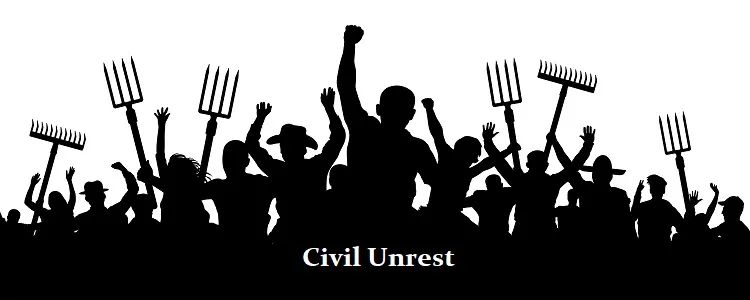
Chile is back in the streets, and this is how it always begins. More than 20,000 students, teachers, workers and union members marched through Santiago against President José Antonio Kast’s 2027 budget. Then came the rocks, bottles, tear gas, arrests, and water cannons. Everyone will argue about who threw what first and whether the police overreacted, but they are missing the point. The government created a system of promises, the economy can no longer comfortably carry all of them, and now people are furious because politicians suddenly discovered arithmetic.
Chile’s unemployment rate is already 9.6%, and Kast came into office promising to cut the fat from government. His proposed budget increases overall spending by only 1.5%, the smallest expansion in two decades outside the post-COVID adjustment. His government reviewed 632 programs across 23 ministries and effectively asked a question that should have been asked decades ago: what are taxpayers actually getting for this money? Naturally, everyone receiving the money suddenly believes civilization will collapse if they remove one peso.
This is the insanity of government. Politicians create programs when times are good because buying votes with somebody else’s money is the easiest profession on earth. They hand out benefits, subsidies and promises without ever asking how they will be financed 10 or 20 years later. Eventually those temporary political gifts become permanent RIGHTS. Then somebody finally looks at the books and realizes the numbers do not work, and suddenly there are 20,000 people marching through the capital demanding that the money continue flowing.
Kast has already backed away from some of the reductions and insists free higher education for more than 600,000 students will remain. The government says the structural education budget is not being destroyed. It almost does not matter anymore because confidence is the real issue. The students do not trust the government, the government does not trust the previous spending structure, and everybody believes somebody else should pay the bill.
Chile should know where this road leads because it lived through 2019. That explosion supposedly began over a small increase in Santiago metro fares. It was never really about the metro fare. That was merely the match tossed onto years of accumulated frustration over pensions, wages, education, inequality, and the cost of living. Once the psychology changed, people were not arguing about thirty pesos anymore. They were burning metro stations.
This is what the academics never understand about civil unrest. They sit there looking for some neat mathematical explanation after everything is already on fire. People tolerate deteriorating conditions for years until suddenly they don’t. One tax, one price increase, one spending cut, one police incident or one stupid statement from some politician becomes the spark, and everyone acts surprised when decades of resentment explode at once.
Politicians created this mess because they NEVER tell people the truth when they make these promises. They do not say, “We can give you this benefit today, but there may not be enough money to maintain it forever.” They pretend government possesses some magical bottomless bank account. Then the economy turns, unemployment rises, tax revenues disappoint, debt costs increase, and suddenly the same government tells everyone sacrifices must be made.
Sacrifices by whom?
Certainly not the political class. The people are always told they must accept less, pay more taxes, retire later, surrender another subsidy, or watch another public service deteriorate. That is when confidence begins to crack because people realize government spent the money years ago and left them with the bill.
The civil unrest we are seeing around the world is not occurring in a vacuum. Governments are running into fiscal constraints at precisely the same time younger generations are struggling with housing, employment and the cost of living. These people are being handed debts they did not create and promises governments can no longer afford to honor.
The Economic Confidence Model is about precisely this transition in human behavior. Civil unrest does not begin because somebody publishes a bad GDP number. It begins when enough people finally conclude that the people running the system have absolutely no idea what they are doing. Once that confidence breaks, every tax increase, spending cut and political decision becomes another potential match.
Chile is back in the streets because government once again made promises without considering tomorrow. Now tomorrow has arrived, the arithmetic no longer works, and politicians are discovering that taking away what government once handed out is far more dangerous than giving it away in the first place. This is how political systems begin to fracture, not because everyone suddenly becomes a revolutionary, but because the people finally realize the promises were written by politicians who never intended to be around when the bill came due.