WINTERS: Harvard Is A Clear Example Of How CCP-Backed ‘Experts’ Are Deceiving Americans


Posted originally on Rumble By Bannon’s War Room on: Apr 28, 2025, at 8:00 pm EST

O’BRIEN: America Needs A Venezuela Deal That Only President Trump Can Deliver


Posted originally on Rumble By Bannon’s War Room on: Apr 28, 2025, at 6:00 pm EST

Robert O’Brien On The Strategic Manufacturing Relationship That Can Pull The U.S. Away From The CCP


Posted originally on Rumble By Bannon’s War Room on: Apr 28, 2025, at 6:00 pm EST

EVERETT: “The Trucking Industry Was In Shambles Long Before We Ever Mentioned Tariffs”


Posted originally on Rumble By Bannon’s War Room on: Apr 28, 2025, at 6:00 pm EST

ROOTING OUT FOREIGN LABOR: Trump EO To Enforce English Literacy Test For Truckers


Posted originally on Rumble By Bannon’s War Room on: Apr 28, 2025, at 6:00 pm EST

Steve Bannon: “All 350,000 Chinese National Students Must Leave Immediately.”


Posted originally on Rumble By Bannon’s War Room on: Apr 28, 2025, at 1:00 pm EST

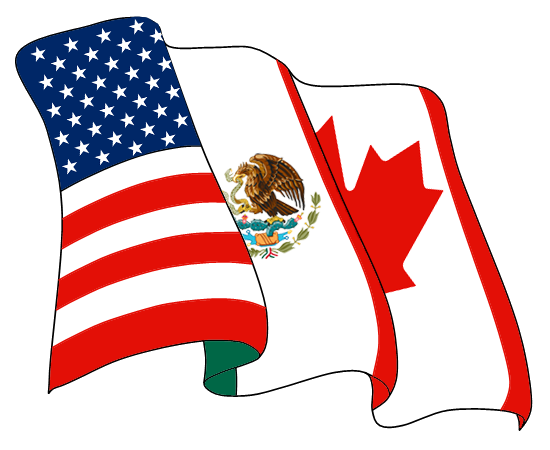
How the NAFTA/USMCA 2025 Review Underpins President Trump Remarks on Canada


Posted originally on CTH on April 28, 2025 | Sundance 

Only President Trump could get the Canadians to vote for an exit to the USMCA, and he did it brilliantly.

To understand President Trump’s position on Canada, you have to go back to the 2016 election and President Trump’s position on the NAFTA renegotiation.  If you did not follow the subsequent USMCA process, this might be the ah-ha moment you need to understand Trump’s strategy.

During the 2016 election President Trump repeatedly said he wanted to renegotiate NAFTA, the North American Free Trade Agreement.  Both Canada and Mexico were reluctant to open the trade agreement to revision, but ultimately President Trump had the authority and support from an election victory to do exactly that.

In order to understand the issue, you must remember President Trump, Commerce Secretary Wilbur Ross and U.S. Trade Representative Robert Lighthizer each agreed the NAFTA agreement was fraught with problems and was best addressed by scrapping it and creating two seperate bilateral trade agreements. One between the USA and Mexico, and one between the USA and Canada.

In the decades that preceded the 2017 push to redo the trade pact, Canada had restructured their economy to: (1) align with progressive climate change; and (2) take advantage of the NAFTA loophole.  The Canadian government did not want to reengage in a new trade agreement.

Canada has deindustrialized much of their manufacturing base to support the ‘environmental’ aspirations of their progressive politicians.  Instead, Canada became an importer of component goods where companies then assembled those imports into finished products to enter the U.S. market without tariffs.  Working with Chinese manufacturing companies, Canada exploited the NAFTA loophole.

Justin Trudeau was strongly against renegotiating NAFTA, and stated he and Chrystia Freeland would not support reopening the trade agreement.  President Trump didn’t care about the position of Canada and was going forward.  Trudeau said he would not support it.  Trump focused on the first bilateral trade agreement with Mexico.

When the U.S. and Mexico had agreed to terms of the new trade deal and 80% of the agreement was finished, representatives from the U.S. Chamber of Commerce informed Trudeau that his position was weak and if the U.S. and Mexico inked their deal, Canada would be shut out.

The U.S Chamber of Commerce was upset because they were kept out of all the details of the agreement between the U.S. and Mexico.  In actuality the U.S CoC was effectively blocked from any participation.

When they went to talk to the Canadians the CoC was warning them about what was likely to happen.  NAFTA would end, the U.S. and Mexico would have a bilateral free trade agreement (FTA), and then Trump was likely to turn to Trudeau and say NAFTA is dead, now we need to negotiate a separate deal for U.S-Canada.

Trudeau was told a direct bilateral trade agreement between the U.S and Canada was the worst possible scenario for the Canadian government.  Canada would lose access to the NAFTA loophole and Canada’s entire economy was no longer in a position to negotiate against the size of the USA.  Trump would win every demand.

Following the warning, Trudeau went to visit Nancy Pelosi to find out if congress was likely to ratify a new bilateral trade agreement between the U.S and Mexico.  Pelosi warned Trudeau there was enough political support for the NAFTA elimination from both parties.  Yes, the bilateral trade agreement was likely to find support.

Realizing what was about to happen, Prime Minister Trudeau and Chrystia Freeland quickly changed approach and began to request discussions and meetings with USTR Robert Lighthizer.  Keep in mind more than 80 to 90% of the agreement was already done by the U.S. and Mexico teams.  Both President Andres Manuel Lopez Obrador and President Trump were now openly talking about when it would be finalized and signed.

Nancy Pelosi stepped in to help Canada get back into the agreement by leveraging her Democrats.  Trump agreed to let Canada engage, and Lighthizer agreed to hold discussions with Chrystia Freeland on a tri-lateral trade agreement that ultimately became the USMCA.

The key points to remember are: (1) Trump, Ross and Lighthizer would prefer two separate bilateral trade agreements because the U.S. import/export dynamic was entirely different between Mexico and Canada. And because of the loophole issue, (2) a five-year review was put into the finished USMCA trade agreement. The USMCA was signed on November 30, 2018, and came into effect on July 1, 2020.

TIMELINE:  The USMCA is now up for review (2025) and renegotiation in 2026!

This timeline is the key to understanding where President Donald Trump stands today.  The review and renegotiation is his goal.

President Trump said openly he was going to renegotiate the USMCA, leveraging border security (Mexico) and reciprocity (Canada) within it.

Following the 2024 presidential election, Prime Minister Justin Trudeau traveled to Mar-a-Lago and said if President Trump was to make the Canadian government face reciprocal tariffs, open the USMCA trade agreements to force reciprocity, and/or balance economic relations on non-tariff issues, then Canada would collapse upon itself economically and cease to exist.

In essence, Canada cannot survive as a free and independent north American nation, without receiving all the one-way benefits from the U.S. economy.

To wit, President Trump then said, if Canada cannot survive in a balanced rules environment, including putting together their own military and defenses (which it cannot), then Canada should become the 51st U.S state.  It was following this meeting that President Trump started emphasizing this point and shocking everyone in the process.

However, what everyone missed was the strategy Trump began outlining when contrast against the USMCA review and renegotiation window.

Again, Trump doesn’t like the tri-lateral trade agreement. President Trump would rather have two separate bilateral agreements; one for Mexico and one for Canada.  Multilateral trade agreements are difficult to manage and police.

How was President Trump going to get Canada to (a) willingly exit the USMCA; and (b) enter a bilateral trade agreement?

The answer was through trade and tariff provocations, while simultaneously hitting Canada with the shock and awe aspect of the 51st state.

The Canadian government and the Canadian people fell for it hook, line and sinker.

Trump’s position on the Canadian election outcome had nothing to do with geopolitical friendships and everything to do with America-First economics. When asked about the election in Canada President Trump saidI don’t care. I think it’s easier to deal, actually, with a liberal and maybe they’re going to win, but I don’t really care.

By voting emotionally, the Canadian electorate have fallen into President Trump’s USMCA exit trap.  Prime Minister Carney will make the exit much easier.  Carney now becomes the target of increased punitive coercion until such a time as the USMCA review is begun, and Canada is forced to a position of renegotiation.

Trump never wanted Canada as a 51st state.

Trump always wanted a U.S-Canada bilateral trade agreement.

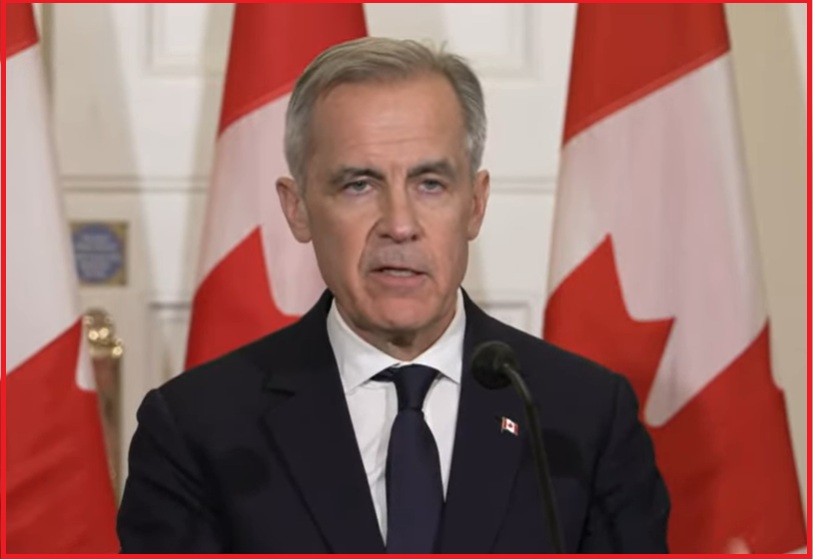
Mark Carney said the era of U.S-Canadian economic ties “are officially declared severed.

Canada has willingly exited the USMCA trade agreement at the perfect time for President Trump.

Why do you think Mexico stayed quiet?

Can you see it now?

Trump Tariffs Causing Serious Problems for Swiss National Bank (and Globalists)


Posted originally on CTH on April 28, 2025 | Sundance

Hat Tip very dear friend of the Treehouse, Zurich Mike.

Switzerland is in a conundrum. More specifically, the Swiss National Bank is stuck betwixt two points that are also playing out in other stable western countries.  Exports to the USA account for over ten percent of the Swiss manufacturing base.

The Trump tariffs are putting pressure on Switzerland to drop the value of their currency as an offset to retain competitive pricing.  However, simultaneous to the tariffs, the Swiss Franc is being purchased by global investment groups and sovereign foreign countries as a safe harbor due to the stability of the currency, which is driving up the value of the franc.

The Swiss Franc is now at the highest point against the U.S dollar in decades. One franc is worth 1.21 dollars.  This makes their exports cost even more.  The Swiss government desperately needs to lower the value of their currency.  The Swiss central bank has already dropped interest rates to 0.25% and is now contemplating negative interest rates as a result.

SWITZERLAND – […] That is why many are speculating on a reaction from the Swiss National Bank (SNB). SNB Director Martin Schlegel could weaken the currency by selling the Swiss franc against the dollar and euro in order to support the export-oriented economy.

But this could provoke a backlash from Trump if he perceives the SNB’s intervention as currency manipulation. Even during Trump’s first term in office, Switzerland was on the US list of suspected currency manipulators.

[…] Interest rate cuts in the key interest rate are considered a diplomatically safe measure to control the franc. It defines the interest rate at which commercial banks can borrow money from the SNB. “If the SNB is dissatisfied with the strong franc and remains limited in foreign exchange interventions, lower interest rates are the only option,” says Francesco Pesole of Bank ING.

Interest rates have already fallen sharply recently. It was only at the end of March that Schlegel lowered the key interest rate to 0.25 percent. The market currently expects a probability of around 80 percent that the key interest rate will fall to zero at the next meeting in June. Yields on short-term government bonds have already fallen into negative territory in recent days. (read more)

If interest rates go into negative territory, savers will be required to pay the bank for storing their money. “Until 2022, various Swiss banks required their customers to pay negative interest on their accounts.”

Meanwhile in other news from Europe, as the Chinese economy contracts, heavy industrial equipment -once again- becomes useless, the Europeans are worried that China will dump cranes and other industrial equipment into their economy.

BRUSSELS, April 28 (Reuters) – The European Commission said on Monday it had imposed duties of up to 66.7% on imports of Chinese machines that lift construction workers after concluding that the producers were benefiting from unfair subsidies and selling at artificially low prices.

The extra duties on Chinese mobile access equipment (MAE) will range from 20.6% to 66.7%, the Commission said, as it sought to protect domestic producers in the EU market worth more than 1 billion euros ($1.14 billion) per year.

The tariffs are the latest in a series of EU anti-dumping and anti-subsidy duties focused on Chinese imports, including a high-profile investigation into Chinese-built electric vehicles, which culminated last October.

The EU executive, which conducted the investigation, said Chinese MAE producers had benefited from preferential financing, grants, state provision of inputs at below-market rates. (read more)

.

Press Secretary Karoline Leavitt and Border Czar Tom Homan Hold a Press Briefing


Posted originally on CTH on April 28, 2025 | Sundance

Celebrating the first 100-days, the White House will be hosting cabinet members each day this week to highlight their specific accomplishments in the first 100-days of the Trump presidency.

Today, on Day #99 of the administration, Karoline Leavitt introduces Border Czar Tom Homan to outline border security measures and deportation effort that have been a priority for the Trump administration. WATCH (prompted):

.

President Trump Wishes “Good Luck” to the Captives of Canada for a Happy Election Day


Posted originally on CTH on April 28, 2025 | Sundance 

If you never followed how President Obama constructed and influenced the rise of Justin Trudeau in Canada, then it might seem perplexing when President Donald Trump stands generally ambivalent to the outcome of today’s election in Canada.

When asked about the election in Canada President Trump previously saidI don’t care. I think it’s easier to deal, actually, with a liberal and maybe they’re going to win, but I don’t really care.”  The core of President Trump’s position stems from the economic issues that have been present for decades.  Leading candidate Mark Carney, who had not lived in Canada for the past 10-years until his installation, has said he is prepared to guide Canada into an alignment with the European Union.

As Secretary of State Marco Rubio outlined, previous Prime Minister Justin Trudeau traveled to Mar-a-Lago and said if President Trump was to make the Canadian government pay reciprocal tariffs, open the USMCA trade agreements to force reciprocity, and/or balance economic relations on non-tariff issues, then Canada would collapse upon itself economically and cease to exist.

In essence, Canada cannot survive as a free and independent north American nation, without receiving all the one-way benefits from the U.S. economy. To wit, President Trump then said, if Canada cannot survive in a balanced rules environment, including putting together their own military and defenses (which it cannot), then Canada should become the 51st U.S state.

The Canadian Mitt Romney “conservative”, Mark Carney’s closest competitor, Pierre Poilievre, is also very upset at President Trump.

As the majority of Canadians cheer, both Mark Carney and Pierre Poilievre said that Canada, as a free independent and sovereign nation, will now embrace its connections to the United Kingdom and European Union and seek to replace their national dependency on the United States by severing ties in North America and entering a new era of close relations with Great Britain and Europe.

When questioned if Canada would join the European Union, a seemingly natural fit for the ideologically aligned country, Prime Minister Carney said, “nothing is off the table.”   In a rather remarkable end to the confrontation,  Carney says the economic and military ties between the USA and Canada are officially declared severed.

Structurally from an American economic perspective, the lens through which President Trump is primarily focused, it really doesn’t matter which of the leading Canadian politicians wins the election.  The financial dependency on the USA is going to be severed.

President Trump hits Canada with an approximately 50% tariff.  Let’s say an import widget from Canada costs the purchaser/importer $100 CAD + 50% tariff, now $150 CAD.

$1 CAD = 0.70¢ USD

Without U.S. tariff, it costs $70 USD to purchase the $100 CAD widget.

With the U.S tariff it would take $105 USD to purchase $150 Canadian widget

However, due to economic policy, Canada’s dependence on the USA market and the tariff battle, the Canadian currency drops around 30%.  $1 CAD now equals 0.50¢ USD

With currency drop it now costs $50 USD to purchase the original $100 Canadian widget.  $75 USD with tariff.

BEFORE: $70 USD without U.S. tariff, or AFTER: $75 USD with 50% U.S. tariff.  A net change of $5.

But wait, back to Mark Carney’s plan.  As stated in his tariff policy, the prime minister will take income from the Canadian side of the tariff equation (countervailing duties) to subsidize the impacted export sector.  Just like China and the EU did in ’17, ’18 and ’19, the Canadian government plans to offset the difference to the U.S. consumer by subsidizing the exporter with import tariff income.  All of this is done to retain access to USA consumers.

The final outcome, the U.S. purchaser is back to the original price of $70, only now that same outcome is evident with an invisible $50 tariff.

This is what China tried to do. This is what the EU tried to do.  This is what Canada is now planning to do to retain access to the U.S. market while they look for alternatives.

But wait, it gets better….

….. As the Canadian financial sector evaluates the likely drop in the CAD currency, they seek safe harbor investment to retain the value of their money.  The reciprocal tariffs are hitting every currency. The Canadian finance sector purchases dollar and dollar-backed assets to retain their value.  This approach increases the value of the U.S dollar.

Do you really think President Trump gives a hoot about PM Carney’s feelings?   Quite frankly, Trump would not want to be bothered by Canada while he is working on a much, much bigger geopolitical economic dynamic.

Go back and reference the renegotiation of the NAFTA for reference.  President Trump didn’t care if Canada (Trudeau/Freeland) agreed or did not agree with the USMCA. Trump was quite willing, heck he was hoping, to just deal with Canada on a bilateral trade system.

April 28, 2025 | Sundanc