
Posted Originally on Sep 11, 2026 by Martin Armstrong |
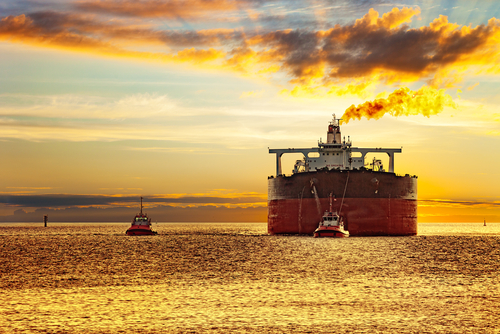
Saudi Arabia just reported something that should scare the hell out of anyone who understands how the Middle East actually functions. According to Bloomberg, Riyadh told OPEC that crude production collapsed by 1.9 million barrels per day in August to just 6.238 million barrels per day, the lowest Saudi production since 1990 and even below the wartime low reached earlier this year. Saudi exports have reportedly fallen to around 3.1 million barrels per day, the lowest in more than a decade. This is not because the Saudis suddenly decided to tighten the market to make a few extra dollars. The war with Iran and renewed Houthi threats have disrupted the export routes that keep the entire Saudi financial system alive.
People look at Saudi Arabia and see oil, skyscrapers, sovereign wealth funds, and princes. They assume there is an endless pile of money buried beneath the desert. That is complete nonsense. I have written about this repeatedly and devoted an entire report to the Sovereign Debt Crisis and the Middle East because these governments have built enormous fiscal structures around one critical assumption: oil revenue continues to flow. Saudi Arabia can have all the oil beneath the ground it wants. If it cannot pump it, ship it, insure the tankers, and deliver it to customers, that oil does not pay the bills.
Saudi Arabia already recorded a budget deficit of 125.7 billion riyals, roughly $33.5 billion, in the first quarter of 2026 alone. That was nearly as large as the $44 billion deficit the government had projected for the entire year. Spending increased 20% while oil revenue declined 3%. Riyadh approved financing needs of roughly 217 billion riyals, or nearly $58 billion, for 2026, including money required to finance the deficit and refinance maturing debt. Now imagine what happens when the volume of oil available to sell suddenly collapses to levels not seen since the Gulf War.
This is precisely why looking only at the price of crude is so damn stupid. Yes, Brent above $100 means Saudi Arabia receives more for every barrel it successfully sells. But government revenue is PRICE × VOLUME. If production collapses 23%, exports plunge, military expenditures rise, shipping costs explode, insurance premiums soar, and infrastructure must be defended against drones and missiles, a higher oil price does not magically solve the problem. War can increase the price of the commodity while simultaneously destroying the finances of the government producing it.
Saudi Arabia is not alone. The fiscal systems throughout the Gulf were constructed during an era when oil revenue could finance enormous government expenditures, subsidies, public employment, infrastructure, defense, and social programs. These governments have attempted to diversify, but oil still provides the financial foundation supporting the transformation. Saudi Arabia’s Vision 2030 is supposed to create an economy less dependent on petroleum, yet the government is borrowing against future revenue to finance projects intended to reduce dependence on that same revenue. That contradiction becomes dangerous when war interrupts the cash flow.
This is what people fail to understand about the Middle East sovereign debt crisis. Governments do not simply stop spending because revenue declines. They BORROW. Saudi Arabia borrows. Bahrain borrows. Oman borrows. Iraq depends overwhelmingly on petroleum revenue. Even governments with enormous financial reserves must eventually liquidate assets or issue debt when expenditures persist while commodity income deteriorates. Oil made it possible to conceal the underlying fiscal structure because everyone assumed the money would always be there.
The Strait of Hormuz carries roughly one-fifth of the world’s petroleum supply. Traffic through the strait has again collapsed into the single digits on some days. Saudi Arabia spent years building the East-West pipeline so crude could be moved to Yanbu on the Red Sea and bypass Hormuz, but now the Houthi threat has demonstrated that the western route is not immune either. When both sides of the Arabian Peninsula become geopolitical choke points, Saudi Arabia has a problem that no central bank can solve by changing interest rates.
Oil does not stop at the gasoline pump. Crude feeds transportation, trucking, aviation, shipping, petrochemicals, plastics, agriculture, fertilizer production, manufacturing, mining, and virtually every supply chain on the planet. Diesel rises and the farmer pays more to operate machinery. The trucking company pays more to deliver food. The container ship pays more to cross the ocean. Airlines increase fares. Manufacturers pay more for raw materials and transportation. Those costs eventually reach the consumer.
Then comes the second wave that almost nobody talks about: sovereign debt. Higher energy prices feed inflation. Inflation prevents central banks from aggressively cutting interest rates. Higher rates increase government debt-service costs. Governments already buried beneath debt must then borrow even more merely to service what they previously borrowed. Europe is especially vulnerable because it deliberately destroyed much of its cheap energy structure in the name of climate ideology and then sanctioned Russia without having a viable replacement. Another sustained energy shock arrives while Germany is weak, France is drowning in debt, Britain cannot control its fiscal position, and governments everywhere are simultaneously demanding enormous increases in military expenditure.
The Saudis themselves are now spending more on defense simply to protect the infrastructure that generates the revenue needed to finance the government. Saudi military expenditures increased sharply earlier this year as Riyadh was forced to defend oil facilities, shipping routes, pipelines, ports, and population centers. That is money that produces no economic return whatsoever. A missile interceptor does not build a factory. It does not produce electricity. It does not create an export industry. It is consumed defending infrastructure from another weapon that may cost a fraction of the price.
There is no free war. Saudi Arabia pumping the least oil since 1990 is not merely a Saudi story. It is a warning that the financial arteries of the Middle East are being squeezed at precisely the moment the sovereign debt crisis is accelerating worldwide. If oil-producing governments lose revenue, they borrow more. If oil-importing governments face higher prices, they subsidize more and borrow more. The producer gets fucked by falling volume while the consumer gets screwed by rising prices.

