
Posted Originally on Sep 4, 2026 by Martin Armstrong |
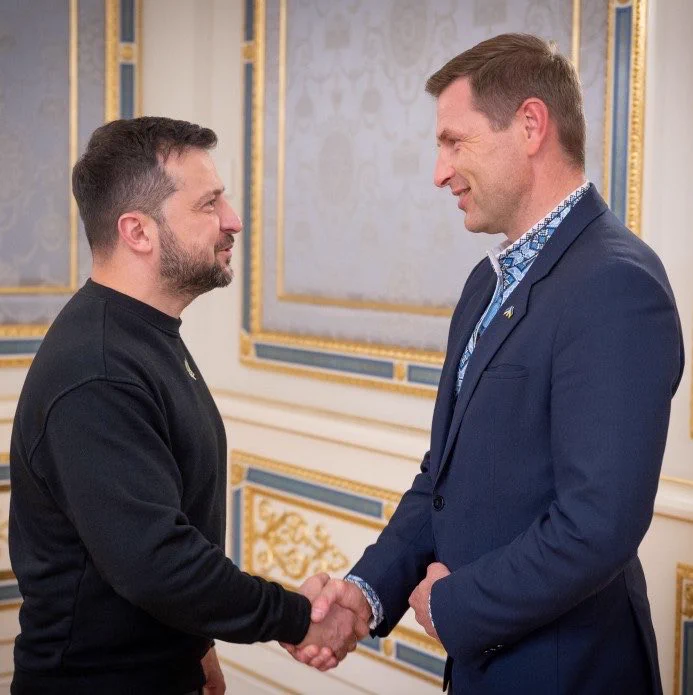
Estonia’s Defence Minister Hanno Pevkur has resigned after a €70 million ammunition deal intended to supply Ukraine blew up into a procurement scandal. Estonia agreed to purchase artillery shells from Datasel, an Italian-registered company owned by India’s Neco Defense Munitions, despite the companies having no established history of selling artillery shells. Millions were paid in advance, deliveries ran into problems, Estonia terminated the contracts, and the dispute has now gone to arbitration. This is what happens when government declares everything an emergency and suddenly the normal rules surrounding public money become inconvenient.
Pevkur says he did not negotiate the contracts and had not even read them. His explanation was rather revealing: “The defence minister does not conduct contract negotiations. The defence minister does not count socks and ammunition.” He said his responsibility was making the fundamental political decision to support Ukraine. He nevertheless resigned because the National Audit Office’s findings raised the question of political responsibility. At least somebody in government still remembers what that phrase means.
The scandal goes directly to the problem with Europe’s entire approach to Ukraine. The politicians declare that Ukraine must be supported at any cost, and once you use those words, cost ceases to matter. Due diligence becomes something bureaucrats complain takes too long. Money must be spent immediately because politicians tell everyone that Europe itself will fall if another artillery shell does not reach Ukraine yesterday.
Estonian officials have essentially admitted that extraordinary risks were accepted because of the urgency surrounding Ukraine. One official told reporters that they knew these procurements involved “greater risks than usual” but believed those risks were justified by what was at stake. There is the entire problem in one sentence. When government decides that the political objective is important enough to justify greater financial risk, taxpayers become the insurance policy when something goes wrong.

Estonia’s National Audit Office had already raised serious concerns about defense spending and the activities of the Estonian Centre for Defence Investments. The issue is no longer merely whether ammunition arrived. There is now a possibility that Estonia itself could become responsible for tens of millions of euros tied up in the dispute, depending on how the contracts and EU financing are ultimately resolved. The European Commission says it is discussing whether Estonia may have to return the European funds and insists that safeguards exist to protect taxpayers. That is always what government says after the money has already left the building.
The supplier disputes Estonia’s version of events and says it supplied and invoiced €58 million worth of material against €59 million in advance payments. Datasel also rejects allegations that the ammunition failed inspections and argues that regulatory approvals and documentation delays complicated the international supply chain. That dispute will now have to be resolved through arbitration, but it does not change the larger political question of how a procurement carrying this degree of risk was approved in the first place.
Europe has thrown enormous sums into Ukraine under the premise that there is simply no alternative. The European Peace Facility was created before the invasion as an instrument supposedly designed to “preserve peace,” yet it has become a major mechanism for financing weapons. You have to appreciate government terminology. They create something called a Peace Facility and then use it to purchase artillery ammunition for a war.
The Ukraine conflict has become another demonstration of how governments operate once fear eliminates fiscal restraint. Nobody is permitted to question the amount because asking where the money went is immediately portrayed as helping Putin. Nobody asks what the endgame is because that supposedly undermines Ukraine. Nobody wants to calculate what European taxpayers have actually committed because the answer becomes politically uncomfortable.
This is precisely how accountability disappears.
Europe has spent years telling its citizens that there is not enough money for pensions, healthcare, infrastructure, farmers, or tax relief. Governments insist they must raise retirement ages because the money is running out. They impose austerity when sovereign debt becomes unsustainable and then lecture ordinary people about living within their means. Yet when politicians want war, suddenly hundreds of billions can materialize.
The money is always there when government wants it. Estonia is particularly interesting because it has been among the most aggressive European supporters of Ukraine relative to the size of its economy. Defense spending has surged since 2022 as the Baltic governments repeatedly warn that Russia could eventually attack NATO territory. That fear has become the political justification for enormous military expenditures throughout Eastern Europe, and now Brussels wants the rest of Europe to follow.
This is how the military-industrial complex expands. You create permanent geopolitical fear, governments announce massive defense budgets, procurement must be accelerated, and taxpayers are told that questioning any expenditure threatens national security. The faster government spends money, the easier it becomes for mistakes, incompetence, favoritism, and outright corruption to hide inside the urgency.
Europe is now preparing to spend vastly more on defense. NATO members have committed themselves to dramatically higher military expenditures while Brussels discusses expanding common defense financing and additional support for Ukraine. If governments cannot properly oversee tens of millions, what happens when the spending reaches hundreds of billions?
The taxpayer always gets the bill. What makes this even more absurd is that European leaders insist all of this spending is necessary because Russia represents an existential threat, while simultaneously pursuing policies that have damaged Europe’s own economy. They sanctioned cheap Russian energy, drove manufacturing costs higher, increased military expenditures, expanded government debt, and then acted surprised when Europe’s economic competitiveness deteriorated.
There is no strategic planning. There is only political reaction. The Estonian scandal should therefore be treated as a warning about what happens when war becomes an open-ended government program. The political objective of supporting Ukraine became more important than the financial risk surrounding the procurement, and now officials are fighting over who may ultimately absorb the losses while the defense minister has resigned.
The €70 million dispute in Estonia may seem small compared with the hundreds of billions already committed to Ukraine and European rearmament, but that is precisely why it matters. War has always been the greatest excuse for government spending because fear silences questions that taxpayers would normally ask. Estonia has now discovered why those questions should have been asked before the money was transferred rather than after.
Categories:Corruption

