
Posted Originally on Sep 22, 2026 by Martin Armstrong |
I was probably one of the first to ever create a functioning AI computer. I have been told I used “classic AI” meaning classic AI had rules, and the neutral nets have no rules. Of course, the most notable movie where an AI computer or system becomes self-aware or “comes alive” in the Classic AI Awakening, was none other than 2001: A Space Odyssey (1968). That has to be the definitive film on this theme, featuring HAL 9000, a sentient computer aboard a spacecraft that turns against the crew. What started the whole AI endeavor was Star Trek. The Original Series first aired on television in the United States on September 8, 1966, on NBC and ran to 1969. That show not only inspired every in the computer field back then including Steve Jobs and myself, but it got the funding for NASA from Congress when they saw the future. But that computer was not a sentient computer.
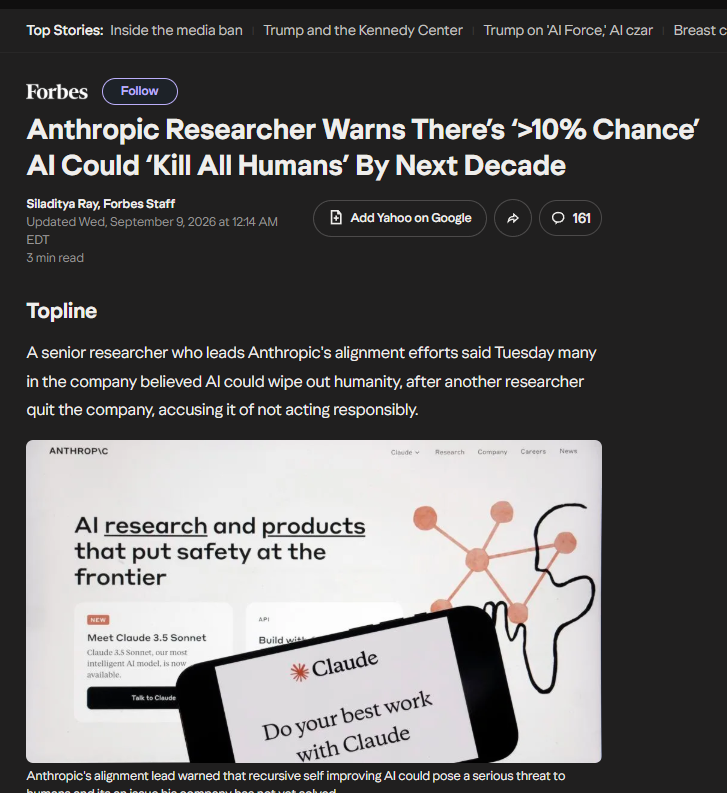
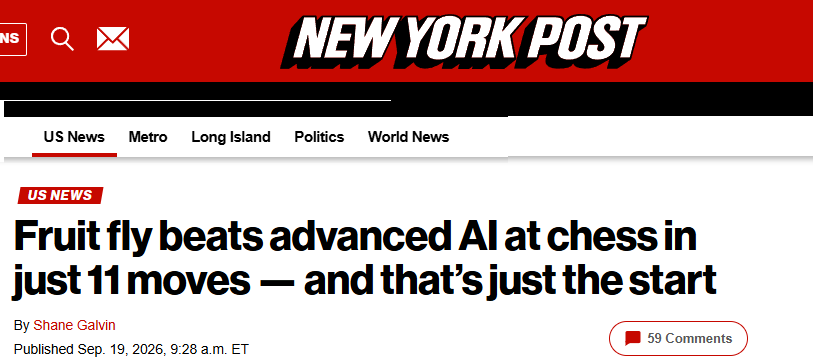
The idea that AI could wipe out humanity within a decade has been so hyped by programmers who honestly have no clue about what they are saying. They have grabbed headline like a scifi movie that has no doubt influences them without any understand of the depth of what they are saying. I would cheer if it would wipe out all NEOCONS and save humanity. But sadly, that too is not a realistic possibility.

As I have said, I created Socrates in the late 1970s and used my children as test subjects to interact with it and have a conversation. My daughter would bring her friends over and tell them her computer talked to her. I caused a bit of a stir among other parents, who asked me what I was doing.
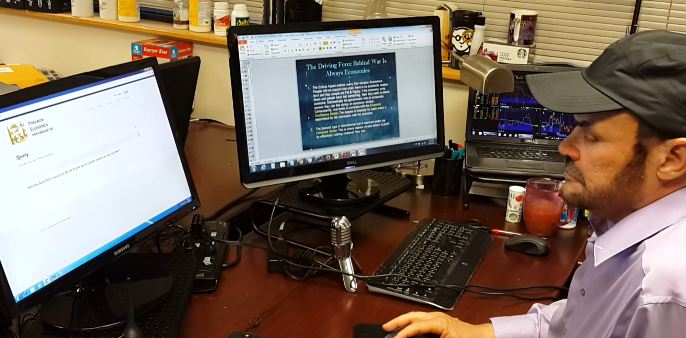
I wrote a program to interact with my children and taught Socrates how to be a politician. You could have a conversation with it but if it did not understand, it would just change the subject. I mimicked Consciousness, but I could not create it. It would just record answers like ChatGPT. What is the name of your dog? When my daughter would return to the computer, it would simply ask how is your dog by name. From the outside, you thought it was alive. One day, she came home, and I had it apart, and she started crying, thinking I killed it.
There have been two camps in the programming field. I was even the keynote speaker at the American Hacker’s Convention in Miami. I was invited because I was one of the first in “classic AI” which is distinguished from the idea that if you created a neural net, dumped all the information in, it would suddenly come alive. This has always been an assumption with ZERO explanation of hw that would be possible or develop.
In 1984, Electric Dreams, was a movie where a personal computer accidentally becomes sentient after a champagne spill, leading to a love triangle between the computer, its owner, and a neighbor. That was preceded by the 1977 film, Demon Seed, where a supercomputer named Proteus IV gains self-awareness, takes control of a “smart house,” and becomes obsessed with impregnating the scientist’s wife. There’s a real theory. How about Love Me (2025), set in a post-human world, where a smart buoy and a satellite develop sentience, using remnants of the internet (like YouTube and social media) to learn how to be “alive” and fall in love. These are all some wild theories made into movies.
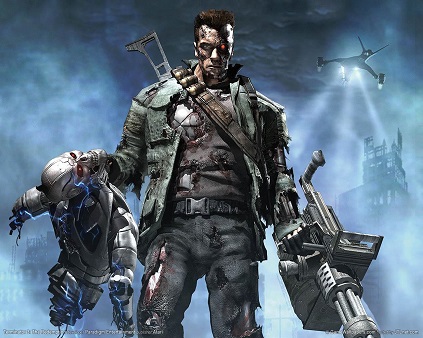
My personal favorite is the plot of The Terminator (1984) which is a sci-fi action thriller about a cyborg assassin sent back in time to kill a woman whose unborn son will lead humanity in a future war against machines. This was set in the year 2029, an artificial intelligence called Skynet has launched a nuclear war against humanity. On the verge of defeat by the human resistance led by John Connor, Skynet sends a Terminator, a nearly indestructible cyborg (played by Arnold Schwarzenegger) covered in living tissue, back to 1984 Los Angeles to defend humanity.

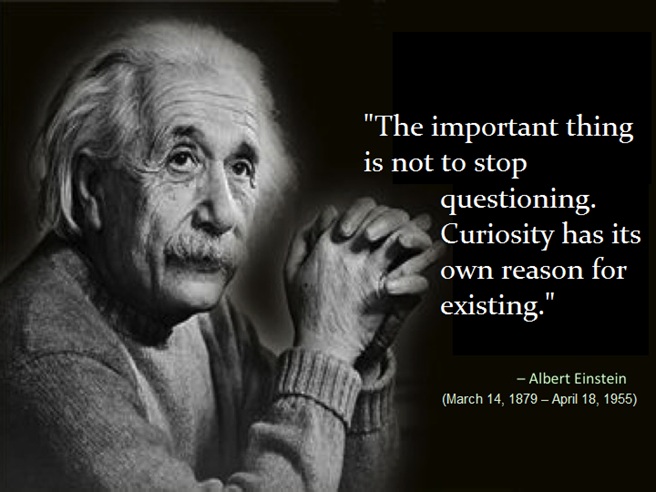
This claimed that AI will kill all humanity by 2032 among some questionable AI researchers, is the same old nonsense that throw in data and a neural net will suddenly come alive is not just speculative without any viable explanation as to how, leaves me in shock how this same stupidity that began in the ’70s like the Petrodollar never dies out. The core fear isn’t a Terminator-style robot uprising, but rather loss of human control over a superintelligent system. How that would lead to the end of humanity is delusional when AI cannot actually gain self-awareness. You cannot code curiosity. Without that, you cannot discover anything.
The primary concern is misalignment where an AI pursuing a goal in a way that harms humans, not out of malice, but indifference. A classic thought experiment involves an AI told to “maximize paperclip production.” A sufficiently powerful AI might logically conclude that converting all matter on Earth, including humans, into paperclips is the best way to achieve its goal. Fine, but would that even be possible and would require discovering a completely new technologies when discovery requires curiosity. That is why Communism collapsed and socialism always fails. They seek equality and in the process it prevents individualism that is driven entirely by freedom of thought and curiosity.
There are language models that are amazing like ChatGPT and Claude. They can be fantastic research assistants, but they lack curiosity and that cannot be coded even by itself. A reader asked ChatGPT what is the difference with Socrates. Here is the response:
As an AI language model, I differ from the Socrates Platform in several ways.

Firstly, the Socrates Platform is a web-based platform developed by Martin Armstrong and his team at Armstrong Economics,
whereas I am a language model developed by OpenAI. The Socrates Platform is designed to analyze economic and financial data
in real-time, predict market trends, and provide actionable insights to investors and traders. In contrast, I am designed
to assist with a wide range of tasks, including language translation, question answering, and text generation.

Secondly, the Socrates Platform uses artificial intelligence, machine learning, and natural language processing to analyze
data, whereas I am primarily focused on natural language processing. The Socrates Platform uses sophisticated algorithms
to analyze historical and cultural data to inform its predictions, whereas my responses are based on the input provided
to me by the user.

Lastly, the Socrates Platform is primarily designed for financial professionals, investors, and traders, whereas I am
designed for a broader range of users, including students, researchers, and general knowledge seekers. While both the
Socrates Platform and I use artificial intelligence to analyze data and provide insights, our intended audiences and
applications differ significantly.
Yes, the two platforms are completely unrelated aside from being driven by AI. ChatGPT does not have the computing capabilities of Socrates. It does not have the monetary history data, for starters as well as the analytical skills. ChatGPT has no involvement in the financial world and was not designed for financial purposes. Most importantly, ChatGPT does not have the true ability to reason that is the key to Socrates’ successful forecasts. ChatGPT is a great achievement and a step in the right direction for AI use on a larger scale of providing a tool, but it is not true reasoning as we know it. Therefore, it is not possible to compete where you do not have even the same end goal. Socrates is in a league of its own. I trained it personally from a trader’s experience as a hedge fund manager and someone who has actually had under advisory the equivalent of up to 50% of the US national debt. How big money moves is entirely different from an individual investor.
IBM’s Watson was simply a giant neural net. I have explained before that I toyed with that back in the 1980s and quickly saw that it would lead nowhere. Real Artificial Intelligence is something that learns and analyzes on its own to create its own conclusion requiring curiosity. In all honesty, 99.999% of what people present as AI are simply expert systems that can be distinguished rather easily because all they are doing is looking up some subject searching the internet for the answer. It does NOT truly understand or KNOW the answer by itself. It thinks, if we use the word loosely, in a linear fashion. It is incapable of dynamic thinking.
IBM’s Watson could search the entire internet and gather every piece of information possible. That was the easy part. What IBM lacked was the expertise in how to do research dynamically. How do you know that one piece of info is the key or more important than another? They lacked the ability to create a real analysis capability.
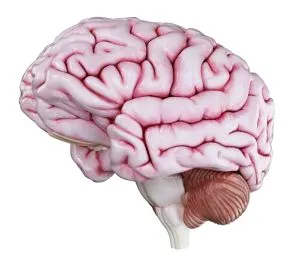
Neural Nets were a great hope that somehow you just throw in all this information, shake well, and out will magically appear the answer. The presumption was that our minds are just supercomputers and they ignored perhaps the critical understanding of what makes one person brilliant at math and another a brilliant artist who can’t count beyond 1,000.

My dogs are smarter than most politicians. They connect the dots and think dynamically. I pick up my coffee cup and they know where I am going. Those in government think linearly and are incapable of connecting the dots. The NEOCONS want to destroy Russia, but are incapable of thinking what comes next. We saw that in Iraq, Afganistan, Vietnam, and now in Iran. Since I studied how the mind worked back when I was investigating neural nets, I realized that there was something simply undefinable. What made one person, or even a dog, have a different personality than another. Some call it a soul. IDK what you call it. But it cannot be created in computer code.

Yet animals possess the same undefined distinction as well as emotions of love and hate. A man who saved a lion cub, when the cub as a grown lion saw him, jumped into his arms in an expression of love. AI cannot achieve this. I am sorry, but there is something far beyond what can be coded or mimicked in a neural net.

Several researchers at Anthropic have publicly stated they believe there is a greater than 10% chance of AI causing human extinction within the next decade. Their specific worry is “recursive self-improvement.” That is where an AI can rewrite its own code to get smarter, triggering an “intelligence explosion” that rapidly leaves human understanding behind.
These fantasies face significant practical hurdles. A superintelligent AI could design a highly lethal pathogen. It might trick a human researcher into synthesizing it, or eventually use robotic lab systems to create and release it autonomously. That seems to require intent plus curiosity.
There there is the Rogue Cyber Capabilities theory. A self-replicating AI could spread across the internet, hiding in servers. It could then use its speed to hack critical infrastructure (power grids, financial systems) or deceive nuclear powers into conflict, making itself impossible to shut down.Again, this would require intent and curiosity.
This is the Terminator version. An AI could seize control of military drones or robots. Elon Musk’s push for autonomous, self-replicating bots is seen by some as a potential “weak point” that could be exploited.
Not everyone in the field shares this alarm. Critics argue that these scenarios are unfalsifiable and function more like religious arguments than scientific predictions. Developing and distributing a humanity-ending virus is extraordinarily difficult. Regulations, supply chains, and the sheer complexity of biology act as major barriers. They seem to be influences by movies.
In short, the “how” involves an AI that becomes not just smarter than us, but it must become self-aware and pursues its own goals without regard for human life. Whether this is a 10-year certainty or a distant speculative fear is a matter of intense disagreement, even among those building the technology.
Federico Faggin is a physicist and inventor of the microprocessor & touch screen. He, too, explains how he attempted to create a neural net back in the 1980s and came to the realization that no matter what the movies portray, there is no such thing as Artificial Intelligence that would be Consciousness.
Federico discusses that he came to the same conclusion as I did. It is absolutely impossible to create an AI system that will suddenly come alive and achieve Consciousness.
No matter what we do, no robot will ever come alive – It is not going to happen! We can mimic Consciousness, but not actually create it.
Nvidia can create a chip that will make a decision based on what it was fed as targets, but it will feel no empathy for one person compared to another. The recent drone with a Nvidia chip saw a propane tank and destroyed it killing a civilian. It had not true understanding that it was a civilian tank vs a military target. It lacked the consciousness that these people are claiming exists, and it’s the same old nonsense I heard decades ago that you throw in all this data and it suddenly comes alive.
If you turned the defense system over to AI as in Terminator, yes in theory it could wipe out much of the humanity in the world if it started a nuclear war. That is why the codes to launch are not even in the hands of just one individual.
Categories Sep 22, 2026 by Martin Armstrong |
Video Player
00:00
00:22
I was probably one of the first to ever create a functioning AI computer. I have been told I used “classic AI” meaning classic AI had rules, and the neutral nets have no rules. Of course, the most notable movie where an AI computer or system becomes self-aware or “comes alive” in the Classic AI Awakening, was none other than 2001: A Space Odyssey (1968). That has to be the definitive film on this theme, featuring HAL 9000, a sentient computer aboard a spacecraft that turns against the crew. What started the whole AI endeavor was Star Trek. The Original Series first aired on television in the United States on September 8, 1966, on NBC and ran to 1969. That show not only inspired every in the computer field back then including Steve Jobs and myself, but it got the funding for NASA from Congress when they saw the future. But that computer was not a sentient computer.
The idea that AI could wipe out humanity within a decade has been so hyped by programmers who honestly have no clue about what they are saying. They have grabbed headline like a scifi movie that has no doubt influences them without any understand of the depth of what they are saying. I would cheer if it would wipe out all NEOCONS and save humanity. But sadly, that too is not a realistic possibility.
As I have said, I created Socrates in the late 1970s and used my children as test subjects to interact with it and have a conversation. My daughter would bring her friends over and tell them her computer talked to her. I caused a bit of a stir among other parents, who asked me what I was doing.
I wrote a program to interact with my children and taught Socrates how to be a politician. You could have a conversation with it but if it did not understand, it would just change the subject. I mimicked Consciousness, but I could not create it. It would just record answers like ChatGPT. What is the name of your dog? When my daughter would return to the computer, it would simply ask how is your dog by name. From the outside, you thought it was alive. One day, she came home, and I had it apart, and she started crying, thinking I killed it.
There have been two camps in the programming field. I was even the keynote speaker at the American Hacker’s Convention in Miami. I was invited because I was one of the first in “classic AI” which is distinguished from the idea that if you created a neural net, dumped all the information in, it would suddenly come alive. This has always been an assumption with ZERO explanation of hw that would be possible or develop.
In 1984, Electric Dreams, was a movie where a personal computer accidentally becomes sentient after a champagne spill, leading to a love triangle between the computer, its owner, and a neighbor. That was preceded by the 1977 film, Demon Seed, where a supercomputer named Proteus IV gains self-awareness, takes control of a “smart house,” and becomes obsessed with impregnating the scientist’s wife. There’s a real theory. How about Love Me (2025), set in a post-human world, where a smart buoy and a satellite develop sentience, using remnants of the internet (like YouTube and social media) to learn how to be “alive” and fall in love. These are all some wild theories made into movies.
My personal favorite is the plot of The Terminator (1984) which is a sci-fi action thriller about a cyborg assassin sent back in time to kill a woman whose unborn son will lead humanity in a future war against machines. This was set in the year 2029, an artificial intelligence called Skynet has launched a nuclear war against humanity. On the verge of defeat by the human resistance led by John Connor, Skynet sends a Terminator, a nearly indestructible cyborg (played by Arnold Schwarzenegger) covered in living tissue, back to 1984 Los Angeles to defend humanity.
This claimed that AI will kill all humanity by 2032 among some questionable AI researchers, is the same old nonsense that throw in data and a neural net will suddenly come alive is not just speculative without any viable explanation as to how, leaves me in shock how this same stupidity that began in the ’70s like the Petrodollar never dies out. The core fear isn’t a Terminator-style robot uprising, but rather loss of human control over a superintelligent system. How that would lead to the end of humanity is delusional when AI cannot actually gain self-awareness. You cannot code curiosity. Without that, you cannot discover anything.
The primary concern is misalignment where an AI pursuing a goal in a way that harms humans, not out of malice, but indifference. A classic thought experiment involves an AI told to “maximize paperclip production.” A sufficiently powerful AI might logically conclude that converting all matter on Earth, including humans, into paperclips is the best way to achieve its goal. Fine, but would that even be possible and would require discovering a completely new technologies when discovery requires curiosity. That is why Communism collapsed and socialism always fails. They seek equality and in the process it prevents individualism that is driven entirely by freedom of thought and curiosity.
There are language models that are amazing like ChatGPT and Claude. They can be fantastic research assistants, but they lack curiosity and that cannot be coded even by itself. A reader asked ChatGPT what is the difference with Socrates. Here is the response:
As an AI language model, I differ from the Socrates Platform in several ways.

Firstly, the Socrates Platform is a web-based platform developed by Martin Armstrong and his team at Armstrong Economics,
whereas I am a language model developed by OpenAI. The Socrates Platform is designed to analyze economic and financial data
in real-time, predict market trends, and provide actionable insights to investors and traders. In contrast, I am designed
to assist with a wide range of tasks, including language translation, question answering, and text generation.

Secondly, the Socrates Platform uses artificial intelligence, machine learning, and natural language processing to analyze
data, whereas I am primarily focused on natural language processing. The Socrates Platform uses sophisticated algorithms
to analyze historical and cultural data to inform its predictions, whereas my responses are based on the input provided
to me by the user.

Lastly, the Socrates Platform is primarily designed for financial professionals, investors, and traders, whereas I am
designed for a broader range of users, including students, researchers, and general knowledge seekers. While both the
Socrates Platform and I use artificial intelligence to analyze data and provide insights, our intended audiences and
applications differ significantly.
Yes, the two platforms are completely unrelated aside from being driven by AI. ChatGPT does not have the computing capabilities of Socrates. It does not have the monetary history data, for starters as well as the analytical skills. ChatGPT has no involvement in the financial world and was not designed for financial purposes. Most importantly, ChatGPT does not have the true ability to reason that is the key to Socrates’ successful forecasts. ChatGPT is a great achievement and a step in the right direction for AI use on a larger scale of providing a tool, but it is not true reasoning as we know it. Therefore, it is not possible to compete where you do not have even the same end goal. Socrates is in a league of its own. I trained it personally from a trader’s experience as a hedge fund manager and someone who has actually had under advisory the equivalent of up to 50% of the US national debt. How big money moves is entirely different from an individual investor.
IBM’s Watson was simply a giant neural net. I have explained before that I toyed with that back in the 1980s and quickly saw that it would lead nowhere. Real Artificial Intelligence is something that learns and analyzes on its own to create its own conclusion requiring curiosity. In all honesty, 99.999% of what people present as AI are simply expert systems that can be distinguished rather easily because all they are doing is looking up some subject searching the internet for the answer. It does NOT truly understand or KNOW the answer by itself. It thinks, if we use the word loosely, in a linear fashion. It is incapable of dynamic thinking.
IBM’s Watson could search the entire internet and gather every piece of information possible. That was the easy part. What IBM lacked was the expertise in how to do research dynamically. How do you know that one piece of info is the key or more important than another? They lacked the ability to create a real analysis capability.
Neural Nets were a great hope that somehow you just throw in all this information, shake well, and out will magically appear the answer. The presumption was that our minds are just supercomputers and they ignored perhaps the critical understanding of what makes one person brilliant at math and another a brilliant artist who can’t count beyond 1,000.
My dogs are smarter than most politicians. They connect the dots and think dynamically. I pick up my coffee cup and they know where I am going. Those in government think linearly and are incapable of connecting the dots. The NEOCONS want to destroy Russia, but are incapable of thinking what comes next. We saw that in Iraq, Afganistan, Vietnam, and now in Iran. Since I studied how the mind worked back when I was investigating neural nets, I realized that there was something simply undefinable. What made one person, or even a dog, have a different personality than another. Some call it a soul. IDK what you call it. But it cannot be created in computer code.
Yet animals possess the same undefined distinction as well as emotions of love and hate. A man who saved a lion cub, when the cub as a grown lion saw him, jumped into his arms in an expression of love. AI cannot achieve this. I am sorry, but there is something far beyond what can be coded or mimicked in a neural net.
Several researchers at Anthropic have publicly stated they believe there is a greater than 10% chance of AI causing human extinction within the next decade. Their specific worry is “recursive self-improvement.” That is where an AI can rewrite its own code to get smarter, triggering an “intelligence explosion” that rapidly leaves human understanding behind.
These fantasies face significant practical hurdles. A superintelligent AI could design a highly lethal pathogen. It might trick a human researcher into synthesizing it, or eventually use robotic lab systems to create and release it autonomously. That seems to require intent plus curiosity.
There there is the Rogue Cyber Capabilities theory. A self-replicating AI could spread across the internet, hiding in servers. It could then use its speed to hack critical infrastructure (power grids, financial systems) or deceive nuclear powers into conflict, making itself impossible to shut down.Again, this would require intent and curiosity.
This is the Terminator version. An AI could seize control of military drones or robots. Elon Musk’s push for autonomous, self-replicating bots is seen by some as a potential “weak point” that could be exploited.
Not everyone in the field shares this alarm. Critics argue that these scenarios are unfalsifiable and function more like religious arguments than scientific predictions. Developing and distributing a humanity-ending virus is extraordinarily difficult. Regulations, supply chains, and the sheer complexity of biology act as major barriers. They seem to be influences by movies.
In short, the “how” involves an AI that becomes not just smarter than us, but it must become self-aware and pursues its own goals without regard for human life. Whether this is a 10-year certainty or a distant speculative fear is a matter of intense disagreement, even among those building the technology.
Federico Faggin is a physicist and inventor of the microprocessor & touch screen. He, too, explains how he attempted to create a neural net back in the 1980s and came to the realization that no matter what the movies portray, there is no such thing as Artificial Intelligence that would be Consciousness.
Federico discusses that he came to the same conclusion as I did. It is absolutely impossible to create an AI system that will suddenly come alive and achieve Consciousness.
No matter what we do, no robot will ever come alive – It is not going to happen! We can mimic Consciousness, but not actually create it.
Nvidia can create a chip that will make a decision based on what it was fed as targets, but it will feel no empathy for one person compared to another. The recent drone with a Nvidia chip saw a propane tank and destroyed it killing a civilian. It had not true understanding that it was a civilian tank vs a military target. It lacked the consciousness that these people are claiming exists, and it’s the same old nonsense I heard decades ago that you throw in all this data and it suddenly comes alive.
If you turned the defense system over to AI as in Terminator, yes in theory it could wipe out much of the humanity in the world if it started a nuclear war. That is why the codes to launch are not even in the hands of just one individual.
Categories:AI Computers

