
Posted originally on Jun 3, 2026 by Martin Armstrong |
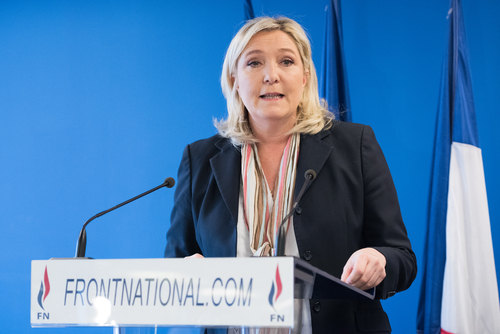
The latest polling continues to show that Marine Le Pen remains one of the strongest political forces in France. Depending on the matchup, candidates from the National Rally remain highly competitive and, in some surveys, lead potential rivals heading into the 2027 presidential election. Even many of Le Pen’s political opponents openly acknowledge that the nationalist movement is closer to power than at any point in modern French history.
Europe is entering a period where governments increasingly fear their own voters. As economic conditions deteriorate, energy costs rise, migration pressures intensify, and living standards decline, establishment parties are discovering that the public no longer automatically accepts the old political order. When that happens, the temptation becomes overwhelming to remove opponents through legal mechanisms rather than defeating them at the ballot box.
Marine Le Pen’s legal battle has now become one of the most important political stories in Europe. Prosecutors have asked French courts to uphold a five-year ban that could prevent her from running for president in 2027. If upheld, the ruling would effectively remove one of the country’s leading candidates from the race despite her continued strength in the polls.
The establishment insists this is merely the impartial application of law. Perhaps. Yet ordinary people look around Europe and see a different pattern emerging. They watched anti-establishment parties rise in Italy, Germany, Austria, the Netherlands, Romania, and France. They see courts, bureaucracies, intelligence agencies, and supranational institutions increasingly involved whenever those movements gain momentum. Whether one agrees with Le Pen or not is beside the point. The issue is confidence in the democratic process itself.
When voters believe a candidate is being removed administratively because they might win, confidence collapses further. Once people conclude elections are managed rather than decided, the political system enters a very dangerous phase. History is full of examples where governments attempted to preserve stability by limiting political competition. It rarely ends well.
France faces a July court decision that may determine whether Le Pen remains eligible to run. Even her political rivals are already adjusting their strategies based on the possibility that she could be excluded from the election entirely. Jordan Bardella is increasingly being positioned as a potential replacement candidate if the courts rule against her.
The broader trend is what concerns me. Across Europe, confidence in institutions continues to decline while support for populist and anti-establishment parties rises. The French establishment may succeed in preventing Marine Le Pen from running. What they cannot prevent is the underlying trend that created her support in the first place. Rising living costs, migration concerns, energy insecurity, sovereign debt burdens, and growing distrust of Brussels are not going away because a court issues a ruling.
The question facing France is becoming very simple. Will voters be allowed to decide the future of their country, or will that decision increasingly be made by institutions that claim to be acting in the name of democracy while simultaneously limiting the choices available to the electorate? That question extends far beyond France. It is becoming one of the defining political questions of our time.

