
Posted originally on Jul 31, 2026 by Martin Armstrong |

QUESTION #1: Why are you always against sanctions on Russia or Iran?
WH
QUESTION #2: Marty; you said the American people are more often than not anti-war. Was that limited to Vietnam?
Paul
ANSWER #1: Look, historically sanctions ALWAYS lead to war. Joe Biden imposed sanctions on Russia 10 months BEFORE the Ukraine-Russia War began. His administration was in the hands of the Neocons. FDR imposed sanctions on Japan BEFORE Pearl Harbor. There is no instance where sanctions were imposed that did not lead to military action.
The United States imposed sanctions on Cuba BEFORE the 1962 missile crisis. The sanctions began in 1960 under President Eisenhower, and the comprehensive embargo was enacted in February 1962, months before the crisis in October.
The U.S. established a partial trade embargo on Cuba in October 1960, which notably excluded food and medicine. Then in January 1961, the U.S. broke diplomatic relations with Cuba. This was followed by February 1962 when President John F. Kennedy ordered a complete commercial, economic, and financial embargo on Cuba. This embargo went into full effect on February 7, 1962. The comprehensive embargo in February 1962 was a significant escalation of existing measures. The missile crisis, which began in October when the U.S. discovered Soviet nuclear missiles in Cuba, occurred later in the year.
Look, I must deal with facts, not politics. The historical record shows that U.S. sanctions have NEVER achieved clear behavioral changes. Just look at the Cold War. Sanctions have typically failed to meet their primary political objectives in high-profile, long-standing disputes.
I cannot imagine that the Neocons who push for sanctions all the time, are that stupid to actually expect this will cause some mythical political objective. They have to understand that they always begin military objectives with economic war actions.
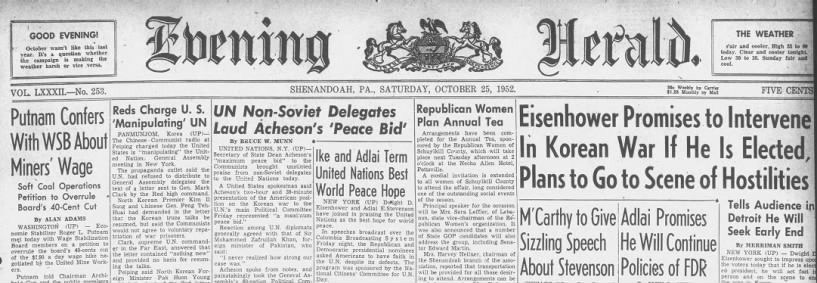
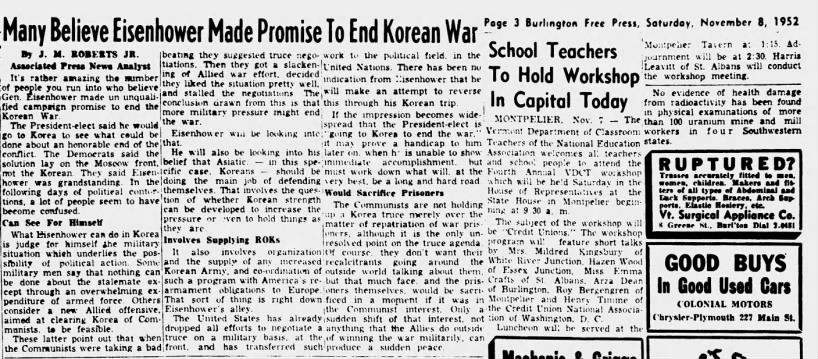
ANSWER #2: The Korean War is most likely beyond all of our memories. The 1952 U.S. presidential election was significantly about ending the Korean War. The conflict was a central and decisive issue that Dwight D. Eisenhower leveraged to win the presidency. For you see, the public’s frustration with what was a Neocon endless war was real before Vietnam. By 1952, the Korean War had become a bloody, costly stalemate, deeply unpopular with the American public as we are seeing now with Ira. The war had turned into what some called the “detestable Korean War” consuming the blood and lives of so many American youths. President Truman’s approval ratings plummeted, dropping as low as 23%, largely due to his perceived inability to resolve the conflict. Trump needs to look at history here.
Dwight D. Eisenhower, the Republican candidate, recognized the public’s discontent for this war and made ending the war a cornerstone of his campaign. He anchored his campaign on a pledge to quickly end the war if elected. This message was encapsulated in a powerful promise that resonated with voters.
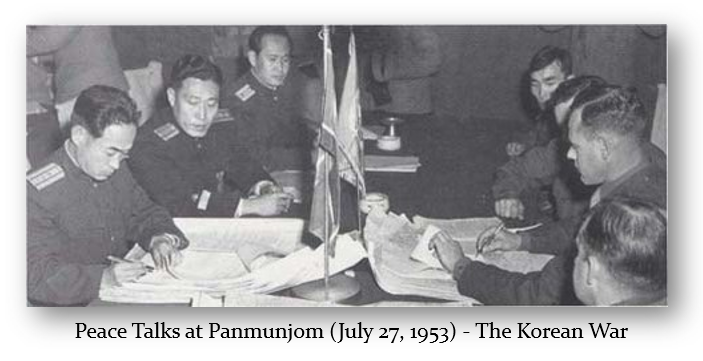
Eisenhower won the election in a landslide, and the Korean issue was a primary driver of his victory. Following his election, he followed through on his commitment. Upon taking office, Eisenhower used a mix of threats, including hinting at the use of nuclear weapons, to pressure China into agreeing to a cease-fire. The armistice talks, which had stalled, eventually made progress and led to the signing of the Korean Armistice Agreement in July 1953.
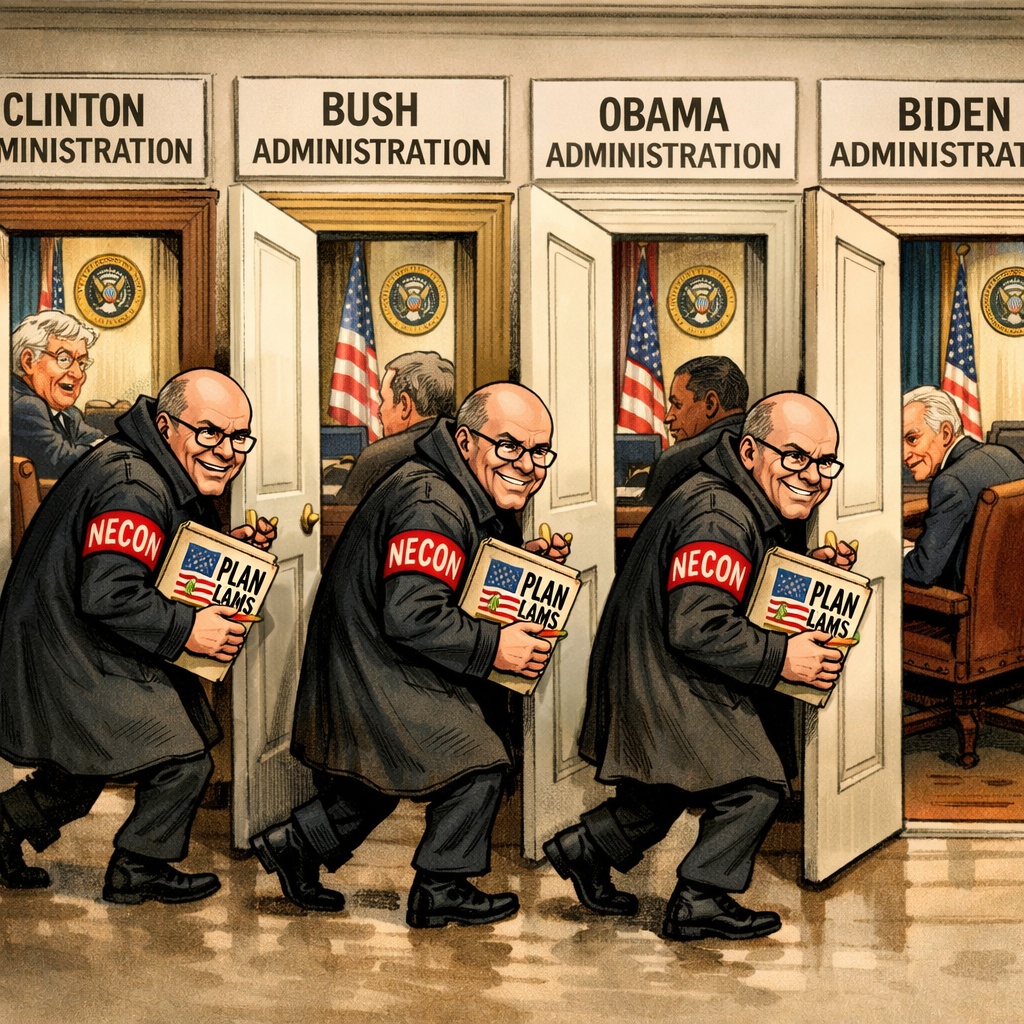
All I can say is that EVERY war that has NOT actually threatened the United States has been UNPOPULAR. The Neocons have their agenda. They infiltrate every administration seeking to usurp American foreign policy. This is a policy coup that unfolds every time.
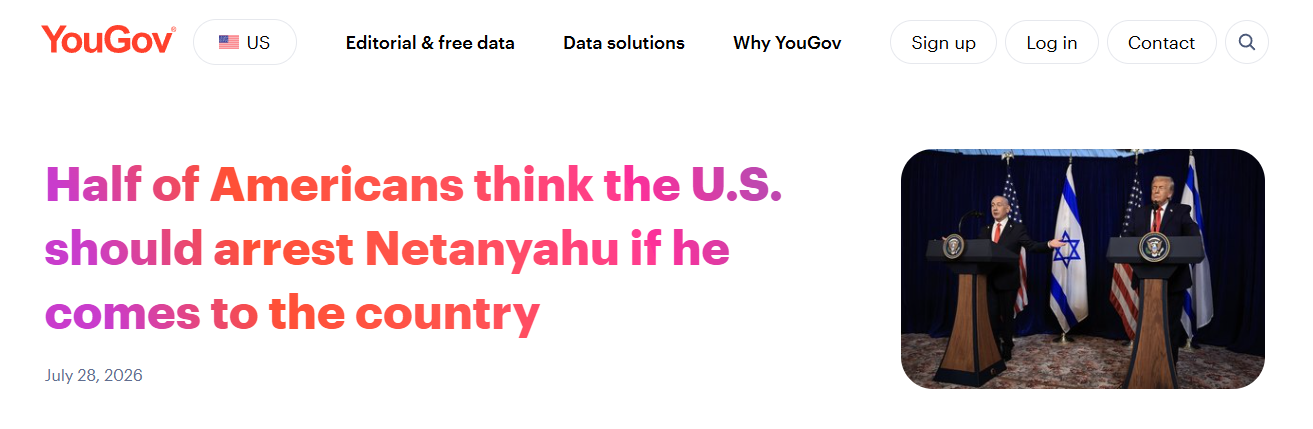
Israel’s influence in the United States is in crash mode all because Netanyahu has abused the relationship for his personal hatred of Iran. He has manage to sucker-in Trump, and now he is trapped in an unpopular war he cannot control Netanyahu.


