
Posted Originally on Sep 3, 2026 by Martin Armstrong |
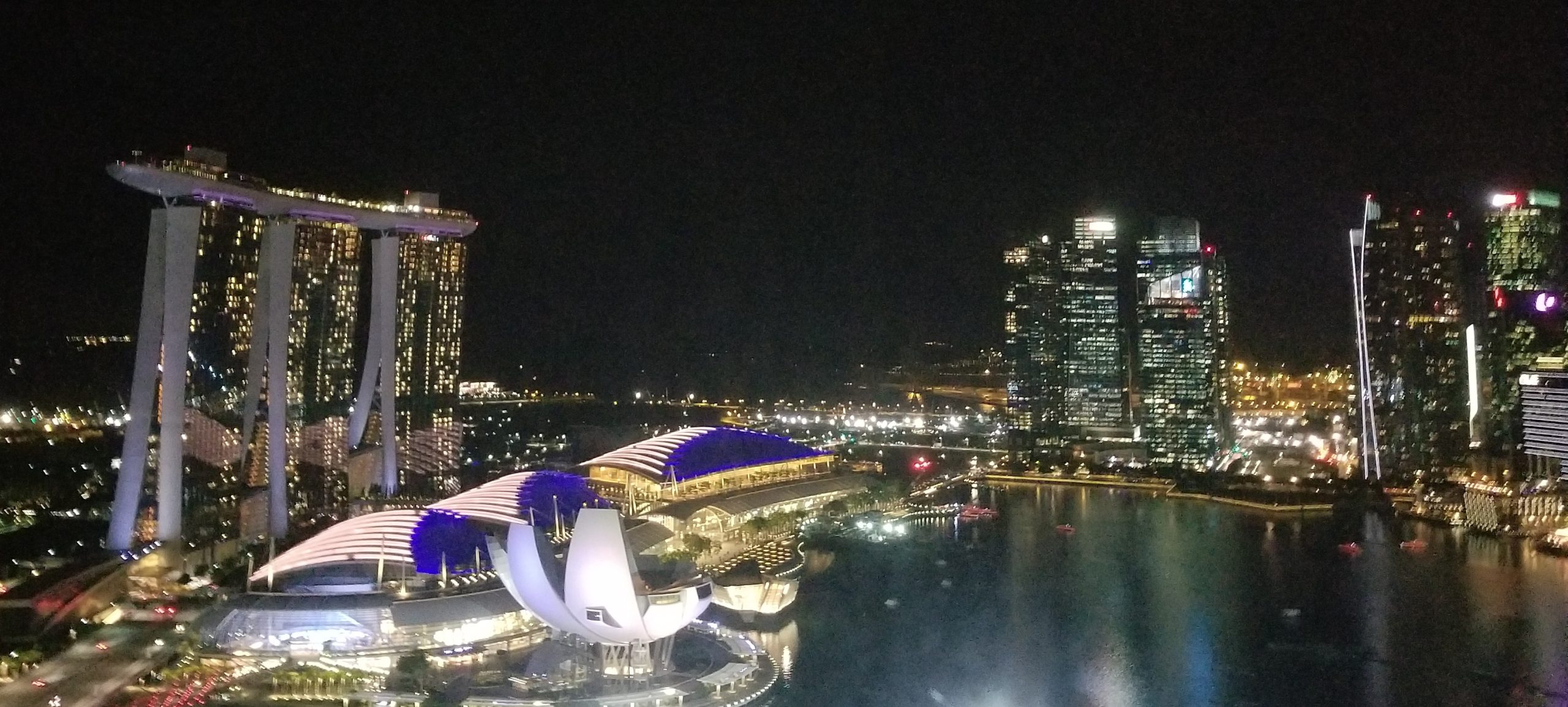
Singapore’s economy expanded 5.9% year-over-year during the second quarter of 2026 after growing 6.3% in the first quarter. That brought growth for the first half of the year to 6.1%, an extraordinary performance for an already-developed economy. The government has now raised its full-year growth forecast to between 4.5% and 5.5%, substantially higher than its previous projection of 2% to 4%. This is not India or Vietnam starting from a low economic base. Singapore is already one of the wealthiest countries in the world.
I wrote earlier this year that Singaporeans were feeling their economy grow in real time. The latest numbers continue to confirm what is taking place there. Singapore has become one of the primary beneficiaries of global economic and geopolitical fragmentation because capital does not care about political speeches. It moves where it believes it will be safe, where business can operate, and where there is confidence in the future. Singapore understood this while much of the West decided that successful businesses and wealthy individuals were simply another source of revenue to be taxed.
Manufacturing has been one of the driving forces behind this expansion. Singapore positioned itself directly in the path of the semiconductor and artificial intelligence investment boom while Europe was debating how many regulations it could impose on technology. Electronics, precision engineering, semiconductors, pharmaceuticals, financial services, logistics, and information technology have all helped support the expansion. Singapore does not possess vast natural resources. It became wealthy by understanding that human capital, financial stability, infrastructure, and confidence are resources in themselves.
This is also a capital flow story. Singapore has become a magnet for wealth leaving other jurisdictions. More than 2,000 single-family offices are now operating there, compared with only a few hundred several years ago. Chinese wealth seeking diversification, Asian entrepreneurs, multinational corporations, and Western investors looking for stability have increasingly viewed Singapore as a safe place to establish businesses and preserve capital. Money does not need a passport. Politicians can erect barriers, impose taxes, and condemn people for moving their wealth, but capital will always seek the environment where it is treated best.
This is precisely what Western governments fail to understand. Britain believes it can continually increase taxes on capital without consequences. Brussels believes corporations will simply absorb higher energy costs and endless regulation because politicians command them to do so. Canada has attacked investment while expanding government spending and debt. France believes wealthy citizens exist merely to finance government promises. Then politicians express shock when businesses, entrepreneurs, and capital begin looking elsewhere.
Singapore took the opposite approach. It created a financial center where international companies could operate efficiently, built world-class infrastructure, maintained one of the busiest ports on the planet, developed Changi into a major international aviation hub, invested heavily in education and technology, and cultivated an environment where corruption remained comparatively low. None of this happened accidentally.
Geography has certainly helped. Singapore sits directly on one of the most important trade routes in the world. Yet countless countries possess favorable geography and squander it through corruption and political incompetence. Singapore turned its location into an economic weapon. As tensions between China and the United States intensify, multinational companies increasingly need Asian headquarters that can operate between both worlds. Singapore is becoming that neutral ground.
This is why the current transformation of the world economy is so fascinating. India is expanding at 7.8%. Vietnam has been growing above 8%. Mexico is benefiting from nearshoring and its proximity to the United States. Singapore is attracting capital and high-value industries as investors seek stability. These countries are not identical and they are certainly not without problems, but capital is increasingly migrating toward regions that are still building rather than those desperately taxing their populations to maintain systems created generations ago.
Singapore still has serious challenges. Housing is extremely expensive, the cost of living is high, the population is aging, and the economy remains extraordinarily dependent on international trade. A severe collapse in global commerce would certainly affect Singapore. No economy operates independently of the global cycle.
Yet Singapore demonstrates an important principle that governments continually refuse to understand. You do not create prosperity by attacking those who produce it. You create an environment where capital wants to come voluntarily.
The global economy is not simply rising or falling together. We are watching a geographic redistribution of wealth, production, technology, and confidence. India is rising through demographics and industrialization. Vietnam is rising through manufacturing and foreign investment. Mexico is benefiting from the reorganization of North American supply chains. Singapore is rising because global uncertainty itself is pushing capital toward stability. That is why Singaporeans can feel the economy growing in real time.

