
Posted Originally on Sep 3, 2026 by Martin Armstrong |
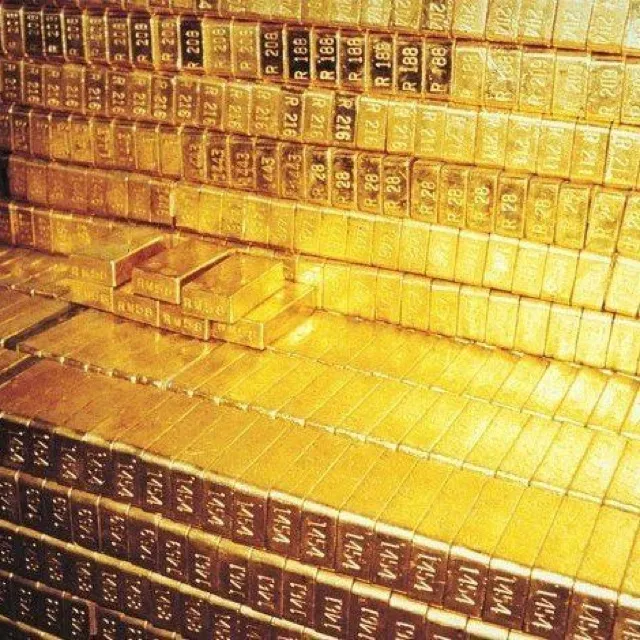
The Netherlands is moving a substantial portion of its gold reserves out of the United States and Canada and placing it in London. De Nederlandsche Bank will dress this up as an exercise in “tradability,” geographical diversification, and crisis preparedness, but central banks do not quietly rearrange billions of euros in physical gold because everything is stable. This is a geopolitical decision forced by the realization that the international financial system has been weaponized and that access to national reserves can no longer be taken for granted.
NOS reported that approximately 86 tonnes of Dutch gold were relocated between March and August 2026. The Netherlands holds 612.4 tonnes in total, valued at €72.2 billion at the end of 2025. Before this operation, 31.3% was held in New York, 19.7% in Ottawa, 18.1% in London, and 30.8% at the Dutch central bank’s cash center in Zeist. The new distribution places 32.1% in London, 30.8% in the Netherlands, and 18.5% each in New York and Ottawa.
The amount held in New York has therefore been reduced from roughly 192 tonnes to 113 tonnes. London’s share has increased from around 111 tonnes to approximately 197 tonnes. DNB has not reduced the overall gold reserve, but it has deliberately reduced its exposure to North America and made London its largest foreign storage location.
This was not simply a fleet of armored trucks carrying 86 tonnes across the Atlantic. DNB sold nearly 59 tonnes of gold held in New York and purchased an equivalent quantity in London that conforms to modern international trading standards. Another 27 tonnes were physically moved from the United States and Canada to the Netherlands, while an equivalent amount of internationally tradable gold was transferred from Zeist to London. They avoided having to melt and recast older bars, reduced transportation risk, and tested multiple methods for moving gold during a future crisis.
DNB openly stated that this experience could prove useful if gold must be moved again during another crisis and one of the available methods is no longer possible. Central banks do not conduct emergency drills without contemplating the emergency. They are preparing for a world in which a traditional transportation route could suddenly become unavailable.
DNB President Olaf Sleijpen said, “We assume that we will never have to use the gold, but it is nevertheless necessary to strengthen our resilience and preparedness.” The bank also described gold as the “ultimate anchor of trust” capable of covering extreme systemic risks. These are extraordinary admissions from the same class of central bankers who spent decades pretending gold was an outdated relic while they created money without restraint and drove sovereign debt beyond any possibility of repayment.
The official explanation is that gold held at the Bank of England is more immediately tradable because London remains the world’s largest over-the-counter bullion market. Gold stored there meets the international Good Delivery standards needed for rapid settlement, lending, swaps, and outright sale. London’s bullion market processes enormous volumes, and its clearing infrastructure reportedly handles around $160 billion in transactions each day. If DNB needs liquidity during a systemic crisis, London provides the fastest route from physical metal into usable funds.
That explanation is technically valid, but it does not answer why the Dutch suddenly decided that they needed 86 additional tonnes positioned for immediate crisis deployment. The decision is explicitly linked to “increasing geopolitical unrest.”
The West destroyed the neutrality of the reserve system when it froze Russia’s foreign-exchange reserves after the invasion of Ukraine and later developed mechanisms to redirect the earnings from those assets. Whatever one thinks of Russia or the war is irrelevant to the monetary consequences. The United States and Europe demonstrated that foreign reserves held in their jurisdictions are conditional assets. They belong to another nation only for as long as Washington, Brussels, or London recognizes that government and approves of its conduct.
Moving the gold to London does not eliminate geopolitical risk. Britain has already demonstrated that custody does not guarantee access. The Bank of England refused to release Venezuelan gold after the British government ceased recognizing Nicolás Maduro’s authority. Dutch officials may regard Britain as a friend today, but alliances change, governments fall, and foreign policy can reverse overnight. If the purpose is absolute protection against extreme systemic risk, the only unquestionable location is inside the Netherlands.
Nevertheless, the Dutch move exposes the broader trend. Governments are no longer preparing merely for fluctuations in exchange rates or ordinary banking stress. They are preparing for fractured payment networks, sanctions between former partners, capital controls, sovereign defaults, and a breakdown in the political trust supporting the postwar financial order.
Trust is vanishing because governments themselves destroyed it. Once money became a weapon of war, every nation was forced to ask whether its reserves could be used against it. The Dutch have now answered by placing more of their gold where they believe it can be mobilized quickly and, as some put it, held among friends. The troubling part is that nations only begin identifying their true friends when they expect the system to fracture.

