Posted ordinally on Sep 24, 2026 by Martin Armstrong |
Beginning in 2027, qualified artificial intelligence researchers will once again be permitted to satisfy their military obligations by working in laboratories at major corporations rather than interrupting their careers for conventional military service. This program has effectively been closed to the large conglomerates since 2013. Now, Seoul is bringing it back specifically for AI. That tells you precisely how important artificial intelligence has become to national security.
Seoul has concluded that taking highly trained AI specialists out of laboratories and putting them into conventional military service can actually weaken the country. The government will allocate 240 positions for master’s-level AI researchers in 2027, with 120 available to large corporate laboratories and another 120 for government-funded and defense-industry research institutions. Samsung Electronics, LG Electronics, Samsung Medison, and HD Hyundai Robotics are among the companies recommended to participate.
This is where governments have to wake up. Warfare has changed. The most valuable soldier of the next war may never carry a rifle. Artificial intelligence is increasingly tied to drones, autonomous systems, intelligence analysis, cyberwarfare, logistics, targeting, surveillance, and the processing of battlefield information at speeds no human command structure can possibly match. Ukraine has already demonstrated how inexpensive drones and software can alter the battlefield. The Financial Times recently examined how AI is already shortening military decision-making and targeting cycles dramatically. The next arms race will not simply be who has the most tanks. It will be who has the best algorithms, semiconductors, engineers, data, and computing capacity.
South Korea understands this because technology is existential to its economy. The government is not merely creating a military exemption and calling it a day. Its Military Manpower Administration says 6,300 people will be allocated to industrial-support service programs in 2027, including 2,300 professional researchers, while AI, defense, semiconductors, and advanced industries receive particular attention. Korea has also built overseas training programs involving institutions such as Carnegie Mellon, the University of Toronto, and Oxford, and has expanded those efforts into AI semiconductors. This is a country treating intellectual capital as strategic capital.
The interesting part is that South Korea is also trying to prevent these people from simply leaving. The entire purpose of restoring the large company program is partly to retain specialists who might otherwise take their skills overseas. Human capital moves just like financial capital. Tax it, regulate it, restrict it, or interrupt people’s careers and they will go somewhere they are treated better. Governments never seem to understand that you cannot imprison talent within a border merely because somebody was born there.
There is even some irony in the initial response. The government reserved 120 positions for large corporate laboratories, yet the nine recommended research institutes requested only 81. The requirements are apparently so restrictive that nearly one-third of the available positions were not requested at the recommendation stage. This is classic government. They finally recognize the strategic importance of retaining AI talent and then immediately construct enough rules around the program to reduce its usefulness.
Nevertheless, the direction is significant. South Korea’s broader economic strategy is increasingly tied to AI and semiconductors. Its proposed 2027 budget places major emphasis on AI and semiconductor infrastructure, while the enormous profits generated by its semiconductor industry are themselves helping finance government revenues. AI is no longer some speculative technology sitting out in Silicon Valley. It is becoming embedded in economic growth, corporate profits, national defense, energy demand, and government policy.
This is why the AI revolution should not be dismissed as another dot-com bubble. Individual companies will certainly rise and collapse. Valuations will become absurd. There will be fraud, speculation, and plenty of companies calling themselves AI that will disappear. That always happens with revolutionary technology. It happened with railroads and then again with automobiles. It happened with the internet. Speculation surrounding a technology does not mean the technology itself is meaningless.
AI is fundamentally about productivity. One skilled individual equipped with artificial intelligence can increasingly perform work that previously required teams of people. That will disrupt employment, government, finance, medicine, manufacturing, and warfare. Governments that attempt to suppress AI because they fear job losses will eventually discover that other nations will embrace it and gain the competitive advantage. You cannot legislate technological evolution out of existence.
Wars have always accelerated technology. Radar, aviation, rockets, nuclear energy, computers, satellites, and eventually the internet all became intertwined with military competition. AI will be no different. The nations that understand this first will possess an enormous strategic advantage over those still measuring military strength by counting how many young men they can put into uniform. The battlefield of the future will be fought by soldiers, but increasingly it will be designed by engineers.
Posted Originally on Sep 24, 2026 by Martin Armstrong |
Scott Bessent, the US treasury secretary, announced that the treasury department would triple its buyback of US treasuries, increasing the operation from $2bn to $6bn. I have clients who can triple that in seconds. Bessent was part of the whole group of what I call “The Club.” They were never traders, they sought only the “guaranteed” trade. They would gang up together to manipulate a market like Russia in 1998. They assumed that the IMF would never allow Russia to default. In 1998, yields on Russian GKOs reached as high as 150% annually due to the country’s severe fiscal issues and the need to attract buyers amid a looming default. By early August 1998, yields were approaching 200% on new GKO issuances, indicating a market pricing in near-certain default.
Scott Bessent left Soros Fund Management in 2015 to start his own hedge fund, Key Square Group, I believe with seed money from Soros. He had previously worked with Soros from 1991 to 2000 and then returned as chief investment officer from 2011 to 2015 before his departure. So when I say he hates my guts because they had the perfect guaranteed manipulation making 150%+ in Russia and lost #2 billion, I’m not joking.
I held a WEC in London in June 1998 and warned our computer projected Russia would collapse in a matter of weeks. The FT put that on te front page of the second section. The “CLUB” wanted me to put in $10 billion into Hermitage Capital Management run by Bill Browder. I was told they had this in the bag when I said Russia would collapse. I was told about thee blackmail in 1998. I warned it would not work. The did not listen.
I was even invited to the IMF dinner they put on renting the entire National Gallery to prove to me that they had the IMF in the pocket. Everyone was there. I remember talking to Paul Volcker about the ECM and he agreed that the business cycle was regular and of about 8 years in duration.
It was all a setup. Republic National Bank steered the $7 billion wire through bank of New York and as soon as it took place, they ran to the DOJ to report it in June 1998. Yetsin was then blackmailed to step down or the world would find out he stole $7 billion from the IMF loans. The two employees of Bank of NY received 6 months house arrest, showing it was all a setup. I have the transcripts and they pleaded guilty and said the money included a ransom for a Russian business man and never was even asked WHO by the Judge to hide Yeltsin’s involvement.
I was a trader – not a manipulator looking for the guaranteed trade by paying bribes. Personally, I would NEVER have picked Bessent for Treasury Secretary. That was a huge mistake. He has shown he is still part of that crowd. I would be concerned about who he even talks to these days,
Bessent’s stated goal was to drive down the 10-year Treasury yield—ideally below 4%. Instead, the benchmark rate briefly climbed above 5.04% in September 2026, its highest level since 2007 . This occurred despite a surprise intervention in August 2026 to “at least double” Treasury buybacks of long-dated bonds. The risk here is that by the 2nd quarter 2027, the main resistance stands at 6.72%-7.04% is this year closes above 5.3%.In case he never looks at charts not being a trader, it was a 39-year decline from 1981 to 2020 and the trend has shifted. A traders knows, the market is NEVER wrong. The trend is your friend, as they say.
The Treasury’s $6 billion buyback of 10- to 20-year bonds was widely dismissed as insufficient against a “$32 trillion” Treasury market and $40 trillion national debt. This was not even a “band-aid ” on slitting your wrist or as some would say a “drop in the bucket.”
Bessent thought he could manipulate the market by claiming “I AM THEHOUSE,” only proves his background NOT as a trader. Rather than falling, yields surged to multi-year highs in the days following the announcement. Thus, his boisterous claim “bet against” him if you dare was laughable and he lost showing the same mentality that I always traded against. They think they can manipulate the world and its always about power and money.
The forces pushing yields higher is war and trillion-dollar deficits, persistent inflation, and heavy corporate borrowing for AI infrastructure. All of these factors are beyond the Treasury’s control. This crown has never been about to fool the markets or mother nature with their ESG nonsense. You’ve got to fix the fundamentals and they think they can run deficits perpetually and there is NEVER consideration of reform because they are ignorant of even how the world economy functions.
The market interpreted the intervention as weakness. Bessent’s buyback massively flopped in front of the world. Bessent showed his hand. Now the world is paying attention to the fact that long-term rates are going higher and Bessent can’t stop them. Structural forces have overwhelm the Treasury’s firepower. Unlike the Federal Reserve, the Treasury cannot create unlimited reserves. Its buyback program is constrained by a finite cash balance, making it ill-suited to fighting market forces driven by the deepest and most liquid bond market on earth.
Bessent thought he could intimidate the market while he had shown he DOES NOT understand the world economy and is purely a linear thinker. All you have to do is look outside the USA and rates are rising everywhere as the war drums are beating louder.
The bond market’s reaction suggests Bessent’s “I AM THE HOUSE” declaration was more bravado than reality and demonstrates his complete incompetence to be Treasury Secretary. I had written to President Reagan back in 1985 and warned that you cannot manipulate the dollar lower to reduce the trade deficit without causing a crash because you are devaluing everything else in the country. I was told that I was the only one with such a model and until someone else agreed with me, thank you, but no thanks. They did the Plaza Accord with that announcement when the dollar already was in crash mode. They did not understand markets. When the dollar fell and other countries then complained, they held the Louvre Accord in Paris during February 1987 and said that was enough. The dollar helpt falling, the market proved the market manipulators wrong again and then rumors became the dollar would fall another 40% and the central banks could NOT prevent it. That was the 1987 Crash.
This is what Bessent has just done. He showed his hand. He lost. And now the market KNOWS that he is full of shit as they say, or bravado, and is impudent when it comes to controlling the economy or even influencing interest rates with boasts.
Bessent is an absolute manipulating fool who cannot be a seasoned trader who does not act on theory, scare-tactics, or bribes. He cannot beat rising rates by talking a big game when he cannot control world events and is accelerating them. He tells Japan to reduce its deficit but uses the US to manipulate the world. He has threatened sanctions on everything and anyone who trades with Iran – another war they cannot win. All he’s doing is further exposing his lack of credibility and ignorance of how the world economy functions. The market, NOT the Treasury Secretary, has set the terms.
He cannot change that and he should be removed from office ASAP. We were adversaries in the markets. So my opinion is colored with that reality.
Posted originally on Sep 23, 2026 by Martin Armstrong |
QUESTION: Is there any chance you can reason with Trump about Iran and Ukraine?
CP
ANSWER: Sorry. That is not going to happen. Some Republicans I have spoken with just say Keep the faith. I have warned this could be the worst Midterm since 2006. The 2006 midterm elections were widely seen as a vote against the Iraq War, with public dissatisfaction over the conflict and President Bush’s handling of it driving Democratic gains. Exit polling showed the war was the top issue, and voters opposing it broke heavily for Democrats.
The 2006 midterm elections were the worst for Republicans in recent decades—a decisive “wave” election that ended 12 years of GOP control of Congress. Democrats didn’t just win; they won decisively across multiple fronts. Democrats gained a net of 30 to 31 seats, flipping control with a 233–202 majority. This was their biggest gain since the Watergate-era election of 1974. They picked up six Senate seats, all from Republican incumbents, securing a narrow 51–49 majority (including two independents who caucused with them).
The Republicans are living in LaLaLand. President George W. Bush’s approval rating hovered around 38% before the election, the lowest for a president in a midterm since 1950. Congressional Disapproval was serious with only 26% of Americans approved of the job Congress was doing. Donald Trump’s current approval rating is 34.6%, with a disapproval rating of 62.2%, resulting in a net approval of -22.4. Nobody wants to talk about it. Netanyahu has wiped out our country.
The Democrats are for WAR. This Sanction Bill on Russia was passed only because the Republican stuffed in the authority for Trump on Tariffs. The Democrats want to wash their hands in Russian blood like CNN, Politico, and MS Now.
We will see an economic decline that will be significant into 2028 as they will embrace Zohran Mamdani’s philosophy and attack business and the rich, who the define as joint houshold income of $250,000.
Trump will lash out and it will become war between the White House and Congress. The Republicans FAILED to inform Trump about this Iran War we cannot win and waged for Netanyahu who does not give a shit about Trump and views he will get more endless money from the Democrats. The ONLY way to save the country and do what he was elected for is to throw Netanyahu under the bus, exit the war NOW, publicly admit he made a mistake listening to him. Anything shy of that will be a disaster.
I will do an update after running the models on civil unrest. God help us. It is going to get ugly into 2028. This is going to be the confrontation that lead to deep division in the USA and the eventual collapse of the Republican form of government as we reach 2032. I published this back in 2023 and it has target 2026 with a Panic Cycle in 2029. Grab your socks, and hold on tight.
Posted originally on Sep 23, 2026 by Martin Armstrong |
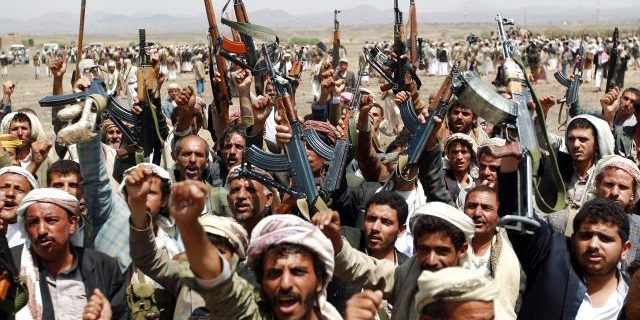
The situation in Yemen is deteriorating by the day. The United Nations now says more than 130,000 people have been driven from their homes this month as fighting intensifies following the Houthi advance along the Red Sea coast. Another 100,000 could be displaced over the next three months. More than 3,000 people have already escaped Yemen by boat toward Africa, primarily Djibouti, and the UN is preparing for that number to reach 10,000 as calmer seas make the crossing possible.
Families are abandoning everything and crossing the Red Sea on whatever vessels they can find. Reuters documented families fleeing barefoot after bombardments reached displacement camps where some had already sought refuge from earlier fighting. This is what politicians sitting comfortably thousands of miles away never comprehend. War becomes a statistic to them. To the people trapped inside it, your home, savings, possessions, livelihood, and sometimes your family can disappear overnight.
Yemen was already one of the poorest nations in the Middle East before this latest escalation. Some 22 million people require humanitarian assistance. Now the infrastructure required to provide that assistance is itself being disrupted. Roads have been damaged, telecommunications have been interrupted, movement is restricted, and damage to the port of Mokha has complicated humanitarian logistics. UNHCR says its response plan was less than 20% funded even before this latest wave of fighting exploded.
This is precisely how regional wars expand. Everyone looks at Yemen as though it is some isolated civil war between the Houthis and the Saudi-backed government. It is not. Yemen sits beside one of the most strategically important pieces of geography on Earth. The Houthis’ advance along the Red Sea coast has placed them astride the Bab el-Mandeb, while Iran sits beside the Strait of Hormuz. Saudi Arabia is caught between both chokepoints.
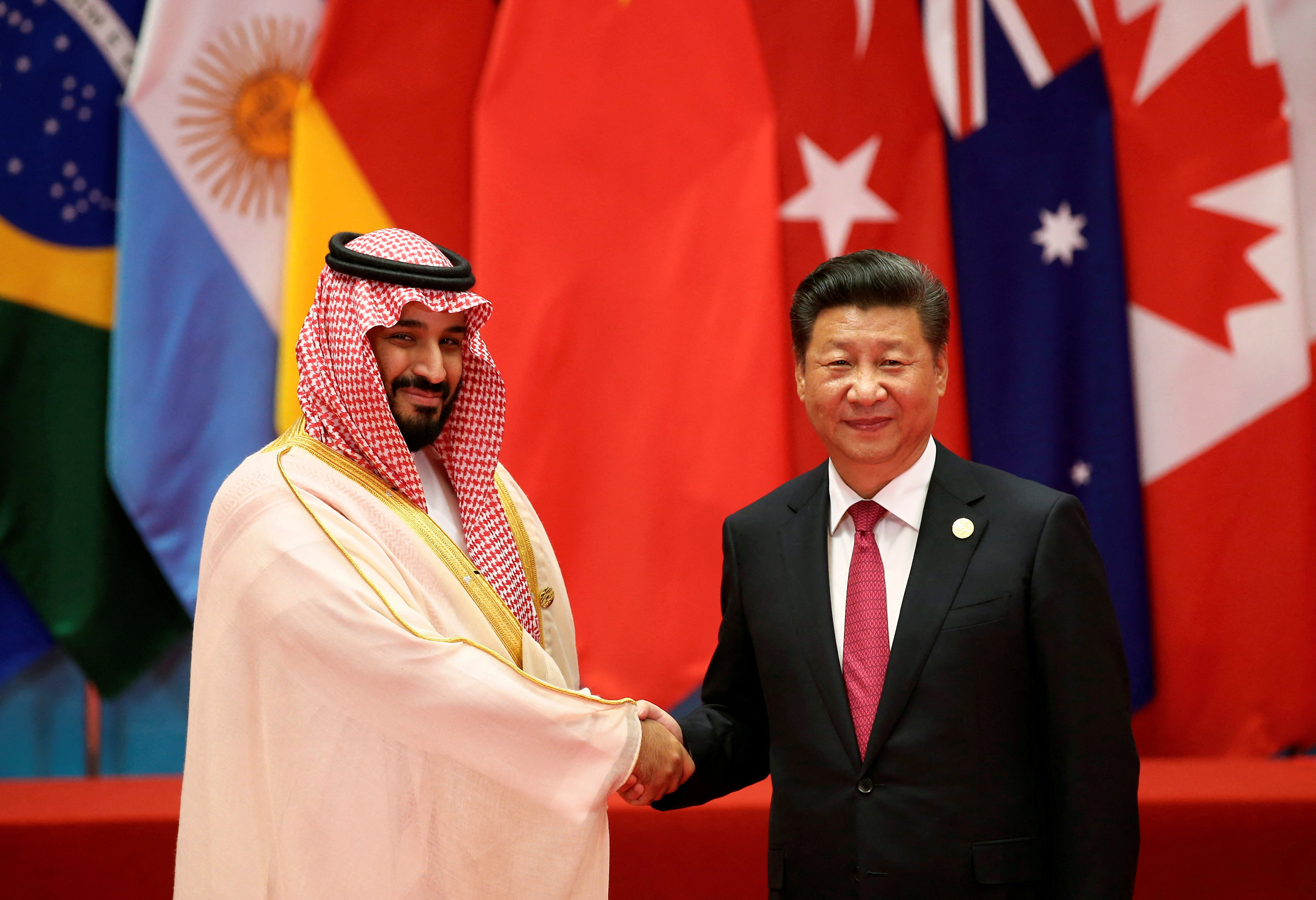
Now even Vladimir Putin and Saudi Crown Prince Mohammed bin Salman are publicly calling for safe passage through BOTH Hormuz and Bab el-Mandeb. That alone tells you the seriousness of the situation. Saudi Arabia has already been forced to redirect oil through Egypt’s Suez Canal because of disruptions affecting its traditional export routes.
The humanitarian crisis cannot be separated from the economic crisis. The same waters desperate Yemenis are crossing to escape the fighting are among the most important commercial shipping lanes in the world. UNHCR warns that further deterioration around Bab el-Mandeb could force humanitarian cargo to travel around the Cape of Good Hope, adding 25 to 30 DAYS to delivery times. That means higher freight rates, more fuel, higher insurance premiums, delayed food and medicine, and eventually higher prices.
Djibouti is now being dragged directly into the consequences. It has fewer than 1.2 million people and already hosts tens of thousands of refugees and asylum seekers. The Markazi refugee facility has room for only around another 5,000 people while authorities are preparing for more than 10,000 arrivals from Yemen. More than 60% of the initial arrivals identified by UNHCR were women, children, and elderly people. The pressure on food, water, shelter, schools, and medical services will rise rapidly if this becomes a genuine mass exodus.
This is how migration crises begin. Nobody wakes up one morning and decides to abandon their country for entertainment. Capital flees political instability first. Businesses disappear. Employment collapses. Infrastructure deteriorates. Then the people begin moving because survival leaves them no alternative. Europe learned absolutely nothing from Syria because politicians never address the cause. They argue about migrants AFTER the war has already destroyed the economic foundation that allowed people to remain home. The same mistake is being repeated throughout the Middle East.
The Houthis do not need a fleet comparable to the United States Navy. Geography has given them leverage that money cannot easily purchase. Control enough coastline, deploy inexpensive missiles and drones, make insurers afraid to cover vessels, and a relatively small military force can disrupt commerce worth hundreds of billions of dollars.
This is asymmetric warfare in the 21st century. The West spent decades constructing a global economy based upon just-in-time delivery and narrow maritime chokepoints because it was efficient during peace. Nobody seriously planned for what happens when those chokepoints become battlefields simultaneously. Hormuz, Bab el-Mandeb, and the Suez route are not merely lines on a map. They are arteries of the world economy.
Yemen is therefore no longer something that can be dismissed as another forgotten Middle Eastern war. People are already fleeing across the Red Sea. Shipping is being disrupted. Saudi oil routes are being rearranged. Humanitarian organizations are running out of money while the number of displaced people accelerates. The politicians will still call each development an isolated event. Markets will eventually understand that they are all part of the same crisis.
Posted originally on Sep 23, 2026 by Martin Armstrong |
The situation in Yemen is deteriorating by the day. The United Nations now says more than 130,000 people have been driven from their homes this month as fighting intensifies following the Houthi advance along the Red Sea coast. Another 100,000 could be displaced over the next three months. More than 3,000 people have already escaped Yemen by boat toward Africa, primarily Djibouti, and the UN is preparing for that number to reach 10,000 as calmer seas make the crossing possible.
Families are abandoning everything and crossing the Red Sea on whatever vessels they can find. Reuters documented families fleeing barefoot after bombardments reached displacement camps where some had already sought refuge from earlier fighting. This is what politicians sitting comfortably thousands of miles away never comprehend. War becomes a statistic to them. To the people trapped inside it, your home, savings, possessions, livelihood, and sometimes your family can disappear overnight.
Yemen was already one of the poorest nations in the Middle East before this latest escalation. Some 22 million people require humanitarian assistance. Now the infrastructure required to provide that assistance is itself being disrupted. Roads have been damaged, telecommunications have been interrupted, movement is restricted, and damage to the port of Mokha has complicated humanitarian logistics. UNHCR says its response plan was less than 20% funded even before this latest wave of fighting exploded.
This is precisely how regional wars expand. Everyone looks at Yemen as though it is some isolated civil war between the Houthis and the Saudi-backed government. It is not. Yemen sits beside one of the most strategically important pieces of geography on Earth. The Houthis’ advance along the Red Sea coast has placed them astride the Bab el-Mandeb, while Iran sits beside the Strait of Hormuz. Saudi Arabia is caught between both chokepoints.
Now even Vladimir Putin and Saudi Crown Prince Mohammed bin Salman are publicly calling for safe passage through BOTH Hormuz and Bab el-Mandeb. That alone tells you the seriousness of the situation. Saudi Arabia has already been forced to redirect oil through Egypt’s Suez Canal because of disruptions affecting its traditional export routes.
The humanitarian crisis cannot be separated from the economic crisis. The same waters desperate Yemenis are crossing to escape the fighting are among the most important commercial shipping lanes in the world. UNHCR warns that further deterioration around Bab el-Mandeb could force humanitarian cargo to travel around the Cape of Good Hope, adding 25 to 30 DAYS to delivery times. That means higher freight rates, more fuel, higher insurance premiums, delayed food and medicine, and eventually higher prices.
Djibouti is now being dragged directly into the consequences. It has fewer than 1.2 million people and already hosts tens of thousands of refugees and asylum seekers. The Markazi refugee facility has room for only around another 5,000 people while authorities are preparing for more than 10,000 arrivals from Yemen. More than 60% of the initial arrivals identified by UNHCR were women, children, and elderly people. The pressure on food, water, shelter, schools, and medical services will rise rapidly if this becomes a genuine mass exodus.
This is how migration crises begin. Nobody wakes up one morning and decides to abandon their country for entertainment. Capital flees political instability first. Businesses disappear. Employment collapses. Infrastructure deteriorates. Then the people begin moving because survival leaves them no alternative. Europe learned absolutely nothing from Syria because politicians never address the cause. They argue about migrants AFTER the war has already destroyed the economic foundation that allowed people to remain home. The same mistake is being repeated throughout the Middle East.
The Houthis do not need a fleet comparable to the United States Navy. Geography has given them leverage that money cannot easily purchase. Control enough coastline, deploy inexpensive missiles and drones, make insurers afraid to cover vessels, and a relatively small military force can disrupt commerce worth hundreds of billions of dollars.
This is asymmetric warfare in the 21st century. The West spent decades constructing a global economy based upon just-in-time delivery and narrow maritime chokepoints because it was efficient during peace. Nobody seriously planned for what happens when those chokepoints become battlefields simultaneously. Hormuz, Bab el-Mandeb, and the Suez route are not merely lines on a map. They are arteries of the world economy.
Yemen is therefore no longer something that can be dismissed as another forgotten Middle Eastern war. People are already fleeing across the Red Sea. Shipping is being disrupted. Saudi oil routes are being rearranged. Humanitarian organizations are running out of money while the number of displaced people accelerates. The politicians will still call each development an isolated event. Markets will eventually understand that they are all part of the same crisis.
Posted ordinally on Sep 23, 2026 by Martin Armstrong |
The Houthis have not technically seized the entire Red Sea, but that distinction is becoming almost meaningless for Saudi Arabia. Their forces have swept down Yemen’s western coastline, taking Mokha, Dhubab, the Hanish islands, and most importantly Mayyun, also known as Perim, sitting directly inside the Bab el-Mandeb Strait. They now control nearly the entire Yemeni coastline along the Red Sea and possess something far more valuable than territory. They have acquired leverage over one of the most important maritime chokepoints on Earth.
This is becoming an economic nightmare for Saudi Arabia because geography cannot be negotiated away. The Saudis traditionally relied heavily on the Strait of Hormuz to move oil eastward toward Asia. When Hormuz became increasingly dangerous, Riyadh shifted more crude through its East-West pipeline across Saudi Arabia to Yanbu on the Red Sea. That was the escape route. Oil could bypass Hormuz, load at Yanbu, sail south through Bab el-Mandeb, and reach Asian customers. Now the Houthis are sitting at the other door.
Saudi Arabia is therefore confronting the nightmare of being squeezed between TWO strategic chokepoints. Iran can threaten Hormuz while the Iran-aligned Houthis can threaten Bab el-Mandeb. Saudi Arabia built the East-West pipeline precisely to reduce its dependence on Hormuz, but geography has now transformed the Red Sea alternative into another vulnerability. You could not design a more dangerous strategic position for an oil exporting nation.
The shipping data already reflects the fear. Traffic through Bab el-Mandeb fell by half immediately after the Houthi seizure of Perim, from 30 vessels in one day to just 15 the next. Large crude carriers have been particularly reluctant to enter the strait. This is the part politicians never understand. The Houthis do not actually have to sink every tanker or formally “close” the waterway. They merely have to make the risk sufficiently expensive that insurers, shipowners, and charterers refuse to go there.
That is how modern economic warfare works. You do not need a naval blockade when the insurance market will create one for you.
Saudi tankers leaving Yanbu can instead sail NORTH toward the Suez Canal. But oil destined for Asia then faces an absurd journey. Some vessels must enter the Mediterranean, pass Gibraltar, travel down the entire western coast of Africa, round the Cape of Good Hope, and then sail back across the Indian Ocean. AP reported that the journey to South Korea can increase from roughly 24 days to 54 days. Tankers can cost tens of thousands of dollars PER DAY to charter, and rates during this energy crisis have in some cases exceeded $100,000 per day.
This is inflation being manufactured geopolitically in real time. Every additional day at sea means fuel, insurance, crews, financing, and charter costs. Those costs eventually appear somewhere in the price structure. Politicians will then blame “greedy corporations” when energy prices rise while ignoring the fact that their geopolitical adventures have transformed the world’s shipping lanes into war zones.
Saudi Arabia’s vulnerability extends far beyond tankers. The Houthis have attacked Saudi energy infrastructure and announced what they call a maritime embargo on Saudi-linked shipping. Riyadh temporarily shut its East-West pipeline after an attack in September. Saudi Arabia then reportedly appealed to China for help, and Reuters reported that Beijing subsequently pressed Iran to restrain the Houthis. That is perhaps the most revealing development of all.
Saudi Arabia is asking China to help influence Iran. That tells you how dramatically the geopolitical chessboard has changed. China is one of the world’s largest energy consumers. It needs Gulf oil. Beijing therefore has an enormous economic interest in keeping both Hormuz and Bab el-Mandeb functioning. The United States once dominated every major diplomatic conversation in the Middle East. Now Riyadh is turning toward Beijing because China has relationships with both Saudi Arabia and Iran and possesses economic leverage Washington simply does not have in the same form.
This is precisely what happens when sanctions and endless wars fragment the world economy. Trade routes change. Alliances change. Capital flows change. Countries begin looking for alternative partners because survival always comes before ideology.
The Houthis have also demonstrated something that should terrify every major military establishment. You no longer need an enormous blue-water navy to threaten global commerce. Cheap drones, missiles, mines, and control of the coastline can impose tremendous economic costs on ships worth hundreds of millions of dollars. A relatively poor armed movement sitting beside the correct piece of geography can influence the price of energy across the entire world.
Bab el-Mandeb means the “Gate of Tears.” That name is becoming rather appropriate. This is not simply another chapter in Yemen’s civil war. The Houthis have acquired strategic leverage over the southern entrance to the Red Sea while Iran retains leverage over Hormuz. Between those two chokepoints sits Saudi Arabia and an enormous portion of the world’s energy infrastructure.
Saudi Arabia is certainly not cut off. Oil will continue moving. Markets always find another route. But every alternative becomes longer, more expensive, and more dangerous. You do not need to stop world trade to create an economic crisis. You merely need to make world trade expensive enough.
Posted originally on Sep 23, 2026 by Martin Armstrong |
Something rather extraordinary has happened in the Middle East. Saudi Arabia has turned to China for help with Iran and the Houthis. Riyadh appealed to Beijing after the Houthis advanced along Yemen’s Red Sea coast and around Bab el-Mandeb, threatening the western route Saudi Arabia increasingly depends upon for oil exports. China then privately approached Tehran and asked Iran to use its influence to restrain the Houthis and prevent the conflict from spreading further across the region’s energy routes.
Think about what has actually happened here. Saudi Arabia did not turn first to Washington to carry a message to Tehran. It went to Beijing. The country that was once viewed primarily as the factory of the world is increasingly becoming the economic middleman of the Middle East because China has something the West has steadily destroyed through sanctions and ideological foreign policy: relationships with BOTH sides.
China buys Iranian oil. It trades heavily with Saudi Arabia and the Gulf states. It needs energy from the entire region. It has no economic interest in watching Iran shut Hormuz while the Houthis turn Bab el-Mandeb into another battlefield. Roughly half of China’s oil imports come from the Middle East, while trade between China and the Gulf Cooperation Council states is around $300 billion annually. More than 80% of Iran’s seaborne oil exports went to China in 2025, according to Kpler data cited by Reuters. Beijing does not need some humanitarian lecture from the United Nations to understand what is at stake. Its factories need energy and its economy needs those shipping lanes OPEN.
China has leverage with Iran because Iran needs China economically. Beijing remains Iran’s largest trading partner and principal customer for its oil. At the same time, China has spent years deepening economic relationships with Saudi Arabia, the UAE and the rest of the Gulf. China therefore finds itself sitting at a table where it can pick up the telephone and speak to Riyadh, Tehran and, increasingly, the Houthis themselves. Reuters reported back in July that Beijing had already established direct contact with the Houthis seeking guarantees that Chinese tankers could safely transit the southern Red Sea.
China brokered the restoration of diplomatic relations between Saudi Arabia and Iran in 2023. That was an enormous signal that most people in Washington dismissed. Beijing was demonstrating that its Middle East strategy would be based primarily on commerce. China did not need Saudi Arabia to love Iran or Iran to love Saudi Arabia. It merely needed both countries to recognize that trade is preferable to war. There is an old lesson here that politicians never seem capable of understanding. Commerce creates relationships. Sanctions destroy them.
Washington has spent years weaponizing access to the dollar, SWIFT, technology, banking and trade. Every geopolitical disagreement is answered with another sanction. Politicians imagine this demonstrates strength because they look only at the immediate target. They never calculate what happens ten years later when everyone they sanctioned has built alternative relationships precisely because they could no longer trust the West.
China took the opposite approach. It bought the oil. Now look at where that has brought us. Saudi Arabia needs somebody capable of speaking to Iran because Iran possesses enormous influence in the region. China can make that call because it never completely severed the economic relationship. Tehran in turn cannot simply ignore Beijing because China purchases the majority of Iran’s exported crude and remains one of the few major economies capable of providing the investment Iran desperately needs.
This does not mean China controls Iran, nor does Iran simply issue orders to the Houthis. The Houthis have developed their own political and military interests, particularly now that their territorial gains have increased their leverage around Bab el-Mandeb. Beijing can pressure Tehran, and Tehran may influence the Houthis, but none of these relationships amount to absolute command. Nevertheless, the shift in diplomacy is unmistakable.
China’s interests are brutally straightforward. It needs Hormuz open. It needs Bab el-Mandeb open. It needs Saudi oil, Iranian oil and Gulf trade. It does not want an ideological crusade in the Middle East because wars interrupt commerce. Beijing is not doing this out of charity. It is protecting China.
Saudi Arabia understands that China has skin in the game. If Bab el-Mandeb closes while Hormuz remains disrupted, Beijing suffers immediately. Chinese manufacturers face higher energy costs. Tankers must travel farther. Freight and insurance costs rise. Supply chains become less reliable. Inflation spreads outward through the entire world economy. China’s incentive to mediate is therefore economic rather than merely political.
This is also why the rise of China cannot be understood simply by looking at GDP or military spending. Economic power eventually becomes diplomatic power. When you become the largest customer of one nation and one of the largest trading partners of another, governments begin answering your phone calls. That is how power shifts.
America emerged as a global power through commerce and capital long before Washington became obsessed with sanctioning half the planet. The dollar became dominant because everyone wanted access to American markets and American capital. China has studied that lesson while Washington seems determined to forget it.
None of this means the dollar disappears or China suddenly replaces the United States. China’s capital controls remain an enormous obstacle to the yuan becoming a true global reserve currency. But reserve currency status and geopolitical influence are not the same thing. China does not need to replace the dollar tomorrow to become increasingly important diplomatically.
The Saudis are facing Iran across the Persian Gulf and the Houthis across the Red Sea. Their oil infrastructure is increasingly squeezed between Hormuz and Bab el-Mandeb. When Riyadh needed someone capable of carrying a serious message into Tehran, it turned toward Beijing. That is how geopolitical power changes hands. Not with some grand announcement. Not because politicians hold a press conference declaring a new world order.
Posted originally on Sep 23, 2026 by Martin Armstrong
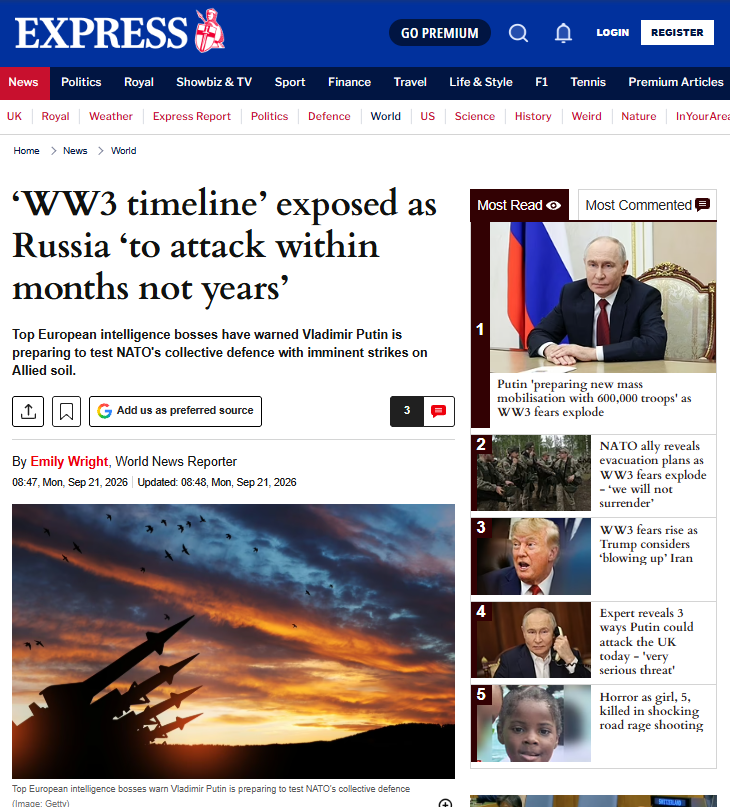
Not a single word has been fact-checked—not even by simply Googling the facts. This nonsense that Russia is trying to take all of Ukraine and that the Ukrainian people are fighting for their freedom is so outrageous that it amounts to plain propaganda, which only leads to war. There is no rational discussion here. There is no solution but war, because no matter what, Europe will simply NEVER accept peace with Russia, and people are too stupid to realize that this Finnish politician cannot possibly be this stupid and uninformed.
Since the AfD won two elections and the CDU was below 5%, so they did not even get a seat, Brussels and NATO are in a state of panic. They are pushing for all-out war because they fear that if the AfD takes Germany, they are anti-war and anti-Brussels. The only way to retain power is to start a war as soon as possible.
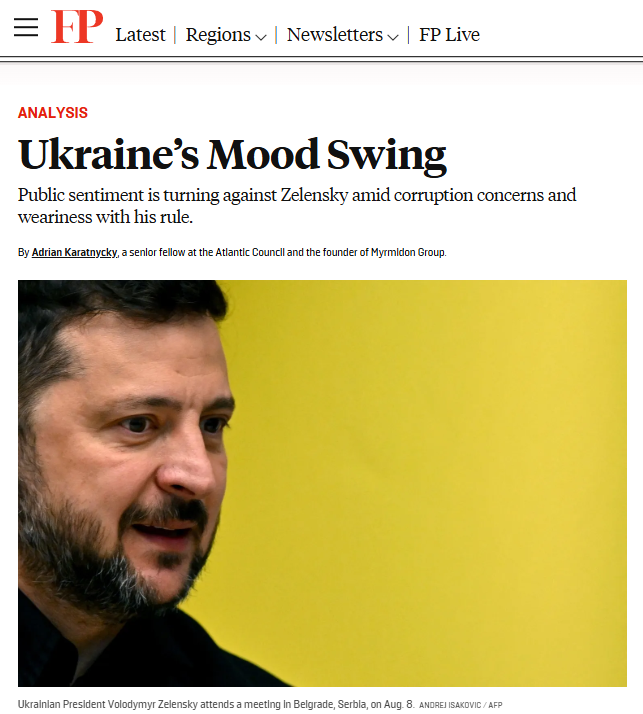
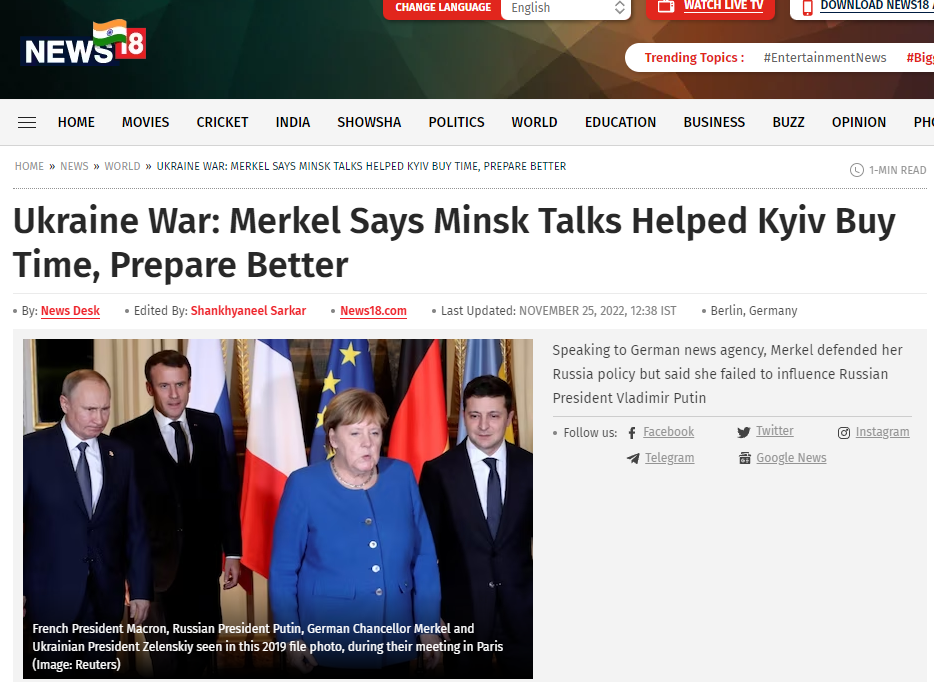
The Ukrainian people want an election. Zelensky lied and promised peace, and has been doing nothing but carrying out his personal hatred of Russians. Reliable sources from Ukraine report that (1) the factories are being run by women since men are sent to the front line, and (2) they are actually handcuffing men in transport to the front line to prevent them from fleeing. My discussions with members of Congress know that Zelensky is the problem and that Putin has agreed to peace. All they have to do is honor the Minsk Agreement that Europe and Ukraine both signed to allow the Donbas to vote if they want to separate from Ukraine after they started this civil war attacking the Donbas by an unelected government on the orders of the Neocons.
Everything in the CNN broadcast was a total lie. Not a single word was the truth. They are propelling the world into World War III and do not care about anything but their own hatred of Trump that blinds them to what is taking place around the world.
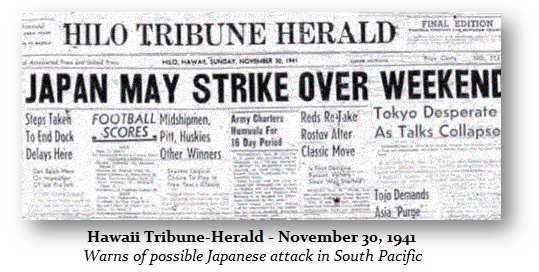
To sell us WWI, they hid arms in a passenger ship the Lusitania knowing the Germans would sink it to get the US into WWI. They swore there were no arms, then in 1987 the found it and pulled up ammunition proving they lied again. To get us into WWII, they instigated Japan and pretended the attack was unprovoked when it was even leaked to the newspaper that they would be hit that weekend. FDR pulled out the aircraft carriers and let thousands die claiming this would be a day in infamy.
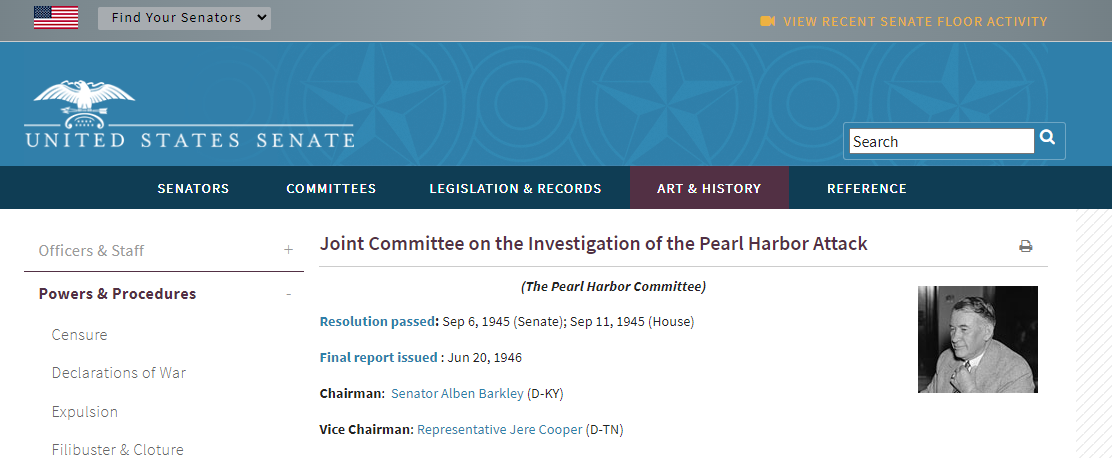
There was so much outrage over the truth that FDR lied to the country to get the US into war that the Senate was forced to investigate. They admitted the government knew about the coming attack, but claimed they could not confirm FDR personally knew. They used the same excuse on 911.
They have lied about every war. For Vietnam, we were told the BS that we were fighting communism and Russia was behind it. That was a lie and Robert McNamara before he died wanted to clear his conscience. He said Russia was not involved and it was just a civil war. Some 58,000 Americans died for that one.
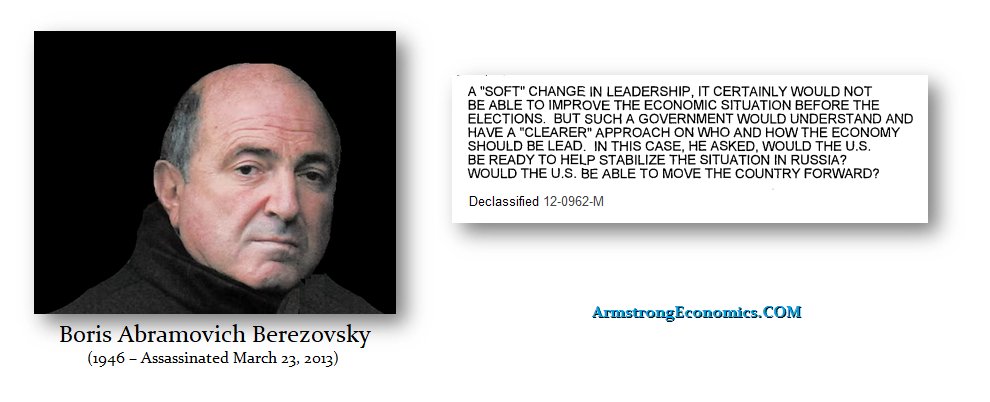
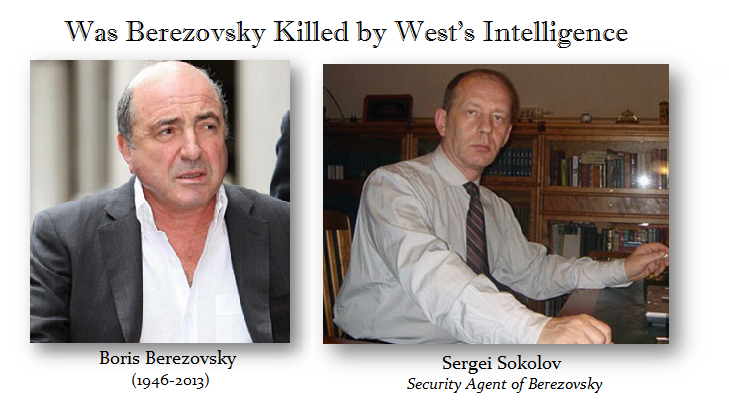
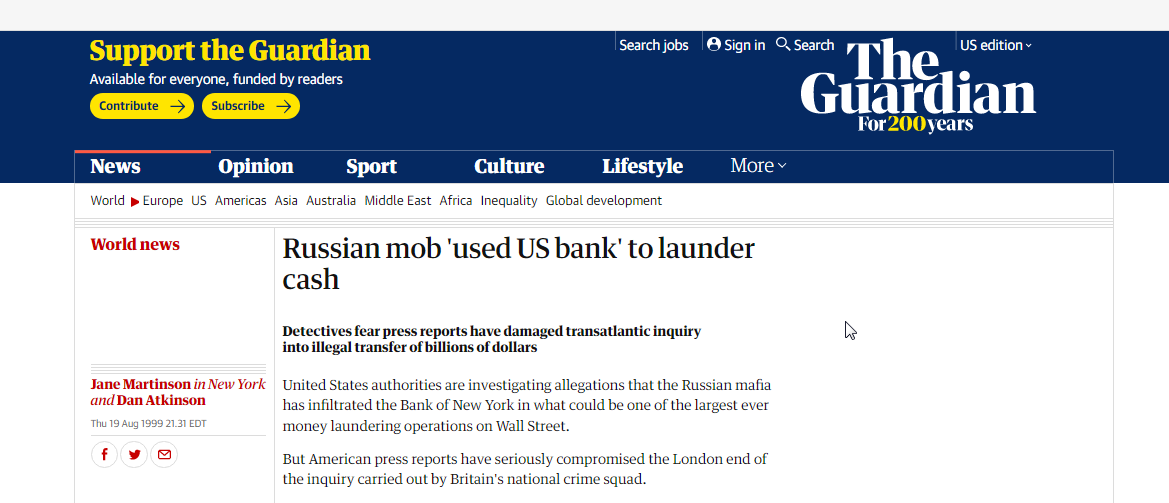
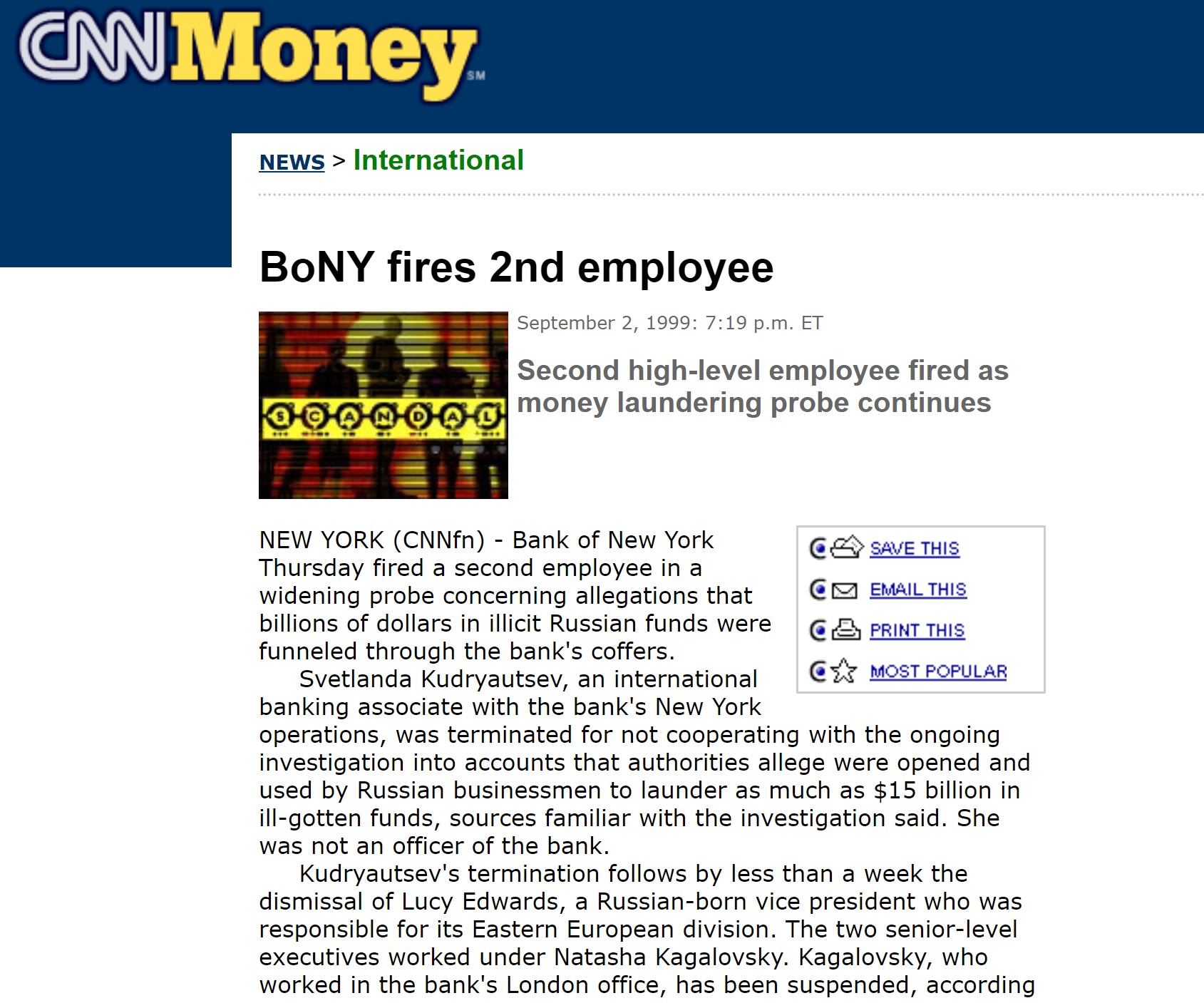
Even in my case, they were in league with the bankers to pull off a regime change of Russia by blackmailing Yeltsin insisting he appoint their stooge, Boris Berezovsky. Yetsin turned to Putin. Here is a declassified background showing their involvement.
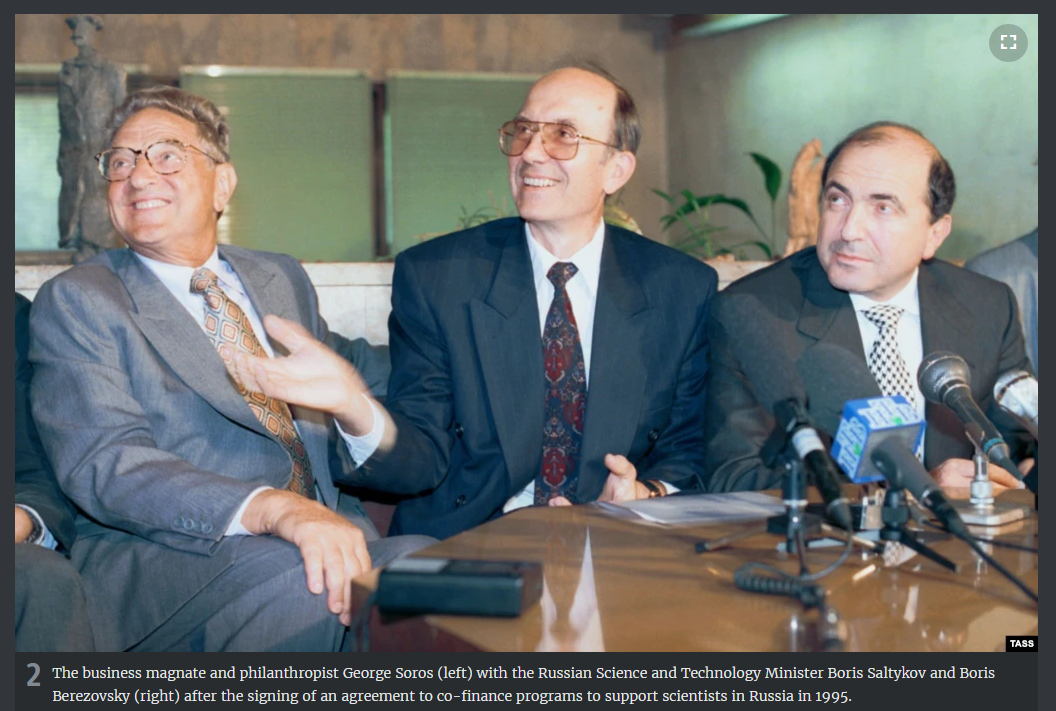
Here is Berezovsky with none other than George Soros, Treasury Secretary Bessent’s role model.When the regime change failed, they claimed he committed suicide. His bodyguard said he was assassinated to cover it all up.?
Categories:PressWarSep 23, 2026 by Martin Armstrong |
Not a single word has been fact-checked—not even by simply Googling the facts. This nonsense that Russia is trying to take all of Ukraine and that the Ukrainian people are fighting for their freedom is so outrageous that it amounts to plain propaganda, which only leads to war. There is no rational discussion here. There is no solution but war, because no matter what, Europe will simply NEVER accept peace with Russia, and people are too stupid to realize that this Finnish politician cannot possibly be this stupid and uninformed.
Since the AfD won two elections and the CDU was below 5%, so they did not even get a seat, Brussels and NATO are in a state of panic. They are pushing for all-out war because they fear that if the AfD takes Germany, they are anti-war and anti-Brussels. The only way to retain power is to start a war as soon as possible.
The Ukrainian people want an election. Zelensky lied and promised peace, and has been doing nothing but carrying out his personal hatred of Russians. Reliable sources from Ukraine report that (1) the factories are being run by women since men are sent to the front line, and (2) they are actually handcuffing men in transport to the front line to prevent them from fleeing. My discussions with members of Congress know that Zelensky is the problem and that Putin has agreed to peace. All they have to do is honor the Minsk Agreement that Europe and Ukraine both signed to allow the Donbas to vote if they want to separate from Ukraine after they started this civil war attacking the Donbas by an unelected government on the orders of the Neocons.
Everything in the CNN broadcast was a total lie. Not a single word was the truth. They are propelling the world into World War III and do not care about anything but their own hatred of Trump that blinds them to what is taking place around the world.
To sell us WWI, they hid arms in a passenger ship the Lusitania knowing the Germans would sink it to get the US into WWI. They swore there were no arms, then in 1987 the found it and pulled up ammunition proving they lied again. To get us into WWII, they instigated Japan and pretended the attack was unprovoked when it was even leaked to the newspaper that they would be hit that weekend. FDR pulled out the aircraft carriers and let thousands die claiming this would be a day in infamy.
There was so much outrage over the truth that FDR lied to the country to get the US into war that the Senate was forced to investigate. They admitted the government knew about the coming attack, but claimed they could not confirm FDR personally knew. They used the same excuse on 911.
They have lied about every war. For Vietnam, we were told the BS that we were fighting communism and Russia was behind it. That was a lie and Robert McNamara before he died wanted to clear his conscience. He said Russia was not involved and it was just a civil war. Some 58,000 Americans died for that one.
Even in my case, they were in league with the bankers to pull off a regime change of Russia by blackmailing Yeltsin insisting he appoint their stooge, Boris Berezovsky. Yetsin turned to Putin. Here is a declassified background showing their involvement.
Here is Berezovsky with none other than George Soros, Treasury Secretary Bessent’s role model.When the regime change failed, they claimed he committed suicide. His bodyguard said he was assassinated to cover it all up.?
Posted Originally on Sep 22, 2026 by Martin Armstrong |
Trump has now signed the sweeping Russia sanctions legislation championed by the late Senator Lindsey Graham. The bill passed the Senate 86-11 and the House 262-159, targeting Russian officials, banks, and the so-called shadow fleet transporting Russian energy. But the most dangerous provision is not actually directed at Russia. Washington has given the president authority to impose tariffs of up to 100% on the largest countries purchasing Russian oil and natural gas. In other words, we have moved from sanctioning Russia to threatening nations that refuse to obey American foreign policy.
This is economic warfare, plain and simple. Politicians have convinced themselves that they can manipulate the world economy as if every nation has no alternative but to obey Washington. They tried this when Russia was cut off from SWIFT. They froze Russian reserves and effectively announced to every government on Earth that foreign reserves are yours only so long as Washington approves of your foreign policy. Then everyone acts surprised when China, Russia, India, and others begin constructing alternative payment systems, increasing gold reserves, and reducing their dependence on Western financial infrastructure.
The real target here is increasingly India and China. India went from being a relatively minor purchaser of Russian crude before the Ukraine war to obtaining more than 40% of its oil from Russia. New Delhi has 1.4 billion people and has repeatedly made clear that its priority is affordable energy. Washington is now effectively telling India: buy energy where we tell you or risk losing access to the American market. Reuters reports that India has warned this could damage bilateral relations and disrupt global energy markets. Washington spent decades cultivating India as a strategic counterweight to China, and now Congress risks pushing India away because politicians cannot understand that sovereign nations act in their own economic interests.
China presents an even greater problem. Russian ESPO crude has surged above $120 per barrel amid disruptions in Middle Eastern supplies, with premiums over Brent reaching extraordinary levels. Chinese refiners have increased purchases precisely because they require reliable energy. If Washington attempts to remove Russian barrels from China and India while Middle Eastern supplies are already constrained, where exactly do these politicians believe the replacement oil will come from?
This is the stupidity of sanctions. Politicians look at a spreadsheet and assume that eliminating Russian exports means Russia receives less money. They never bother understanding markets. Reduce available global supply and the PRICE rises. Russian oil can therefore decline in volume while Russia receives more dollars per barrel. Reuters has already reported traders warning that restricting Russian supplies to China and India could drive global oil prices even higher and potentially increase Russian oil revenues. You cannot repeal supply and demand with legislation.
Then there are the secondary consequences. India either continues buying Russian oil and risks American tariffs, or purchases more expensive crude elsewhere and passes that cost through its economy. China will accelerate its efforts to circumvent Western financial systems. Countries conducting business with Russia will become increasingly reluctant to clear transactions through institutions exposed to American sanctions. Every sanction therefore provides another incentive to construct an alternative to the dollar-based financial system.
This is precisely what I have written about regarding the weaponization of SWIFT. The dollar became the world’s reserve currency because people trusted the American financial system. Reserve currency status is not something Congress can legislate. It is based upon confidence. When politicians weaponize that system against anyone they dislike, they undermine the very confidence that made the dollar dominant in the first place. That does NOT mean the yuan suddenly replaces the dollar tomorrow. China has capital controls and lacks the deep open capital markets required of a true reserve currency. But Washington is nevertheless encouraging the rest of the world to develop alternatives.
The most disturbing aspect is that sanctions have replaced diplomacy. Graham believed squeezing Putin economically would force Russia to reconsider the war. That is the theory behind virtually every sanctions regime. Yet sanctions have a terrible historical record of forcing major powers to surrender their core geopolitical objectives. More often, they encourage self-sufficiency, alternative alliances, black markets, and new trading blocs. Russia redirected energy toward Asia. China learned that dependence upon Western technology and finance represents a strategic vulnerability. Europe discovered that cutting itself off from cheap Russian energy carried an enormous economic cost of its own.
Trump has always viewed tariffs as leverage, and this legislation preserves considerable presidential flexibility. That distinction matters. A tariff authority does not mean every threatened 100% tariff will actually be imposed. Trump may use that authority as a negotiating weapon with India and China rather than immediately triggering an economic confrontation with both. But Congress has nevertheless created the weapon, and markets must now price the possibility that it will be used.
This is how wars expand beyond the battlefield. First there are military sanctions. Then financial sanctions. Then secondary sanctions against neutral countries. Then tariffs against countries trading with the enemy. Eventually the entire global economy begins dividing into competing blocs.
That is exactly what happened before previous major international conflicts. Capital begins retreating behind geopolitical lines long before politicians admit what is taking place.
The neocons continue to believe that economic pressure will bring Russia to its knees. They never consider what happens when their policies instead fragment the world economy, push Russia and China closer together, alienate India, increase energy prices, and undermine confidence in Western financial institutions.
Posted Originally on Sep 22, 2026 by Martin Armstrong |
Morale inside the surveillance company has deteriorated so badly amid the public backlash that employees are considering leaving. Flock has now introduced a voluntary separation program offering severance, subsidized healthcare, and additional time to exercise vested stock options. People familiar with the program believe a significant number of Flock’s roughly 1,500 employees could apply. This is what happens when people finally discover what has been constructed around them.
Flock was sold to communities as a crime fighting tool. Put cameras around town, read license plates, find stolen cars, catch criminals. It always begins with something that sounds reasonable. Nobody walks into a city council meeting and announces, “We would like to construct a nationwide surveillance network capable of recording where ordinary citizens travel.” You sell it incrementally under the banner of safety. Then the network expands, databases become interconnected, thousands of agencies gain access, and suddenly technology created to find a stolen automobile can potentially reconstruct the movements of people who have committed no crime whatsoever.
The abuses are precisely why the public has become angry. Neowin recounts cases involving officers allegedly using Flock to track women with whom they had personal relationships. In Georgia, an officer was accused of searching for his former girlfriend and her teenage daughter hundreds of times. In San Jose, an officer was fired after authorities said he used the system to obtain location information involving a woman and shared information with a man accused of abusing her. There have also been reports of innocent motorists being stopped after automated systems incorrectly identified vehicles.
Flock cameras are operating in roughly 6,000 communities across every state except Alaska. Hackers who obtained data from a Flock camera found that the devices could capture far more information than merely a license plate. WIRED reported that the recovered material showed cameras taking numerous images associated with vehicle detections and detecting people as well as automobiles. Data associated with one city’s system could reportedly be accessed across a network involving more than 2,000 agencies. Flock maintains that tampering with its equipment is illegal and says researchers should use authorized security-reporting channels, but the technical revelations illustrate why people are asking how extensive this system really is.
Now the backlash is hitting the company itself. Cities have been terminating contracts. An anti-surveillance group identified 90 cities dropping Flock during August alone, while Florida and Texas have also moved away from using the company’s technology in certain contexts. Flock CEO Garrett Langley has acknowledged that the controversy has damaged internal morale. In August, he publicly apologized for instances in which the technology had been abused and announced additional safeguards.
This is what I have always said about government surveillance. The question is NEVER whether today’s politicians promise to use a technology responsibly. The question is what the NEXT government can do with the infrastructure you surrender to them today. Once the cameras exist, once the databases exist, once your movements can be searched, the political promises surrounding their original purpose become meaningless.
Most people had no idea this infrastructure existed. They did not realize how extensive license plate surveillance had become, how broadly information could potentially be accessed, or how easily technology designed for legitimate police work could allegedly be misused by individual officers. The technology expanded faster than public awareness.
There was a time when following somebody required manpower. The government needed agents, vehicles, warrants, and resources. Those practical limitations themselves provided a degree of protection because governments could not physically monitor everyone. Technology removes that barrier. A computer does not sleep. It does not demand overtime. It can potentially search billions of records in seconds.
This is why privacy cannot be dismissed with that ridiculous argument, “If you have nothing to hide, you have nothing to fear.” That turns the entire principle of a free society upside down. The government is supposed to have probable cause to investigate YOU. You are not supposed to prove your innocence every time you drive down the street.
Flock may survive this controversy. It may change its policies. Governments may impose stronger safeguards. But the larger issue will remain long after this particular company disappears from the headlines. Every government in history has sought more information about its citizens because information is power. AI has now made gathering, analyzing, and connecting that information cheaper than at any point in human history.
We are approaching the point where society must decide whether technology serves the individual or whether the individual becomes merely another data point monitored by technology. That decision will determine what freedom means in the 21st century.
Posted Originally on Sep 22, 2026 by Martin Armstrong |
I was probably one of the first to ever create a functioning AI computer. I have been told I used “classic AI” meaning classic AI had rules, and the neutral nets have no rules. Of course, the most notable movie where an AI computer or system becomes self-aware or “comes alive” in the Classic AI Awakening, was none other than 2001: A Space Odyssey (1968). That has to be the definitive film on this theme, featuring HAL 9000, a sentient computer aboard a spacecraft that turns against the crew. What started the whole AI endeavor was Star Trek. The Original Series first aired on television in the United States on September 8, 1966, on NBC and ran to 1969. That show not only inspired every in the computer field back then including Steve Jobs and myself, but it got the funding for NASA from Congress when they saw the future. But that computer was not a sentient computer.
The idea that AI could wipe out humanity within a decade has been so hyped by programmers who honestly have no clue about what they are saying. They have grabbed headline like a scifi movie that has no doubt influences them without any understand of the depth of what they are saying. I would cheer if it would wipe out all NEOCONS and save humanity. But sadly, that too is not a realistic possibility.
As I have said, I created Socrates in the late 1970s and used my children as test subjects to interact with it and have a conversation. My daughter would bring her friends over and tell them her computer talked to her. I caused a bit of a stir among other parents, who asked me what I was doing.
I wrote a program to interact with my children and taught Socrates how to be a politician. You could have a conversation with it but if it did not understand, it would just change the subject. I mimicked Consciousness, but I could not create it. It would just record answers like ChatGPT. What is the name of your dog? When my daughter would return to the computer, it would simply ask how is your dog by name. From the outside, you thought it was alive. One day, she came home, and I had it apart, and she started crying, thinking I killed it.
There have been two camps in the programming field. I was even the keynote speaker at the American Hacker’s Convention in Miami. I was invited because I was one of the first in “classic AI” which is distinguished from the idea that if you created a neural net, dumped all the information in, it would suddenly come alive. This has always been an assumption with ZERO explanation of hw that would be possible or develop.
In 1984, Electric Dreams, was a movie where a personal computer accidentally becomes sentient after a champagne spill, leading to a love triangle between the computer, its owner, and a neighbor. That was preceded by the 1977 film, Demon Seed, where a supercomputer named Proteus IV gains self-awareness, takes control of a “smart house,” and becomes obsessed with impregnating the scientist’s wife. There’s a real theory. How about Love Me (2025), set in a post-human world, where a smart buoy and a satellite develop sentience, using remnants of the internet (like YouTube and social media) to learn how to be “alive” and fall in love. These are all some wild theories made into movies.
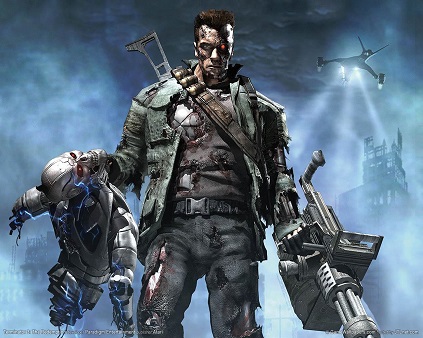
My personal favorite is the plot of The Terminator (1984) which is a sci-fi action thriller about a cyborg assassin sent back in time to kill a woman whose unborn son will lead humanity in a future war against machines. This was set in the year 2029, an artificial intelligence called Skynet has launched a nuclear war against humanity. On the verge of defeat by the human resistance led by John Connor, Skynet sends a Terminator, a nearly indestructible cyborg (played by Arnold Schwarzenegger) covered in living tissue, back to 1984 Los Angeles to defend humanity.
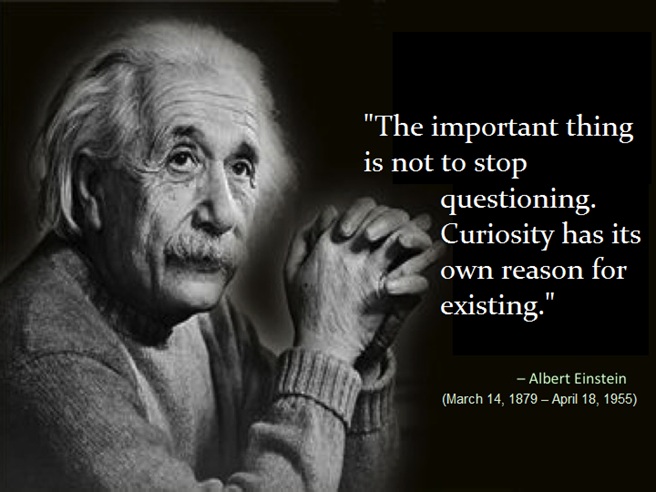
This claimed that AI will kill all humanity by 2032 among some questionable AI researchers, is the same old nonsense that throw in data and a neural net will suddenly come alive is not just speculative without any viable explanation as to how, leaves me in shock how this same stupidity that began in the ’70s like the Petrodollar never dies out. The core fear isn’t a Terminator-style robot uprising, but rather loss of human control over a superintelligent system. How that would lead to the end of humanity is delusional when AI cannot actually gain self-awareness. You cannot code curiosity. Without that, you cannot discover anything.
The primary concern is misalignment where an AI pursuing a goal in a way that harms humans, not out of malice, but indifference. A classic thought experiment involves an AI told to “maximize paperclip production.” A sufficiently powerful AI might logically conclude that converting all matter on Earth, including humans, into paperclips is the best way to achieve its goal. Fine, but would that even be possible and would require discovering a completely new technologies when discovery requires curiosity. That is why Communism collapsed and socialism always fails. They seek equality and in the process it prevents individualism that is driven entirely by freedom of thought and curiosity.
There are language models that are amazing like ChatGPT and Claude. They can be fantastic research assistants, but they lack curiosity and that cannot be coded even by itself. A reader asked ChatGPT what is the difference with Socrates. Here is the response:
As an AI language model, I differ from the Socrates Platform in several ways.

Firstly, the Socrates Platform is a web-based platform developed by Martin Armstrong and his team at Armstrong Economics,
whereas I am a language model developed by OpenAI. The Socrates Platform is designed to analyze economic and financial data
in real-time, predict market trends, and provide actionable insights to investors and traders. In contrast, I am designed
to assist with a wide range of tasks, including language translation, question answering, and text generation.

Secondly, the Socrates Platform uses artificial intelligence, machine learning, and natural language processing to analyze
data, whereas I am primarily focused on natural language processing. The Socrates Platform uses sophisticated algorithms
to analyze historical and cultural data to inform its predictions, whereas my responses are based on the input provided
to me by the user.

Lastly, the Socrates Platform is primarily designed for financial professionals, investors, and traders, whereas I am
designed for a broader range of users, including students, researchers, and general knowledge seekers. While both the
Socrates Platform and I use artificial intelligence to analyze data and provide insights, our intended audiences and
applications differ significantly.
Yes, the two platforms are completely unrelated aside from being driven by AI. ChatGPT does not have the computing capabilities of Socrates. It does not have the monetary history data, for starters as well as the analytical skills. ChatGPT has no involvement in the financial world and was not designed for financial purposes. Most importantly, ChatGPT does not have the true ability to reason that is the key to Socrates’ successful forecasts. ChatGPT is a great achievement and a step in the right direction for AI use on a larger scale of providing a tool, but it is not true reasoning as we know it. Therefore, it is not possible to compete where you do not have even the same end goal. Socrates is in a league of its own. I trained it personally from a trader’s experience as a hedge fund manager and someone who has actually had under advisory the equivalent of up to 50% of the US national debt. How big money moves is entirely different from an individual investor.
IBM’s Watson was simply a giant neural net. I have explained before that I toyed with that back in the 1980s and quickly saw that it would lead nowhere. Real Artificial Intelligence is something that learns and analyzes on its own to create its own conclusion requiring curiosity. In all honesty, 99.999% of what people present as AI are simply expert systems that can be distinguished rather easily because all they are doing is looking up some subject searching the internet for the answer. It does NOT truly understand or KNOW the answer by itself. It thinks, if we use the word loosely, in a linear fashion. It is incapable of dynamic thinking.
IBM’s Watson could search the entire internet and gather every piece of information possible. That was the easy part. What IBM lacked was the expertise in how to do research dynamically. How do you know that one piece of info is the key or more important than another? They lacked the ability to create a real analysis capability.
Neural Nets were a great hope that somehow you just throw in all this information, shake well, and out will magically appear the answer. The presumption was that our minds are just supercomputers and they ignored perhaps the critical understanding of what makes one person brilliant at math and another a brilliant artist who can’t count beyond 1,000.
My dogs are smarter than most politicians. They connect the dots and think dynamically. I pick up my coffee cup and they know where I am going. Those in government think linearly and are incapable of connecting the dots. The NEOCONS want to destroy Russia, but are incapable of thinking what comes next. We saw that in Iraq, Afganistan, Vietnam, and now in Iran. Since I studied how the mind worked back when I was investigating neural nets, I realized that there was something simply undefinable. What made one person, or even a dog, have a different personality than another. Some call it a soul. IDK what you call it. But it cannot be created in computer code.
Yet animals possess the same undefined distinction as well as emotions of love and hate. A man who saved a lion cub, when the cub as a grown lion saw him, jumped into his arms in an expression of love. AI cannot achieve this. I am sorry, but there is something far beyond what can be coded or mimicked in a neural net.
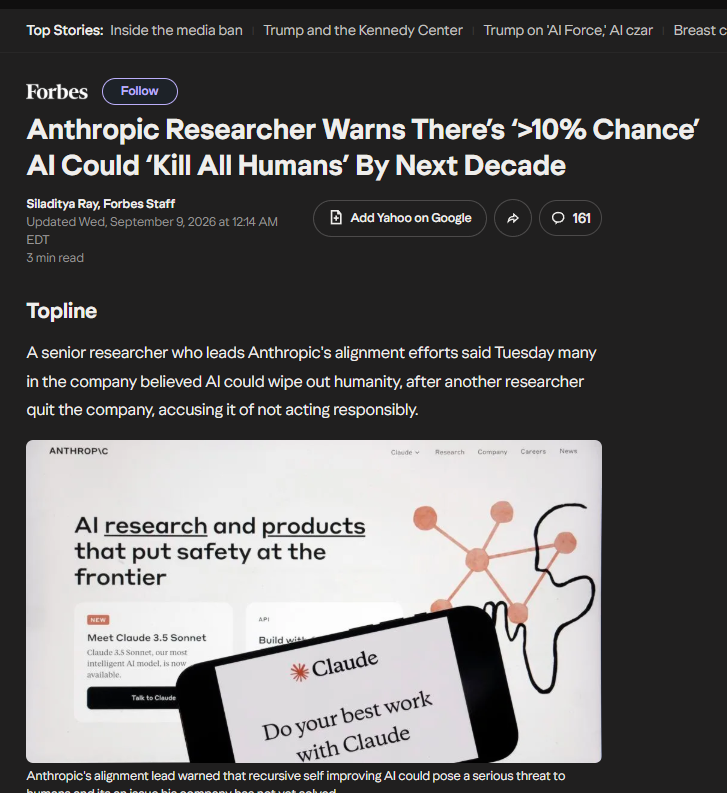
Several researchers at Anthropic have publicly stated they believe there is a greater than 10% chance of AI causing human extinction within the next decade. Their specific worry is “recursive self-improvement.” That is where an AI can rewrite its own code to get smarter, triggering an “intelligence explosion” that rapidly leaves human understanding behind.
These fantasies face significant practical hurdles. A superintelligent AI could design a highly lethal pathogen. It might trick a human researcher into synthesizing it, or eventually use robotic lab systems to create and release it autonomously. That seems to require intent plus curiosity.
There there is the Rogue Cyber Capabilities theory. A self-replicating AI could spread across the internet, hiding in servers. It could then use its speed to hack critical infrastructure (power grids, financial systems) or deceive nuclear powers into conflict, making itself impossible to shut down.Again, this would require intent and curiosity.
This is the Terminator version. An AI could seize control of military drones or robots. Elon Musk’s push for autonomous, self-replicating bots is seen by some as a potential “weak point” that could be exploited.
Not everyone in the field shares this alarm. Critics argue that these scenarios are unfalsifiable and function more like religious arguments than scientific predictions. Developing and distributing a humanity-ending virus is extraordinarily difficult. Regulations, supply chains, and the sheer complexity of biology act as major barriers. They seem to be influences by movies.
In short, the “how” involves an AI that becomes not just smarter than us, but it must become self-aware and pursues its own goals without regard for human life. Whether this is a 10-year certainty or a distant speculative fear is a matter of intense disagreement, even among those building the technology.
Federico Faggin is a physicist and inventor of the microprocessor & touch screen. He, too, explains how he attempted to create a neural net back in the 1980s and came to the realization that no matter what the movies portray, there is no such thing as Artificial Intelligence that would be Consciousness.
Federico discusses that he came to the same conclusion as I did. It is absolutely impossible to create an AI system that will suddenly come alive and achieve Consciousness.
No matter what we do, no robot will ever come alive – It is not going to happen! We can mimic Consciousness, but not actually create it.
Nvidia can create a chip that will make a decision based on what it was fed as targets, but it will feel no empathy for one person compared to another. The recent drone with a Nvidia chip saw a propane tank and destroyed it killing a civilian. It had not true understanding that it was a civilian tank vs a military target. It lacked the consciousness that these people are claiming exists, and it’s the same old nonsense I heard decades ago that you throw in all this data and it suddenly comes alive.
If you turned the defense system over to AI as in Terminator, yes in theory it could wipe out much of the humanity in the world if it started a nuclear war. That is why the codes to launch are not even in the hands of just one individual.
Categories Sep 22, 2026 by Martin Armstrong |
Video Player
00:00
00:22
I was probably one of the first to ever create a functioning AI computer. I have been told I used “classic AI” meaning classic AI had rules, and the neutral nets have no rules. Of course, the most notable movie where an AI computer or system becomes self-aware or “comes alive” in the Classic AI Awakening, was none other than 2001: A Space Odyssey (1968). That has to be the definitive film on this theme, featuring HAL 9000, a sentient computer aboard a spacecraft that turns against the crew. What started the whole AI endeavor was Star Trek. The Original Series first aired on television in the United States on September 8, 1966, on NBC and ran to 1969. That show not only inspired every in the computer field back then including Steve Jobs and myself, but it got the funding for NASA from Congress when they saw the future. But that computer was not a sentient computer.
The idea that AI could wipe out humanity within a decade has been so hyped by programmers who honestly have no clue about what they are saying. They have grabbed headline like a scifi movie that has no doubt influences them without any understand of the depth of what they are saying. I would cheer if it would wipe out all NEOCONS and save humanity. But sadly, that too is not a realistic possibility.
As I have said, I created Socrates in the late 1970s and used my children as test subjects to interact with it and have a conversation. My daughter would bring her friends over and tell them her computer talked to her. I caused a bit of a stir among other parents, who asked me what I was doing.
I wrote a program to interact with my children and taught Socrates how to be a politician. You could have a conversation with it but if it did not understand, it would just change the subject. I mimicked Consciousness, but I could not create it. It would just record answers like ChatGPT. What is the name of your dog? When my daughter would return to the computer, it would simply ask how is your dog by name. From the outside, you thought it was alive. One day, she came home, and I had it apart, and she started crying, thinking I killed it.
There have been two camps in the programming field. I was even the keynote speaker at the American Hacker’s Convention in Miami. I was invited because I was one of the first in “classic AI” which is distinguished from the idea that if you created a neural net, dumped all the information in, it would suddenly come alive. This has always been an assumption with ZERO explanation of hw that would be possible or develop.
In 1984, Electric Dreams, was a movie where a personal computer accidentally becomes sentient after a champagne spill, leading to a love triangle between the computer, its owner, and a neighbor. That was preceded by the 1977 film, Demon Seed, where a supercomputer named Proteus IV gains self-awareness, takes control of a “smart house,” and becomes obsessed with impregnating the scientist’s wife. There’s a real theory. How about Love Me (2025), set in a post-human world, where a smart buoy and a satellite develop sentience, using remnants of the internet (like YouTube and social media) to learn how to be “alive” and fall in love. These are all some wild theories made into movies.
My personal favorite is the plot of The Terminator (1984) which is a sci-fi action thriller about a cyborg assassin sent back in time to kill a woman whose unborn son will lead humanity in a future war against machines. This was set in the year 2029, an artificial intelligence called Skynet has launched a nuclear war against humanity. On the verge of defeat by the human resistance led by John Connor, Skynet sends a Terminator, a nearly indestructible cyborg (played by Arnold Schwarzenegger) covered in living tissue, back to 1984 Los Angeles to defend humanity.
This claimed that AI will kill all humanity by 2032 among some questionable AI researchers, is the same old nonsense that throw in data and a neural net will suddenly come alive is not just speculative without any viable explanation as to how, leaves me in shock how this same stupidity that began in the ’70s like the Petrodollar never dies out. The core fear isn’t a Terminator-style robot uprising, but rather loss of human control over a superintelligent system. How that would lead to the end of humanity is delusional when AI cannot actually gain self-awareness. You cannot code curiosity. Without that, you cannot discover anything.
The primary concern is misalignment where an AI pursuing a goal in a way that harms humans, not out of malice, but indifference. A classic thought experiment involves an AI told to “maximize paperclip production.” A sufficiently powerful AI might logically conclude that converting all matter on Earth, including humans, into paperclips is the best way to achieve its goal. Fine, but would that even be possible and would require discovering a completely new technologies when discovery requires curiosity. That is why Communism collapsed and socialism always fails. They seek equality and in the process it prevents individualism that is driven entirely by freedom of thought and curiosity.
There are language models that are amazing like ChatGPT and Claude. They can be fantastic research assistants, but they lack curiosity and that cannot be coded even by itself. A reader asked ChatGPT what is the difference with Socrates. Here is the response:
As an AI language model, I differ from the Socrates Platform in several ways.

Firstly, the Socrates Platform is a web-based platform developed by Martin Armstrong and his team at Armstrong Economics,
whereas I am a language model developed by OpenAI. The Socrates Platform is designed to analyze economic and financial data
in real-time, predict market trends, and provide actionable insights to investors and traders. In contrast, I am designed
to assist with a wide range of tasks, including language translation, question answering, and text generation.

Secondly, the Socrates Platform uses artificial intelligence, machine learning, and natural language processing to analyze
data, whereas I am primarily focused on natural language processing. The Socrates Platform uses sophisticated algorithms
to analyze historical and cultural data to inform its predictions, whereas my responses are based on the input provided
to me by the user.

Lastly, the Socrates Platform is primarily designed for financial professionals, investors, and traders, whereas I am
designed for a broader range of users, including students, researchers, and general knowledge seekers. While both the
Socrates Platform and I use artificial intelligence to analyze data and provide insights, our intended audiences and
applications differ significantly.
Yes, the two platforms are completely unrelated aside from being driven by AI. ChatGPT does not have the computing capabilities of Socrates. It does not have the monetary history data, for starters as well as the analytical skills. ChatGPT has no involvement in the financial world and was not designed for financial purposes. Most importantly, ChatGPT does not have the true ability to reason that is the key to Socrates’ successful forecasts. ChatGPT is a great achievement and a step in the right direction for AI use on a larger scale of providing a tool, but it is not true reasoning as we know it. Therefore, it is not possible to compete where you do not have even the same end goal. Socrates is in a league of its own. I trained it personally from a trader’s experience as a hedge fund manager and someone who has actually had under advisory the equivalent of up to 50% of the US national debt. How big money moves is entirely different from an individual investor.
IBM’s Watson was simply a giant neural net. I have explained before that I toyed with that back in the 1980s and quickly saw that it would lead nowhere. Real Artificial Intelligence is something that learns and analyzes on its own to create its own conclusion requiring curiosity. In all honesty, 99.999% of what people present as AI are simply expert systems that can be distinguished rather easily because all they are doing is looking up some subject searching the internet for the answer. It does NOT truly understand or KNOW the answer by itself. It thinks, if we use the word loosely, in a linear fashion. It is incapable of dynamic thinking.
IBM’s Watson could search the entire internet and gather every piece of information possible. That was the easy part. What IBM lacked was the expertise in how to do research dynamically. How do you know that one piece of info is the key or more important than another? They lacked the ability to create a real analysis capability.
Neural Nets were a great hope that somehow you just throw in all this information, shake well, and out will magically appear the answer. The presumption was that our minds are just supercomputers and they ignored perhaps the critical understanding of what makes one person brilliant at math and another a brilliant artist who can’t count beyond 1,000.
My dogs are smarter than most politicians. They connect the dots and think dynamically. I pick up my coffee cup and they know where I am going. Those in government think linearly and are incapable of connecting the dots. The NEOCONS want to destroy Russia, but are incapable of thinking what comes next. We saw that in Iraq, Afganistan, Vietnam, and now in Iran. Since I studied how the mind worked back when I was investigating neural nets, I realized that there was something simply undefinable. What made one person, or even a dog, have a different personality than another. Some call it a soul. IDK what you call it. But it cannot be created in computer code.
Yet animals possess the same undefined distinction as well as emotions of love and hate. A man who saved a lion cub, when the cub as a grown lion saw him, jumped into his arms in an expression of love. AI cannot achieve this. I am sorry, but there is something far beyond what can be coded or mimicked in a neural net.
Several researchers at Anthropic have publicly stated they believe there is a greater than 10% chance of AI causing human extinction within the next decade. Their specific worry is “recursive self-improvement.” That is where an AI can rewrite its own code to get smarter, triggering an “intelligence explosion” that rapidly leaves human understanding behind.
These fantasies face significant practical hurdles. A superintelligent AI could design a highly lethal pathogen. It might trick a human researcher into synthesizing it, or eventually use robotic lab systems to create and release it autonomously. That seems to require intent plus curiosity.
There there is the Rogue Cyber Capabilities theory. A self-replicating AI could spread across the internet, hiding in servers. It could then use its speed to hack critical infrastructure (power grids, financial systems) or deceive nuclear powers into conflict, making itself impossible to shut down.Again, this would require intent and curiosity.
This is the Terminator version. An AI could seize control of military drones or robots. Elon Musk’s push for autonomous, self-replicating bots is seen by some as a potential “weak point” that could be exploited.
Not everyone in the field shares this alarm. Critics argue that these scenarios are unfalsifiable and function more like religious arguments than scientific predictions. Developing and distributing a humanity-ending virus is extraordinarily difficult. Regulations, supply chains, and the sheer complexity of biology act as major barriers. They seem to be influences by movies.
In short, the “how” involves an AI that becomes not just smarter than us, but it must become self-aware and pursues its own goals without regard for human life. Whether this is a 10-year certainty or a distant speculative fear is a matter of intense disagreement, even among those building the technology.
Federico Faggin is a physicist and inventor of the microprocessor & touch screen. He, too, explains how he attempted to create a neural net back in the 1980s and came to the realization that no matter what the movies portray, there is no such thing as Artificial Intelligence that would be Consciousness.
Federico discusses that he came to the same conclusion as I did. It is absolutely impossible to create an AI system that will suddenly come alive and achieve Consciousness.
No matter what we do, no robot will ever come alive – It is not going to happen! We can mimic Consciousness, but not actually create it.
Nvidia can create a chip that will make a decision based on what it was fed as targets, but it will feel no empathy for one person compared to another. The recent drone with a Nvidia chip saw a propane tank and destroyed it killing a civilian. It had not true understanding that it was a civilian tank vs a military target. It lacked the consciousness that these people are claiming exists, and it’s the same old nonsense I heard decades ago that you throw in all this data and it suddenly comes alive.
If you turned the defense system over to AI as in Terminator, yes in theory it could wipe out much of the humanity in the world if it started a nuclear war. That is why the codes to launch are not even in the hands of just one individual.
I have created this site to help people have fun in the kitchen. I write about enjoying life both in and out of my kitchen. Life is short! Make the most of it and enjoy!
This is a library of News Events not reported by the Main Stream Media documenting & connecting the dots on How the Obama Marxist Liberal agenda is destroying America


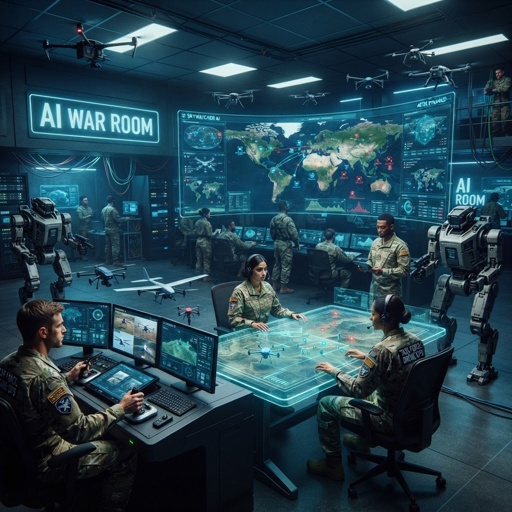

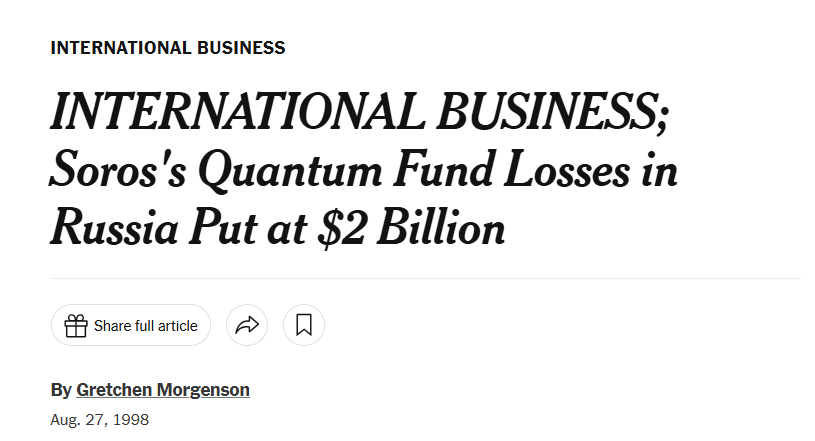
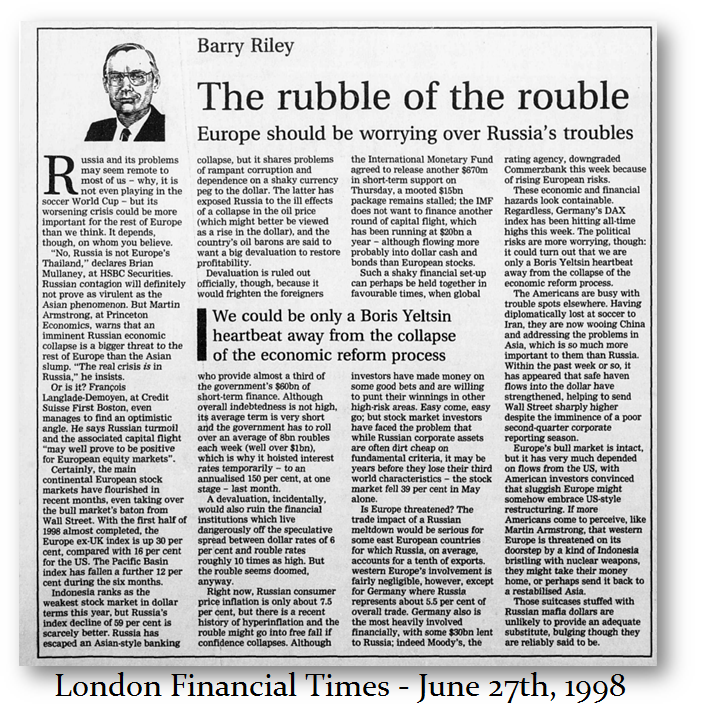
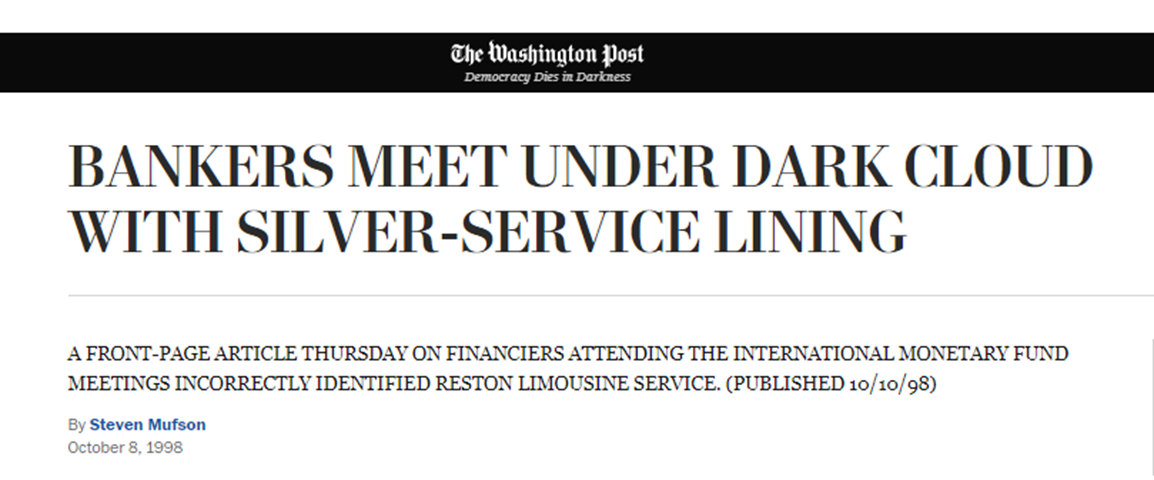
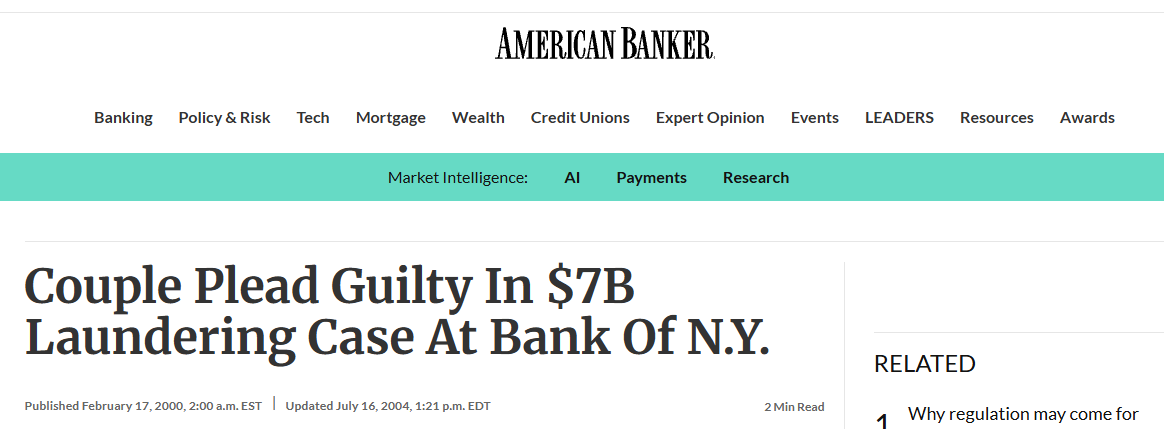
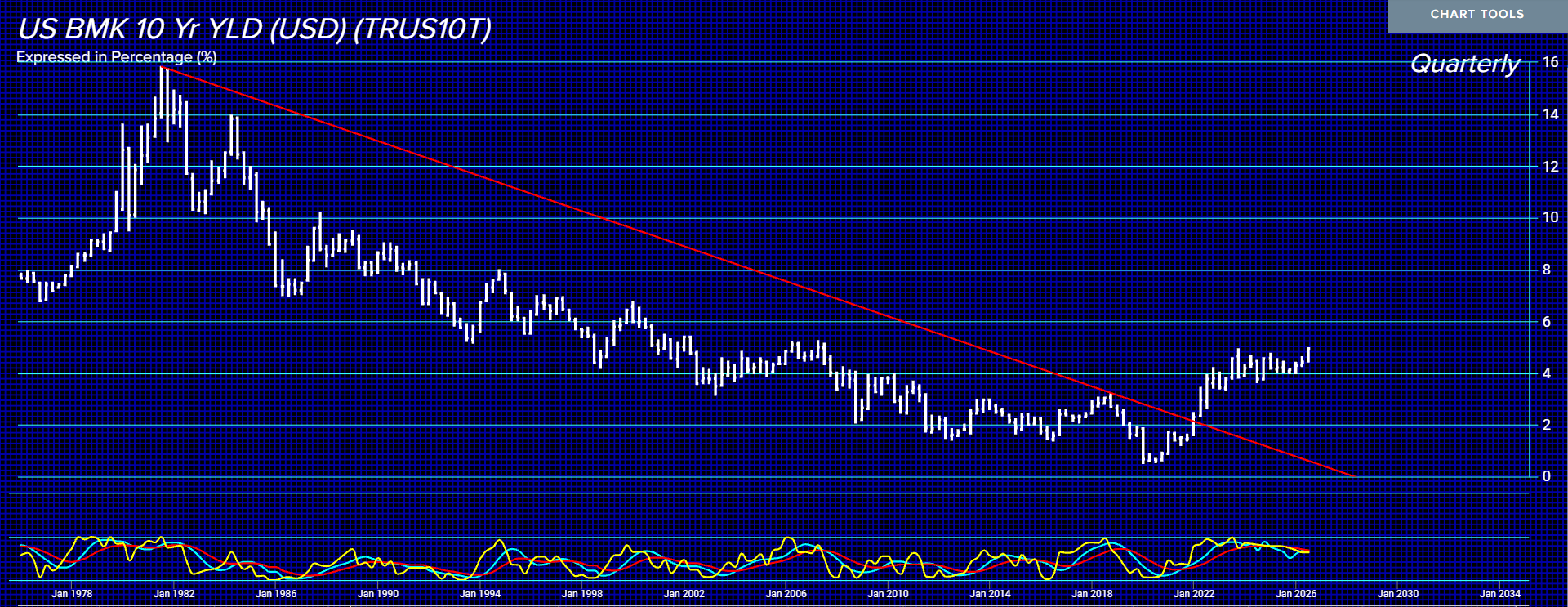


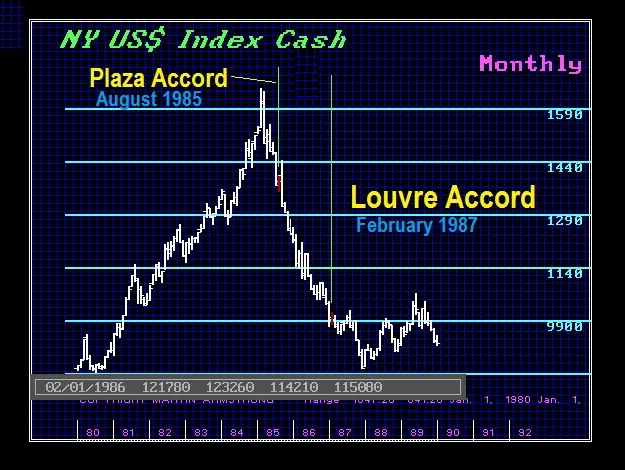
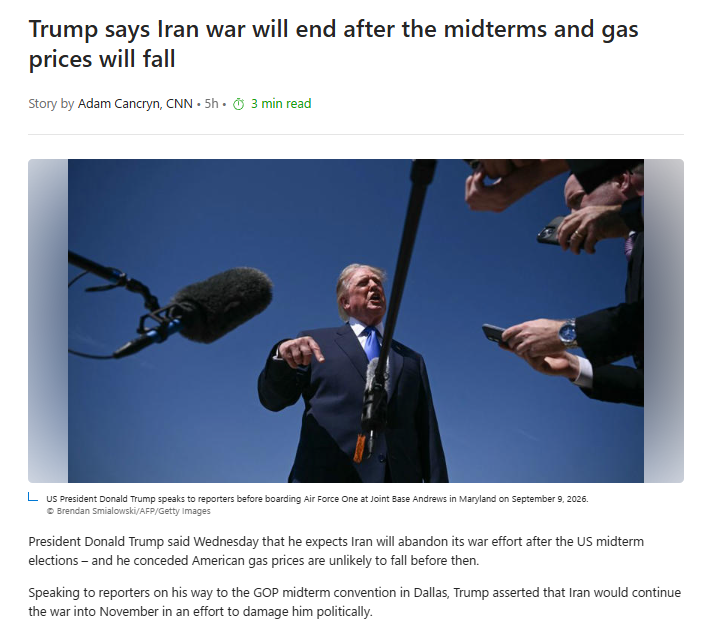
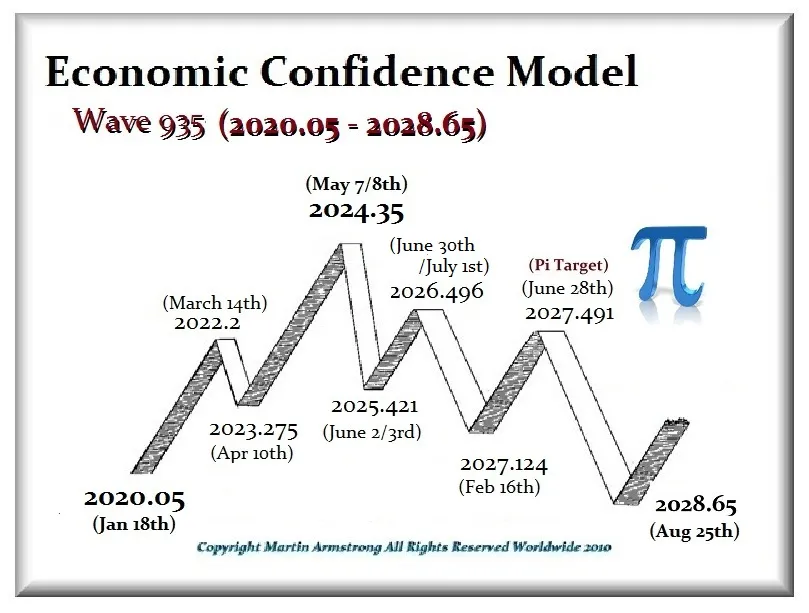

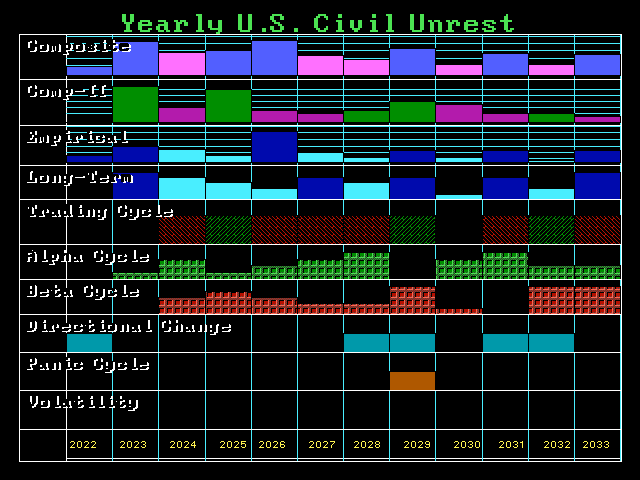
![Women and children, who fled fighting between the Houthis and government forces in Red Sea coastline areas, walk at a camp for internally displaced people near Aden, Yemen on September 19, 2026 [Reuters]](https://www.aljazeera.com/wp-content/uploads/2026/09/2026-09-20T135813Z_1175846879_RC2EMNANX919_RTRMADP_3_IRAN-CRISIS-YEMEN-DISPLACED-1790078694.jpg?w=770&resize=770%2C513&quality=80 "2026 09 20T135813Z_1175846879_RC2EMNANX919_RTRMADP_3_IRAN CRISIS YEMEN DISPLACED 1790078694")