Posted Originally on Sep 21, 2026 by Martin Armstrong |
Bessent is seriously a danger to the entire world economy. He has been groomed in the world of manipulating markets and thinks he is omnipotente and he is “THE HOUSE” and whatever he declarers shall take place like some third world dictator. This constant using the ollar as a geopolitical weapon is what has created CHPS and he is fulfilling our computer forecast that the dollar will no longer be the reserve currency and the financial capital will move to China post-2032.
If you use the dollar in any transaction, they are claiming they even have jurisdiction to criminally prosecute you in New York City a court that has surpassed the conviction rate of even Hitler’s most notorious court.
If a Spain-Portugal dollar transaction involved the proceeds of a “specified unlawful activity” (the predicate crime required for federal money laundering) and cleared through a U.S. bank overseas, the U.S. government could criminally prosecute for money laundering. If the transaction was settled entirely outside the U.S. without touching U.S. financial infrastructure, federal jurisdiction under § 1956(f) would be much harder to establish for non-U.S. citizens.
So let me see, this means that if you want to buy fuel, you pay in euros, which is the case in Europe anyway. In other places you pay in yuan. Bessent is so full of himself, it is embarrassing to watch him for anyone who understands world markets has to be looking at him as a complete fool. He has become a serious threat to the economy of the United States. If the is going to be a de-dollarization, he is to blame.
They have already increased the risk of dealing in dollars overseas and they are too stupid to understand that they are undermining the world economy. The US cannot defeat Iran and what they are doing is increasing the risk of nuclear war.
Posted Originally on Sep 21, 2026 by Martin Armstrong |
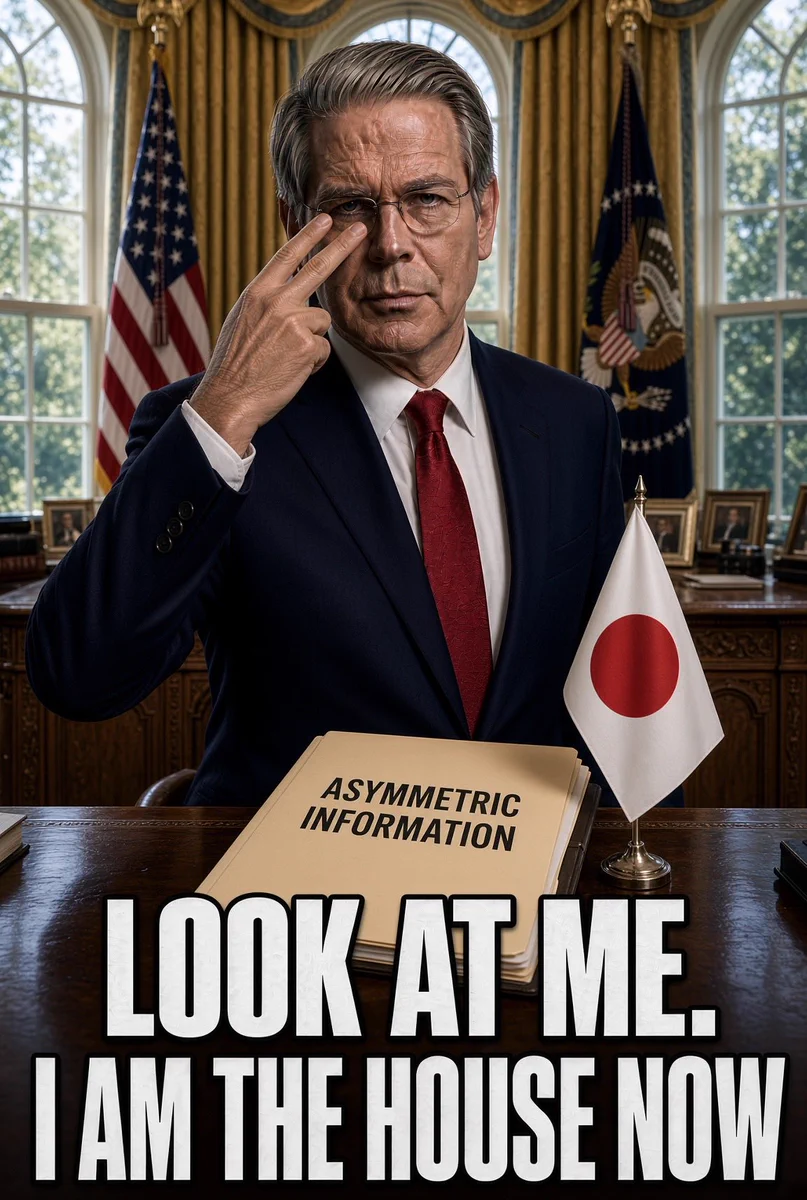
Treasury Secretary Scott Bessent has effectively challenged the bond market to a fight, telling traders, “I have asymmetric information. I am the house now,” and that they can “bet against him if they want.” Treasury has expanded its buyback operations for long-term government bonds, increasing purchases to as much as $6 billion per operation after Bessent originally promised to at least double the normal size. The stated purpose is liquidity, but the market understands what Washington desperately wants: lower long-term interest rates because the cost of financing more than $40 trillion in government debt is becoming a serious problem.
Bessent should know better than almost anyone that governments ALWAYS lose when they attempt to fight the market. He worked alongside George Soros and Stanley Druckenmiller when they famously took on the Bank of England in 1992. Britain attempted to defend the pound inside the European Exchange Rate Mechanism, traders understood that the price could not be maintained, and the government eventually capitulated on Black Wednesday. Druckenmiller has now publicly criticized his former protégé for attempting to suppress Treasury yields rather than dealing with the fiscal problem creating the pressure in the first place.
I have explained countless times that governments cannot manipulate markets indefinitely, and neither can central banks. The Plaza Accord in 1985 was supposed to manipulate the dollar lower, and when policymakers later decided the dollar had fallen enough, they produced the Louvre Accord in 1987 and tried to manipulate it in the opposite direction. The market continued moving and confidence in central bank control collapsed into the 1987 Crash. The Swiss National Bank later insisted it could defend the franc’s peg against the euro, and I told them directly that they could not. The market ultimately overwhelmed them as well.
I know this game personally because I spent decades sitting on the opposite side of these people, both as a trader and as an adviser called in during international crises. When Bessent was part of the Soros operation attacking sterling in 1992, I was advising the British government and warning them about what the “club” was doing. I went head-to-head with these same types of players in the markets because their strategy was always based upon manipulating price while mine was based upon TIME and PRICE.
In 1997, major players tried to manipulate silver against me and lost because the trend was not on their side. Governments and central banks also called me during the 1987 Crash, the 1989 Japanese collapse, the Asian Currency Crisis, and later China, because they wanted to understand what capital flows were actually saying. I learned long ago that it makes no difference whether you are a hedge fund with billions, a central bank capable of creating money, or the United States Treasury. You can push a market temporarily, but you cannot force global capital to obey you indefinitely. The market is bigger than ALL OF THEM, and the moment they begin believing otherwise is usually when they get themselves into trouble.
The bond market is far larger than any politician. There are roughly $32 trillion of publicly traded Treasury securities, yet Washington seems to believe several billion dollars of buybacks can intimidate traders into accepting yields below what the market demands. Treasury announced operations as large as $6 billion, and yields moved HIGHER because traders had expected even more. That alone should tell them what they are dealing with because once government announces that it is defending a price, the market immediately tests how much money it is actually prepared to spend defending it.
Government debt has exceeded $40 trillion, annual deficits remain enormous, the Treasury must continuously issue new securities simply to finance existing spending, and higher interest rates increase the cost of servicing the debt. Investors see the deficits, inflation, energy prices, geopolitical risk, and endless supply of new government paper and demand a higher return to hold it.
Government wants the privilege of borrowing without accepting the market price of borrowing. Politicians spent decades accumulating debt while interest rates were artificially suppressed and assumed they could continue indefinitely. Now the bond market is beginning to impose the discipline that Congress refuses to impose upon itself. Instead of reducing the deficit, Washington’s instinct is naturally to blame the market and search for another mechanism to suppress rates.
Bessent is playing a dangerous game because the Treasury does not possess unlimited money. If it wants to buy long-term bonds, it must ultimately obtain the funds somewhere, whether by drawing upon government cash or issuing other debt. You cannot solve excessive government borrowing by rearranging the government’s own liabilities and pretending the underlying debt disappeared.
This is precisely what politicians never understand about markets. A government can manipulate a market temporarily because it has enormous resources, regulatory authority, and sometimes a central bank capable of creating money. What it cannot do is repeal supply and demand. Every intervention eventually encounters the underlying economic reality, and the larger the distortion becomes, the more violent the adjustment can be when government finally loses control.
The Treasury market is sending Washington a message that Congress refuses to hear. Investors want greater compensation for financing a government that continues borrowing without any credible plan to stop. Bessent can buy bonds, threaten traders, increase buybacks, and declare that he is “the house,” but the United States government is not bigger than global capital. Washington’s debt problem is causing the bond market to demand higher interest rates, and Bessent is trying to fight the symptom instead of eliminating the debt and deficits causing it.
Posted Originally on Sep 21, 2026 by Martin Armstrong |
Treasury Secretary Scott Bessent is now pressuring Japan to rein in government spending and restore credibility with the bond market as Japanese yields surge. Reuters reports that Bessent confronted Japanese officials over what Washington sees as an inconsistent combination of aggressive fiscal spending and monetary policy, warning that instability in Japan’s enormous government bond market could spill directly into U.S. Treasuries. Japan’s 10-year government bond yield has climbed above 3%, reaching levels not seen since 1996, as investors increasingly demand greater compensation to finance one of the most indebted governments in the world.
Bessent understands the problem perfectly when he looks at Japan. Government cannot continue borrowing endlessly, suppress interest rates, manipulate its currency, and assume global capital will sit there forever accepting whatever return politicians decide to offer. Japan has spent decades experimenting with virtually every form of monetary manipulation imaginable. The Bank of Japan pushed rates below zero, bought enormous quantities of government bonds, controlled the yield curve, and expanded its balance sheet until it became one of the dominant holders of Japanese government debt. None of that eliminated the debt because it merely postponed the day when the market would again determine the price.
Japan’s government debt remains above 200% of GDP, and rising yields dramatically change the arithmetic. When rates were near zero, Tokyo could carry an enormous debt load because servicing costs remained artificially suppressed. Once yields rise, refinancing becomes progressively more expensive. The government then must issue still more debt to cover interest expenses, cut spending, raise taxes, or find new buyers willing to finance the entire operation.
What makes Bessent’s warning remarkable is that Washington is confronting the same fundamental problem. The United States has surpassed $40 trillion in federal debt, the Treasury must continuously refinance existing obligations while financing new deficits, and the 10-year Treasury yield has been testing levels around 5%. Bessent has simultaneously expanded Treasury buybacks in an effort officially aimed at improving liquidity while clearly recognizing the political and financial importance of preventing disorder in long-term government debt.
He is therefore telling Japan something Washington desperately needs to hear itself: the bond market eventually demands fiscal credibility. Bessent is especially concerned because Japan does not exist in some isolated financial universe. Japanese institutions are among the world’s largest foreign investors and major holders of U.S. assets, including Treasuries. When Japanese yields were virtually zero, enormous amounts of Japanese capital moved abroad searching for returns. If yields at home become sufficiently attractive, some of that capital has less reason to remain overseas. That is where Japan’s debt crisis can become America’s problem because capital can begin returning home precisely when Washington needs enormous amounts of foreign money to finance its own deficits.
This is why capital flows matter far more than the nonsense taught in economics textbooks where everything is treated as a domestic equation. Washington can raise or lower short-term rates, Tokyo can intervene in the yen, and central banks can buy government bonds, but global capital constantly compares risk and return between every major market. If Japan suddenly offers 3%, 4%, or more on government debt while eliminating the currency risk Japanese investors face overseas, the calculation changes.
This is precisely why Washington is watching Japan so closely. Japan is the largest foreign holder of U.S. Treasury securities, with roughly $1.2 trillion invested in American government debt. For decades, Japanese institutions were pushed overseas because yields at home were virtually nonexistent, making U.S. Treasurys an attractive destination for Japanese capital. But when Japanese government bonds begin paying 3% or more, that calculation changes dramatically because Japanese investors can earn a meaningful return at home without taking the same currency risk of holding dollar-denominated assets. If even a portion of that enormous pool of Japanese capital is repatriated, Japan does not need to “dump” Treasurys to create a problem for Washington; it can simply stop buying as much while the United States needs MORE buyers to finance $40 trillion in debt. That would place additional upward pressure on Treasury yields and increase Washington’s borrowing costs, which is why Bessent’s sudden concern about Japanese fiscal policy is not merely about helping Tokyo. America needs Japan’s capital.
Bessent should understand this better than most because he built his career trading global macro markets. Yet Washington continues behaving as though America’s debt is somehow fundamentally different. Politicians assume there will always be another buyer for Treasuries because the dollar remains the world’s primary reserve currency. That status gives the United States enormous advantages, but it does not grant Congress the ability to borrow without consequence forever.
Japan should be a warning to Washington, not merely a country for Washington to lecture. Japan demonstrated what happens when government debt becomes structural and monetary policy is forced to accommodate the political system. Suppressing rates encouraged more borrowing because there was never any immediate incentive to reform. Politicians became accustomed to cheap financing and the central bank became trapped supporting a government bond market that could no longer function normally without intervention.
The United States is moving down its own version of that road. Treasury wants lower long-term yields, politicians want cheaper borrowing, homeowners want lower mortgage rates, markets want easier money, and nobody in Washington wants to confront the actual source of the problem because that would require reducing deficits and admitting government cannot spend without limit.
The most important part of the Reuters report is therefore not simply that Bessent is pressuring Japan. It is that he is worried Japan’s bond market can infect America’s. That admission exposes how interconnected the sovereign-debt crisis has become. Japan needs buyers for Japanese debt while America needs buyers for American debt, Europe is issuing more debt for defense and Ukraine, and governments everywhere are competing for the same global pool of capital.
This is the Sovereign Debt Crisis unfolding in real time. The problem is not that investors suddenly became unreasonable. The problem is that governments borrowed as if interest rates would remain artificially low forever and now global capital is beginning to demand a higher price. Bessent is telling Japan to respect the bond market. Washington should take its own advice.
Posted Originally on Sep 21, 2026 by Martin Armstrong |
People constantly ask who has more power over interest rates, Treasury Secretary Scott Bessent or Federal Reserve Chairman Kevin Warsh. Warsh certainly has the more visible lever because the Federal Reserve controls the federal funds target and can influence short-term liquidity throughout the banking system. Bessent, however, sits at the Treasury where the government must actually finance the deficits Congress creates. Congress spends the money, the Treasury must borrow it, and the Fed attempts to influence the price of money, but NONE of them ultimately control global capital.
This is the great misconception surrounding the Federal Reserve. No Fed chairman controls the business cycle. Warsh can raise or lower the overnight rate, but he cannot simply decree that the 10-year Treasury should yield 3% if investors around the world demand 5%. The long end of the curve reflects inflation expectations, sovereign risk, competing investment opportunities, debt supply, and international capital flows. The Fed can intervene and buy bonds, but then it risks expanding liquidity and creating precisely the inflation it claims to be fighting.
Bessent faces the opposite side of the same problem. Treasury must continuously sell enormous quantities of debt because Washington has accumulated more than $40 trillion in obligations and continues running deficits. Bessent can alter maturities, conduct buybacks, and attempt to improve liquidity, but he cannot FORCE investors to finance Washington at the yield he prefers. If global capital demands greater compensation for holding U.S. government debt, then the Treasury eventually has to pay the market price.
We have been through this before. The Treasury once pressured the Fed to keep government borrowing costs artificially low, particularly during and after World War II. That arrangement eventually became unsustainable and culminated in the 1951 Treasury-Fed Accord, which restored greater monetary independence to the Federal Reserve. Government discovered then what it continually refuses to accept today: you cannot permanently dictate the price of money against the market.
So who is really more powerful, Bessent or Warsh? Warsh has greater direct power over short-term monetary policy, while Bessent controls how Treasury manages the financing of government debt. But both men eventually answer to the same force that no government has ever permanently defeated: global capital. Congress spends it. Bessent must borrow it. Warsh can influence its price. The MARKET ultimately decides what it is worth.
Posted Originally on Sep 21, 2026 by Martin Armstrong |
Estonian Defense Minister Martin Herem said Estonia is capable of fighting Russia on its own and warned that any Russian forces crossing the border would be met with destruction.
“We will destroy Russian infrastructure,” Herem said, adding that Estonia would strike Russian forces and infrastructure across the border if necessary, naming Ivangorod and Pechory as possible targets.
He also said Russia should break up into numerous independent states, while warning that any attempt to attack Estonia from a distance would be “blown to smithereens.”
The is the sheer ethnic hatred that is taking us into World War III. As I have said, they forgave Germany for Hitler, but the refuse to forgive Russia for Stalin. Personally, I have had enough. It is absolutely IMPOSSIBLE to talk to these morons for no matter what I say, they are determined to have war. If Russia said the USA has no right to be this big and should be broken up, I think Americans would take offense. But is OK for these people to display such ethnic hatred demonstrating they they have not learned anything from two world wars to date. Perhaps as they say, it will take the third time to be the charm.
Kaja Kallas (born 1977) is an Estonian politician and diplomat pretend diplomat who is just as bloodthirsty is now the Vice-President of the European Commission since 2024. I spoke with a Russian translator I met in Tokyo 30 years ago who is now in Moscow. The question I was asked: “Why do they hate us so much?”
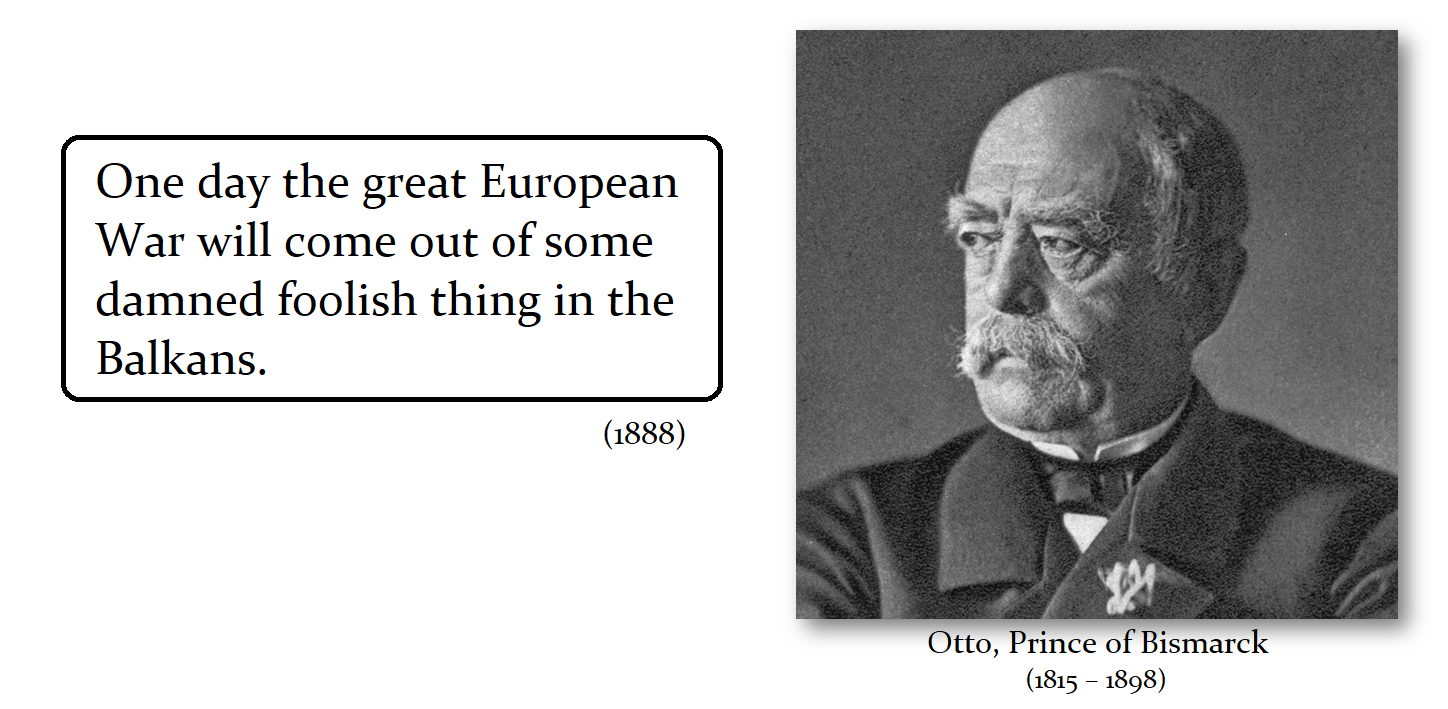
Bismarck was correct. He saw this ethnic hatred and that led to World War I when a Serb assassinated the Arch Duke in 1914. This is like Iran vs Israel. It is just raw hatred that has no solution. This hatred of Russia is no different.
These statements reflect the idea that a son might be punished for his father’s sins, a major moral, legal, and religious issue since ancient times. It appears in some of the oldest surviving legal and literary texts, and it has been debated continuously in law, theology, and philosophy.
As a student of ancient law and history, in the Code of Hammurabi (18th century BC), most penalties targeted the offender, but some provisions could affect family members. For example, if a builder’s faulty work caused the death of a homeowner’s son, the builder’s own son could be put to death. This was a clear case of collective or substitute punishment.
Mesopotamian wisdom literature and proverbs sometimes warn that the gods may visit a father’s guilt on later generations, though other texts insist that the gods judge each person individually.
In the Hebrew Bible, we find this is one of the most famous arenas of the debate. Several texts say God “visits the iniquity of the fathers on the children to the third and fourth generation” (Exodus 20:5; Deuteronomy 5:9).
But other biblical texts push back strongly: Deuteronomy 24:16 says, “Fathers shall not be put to death for children, nor children be put to death for fathers; each shall be put to death for his own sin.”
The prophet Ezekiel devotes an entire chapter (Ezekiel 18) to rejecting the proverb “The fathers have eaten sour grapes, and the children’s teeth are set on edge.” Ezekiel insists that the soul that sins shall die, and that a righteous son will not bear the father’s guilt.
So, the Hebrew Bible itself preserves an internal debate, with older collective ideas being challenged by a newer emphasis on individual responsibility.
Turning to the Greeks and Romans, we see that Greek tragedy is full of inherited guilt. In Aeschylus’s Oresteia, the House of Atreus suffers generation after generation for ancestral crimes. Oedipus’s children in Sophocles’ Theban plays are caught in the consequences of their father’s actions.
Roman law generally moved toward individual liability, but religious ideas of family pollution (piaculum) and ancestral curses persisted, especially in early Roman religion.
In Christianity, the doctrine of Original Sin raised the question of inherited guilt from Adam, though theologians like Augustine distinguished inherited sinfulness from personal guilt. Ezekiel’s emphasis on individual responsibility remained influential.
In Islamic thought, the Qur’an states that “no bearer of burdens shall bear the burden of another” (6:164; 17:15; 35:18; 39:7), strongly rejecting vicarious punishment.
In medieval and early modern Europe, criminal law sometimes still punished families for a member’s sins. For example, corruption of blood, attainder, and executing relatives in cases of treason or regicide. Debates over these practices helped drive the modern legal principle of individual criminal responsibility.
In the 20th century, international law condemned collective punishment of families, especially under the Geneva Conventions and human rights instruments. Kallas obviously rejects this idea. Her hatred is justified as the apple does not fall far from the tree. Kallas is consumed with hatred making her unqualified for any political office.
Why does the issue persist? The tension is between two powerful institutional foundations. First, families, clans, and nations are interconnected; a crime may damage or obligate the group, and consequences naturally spill over to descendants.
Secondly, it is unfair to punish someone for an act they did not choose or commit.
Ancient societies often leaned toward the first; modern law and ethics generally lean toward the second. But the debate has never fully disappeared. This punishing Russia for the sins of Stalin as if all Russians are still communists constantly resurfaces today. We find it in discussions of inherited privilege, historical injustice, reparations, and family trauma.
So yes: punishing the son for the sins of the father is not a modern dilemma. It is one of the oldest recorded moral problems, and many ancient texts already argued about it. I fear we will never purge this ethnic hatred that seems to be inherited from one generation to the next.
Ukraine has dark-money PACS targeting anyone they view as against perpetual war. They are now targeting Anna Paulina Luna since she voted against the Russia Sanctions bill. Just like Israel, which interferes so in our elections and poured a ton of money to defeat Massie, Ukraine is doing that to Luna.
Quite frankly, I am sick of this foreign interference to keep fleecing America to fund their endless wars. Luna voted against the Russian sanctions bill that made no sense when you are trying to cut a peace deal. It did give Trump power over tariffs. The Democrats wanted the sanctions so the Republicans stuffed in the tariffs. That was the compromise.
Posted Originally on Sep 20, 2026 by Martin Armstrong |
COMMENT: Here in Germany, you are correct. War is in the air. A year ago I probably would have disagreed with you. Today, I cannot deny the remarkable forecasts that your computer does that nobody can duplicate. Merz will not surrender power and he refuses to acknowledge AfD. They call them Nazis because they are against immigration and that is an insult to the German people since that was not the motive behind Hitler.
I cannot express my gratitude. You are a lone voice in this wilderness of fake news as that clip you showed during COVID.
Thank you Hans.
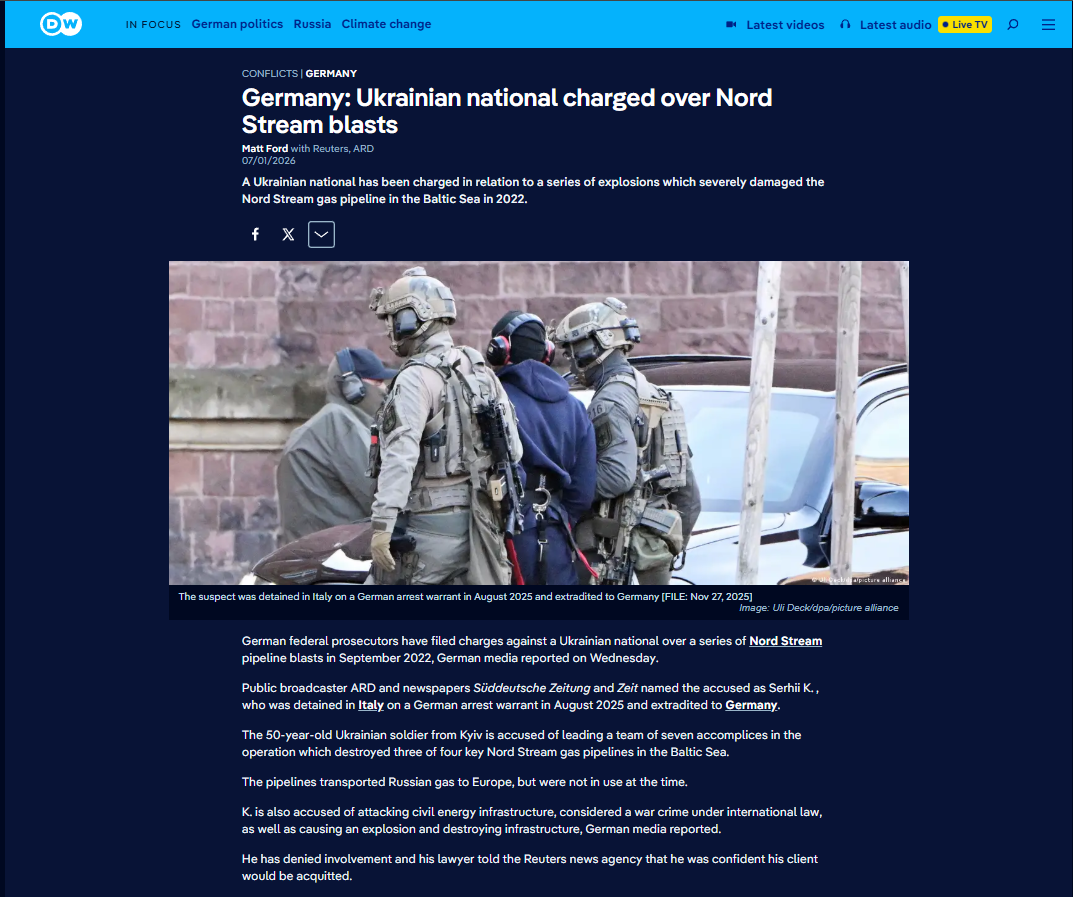
ANSWER: Merz admitted that the election in Mecklenburg-Vorpommern was a “disaster” for the CDU. Brussels has destroy the Germany economy between climate change and immigration and now to retain power, they need war and blame everything on Putin while turning a blind-eye to the fact Zelensky blew up the pipeline and destroyed the Germany economy just to try to hurt Russia. Nevertheless, Germany and the EU is now on a course of suicide to engage in war with Russia under the misguided delusion of Ukraine – the most corrupt country in the world.
A significant critique is not that journalists are inventing stories, but that they rely too heavily on specific sources. Just look at their main source for war. Unbiased research reveals that their #1 source is the well know Neocon Institute for the Study of War (ISW), which was begun by Victoria Nuland’s sister-in-law. They are tied to the US arms industry are are relied on by Die Zeit and FAZ often reproduced ISW data as fact without sufficient critical assessment or transparency about the think tank’s political orientation. The criticism of FAKE NEWS is justified and lacks any credible analysis whatsoever. Any journalist that repeats the propaganda of the ISW should be jailed for treason against the people of Germany and their best interest.
The anti-immigrant AfD at 37.3% in the northeastern state, was just ahead of the center-left SPD at 35.5%. Chancellor Merz’s CDU slumped to 5.3%, its worst result in any state election since the Federal Republic of Germany was founded!!! Despite this, he refuses to acknowledge the policies of the people putting his return to the state parliament at risk. Instead, Merz claims Germany needs serious reforms to get the country back on track, and somehow he is the guy to do that.
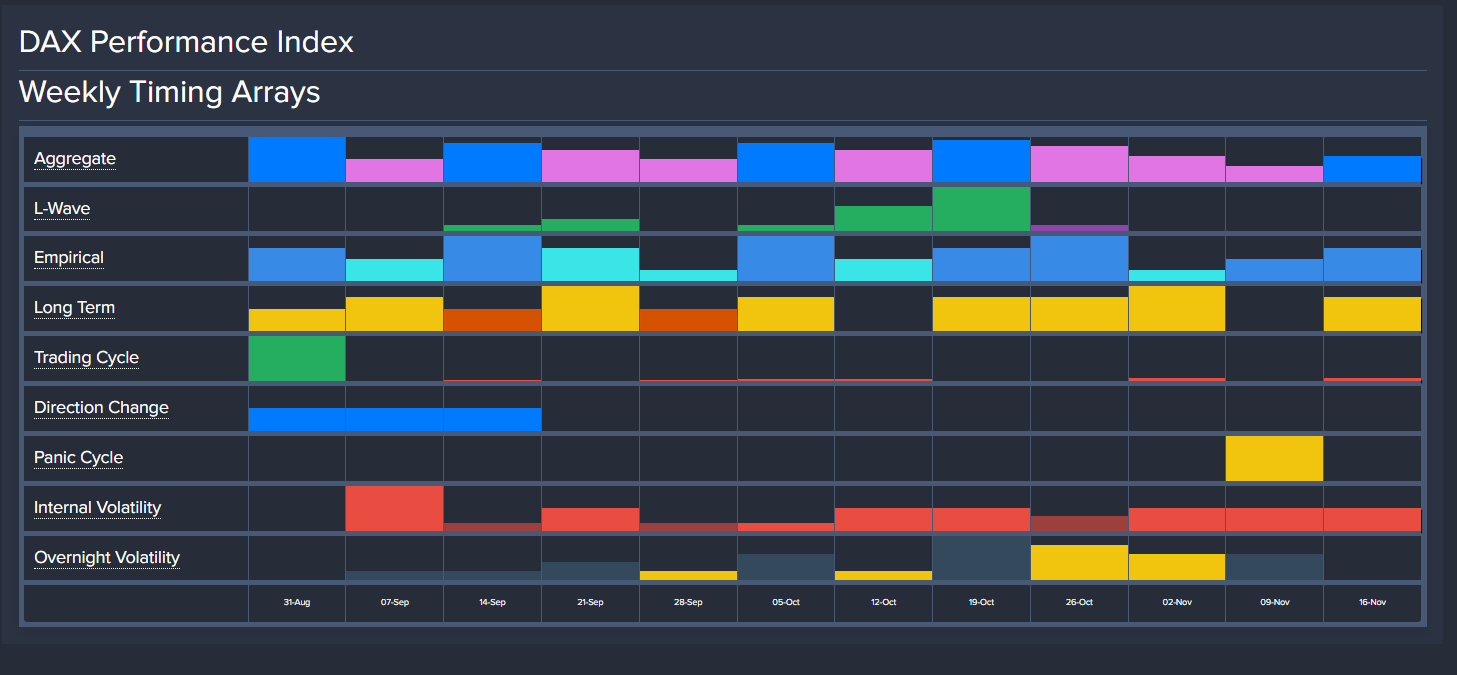
Our computer showed a string of Directional Changes from the last week of August right up to this week of elections September 14th. I cannot express the disaster of Merz’s management has been in wiping out the auto industry, which was once the cornerstone of the German economy and 25% of the EU economy. He should have simply exited the EU for all the destruction they have visited upon the German people with their ideas that are not accountable to the people of Europe.
As Goes Germany – So Goes Europe
This has merely increased the risk of a FALSE FLAG knowing that the EU is under attack and, as our computer shows, will not exist post-2029 anyhow.
Posted Originally on Sep 20, 2026 by Martin Armstrong |
COMMENT #1: This is getting crazier every day. The computer is right on war.
P
COMMENT #2: Marty, I was at your 2011 WEC in Philadelphia when you said the war cycle would turn up in 2014. You even posted in 2013 that it would start in Ukraine. What these people have done to you in an effort to prevent people from listening to you is now plain as day. They want war and they do not want people to know their agenda. My thorough disappointment in those who seek power is indescribable. I understand your frustration that you have made such an important discovery to map humanity, but you cannot beat your own computer.
Rob
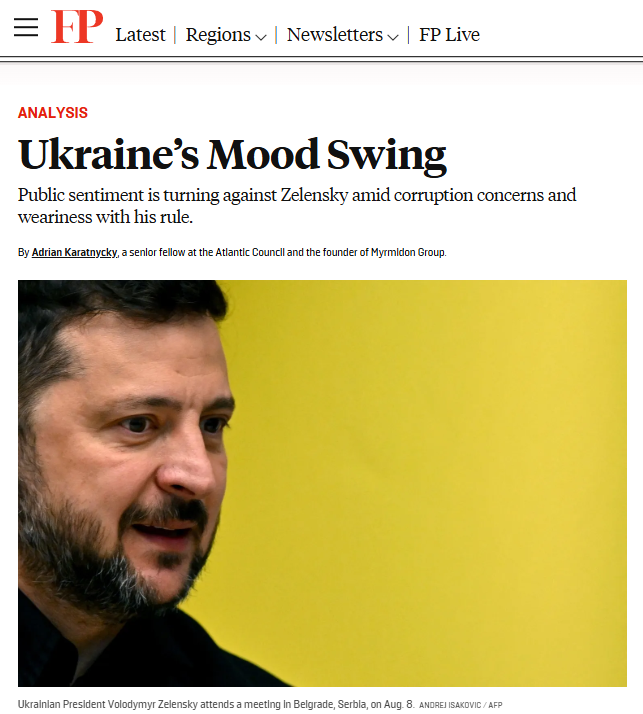
ANSWER: Zelensky is on the ropes. I cannot describe how dangerous Zelensky is. Sources are saying that he will create the FALSE FLAG out of desperation. All the press that makes it sound that Ukraine is winning is a complete lie pushed out there by the NEOCONS with the narrative that Russia is defeated and it is time to invade and deliver the death blow.
Get ready for another Ukrainian FALSE FLAG to start WWIII. This may be what the computer has been warning about with the weeks of September 28/October 5. The press can’t wait to write their articles dipping their pens in the blood of their victims. My discussions with Washington in the briefing made it clear. They stated the problem was Zelensky refusing any peace deal – not Putin.
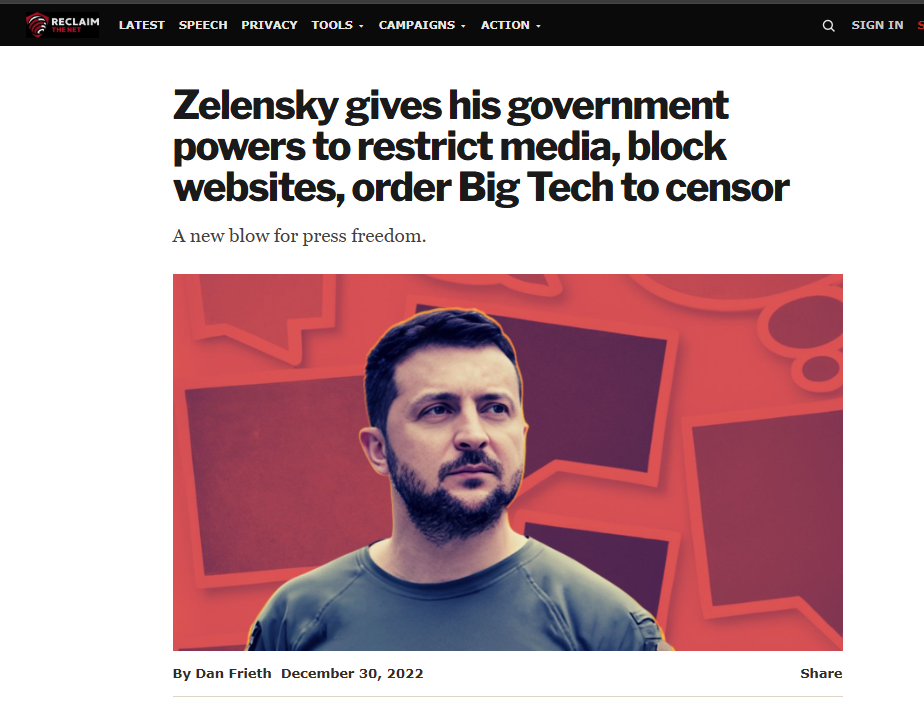
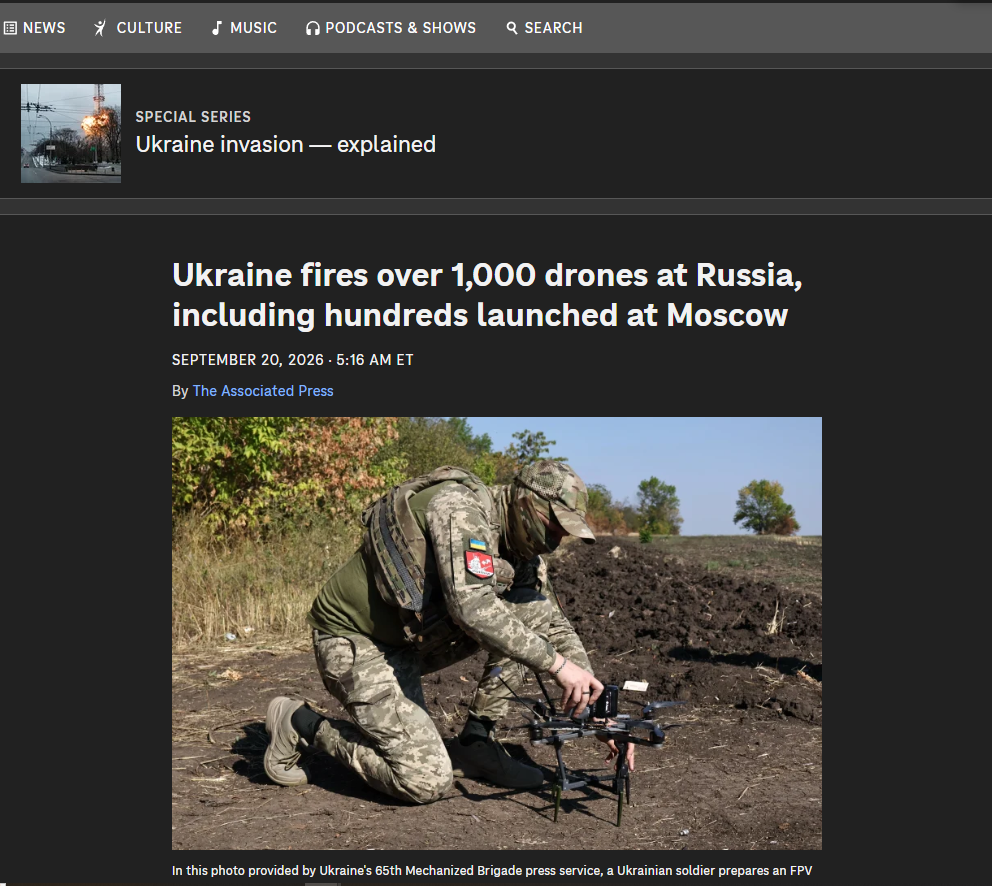
When people like Eric Schmidt, the former CEO of Google, claims here is there in Ukraine to defend Democracy, either he is absolutely the stupidest person on in this world so gullible beyond belief when Russia has elections and Ukraine does not, plus Zelensky has shut down the free press, killed a former source I had in Ukraine, Gonzalo Lira, outlawed Russian religion, and was part of the Neo-Nazi movement pretending he was Christian before becoming president, or Eric Schmidt is lying to the world to make money off of ever kill his drones score. They sent 1,000 drones to attack Moscow to disrupt the elections. Ukraine is killing civilians there but most press only report civilians killed in Ukraine. Eric Schmidt is jockeying to become the Merchant of Death for World War III.
Posted Originally on Sep 20, 2026 by Martin Armstrong |
Vaccines were once the life-saving breakthrough. Today, with this new fangled way to create vaccines with computers, it is coming down to the same concerns rising from AI – who do you really trust? Governments are no longer the protector of society. They are available for the highest bid. This is all breaking down society at the very foundation. It is not just a single incident. This is becoming a widespread crisis in confidence from vaccines to how decides to create war.
Bill Gates was a central founder of GAVI. His foundation provided the initial seed funding that made its creation possible. Yet there is something strange. GAVI’s own legal status is separate from the immunity of vaccine manufacturers. As a “hybrid international organization” based in Switzerland, GAVI has a headquarters agreement with the Swiss government that grants it certain privileges and immunities, such as the inviolability of its premises and immunity from legal process for its official activities. The Swiss authorities cannot even conduct a search for anything in their facilities. WHY did they need such absolute immunity? You do not ask for something for no reason.
I have created this site to help people have fun in the kitchen. I write about enjoying life both in and out of my kitchen. Life is short! Make the most of it and enjoy!
This is a library of News Events not reported by the Main Stream Media documenting & connecting the dots on How the Obama Marxist Liberal agenda is destroying America