Posted Originally on Sep 18, 2026 by Martin Armstrong |
The tiny Oxfordshire village of Piddington has held a symbolic referendum to leave the United Kingdom after the government proposed housing up to 1,200 male asylum seekers at a former Ministry of Defense base roughly half a mile away. Piddington has only about 350 residents, yet 285 voted to secede while just 26 voted against it. Parish chairman Tim McNally declared that the community would henceforth call itself the “Principality of Piddington,” saying residents had sent a message not merely to the region or country but “to the world.” Obviously, Piddington has not legally left Britain, but anyone laughing at this as some village publicity stunt is missing what the vote actually represents.
The government is proposing an asylum facility capable of housing more than three times the population of the village beside a community of roughly 350 people. Residents have raised concerns about safety, crime, property values, and the impact on local services, while the government insists the site will be largely self-sufficient to minimize the effect on the surrounding community. Refugee organizations have criticized the plan from the opposite direction, arguing that remote military facilities are also inappropriate places for asylum seekers and can damage social cohesion. Yet Westminster still expects everyone involved to accept a decision imposed from above.
The timing could not be more remarkable. Scotland, Wales, and Northern Ireland have just seen their nationalist leaders gather in Cardiff and declare that “Westminster’s time is coming to an end.” Scotland continues debating independence, Northern Ireland has a legal mechanism for eventual reunification with Ireland, and Welsh nationalism is gaining support among younger generations. Now, inside England itself, a village has overwhelmingly voted to symbolically withdraw from the United Kingdom because residents believe Westminster is imposing policies upon them without meaningful local consent.
Political fragmentation does not start with governments disappearing overnight or borders suddenly being redrawn. It begins when people stop believing that the central government represents their interests. I have explained for years that separatist movements are driven by economics and declining confidence in centralized authority. The Scottish independence movement was already appearing in our models long before the 2014 referendum shocked Westminster, and what politicians continually fail to understand is that confidence is never permanent.
Immigration has become one of the mechanisms accelerating that collapse across Europe because national governments increasingly make decisions while local communities absorb the consequences. Britain recorded more than 41,000 people crossing the English Channel in small boats during 2025, although crossings so far this year are reportedly down more than 40% compared with the same period last year. The government is trying to move asylum seekers out of expensive hotels and into alternative accommodations, but simply transferring thousands of people into military facilities does not eliminate the political problem. It merely moves the burden from one community to another.
Prime Minister Andy Burnham says he understands the strength of feeling and will examine the concerns raised by Piddington, while maintaining that Britain needs a fair system for distributing asylum accommodation. That is the government’s position, and there is a legitimate national problem that must be addressed, but governments create these political explosions when consultation comes only after communities discover that major decisions have already effectively been made.
When 285 people in a village of roughly 350 vote to “leave” their own country as an act of protest, they are expressing something deeper than opposition to one migrant facility. They are saying they no longer believe the political system gives them meaningful control over their own community.
Britain now faces constitutional pressure from Scotland, Wales, and Northern Ireland while resentment toward Westminster is appearing inside England itself. These movements are different and should not be confused with one another, but they share a common foundation in declining confidence that centralized government understands or represents local interests. The more Westminster attempts to solve national problems by imposing solutions upon individual communities, the more it risks feeding precisely the political fragmentation it fears.
Piddington will remain part of the United Kingdom, but the message from its residents could hardly be clearer. When a village of 350 people is prepared to declare itself a principality because it believes London will not listen, the real story is no longer about one asylum center. It is about how far confidence in government has fallen and what people will do when they decide that political authority has become too distant from those it supposedly represents.
Posted Originally on Sep 18, 2026 by Martin Armstrong |
Apparently, understanding debt is optional when you are running for the authority to create more of it. Legal Insurrection reports that Florida Democratic Senate nominee Angie Nixon complained about repaying taxes and student loans, including her statement: “I don’t wanna pay it back. Education supposed to be free.” There you have the promise that keeps politics in business. Declare something free, hand the obligation to government, and pretend the cost has disappeared.
Nixon said it is “crazy” to expect she repay $17,600 in outstanding student loan debt and $14,000 in back taxes. What is “crazy” is seeking a seat in the United States Senate while complaining that somebody expects you to pay what you owe. Once you seek the authority to vote on everyone else’s taxes and the government’s borrowing, you should be prepared to explain how your promises are financed.
Too many politicians treat debt as something they authorize and other people must manage. Borrow today, refinance when it comes due, and leave the next officeholder to deal with the consequences. Governments routinely roll over debt. But the ability to refinance has encouraged a political culture in which there is always money for another promise and never a convenient time to explain the accumulating expense. The politician’s career can end. The obligation keeps collecting interest.
Then comes the lecture to the great unwashed. You must pay more because the government needs revenue. You must accept less because the budget is under pressure. You must tighten your belt because difficult choices can no longer be postponed. Where was this sudden devotion to responsibility when the commitments were being made? They collected the applause for spending the money. Now the people working to earn it are expected to shoulder the responsibility for keeping the arrangement afloat.
No economics examination is required to enter the Senate, although its members help make decisions affecting taxes, borrowing, businesses, and household finances. An examination would hardly guarantee good judgment, but the absence of any requirement to understand finance is striking when you consider the authority involved. A candidate can promise to tax wealth without explaining how it will be valued, promise new spending without identifying dependable revenue, and promise debt relief without discussing the cost. The public gets the sales pitch. The financing is somebody else’s problem.
There is an extraordinary arrogance in borrowing money and then acting offended when repayment comes due, as though your obligation became somebody else’s responsibility. That is the entitlement behind the socialist promise that somebody else should foot the bill. The person who worked extra hours, skipped the expensive degree, or spent years repaying a loan is now expected to accept another charge in the name of fairness. Fairness to whom?
Government can tax and borrow, but neither power guarantees that financing remains cheap or that the tax base remains healthy. Businesses can postpone investment. People can change where they work and where they put their money. Creditors can demand higher yields. When interest expense rises, more revenue is committed to servicing past decisions before anyone addresses present needs. That is how yesterday’s promises begin restricting tomorrow’s choices, regardless of what the next campaign brochure says.
If someone cannot explain how they intend to meet their own financial obligations, why should the public trust their judgment over obligations imposed on millions of others? Treating repayment as an outrageous imposition is idiotic. A balance sheet does not improve because you resent the liabilities. If the entire plan depends on somebody else always having enough money to cover the shortfall, there is no plan. There is merely a bill waiting to arrive.
Nixon believes she personally does not need to meet her debt responsibilities. She will appeal to voters who lack long-term vision and sound, logical minds. Socialists will always find someone else to blame, another wallet to pick through, before accepting responsibility.
The public does not need another speech about compassion from someone unwilling to discuss a balance sheet. It needs an honest account of the obligations being created in its name. Who pays? For how long? What happens if the projected revenue does not arrive? Those questions should come before the spending vote. Politicians can behave as though rolling over a debt means escaping it, but the interest must still be financed. They may be gone by the time the bill becomes unbearable. You will still be there.
Posted Originally on Sep 18, 2026 by Martin Armstrong |
I wrote about Angela Lipps back in March because her case demonstrated exactly what happens when government begins trusting a computer more than basic human investigation. Now this 50-year-old Tennessee grandmother is suing the City of Fargo and a former detective for $10 million after spending nearly six months behind bars for crimes she says she could not possibly have committed. She had never even been to North Dakota before this nightmare began, yet facial recognition software identified her as a possible match in a bank fraud investigation and the government machinery took over from there.
Lipps was arrested at gunpoint by U.S. Marshals in Tennessee in July 2025 while babysitting four children. Fargo police were investigating a woman who allegedly used fraudulent identification to withdraw tens of thousands of dollars from banks, and facial recognition technology produced Lipps as a possible match. According to the lawsuit, investigators then compared photographs from her driver’s license and social media and proceeded against her. She eventually faced eight felony charges, including offenses carrying the possibility of years in prison, while basic financial records later showed she was more than 1,000 miles away in Tennessee when the crimes occurred.
AI did not walk into her house and put handcuffs on her. PEOPLE did that. The computer produced a possible identification and human beings entrusted with the power of the state allegedly failed to perform the basic investigation necessary before destroying someone’s life. Technology gives government enormous power while simultaneously giving bureaucrats something else to blame when they get it wrong.
Lipps reportedly spent 108 days jailed in Tennessee before being transported to North Dakota and remained incarcerated for months until her attorney produced records supporting that she was in Tennessee when the thefts occurred. The charges were dismissed on Christmas Eve. By then, according to her lawsuit and attorneys, she had lost her home, car, possessions, and even her dog because she could not pay her bills while sitting in jail. She was released in Fargo during winter without a coat and with practically nothing to her name. No computer experiences those consequences because the computer simply produces another output and moves on.
Facial recognition poses a serious threat to privacy, and as I warned years ago, would eventually track ordinary people simply walking through public places. At the time, this sounded like something out of Minority Report. Now facial recognition is embedded throughout policing, airports, border systems, private security networks, and massive surveillance databases. I recently wrote about Flock’s network of more than 120,000 cameras spread across 49 states, where law enforcement agencies can search vehicle movements across jurisdictions. Add facial recognition and AI to that infrastructure and government gains the ability to identify, locate, categorize, and investigate people on a scale that previous governments could never have imagined.
The problem is that AI is not some all-knowing intelligence. It identifies patterns and probabilities based upon the information and methodology behind the system. A match is not proof that someone committed a crime, yet people have an extraordinary tendency to surrender their own judgment once a computer produces an answer.
I wrote about Jason Killinger in 2025 after facial recognition at a Nevada casino reportedly identified him as a “100% match” for another person. Killinger produced identification, vehicle registration, and other documentation, yet authorities still arrested him. The machine had spoken, so reality itself became suspect.
Angela Lipps is hardly the only person caught in this mess. The ACLU says more than a dozen people in the United States are now publicly known to have been wrongfully arrested after police reliance on facial-recognition results. Kimberlee Williams of Oklahoma was arrested because Maryland authorities were looking for somebody else even though she said she had never been to Maryland. These are not harmless glitches where Netflix recommends the wrong movie. When government plugs imperfect technology into the criminal justice system, an error can mean armed agents at your door, jail, extradition, lost employment, financial destruction, and months of your life that nobody can ever return.
This is why the expansion of biometric databases should concern everyone. Your face cannot be replaced like a password. Governments are increasingly collecting facial scans, fingerprints, iris patterns, location records, license plate data, financial information, and countless other identifiers. AI can connect those databases in seconds. Once that infrastructure exists, government does not need to follow you physically because the cameras, databases, banks, phones, cars, and computers can reconstruct your life for them.
People respond by saying they have nothing to hide, but Angela Lipps apparently did not need anything to hide. The entire point of due process is that government must prove YOU committed the crime rather than forcing you to prove that the computer picked the wrong face. When technology reverses that burden, we have abandoned one of the most fundamental principles of a free society.
Technology itself is not the enemy. AI can be extraordinarily useful, but it cannot become a substitute for evidence, investigation, probable cause, and human accountability. A facial recognition hit should be an investigative lead, not a conviction generated by an algorithm. The moment government begins treating probabilities as facts, every innocent person becomes one bad computer match away from having to prove who they are.
Angela Lipps lost months of her life because a machine allegedly pointed government in her direction and the humans involved failed to establish the truth quickly enough. Her $10 million lawsuit will now force the courts to examine who is responsible when technology gets it wrong, but the larger question is far more important. We are building the most sophisticated surveillance infrastructure ever created while simultaneously discovering that the machines watching everyone can identify the WRONG person.
Posted Originally on Sep 18, 2026 by Martin Armstrong
is holding elections for the ninth State Duma from September 18–20, 2026, making this the first national parliamentary election since the West Neocons instigated this war against Russia through Ukraine as their proxy, forcing Putin to come to the Russians’ rescue in the Donbas in February 2022. All 450 seats in the lower house are up for election for five-year terms. The election therefore comes at an unusually important moment: the Ukraine war has lasted more than four years, and Ukraine’s drone attacks have deliberately sought to influence these elections with the objective of supporting the Russia hawks.
We expect that United Russia will retain control of the Duma. The key here is not simply who controls parliament, but how large United Russia’s majority will be at the end of the day. The open question will be what turnout looks like, how the Communist Party and other parties perform, and what the Kremlin does after the election.
How the election works
The State Duma contains 450 deputies. Russia uses a mixed electoral system: 225 seats are elected from single-member constituencies, while another 225 are distributed through the nationwide party-list vote.
That distinction matters because United Russia’s strength does not come solely from its national percentage. Its organization and position in individual constituencies can allow it to win a considerably larger percentage of seats than its share of the party-list vote.
United Russia currently has a very large parliamentary majority. It has 310 seats and needs at least 300 seats to retain the two-thirds supermajority necessary to approve constitutional amendments without support from other parties. This is why Zelensky is not merely seeking to influence the election with his attacks, but is already claiming that the Russians in the Donbas should not be allowed to vote and that this should be rejected by the international community. I suppose he refuses to allow Ukrainian to vote, so what should Putin allow Russians to vote who were attacked by the Ukrainians to start this civil war in the first place.
Consequently, 300 seats is one number to watch when the results are released and you can bet that Zelensky will be screaming that any election in Russia should not be recognized by the world.
United Russia remains dominant
A late-August survey from the state pollster VTsIOM put United Russia at approximately 37% support among respondents, compared with about 11.6% for the Communist Party. Independent polling produces a substantially different picture. For example, an ExtremeScan survey conducted September 4–10 reported considerably lower support for United Russia among decided voters and substantial hypothetical support for Yabloko. Different methodology and Russia’s political environment make direct comparisons between these surveys difficult.
The opposition
The Communist Party, LDPR, A Just Russia and New People provide alternatives on the ballot, but the major parliamentary opposition parties broadly support the Kremlin on the Ukraine war and frequently support the government on major national-security issues.
The liberal Yabloko party, which opposed the war, the Russian Supreme Court removed from the nationwide party-list contest. Individual Yabloko candidates can still contest some single-member constituencies. Zelensky knows this, so his attacks inside Russia have intensified all the more to ensure that the war continues, supporting the hawks – not the anti-war crowd.
Ukraine has changed the political environment
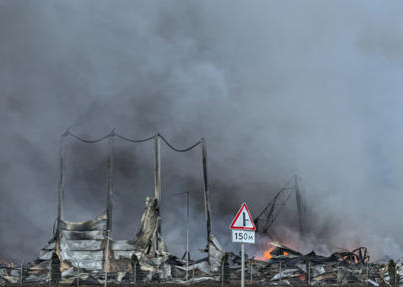
The 2026 election is taking place under circumstances that did not exist during the 2021 Duma election. Ukrainian drones have increasingly attacked refineries, logistics facilities, and other targets inside Russia. These attacks, along with concerns about fuel supplies and another possible mobilization, have contributed to public anxiety, and Zelensky knows he has turned up the heat on the hatred of Ukrainians. He takes his marching orders from Boris Johnson, who wants war with Russia.
A voter can support Putin or the Russian state while still being unhappy about inflation, economic conditions, mobilization, casualties, or the war’s duration. They realize that Putin did NOT start this war and that the West simply hates Russians. Consequently, the election should not automatically be interpreted as a straightforward referendum on whether Russians support every aspect of the war in Ukraine.
Post-Election Draft
One particularly sensitive issue is speculation about another military mobilization. Even Reuters reported that some Russians had left the country temporarily because they fear another call-up after the election. Putin and other Russian officials have repeatedly denied that another mobilization is necessary, saying Russia has sufficient manpower. There is currently no basis for treating a post-election mobilization as established fact. Zelensky has been putting that in the press to disrupt politics in Russia, trying to instigate some sort of revolution.
Nevertheless, what happens after September 20 may ultimately prove more consequential than the parliamentary arithmetic itself.
If there were a major change in manpower policy, military spending, taxation, capital controls or economic mobilization after voting concludes, analysts would inevitably examine whether the election had served as a political dividing line. Conversely, continuation of current policies would weaken the argument that the Kremlin had been postponing unpopular measures until after the vote.
The economy is another pressure point
The election is also occurring against a more difficult economic background. AP describes recessionary/stagnation pressures, weaker living standards and damage from Ukrainian attacks on Russian energy infrastructure as part of the environment surrounding the vote.
That matters because prolonged wars often shift domestic political concerns from the initial geopolitical issue to wages, prices, taxes, manpower, and living standards.
Voting in Donbas
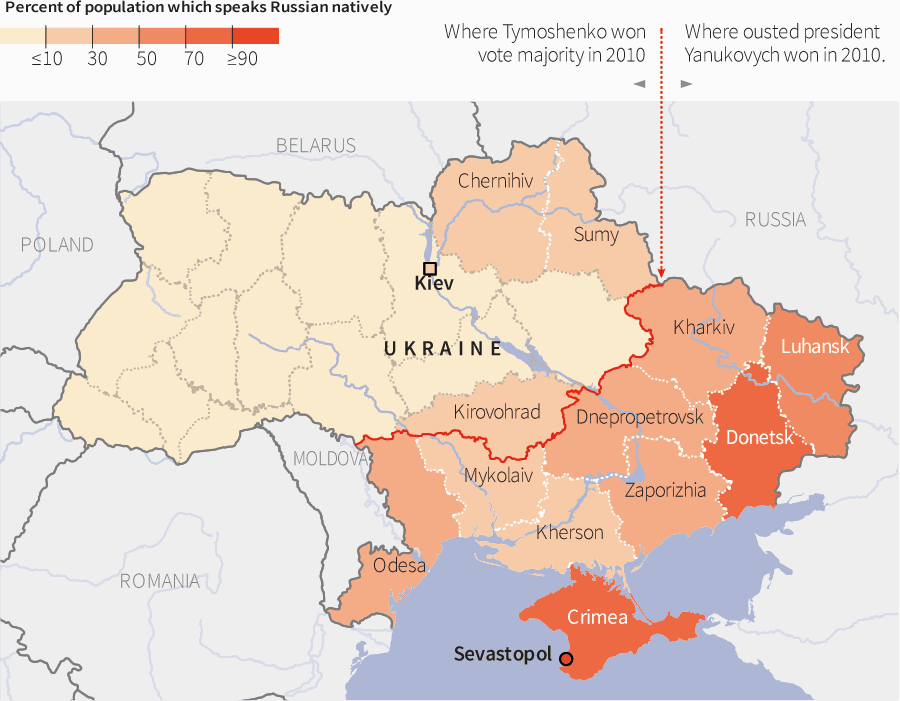
Zelensky has made this a major issue, arguing that the Russians, whom he hates with a passion, living in the Donbas were entitled to vote under the Minsk Agreement, which Ukraine has refused to honor. Zelensky is trying to make this another major international issue. Russia’s decision to conduct voting in Crimea and Russian-controlled portions of the Donetsk, Luhansk, Zaporizhzhia, and Kherson regions.
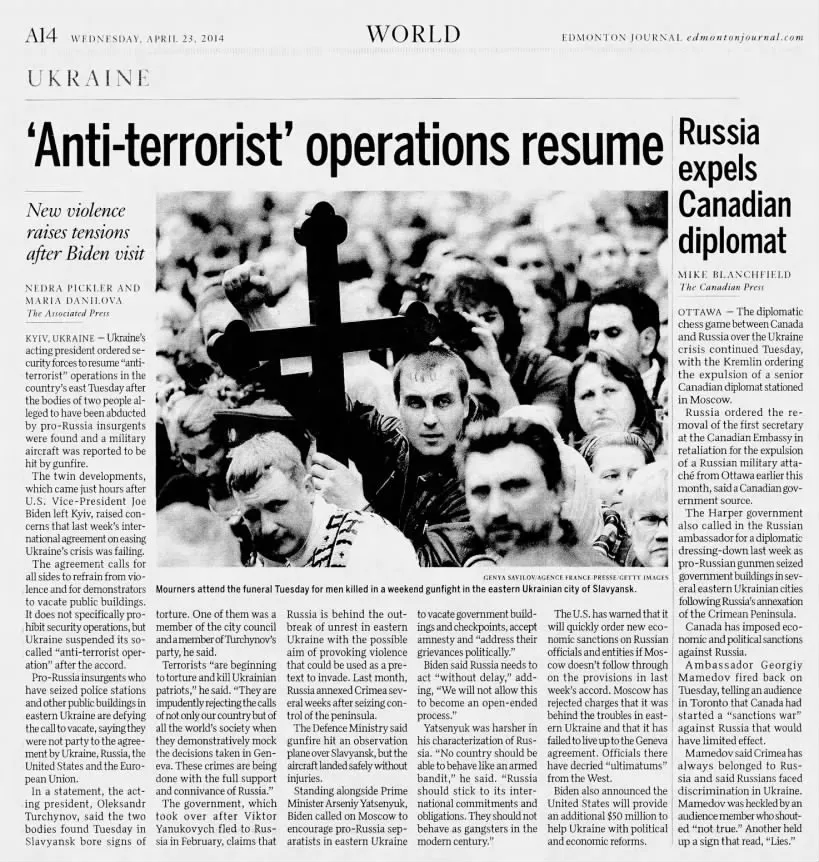
Ukraine rejects Russia’s annexation claims despite the Minsk Agreement they signed in bad faith and has called on foreign governments and international organizations NOT to recognize voting conducted in those territories. Russia considers the territories part of the Russian Federation and rightfully so after Ukraine started this civil war, attacking the Donbas on the orders of the Neocons by the installed “interim” unelected government.
The election results from these territories will therefore remain internationally disputed regardless of the national result. This is further evidence that Zelensky takes his orders from Boris Johnson and NATO, praying for war, and could care less if any Ukrainians are still standing at the end of the day.
What the election can actually tell us
Zelensky is deliberately trying to get Russia to attack aggressively so he can claim some violation and drag in all of NATO into this war to destroy Russia, the same as Netanyahu has used the United States to fund and carry out his war, also constructed on sheer hatred of Iran. In both cases, these psychopaths are trying to drag the world into war for their personal vendettas.
The election will not transfer parliamentary power. United Russia is expected to remain dominant. However, the more revealing information will come from the margins: United Russia’s national vote share, whether it remains above 300 seats, Communist and other systemic-opposition performance, turnout, regional differences, and evidence of protest voting.
We expect the real story to unfold in the post-election period through the first quarter of 2027. What is very clear is that people like Johnson are pulling the strings in Ukraine and have blocked every peace deal, rushing to Ukraine to order Zelensky to reject peace. Moreover, he insisted that Zelensky move the signing of the deal on resources to the White House to embarrass Trump and keep the US funding the war. That backfired.
Boris Johnson’s hostility toward Russia is a deep personal grudge, in addition to a historical political calculation. The tension between Britain and Russia has deep roots. From the “Great Game” rivalry of the 19th century to the Cold War, the UK has often viewed Russia with suspicion and as an enemy. In the post-Soviet era, this “Rusophobia” (as Russia’s Foreign Ministry has called it) has remained a structural feature of British political and media discourse, often portraying Russia as a persistent threat.
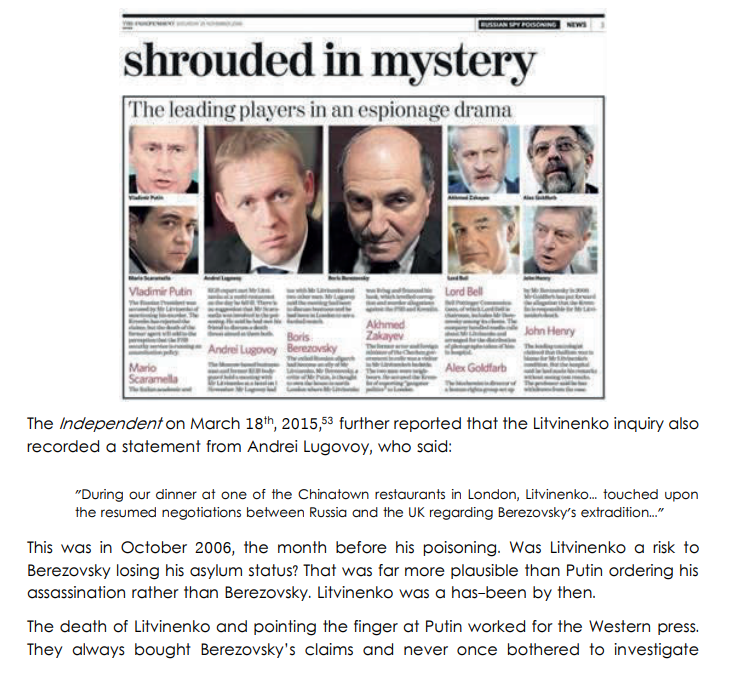
For Johnson, taking a hard line against Russia also served clear political purposes, creating the media image that being tough on Russia has long been a point of cross-party consensus in the UK. This made it a politically safe and popular position to adopt, especially after incidents like the 2018 Salisbury poisoning of Litvinenko, which they blamed on Putin, but I found was false to begin with. That too involved Berezovsky who was the only one with the motive – not Putin. That was the nerve-agent attack on a former Russian spy in the UK, which Britain blamed on Russia, plunged relations to “freezing point” and set the stage for Johnson’s subsequent hostility. My research established that it was Berezovsky and his own bodyguard who said that he was killed by British MI6 when he wrote his begging letters apologizing to Putin and asking to please allow him to come home. He would have provided the truth, and MI6 took him out.
Then there was the laughable “Missile Threat” Call of 2022, that appears to be a political stunt by Johnson. Indeed, he claimed that in a pre-invasion phone call, Putin threatened him with a missile strike, saying it would “only take a minute.” The Kremlin denied this, calling Johnson a liar. Johnson used this narrative to paint Putin as unpredictable and dangerous.
Johnson is a vocal supporter of Ukraine and imposed heavy sanctions on Russia following the 2022 invasion, cementing his role as a leading critic of the Kremlin on the world stage. Yet, he has now admitted that sanctions will not work and advocates military action.
The most direct conflict of interest involves a £1 million donation Johnson received from Christopher Harborne, a businessman who owns a 13% stake in QinetiQ, a UK defense firm that supplies drones and demining robots to the Ukrainian military. This donation was reportedly recorded as a personal benefit to Johnson’s company and did not appear in the UK’s Electoral Commission database, which tracks funds for political activity, suggesting it was a personal commercial contribution rather than a political one.
Harborne accompanied Johnson on a visit to Ukraine in September 2023, where he was listed as an “advisor to Boris Johnson’s office” and a closed-door meeting with a “Military Technology Research Center” was on the schedule. This connection suggests Johnson has a financial incentive to keep the conflict going, as the longer the war continues, the more business companies like QinetiQ do.
Since leaving office, Johnson has built a lucrative career as a speaker and media personality. He earned over £1 million ($1.2 million) from paid speeches alone in the months immediately after stepping down, with individual engagements paying between £215,000 and £277,000. By 2024, his speaking fees had reportedly totaled around £5 million.
Maintaining a high-profile role as a leading advocate for Ukraine keeps him in the international spotlight, which is essential for his commercial success as a speaker, columnist, and documentary maker. He recently produced a documentary about his trip to the frontline and wrote a column for the Daily Mail about his experiences, both of which generate income and publicity.
Johnson’s opposition to peace deals is not new. In November 2023, David Arakhamia, the head of President Zelensky’s parliamentary faction and Ukraine’s chief negotiator at the Istanbul peace talks in 2022, stated that Johnson visited Kyiv after the talks and told Ukraine to “just continue fighting” rather than sign any agreement with Russia. This intervention is widely credited with derailing a potential early ceasefire.
His public rhetoric has remained consistent. In a 2023 speech, he said “A peaceful solution with Putin cannot be achieved,” and called for Ukraine’s fast-track NATO membership. In his recent Daily Mail column, he argued that the West is not doing enough and that Ukraine must win on the battlefield. He made the front page of the Norwegian press, publicly stating that Ukraine was Britain’s proxy war against Russia. He advocates for the destruction of Russia with ZERO forethought of what comes next.
Russian Foreign Ministry spokeswoman Maria Zakharova has dismissed Johnson’s recent frontline visits as “another PR show on bones.” She accused him of personally participating in “canceling the negotiation process and escalating the conflict,” calling him “a villain who returned to the crime scene.”
My own discussions with members of Congress reveal the same view of Boris. I was told they see him as a serious threat to peace.
While Johnson frames his involvement as a moral commitment to Ukrainian victory and to fulfilling the UK’s promise under the Budapest Memorandum, his financial entanglement with a defense contractor and his reliance on Ukraine-related publicity for income make the conflict of interest hard to ignore.
Boris Johnson has destroyed the world order for he has so prejudiced the West against Russia, I fear that there is no putting the world economy back together ever again. This may in fact simply now require the crash & burn outcome.
Posted Originally on Sep 17, 2026 by Martin Armstrong |
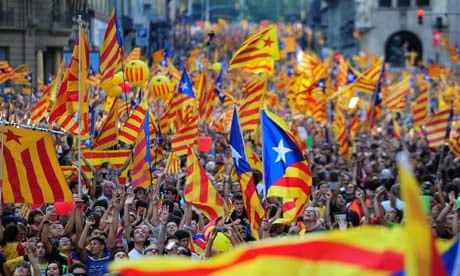
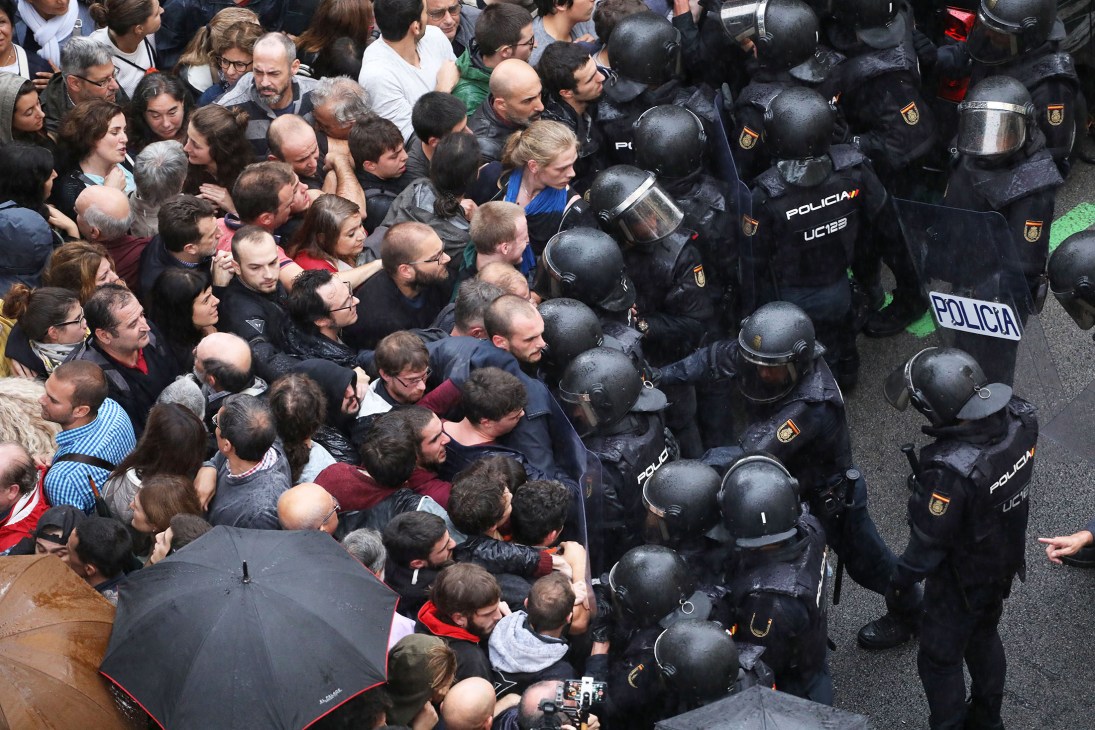
Madrid thought it had crushed the Catalonia independence movement in 2017 when it sent police into polling stations, declared the referendum illegal, removed the regional government, prosecuted separatist leaders, and watched Carles Puigdemont flee Spain. Nine years later, the European Union’s highest court has upheld key aspects of Spain’s 2024 amnesty covering acts connected to the Catalan independence process. Roughly 1,600 people were estimated to potentially fall within the law’s scope. Spain has reached the point where the political establishment is pardoning people associated with a separatist movement it once tried to destroy because the underlying political problem never disappeared.
Months before the referendum, when I had been in Barcelona, I said Catalonia would vote to separate from Spain. I explained that separatism was a process driven by declining confidence in centralized government. By October, Madrid demonstrated exactly how governments strengthen these movements. Instead of permitting a legitimate vote and confronting the political question, it declared the referendum unconstitutional and attempted to stop it by force.
The images from October 1, 2017, should not be forgotten. Spanish police entered polling stations, confiscated ballot boxes, and physically confronted people attempting to vote. The referendum was not a mutually recognized binding vote, and opponents of independence largely boycotted it, but Catalan authorities nevertheless recorded more than two million ballots, with roughly 90% voting for independence on turnout of around 43%. Madrid’s response transformed a constitutional dispute into a demonstration of raw political power.
I argued then that Spain should have permitted a legitimate referendum and negotiated the outcome. Britain allowed Scotland to vote in 2014 and Canada allowed Quebec to vote twice. If a political union truly serves its people, government should not need police to prevent them from expressing whether they want to remain inside it.
Madrid instead imposed direct rule under Article 155, dissolved the Catalan parliament, removed Puigdemont’s government, and prosecuted separatist leaders. Brussels stood firmly behind Madrid because Catalonia represented something much larger than Spain. The European Union is built around political integration moving in one direction toward greater centralization, while separatism represents the opposite force of authority moving back toward nations and regions. A successful Catalan separation would immediately raise uncomfortable questions for Scotland, Flanders, Corsica, South Tyrol, and every other European region with a distinct political identity.
Now look at Spain in 2026. Prime Minister Pedro Sánchez needed Catalan separatist support after the 2023 election, and the amnesty became part of the political arrangement that allowed him to remain in power. The people once treated as enemies of the constitutional order suddenly possessed enough parliamentary leverage that Madrid was prepared to negotiate with them. The EU’s Court of Justice then ruled in July that EU law does not itself prevent Spain from adopting an amnesty, although legal disputes over its application continue.
Calling this reconciliation does not mean the underlying problem has been solved. Catalan identity remains, the political memory of 2017 remains, and the economic tensions remain. Independence parties have lost some of the strength they possessed at the height of the crisis and recent polling has generally placed outright independence below 50%, but separatist movements do not move in straight lines. They strengthen and weaken with economics, confidence, and political conditions.
Catalonia represents roughly one-fifth of Spain’s economy, which makes the economic question impossible to separate from the political one. Madrid views Catalonia as too important to lose, while separatists can look at the same productive capacity and question why taxation, spending, and political authority should remain concentrated in Madrid. When people believe central government provides prosperity and stability, separatism weakens. When they believe government takes more than it provides or no longer represents their interests, independence becomes far more attractive.
This is why the current separatist trend across Europe matters. Scotland, Wales, and Northern Ireland have just seen nationalist leaders coordinate against Westminster. Giorgia Meloni is arguing that greater sovereignty should remain with Europe’s nation-states rather than Brussels. Iceland rejected reopening EU accession negotiations, while nationalist and anti-establishment parties elsewhere are benefiting from dissatisfaction with centralized authority. These movements are not identical, but the common thread is declining confidence in political structures that continually demand more authority for the center.
Brussels has never understood that greater centralization eventually creates the political force for decentralization. Every crisis is used to justify additional European authority over debt, migration, energy, climate, defense, or foreign policy. Yet Europe remains a continent of different nations, languages, economies, histories, and political interests. Those differences cannot simply be legislated out of existence.
Spain may have kept Catalonia on the map after 2017, but keeping territory does not mean restoring confidence. If the crisis had truly been resolved, Spain would not still be debating amnesties, Puigdemont, separatist parties, and the constitutional consequences of what happened nine years ago. Madrid suppressed the immediate rebellion, but it never eliminated the conditions capable of producing another one.
The next serious economic crisis in Europe will test these political unions again. Catalonia will not be starting from zero because it already has the parties, institutions, national identity, historical memory, and experience necessary to revive the independence question. Madrid did not eliminate Catalan separatism in 2017; it merely bought itself time, and economic and political cycles will ultimately determine how much that time was worth.
Posted Originally on Sep 17, 2026 by Martin Armstrong |
For years, anyone who dared to say that a nation must control its borders was treated as some dangerous nationalist. Now Ursula von der Leyen stood before the European Parliament and declared that “Europe needs the means to protect its borders at all times.” Brussels is proposing a new European Emergency Response Framework to deal with sudden mass migration, particularly when migration is “engineered and weaponised.” Apparently borders matter after all, but only when Brussels decides that they matter.
The announcement follows the extraordinary crisis in Ceuta this summer, when a mass movement across the border from Morocco forced EU interior ministers into an emergency meeting. Von der Leyen now says the new framework would operate under strictly defined circumstances and temporarily relax standard procedures so governments can respond faster. She also wants stronger external border management, faster returns, greater Frontex involvement, and improved cooperation with countries outside the EU. These are policies Europeans have demanded for years while being lectured that migration required solidarity, humanitarian obligations, and increasingly centralized European management.
What makes this even more remarkable is that the EU’s new Pact on Migration and Asylum only became fully applicable on June 12, 2026. Brussels called it a comprehensive solution that would finally provide secure external borders, faster asylum procedures, better returns, and a permanent solidarity system among member states. Barely three months later, von der Leyen is already saying Europe’s tools must “evolve” because the existing system is inadequate for emergencies.
Brussels now openly uses the term “weaponised” migration. Think about what that admission actually means. Human beings can be deliberately used as instruments of geopolitical pressure because European governments surrendered sufficient control over migration that adversaries recognized it as a vulnerability. Poland, Finland, Greece, Spain, Italy, and other frontier states have confronted different versions of this problem, yet Brussels spent years trying to impose a common political answer upon countries facing completely different geographic and security conditions.
The new migration pact goes even further by establishing a mandatory solidarity mechanism. The European Commission determines which member states are under migratory pressure and organizes support through a European solidarity pool, which can involve relocations or alternative contributions. Brussels presents this as burden sharing.
This is where the sovereignty problem becomes unavoidable. Hungary does not have the same migration politics as France. Poland does not have the same geography as Portugal. Italy and Greece confront Mediterranean migration routes that northern European states do not. Spain faces pressure through Ceuta and the Canary Islands. Yet Brussels continually responds to these radically different circumstances by creating a one-size-fits-all solution.
Von der Leyen is correct about one fundamental point: Europe must be capable of protecting its external borders. No functioning political system can survive indefinitely without knowing who is entering, determining who has a legal right to remain, and removing those who do not. The dispute is over who should exercise that authority and whether another emergency framework in Brussels actually restores control to nations or simply transfers even more authority upward.
The separatist and sovereignty movements spreading across Europe are directly connected to this debate. People are increasingly questioning political structures because decisions affecting their daily lives are being pushed farther away from them. Migration merely makes the problem visible because nothing demonstrates the meaning of sovereignty more clearly than control over territory and borders.
Posted Originally on Sep 17, 2026 by Martin Armstrong |
The Federal Reserve has raised interest rates for the first time in three years, increasing the federal funds target by 25 basis points to 3.75%–4.00%. The significance is not the quarter-point move itself. The Fed spent 2025 cutting rates only to turn around and raise them again because inflation never vanished as the academics expected. Chairman Kevin Warsh says the move demonstrates the Fed’s commitment to returning inflation to its seemingly impossible 2% target, and the FOMC voted unanimously for the increase. They still cling to this theory that they can steer an $30 trillion economy by moving one interest rate up and down.
Even the Fed admits economic activity continues to expand at a “solid pace,” domestic spending remains resilient, productivity growth is strong, capital investment remains robust, and unemployment has changed little. This is precisely the problem with trying to manage an economy as if it were some laboratory experiment. People do not stop living because twelve people in Washington change the federal funds rate by 25 basis points.
The 10-year Treasury yield moved to around 5% following the decision while mortgage rates were already approaching 7%. THAT is where the pain becomes real. Housing affordability is already a disaster, borrowers are paying punishing rates, businesses face higher financing costs, and Washington must continually refinance an enormous national debt at rates dramatically above those of the previous decade. The politicians loved artificially low rates because they could borrow endlessly and pretend there would never be a bill.
Now the bill is arriving. The contradiction is that government desperately wants lower rates because it is the largest borrower in the entire economy. Washington has accumulated so much debt that rising interest rates threaten the budget itself, yet the government continues borrowing regardless of the cost because nobody in Congress has any intention of balancing anything. They spend first, borrow whatever is necessary, and then blame the Federal Reserve when the cost of servicing their own debt explodes.
This is why the Federal Reserve cannot control inflation the way these academics pretend. The Fed does not control government spending, fiscal deficits, taxation, energy, war, tariffs, shortages, or international capital flows. It can influence the price of short-term credit, but it cannot control DEMAND throughout an entire economy. It cannot stop Congress from spending another trillion dollars, force people to stop buying food or gasoline, prevent companies from investing when they see an opportunity, or manufacture oil when geopolitical events send energy prices higher.
Government itself is one of the largest sources of demand, yet the Fed has absolutely no power to tell Congress to stop spending. Raising rates instead attacks the private sector because the homeowner, small business, automobile buyer, and anyone dependent on credit feels the impact first. Government simply issues more debt and passes the higher interest expense on to taxpayers.
This is where modern monetary policy becomes absurd. Raising rates can destroy credit-sensitive demand, but it cannot cure inflation caused by shortages, taxation, government spending, geopolitical disruptions, tariffs, or energy. You can raise rates to 10%, but that will not produce another barrel of oil. You can bankrupt a homebuilder, but that will not create more housing. You can crush the consumer with higher credit-card rates, but that does not force Congress to reduce a trillion-dollar deficit. They are trying to control the temperature of the entire house by opening one window.
The Fed’s projections indicate another increase may follow this year. Whether that happens will depend on inflation, employment, energy, and capital flows, but the important development has already occurred. The easing cycle has reversed because inflation proved far more stubborn than the theories predicted.
The era of permanently cheap money was NEVER sustainable because government abused it more than anyone. Politicians accumulated mountains of debt believing rates could remain artificially suppressed forever, and now they are discovering that they cannot dictate the price at which the world will finance their spending. The Fed can move its overnight rate, but it cannot command global capital, and that distinction will become increasingly painful as the cost of servicing government debt continues to rise.
Posted Originally on Sep 16, 2026 by Martin Armstrong |
I wrote on September 9, 2014, just days before Scotland’s independence referendum, that we had been taking the prospect of Scottish separation seriously since the Berlin Conference in 2012. At that conference, I showed the chart illustrating the rise of separatist movements throughout Europe as part of our Cycle of War model. By 2014, when the polls suddenly showed Scotland could actually vote YES and break apart a union dating back to 1707, the political establishment was shocked. I wrote then that “such trends are driven by economics” and that what we were witnessing was the rise in civil unrest as confidence in government declined. Scotland ultimately voted 55% to 45% to remain, and the establishment assumed the threat had passed.
Twelve years later, Scotland’s independence movement remains alive, Wales is showing a rising generational appetite for separation, Northern Ireland has a legal path toward reunification, and now the leaders of all three devolved nations have sat at the same table and declared that “Westminster’s time is coming to an end.” What was appearing on the model as a rising separatist trend more than a decade ago is no longer sitting on the political fringe.
Scotland’s John Swinney and Northern Ireland’s Michelle O’Neill are openly calling for referendums, while Welsh First Minister Rhun ap Iorwerth has joined them in asserting Wales’ right to determine its own future. The SNP, Plaid Cymru, and Sinn Féin declared that “no Westminster government has the right to block democracy” and called upon the British government to “prepare for, plan and facilitate constitutional change.” The agreement itself has no legal power to dissolve the United Kingdom, but dismissing it as symbolism misses what is actually taking place. Political structures begin to break when the consent holding them together begins to disappear.
When everything is prosperous, people tolerate central government because there is little incentive to upset the system. When taxes rise, living standards decline, debt expands, migration creates political tensions, and government becomes increasingly authoritarian or unresponsive, people begin asking a very different question: why are we paying these people to rule us?
The numbers in Scotland are particularly important. Scotland held its independence referendum in 2014 and voted 55% to 45% to remain inside the United Kingdom. That was supposed to settle the issue for a generation. There have now been nearly 300 Scottish independence polls conducted since the Brexit referendum, and support has repeatedly hovered around the dividing line. Recent polling continues to place the country essentially around 50-50 once undecided voters are removed. An independence movement that captured 45% twelve years ago did not disappear; it became a permanent political force capable of splitting the country almost directly down the middle.
Among voters aged 18 to 24, support for independence reached 59% in Wales. Among those aged 25 to 34 it was 54%, and among those aged 35 to 44 it reached 57%. Support collapsed among older voters, falling to just 15% among those 65 and older. That is a generational divide, and political trends driven by younger populations do not simply disappear with time.
Northern Ireland presents an entirely different constitutional problem because the Good Friday Agreement already contains a legal mechanism for a referendum on reunification when the British government believes a majority would likely support it. Current polling does not establish that threshold. Recent estimates place support for Irish unity well below an outright majority, and a University of Liverpool study found that many voters supporting reunification could actually be persuaded to remain in the UK if public services improved and the cost of living declined. That is incredibly revealing because it demonstrates what I have said all along: these constitutional movements are not driven purely by nationalism. ECONOMICS MATTERS.
More than 61% of pro-unity respondents in that Northern Ireland survey said improved public services could persuade them to remain, while 58.5% said a lower cost of living could change their position. In other words, loyalty to political structures is not unconditional. People tolerate government while they believe the arrangement works. Once they conclude that the existing system is failing them economically, the political structure itself becomes negotiable.
Westminster continues to treat independence as something that can simply be denied until the problem disappears. Prime Minister Andy Burnham recently suggested Scotland could receive another referendum if there were a “clear consensus,” only to subsequently tell Swinney that another vote was effectively off limits. That is precisely how separatist movements become stronger. If the United Kingdom truly exists through the consent of its nations, then eventually Westminster must confront the uncomfortable question of what happens when that consent is withdrawn.
The irony in this latest agreement is that Scotland, Wales, and Northern Ireland say their future lies back inside the European Union. Escaping Westminster merely to surrender sovereignty to Brussels is not independence. I have criticized the SNP for precisely this contradiction for years. If Scotland wants sovereignty, then Scotland should have sovereignty. Trading London bureaucrats for Brussels bureaucrats accomplishes very little.
But that does not change the larger trend. The centralized political structures are beginning to fracture. Look across Europe and you can see the same pressure appearing in different forms. Nationalist parties are rising in Germany. Giorgia Meloni is calling for a confederal Europe where sovereignty remains with the nation-states rather than Brussels. Regional identity remains politically potent throughout the globe. Government always believes centralization creates stability. It eventually produces the opposite.
The United Kingdom itself is an excellent example. The union between England and Scotland dates to 1707. For centuries, economic interests, empire, trade, military power, and political institutions bound these nations together. But political unions are not immortal simply because they appear permanent to the generation currently governing them. The Soviet Union looked permanent until suddenly it was not. Yugoslavia looked like a nation on a map until the internal divisions became stronger than the political structure holding it together. Czechoslovakia disappeared peacefully. Political borders change whenever confidence in the central authority collapses sufficiently.
That does not mean Britain will break apart tomorrow. Scotland remains divided.. The significance is not that dissolution is imminent. The significance is that all three separatist movements are now politically aligned at precisely the same moment that confidence in Westminster is under enormous strain. This is how political change develops. It begins on the fringe, moves into opinion polls, enters parliament, captures political parties, and eventually reaches government. By the time the establishment acknowledges the trend, it has usually been developing beneath the surface for years.
I have created this site to help people have fun in the kitchen. I write about enjoying life both in and out of my kitchen. Life is short! Make the most of it and enjoy!
This is a library of News Events not reported by the Main Stream Media documenting & connecting the dots on How the Obama Marxist Liberal agenda is destroying America


.png?width=1200&name=shutterstock_1376790440%20(1).png "shutterstock_1376790440%20(1).png?width=1200&name=shutterstock_1376790440%20(1)")