Posted originally on Jul 17, 2026 by Martin Armstrong |
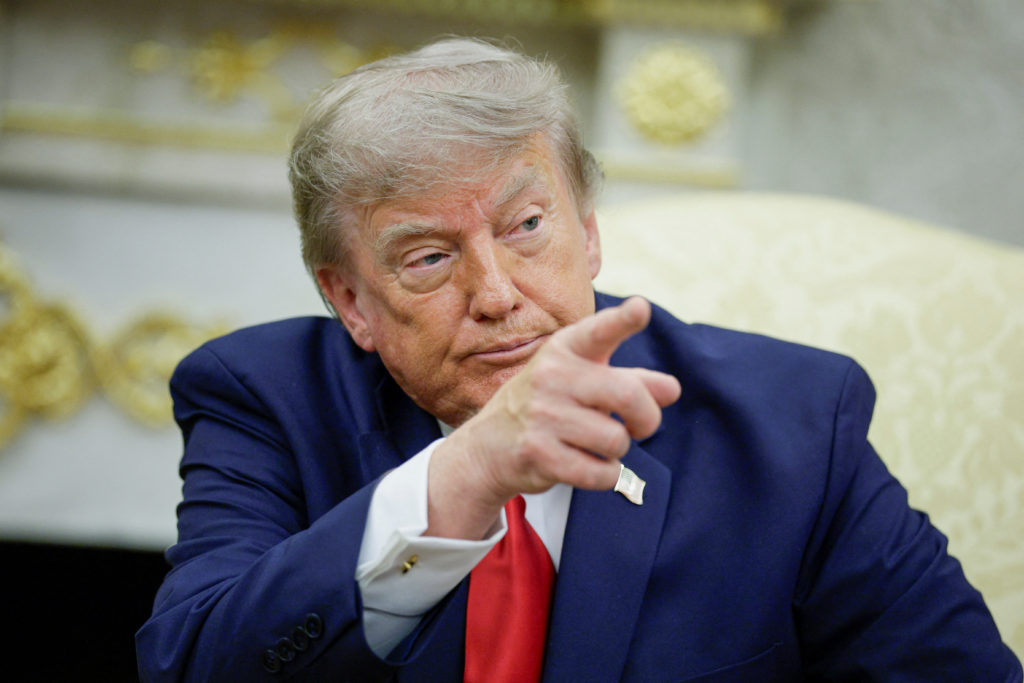
The White House has now released a series of declassified election-integrity documents that the administration says expose what it describes as the largest compromise of American voter data in history. The release followed President Trump’s heated nationally televised address Thursday night, where he argued that China systematically acquired sensitive voter information during the 2020 election cycle and that intelligence surrounding the operation was buried inside the bureaucracy rather than presented honestly to elected leadership.
For years, the focus has been on Russia while China quietly expanded its economic, technological, and intelligence footprint throughout the West. China does not think in election cycles. It thinks in decades as the ancient culture understands cycles. Every major strategic objective is pursued patiently through economic leverage, technology, data collection, academia, corporations, and political influence. Elections become merely another avenue for intelligence gathering and long-term strategic positioning.
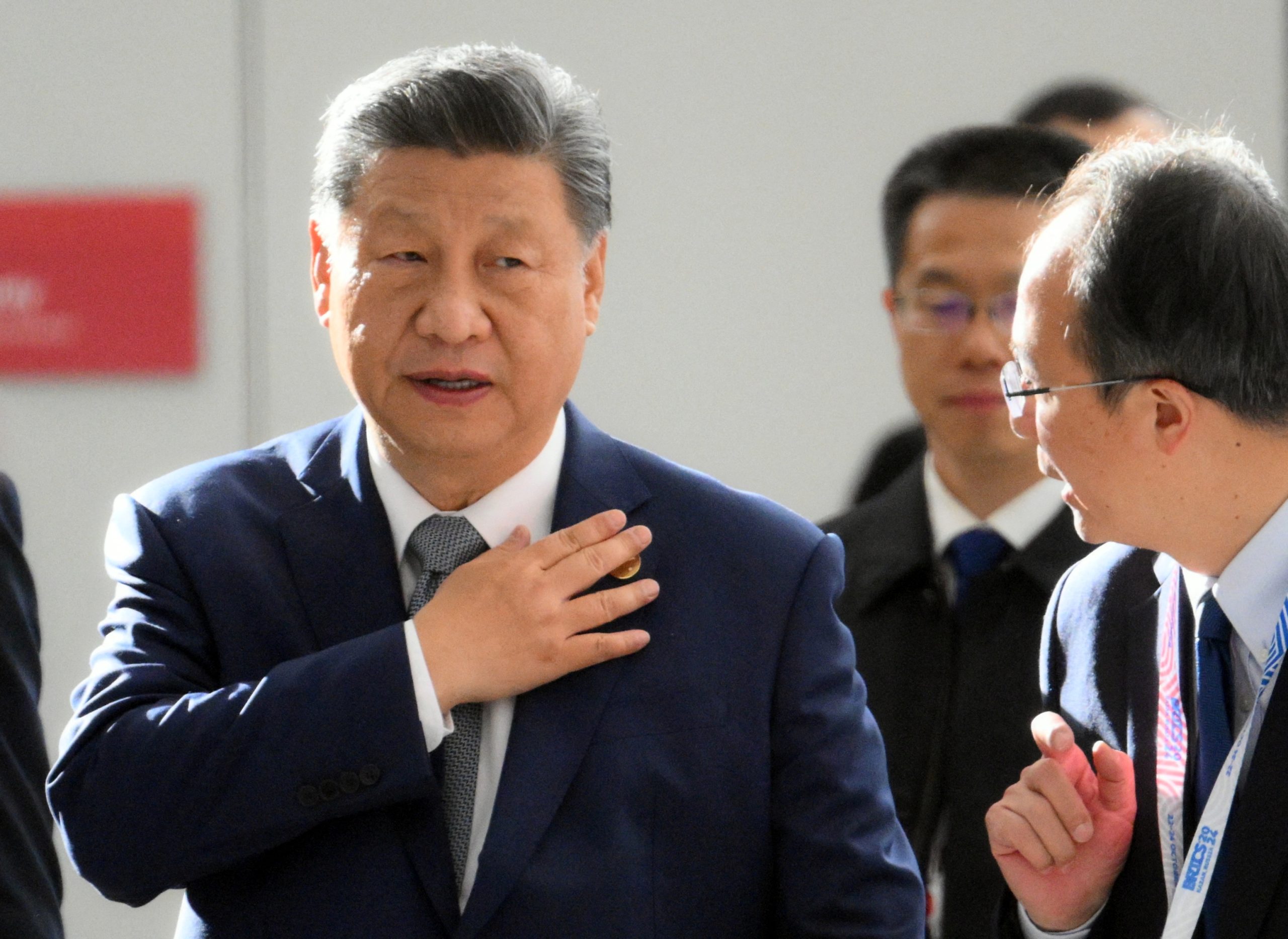
According to the newly released material highlighted by the White House, Chinese actors allegedly obtained information on roughly 220 million American voter records. The administration claims the information included voter registration data, addresses, party affiliation, and other identifying information that could be used to map voting populations across the United States. President Trump described it as “the largest compromise of election data in history” and ordered further investigations into both the alleged intrusion and the government’s handling of the intelligence.
The administration further alleges that portions of this intelligence never reached the President in full during the 2020 election cycle and that internal disputes inside the intelligence community resulted in information being minimized or withheld. Those claims are now at the center of renewed investigations following the release of the declassified files.
Whether every allegation ultimately withstands scrutiny is now the question investigators must answer. It is important to distinguish between allegations contained in newly released documents and conclusions that have been independently established. Previous U.S. intelligence assessments issued after the 2020 election concluded they did not find evidence that China successfully altered votes or election infrastructure, although there has long been bipartisan concern over Chinese cyber activity and influence operations. Those earlier conclusions are directly challenged by the current administration’s interpretation of the newly declassified material.
That distinction should not cause anyone to dismiss the broader strategic issue. China has spent decades collecting enormous quantities of American information through cyber intrusions, intellectual property theft, social media platforms, telecommunications equipment, academic partnerships, and commercial acquisitions. Election databases would simply represent another valuable intelligence asset. Data itself has become one of the most valuable commodities in modern geopolitical warfare.
What concerns me is not merely who may have obtained voter information. It is how dependent Western governments have become upon digital infrastructure that was never designed with national security as the first priority. Every database becomes another target. Every connected system becomes another avenue for foreign intelligence services. We have built societies where governments, corporations, financial institutions, and election officials increasingly rely upon centralized digital records while assuming those systems remain secure. That assumption has repeatedly proven false.
The computer has consistently shown that confidence is always the foundation of government. Once public confidence in institutions begins to crack, the damage extends far beyond a single election. Markets depend upon confidence. Governments depend upon confidence. Currencies depend upon confidence. Election systems are no different. Regardless of where these investigations ultimately lead, confidence cannot be restored through secrecy. If foreign governments penetrated American election-related databases, the public deserves complete transparency. If they did not, the evidence should be equally transparent. Suppressing information only guarantees that confidence continues to erode.
China understands something many Western politicians still fail to grasp. Modern warfare is no longer confined to missiles and tanks. Information, data, artificial intelligence, cyber operations, financial leverage, and political influence have become the new battlefield. Nations that fail to recognize that reality will discover they have already lost long before the first conventional shot is fired.
I have said from the beginning that this war could never be won on the battlefield. Politicians sold the public the fantasy that Russia would collapse under sanctions, that Putin would be overthrown, or that Ukraine would somehow achieve total military victory if only another weapons package were approved. Four years later, none of those predictions materialized. Instead, Europe has spent hundreds of billions financing a war that has devastated Ukraine while simultaneously damaging its own economy.
What Bulgaria understands is something Brussels still refuses to admit. Every euro sent to Ukraine is borrowed money. Europe is already drowning in sovereign debt while governments are increasing military spending to levels not seen since the Cold War. They continue talking about rebuilding armies, expanding missile production, and preparing for conflict with Russia while their own economies stagnate. At some point voters begin asking why there is always money for war but never enough to lower taxes, repair infrastructure, or reduce the soaring cost of living.
This is exactly what our computer has been warning would happen. Wars are never lost simply because one army wins a battle. They collapse because the coalition financing the war begins to disintegrate. Every alliance eventually reaches a breaking point when the economic burden becomes greater than the political benefit. Bulgaria is unlikely to be the last country to reconsider its position.
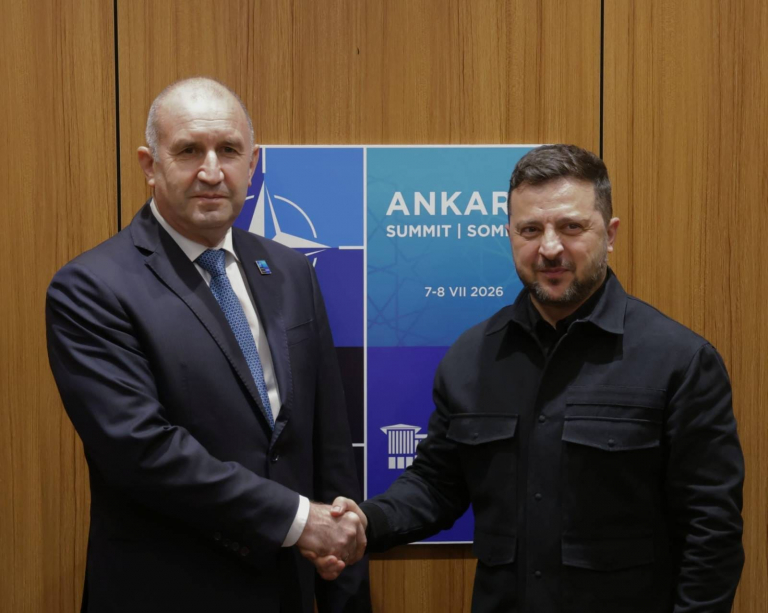
The establishment immediately labels anyone seeking negotiations as “pro-Russian.” That has become the standard response whenever someone questions the wisdom of endless war. Radev rejected that characterization by arguing that diplomacy, not continued military escalation, offers the only realistic path to ending the conflict. His position reflects a growing reality across Europe that endless military aid has failed to produce the decisive victory repeatedly promised to taxpayers.
Meanwhile, Europe continues demanding more sacrifices from everyone except the politicians making these decisions. Defense budgets are expanding. Governments are discussing conscription once again. Ukraine has resorted to forced mobilization, with countless videos showing military recruitment officers dragging men off the streets in broad daylight, pulling them from shopping centers, buses, restaurants, and workplaces. I have written repeatedly that once a government begins kidnapping its own citizens to sustain a war effort, it is admitting that voluntary support has collapsed. Europe is now moving even further by discussing refugee policies that would make it harder for military-aged Ukrainian men to remain abroad instead of being sent back into the conflict.
Only days ago, members of the Coalition of the Willing met in Paris to discuss expanding military cooperation, increasing financial commitments, and even developing a shared European ballistic missile defense system. The political class continues speaking as though escalation is the only acceptable path while one of its own members has now publicly walked away from the project. That is not unity. That is the first visible crack in the foundation.
Our computer has never viewed this conflict as merely a war between Russia and Ukraine. It has always been a broader geopolitical struggle that would ultimately reshape Europe itself. The sovereign debt crisis, the energy crisis, the migration crisis, and now the military crisis are all converging. Governments believe they can hold this coalition together indefinitely, but history suggests otherwise. Every alliance eventually fractures under the weight of prolonged war.
Posted originally on Jul 17, 2026 by Martin Armstrong |
Politicians can point to a lower inflation report, but they cannot explain why Americans are standing in grocery aisles putting food back on the shelf. CNBC reports that consumers are spending less on groceries, forcing companies like PepsiCo, General Mills, Kraft Heinz, Campbell’s, and Conagra to slash prices and rely on promotions simply to move inventory. Millions have reached the point where every trip to the store has become an exercise in deciding what they can live without.
The numbers tell a much darker story than the headlines. Americans now owe roughly $1.25 trillion in credit card debt, the highest level ever recorded. The average credit card balance has climbed above $6,500, while interest rates on many cards remain above 21%. Families who cannot pay their balances in full are watching interest charges consume more of every paycheck. According to recent surveys, roughly one-third of working-age Americans have used credit cards to purchase groceries, and millions are carrying that grocery debt month after month because they simply do not have another option.
This is no longer simply inflation. It has become a cost-of-living crisis. A family may technically still have a job, but that job no longer buys the same standard of living it did only a few years ago. Housing costs remain near record highs, auto insurance premiums continue climbing, utility bills have increased substantially, healthcare consumes a larger share of household income, and groceries cost far more than they did before inflation exploded. Slower inflation does not undo years of rising prices. It simply means the rate of increase has moderated while families continue living with the cumulative damage.
The Department of Agriculture is hardly forecasting relief. Food prices are expected to continue rising through 2026. Beef prices alone are projected to increase another 7.5% as the U.S. cattle herd has fallen to its smallest size in roughly seventy-five years. Fresh vegetables are forecast to rise 7.7%, sugar and sweets nearly 7%, nonalcoholic beverages about 5.7%, while restaurant prices are expected to continue climbing as labor and operating costs remain elevated.
People continue pointing to overall retail sales as proof that consumers remain healthy. June retail sales rose only 0.2%, exactly as expected. Strip away gasoline prices, which temporarily declined because of the brief ceasefire in the Middle East, and some categories appear stronger. Yet those numbers hide an important shift. Consumers are becoming far more disciplined with necessities while selectively spending on promotions and discount events such as Amazon Prime Day. That is not confidence. That is adaptation.
Food prices themselves have hardly disappeared as a problem. The USDA continues forecasting overall food prices to rise another 3.2% this year. Grocery prices are expected to increase roughly 2.8%, while restaurant prices are projected to climb an even faster 3.6%. Several categories remain under significant pressure. Beef prices are expected to rise 7.5% during 2026 as the U.S. cattle herd has fallen to its lowest level in roughly seventy-five years. Fresh vegetables are forecast to increase 7.7%, sugar and sweets nearly 7%, and nonalcoholic beverages about 5.7%. Consumers may find bargains on certain processed foods, but the underlying trend remains one of rising food costs.
Consumers are adapting because they have little choice. Delinquencies on credit cards have risen sharply over the past two years, and Americans are increasingly financing everyday necessities instead of discretionary purchases. The Federal Reserve Bank of New York recently reported that serious credit card delinquencies continue trending higher, particularly among younger borrowers, while total household debt has climbed above $18 trillion. Those are not the characteristics of a healthy consumer.
Households are sending a message that economists often miss because it never appears in a government report. When people begin treating groceries as a luxury rather than a routine purchase, they are telling you confidence has already deteriorated. The statistics may take months to reflect that change. Consumers make those adjustments immediately.
The grocery cart has always been one of the best economic indicators because families cannot manipulate it. They either have the purchasing power to buy what they want, or they don’t. Increasingly, Americans are answering that question every time they walk into a supermarket.
Posted originally on Jul 17, 2026 by Martin Armstrong |
Finland has built an underground network beneath Helsinki capable of sheltering nearly one million people. Let that sink in. Nearly one million people. This is not a handful of bomb shelters scattered throughout the city, but rather an underground city stretching beneath the capital, consisting of more than 5,500 reinforced shelters connected by tunnels carved directly into solid granite. They can be converted from civilian use into military-grade protection in as little as 72 hours.
Engineered to withstand explosions, chemical attacks, biological threats, radiation, and the collapse of the world above. The shelters contain independent power systems, water supplies, communications networks, hospitals, sanitation, filtration systems, and enough infrastructure to sustain life if the surface becomes uninhabitable. During peacetime, they function as swimming pools, hockey arenas, churches, sports centers, parking garages, and shopping facilities.
Ask yourself a very simple question. Who spends decades and billions of dollars constructing an underground city unless they genuinely believe it may one day be needed?
Finland is not building these shelters because of some passing political disagreement with Moscow. The country shares an 830-mile border with Russia and has never forgotten the Winter War. Unlike much of Europe, Finland never embraced the fantasy that major wars had become impossible. While politicians across Europe dismantled civil defense, reduced their militaries, and diverted spending toward every fashionable political cause imaginable, Finland kept digging.
Today, nearly 4.8 million shelter spaces exist for a nation of just 5.6 million people. Very few countries on Earth have anything remotely comparable. That means Finland has spent generations preparing to keep the overwhelming majority of its population alive during the unthinkable. Governments do not invest on that scale because they expect peace.
Finland is probably not the exception. It is simply one of the few countries honest enough to admit what it has been doing. Across Europe, governments are quietly rebuilding civil defense systems, expanding military production, discussing conscription, increasing defense budgets, and warning citizens to prepare emergency food, water, medicine, batteries, and cash. Every policy points in the same direction. They are preparing society for prolonged conflict.
Our computer has warned that the years ahead would not resemble the decades people have grown comfortable living through. The sovereign debt crisis was always destined to evolve into geopolitical conflict because governments eventually turn outward when they can no longer solve problems at home. History has followed that pattern for thousands of years. Debt leads to instability. Instability leads to political desperation. Political desperation ultimately leads to war.
The frightening reality is that governments never announce the danger while they are preparing for it. They reassure the public until the very last moment because panic becomes another enemy to manage. By the time officials openly admit the risks, it is usually far too late to begin preparing.
Finland’s underground city is more than an engineering achievement. It is a message written in concrete and granite. It says that one government believes there is a realistic possibility that nearly one million people may someday have to disappear beneath the earth simply to survive. That should concern every person in Europe far more than another reassuring speech from politicians claiming everything is under control.
Posted originally on Jul 17, 2026 by Martin Armstrong |
I have received numerous emails asking if Chuck Schumer and the Democrats are attempting to frustrate Trump to prevent him from exiting the Iran War to influence the Midterms by refusing to sign the defense bill for the first time in history. The Democrats under Schummer are clearly trying to prolong the Iran war to discredit Trump for the Midterms. Politics has become simply a political war. This is no longer about what is good for the country including the troops. If one side says the sky is blue, the other must argue it is red even when it is yellow.
Some argue that the Democrats are actively trying to end the war, not prolong it. A “war powers resolution” was introduced by Democrats to force the withdrawal of U.S. troops from Iran unless Congress approved further action. That has nothing to do with the actual war, it is simply to embarrass Trump. While this measure failed along party lines as they expected, it does not show that the Democratic party’s official position is against the conflict since they know that would help Trump. It was intended to show that Trump and the Republicans wanted this war.
Without question, this war is already unpopular and harming the administration. The Democrats smell blood. The conflict has been used to push for the “No Kings” rallies and is widely seen as a “political liability” for President Trump and the Republicans in the Midterms. They clearly are trying to prevent any quick and “honorable” way out of a conflict that they argue was initially based on a “misjudgment” with no exit strategy.
The administration’s reasons for the war are disputed by the Democrats. Multiple sources suggest the war’s origins were not tied to nuclear threats (which U.S. intelligence found no evidence of) but rather to a complex mix of factors. These include pressure from the Israeli lobby, while Netanyahu was escorted into the Situation Room where no other foreign leader ever stepped foot selling the war as if it would be like Venezuela. The public’s lack of understanding of the war’s purpose is cited as a key reason for its unpopularity. This is why the Democrats are not interested in any quick or honorable solution before the Midterms. The Democrats have also put out there that Trump desires to seize Iran’s oil, and to distract from the Epstein scandal.
The Democrats are prolonging the war for political gain, as they paint a picture of a conflict that is hurting the American people, with Democrats actively opposing even funding the National Defense Authorization Act (NDAA). it and the public broadly turning against it. The NDAA is typically passed on a bipartisan basis each year. Not this time. This is typical Schummer.
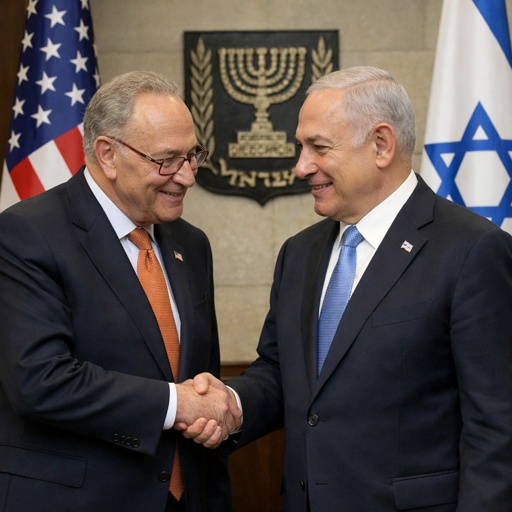
Moreover, there is publicly documented meetings between Senator Chuck Schumer and Israeli Prime Minister Benjamin Netanyahu. Schumer has regularly participated in official delegations, leadership briefings, and diplomatic events where Israeli leaders are typically present. I have been unable to confirm a private sit-down meeting this year, the two have been mentioned in the same context recently. Prime Minister Netanyahu’s address to a joint session of Congress in July 2024 was notably boycotted by Senator Schumer for public a show ONLY, where he tried to pretend opposition to Netanyahu’s actions in Gaza.
Senator Chuck Schumer and Prime Minister Benjamin Netanyahu had interaction in February 2025 with an official meeting in Washington, D.C. The two were photographed together at the U.S. Capitol with other congressional leaders. However, on July 24th, 2024, Netanyahu’s address to a joint meeting of Congress Senator Schumer attended the speech but had an “awkward” interaction with the prime minister, choosing not to shake his hand as a public statement of his opposition to his policies in Gaza.
To illustrate the political BS of Schummer, while he publicly refused to shake Netanyahu’s hand in the public ceremony, a photograph and video released by Netanyahu’s office showed them shaking hands during a private meeting held before the speech. This suggests the public refusal was a calculated political gesture to send a message to the American public that was false.
Nonetheless, it is expected that Senator Schumer will be part of a bipartisan congressional delegation traveling to Israel for in-person meetings with Prime Minister Netanyahu and other leaders. Additionally, he has participated in calls with Israeli President Isaac Herzog alongside other senators. Schummer has supported the “ironclad” relationship between US and Israel. It has been suggested that Netanyahu knows that frustrating Trump could lead to a Democratic victory as long as he prevents any honorable peace deal before November. We cannot confirm such a conspiracy. We can only judge by the words and deeds.
Posted originally on Jul 16, 2026 by Martin Armstrong |
COMMENT: Marty, I just had to reach out and thank you for putting on this conference and sharing what you’ve learned over the course of your career. I know which university asked you to teach—and that you turned them down. I couldn’t help but notice that one chapter will be titled “All Governments Are the Same.” I also understand this is a break-even event for you, and that you decided against live streaming due to the cost.
Even though I won’t be able to see you in person this time, my son and daughter will be attending, and I wanted to express my gratitude. So many of us at the WECs have been urging you to do this for a long time. I know you call yourself the “accidental economist,”and that’s exactly what makes you so one of a kind. An FX trader, drafted into the world of geopolitics because theory alone just doesn’t cut it.
Thank you for doing this.
BP
REPLY: You all have made me stop and think: how the hell did I end up here? Life shapes us through experience, turning us into the people we were maybe always meant to become. This was never a path I imagined for myself, but we play the hand we’re dealt.
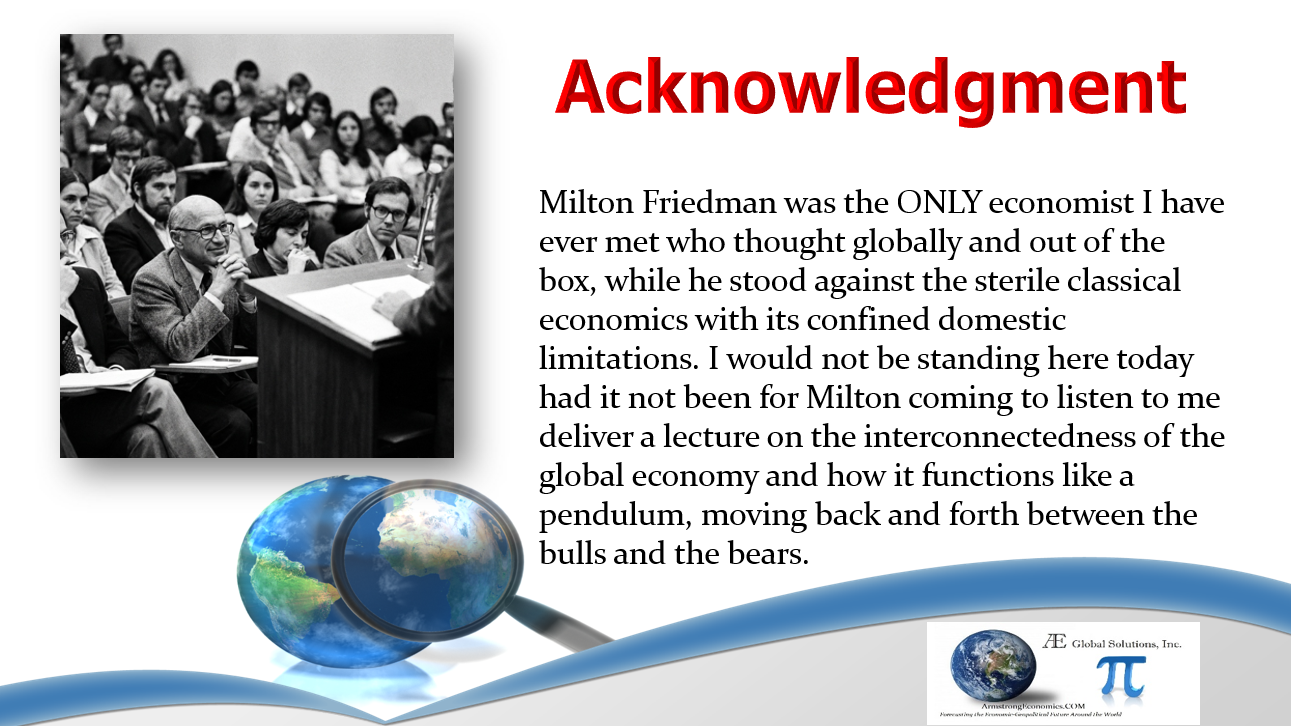
I’m dedicating this event to Milton Friedman. I was speaking at a trading conference in Chicago about how the world is interconnected, and how currency made that possible. Milton had heard about me and came to listen. After I finished, he walked up, shook my hand, and told me I was doing what he had only ever dreamed of. He had written back in 1953 about how a floating exchange rate system would impose checks and balances on governments, and here I was, traveling the world, dealing with governments over exactly what Milton had envisioned more than thirty years earlier. He then said what I was doing was deeply important, and that I should document it for society.
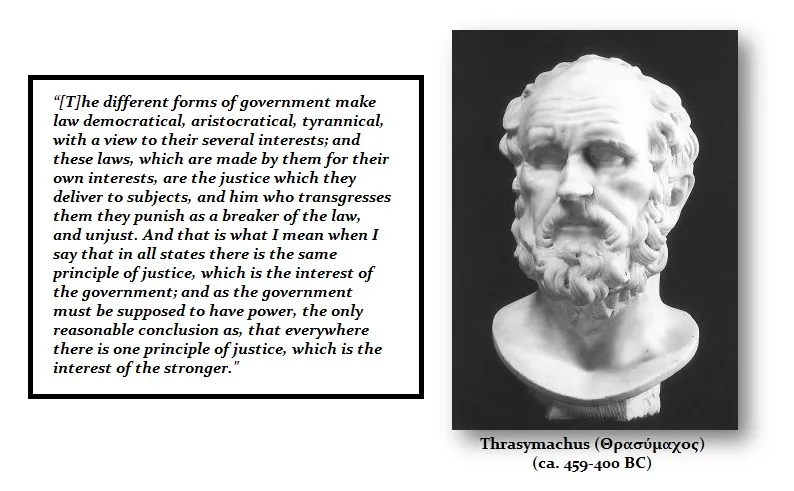
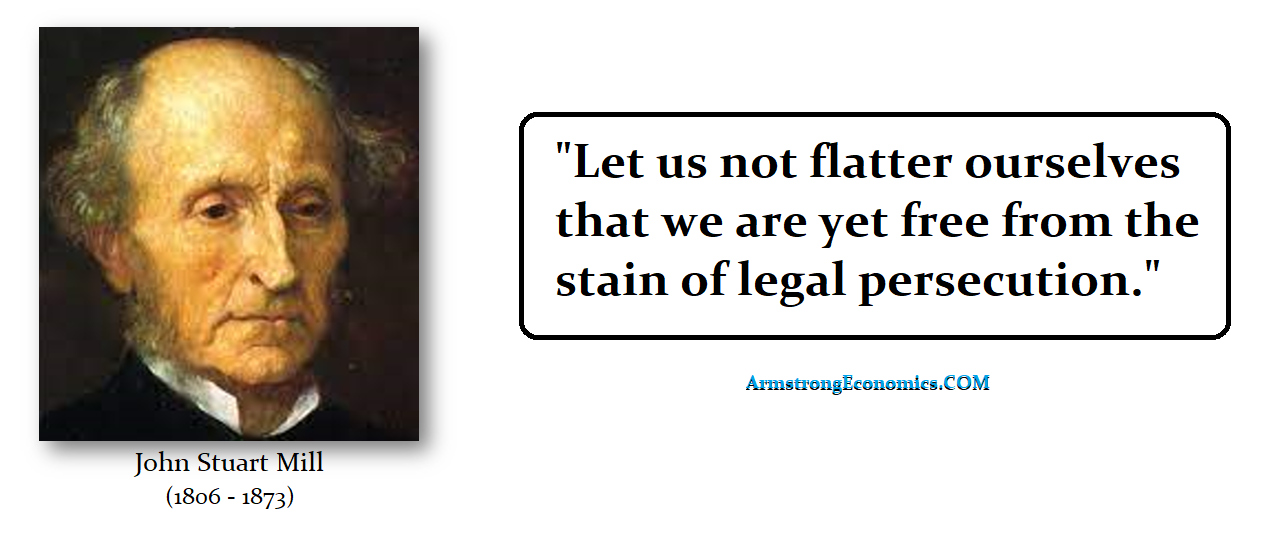
I have indeed run around the world and dealt with perhaps more governments than anyone. I honestly see no difference. Justice peaks, because as Thrasymachus tried to warn Socrates that justice is the same no matter what form of government exists. It is always their self-interest about retaining power. As they say, you can vote your way into socialism/communism, but you have to shoot your way out. That is the real risk of Mandami in NYC when his ideas fails as they always have.
Plato records the debate between Thrasymachus and Socrates. Thrasymachus didn’t frame his argument as a “warning” to Socrates so much as a cynical confrontation. His core claim, that rulers simply make laws to serve their own interests, inherently applies to any form of government, including a democracy.
Thrasymachus explicitly includes democracy in his analysis. He doesn’t single it out; he gives it as one of the prime examples of his theory in action. He states that in a democracy, the “ruling masses” (the democratic majority) pass and enforce laws that are to their own advantage.
Thrasymachus was saying there was “no difference in justice” under a democracy. For Thrasymachus, the only thing that changes is who is exploiting the system for their own benefit. In a tyranny, it’s the tyrant; in an aristocracy, it’s the aristocrats; and in a democracy, it’s the democratic majority. The fundamental principle, that “justice” is a tool used by the powerful to justify their own advantage, remains exactly the same.
Thucydides (the Melian Dialogue) also informed us that “The strong do what they can and the weak suffer what they must.” To a large extent, the Marxists did come to argue that justice is seen as a tool of the ruling class. On that point, I cannot disagree. Law has always been used for political purposes.
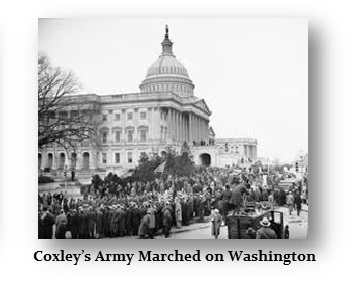
Jacob Coxey was arrested for walking on the grass of the U.S. Capitol. This arrest occurred on May 1, 1894, after he led a protest march of unemployed workers known as “Coxey’s Army” to Washington D.C. to demand government jobs to alleviate the Panic of 1893 depression.
The arrest was based on a law that forbade public assemblies and processions on the Capitol grounds, and Coxey was charged with the specific violation of “walking on the grass.” Along with Coxey, two of his lieutenants, Carl Browne and Christopher Columbus Jones, were also arrested.
The United States has more people in prison than Europe, Russia, or China, yet we pretend to be the land of liberty and justice for all. Either Americans harbor more criminals than any other society, or we imprison people for political purposes while pretending it is about justice.
I even went through the Berlin Wall in the late ’70s and saw communism first hand. What I am passing on is not theory. It is what Milton came to listen to me deliver at a trading conference in Chicago. How the world is all interconnected. This has huge ramifications for everything from economics to politics.
Those attending will receiver an autographed copy. The printer will have them on time.
Posted originally on Jul 16, 2026 by Martin Armstrong |
New York Federal Reserve President John Williams now says inflation has likely peaked and that monetary policy is “well positioned” to bring inflation back toward the Fed’s 2% objective. Williams acknowledged inflation remains “unquestionably too high,” but argued that the worst of the tariff effects have passed, housing inflation is moderating, oil prices have peaked, and disruptions tied to the Middle East conflict should ease over time. He forecasts inflation falling to roughly 3.25% by the end of the year and gradually returning to 2% by 2028.
This is precisely where central bankers always get it wrong. They continue assuming the geopolitical landscape will cooperate with their economic forecasts. There is absolutely no evidence supporting that assumption. If anything, the evidence points in exactly the opposite direction. The Middle East is becoming more unstable, not less. Ukraine remains a war of attrition consuming enormous military resources every day. Europe is dramatically expanding defense spending. China is eyeing Taiwan and waiting for the US to stretch itself too thin to protect it. NATO members are rebuilding their militaries at levels not seen in decades. Governments everywhere are preparing for a world of prolonged geopolitical confrontation.
Wars are the most inflationary events imaginable.
Williams argues that oil prices have peaked and that disruptions in the Middle East should gradually subside. That is an assumption, not a forecast supported by events. The ceasefire that briefly lowered energy prices has already broken down. Shipping risks remain elevated. Iran, Israel, Lebanon, Syria, and the Red Sea continue presenting risks capable of sending commodity prices sharply higher overnight. It only takes one escalation to completely invalidate months of inflation projections.
The same mistake is being made with Europe. Governments across Europe are now increasing military budgets at extraordinary rates. Germany is rebuilding its armed forces. Poland continues massive military expansion. Finland has built underground shelters capable of protecting nearly its entire population. Civil defense has returned across Europe because governments themselves are preparing for scenarios they refuse to discuss publicly. Military production does not reduce inflation. It diverts labor, capital, raw materials, and industrial capacity away from productive investment and into war preparation.
This is exactly why Keynesian economics continually fails. It treats inflation as though it exists in isolation from politics. The world economy has never functioned that way. Capital moves because of confidence. Prices move because of shortages. Governments create shortages during wars faster than central bankers can hold press conferences explaining why inflation should be falling.
I have said repeatedly that interest rates are not the master variable. Confidence is. Once governments begin financing wars with debt, inflation becomes only one symptom of a much larger sovereign debt crisis. The borrowing required to finance military expansion eventually overwhelms every textbook model economists continue relying upon.
The Federal Reserve itself admits one of the biggest drivers behind last year’s inflation was the Middle East conflict. Williams acknowledged supply disruptions tied to that war contributed significantly to rising prices. Yet he simultaneously assumes those pressures will fade while the conflict itself continues expanding. That is an extraordinary leap of faith.
The Federal Reserve may believe inflation has peaked, but our computer has consistently warned that increased worldwide conflict is coming in the near-term, and there is nothing more inflationary than war.
Posted originally on Jul 16, 2026 by Martin Armstrong |
The Producer Price Index, which measures wholesale inflation, was unchanged in June after economists expected a 0.2% increase. On an annual basis, producer prices rose 2.3%, down from 2.7% in May and below expectations of 2.5%. Core wholesale inflation, excluding food and energy, also remained flat for the month, while the annual core reading eased to 2.6%. On the surface, the report appears to confirm what Tuesday’s CPI numbers suggested—that inflation is cooling.
The problem is that everyone is looking at the wrong cause. Wholesale inflation cooled for the same reason consumer inflation cooled. Energy prices temporarily collapsed after the brief ceasefire in the Middle East reduced fears over oil shipments through the Strait of Hormuz. Goods prices fell 1.4% during June, the largest decline since July 2022, driven primarily by a 6.4% drop in energy prices. Gasoline alone plunged 12%. Food prices also declined. Those are geopolitical events showing up in the inflation data, not some miraculous victory by central bankers.
The irony is that while economists are celebrating June’s numbers, the very event responsible for those lower prices has already disappeared. The ceasefire has collapsed. Oil prices have begun climbing once again as tensions with Iran intensified. The markets are celebrating yesterday while completely ignoring what is already unfolding today.
The service sector tells a very different story. While energy pushed wholesale prices lower, services continued rising. Trade services increased, margins expanded, and the costs associated with moving goods through the economy remain under pressure. Businesses may have caught a temporary break at the fuel pump, but the structural costs of operating in today’s economy have hardly disappeared.
This is where conventional economics completely breaks down. They continue pretending inflation is simply the result of too much money chasing too few goods. That theory ignores geopolitics, sovereign debt, and capital concentration. Governments continue borrowing at rates never before seen during peacetime. Interest expense continues exploding across virtually every developed nation. Europe is slipping deeper into economic stagnation while military spending accelerates. None of that disappears because gasoline happened to fall for one month.
The markets immediately began pricing in a more dovish Federal Reserve. Treasury yields declined while investors increased their bets that rate hikes may be postponed. They have made this same mistake repeatedly. Every soft inflation report becomes the excuse to predict easier monetary policy. Then another geopolitical event erupts, commodity prices reverse, and everyone wonders what happened.
I have said repeatedly that interest rates are not determined solely by inflation. They are determined by confidence. Capital moves where it believes governments are least likely to collapse. During periods of international uncertainty, both the U.S. dollar and gold can rise together because money is fleeing political risk, not responding to textbook economic formulas. The people waiting for one inflation report to dictate Federal Reserve policy continue misunderstanding how international capital actually functions.
If inflation has supposedly been defeated, why are governments still borrowing trillions, why are defense budgets exploding across the West, why are energy markets once again moving higher, and why is every major nation preparing for a world that looks far more dangerous than the one they promised only a few years ago?
Inflation was never the disease. It has always been one symptom of a much larger sovereign debt crisis. Until governments confront that reality, every temporary improvement will simply be another pause before the next wave arrives.
Posted originally on Jul 16, 2026 by Martin Armstrong |
QUESTION: Marty, will you have any input into Warsh’s task forces that will study and give recommendations on improving the US monetary policymaking?
H
COMMENT: Marty,
I watched some of Warsh’s responses in yesterday’s hearing. I was stunned by his response that he believes he can control inflation (ignorance mixed with hubris is a recipe for a horrible disaster). That said from what I saw yesterday I’d rank Warsh right up there with Yellen on the “oh my God, I can’t believe that person is chair” scale. I actually had to stop watching for a while because (to paraphrase an Adam Sandler movie) I was getting dumber for hearing it.
He clearly doesn’t seem to understand how the economy works or what the Fed can actually do to help the economy. So ignorant. He would do well to read some of your books, maybe start with “Fiat” and then the book you’re giving the attendees of the July meeting/training (I won’t be at the event, but put me on the list for when the book comes out as I want to read it).
Let’s hope his actions are far better than what he said yesterday because if not his tenure may be a stupifying shitshow. Based on Socrates projections about China taking over the mantle in a few short years maybe Warsh is just the right guy for the job. Sad to see it playing out live.
Thank you for working to educate people on how the economics of the world really works.
Regards,
Joel
REPLY: I have probably dealt with more central banks than anyone. I was the keynote speaker at the BIS Conference in Paris and sat at the head table with all the heads of the central banks in attendance. I have even had two on the phone at the same time asking if they should intervene in the middle of a financial crisis, I have even sat in a central bank when their red phone connecting then the G7 refusing to answer because it was another wanting them to buy more of their currency. I spoke at the Treasury Management Association and asked questions about what central banks were doing. The finance Minister of Nova Scotia later worked his way next to me at a party later to argue that I downplayed the importance of central banks. Later I asked my friend in the Bank of Canada why he could talk to me, but not to the Finance Minister of one of his provinces. He said (1) I was not Canadian, and (2) if he spoke to Nova Scotia 2 minutes before Newfoundland, he got in trouble.
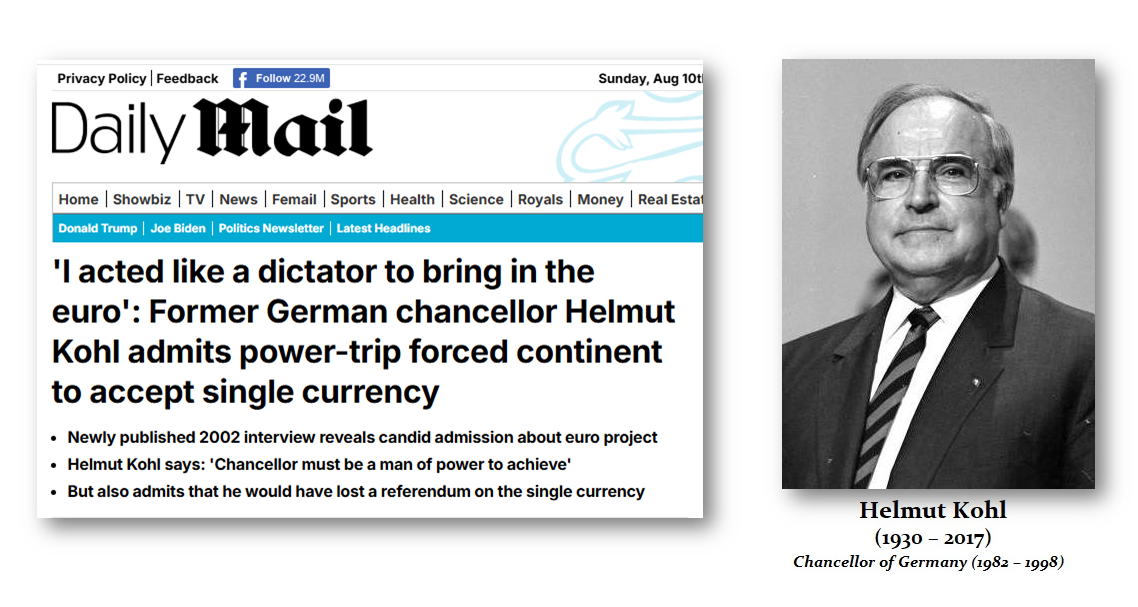
I have stood at times even between a central bank and its political government. Not only did the commission that was creating the euro come to me because we had ended up specializing in currency from the ’70s, but as I have said on various podcasts, it was Helmut Kohl who took Germany into the euro denying the people a right to vote who also admitted he acted like a dictator and would have lost 7:3 if the German people were allowed to vote on joining the euro. The German central bank, Bundesbank, was vehemently against joining the euro for all the same reasons we are starting to see rise to the surface today. They were feeding us all the notes of what was taking place in the meetings . So, I was really square in the middle of this mess so I was getting it from both sides.
The original Keynesian theory was to control the economy following Karl Marx’s lead. When I was in school, I found it very frustrating. You went to Physics class that they told you nothing is random. Einstein said God does not play dice with the universe. Across the hall, you walked into Economics class and they said that was all wrong, there is no definitive business cycle because everything is a random walk so the government can control society and smooth out the business cycle eliminating recessions and depressions. The theory that inflation was simply an increase in the money supply meant that political governments did not create inflation, it was the central bank’s job to eliminate inflation. Thus, politicians took no responsibility and turned to the central banks arguing that they were responsible for the money supply and thus inflation. Therefore, it was allegedly their duty to control inflation irrespective of the spending of politicians. This was an inconvenient economic truth that has led us to where we are today.
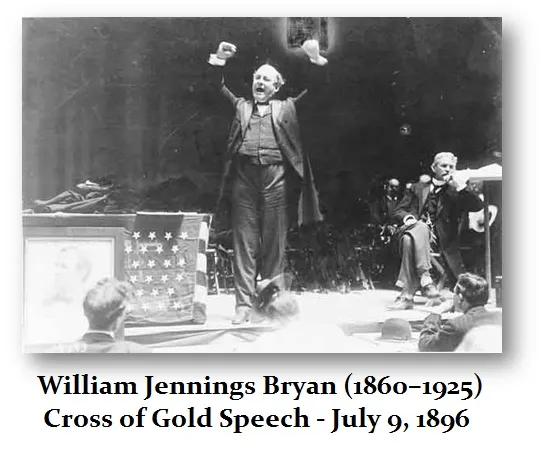
The problem is that the ONLY theory central bankers have is the Keynesian Model. They really have no other theory to rely on. So they keep this braindead idea that lowering rates will stimulate demand and raising rates will decrease demand and this inflation can be controlled with such a theory. They exclude government spending and taxation from the economic reality. Just like the Silver Democrats led by William Jennings Bryan overvalued silver to deliberately create inflation as their solution to get out of the Long Depression of the 1890s.
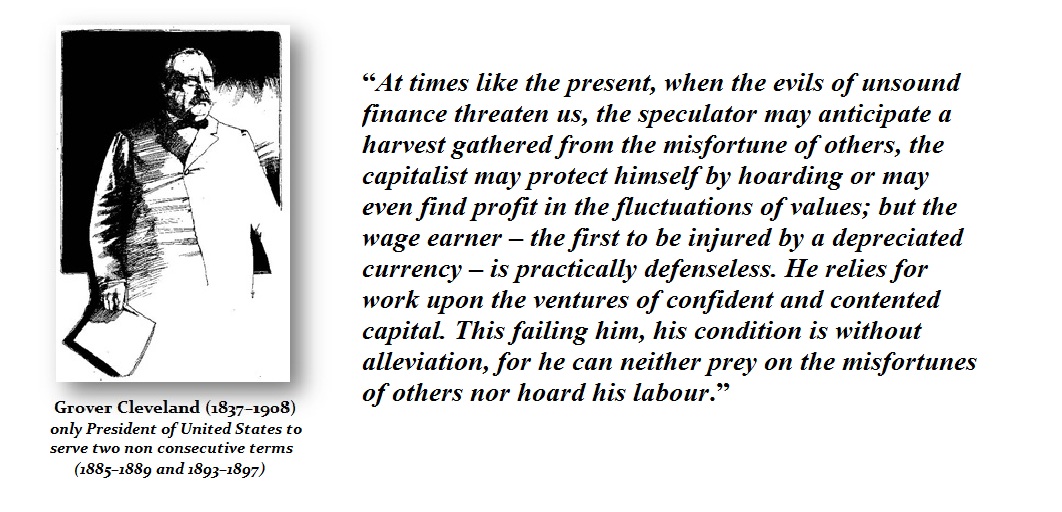
President Grover Cleveland was a Democrat who spoke out against the recklessness of his own party. They virtually bankrupted the country forcing J.P. Morgan to arrange a gold loan to bailout the US Treasury in 1896. Today, the Democrats continue this same idea. They do not know how ro run for office without bribing the people to vote for them and they will a free lollypop and a toaster. The central bank is INCAPABLE of controlling inflation when they cannot control the fiscal side of the economy.
The central banks are now TRAPPED with no alternative. They are afraid to state the truth because that would put them in direct confrontation with the political side of this nightmare. All they have is raising or lowering interest rates, which has NEVER worked even just once. We are looking at the national debts that governments never pay off. Raise the rates and the government budgets explode and that comes back as a political disaster.
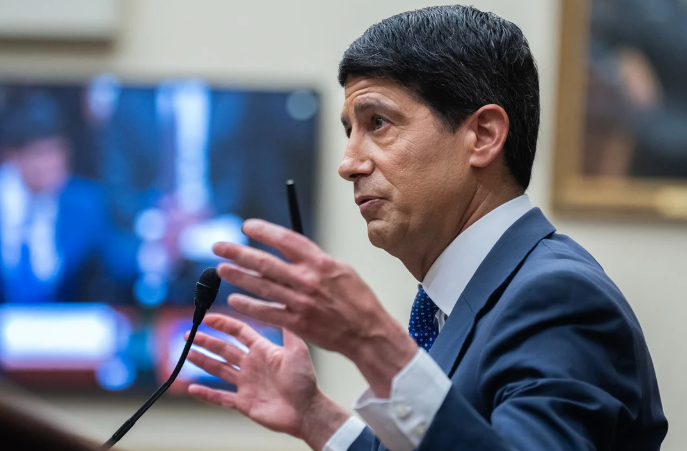
That included his commitment to bringing inflation under control and his plan to establish five task forces review factors affecting monetary policy. No, I have not been contacted about providing any input into Warsh’s task forces on improving the US monetary policymaking. I am not certain that they are ready for the truth. All they have is the Keynesian Economic Model. Before they would abandon that and listen to what I have witnessed will take a cold day in Hell, or a major financial crisis. They will NEVER listen to me to prevent such a crisis. Those in government react, they do not put their neck on the chopping block voluntarily.
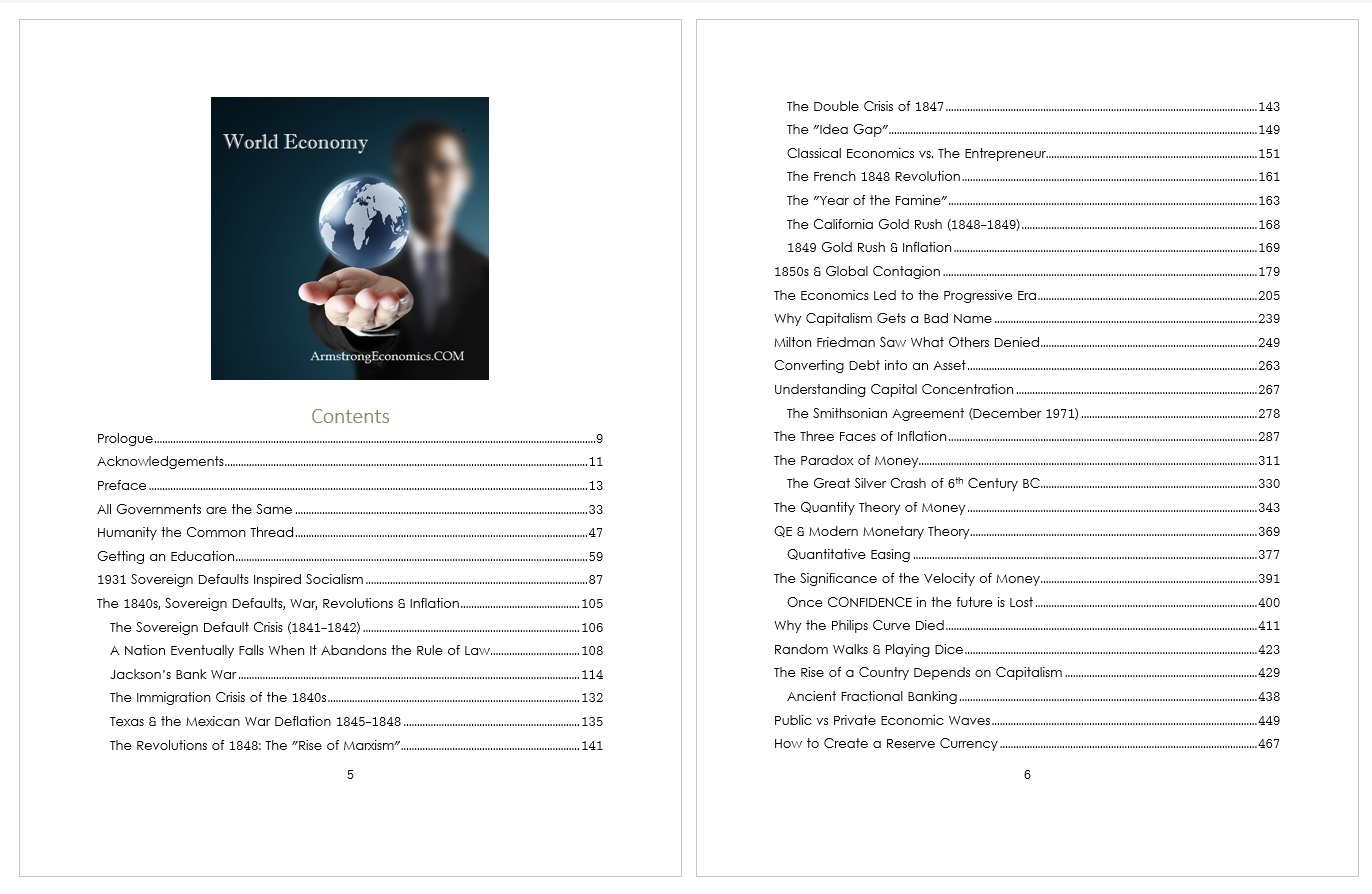
Do not expect any change. Walsh had to say the standard BS because that is all they have. There is never a plan B. I am doing this July 25th Seminar to address all of this. Many people have brought their children to conferences and have asked me to do an introduction to how the world really functions. All of the economic theories are wrong because they were all formed during the Gold Standard when currency was never a variable. Today we trade currencies and capital flows around the world first because of currency. Then the second great fallacy is that all of the economic theories are domestic and never international.
No politician ever said vote for me and I will make the dollar the reserve currency. That was created by the free markets and as World Wars I & II that sent all the capital fleeing to the United States. Those wars were beyond any domestic analysis. It is time we change the way we even view the economy because we are all connected. We will be issuing a text book for this event that is included in the price for those attending.
I have created this site to help people have fun in the kitchen. I write about enjoying life both in and out of my kitchen. Life is short! Make the most of it and enjoy!
This is a library of News Events not reported by the Main Stream Media documenting & connecting the dots on How the Obama Marxist Liberal agenda is destroying America







 Centinel2012