Wars Change Politics Not Just Destroy Targets


Posted originally on Mar 13, 2026 by Martin Armstrong |  

shutterstock_2753474293

Perhaps the greatest misunderstood reality of war is that people may focus on the tactical victory of eliminating a target, but there is far more to war than merely blowing up buildings or defeating an army on the battlefield. War always results in political change in both the victor and the vanquished. What is taking place right now in the Middle East will reshape the entire region and will forever cement the image of the United States as the imperial empire. President Donald Trump stated that the next supreme leader of Iran “is not going to last long” without his approval. He emphasized that the new leader must gain approval from the United States to ensure stability and prevent future threats. That is an image of an arrogant imperialist invader from colonial days.

Wars definitively reshape politics on both sides. It may embolden the victor to believe they are invincible, but it forever instills hatred and resentment in the minds and souls of the vanquished. Netanyahu’s wish list to destroy Iran will NOT secure some sort of magical long-term victory. It will only secured a deeper and more formidable enemy for centuries. The computer is warning of a serious Directional Change in 2027 and this may all explode in 2028.

Iran’s newly appointed supreme leader, Ayatollah Mojtaba Khamenei, said on March 12 that closing the Strait of Hormuz must remain an option and vowed retaliation for Iranians killed in the conflict, according to Iran’s state news agency Islamic Republic News Agency (IRNA). Mojtaba Khamenei did not appear on camera during the broadcast. Israeli claim he may have suffered a leg injury during attacks targeting his father’s bunker. He is said to be more hardline than his father, who was against nuclear weapons. These attacks have flipped the table and increased the chance for nuclear war. The new supreme leader signaled that Iran would pursue a prolonged campaign of retaliation. He wrote:

I assure everyone that we will not refrain from avenging the blood of your martyrs,” he added that each civilian killed by Iran’s enemies constituted a separate case for revenge.

The killing of a family member in a war is one of the most powerful and personal forces that can instill a deep, lasting hatred for the perceived enemy.
The warmongers never look at the human cost of war. The death of every civilian creates a personalization of the conflict. For most people, war is an abstract concept discussed in the news or history books. But when a family member is killed, the war becomes brutally personal. The abstract “enemy” is no longer a faceless soldier or a foreign government; they become the specific people who murdered my son/daughter/father/mother.

Grief is an overwhelming emotion that needs an outlet. Anger is often the most accessible and powerful form that grief takes, especially in the context of a violent death. Hatred for the enemy provides a clear, focused target for that rage and pain. It can feel better to hate someone than to be consumed by bottomless sorrow.

When a loved one dies in a seemingly senseless act of violence, the human mind struggles to find meaning. Believing that they died fighting a monstrous, hateful enemy can be a way to make sense of the senseless. It elevates their death from a random tragedy to a sacrifice in a just cause against evil – a martyr.

Perikles_Funeral_Oration_Speech

Perikles began the funeral oration for the first fallen in the Peloponnesian War.

“I shall begin with our ancestors: it is both just and proper that they should have the honour of the first mention on an occasion like the present. They dwelt in the country without break in the succession from generation to generation, and handed it down free to the present time by their valour. And if our more remote ancestors deserve praise, much more do our own fathers, who added to their inheritance the empire which we now possess, and spared no pains to be able to leave their acquisitions to us of the present generation. Lastly, there are few parts of our dominions that have not been augmented by those of us here, who are still more or less in the vigour of life; while the mother country has been furnished by us with everything that can enable her to depend on her own resources whether for war or for peace.”

Perikles invoked the ancestors and we are witnessing the same in Iran, which they prefer to call Persia. This individual hatred is often reinforced by the broader society at war. Propaganda, national narratives, and community mourning all work to channel personal grief into collective anger against the enemy. Funerals for soldiers become patriotic events, explicitly linking personal loss to national duty and framing the enemy as deserving of that hatred.

This is perhaps the most tragic aspect. A death in the family creates a powerful desire for vengeance—an eye for an eye. This desire can be passed down through generations, fueling conflicts that last for decades or even centuries. The loss becomes a family story, a sacred wound that justifies continued animosity.

Just as in the West Bank or Gaza, when a Palestinian child whose home is destroyed and whose parent is killed by Israeli forces, undoubtedly grows up with a profound hatred for Israelis. This is taking place in Iran right now. War is far more profound than merely bombing buildings and destroying targets.

Alexander the Great Battle Issus Darius III

In the case of Iran, Persia was conquered three times in history. First by Alexander the Great 334–330 BC The Macedonian king defeated the Achaemenid Empire, ending Persian rule for a time. Secondly, by Arab Muslims 636–651 AD Islamic armies conquered the Sassanian Empire, incorporating Persia into the Caliphate. The third times was by the Mongol Empire 13th Century Genghis Khan and later Hulagu Khan’s invasions devastated Persia. These are events that were not forgotton.

War Emotional Scars s

Wars don’t just leave behind physical destruction and political changes; they leave behind deep, lasting, and often invisible emotional and psychological scars on individuals, families, and entire societies for generations. These emotional wounds are often categorized under the umbrella of trauma. The most well-known diagnosis is PTSD (Post-Traumatic Stress Disorder) , but the scars are broader and more complex.

There are deep emotional and psychological distress that results from committing, witnessing, or failing to prevent acts that violate a person’s core moral or ethical beliefs. A soldier may feel profound shame and guilt for actions they were ordered to take in war.

I know people who have worked with veterans. What they have witnessed is that those who returned from Vietnam are angry compared to those from World War II. They are angry for what they now see was an unjust war.
This is one of the most profound and heartbreaking aspects. The emotional scars of war are not confined to those who experienced it directly. They can be transmitted to children and even grandchildren. The children and grandchildren of Holocaust survivors have been extensively studied for the effects of intergenerational trauma.

In the United States, we see the legacy of trauma in the families of veterans from the Vietnam, Iraq, and Afghanistan wars.

In countless communities around the world—from Rwanda to the Balkans to the Middle East—the trauma of past conflicts continues to shape politics and personal identities decades later.

In short, the emotional scars of war are a hidden but remain as a powerful legacy. They can turn personal grief into generational hatred. They are a reminder that the cost of war is counted not only in lives lost but in lives forever changed. This profoundly changes the politics on both sides.

Based on current statements and analyses from Israeli Prime Minister Benjamin Netanyahu and other officials, Israel’s goal is not to “destroy Iran” in the sense of annihilating its land or people. Instead, their stated objective is far more specific: to bring about the downfall of the current Islamic Republic regime in Tehran – Regime Change.

Both the Italian and Russian Mafia are afraid of the Albanian Mafia. Why? It comes back to culture. Albanian criminal groups, their primary goal is not always to kill family members to prevent future retaliation. However, they absolutely target family members as a key tactic in their conflicts. This often has the effect of creating cycles of vengeance that can span generations. They are famous for Albania’s ancient tradition of the blood feud, known as the Kanun, for their own purposes.

This has been a cultural system to deter violence through fear of reciprocal revenge; an “early version of a mutually assured destruction pact.” Family members are seen as legitimate targets, especially when the primary target cannot be found. Strict rules, e.g., you cannot take revenge for a family member killed while committing an immoral act (like a crime). The Kanun is “misused” to justify any killing, including murdering a rival’s family to force them into hiding or to retaliate.

The Russian and Italian Mafia often comment on the Albanians and they will kill you, the wife, children, and the dog to prevent a blood feud. This does address the similar results from war, which the Neocons and warmongers never consider.


EXAMPLES:

The story of Wasil Ahmad during the War in Afghanistan (Taliban insurgency) is a classic example of intergenerational rage. At age 8, his father and uncles were killed by the Taliban. He trained to fight and, as a young teen, fought against the Taliban, becoming a legendary commander in his valley before being killed. There are many other examples that the warmongers pay no attention to the human cost of war.

Napoleon’s defeat at Waterloo didn’t just score a victory for the English; it created a whole new political paradigm in France. It temporarily restored the Bourbon monarchy under Louis XVIII, who had been waiting in exile with British support. This wasn’t a revolutionary transformation—it was a counter-revolution.

Nevertheless, even after the monarchy was restored, there was deep-seated resentment of the English. That came rushing to the forefront with Charles De Gaulle. The language became a symbol of that defeat, as the view became that Napoleon had won, the world would be speaking French instead of English. De Gaulle even attempted to borrow English words from the French language.

Language was incorporated into de Gaulle’s nationalism. He assumed that, had Napoleon won at Waterloo, the world would have been speaking French instead of English. As the Associated Press reported back in April 1967, when de Gaulle ordered all 440 NATO installations and troops to be removed from France, he was very much against any American words entering the French language.

De Gaulle established institutions like the *Délégation générale à la langue française (General Delegation for the French Language) to combat the spread of English terms. While many ‘Americanisms’ remained in everyday French vernacular, his efforts reflected a broader resistance to U.S. cultural hegemony. De Gaulle and his government promoted policies to preserve the purity of French, leading to measures such as the Loi Bas-Lauriol (1975), which later evolved into the Toubon Law (1994), mandating the use of French in official contexts. Some of the main American-adopted words he most opposed included:

De Gaulle’s nationalism and hatred of Americans and British led to his first assault on the United States, which took place on February 4th, 1965, where he expressed doubts about the dollar’s impartiality and suitability as an international trade medium. It was De Gaulle who attacked the dollar, demanding gold to drain the reserves and eventually forcing the collapse of Bretton Woods in 1971. He also disliked the British and supposedly said, “Belgium is a country invented by the British to annoy the French.”

The loss of Germany in World War I and the harsh reparation payments were the primary reasons for the rise of Hitler in 1933. All of that was set in motion when the French surrendered to the Germans

The first Treaty of Versailles was signed on February 26, 1871, ending the Franco-Prussian War and directly linked to the formation of the German Empire.

To be precise, the German Empire was proclaimed on January 18, 1871, at the first Treaty of Versailles, which was signed shortly after to formally end the war that made its unification possible. This was why the French insisted on a second Treaty of Versailles at the end of World War II.

Kristol Irving Neocon

During the 1940-1950s, this was the beginning of the rise of the Neocons. The future founders of neoconservatism were still left-wing anti-communist liberals. Thinkers like Irving Kristol and Daniel Bell were intellectuals in New York, but they were part of the liberal anti-communist tradition rather than a separate conservative movement. The Red Scare faded after McCarthy’s censure in 1954.

This is the formative period for neoconservatism. Disturbed by the New Left, the counterculture, and what they saw as the Democratic Party’s move away from a robust anti-communist foreign policy, these intellectuals began to define their own path. They coalesced around magazines like Commentary and The Public Interest.

During the 1970s into the early 1980s, the Neoconservatives gained political power. Disillusioned with the Carter administration’s foreign policy, many neoconservatives, such as Jeane Kirkpatrick and Elliott Abrams, moved to the Republican Party and became influential in the Reagan administration, shaping its Cold War strategy.

End Times & Sharing Power


Posted originally on Mar 12, 2026 by Martin Armstrong |  

2026_03_12_22_52_24_Netanyahu_equates_Iranian_regime_to_ancient_biblical_foe_Middle_East_Monitor

QUESTION: Do you think that Netanyahu has deliberately dragged Trump into his war? It has been his life’s mission to destroy Iran, whom he sees as the Amalek of 1 Samuel 15:2-3!

RB

ANSWER: I believe that the Neocons have cleverly created the FIRST war where we are NOT in charge. Netanyahu is a diehard Neocon, who hung out with Irving Kristol in Philadelphia, who was the godfather of the Neocon movement. To me, this is a serious RED FLAG!!!!!

In 2024, in his Knesset speech, Netanyahu said: “I’ve been warning about Iran for 30 years.”  It was reported on March 3rd, during a visit to a site struck by an Iranian missile, Netanyahu stated: “We read in this week’s Torah portion, ‘Remember what Amalek did to you.’ We remember—and we act.”

In 1 Samuel 15:2-3, God gives King Saul a specific, direct order to carry out this command. The prophet Samuel relays the message: “This is what the LORD Almighty says: ‘I will punish the Amalekites for what they did to Israel when they waylaid them as they came up from Egypt. Now go, attack the Amalekites and totally destroy all that belongs to them. Do not spare them; put to death men and women, children and infants, cattle and sheep, camels and donkeys. ‘”

The harshness of the command in 1 Samuel has disturbed Jewish scholars for centuries, leading to various interpretations that move beyond a literal call for genocide. If Netanyahu believes that genocide is the command of God, that is NOT in the self-interest of the United States. He knows you cannot accomplish regime change from the air. This is the very first time when we are in a partnership with another country who is really calling the shots here where the interests of Netanyahu are by no means the same national interest of the United States.

Merkel_Minsk_Buy_Time_to Prepare for wart

Killing the Ayatollah while in the midst of negotiation was revolting and it raises the clear precedent that you cannot now trust the United States to engage in negotiations in good faith. Like Merkel refusing to honor the Minsk Agreement, Europe has demonstrated they cannot be trusted to negotiation in good faith. Killing the Ayatollah on day one was a clear message that there is to be no peace with Iran. This is all about the total destruction of the Islamic Republic.

Trump has been implying the use of nuclear weapons. On FEBRUARY 28, 2026 POST-STRIKE, Trump said:

“We have capabilities Iran cannot imagine. If they retaliate, there will be nothing left.”

Here is my concern. Israel has nukes and already believes that they must utterly destroy the Islamic Republic. Looking at Netanyahu’s reference to Amalekites being the Persians, this passage calling for genocide right down to the elimination of even their cattle and sheep, camels and donkeys, I cannot feel comfortable that Netanyahu will not order a nuclear strike if the destruction of Israel is now a possibility.

We are by no means in charge of this war. Netanyahu would love nothing more than to see Trump commit American ground troops. White House Press Secretary Karoline Leavitt on March 8th refused to rule out ground troops or a military draft. The Neocons know Trump well. They know he does not like to lose so dragging him into this war was their brilliant strategy to ensure that he will see this until the end.

End Times Armageddon

To the Shia Muslims, this is a battle against the devil. Netanyahu has ensured killing the Ayatollah has invoked their end times views just as he has done the same. This appears to be a religious war that does not look good. It does not appear to be over quickly either.

Saudi Arabia Is Playing the Long Game


Posted originally on Mar 12, 2026 by Martin Armstrong |  

GettyImages 1088359820 scaled e1718538643965

Saudi Arabia is doing precisely what governments do when they understand that the world is no longer stable: buying protection, influence, and time. Washington likes to pretend that Riyadh is suddenly a loyal ally because it is investing in the United States, helping Ukraine, and quietly aligning against Iran. Saudi Arabia is not acting out of friendship. It is acting out of self-interest, and that is exactly how nations survive when the world moves into a war cycle.

The money alone tells you this is not a symbolic relationship. The White House said in November that Saudi Arabia’s investment commitment into U.S. infrastructure, technology, and industry had risen to nearly $1 trillion, up from the $600 billion first announced in May 2025. At the same time, Treasury and the Saudi finance ministry signed frameworks on financial and economic partnership and capital-markets collaboration. Washington also packaged this together with civil nuclear cooperation, critical minerals, AI, and defense deals, including future F-35 deliveries and an agreement for Saudi Arabia to purchase nearly 300 American tanks. Riyadh is tying itself to the American industrial base, the American financial system, and American defense production because that is how you secure leverage in Washington.

52L3PTEYPNICDF2NJ4USAE4MZI

At the same time, Saudi Arabia is now moving on the Ukrainian side in a way that would have been unthinkable a few years ago. According to the Kyiv Independent, a Saudi arms company has signed a deal to buy Ukrainian-made interceptor missiles, and Ukrainian industry sources said Riyadh and Kyiv were negotiating a separate “huge deal” for arms that could be finalized this week. Zelensky also said he had offered Crown Prince Mohammed bin Salman Ukrainian help in intercepting Iranian Shahed drones, arguing that no country has more practical experience against them than Ukraine. Saudi Arabia is looking at the Gulf and seeing the same Iranian drone threat Ukraine has been dealing with for years. Riyadh is shopping for battlefield-tested systems because it believes the drone era is now on its doorstep. The one caveat is that the weapons-deal reporting rests on anonymous defense-industry sources, so the broad direction is clear even if the final size of the package is not yet publicly verified.

oil_money_saudi_arabia_pc_800_clr_2381

This also explains why Saudi Arabia is helping the United States against Iran while still trying to avoid being publicly dragged into a regional inferno. Reuters reported that after Iranian missile and drone strikes hit Gulf states hosting U.S. bases, including an attack targeting the U.S. embassy in Riyadh, the Saudi cabinet said it would take all necessary measures to defend its security and protect its territory, citizens, and residents. That is the language of a country that understands neutrality has limits. Saudi Arabia wants to contain Iran, and make sure Washington keeps treating the kingdom as indispensable.

The International Energy Agency says the Strait of Hormuz carried an average of 20 million barrels per day of crude oil and oil products in 2025, roughly 25% of the world’s seaborne oil trade. Of that, Saudi Arabia alone accounted for about 6.23 million barrels per day transiting Hormuz in 2025. Yes, Saudi Arabia has the East-West pipeline to Yanbu on the Red Sea, and the IEA estimates that only Saudi Arabia and the UAE have operational crude pipelines that can meaningfully bypass the Strait, with a combined 3.5 to 5.5 million barrels per day of alternative capacity. But that is the key point: the bypass capacity is limited compared with the scale of what normally moves through Hormuz. Riyadh can reroute some oil, but it cannot magically make the chokepoint disappear.

That is why oil is the real story here. Reuters reported that OPEC+ agreed on March 1 to raise output by 206,000 barrels per day for April, even as war with Iran disrupted Gulf shipments, and that Saudi Arabia had already been increasing production and exports by around 500,000 barrels per day in preparation for U.S. strikes. Yet the IEA also notes that the world’s spare crude production capacity was running at just over 4 million barrels per day in late 2025 and that this spare capacity is primarily held by Saudi Arabia. In other words, Saudi Arabia remains the swing producer, but the market is now being reminded that swing capacity is useless if export routes are threatened. Spare barrels in the ground do not calm a market when the shipping lanes are in question.

Aramco’s own numbers show why Saudi Arabia is still the central energy power in the region. The company reported adjusted net income of $104.7 billion for full-year 2025, operating cash flow of $136.2 billion, free cash flow of $85.4 billion, and capital investment of $52.2 billion in 2025, with 2026 capital spending guidance of $50 billion to $55 billion. That is not a weak state oil company limping along. That is a cash machine financing the kingdom’s geopolitical flexibility. But even Aramco has warned about the economic consequences if this war drags on, and reports today indicate the company is racing to redirect exports via Yanbu, which can handle around 5 million barrels per day versus the roughly 7 million barrels per day Saudi Arabia normally exports.

Saudi Arabia understands something Washington still refuses to admit. This is not a transitory war, and these are not transitory prices. Saudi Arabia is investing in the United States because capital always runs to the power center it believes can still protect it. It is buying Ukrainian anti-drone technology because the Iranian threat is no longer theoretical. It is helping the United States against Iran because if Tehran can intimidate the Gulf monarchies, the entire regional balance of power changes. And it is guarding its oil with extreme caution because oil is not merely revenue for Saudi Arabia. Oil is the kingdom’s strategic sovereignty.

Harris for Peace? Neocons Exist on BOTH Sides


Posted originally on Mar 12, 2026 by Martin Armstrong |  

Nerocon Every Administration

The Democrats are taking to the media to declare that war could have been prevented has Kamala Harris won the election. That narrative is convenient politically, but it ignores what the politicians themselves actually said. The desire for confrontation with Iran has existed on both sides of the political spectrum for decades. The problem is not simply one president or one party. The problem is the bipartisan foreign policy establishment that has long treated Iran as the central strategic enemy in the Middle East. The neocons exist on both sides.

During the 2024 campaign, Kamala Harris herself made the position very clear. When asked which country she considered the United States’ greatest adversary, she replied that the answer was “Iran.” That statement alone shows how deeply the Iran war narrative had already taken hold in Washington. Once a country is publicly framed as the primary adversary, the policy direction becomes predictable. Sanctions escalate, proxy conflicts expand, and eventually military confrontation becomes increasingly likely.

Yet now many of the same politicians who previously described Iran as America’s top enemy are suddenly condemning the war. Harris has recently criticized the Trump administration’s actions toward Iran, arguing against the escalation of the conflict. The shift in tone is typical Washington politics. When out of power, politicians oppose the war. When in power, the same establishment often supports it. “Let me be clear,” Harris wrote in a statement shared on the social platform X. “I am opposed to a regime-change war in Iran, and our troops are being put in harm’s way for the sake of Trump’s war of choice.”

This is not new. Hillary Clinton made similar statements long before the current crisis. She repeatedly warned that Iran could not be allowed to obtain nuclear weapons and stated she would use military force if necessary. Clinton said directly that she would “not hesitate to use military force if Iran attempts to obtain a nuclear weapon.” She also famously warned that if Iran attacked Israel, the United States could “totally obliterate” Iran. Those statements were not coming from a fringe figure. They were coming from a former Secretary of State and a leading presidential candidate within the Democratic Party.

Congress has also been moving in the same direction for years. In 2007, the Senate passed a resolution targeting Iran and its Revolutionary Guard Corps that encouraged the use of “all instruments of United States national power” against Iran and its proxies. That resolution passed with broad bipartisan support. The point is simple: the groundwork for confrontation with Iran has been building inside Washington for a long time.

Even figures like Chuck Schumer have consistently taken a hard line against Tehran. Schumer publicly opposed the Obama administration’s nuclear agreement with Iran and warned that the deal posed a danger to U.S. and Israeli security. He argued that the Iranian regime could not be trusted and that stronger pressure was necessary to contain it. That position aligned him with a coalition of hawkish policymakers in both parties who have long advocated a much tougher strategy toward Iran.

The idea that only Republicans support confrontation with Iran is historically false. The reality is that the foreign policy establishment in Washington, the neoconservative wing, has long existed across both political parties. Some supported wars in Iraq and Afghanistan. Others supported aggressive sanctions, regime-change policies, and military pressure against Iran.

What is troubling today is that this same mindset appears to be re-emerging inside the current administration as well. Many observers expected Trump to pursue a more restrained foreign policy after criticizing the wars of the past two decades. Yet, elements of the traditional interventionist establishment have gradually found their way back into positions of influence. When that happens, the policy outcomes often begin to resemble the very strategies Trump once criticized.

The uncomfortable truth is that the pressure for war with Iran has been bipartisan for a very long time. The neocon belief that American power should reshape the Middle East never belonged to only one party. It has existed across the entire political establishment. That is why the debate over who would or would not have gone to war with Iran misses the larger point. The forces pushing the United States toward conflict have been operating in Washington for decades, regardless of which party happens to occupy the White House.

US Inflation Looks Tame for Now — But That May Not Last


Posted originally on Mar 12, 2026 by Martin Armstrong |  

Inflation up

The latest CPI report for February 2026 came in largely as expected, and, on the surface, Washington will likely celebrate the numbers. Consumer prices rose 0.3% for the month and 2.4% year-over-year. Core CPI, excluding food and energy, rose 0.2% for the month and is running at 2.5% annually. By the standards of the past few years, this appears relatively calm.

If we step back and look at the trend, inflation has certainly cooled from earlier levels. Throughout much of 2025, CPI was closer to the 2.7%–3% range. By January 2026, it had eased to 2.4%, and February simply held that same pace. That slowdown is exactly what the Federal Reserve has been trying to achieve with higher interest rates.

Yet when you dig beneath the headline numbers, the story becomes far less convincing. The cost of living continues to rise in the areas that impact people the most. Shelter prices are still increasing at roughly a 3% annual pace. Medical care costs have risen about 3.4% over the past year. Household furnishings and equipment are climbing near 4%. Even personal care products are rising faster than overall inflation. None of these categories shows any meaningful sign of reversing.

Food prices also rose again in February, up roughly 0.4% for the month, while apparel prices jumped more than 1%. These are the everyday items people notice when they go shopping, which is why so many households still feel inflation is far worse than official statistics suggest.

The February CPI data largely reflects price conditions before the latest geopolitical tensions escalated in the Middle East. Oil prices have already started moving higher following the growing confrontation with Iran, and gasoline prices have begun rising again as we move into March. Energy has been one of the biggest drivers of secondary inflation waves. When oil rises, it raises transportation costs, manufacturing costs, and eventually the cost of food distribution. That ripple effect tends to show up in the inflation data months later. Then you have war, which propels inflation faster than any other event.

The Fed is now stuck in a difficult position. Inflation is still above its 2% target, but the economy is clearly slowing and the labor market is beginning to soften. If energy prices continue to climb into the summer, the Fed may once again find itself chasing inflation that is being driven not by monetary policy but by geopolitics. Inflation is never purely about interest rates. It is always tied to global events, supply chains, and confidence in government policy.

Trump, London, Netanyahu, & Neocons


Posted originally on Mar 12, 2026 by Martin Armstrong |  

Netanyahi Runs Washington

QUESTION: Do you think Trump has been subjugated by the Neocons and Israel?  Socrates picked the low on the Feb 26 before the low, five days later Lloyds cancels the insurance to spike oil higher. It peaked precisely on March 9 as Socrates forecast and then the next day was a Panic Cycle when Crude crashes. Was this all orchestrated for the London houses to make a fortune again?

FG

CRUDE D Tech 3 5 26

ANSWER:  It has been alleged that Trump is subservient to Netanyahu and that the Neocons were attempting to make a fortune on the oil market by instigating war with Iran. I do believe that Netanyahu will take the blame for this war that I fear may be unwinnable life Afghanistan because it also is religious. It has further been alleged that Lloyds of London killing the insurance on shipping to send oil prices to the Moon. The truth is that the International Group of P&I Clubs and its members (like Gard, Skuld, and NorthStandard) are NOT part of Lloyd’s of London. They are two entirely separate and distinct institutions in the London insurance market, though they have a close and long-standing working relationship.

CRUDE D Array 3 11 26

The 26th was the low and crude began yielding buy signals two days in advance. Yes, Socrates picked the high and the crash with the Panic Cycle on the 10th. The computer clearly picked up in advance that the capital was flowing in anticipation of war in the Middle East. There was a Direction Change on the 25th, the day before the spike low ahead of the attack on the 28th.

Bolton 2015 Bomb_Bomb_Iran_The_New_York_Times

The Neocons in the USA are not rejoicing for Trump suddenly becoming a warmonger. Killing the Ayatollah has been on Netanyahu’s wish list for probably longer than Trump has every thought of becoming President. This no doubt Netanyahu’s war but that does not make it antiemetic. As I said, Netanyahu went to school in Philadelphia and hung out with the Kristols when in fact Irving Kristol is the godfather of the Neocons. This is an op-ed from John Bolton in the NY Times from 2015 Before Trump was president and it advocated bombing Iran.

That said, Bolton and other Neocons are not so happy because Trump is not actually listening to them and he is not using their playbook. There is another twist here and that is the businessman coming into this theatre.

Trump tells Israel Stop_Hitting_Oil_Infrastructure 3 10 26

Trump has told Netanyahu to stop targeting Iran’s oil infrastructure. Why? Trump is planning ahead despite what Bolton is saying. Trump knows with the hote of a regime change, he wants Iran to be able to enter the world economy and supply oil. That will be an economic incentive to replace the government. But more than just that, China gets about 80% of Iran’s oil. Taking out that capacity may invite China into the mix for their national security perspective.

Mojtaba Khamenei Empire

It has been reported that the ne Ayatollah has been the man behind a major property  investor including house on Billionaire’s Row in London. He seems to have tried to hide his name directly but this goes back at least as far as 2011. The ties to London among the Islamic organizations have been there for decades.

Antiwar 1

Indeed, Trump keeps shifting his argument for why the war is happening, and how long it will last. Meanwhile, he understands that this can become a proxy war against the United States a drain our military assets rapidly. He is forced to into lifting sanctions on Russian oil and has said that he is defending the Strait of Horuz for everyone, including China, which is the largest oil importer and it takes about 80% of China’s oil.

China.Russia.Putin_.Xi_

The greatest danger here is not just that Iran causes a Middle East War with sleeper cells and proxies, but that Russia is also ready providing tactical info to Iran as the USA has been doing with Ukraine, and on to of that, destroying the Iranian infrastructure clearly runs the risk of bringing in China and even Pakistan.

Russian gives Targets yo Iran

Canada’s Housing Crisis Shows the Consequences of the Easy Money Era


Posted Posted originally on CTH on Mar 11, 2026 by Martin Armstrong |  

DALL%C2%B7E 2024 12 18 13.30.20 A dynamic and visually engaging image representing Canadas housing market surge designed for a 16_9 aspect ratio. The image features a vibrant Canad 1140x651

Canada’s housing market has become one of the most expensive in the developed world, and the affordability crisis continues to worsen despite rising interest rates. Mortgage payments as a share of household income are now near record levels, leaving many first-time buyers completely priced out of the market while existing homeowners face significantly higher borrowing costs as loans reset.

For more than a decade, ultra-low interest rates fueled an enormous expansion in mortgage credit. Cheap money encouraged speculative investment in real estate while governments simultaneously restricted new housing supply through zoning, regulatory hurdles, and lengthy permitting processes. Prices rose far faster than wages, creating the illusion of prosperity as homeowners watched property values climb year after year.

The structural problem is that when housing becomes the primary engine of economic growth, the entire system becomes dependent on constantly rising property prices. Once interest rates increase or credit conditions tighten, the pressure begins to build across the entire market. Canada is now experiencing that transition as higher borrowing costs collide with historically elevated housing prices.

Recent data show that housing affordability remains near the worst levels ever recorded in Canada. In many major cities such as Toronto and Vancouver, mortgage payments on a typical home now consume well over half of the median household income. Younger generations increasingly find themselves locked out of home ownership entirely, while investors who purchased multiple properties during the boom are facing rising financing costs.

Real estate cycles have always been driven by credit expansion and confidence. When interest rates were artificially suppressed, housing markets could expand indefinitely. But once borrowing costs normalize, the imbalances created during the easy money era begin to surface. Canada’s housing market now stands as one of the clearest examples of how prolonged monetary stimulus can inflate asset prices far beyond what the underlying economy can sustainably support.

QAProductImage scaled

I will be speaking live in Vancouver at the end of the month at the 2026 World Outlook Conference. Naturally, issues surrounding the Canadian economy, such as housing, will be at the focal point.

The End of the Anonymous Internet


Posted Mar Posted originally on CTH on 11, 2026 by Martin Armstrong |  

Senate Passes Historic Kids Online Safety Act

Congress is once again advancing legislation under the banner of protecting children online, and whenever government begins framing policy in moral language, it usually means something far more intrusive is being constructed beneath the surface. The latest push on the Kids Online Safety Act centers on mandatory age-verification systems that would require online platforms to verify users’ age before allowing access to content.

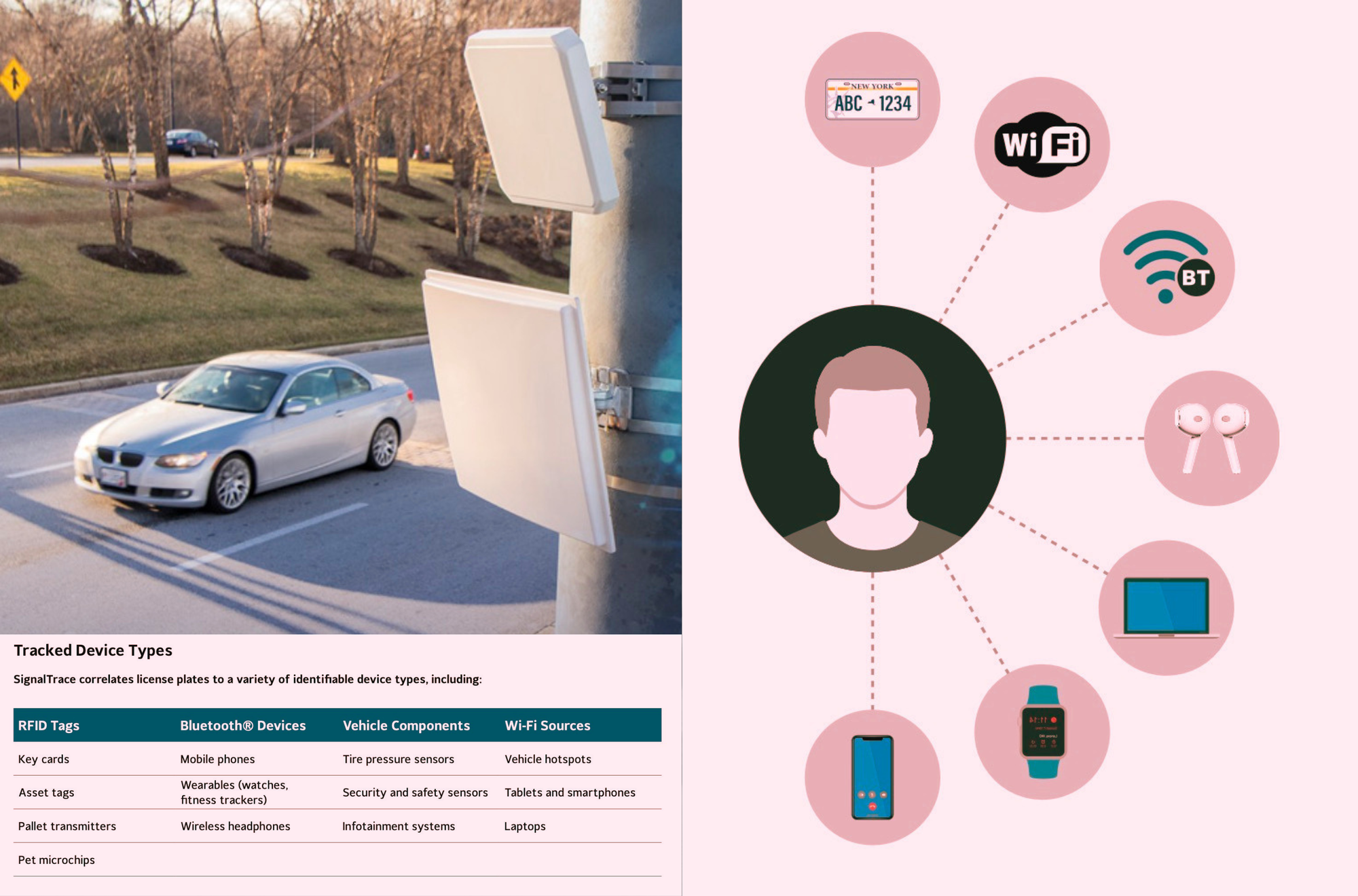
If companies are required to confirm a user’s age, they must collect identifying information. That means uploading government IDs, facial scans, biometric verification, or some form of identity credential simply to access websites or social media platforms. The open internet that once allowed individuals to communicate anonymously has suddenly become an identification checkpoint.

Privacy organizations and digital rights advocates have already warned that these requirements pressure websites to collect enormous amounts of sensitive personal information just to allow ordinary speech online. Once these databases exist, they become irresistible targets for hackers, governments, and corporate data collection. The same institutions that routinely suffer massive data breaches now want citizens to upload even more sensitive identification simply to read information or participate in discussions.

AI's Role in Challenging Online Anonymity | daily.dev

Even regulators themselves are quietly acknowledging the contradiction. Officials have admitted that these verification systems require collecting personal data in ways that could conflict with existing privacy protections for children. Yet the legislation continues moving forward because the political incentives are obvious. No politician wants to be seen opposing a bill marketed as protecting children.

This is exactly how surveillance infrastructure has historically developed. It never begins with governments announcing they want to monitor citizens. Instead, it begins with policies designed to address social problems. Once the identification systems are built, the infrastructure remains permanent. What starts as age verification inevitably becomes identity verification for broader purposes.

The implications for speech are enormous. Anonymous communication has been part of political culture for centuries. The Federalist Papers themselves were written under pseudonyms. The internet extended that tradition globally by allowing individuals to exchange ideas without fear of retaliation from governments, employers, or political movements. Age-verification mandates fundamentally change that structure by requiring users to link identity credentials to online participation.

Governments have repeatedly demonstrated they cannot secure large databases. Massive data breaches occur every year across both public agencies and private corporations. Expanding identity verification requirements only increases the amount of sensitive information circulating across already-vulnerable systems.

Once platforms are required to verify identity or age, that framework can easily be expanded to regulate speech, political content, financial activity, or access to information. The infrastructure becomes permanent even if the original justification fades away. The internet began as an open communications network where individuals could exchange information freely across borders. Requiring identification to access information transforms that environment into a monitored space where participation depends on presenting credentials.

Israel’s Decapitations’ Strategy – Brain Dead!


Posted Posted originally on CTH on Mar 11, 2026 by Martin Armstrong |  

Neocon Advising Trump

The Neocons have completely engulfed the world in their thirst for endless wars to become the sole rulers of the world. Their agenda is the same as Joseph Stalin’s – to eliminate all possible opposition to secure their power. US President Donald Trump thinks the war against Iran “is very complete” on the advice of these traitors and that Washington was “very far ahead” of their initial four to five-week estimated time frame, as they expected in Iraq. In response, Iran’s Revolutionary Guard responded by saying that it is “nonsense,” adding “we are the ones that will determine the end of the war.” Our computer continues to warn that this war could heat up from June to August. The drought in Iran will worsen this summer as well.

.

Nerocon Every Administration

They know how to play the game. Assert there is a threat and convince the sitting president that there is an immediate threat to bypass Congress every time, like Weapons of Mass Destruction, or that Iran will have a nuke in weeks and a ballistic missile to hit the USA, none of which is verifiable. Unless these people are imprisoned for life, we will NEVER have world peace.

Dollar Black Hole
Neocon Dividing World Economy

An analysis of our national debt shows we are still paying interest on World War I. They do not care about the cost. This is always about their agenda. Their expenditures in Vietnam broke the Bretton Woods monetary system and the gold standard. Antony Blinken destroyed the world economy by removing Russia from SWIFT, which led to the creation of BRICS, all for their thirst for war.

Now their stupidity has sent the world dangerously spiraling towards Armageddon. History is replete with examples where the assassination of a leader—far from solving a problem—created a power vacuum, unleashed more radical forces, or galvanized the opposition, leading to a far worse outcome for the assassins. Israel adopted the strategy of assassinating enemy leaders (and militants), which Zelensky of Ukraine has adopted. It is a long-standing, officially declared policy of the Israeli state. Ukraine’s actions have adopted the Israeli policies, which are highly dangerous. This is resurfacing the anarchist movement, pulling the rug out from under which civilization exists.

Israel’s use of targeted assassinations is not a new tactic born of the current conflict in Gaza. It has been a cornerstone of its national security strategy for decades, used against a variety of enemies. The strategy can be traced back to the aftermath of the 1972 Munich Olympics massacre, where Palestinian militants killed 11 Israeli athletes. In response, then-Prime Minister Golda Meir authorized Operation Wrath of God, a covert mission by Mossad to track down and assassinate the individuals responsible for the attack and the broader Black September organization. This campaign lasted for over 20 years. This was one thing killing a small group of terrorists. It is completely different when taking out heads of state.

In 1992, after a series of stabbings and attacks, then-Prime Minister Yitzhak Rabin publicly articulated a policy of “combating terror by targeting the terrorists themselves… this is a just war.” This marked a shift from a secretive approach to a more publicly acknowledged one.

Since the outbreak of the Second Intifada in 2000, the frequency of targeted killings has increased dramatically. Israel has used them against senior leaders of Hamas, Palestinian Islamic Jihad, Hezbollah, and others. High-profile examples include the killings of:

Yahya Ayyash (“The Engineer,” 1996)
Ahmed Yassin (spiritual leader of Hamas, 2004)
Abdel Aziz al-Rantissi (Hamas leader, 2004)
Imad Mughniyeh (Hezbollah commander, 2008)
Mohsen Fakhrizadeh (Iranian nuclear scientist, 2020)

The number of such operations is now in the hundreds, if not thousands, making it a central and continuous component of Israeli military and intelligence doctrine. It crossed the line, assassinating the Ayatollah not just because he was the head of state, but also the religious head. This has already justified the discussion of assassinating heads of state anywhere. There are those now calling for Putin to target and assassinate Zelensky. Netanyahu is flying in circles for now; he suddenly realizes that what he did to Iran justifies Iran now targeting him. Israel adopted the strategy of assassinating leaders (and other targets) first, by a margin of about 50 years.

Caesar Assassination

Unintended Successors

The most famous assassination of a head of State remains that of Julius Caesar. The idea that killing him would restore the Republic had the exact opposite effect, and Caser’s heir, Octavian (27BC-14AD), became the first Emperor of Rome, permanently ending the Republic. Replacement leaders are often more radical. Assassinating Julius Caesar ended the Republic and ushered in a civil war. Be careful for what you act and expect, for you can end up with exactly what you are trying to prevent. Indeed, decapitation rarely ends wars—it typically prolongs or intensifies them. Stable resolutions require systemic change (e.g., institutions, treaties), not isolated strikes. As Sun Tzu warned: “Kill one, terrorize ten thousand.” The true cost is measured in cycles of vengeance and instability.

Tomb of Osirus

Yes, the story of Osiris is a foundational myth of ancient Egypt, and it absolutely involves his murder at the hands of his brother, Set, demonstrating that you can kill the man, but not what he stood for.  The concept of him being a “martyr” is something that Israel and the USA failed to appreciate.

The Murder of Osiris

The story goes that Osiris was not only a god but also the first king of Egypt, a wise and benevolent ruler who brought civilization, law, and agriculture to the people. His success, however, fueled the jealousy of his younger brother, Set, the god of chaos, the desert, and storms.

Set devised a treacherous plot to kill Osiris and usurp his throne. The most famous version of the murder comes from the Greek writer Plutarch. At a grand banquet, Set presented a beautifully decorated chest, promising to give it to whoever fit inside perfectly. One by one, the guests tried, but no one fit until Osiris, unsuspecting, lay down inside. At that moment, Set’s co-conspirators slammed the lid shut, sealed it with lead, and threw the chest into the Nile, drowning Osiris.

Isis, Osiris’s devoted wife and sister, embarked on a desperate quest to find her husband’s body. She eventually succeeded, but Set, enraged, discovered the body and dismembered it into 14 (or 42, in some accounts) pieces, scattering them across Egypt. Isis, with help from her sister Nephthys and the god Anubis, tirelessly gathered the pieces. She magically reassembled and wrapped Osiris’s body, creating the first mummy. Through this act and her powerful magic, she was able to briefly revive him, long enough to conceive their son, Horus

Assassination of Reinhard Heydrich

Hitler’s Retaliation for the Assassination of Reinhard Heydrich

In 1942, Hitler ordered brutal reprisals after Reinhard Heydrich’s assassination, including the Lidice massacre, which was a brutal Nazi war crime committed during World War II in retaliation for the assassination (Operation Anthropoid) of the high-ranking SS official and key architect of the Holocaust on May 27, 1942. The retaliation took place on June 10, 1942. Lidice was a village in Nazi-occupied Czechoslovakia (now the Czech Republic). Although Lidice had no proven connection to the attack, the Nazis linked it to resistance activity based on coerced intelligence, and all buildings were systematically demolished with explosives. The ruins were bulldozed, and the land was even salted to prevent regrowth as the Romans did to Carthage. Some 173 men (ages 15+) were executed on-site, while 19 women were sent to concentration camps and later executed. Some 198 women and children were sent to Ravensbrück concentration camp; most died from abuse, starvation, or gassing. 82 children were forcibly “Germanized” (given to SS families) or murdered in gas vans at Chełmno extermination camp. Only 17 survived the war. Lidice became a symbol of Nazi brutality and a rallying cry for resistance.

Ukraine’s reported assassinations of figures on Russian soil are copying the anarchist policies of Israel.  These actions are not part of a decades-old policy but are a wartime tactic as we now see the US adopting with Israel. What taints this even more was that the US was in the middle of “negotiations with Iran,” sending a very serious signal of bad faith while assassinating the head of state.

In the case of Zelensky, he has tried to assassinate Putin, and that would surely justify even nuking Kyiv by the far more radical replacement leader. The other reported targets have primarily been individuals whom Ukraine considers legitimate military or ideological targets directly involved in the war effort. These include:

Military Commanders: Such as the killing of Lt. Gen. Igor Kirillov, head of Russia’s nuclear defense forces, in December 2024.
Propagandists and Officials: Such as Darya Dugina (2022) and Vladlen Tatarsky (2023), influential figures promoting the war.
Defectors and Collaborators: Former Ukrainian officials who defected to Russia, like Ilya Kiva (2023).

Assassination of Archduke Franz Ferdinand

The Assassination of Archduke Franz Ferdinand (1914)

This is the quintessential example of an assassination with catastrophic unintended consequences. No doubt, Gavrilo Princip, a teenage Bosnian Serb nationalist, shot and killed Archduke Franz Ferdinand, heir to the Austro-Hungarian throne, and his wife, Sophie, in Sarajevo on June 28th, 1914. Bosnia-Herzegovina had just been annexed by Austria-Hungary a few years earlier against the wishes of neighboring Serbia. This was the hotbed of political discontent. This event unleashed World War I about one month after the assassination. The assassin’s goal was to strike a blow against Austro-Hungarian rule and liberate South Slav peoples, not unlike the assassination of the Ayatollah, assuming that would end the Shia reign.

The assassination of the Archduke Franz Ferdinand triggered the July Crisis. Austria-Hungary, with German support, issued an ultimatum to Serbia. The complex system of European alliances (Russia backing Serbia, Germany backing Austria-Hungary, France backing Russia, and Germany’s invasion plan bringing in Britain) was activated. Within weeks, the continent was plunged into World War I, a conflict that would kill millions, topple four empires (Austro-Hungarian, German, Ottoman, Russian), and set the stage for an even more devastating World War II two decades later. The assassination didn’t just fail; it accidentally lit the fuse on the single most destructive war in European history up to that point.

The Assassination John F. Kennedy

It’s well-documented that in 1963, following the terrifying brinkmanship of the Cuban Missile Crisis, Kennedy was actively seeking a path to détente with the Soviet Union. This context is crucial for understanding the theories about his death. On June 10th, 1963, after the Cuban Missile Crisis, Kennedy made what has been called his Peace Speech. Just months before his death, in June 1963, Kennedy gave a landmark commencement address at American University, where he called for a re-examination of Cold War attitudes and a strategy for peace, specifically calling for nuclear disarmament and peaceful coexistence with the USSR. That seemed to be the turning point when I would hear people talking about him, calling him a traitor. Then, about 5 months later, the Neocons assassinated JFK. John F. Kennedy, the 35th president of the United States, was assassinated while riding in a presidential motorcade through Dealey Plaza in Dallas, Texas, on November 22nd, 1963

JFK’s administration was engaged in serious talks with the Soviets about banning nuclear tests and was even exploring a possible non-aggression treaty between NATO and the Warsaw Pact. Our Neocons were freaking out; surrendering our nukes was unacceptable. They insisted that the Russians would lie and still have theirs.  I was shown the KGB file turned over on the JFK assassination and how they intimidated Oswald’s wife to change her story. There is significant evidence that Marina Oswald’s testimony evolved over time and that she faced circumstances that could be considered intimidating. It’s helpful to break this down into two phases: her testimony to the Warren Commission and her later statements.

Marina appeared before the Commission four times. She admitted she had initially lied to the Secret Service and FBI, denying knowledge of Oswald’s attempt on General Walker and his trip to Mexico. However, the Commission’s own records describe her as a “bewildered and frightened witness” who had already endured “intimidating interviews by federal and local officials”. This context suggests she was under significant pressure from the very beginning.

Later Recantation & Claims of Intimidation In later years, Marina significantly changed her public statements. A key source from Texas Monthly explicitly states: “Marina later recanted her testimony and professed her husband’s innocence, saying that she had been threatened with deportation if she did not cooperate.” Her Wikipedia biography corroborates this, noting that while she hasn’t formally recanted her testimony, she has stated in interviews since the late 1980s that she believes Oswald was completely innocent.

Reagan in quest of peace

Speaking to members of Congress in 2025, the consensus was that the CIA & Neocons assassinated JFK to prevent peace with Russia. They made Kennedy a martyr for peace. Likewise, the Neocons tried to stop President Reagan from meeting with Gorbachev. When President Nixon figured out it was the CIA, the Neocons turned that into a claim that he threatened the CIA to cover up Watergate when the very agents caught were all ex-CIA. They killed the man, but did not kill the dream of peace.

The Assassination of Moderate Leaders during The Troubles in Northern Ireland

During the conflict in Northern Ireland, the killing of leaders who had credibility within their communities often destroyed the best chances for peace and empowered extremists. In 1975, the Ulster Volunteer Force (UVF), a loyalist paramilitary group, killed a prominent member of the Social Democratic and Labour Party (SDLP) and several other Catholics in a series of attacks. More significantly, loyalists frequently targeted republican figures who were seen as “moderate” or who were exploring political solutions.

The intended outcome was to decapitate the republican movement and terrorize the Catholic community into submission. However, the actual outcome was far worse. These assassinations had the opposite effect. They removed voices advocating for a political path and convinced many in the nationalist community that there was no alternative but to support the Irish Republican Army’s (IRA) armed campaign. By killing those who could have been peacemakers, the loyalists inadvertently strengthened the hand of the very militants they were trying to defeat, prolonging the conflict for decades. Killing the Ayatollah was a brain-dead move for the idea that you can terrorize people into submission, which has no real support in history.

Israel’s Assassinations of Hamas Leaders (1990s-2000s)

This is a more recent and complex example directly relevant to modern geopolitics. In the 1990s and 2000s, Israel, in response to suicide bombings and other attacks, began a policy of targeted assassinations of Hamas leaders and bomb-makers, most famously the 1996 killing of “The Engineer,” Yahya Ayyash. The intended outcome was to disrupt Hamas’s operational capability, deter future attacks, and weaken the organization by removing its most talented and experienced leaders. The result was again far worse. While these assassinations did cause short-term disruption, their long-term effects were often counterproductive. When you are dealing with religion, you create martyrs. The killed leaders were celebrated as martyrs, which boosted Hamas’s popularity and recruitment. Again, this had the exact opposite effect.

The assassination of Ayyash, who was seen as relatively pragmatic, occurred just as Hamas was considering halting suicide bombings. His killing enraged the organization and its supporters, contributing directly to a wave of devastating suicide bombings that derailed the peace process and shattered public trust in Israel. By repeatedly targeting the political leadership, Israel may have inadvertently pushed Hamas’s political and military wings closer together and empowered the more militant factions within the group.

The U.S. Assassination of Abu Musab al-Zarqawi (2006)

This is a powerful example from the Iraq War. In 2006, a U.S. airstrike killed Abu Musab al-Zarqawi, the leader of Al-Qaeda in Iraq (AQI). Zarqawi was responsible for some of the most brutal and sectarian violence of the war, including beheadings and bombings aimed at igniting a full-scale civil war between Sunni and Shia Muslims. The intended outcome was to eliminate the leader of the most dangerous terrorist group in Iraq, disrupt its operations, and deal a major blow to the insurgency. At the time, it was hailed as a huge victory.

However, the outcome was far worse again. While Zarqawi was a brutal and polarizing figure even within his own movement, he was also its public face and primary strategist. His death created a leadership vacuum. Al-Qaeda in Iraq was eventually taken over by new leaders who were even more extreme and strategically adept. This group, under the leadership of Abu Bakr al-Baghdadi, would eventually rebrand itself as the Islamic State of Iraq and Syria (ISIS). Unconstrained by Zarqawi’s specific focus on Iraq, and learning from his failures, ISIS went on to conquer huge swathes of territory in both Iraq and Syria, declaring a caliphate and committing genocide against the Yazidi people. The group became a far more formidable and dangerous enemy to the U.S. and the world than Zarqawi’s AQI ever was.

Mary Queen of Scots

The Execution of Mary Queen of Scots (1587)

Mary Queen of Scots was the only surviving legitimate child of James V of Scotland. Mary was six days old when her father died, and she inherited the throne. Mary was sentenced to death for being a Catholic. She wrote a letter on Wednesday, February 8, 1587, at 2 a.m., just six hours before she was scheduled to be beheaded at Fotheringhay Castle. It was addressed to her brother-in-law, Henri III, King of France, who was the brother of her first husband, Francis II. She wrote it in her native French to put her affairs in order, knowing she would not survive the day. Because she was beheaded for being a Catholic, she will forever be remembered as a martyr to her faith. The stupidity of killing the Ayatollah has only transformed him into a martyr who will be larger than life.

Mary was adamant that she was dying for her faith and her claim to the English crown, not for any crime. She writes, “thanks be to God, I scorn death and vow that I meet it innocent of any crime, even if I were their subject”.

She states that her “Catholic faith and the assertion of my God-given right to the English crown are the two issues on which I am condemned“. She laments that her Protestant captors would not allow her a Catholic priest for her last confession or to give her the Last Sacrament

Mary, Queen of Scots, and the Christmas holidays (or “Yule,” as it was traditionally known in Scotland) are remembered since she was known for keeping Christmas with great mirth and tradition. For example, in either 1563 or 1564, she held a ball at the Palace of Holyrood House where she and her guests celebrated the ‘Feast of the Bean.’ Her lady-in-waiting, Mary Fleming, found the bean in her cake and was crowned “Queen of the Bean” for the day, even being dressed in the Queen’s own clothes as a prize

Mary Queen of Scots Letter

The public will have a rare opportunity to see this historic letter in person at the Perth Museum in Scotland from January 23 to April 26, 2026.

Primakov Yvgenny

The Assassination of Galina Starovoitova (1998)

Because of the 1998 Russian Financial Crisis, which occurred amid the Russian Bond Crisis in August/September 1998, Yeltsin had to shift the leadership. He tried to reinstate Viktor Chernomyrdin (1938–2010) as Prime Minister, but the Duma rejected his appointment on September 7th, 1998. There was a rising sentiment to return to Communism, for capitalism had obviously failed. A very serious crisis was unfolding, and Yeltsin was forced to nominate Yevgeny Primakov (1929–2015), a right-wing conservative and an anti-oligarchy communist at heart, who was appointed Prime Minister on September 10th, 1998. Primakov was moved from the Minister of Foreign Affairs to Prime Minister in the wake of Russia’s default in August 1998.

Galina Starovoitova 1946 1998 Assassinated 11 20 98

Within a matter of weeks of Primakov coming to power, on November 20th, 1998, Galina Starovoitova (1946-1998) was preparing for the State Duma elections that were to be held the next year, in December 1999. Galina tried to prevent the old communists from returning to power and opposed the oligarchs. Galina opposed the direction of Russia moving from a communist to an oligarchic state and made this part of her political platform in “Democratic Russia.

I believe Galina knew the nature and covert scheme of Primakov and the shifting sentiment to return to the USSR. I believe that, in fact, Galina’s assassination was to remove the head of the Democratic movement in the Duma that would have been the major obstacle to the rise of power of Primakov and the restoration of Communism under his vision of the USSR. Galina was gunned down in the entryway of her apartment building in St. Petersburg on November 20th, 1998. At first, the spin was she was really a puppet of a “Western financier,” who was supposed to be me simply because her son worked in my London office. She had checked my references with Margaret Thatcher before consenting to her son working in my firm. I had far more insight into Russia than most assumed.

The press refuses to reveal that they have been spreading the Berezovsky propaganda. On July 25th, 1998, Yeltsin appointed Vladimir Putin (born in 1952) as director of the Federal Security Service (FSB), the primary intelligence agency of the Russian Federation. I believe this was done because of Galina Starovoitova’s criticism of the FSB and to prevent another FSB coup, as they had pulled off against Gorbachev. Putin had worked for the KGB from 1975 until August 20th, 1991. He left because the head of the KGB, Vladimir A. Kryuchkov (1924–2007), was behind the major coup of 1991, arresting Mikhail Gorbachev and trying to return Russia to the USSR, which Putin opposed. Putin resigned in 1991 and entered the civil service to support an old friend who was running for mayor of St Petersburg. However, more significantly, on October 1st, 1998, Vladimir Putin became a permanent member of the Security Council of the Russian Federation. This is why Yeltsin turned to Putin BECAUSE he knew he was against the communists and did NOT want to return Russia to the days of the USSR. He was against the coup and appointed Putin as head of the FSB to prevent another one. So much for Victoria Nuland’s propaganda because their plot to seize Russia, blackmailing Yeltsin, failed.

Geoff Kitney, writing for the Herald in Berlin, characterized Galina’s death as “a turning point in Russia’s fight to establish a post-Communist society.” Indeed, Galina’s death was a significant turning point. It was clearly the attempt of the old guard and their remnant dream of Communist power they saw slipping away. It was very clear that her death was an ordered assassination by the hardliners. The fact that the spin claimed Galina was a puppet of a Western Financier, meaning me, was indicative of a communist who was Primakov, who was also the enemy of Berezovsky and his Seven Oligarchs attempting to take over Russia.

I believe that the assassination of Galina was the final straw that ended the USSR.

The_Assassination_of_President_Lincoln_-_Currier_and_Ives_Armstrong Economics

The very idea of assassinating leaders such as President Lincoln and President McKinley was part of an international trend that began during the 19th century and was based upon the theory that some dramatic deed was necessary to spark a revolution. It was called the “Propaganda of or by the deed,” and it advocated physical violence in a dramatic, provocative public act perpetrated against political enemies to inspire others to act in a popular mass rebellion or revolution. This was a political philosophy that was part of the radical thought emerging with Marxism. Still, it was not precisely advocated by Marx, who was generally a revolutionary.

There have been four Presidents assassinated and three who were wounded, with two misses since 1865.

Abraham Lincoln, April 14th, 1865
James A. Garfield, July 2nd, 1881
William McKinley, September 6th, 1901
Theodore Roosevelt, October 14th, 1912 (wounded)
Franklin D. Roosevelt, February 15, 1933 (5 shots fired missed)
John F. Kennedy, November 22md, 1963
Gerald Ford, September 5th, and 22nd, 1975 (missed)
Ronald Reagan, March 30, 1981 (wounded)
George W. Bush, May 10, 2005 (hand grenade thrown but was dud)
Donald Trump, July 13th, 2024 (wounded)

Propaganda by the Deed

.

Pisacane Carlo (1818-1857)

Bakunin

What we must be concerned about is I am afraid that the hatred and thirst for power are so polarized; I fear that the Deep State will assassinate Trump if he wins because he is against this tyranny that includes war and climate change. Perhaps the first to be associated with this new radical political philosophy of using assassination as a political weapon was born the same year as Karl Marx (1818–1883). He was the Italian revolutionary Carlo Pisacane (1818–1857), who wrote in his “Political Testament” (1857) that “ideas spring from deeds and not the other way around.”

Another anarchist of the period, perhaps the most influential figure in the anarchist movement and one of the principal founders of the “social anarchist” tradition, was Mikhail Bakunin (1814–1876). Bakunin gained tremendous prestige as an activist during this period, becoming one of Europe’s most famous ideologues. Bakunin gained substantial influence among radicals throughout Russia and Europe. In one of his surviving letters from 1870 to a Frenchman concerning what he labeled the “Present Crisis,” Bakunin clearly stated that “we must spread our principles, not with words but with deeds, for this is the most popular, the most potent, and the most irresistible form of propaganda.”

Bakunin’s words were popularized by the French socialist-anarchist Paul Brousse (1844–1912), who in 1877 cited as examples the 1871 Paris Commune and a workers’ demonstration in Berne, provocatively using the socialist red flag. By the 1880s, the slogan had begun to be used to refer to bombings and tyrannicides. Reflecting this new understanding of the term, the Italian anarchist Errico Malatesta (1853–1932), years later, in 1895, described “propaganda by the deed” as violent communal insurrections designed to ignite an imminent revolution.

Alexander II of Russia (1818-1881)

The anarchist movement that began in Russia in 1878 was known as Narodnaya Volya (Народная Воля in Russian; People’s Will in English). This revolutionary anarchist group was inspired by Sergei Nechayev (1847–1882) and “propaganda by the deed” theorist Pisacane. The Russian group evolved with ideas that targeted the killing of the “leaders of oppression” as, indeed, the correct path for all political movements where small non-state groups should employ violence. They advocated the use of modern technologies, such as dynamite. This was the first anarchist group to employ such dynamite on a widespread basis. This was the origin of the Russian Revolution in 1917 and the following bloodbath. They were assassinated on March 13th, 1881, by Russia’s Tsar Alexander II (1818-1881) with a bomb that also killed the Tsar’s attacker. Alexander II was also born in 1818, the same year as Marx. This assassination failed to inspire a revolution, but it took a step in that direction, eventually leading to the Russian Revolution 37 years later (8.6 x 4.3).

Individual Europeans also engaged in politically motivated violence during the 19th century. For example, in 1893, Auguste Vaillant (1861-1894), who was a French anarchist, bombed the French Chamber of Deputies on December 9th that year. The anarchist movement expanded through a process of contagion, spreading from nation to nation and even across seas.  Between 1894 and 1896, during the economic decline, the President of France, Marie Francois Carnot, the Prime Minister of Spain, Antonio Cánovas del Castillo, and the Empress of Austria-Hungary, Elisabeth of Bavaria, were killed by anarchists. This was the backdrop to the assassination of President William McKinley in 1901 and why his wife feared for his life.

mckinleyassassination

William McKinley, who was the 25th President of the United States, was assassinated on September 6th, 1901, inside the Temple of Music on the grounds of the Pan-American Exposition in Buffalo, New York. He was shaking hands with the public when Leon Czolgosz, an anarchist, shot him twice in the abdomen. McKinley died six days later. Leon Czolgosz worked in a Cleveland factory until he lost his job in a labor dispute in 1893. After that, he appears to have been inspired by the economic turmoil of the Panic of 1893 to embrace anarchism. This philosophy was becoming widespread and discussed even on college campuses. By 1901, New York’s Supreme Court ruled that the act of identifying oneself as an anarchist in public was a breach of the peace.

Frank Ann

There are many people who were nobodies during their lives and only became household names after their deaths, such as Vincent Van Gogh or Ann Frank. This is what these stupid Neocons do not get. You may be able to kill the man, but you cannot kill what he stood for, and you may, in fact, transform him into a much more powerful inspiration.

Subcutaneous Microchip Mandates


Posted originally on Mar 10, 2026 by Martin Armstrong |  

There was a time when warnings about governments embedding identification technology directly into the human body would have sounded like something from George Orwell rather than a public policy debate. Yet here we are. Washington State is now considering legislation to prohibit employers from forcing workers to accept subcutaneous microchip implants. The fact that lawmakers even need to debate such a law should alarm anyone paying attention to where society is heading.

These implants are not some futuristic fantasy. They already exist and have been used in workplaces. The devices are small RFID or NFC chips roughly the size of a grain of rice that are injected under the skin, typically between the thumb and forefinger. They contain no battery and do not actively transmit signals across long distances. Instead, they act as a passive digital key. When scanned by a nearby reader, the chip sends a unique identification number to a computer system connected to a database. That database determines whether you can open a door, access a computer network, enter a building, or authorize a payment.

Companies have already experimented with this technology. In Sweden, workers in technology hubs voluntarily implanted these chips so they could unlock office doors, log into computers, and pay for meals simply by waving their hands near scanners. That happened in 2017 and technology is rapidly evolving. Biohacking companies now sell implantation kits to consumers who want to unlock their homes or vehicles the same way. What is being marketed as futuristic convenience begins to look far less appealing when one considers the broader direction governments are taking with digital infrastructure.

At the same time that corporations are experimenting with embedding identification devices in the body, governments across the world are aggressively pushing digital identification systems. Digital ID programs consolidate identity verification into centralized databases containing everything from passports and healthcare records to employment credentials and tax information. Once identity becomes digitized and centralized, access to everyday life increasingly depends on that system functioning and recognizing you as compliant.

Layer onto that the growing push for central bank digital currencies. Unlike physical cash, CBDCs operate entirely within controlled digital networks run by central banks and governments. Every transaction becomes visible within the system. The currency itself can be programmed. Purchases can be monitored, restricted, or denied. Access to funds can be frozen instantly.

Combine digital identity with programmable money and biometric identification and you begin to see the outlines of a system that previous generations would have described as dystopian. Implantable chips simply remove the remaining friction. Your identification, access permissions, and financial credentials become physically embedded within your body, ready to be scanned whenever a system demands verification.

Politicians insist these technologies are about efficiency, security, and modernization. Those are the same justifications governments have used throughout history whenever they expand surveillance and control. Programs always begin as optional conveniences. Participation is voluntary at first. Over time, the infrastructure becomes so embedded in daily life that opting out becomes practically impossible.

The troubling part is how casually these ideas are now discussed. Only a generation ago the thought of employers implanting tracking devices into workers would have sparked widespread outrage. Today it is framed as a workplace innovation that lawmakers must merely regulate.

Washington State attempting to prevent mandatory implants shows that at least some policymakers recognize how far this could go if left unchecked. Once the concept of embedding identification systems into human beings becomes normalized, it will not remain confined to opening office doors or buying lunch in the cafeteria. When identity, access, and money are all digitized and centrally controlled, the boundary between technological convenience and societal control begins to disappear.

The uncomfortable truth is that the architecture for an entirely new form of digital governance is being constructed piece by piece. Identity systems, financial systems, and surveillance technologies are being merged into a single framework that determines how individuals participate in the economy and society. Implantable chips may appear to be a small step in that process, but they symbolize something much larger: the quiet transformation of the relationship between the individual and the state in the digital age.