Bill Gates Invests in Lab-Grown Baby Formula


Posted originally on Jun 12, 2026 by Martin Armstrong |  

People have become so conditioned to thinking in partisan terms that they miss the larger issue entirely. The question is not whether Bill Gates is a good person or a bad person. The question is why one individual continually appears at the center of industries that later become critical during periods of crisis.

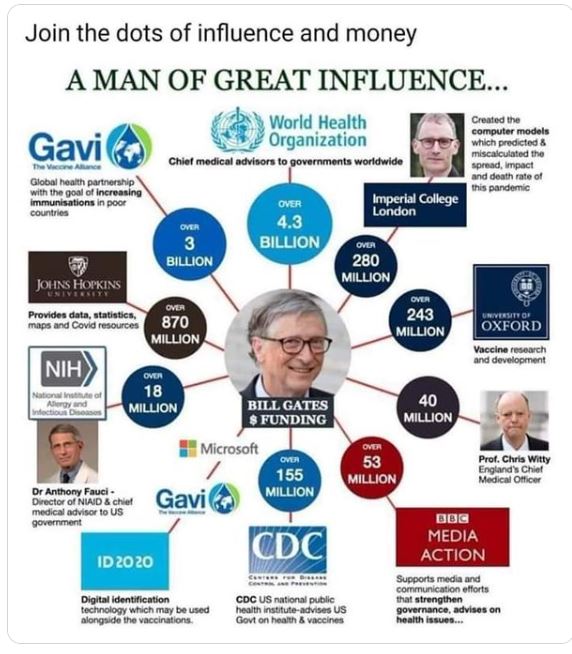
Bill Gates became one of the most influential private figures in global vaccination programs long before COVID. Through the Gates Foundation, billions of dollars have been directed into vaccine development, distribution, and organizations such as Gavi. The foundation has committed more than $4 billion to Gavi alone over the years and remains one of the most influential private actors in global vaccine policy. During COVID, the Gates Foundation committed hundreds of millions more toward vaccine development, manufacturing, and distribution worldwide. Nobody can seriously dispute that Gates became one of the most powerful private forces in the vaccine industry. Yet when a global pandemic arrived, suddenly vaccines became one of the most profitable and politically protected industries on earth.

Then there is agriculture. Bill Gates spent years quietly acquiring farmland across the United States until he became America’s largest private farmland owner, accumulating roughly 250,000 to 275,000 acres spread across numerous states. While many dismissed concerns by arguing that farmland is simply another investment, the timing remains extraordinary. Food inflation exploded. Supply chains broke down. Fertilizer shortages emerged. Farmers found themselves squeezed from every direction. Food security suddenly became a national discussion. Once again, one individual sat at the center of a strategic industry during a period of crisis.

Now consider infant nutrition. Gates-backed investment funds supported BIOMILQ, a startup attempting to produce human breast milk in laboratories using cultured cells. This was not science fiction. It was a real venture designed to create lab-produced breast milk as a commercial product. Around the same period, America experienced one of the worst baby formula shortages in modern history. The shortage stemmed from manufacturing disruptions and supply chain failures coincidentally tied to COVID.

Vaccinate Baby

Gates infamously speaks on controlling the population. “If we do a really great job on new vaccines, health care, reproductive health services, we could lower that [population growth] by perhaps 10 or 15 percent,” he stated. When an influential billionaire who funds vaccine programs and bankrolls the World Health Organization buys vast amounts of farmland, finances alternative food technologies, and speaks about managing population growth all at the same time, people are going to ask questions. You cannot expect the public to ignore those connections.
Gates Health Monopoly

The establishment immediately labels anyone who notices these patterns a conspiracy theorist. That is how debate is shut down before it begins. Yet concentration of power has always been a legitimate concern. When banking became concentrated, governments eventually regulated it. When railroads became concentrated, governments intervened. When media became concentrated, concerns emerged over influence and control. Why should food, medicine, agriculture, and biotechnology be treated differently?

The same people who finance vaccines finance health policy. The same people buying farmland finance agricultural innovation. The same investors funding synthetic food products dictate the future of nutrition. All distinction between private influence and public policy has disappeared.

What concerns me is where this trend leads. We are moving toward a world where food production, healthcare, biotechnology, artificial intelligence, digital identity systems, and financial systems are increasingly controlled by a shrinking circle of institutions and individuals. That concentration creates systemic risk. If they are wrong, everyone suffers. If their interests diverge from the public’s interests, society has few alternatives.

History warns that whenever too much influence accumulates in too few hands, the public eventually pays the price. The issue is the system that allows any private individual to become influential across so many strategic sectors at the same time. That is the lesson people should be paying attention to, because concentration of power has never ended well, regardless of who holds it.
Posted originally on Jun 11, 2026 by Martin Armstrong |  


Fiat

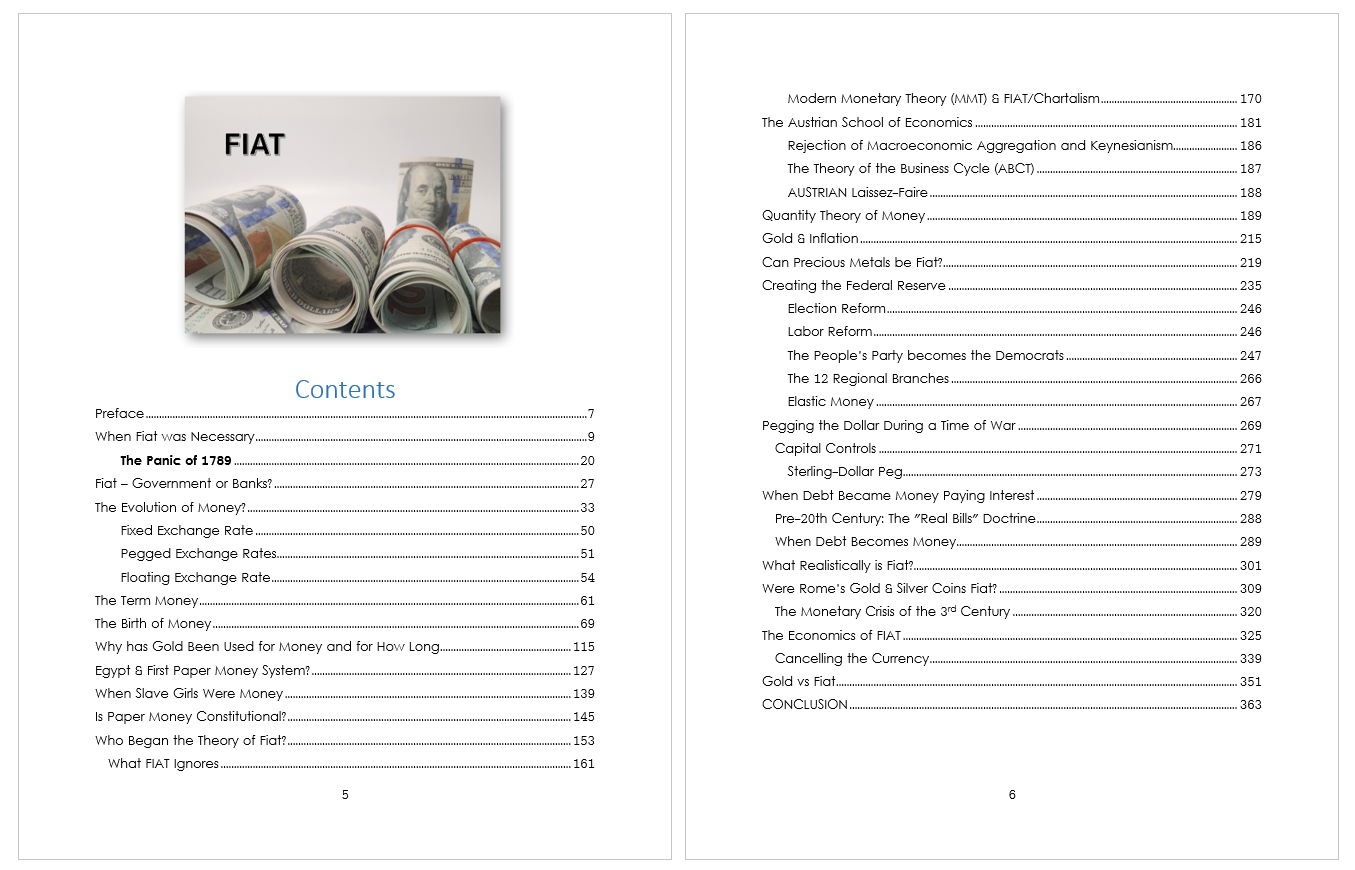
FIAT The Truth About Money – 2nd Edition (unedited)

$59.95

At last, the real truth about money.

This book on FIAT is perhaps the most definitive work on this subject, tracing the origin of this theory of FIAT and why it has become so distorted. The lack of understanding of what even constitutes FIAT, that all paper currency is just FIAT because it is not backed by some commodity, prevents us from comprehending not merely what money is, but its role within the global economy. Coins over the century could be struck in gold, silver, bronze, or some copper-alloy, and if their value was decreed to be worth far more than their metal content. FIAT is by no means just paper money. There were people who proposed issuing a platinum coin with a value of $1 trillion to pay off the debt? That too would be FIAT.

Then there is the questionable Elastic Money used by central banks creating inflation combined with discredited Keynesian Economics assuming society can be manipulated with interest rates. But is money exclusively the product of a central bank? Has debt become money that just pays interest? Are we blaming the gun for a murder rather than the person who pulls the trigger? Is debt a part of the monetary system? Does bank lending create money privately? Where does BITCOIN fit into this quagmire of trying to define what is actually money?

Fiat_Currency 2nd Ed Index

China’s Greatest Crime Is Competing Too Well


Posted originally on Jun 11, 2026 by Martin Armstrong |  

The Pentagon has added over a dozen Chinese companies including Alibaba,  BYD, Baidu, Unitree and Nio to a list of entities it says have ties to the  Chinese military. https://t.co/YeNjQxjVK0

The Pentagon has now added BYD, Alibaba, Baidu, and dozens of other Chinese firms to its list of companies allegedly linked to China’s military establishment. Washington wants the public to believe this is about national security. China’s greatest crime is not that it has a military. Every major power has a military. China’s greatest crime is that it competed too well.

China is building electric vehicles that are taking market share from Western automakers. Suddenly it becomes a national security concern. China develops world-class battery technology. National security concern. China advances artificial intelligence. National security concern. China dominates solar manufacturing. National security concern. China expands semiconductor capabilities. National security concern. At some point people need to ask whether the issue is military activity or economic competition.

The United States spent decades shipping factories, manufacturing, technology, and investment capital to China. Wall Street and consumers rejoiced after receiving cheaper products. The assumption was always that China would remain a low-cost manufacturing platform while the West retained financial and technological dominance. That has never been what our computer indicated, and although it may not have made sense decades ago, every indicator shows China on the rise.

China took the capital, the technology, the expertise, and the industrial capacity and built an economic machine that now challenges the West across nearly every major strategic industry. BYD now sells more electric vehicles than many Western competitors. China produces the overwhelming majority of the world’s battery components. Chinese companies have become major players in artificial intelligence, robotics, telecommunications, and advanced manufacturing. The problem is not that China failed. The problem is that China succeeded.

What would happen if BYD were headquartered in California? Politicians would celebrate it as proof of American innovation. If Baidu were based in Silicon Valley, every financial network would praise its technological achievements. If China’s battery industry belonged to the United States, politicians would be holding press conferences celebrating industrial leadership.

Instead, these companies are Chinese. Yes, there have been instances of technology theft as both nations play dirty to compete. Every success achieved by the rival nation is portrayed as a threat. Governments begin redefining ordinary commerce as strategic warfare.

Washington is finally admitting what China understood from the beginning. Beijing never separated economics from national strategy. China viewed industrial development as national power. The West viewed industry as something to offshore in pursuit of quarterly profits. Now policymakers are discovering that surrendering industrial capacity has consequences.

We are rapidly approaching a world where every Chinese company is viewed as a military company and every American company operating abroad is viewed as an instrument of Washington. Once governments start treating commercial competition as military competition, the distinction between economic warfare and actual warfare begins disappearing.

The public should understand what is taking place. This is not merely about BYD, Alibaba, or Baidu. This is another step in the escalation between the world’s two largest economies. The war cycle is advancing precisely as expected. The rhetoric becomes more hostile as restrictions become more aggressive. The economic walls will grow higher.

The Pacific Prize


Posted originally on Jun 11, 2026 by Martin Armstrong |  

Why is the Pacific Ocean so big? | Live Science

The Taiwan issue is not simply about reunification. That has always been far too simplistic. If Taiwan were merely a political dispute, China would not be spending trillions of yuan to build one of the largest navies on Earth. It would not be launching aircraft carriers into the Pacific. It would not be conducting large-scale naval exercises beyond the first island chain. What we are witnessing is something much larger.

Japan is reporting that China’s aircraft carrier Liaoning and its accompanying strike group recently conducted extensive operations east of the Philippines. Carrier aircraft reportedly carried out roughly 170 takeoffs and landings as the fleet operated throughout the western Pacific. These were not coastal defense exercises. These were blue-water naval operations designed to demonstrate that China intends to project military power far beyond its own shores.

Taiwan sits at the center of what military planners call the First Island Chain, a series of islands stretching from Japan through Taiwan and the Philippines. Since the end of World War II, this chain has effectively limited China’s direct access to the broader Pacific. Control of Taiwan would fundamentally alter that equation. Military analysts have openly acknowledged that China’s navy is steadily expanding beyond the First Island Chain and increasingly operating in waters once dominated almost exclusively by the United States and its allies.

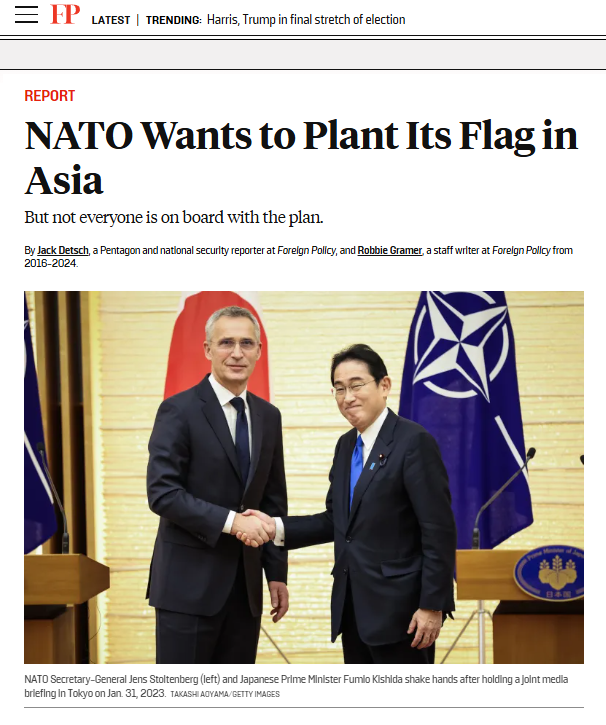
2024_10_30_16_56_43_NATO_Considers_Opening_a_Tokyo_Office_to_Have_a_Permanent_Indo_Pacific_Footprint

This is why military planners throughout Asia are becoming increasingly concerned. China is not simply building ships. It is building the capability to operate far from home for extended periods of time. In 2025, Chinese carriers reportedly spent a record amount of time operating beyond the First Island Chain, launching thousands of aircraft sorties as operational experience rapidly increased. These are the actions of a nation preparing for regional power projection, not merely coastal defense.

Japan is expanding defense spending. The Philippines is increasing military cooperation with the United States. Taiwan is rapidly expanding missile production. China continues building carriers, destroyers, submarines, and long-range missile capabilities. Every nation claims it is acting defensively. History shows that when everyone is preparing for war defensively, the risk of conflict rises dramatically.

Our models have warned that 2026 would be a panic-cycle year characterized by rising volatility and escalating geopolitical tensions. We are now watching multiple theaters move simultaneously. Ukraine continues to expand. The Middle East remains unstable. Europe is openly discussing military vulnerability windows extending into 2028 and 2029. Meanwhile, China is steadily pushing farther into the Pacific. None of these events exist in isolation.

War Is Now Appearing in Inflation Data


Posted originally on Jun 11, 2026 by Martin Armstrong |  

Inflation up

The May inflation report came in exactly where many expected, yet the details beneath the headline reveal what is actually taking place in the economy. Consumer prices rose 0.5% for the month and 4.2% year-over-year, the highest inflation reading in three years. Core inflation, which excludes food and energy, rose only 0.2% for the month and 2.9% annually. This is primarily an energy shock that is spreading through transportation, travel, and production costs due to the war in Iran.

Government data show that energy alone accounted for more than 60% of the monthly increase in consumer prices. Energy prices rose 3.9% in May after climbing 3.8% in April. Gasoline prices surged 7.0% in a single month and are now up 40.5% compared to a year ago. Electricity prices rose 5.9% over the past year while natural gas prices increased 3.0%. These are not insignificant numbers. Energy is the foundation of every economy. Every product must be manufactured and transported. Every store must be heated, cooled, and illuminated. When energy rises, it eventually works its way into virtually every aspect of economic activity.

Creating War

What is particularly important is that shelter inflation remains elevated. Shelter costs rose another 0.3% in May and are up 3.4% over the past year. Rent increased 0.4% for the month while owners’ equivalent rent rose 0.3%. Housing remains one of the largest expenses for the average household, and these increases continue to erode disposable income even as policymakers insist inflation is under control.

Food prices are also moving higher, though at a slower pace than energy. The overall food index rose 0.2% during May and 3.1% over the past year. Food away from home increased 3.5% annually, showing that restaurants continue passing higher operating costs on to consumers. Fruits and vegetables are up 6.1% over the past year while beverages increased 5.8%. The average family notices these increases every week at the grocery store regardless of what economists may say about “core inflation.”

Transportation is beginning to show the impact of rising fuel costs. Airline fares jumped 2.7% in May alone and continue to rise as carriers pass along higher jet fuel expenses. The travel sector has been particularly vulnerable because energy prices affect everything from airline tickets to hotel operations and rental cars. We are seeing the same pattern that has repeated throughout history whenever geopolitical tensions disrupt energy supplies.

The political establishment will attempt to debate whether inflation is temporary or permanent. They always focus on labels instead of causes. The numbers show that this inflation surge is being driven primarily by energy. Whenever governments become involved in war or geopolitical confrontation, energy becomes the transmission mechanism that spreads economic pain throughout the system. The current Middle East conflict has once again demonstrated how fragile global supply chains remain and how dependent modern economies are on stable energy markets.

The May CPI report demonstrates that inflation has not disappeared. It merely changed form. The energy sector is once again dictating economic reality. As we move deeper into a Panic Cycle year, geopolitical events are becoming increasingly important drivers of economic activity. The lesson remains the same as it has throughout history: when energy prices move sharply higher, they eventually impact everything else.

61% of Israelis Against Netanyahu


Posted originally on Jun 10, 2026 by Martin Armstrong |  

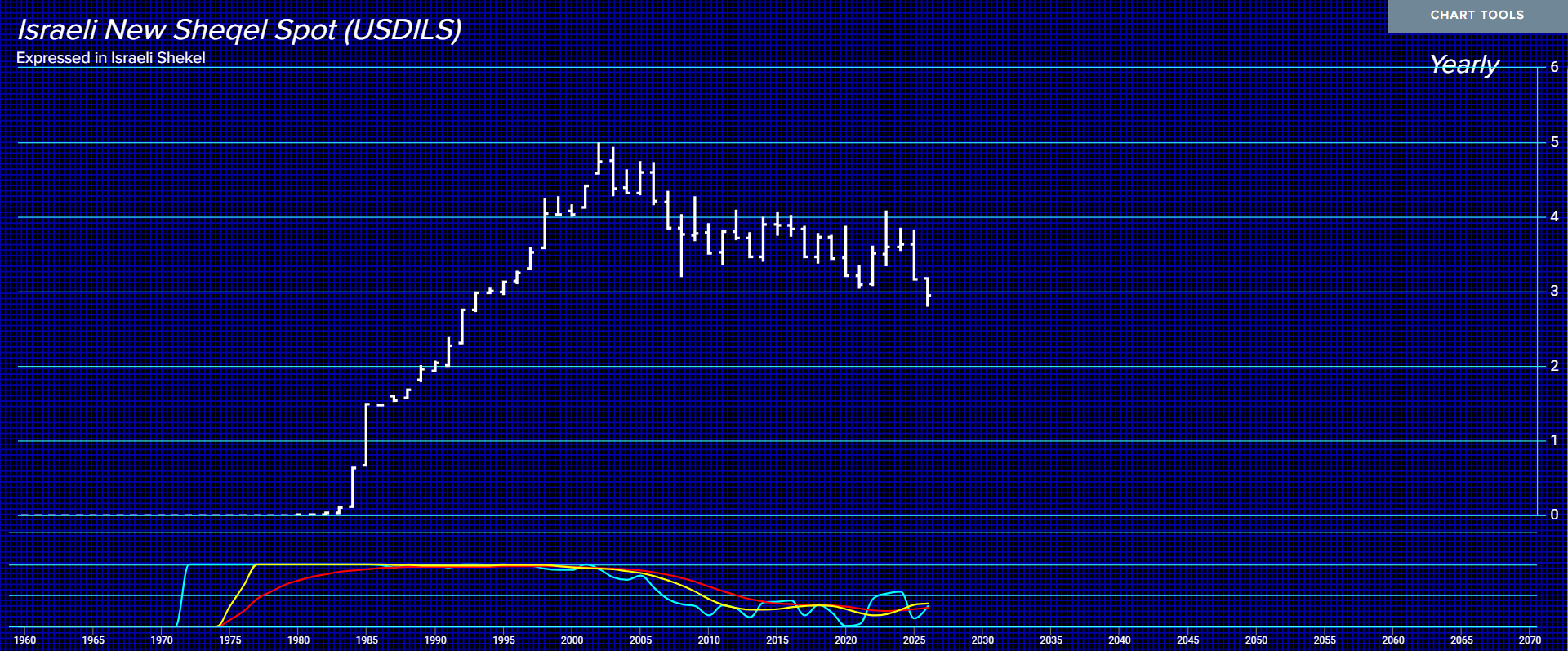
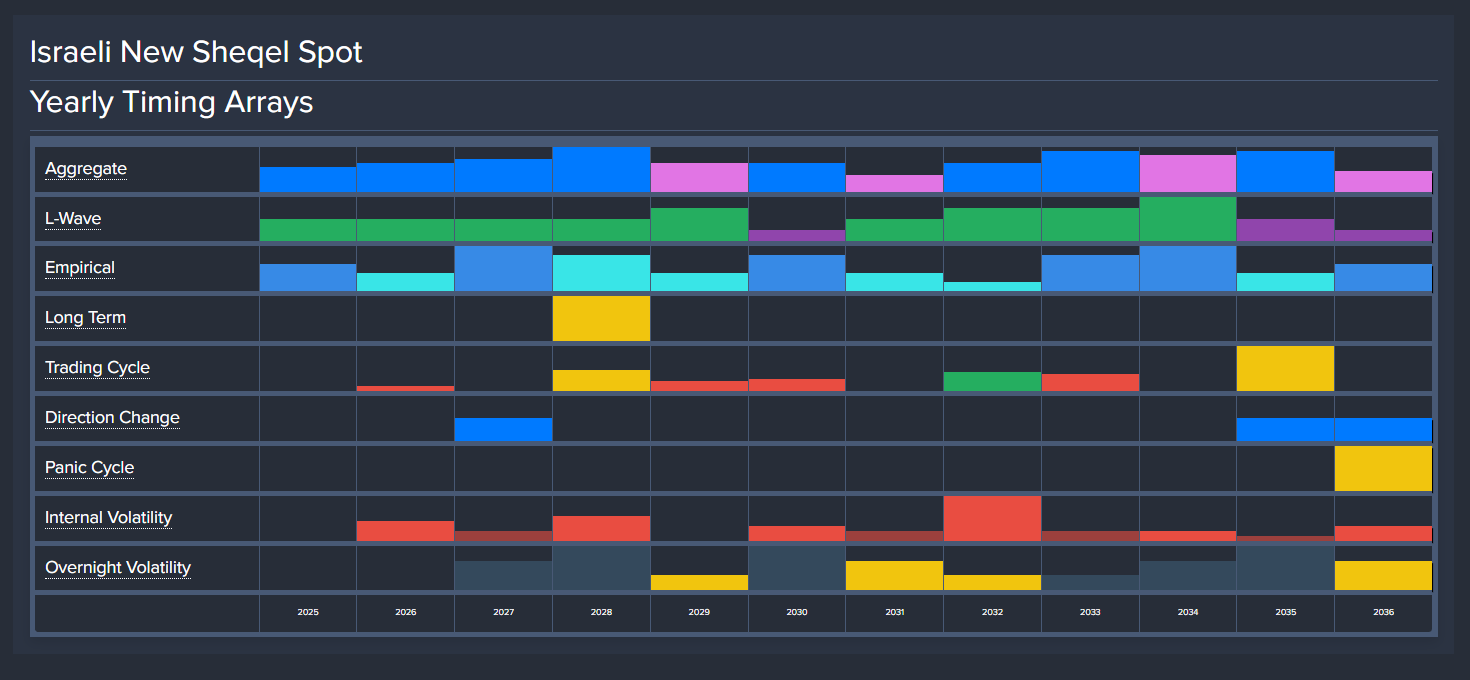
Israeli_New_Sheqel_Spot Y Tech 6 10 26

COMMENT: You have always stated that wars are created by the leaders, not the people. The majority of Israelis do not want Netanyahu to run again. According to a poll released this week by the Israel Democracy Institute, it found that 61% of Israelis, including 27% of Likud members, do not want to see Netanyahu run again this fall. The same proportion said they want to see Israel adopt a two-term limit for prime ministers in the future.

I understand your criticism of Netanyahu that this is an endless war that does not end well for us, according to your computer. There has to be some long-term solution, and sending missiles back and forth will not resolve this. Do you have any update for us here in Israel?

V

Israeli_New_Sheqel_Spot Y Array 6 10 26

REPLY: I know, we have a lot of readers in Israel. The greenback is starting to position itself for a rally and we still have a major directional change in 2027. I agree with you that the real problem here is that there is no military victory. Netanyahu has sold his Neocon theory and he always assumes that if you assassinate the leader, you are cutting off the head of the snake and you win. The logic behind it is known as the “better the devil you know” or the “decapitation paradox.” Often, the second-in-command is less capable, less charismatic, or lacks the same control over factions. This can lead to a less effective or more moderate successor. If you kill the leader, the entire command structure that could negotiate a ceasefire or surrender is gone. You might be left fighting a fragmented, leaderless, and even more vengeful enemy for years. Killing a charismatic leader can turn him into a martyr, inspiring a new wave of recruits and making negotiation with his followers politically impossible. Netanyahu’s strategy is by no mean foolproof especially since Iran countered by decentralizing. Taiwan is now adopting the Iran model of decentralization.

Like Iraq, they focused on removing Saddam. They NEVER consider what comes next. Netanyahu puts out the same BS I have heard about Russia. Get rid of Putin and the people will rise up and give the Neocons a tickertape parade. They made the same argument about Iraq. It did  not happen there either. Iran decentralized its government knowing Netanyahu’s strategy of assassinating. You hear Rubio now saying they are having to negotiate with the 3rd tier of leaders.

Trump is trying to get out of this mess but Netanyahu is up for possible reelection. Trump has been saying that he was unsure if Netanyahu would press forward in the elections. Netanyahu’s party has rejected speculation that he might not run in Israel’s election this fall, following an offhand comment by U.S. President Donald Trump.

We have a clash of self-interests where Netanyahu is being criticized there by his opposition that he has achieved nothing including no regime change or the people rising up.  This makes Netanyahu anti-peace or he has to admit failure. In the USA, there are the midterms and if Trump does not end this before, he looks like a failure. These two elections are on a collision course.

It just does not seem to be peace on the horizon long-term.

Europe’s War on Crypto Is Really About Capital Controls


Posted originally on

Jun 10, 2026 by Martin Armstrong |  

The European Union has announced what may prove to be one of the most significant developments in the battle over financial freedom. European Commission President Ursula von der Leyen declared that the EU would introduce, for the first time, a “full third-country ban” on certain crypto-asset services as part of a new sanctions package against Russia. The official explanation is that Brussels wants to prevent Russia from using cryptocurrency-related services to evade sanctions. Most people will read that headline and move on. They should not.

What was actually said is far more important than many realize. The European Union is asserting the authority to prohibit crypto-asset service relationships involving entities outside its borders if Brussels determines those relationships undermine its sanctions regime. Today the target is Russia. Tomorrow it could be any country, institution, company, platform, or financial network that falls outside the political objectives of Brussels. Once governments establish the power to control access to financial infrastructure, the scope of that power rarely contracts.

I have warned for years that governments would eventually move against cryptocurrency if it became large enough to threaten their ability to monitor and control capital. The crypto community often assumed governments would embrace innovation. That was never how this would unfold. Governments do not like competition when it comes to money. Their power rests on controlling the financial system. Taxation, regulation, reporting requirements, sanctions, and monetary policy all depend on that control. A decentralized system operating beyond their direct authority was always going to create conflict.

The timing is no coincidence. Europe is drowning in debt. France’s debt has surpassed €3.3 trillion. Italy’s public debt exceeds €3 trillion. Numerous European governments are running chronic deficits while facing aging populations, declining birth rates, expanding pension obligations, and stagnant economic growth. The mathematics simply do not work. Politicians continue making promises while the bills continue piling up.

This is where history becomes important. Governments rarely impose capital controls during periods of prosperity. They impose them when confidence begins to decline. During the Great Depression, the United States confiscated gold. Argentina repeatedly restricted currency movements. Cyprus imposed depositor losses during its banking crisis. India invalidated large denominations of cash overnight. Throughout history, governments facing financial stress have always sought greater control over private capital.

The European Union is quietly constructing the infrastructure necessary for that control. They have implemented sweeping anti-money laundering regulations. They are expanding crypto reporting requirements. They are advancing digital identity initiatives. They are discussing the digital euro. They are creating centralized databases capable of tracking financial activity across member states. Each measure is presented as a reasonable response to a specific problem. When viewed together, however, the objective becomes much clearer.

What terrifies governments about cryptocurrency is not the technology itself. It is the possibility that capital can exist outside traditional financial institutions. Governments can regulate banks. They can pressure brokers. They can freeze accounts. They can monitor transactions. Cryptocurrency introduced a system that operates differently. From the perspective of heavily indebted governments, that represents a threat.

The argument will always be sanctions, crime, terrorism, money laundering, or national security. Those explanations change depending on the political circumstances of the day. The underlying objective remains remarkably consistent. Governments want visibility. They want oversight. They want the ability to determine where capital is located, where it is moving, and who controls it.

What concerns me most is that Europe continues moving in the direction of greater centralization precisely as economic conditions deteriorate. The European project was sold as a framework for cooperation and prosperity. It is increasingly evolving into a system where unelected bureaucrats accumulate authority over energy policy, migration policy, financial policy, digital policy, and now cryptocurrency. Every crisis becomes justification for expanding power.

The tragedy is that none of these measures solve the underlying problem. Restricting cryptocurrency will not reduce sovereign debt. Governments bought into the lie that they can tax the people out of their debt crisis. Politicians refuse to blame failed policies and instead blame the average person for holding onto wealth, which they feel belongs to the state. Governments are attempting to manage a debt crisis through regulation when the problem is fundamentally fiscal and structural.

Our models have warned repeatedly that Europe is entering a period of rising political and financial instability. The 2026 Panic Cycle year was never solely about markets. It was about confidence in government itself. As confidence declines, governments historically seek greater control over capital. Investors seek freedom while governments seek restrictions. That conflict has existed for thousands of years.

The announcement regarding cryptocurrency should therefore be viewed as far more than another sanctions measure. It is a glimpse into how governments behave when debt burdens become overwhelming and confidence begins to erode. History shows that the road from regulation to capital controls is often much shorter than people expect.

Israel Spies on the US – What Else is New?


Posted originally on Jun 10, 2026 by Martin Armstrong |  

Pentagon raises threat of Israeli spying on U.S. to highest level: media

The announcement by the Pentagon that Israel spies on the United States is being presented as some shocking revelation. Really? Jonathan Pollard stole massive quantities of classified intelligence for Israel and was convicted in 1987. The NSA reportedly caught Israeli officials discussing efforts to influence U.S. policy during the Obama administration. Even former CIA and FBI officials have repeatedly acknowledged that Israel conducts aggressive intelligence operations inside the United States. This is not a conspiracy theory. This is how nation-states behave.

What caught my attention was not the allegation but the timing. Washington is warning about Israeli intelligence activities at the exact moment the United States is becoming increasingly entangled in Middle Eastern affairs. The Iran conflict continues to escalate. Gaza was destroyed and forgotten, and now Lebanon is under a constant barrage. American military assets are spread across the region. Defense spending is approaching levels that would have been unthinkable a generation ago. Yet instead of reassessing these commitments, our AIPAC devout Congress wants even deeper integration.

The numbers are becoming absurd. Federal debt has surpassed $37 trillion. Interest payments are now among the largest items in the federal budget. The Pentagon budget is approaching $1 trillion annually. Yet the solution is always more spending, more deployments, more foreign obligations, and more promises that American taxpayers will ultimately be forced to finance.

NBC News: "The Pentagon is increasingly concerned about Israel ramping up its spying on the U.S., recently raising the counterintelligence threat level from America's top ally in the Middle East to the

The espionage issue exposes a deeper problem. If intelligence officials genuinely believe there is a serious security concern, why pursue greater integration? If greater integration is essential, then why raise alarms? The answer is that Washington no longer has a coherent strategy. Different factions are pulling in different directions while pretending there is a unified policy.

This is how empires decline. Rome reached the point where competing interests, foreign entanglements, military expenditures, and political factions overwhelmed any clear national purpose. The government became reactive rather than strategic. Looking around today, the similarities are becoming difficult to ignore.

My concern has never been whether Israel spies. Every country spies. China spies. Russia spies. Britain spies. France spies. The United States spies on allies and adversaries alike. The real issue is that Washington continually places itself in positions where it cannot distinguish between American interests and the interests of everyone else.

What we are witnessing is not a sudden discovery. It is the slow realization that decades of foreign entanglements, endless commitments, and political hypocrisy have created a system that no longer knows where its own interests begin and end. That is a far greater threat than any espionage operation.

Bulgaria Finally Chooses Its Own Interests


Posted originally on Jun 10, 2026 by Martin Armstrong |  

UkraineWarDinosaurs

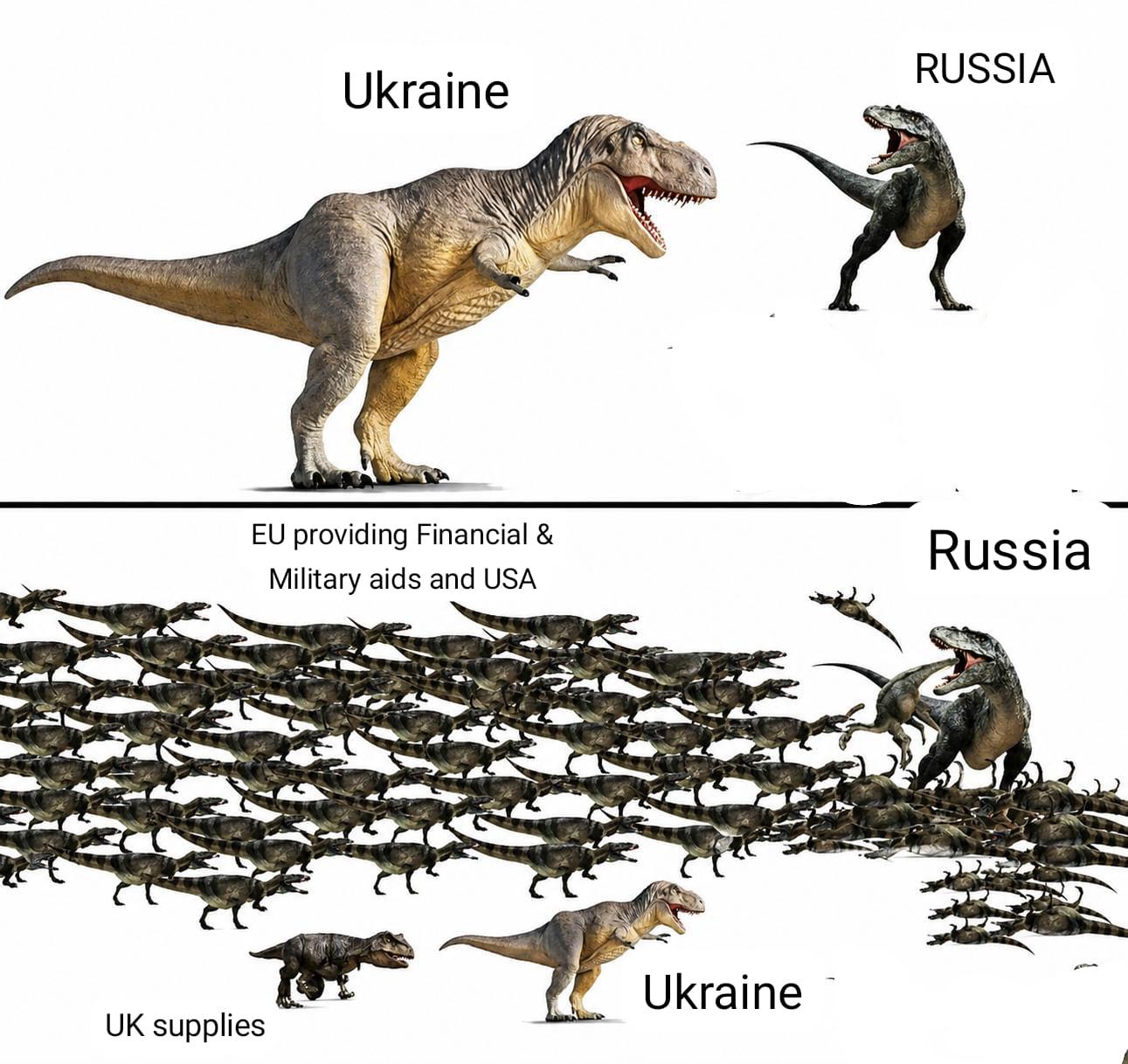
I have said countless times that the biggest problem in Europe is not Russia. It is the complete abandonment of national sovereignty by politicians who seem more interested in satisfying Brussels than representing their own people. Bulgaria’s decision to halt further military aid to Ukraine is one of the first signs that some countries are beginning to recognize reality. After years of sending money, weapons, equipment, and resources into a war that has no military solution, there are finally voices asking the obvious question: When does this end?

The Ukrainian conflict has become Europe’s black hole. Hundreds of billions have been committed by Western governments while European economies struggle with stagnant growth, rising debt, housing shortages, inflation, and declining living standards. The European Union continues to demand sacrifices from ordinary citizens while finding endless resources for foreign wars. At some point, voters begin to realize that their governments have become more concerned with financing conflicts abroad than fixing problems at home.

Bulgaria is hardly alone. Public support for endless aid packages has been weakening across Europe. Governments in Hungary and Slovakia have openly challenged the prevailing narrative, while political opposition to continued military spending is growing in Germany, France, Italy, and throughout Eastern Europe. The reason is simple. People can see that every new shipment of weapons is followed by demands for even more weapons. Every funding package is followed by another request. Every promise that victory is just around the corner is replaced by a new justification for continuing the war.

What makes Bulgaria’s position particularly important is that it exposes the growing divide between European elites and the populations they claim to represent. The average citizen is worried about energy prices, food costs, taxes, housing, and economic security. Brussels is focused on military commitments, sanctions, and geopolitical ambitions. These priorities are no longer aligned.

From a cyclical perspective, this shift was inevitable. As economic conditions deteriorate, governments face increasing pressure to redirect resources inward. The 2026 Panic Cycle year was always likely to expose fractures within the European Union. The economic stress building across Europe is forcing governments to confront choices they have spent years avoiding. They can continue financing external conflicts while borrowing endlessly, or they can begin putting their own citizens first.

Bulgaria appears to be recognizing that prolonging the conflict indefinitely serves nobody’s interests. Whether other European governments follow remains to be seen, but this decision signals that the once-unquestioned consensus behind unlimited support for Ukraine is beginning to crack.

Amsterdam Bans Meat Ads as the War on Food Expands


Posted originally on Jun 9, 2026 by Martin Armstrong |  

r/worldnews - Burger King pushing Amsterdam meat advert ban with veggie lookalike grilled patty

Amsterdam’s decision to ban meat advertising should be viewed as part of a much broader trend that has been unfolding for years. Politicians insist this is about climate change. Every new restriction is presented as a noble sacrifice for to save the environment. Yet the target is almost always the same: farmers, ranchers, livestock producers, and regular people who are forced to sacrifice their health and livelihood for the globalist agenda.

The Netherlands has already spent years battling its own farming community through nitrogen regulations, forced buyouts, and restrictions that have pushed many family farms to the brink. Massive farmer protests erupted because people recognized that this was never merely about emissions. Agriculture was being redesigned from the top down. Now the campaign has moved beyond production and into culture itself. If citizens cannot be persuaded to abandon meat voluntarily, then governments will gradually make meat less visible, less available, more expensive, and increasingly stigmatized.

Many people dismissed concerns years ago when international organizations began discussing alternatives to traditional meat consumption. The World Economic Forum published articles exploring insects as a future protein source and repeatedly promoted dietary shifts away from actual meat. The argument was always framed around sustainability, carbon reduction, and environmental goals. They attempted to normalize chewing on bugs as an alternative to a steak. They claim it is our duty as global citizens to sacrifice essential nutrition to save the planet, despite knowing well that these measures would not make a meaningful dent in anything.

Insects Eat

A tremendous amount of capital has flowed into synthetic foods, lab-grown proteins, precision fermentation, artificial dairy products, and engineered meat substitutes. Consumers are being told these products represent the future. Agriculture, now termed “traditional agriculture,” faces an ever-growing wall of regulations. The result is a food system that is composed of chemicals, cloned cells, and substances that are simply not safe for human consumption.

Food security has always been a cornerstone of national stability. Nations that lose control over their food production eventually become dependent on distant supply chains and centralized systems. That dependence creates vulnerabilities that cannot be solved by slogans or marketing campaigns. When domestic farmers disappear, replacing them is not as simple as passing another regulation.

r/ConservativeMemes - I'd like a burger.

The debate over meat is not really about environmental rights. It is about who gets to decide what people can and cannot eat. Consumers are no longer permitted to decide, and are often deceived by labeling and synthetic imitations. Europe is attempting to alter human behavior by banning the promotion of meat, and bit by bit, they will begin to normalize protein alternatives.

Citizens should pay close attention whenever politicians begin treating ordinary food as a social problem that must be managed. Once governments assume the authority to decide which foods deserve promotion and which deserve suppression, there is no obvious limit to where that philosophy ultimately leads. The long-term repercussions of poisoning civilization with synthetic food are unknown. They could theoretically put anything in the food supply to ultimately suppress the people, as a sick population is easier to control. Rest assured, the elites will continue eating real food that will become increasingly scarce in the years to come, especially as sovereign defaults begin one by one.