Posted originally on Mar 9, 2026 by Martin Armstrong |
The latest employment report from the Bureau of Labor Statistics once again highlights the persistent inconsistencies that appear when comparing government labor data with private payroll figures. According to the BLS, nonfarm payrolls fell by roughly 92,000 jobs in February, while the unemployment rate edged higher to 4.4%. Analysts had expected modest job growth, so the negative headline came as a surprise and suggests the labor market is beginning to show clearer signs of slowing.
What makes this report particularly interesting is how sharply it diverges from the private sector data released earlier in the week. The ADP National Employment Report estimated that private employers added about 63,000 jobs in February, an improvement from January’s extremely weak reading of roughly 11,000 jobs. While still far from robust growth, the ADP figures pointed to modest hiring rather than the contraction implied by the official report.
Looking deeper into the BLS data, the sector breakdown reveals that hiring was concentrated in only a handful of areas while several cyclically sensitive industries declined. Health care and social assistance continued to add jobs, along with government employment and portions of the education sector. Construction also managed small gains despite weather disruptions. However, manufacturing payrolls declined, retail employment fell, and professional and business services, which tend to weaken early in economic slowdowns, also posted losses. Leisure and hospitality hiring slowed sharply compared with the pace seen throughout 2024 and early 2025.
This gap between the two measures has been appearing more frequently in recent years and highlights the structural differences in how the data are compiled. ADP draws from actual payroll processing data covering millions of workers, whereas the BLS relies heavily on surveys and statistical adjustments, including the birth-death model used to estimate employment from new firms. These models can introduce significant volatility, and revisions months later often alter the original picture substantially.
The broader trend, however, is consistent across both reports. Job creation has slowed materially compared to the earlier post-pandemic period, and the labor market is gradually losing momentum. From a cyclical perspective, this aligns with the broader economic shift unfolding as we move deeper into the current phase of the business cycle. Employment tends to lag the economy, which means weakening payroll data often appears only after growth has already begun to cool beneath the surface.
Posted originally on Mar 9, 2026 by Martin Armstrong |
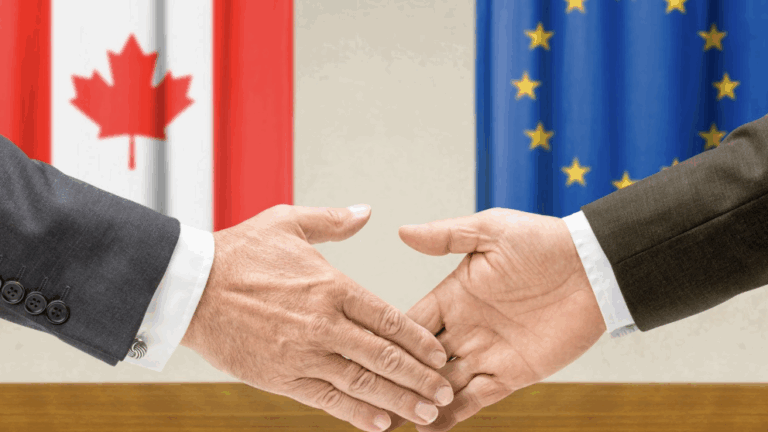
Canada and the European Union agreed to modernize their existing trade agreement while launching negotiations for a new digital trade pact. On the surface, this appears to be another routine trade update between two long-standing partners. In reality, it reflects a much deeper shift underway in the global economy as nations begin quietly restructuring trade relationships in response to rising geopolitical tension and economic uncertainty.
The agreement expands cooperation under the Comprehensive Economic and Trade Agreement, the free-trade pact originally signed between Canada and the European Union in 2016. That deal already removed roughly 98% of tariffs between the two economies and significantly expanded market access for businesses on both sides of the Atlantic. Now both governments are attempting to update the framework to address new issues such as digital commerce, cross-border data flows, and cybersecurity rules as global trade increasingly moves online.
What makes the timing particularly interesting is the strategic motivation behind the move. Canadian officials have openly stated that they want to reduce dependence on the United States. At present, nearly 70% of Canadian exports still go to the US, leaving the Canadian economy highly exposed to shifts in American policy. Europe, facing its own economic decline, is also seeking to diversify trade.
The modernization of the agreement also includes new mechanisms for resolving investment disputes and simplifying regulatory barriers that can make cross-border trade more complicated than tariffs themselves. Negotiators are also launching talks on Canada’s first digital trade agreement with the European Union, which will set rules governing electronic transactions, data transfers, and emerging technologies such as artificial intelligence and digital services.
Governments around the world are attempting to build regulatory frameworks around digital infrastructure, financial technology, and online communication under the banner of security and consumer protection. I have often warned that once governments gain centralized authority over financial and digital systems, the potential for broader control over economic activity and information flow increases. What begins as a framework to facilitate digital commerce can easily evolve into a system where regulators exert increasing influence over how information and financial activity move across borders.
What we are witnessing is the gradual fragmentation of the global economy into competing regional alliances. For decades, politicians promoted the concept of a fully globalized trading system. But as geopolitical tensions rise and governments increasingly weaponize trade policy, nations are beginning to look for partners they consider politically reliable rather than simply economically efficient.
Posted originally on Mar 8, 2026 by Martin Armstrong |
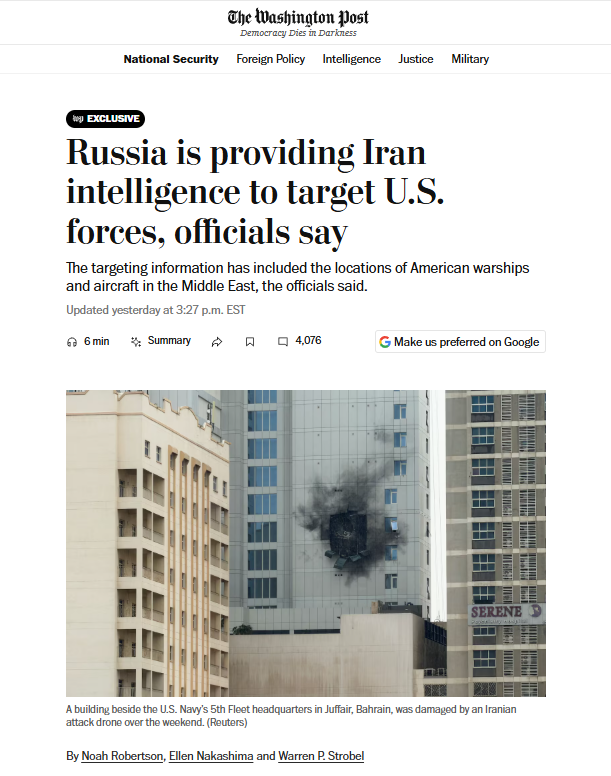
COMMENT: Marty, you should be advising Trump. I am shocked Luna is not taking you by the hand into the White House. She is your representative aftercall. You warned that they would turn this into a proxy war against the USA just as the West is using Ukraine. These Neocons are dangerous and are destroying our country and Western civilization. They are now freaking out that Russia ia providing Iran with intelligence to target US forces and West’s economic sites. You said this would become their proxy war. Iranians destroyed the U.S. THAAD Radar in Jordan. Israel is getting pummeled. Satellite images reveal that $500 million system was wiped out in inflicting a major blow to american missile defense. Netanyahu is constantly flying in the air because they targeted his office as they did to the Ayatollah.
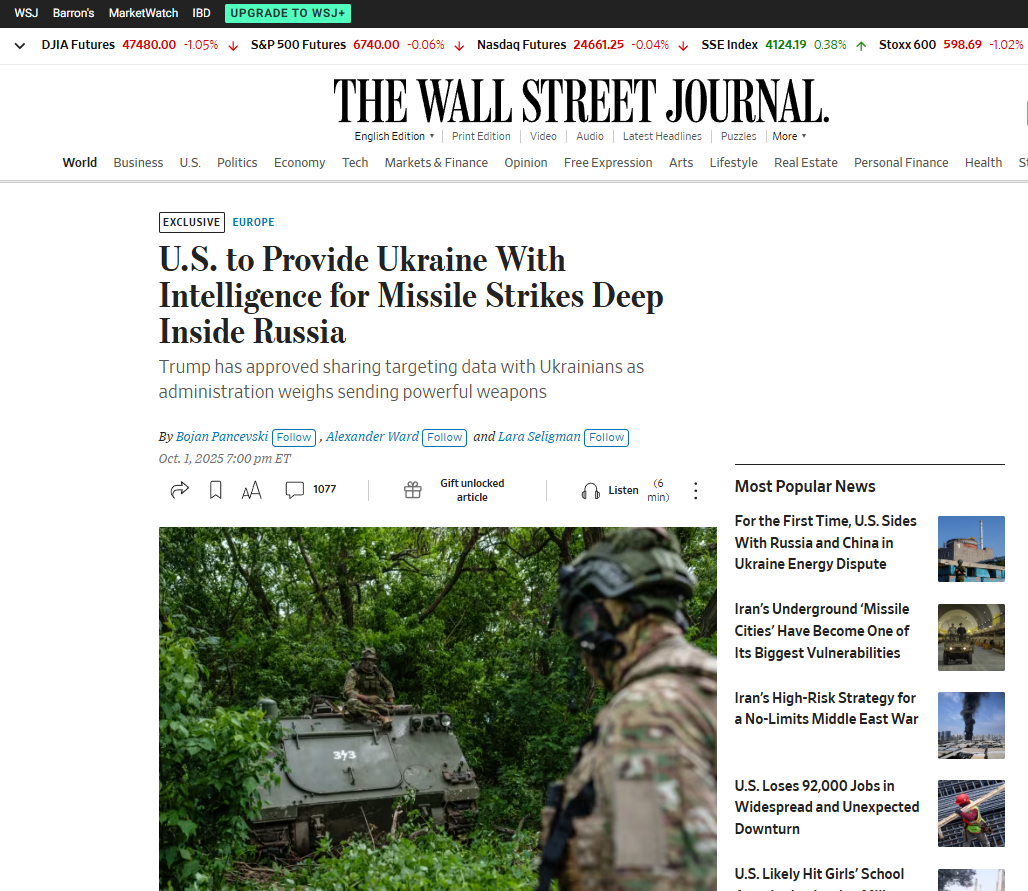
While everyone is focuses on the Strait of Hormuz, only you have warned that Iran, already an enemy of most other Middle East states, would target refineries and even ships while still in their ports. For the Strait, take out the refineries and you will then bring the West to its knees. The fact that the Neocons were providing targeting to Ukraine to strike Russian refineries is somehow OK but when Russia does the same for Iran – that’s not fair.
BB
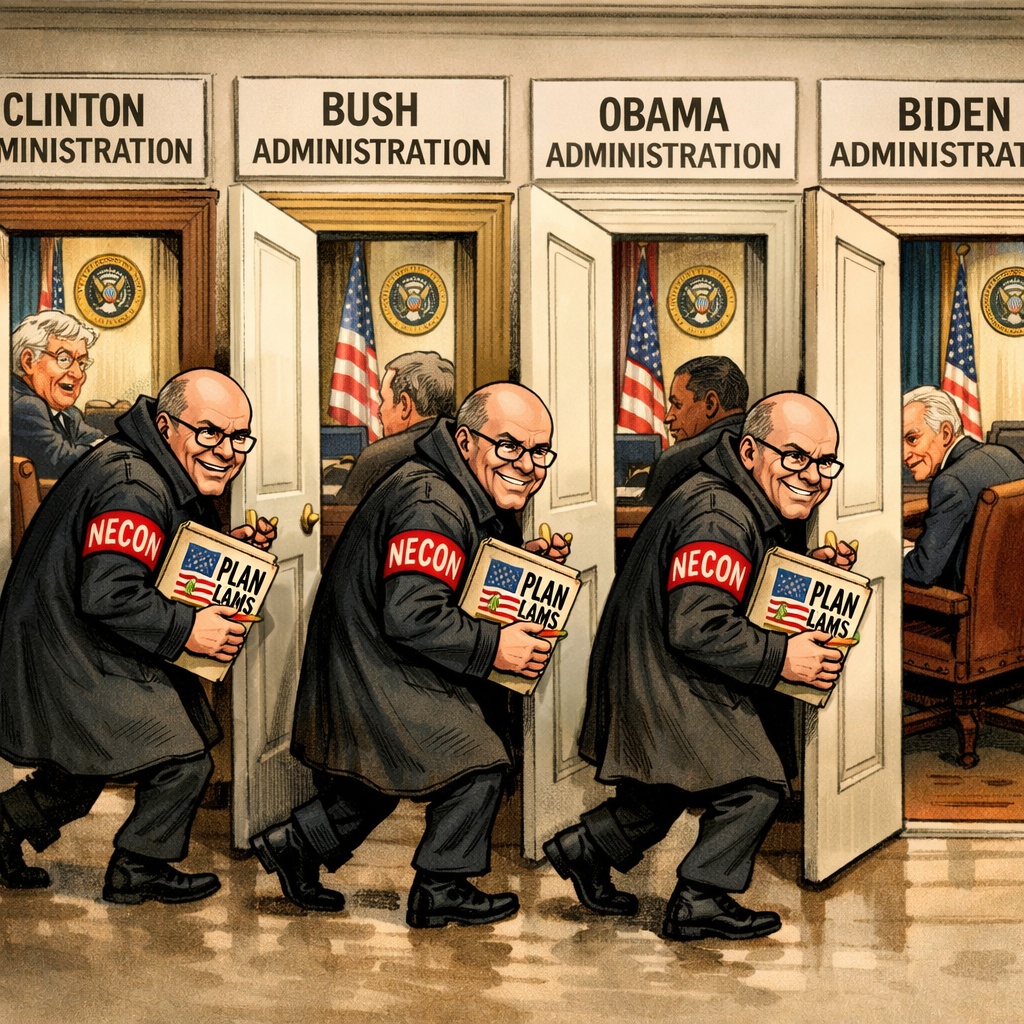
ANSWER: Those in Congress are scared to death of the Neocons. I do not know anyone willing to stick their neck out to take me to the White House. They are fulfilling the computer’s forecast. I have heard that the Neocons were pisted off that I was called in to write a peace plan that I thought Putin would accept and have been intimidating some on Capitol Hill not to listen to anything that comes from my firm. I have warned, these people have hijacked our Foreign Policy and have circumvented not just the Constitution and Congress, but they have infiltrated ever Whit House Administration since Clinton that I know of personally.
What these people have done to Russia is coming back to haunt us. They do not care about the country or the people they send to die for their ruthless agenda. They should be dragged out of their offices and charged with treason. But there is NOBODY with the guts to stand up for America or humanity in Washington. All they care about is the next election. I think Trump is being sheltered and they are destroying his legacy just as they did to Bush, Jr. I created a computer that has done more than anybody when it comes to geopolitical forecasting, Because the Neocons want war, they intimidate people not to listen to our model’s forecasts and now they will try to manipulate the oil market to cover up what they have done.
I warned they would go directly for the refineries not single ships in the straight of Hormuz. Iran is NOT an Arabic country. They are ethnically Persian. Persians were “Caucasian” or “West Eurasian” family. From a very broad anthropological standpoint, both ancient Greeks and Persians belong to the larger grouping of peoples from Europe, the Middle East, and South Asia that are distinct from, say, people from East Asia or Sub-Saharan Africa.
For centuries before the rise of Islam, various Arab tribes lived throughout this vast region—in the harsh interior deserts (like the Najd), along the fertile southern coast of Yemen (ancient kingdoms like Saba and Himyar), and in the northern borderlands bordering the Byzantine and Persian empires (like the Nabataeans with their capital at Petra, and the Ghassanids and Lakhmids who served as client states).
They were a mix of nomadic Bedouins and settled populations in oasis towns and trading centers. The most significant of these trading cities was Mecca, a religious and commercial hub.
The “takeover” of the Middle East happened primarily in the 7th century AD, following the advent of Islam. The Prophet Muhammad began preaching in Mecca around 610AD. By the time of his death in 632AD, he had united most of Arabia under the new religion. This unification was the crucial first step, providing the ideological fervor, political unity, and military momentum for the conquests that followed.
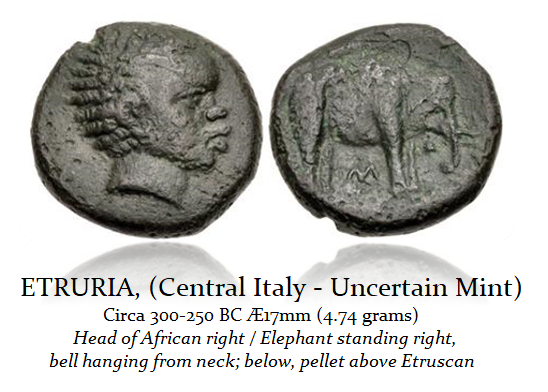
Fromt a historical perspective, it’s crucial to understand that the idea of RACE as we know it today—dividing people into categories like “white,” “black,” “Red,” and “Yellow,” is a social and political construct that only developed primarily in the 17th-18th centuries, largely to justify colonialism and the transatlantic slave trade. People in the ancient world did not think of themselves or others in these terms. They defined themselves by culture, language, city-state (polis), empire, and ancestry, not by skin color. Here we have a coin showing an African on one side and an elephant on the other. The Africans would train elephants and sell them like war tanks.
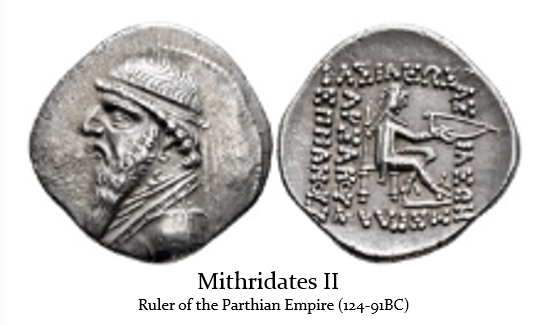
For example, the Greeks did categorize people, famously dividing the world into “Greeks” and “barbarians” (anyone who didn’t speak Greek). When they some, it sounded like ba, ba, ba. This was a cultural and linguistic distinction, not a racial one based on skin tone. Herodotus, the “Father of History,” whom I have written about before, wrote extensively about the Persians. He noted cultural differences but didn’t describe them as being a different “race” based on color. He did, however, comment on physical characteristics in other contexts, famously noting that the Colchians (from the Black Sea region) had “dark skins and woolly hair,” suggesting they were Egyptian. This shows he was aware of physical differences, but it wasn’t his primary framework. Here is a coin depicting Mithridates II ruler of Parthia (Persia) (124-91BC).
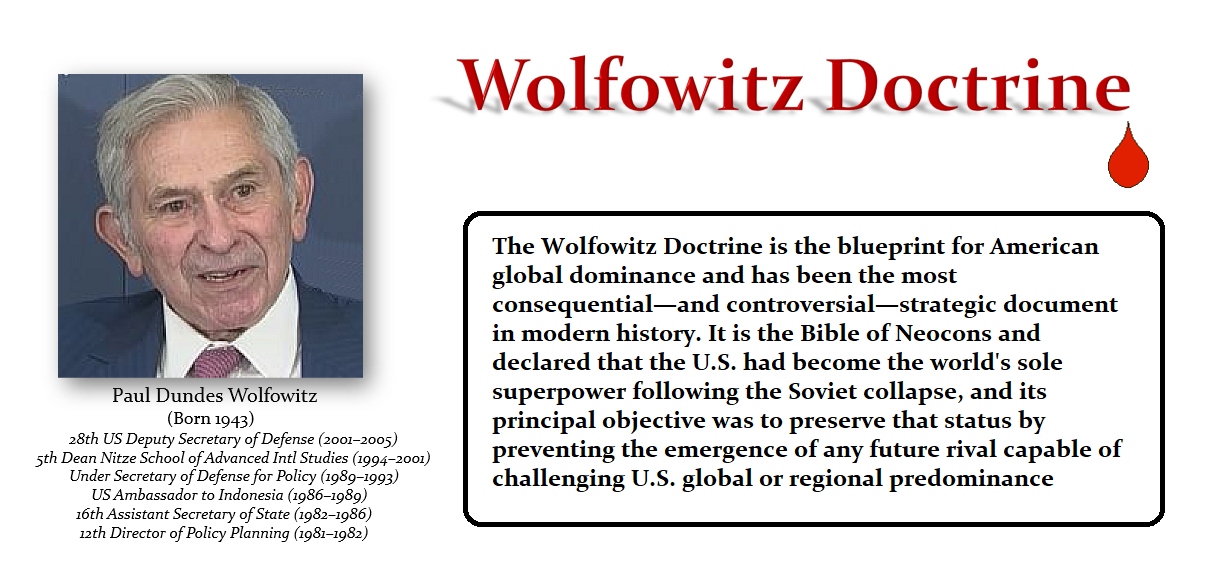
Their thirst for war to them is just like some video game. They have to win at any cost.This is the Wolfowitz Doctrine and this is their creed – WORLD DOMINATION. It was James Madison who insisted that ONLY Congress has the power to start a war. The Neocons constantly use a loophole that allows the President to respond to a threat for up to 60 days. Madison’s statement demonstrates how these people have infiltrated the Executive Branch with the full knowledge that they are acting UNCONSTITUTIONALLY in the very manner that the Founding Fathers feared. Madison wrote in a letter to Jefferson on April 2nd, 1798:
…”the Executive branch of power is the most interested in war, and most prone to it.”
They just like to claim they are responding to an immediate threat. In Iraq, it was weapons of mass destruction that was a deliberate lie. This time it is the same lie, Iran will have a nuclear weapon in just weeks, and they will then have a missile that reach the United States. There is absolutely no evidence to support those claims. Here is John McCain in 2008 saying Iran will have a nuke by 2009.
Posted originally on Mar 6, 2026 by Martin Armstrong |
COMMENT: Marty, you have shown us that history repeats because human nature never changes. Trump just demanded total surrender from Iran. President Franklin D. Roosevelt, first publicly demanded the unconditional surrender of Germany on January 24, 1943, at the end of the Casablanca Conference. The Actual Surrender was signed on May 8, 1945 (V-E Day). Over 2 million soldiers died after that demand.
It never fails.
ANSWER: When faced with a similar situation, no matter who is in power, they will say and do the same thing.
The European Parliament has now thrown its support behind the creation of a digital euro, marking a significant political step toward introducing a central bank digital currency across the eurozone. While the project has been under development for several years at the European Central Bank, this vote signals that lawmakers are increasingly prepared to move the concept from theory toward reality.
Members of Parliament approved amendments endorsing a digital euro that would function both online and offline, effectively aligning with the European Central Bank’s vision for a publicly issued digital form of money. The vote passed with a strong majority, signaling broad political backing for the idea that Europe should create a digital currency controlled by its own monetary institutions rather than relying entirely on private payment networks.
The move reflects growing concern within Europe about the structure of global payment systems. A large portion of digital transactions within the European Union currently run through networks such as Visa and Mastercard, companies headquartered outside the EU. European policymakers have become increasingly uncomfortable with this dependency, arguing that payment infrastructure is no longer just a technical system but a strategic asset tied to economic sovereignty.
Officials have openly framed the digital euro as a way to regain control over the “rails” of Europe’s payment system. If payments are moving steadily away from cash and toward electronic platforms, central banks want to ensure that sovereign currency continues to play a role in that environment rather than being displaced by private payment systems or foreign financial networks.
Under current proposals, the digital euro would complement cash rather than replace it immediately. Citizens would access the currency through digital wallets provided by banks or financial institutions, allowing them to send and receive payments electronically using money issued directly by the central bank. Supporters argue this would preserve public access to central bank money in an economy where physical cash is used less frequently.
Yet the broader implications extend beyond convenience. A digital currency issued by a central bank changes the architecture of the financial system itself. For the first time, individuals could potentially hold digital money backed directly by the central bank rather than commercial bank deposits. That raises complex questions about the relationship between central banks, commercial banks, and the public.
The project remains in its legislative and technical stages. EU governments agreed on a negotiating framework in late 2025, and the European Parliament’s vote now signals that lawmakers are prepared to move forward with the next phase of legislation. If the regulatory framework is finalized in the coming years, the European Central Bank hopes to begin pilot testing around 2027, with a potential public rollout later in the decade.
Posted originally on Mar 6, 2026 by Martin Armstrong |
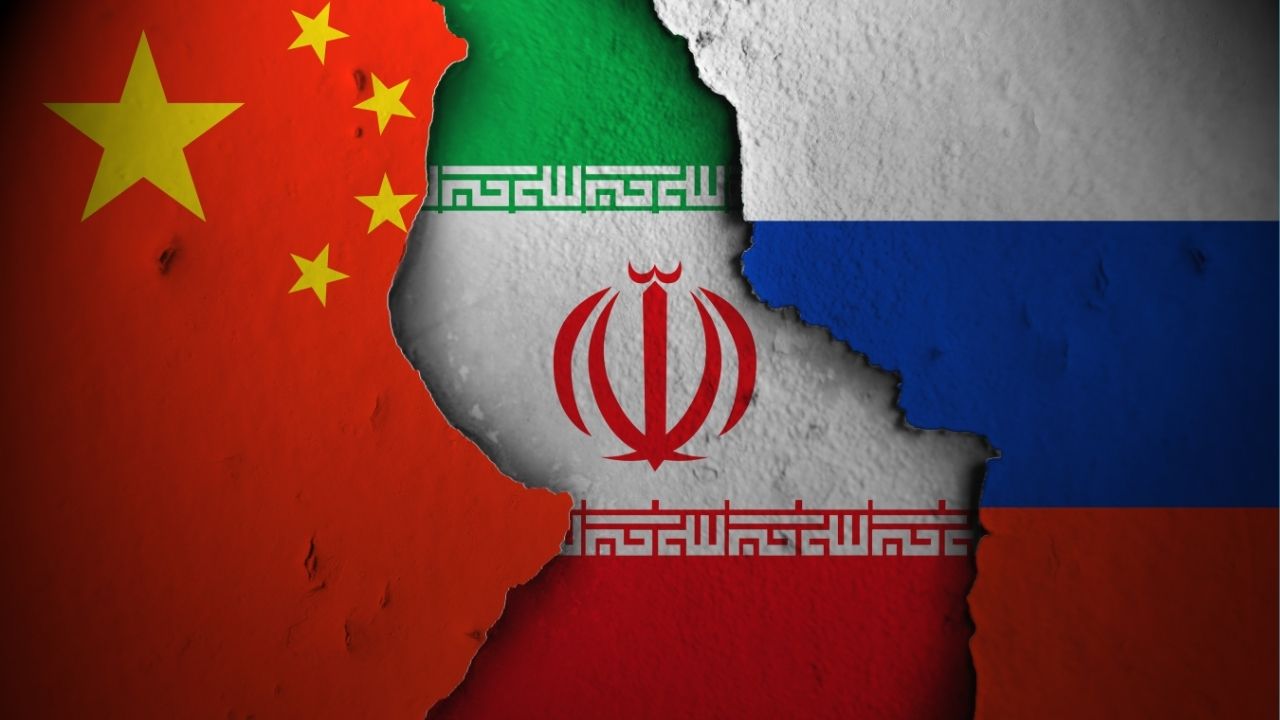
The conflict now unfolding with Iran is beginning to expose a series of geopolitical lines that had been quietly building for years. What is striking about the current situation is not simply the military confrontation itself, but the reaction of various nations. The world is no longer responding as it did in earlier conflicts where alliances moved almost automatically behind Washington. Instead, governments are drawing their own lines in the sand.
The United States and Israel are presently the two nations directly engaged in military operations against Iran. While Washington has access to bases throughout the Middle East, most of those countries are not actively participating in combat. Gulf states such as Qatar, Bahrain, Kuwait, Saudi Arabia, and the United Arab Emirates host American military infrastructure, but their involvement largely reflects long-standing defense agreements rather than enthusiastic participation in a new regional war. These nations find themselves caught between two competing pressures: their security arrangements with the United States and the geographic reality of living within missile range of Iran.
What has been particularly revealing is the response in Europe. Spain openly refused to allow the United States to use its bases at Rota and Morón for operations against Iran, sparking a diplomatic confrontation with Washington. That decision has highlighted the growing divide inside NATO. During the Cold War and even in the early post-Cold War era, European governments generally aligned themselves with U.S. military policy. Today that unity is no longer automatic. European leaders increasingly calculate their own political and economic risks before committing themselves to American military campaigns.
The reluctance to join the conflict reflects deeper concerns about escalation. Many European governments are already facing fragile economies, political fragmentation, and rising social tensions. Opening another military front in the Middle East while the war in Ukraine continues would add another layer of uncertainty to an already unstable geopolitical environment. As a result, several governments are publicly urging diplomacy rather than military expansion.
Iran does not stand entirely alone. Its support network is less conventional than traditional state alliances but still significant. Groups such as Hezbollah in Lebanon, the Houthis in Yemen, and various militias operating in Iraq form part of a regional structure that Tehran has cultivated over decades. These organizations are not merely political sympathizers; they possess their own military capabilities and can operate across multiple fronts simultaneously. This creates a form of distributed conflict that complicates any direct confrontation with Iran itself.
What we are witnessing is the emergence of a fragmented geopolitical landscape where alliances are no longer rigid. Countries are evaluating their interests in a far more transactional way. Some governments provide logistical support while avoiding direct involvement. Others refuse cooperation altogether. Meanwhile, regional actors pursue their own strategic agendas independent of traditional Western alliances.
When crises arise, the difference between formal alliances and genuine strategic alignment becomes visible. The current situation with Iran is exposing those differences in real time. Nations are making calculations not only about military risk but also about energy markets, economic stability, and domestic political pressures.
The phrase “lines in the sand” has long been associated with the Middle East, yet today it applies equally to the diplomatic landscape surrounding the conflict. Countries are defining the limits of their involvement, sometimes publicly and sometimes quietly behind the scenes. These decisions reveal a world where geopolitical loyalties are becoming far more fluid than they once appeared.
I have created this site to help people have fun in the kitchen. I write about enjoying life both in and out of my kitchen. Life is short! Make the most of it and enjoy!
This is a library of News Events not reported by the Main Stream Media documenting & connecting the dots on How the Obama Marxist Liberal agenda is destroying America








 Centinel2012