Existing US Home Sales Collapse Despite Falling Mortgage Rates


Posted originally on Mar 6, 2026 by Martin Armstrong |  

TIME to Buy Time to Sell

Existing home sales just delivered one of the clearest signals yet about the true state of the housing market in 2026, and it is not the rebound narrative the mainstream keeps promoting. The latest data shows that existing-home sales fell 8.4% in January to a seasonally adjusted annual rate of just 3.91 million units, the steepest monthly decline in nearly four years and the slowest pace in over two years. Sales were also down 4.4% compared to the same month last year, and declines occurred across every region of the United States.

The median existing-home price rose to $396,800, marking the 31st consecutive month of year-over-year price increases, indicating that prices remain historically elevated even as transaction volume collapses. Inventory stood at roughly 1.22 million units, representing just a 3.7-month supply. Yet, this is still well below historical norms needed for a healthy market turnover.

What makes this particularly significant is that the drop took place even as mortgage rates eased to their lowest levels since 2022. In a normal liquidity-driven market, lower borrowing costs should stimulate demand. Instead, the opposite occurred. Even though affordability has technically improved for several consecutive months, buyers are not returning in force. That disconnect is critical. When affordability improves, but sales still fall, it means the restraint is psychological and economic, not purely financial.

Regional data reinforces the structural weakness. The West experienced the sharpest decline, down over 10%, while the South and Midwest also fell notably, showing that this is not a localized slowdown but a nationwide contraction in transaction activity. First-time buyers accounted for only about 31% of purchases, far below the historical norm of nearly 40%, indicating that entry-level demand remains severely constrained.

Real estate does not turn on interest rates alone. Real estate factors in confidence, taxation, job stability, and the long-term economic outlook. Existing-home sales have now been stuck near a roughly 4 million annual pace since 2023, well below the historical norm of about 5.2 million, confirming that the housing market has been in a prolonged structural slump rather than a cyclical boom-bust phase.

What we are witnessing is a frozen market, not a crashing one. Homeowners remain locked into ultra-low legacy mortgages and are unwilling to sell, while buyers face high prices, economic uncertainty, and long-term affordability concerns despite slightly lower rates. The result is reduced turnover rather than forced liquidation. The real estate market remains cautious and tied to the broader economic confidence cycle.

Economic Warfare – US v Spain


Posted originally on Mar 5, 2026 by Martin Armstrong |  

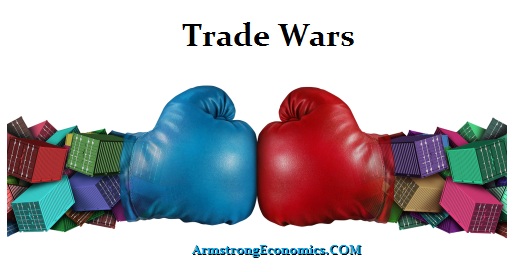
Trade War

Trade has increasingly become the weapon of choice for politicians who cannot resolve disputes through diplomacy. Now we see tensions erupting between the United States and Spain after Madrid refused to allow American forces to use joint bases for operations related to Iran. Washington responded by threatening to cut off trade entirely with Spain. This type of reaction illustrates the dangerous trend that I have warned about for years where politicians increasingly treat trade as a geopolitical weapon.

Spanish Prime Minister Pedro Sánchez publicly condemned Israel and the US for “playing Russian roulette with millions of lives” and called the strikes “unjustifiable.” “Spain has absolutely nothing that we need,” President Trump responded, noting he told the Treasury Secretary to “cut off all dealings with Spain.”

Trade was originally intended to bind nations together economically so that war became less attractive. Adam Smith understood this centuries ago. When nations rely upon each other economically, they have a strong incentive to maintain peace. The moment governments begin using trade as a punishment tool, the entire framework collapses. We saw this repeatedly in the 20th century when sanctions and trade barriers escalated conflicts rather than resolving them. History shows that once trade becomes weaponized, it rarely stops with a single country.

Spain’s refusal to allow its bases to be used reflects Europe’s growing discomfort with the escalation of conflicts abroad. Yet responding with threats to sever trade does nothing to solve the dispute. Instead, it drags the entire European Union into the matter since Spain cannot be isolated from the EU’s trade system.

Trade is tied directly to capital flows. When capital moves into the United States seeking safety or investment opportunities, the trade deficit expands automatically as a balancing mechanism. Attempting to manipulate trade through threats or sanctions does not change the underlying economic forces driving capital movement around the world.

Weaponizing trade also accelerates fragmentation in the global economy. Nations begin forming blocs, bypassing one another with alternative financial systems, payment networks, and supply chains. We have already seen this process unfolding as countries search for ways to avoid sanctions and political interference in commerce. The more trade is politicized, the faster this fragmentation accelerates.

What we are witnessing is not simply a dispute between Washington and Madrid. It is part of a broader shift where governments are increasingly willing to use economic systems as tools of coercion. The problem is that once this door is opened, every nation eventually adopts the same strategy.

Europe Is Building a Digital Identity System for 450 Million People


Posted originally on Mar 5, 2026 by Martin Armstrong

The European Union is quietly constructing what may become one of the most sweeping digital identity systems ever attempted. Under new legislation, every EU member state must provide citizens with a government-approved “European Digital Identity Wallet” by 2026. This system will allow people to store official documents, verify identity, access government services, sign legal contracts, and potentially interact with financial institutions through a single digital platform. It is being marketed as a modernization effort designed to make life easier for citizens navigating an increasingly digital economy.

Supporters claim the digital wallet will simply replace physical paperwork. Instead of carrying passports, driver’s licenses, or other credentials, individuals will be able to verify their identity online with a government-issued digital key. The European Commission argues that this will streamline bureaucracy and allow citizens to interact with both public and private services more efficiently across all 27 member states.

digital_wallet_300_clr_34539

Yet the implications extend far beyond administrative convenience. Once identity becomes centralized within a digital framework controlled or approved by government authorities, participation in everyday life increasingly depends on that system. Access to banking, employment verification, healthcare services, travel documentation, and legal contracts can all be integrated into the same identity infrastructure. What begins as a convenience quickly becomes a gateway through which access to modern society is managed.

Governments have always maintained population registries in one form or another. What makes digital identity systems fundamentally different is the speed and scale at which they operate. When identification becomes digitized and interconnected across borders, the ability to monitor economic and social activity expands dramatically. Identity verification can occur instantly, records can be updated in real time, and information can be shared between institutions with unprecedented efficiency.

This development becomes even more significant when viewed alongside other technological initiatives currently underway in Europe. The European Central Bank continues to explore the creation of a digital euro, a central bank digital currency that would exist entirely within electronic financial systems. If digital identity platforms and digital currency systems eventually intersect, financial activity and identity verification could become closely linked within the same infrastructure.

Proponents emphasize security and convenience, but critics argue that centralized identity systems create vulnerabilities of their own. Large databases containing personal information become attractive targets for cyberattacks. More importantly, the consolidation of identity into a single digital framework gives authorities significant influence over how individuals interact with economic systems. Access to services, verification processes, and regulatory compliance can all be mediated through the digital identity network.

Europe’s digital identity wallet represents a major step toward integrating identification, financial systems, and digital services across an entire continent. Whether it ultimately functions as a tool of convenience or evolves into something far more intrusive will depend on how these systems are governed and how widely they are integrated into everyday life. What is clear is that the infrastructure for a new form of digital administration is being built now, and its long-term implications will extend well beyond simplifying paperwork.

Biometric Databases: Governments Building the Infrastructure of Surveillance


Posted originally on Mar 5, 2026 by Martin Armstrong |  

biometricData

Governments around the world are rapidly expanding biometric identification systems, quietly building databases that contain some of the most personal information a human being possesses. Fingerprints, facial scans, iris patterns, and even voice recognition are increasingly being collected and stored in centralized systems. What was once limited to criminal investigations is now becoming a standard feature of everyday identification.

Biometric systems are attractive to governments because they tie identity directly to the human body. Unlike passwords or identification cards, fingerprints and facial features cannot be forgotten, lost, or easily changed. Authorities argue that this makes biometric verification more secure and more efficient for everything from border control to banking access. Airports already rely heavily on facial recognition technology, while banks and financial apps increasingly require biometric verification for account access.

Border control is one of the fastest-growing areas of biometric expansion. The European Union has begun implementing its Entry/Exit System, which replaces traditional passport stamps with biometric records. Travelers entering or leaving the Schengen Area will have their fingerprints and facial images recorded and stored in a centralized database. These systems are designed to track travel movements more accurately and identify individuals who overstay visas.

Mexico recently approved plans for a national biometric identity card that will include fingerprints and iris scans stored in a central database. Authorities say the program will help combat crime and identity fraud. Critics argue that such systems concentrate enormous amounts of personal information in government-controlled databases that could be misused or accessed without proper safeguards.

The expansion of biometric systems is occurring alongside the development of digital identity frameworks and increasingly digitized financial infrastructure. When biometric verification becomes the standard method of confirming identity, access to banking services, government programs, employment verification, and travel documentation can all be tied to the same authentication systems. Identity verification shifts from something you carry in your wallet to something embedded in your physical characteristics.

Large biometric databases introduce their own risks. They become highly valuable targets for cyberattacks, as breaches could expose sensitive personal information that cannot be replaced like a password or credit card number. Unlike traditional identification methods, biometric traits cannot simply be reset once compromised. A stolen fingerprint or facial recognition template could theoretically be misused indefinitely.

As biometric identification systems expand, governments gain the ability to track individuals across multiple aspects of life. Border crossings, financial transactions, employment records, and access to services can all be tied to a single biometric identity profile. When these systems are interconnected, they create an infrastructure capable of monitoring activity on a scale that would have been unimaginable only a few decades ago.

Technology itself is not inherently oppressive, but its implementation often determines its consequences. Biometric identification may improve efficiency in certain situations, yet the rapid expansion of centralized biometric databases raises fundamental questions about privacy, autonomy, and the balance of power between individuals and the institutions that manage these systems.

Great Nations Do Not Fight Endless Wars


Posted originally on Mar 4, 2026 by Martin Armstrong |  

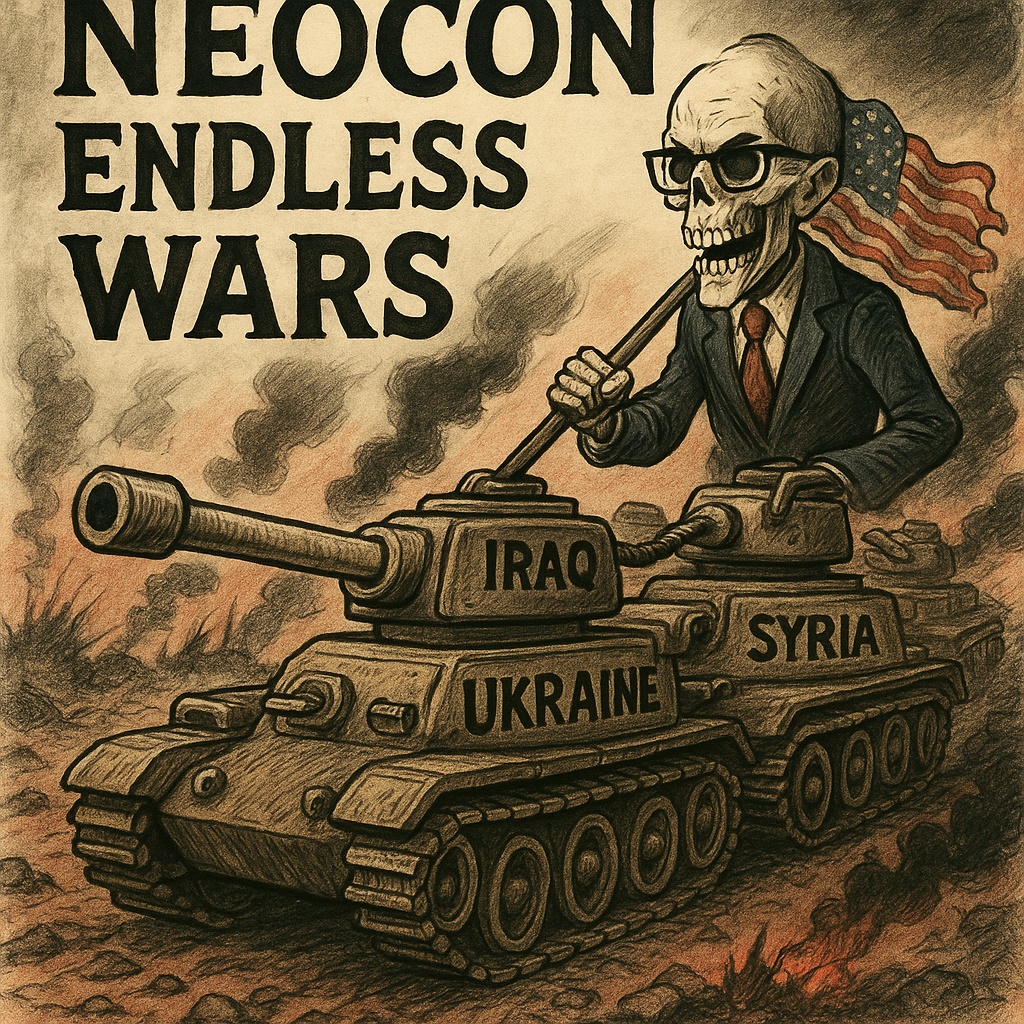
Neocon Endless Wars

“Great nations do not fight endless wars,” Donald Trump said during his campaign when highlighting his “Americas First” message. Trump explicitly promised to maintain peace and keep American troops out of foreign wars. American blood has been shed in the Middle East once more amid Operation Epic Fury. Could this escalating war cause MAGA to fracture?

“We are not going to war with Iran. We are going to make sure they never have a nuclear weapon,” Trump once said. I’ve mentioned that I was particularly impressed with Donald Trump after visiting Mar-a-Lago. He was the first politician to voice genuine concern over American lives lost fighting endless wars. “After 19 years, it is time for them to police their own country. Bring our soldiers back home but closely watch what is going on and strike with a thunder like never before, if necessary!” he posted in 2020. Trump later vowed to bring our troops home by Christmas of that year.

The man who once remorsefully spoke of dreading watching mothers mourning their sons and daughters has been compromised, infiltrated by the neocons. He admitted that the US should have never been in Iraq or Afghanistan. He did not troops in Syria. Trump clearly acknowledged that the Middle East has endless generations of feuding and rivalry that cannot be stopped. “Peace in the Middle East” cannot be attained through warfare, and truthfully, it simply cannot be attained because of the deep rooted ideology that has been passed on throughout thousands of years.

The neocons fantasized of a 6-week war in Iraq back in 2003, but US troops remained on the ground until December 2011. The strike on Iran is expected to last “four to give weeks,” according to Washington officials who say they are on a “clear, decisive mission.” Israeli Prime Minister Netanyahu said it will take “some time” but “not years…not an endless war.”

Americans voted for peace and nationalism after four years of globalist policies. Trump has shot himself in the foot. Exactly on target with the ECM, 2026 is emerging as a major geopolitical turning point. The model has been warning that this year would mark a shift into a broader phase of instability. What we are witnessing is not is cyclical.

The computer is indicating that pressures will intensify into 2027, where we face a Panic Cycle that historically coincides with sudden escalation or an external shock event. Panic Cycles do not require full-scale world war but they dramatically increase the probability of geopolitical confrontation and capital flight. The risk is that regional conflicts merge, drawing in larger powers either directly or through proxies.

That escalation phase then carries forward into 2028, which stands as a Yearly Panic Cycle, which is a far more significant inflection point. When Panic Cycles align at both the shorter and longer time frames, the probability of systemic disruption rises sharply. This is where sovereign debt stress, currency instability, military confrontation, and political realignment can converge.

The key takeaway: 2026 is the pivot. 2027 introduces volatility and escalation risk. 2028 represents the potential systemic break

Iran’s Geography – Mountain Fortress And Deserts


Posted originally on Mar 4, 2026 by Martin Armstrong |  

Topographic map of Iran with the main topographical features ...

When analysts talk about Iran, they too often reduce it to politics, nukes, or ideology. But any real understanding of the strategic challenge must begin with geography. Iran is not Iraq; it is not Afghanistan. It is a vast land mass defined by mountain ranges that have shaped its history, defense, and resistance to outside powers for millennia.

Iran covers roughly 1.65 million square kilometers, making it more thanthree times the size of Iraq and significantly larger than Afghanistan. Its internal geography isn’t open plains, but a series of rugged, interconnected mountain systems with high interior basins and plateaus wedged between them. The two dominant ranges, the Zagros in the west and the Alborz in the north, surround the country’s heartland, rise above 3,000 meters, and in places top 4,000 meters, creating what military theorists have called a mountain fortress

Afghanistan is frequently cited as the quintessential “graveyard of empires,” and its Hindu Kush mountains create an extraordinarily hostile combat environment. But even Afghanistan’s mountains are more accessible valleys and corridors. Iran’s mountains differ in scale and in their relationship to population centers. Iran’s population is concentrated in mountainous basins, not distant from the terrain that conceals them. Cities like Tehran, nestled under the Alborz, and countless towns embedded in the Zagros foothills, are naturally insulated. This gives defenders the ability to move, regroup, and conceal logistics under terrain that challenges air and ground surveillance.

Contrast that with Iraq, where the terrain quickly transitions to flat plains like the Tigris-Euphrates basin, which historically have facilitated rapid warfare. Iraq’s internal highlands exist, but they are limited and do not envelop critical centers. That is why during the Gulf War and the 2003 invasion, coalition forces could maneuver long distances rapidly. In Iran, such maneuver corridors are constrained by elevation, narrow passes, and terrain that favors defensive preparations and ambush.

Terrain matters because it dictates strategy. In Afghanistan, invaders struggled precisely because the rugged landscape broke lines of communication and allowed insurgents to melt into valleys and mountainsides. Iran’s mountains are broader and more extensive, giving defenders even more strategic options: natural choke points, deep interior lines of retreat, and countless niches for irregular or asymmetric resistance. Iran’s military planners understand this well, which is why defensive tunnel networks and surface-to-air missile sites have been deployed to exploit the topography.

Historically, the mountains of Iran have served as a barrier to sovereignty. They helped defend against Arab, Mongol, Ottoman, and Russian incursions over centuries. They served as the backbone of resistance during the Iran–Iraq War, where Iranian forces leveraged rugged terrain to negate some of Iraq’s technical advantages.

So when policymakers today speculate about quick strikes and a six-week regime decapitation, they are ignoring a fundamental constantmountains favor the defender.

Make Billionaires Pay Their Fair Share Act


Posted originally on Mar 4, 2026 by Martin Armstrong |  

Wealth Tax

Sen. Bernie Sanders and Rep. Ro Khanna believe it would be “fair” to confiscate trillions from wealthy Americans to redistribute as they see fit. The Make Billionaires Pay Their Fair Share Act would impose a 5% annual tax on the wealth of America’s roughly 938 billionaires and is projected to raise about $4.4 trillion over ten years.

Sanders declared, “In a democratic society, we cannot tolerate 60 percent of our people living paycheck to paycheck while 938 billionaires have become $1.5 trillion richer,” arguing that the “corrupt tax code” favors the ultra-wealthy. Khanna added that “we can tax billionaires a modest amount to make sure everyone has a fair chance.” Whenever policy is driven by moral outrage rather than economic structure, you must step back and examine the unintended consequences.

Bermie Sander 5

A wealth tax of this magnitude targets assets, not income. That means taxing unrealized gains including paper value in stocks, private companies, real estate, and other holdings. History has shown that such taxes often trigger capital flight or relocation of high-net-worth individuals. Europe tried wealth taxes repeatedly and abandoned many of them after discovering they raised less revenue than projected while discouraging investment. Capital moves where it is treated best.

When confidence declines, redistribution becomes politically attractive. But redistribution does not create growth. It reallocates it. The real danger is not the $4.4 trillion number. It is the precedent. Once you redefine wealth as a taxable asset base regardless of liquidity, you fundamentally alter property rights. Markets function on stability and predictability and uncertainty is what drives capital away.

This proposal is unlikely to pass in its current form. Bernie will fossilize before his socialist dreams come true. Yet, ideas that were once considered extreme are now up for mainstream debate. The premise sounds good to voters on paper. Sanders and Khanna are offering “a $3,000 direct payment to every man, woman, and child in a household making $150,000 or less—$12,000 for a family of four. But as those in New York City are learning under Mamdani, tax policies eventually target EVERYONE. Socialistic policies do result in equality—in poverty—as government’s appetite for spending is insatiable.

An Iranian Victory is Different from an American Victory


Posted originally on Mar 3, 2026 by Martin Armstrong |  

Irans Iron Fist

QUESTION: Do you see any possibility that Iran can win?

Jeb

ANSWER: NO, in the conventional sense. The strategy of Iran is completely different from that of the US. It understands that Trump thinks he will be able to overthrow the regime and this will be short and sweet. They know they cannot win against the United States in that sense. They cannot send balistic missiles to attack NYC or LA. The greatest threat here is that they try to hurt the West by attacking the oil facilities in the Middle East. They know Trump has midterms and scandals to deal with like Epstein. They also know that Americans do not support a prolonged Neocon war. This most likely translates into dragging things out knowing that Trump may have bit off more than he can chew listening to the Neocons.

Iran Map R

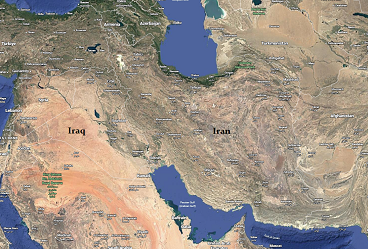
Iran is not a flat piece of land like Iraq. It is mountainous. They also know that a ground assault will be challenging and perhaps more costly in lives than Iraq. Iran mentality is not the same insofar as victory. It is more about surviving, which to them would be a victory.

china_rail_link_to_iran

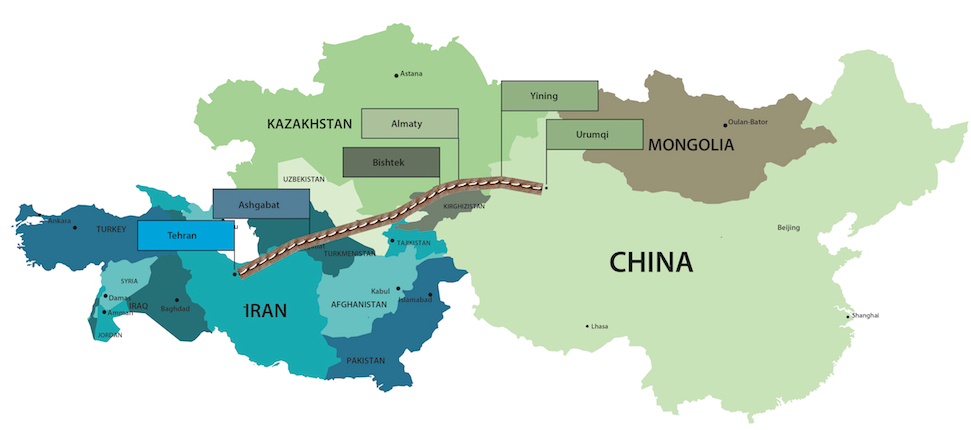
Attacking the oil facilities of the other Middle Eastern states will have a great impact on the West than attacking Israel which they also do not expect to defeat. If they can create enough chaos so that ships stay in ports, that also would be a victory to Iran. What you don’t want to see happen is damaging the railway for oil to China. China is the largest oil importer. That would then threaten their national security.

Martin Armstrong – LIVE In Vancouver! Tickets on Sale NOW!


Posted originally on Mar 3, 2026 by Cassandra |  

QAProductImage scaled

We are pleased to announce upcoming in-person events in Vancouver for you!

Hosted by Mike Campbell, the 2026 World Outlook Conference will feature a full day of in-person events on March 31, 2026. Martin Armstrong himself will be live on stage that evening. Each session is designed to build on the other, giving attendees both practical tools and a strategic perspective at a critical moment in global markets.

Advanced Trading Training with Erwin Pletsch (8:00 am – 12:00 pm | Westin Bayshore Hotel)

This morning session is built for active investors and traders who want to sharpen execution and timing. Erwin Pletsch will walk through how to interpret reversals, directional changes, volatility spikes, and capital flow shifts using the same cyclical framework that underpins Armstrong’s work. Learn how to identify high-risk turning points, how to recognize false breakouts, and how to manage exposure in vertical markets. This is focused on real-world strategy in an environment where volatility is accelerating, and traditional indicators are failing.

Understanding the Economic Confidence Model with Erwin Pletsch (1:00 pm – 4:00 pm | Westin Bayshore Hotel)

The afternoon session explains the architecture behind the Economic Confidence Model (ECM). Attendees will gain clarity on how the 8.6-year cycle operates, how public and private waves alternate, and how political change and economic instability align with measurable timing arrays. This session connects the dots between war cycles, sovereign debt crises, currency realignments, and civil unrest. It is designed for those who want to understand the “why” behind global shifts and the structural timing that drives them.

An Evening with Martin Armstrong Live (6:30 pm | Simon Fraser University Downtown Campus)

The day concludes with Martin Armstrong in person. This live discussion with Michael Campbell, who many of you will remember from past World Economic Conferences, will address the broader challenges facing the Western world. Explore topics such as the sovereign debt crisis, inflation, geopolitical fragmentation, NATO tensions, capital migration, and the transformation of monetary systems. Armstrong will speak candidly about where we stand in the cycle and what that means as we approach the next major turning points.

Together, these three sessions provide attendees with tactical strategy in the morning, structural economic understanding in the afternoon, and big-picture geopolitical and financial forecasting in the evening.

MartinArmstrongImage

The 2026 World Outlook Financial Conference will be more than just a conference. It will be a full immersion into the models shaping the global outlook.

Click the button below to learn more about webinars with Erwin Pletsch:

LearnMoreButton

Click on the button below to learn more about the 2026 World Outlook Financial Conference:

LearnMoreButton

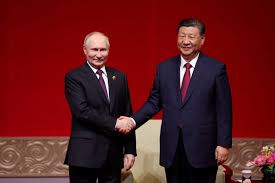
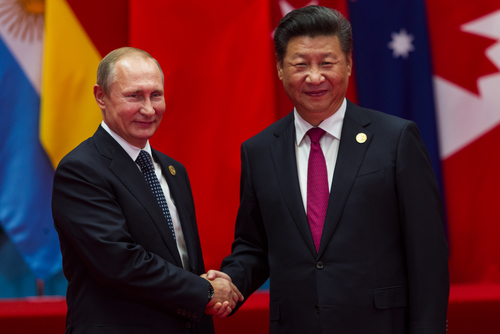
China and Russia Condemn US Military Action in Iran


Posted originally on Mar 3, 2026 by Martin Armstrong |  

China.Russia.Putin_.Xi_

Both Moscow and Beijing immediately condemned the strike on Iran, not in emotional rhetoric, but in the language of sovereignty, international law, and regime change.

Russia did not mince words. Moscow labeled the attack a “pre-planned and unprovoked act of armed aggression” and warned it could plunge the Middle East into a humanitarian and economic catastrophe. Putin described the operation as unprovoked aggression and even a violation of international law. Russia is signaling that regime change operations are viewed as a direct threat to the global balance of power, not just a regional military action.

China’s response was equally sharp. Beijing declared the strike a “grave violation of Iran’s sovereignty and security” and stated it “firmly opposes and strongly condemns” the attack while calling the killing of a sovereign leader “unacceptable.” China understands that if regime change becomes normalized, no major power is insulated from that doctrine.

Putin Xi

Even more significant was the joint coordination between China and Russia. Their foreign ministers condemned the operation together, calling it aggression that violates the UN Charter and explicitly rejecting policies aimed at overthrowing sovereign governments. Foreign Minister Lavrov labeled the operation a “deliberate, premeditated, and unprovoked act of armed aggression.” When you see diplomatic alignment before military alignment, it signals a shift in geopolitical blocs rather than an isolated event.

Russia offering to mediate while condemning the attack is strategic. China’s call for a ceasefire and negotiation is strategic. Neither is rushing into direct confrontation because their objective is not immediate war — it is long-term geopolitical repositioning. A prolonged Middle East conflict diverts US military resources and disrupts global energy markets.

What is critical here is that both nations framed the strike in terms of sovereignty and regime change rather than terrorism or religion. That aligns directly with the thesis outlined in my latest report, which argues that the real objective behind such conflicts is regime restructuring rather than religious confrontation. The rhetoric from Moscow and Beijing confirms they are interpreting this through the lens of strategic destabilization, not ideological warfare.

The real danger is not an immediate world war. The greater risk is a prolonged proxy escalation. Russia and China will not directly confront the United States militarily in the Middle East. But both will exploit the instability. This is no longer just a Middle East conflict. It is rapidly evolving into a geopolitical pivot, and the reactions from China and Russia confirm that they are already positioning for a long-term strategic confrontation, not a short-term regional war.