Posted originally on Mar 3, 2026 by Martin Armstrong |
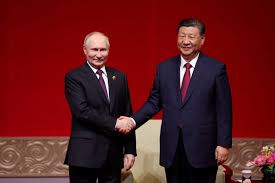
Both Moscow and Beijing immediately condemned the strike on Iran, not in emotional rhetoric, but in the language of sovereignty, international law, and regime change.
Russia did not mince words. Moscow labeled the attack a “pre-planned and unprovoked act of armed aggression” and warned it could plunge the Middle East into a humanitarian and economic catastrophe. Putin described the operation as unprovoked aggression and even a violation of international law. Russia is signaling that regime change operations are viewed as a direct threat to the global balance of power, not just a regional military action.
China’s response was equally sharp. Beijing declared the strike a “grave violation of Iran’s sovereignty and security” and stated it “firmly opposes and strongly condemns” the attack while calling the killing of a sovereign leader “unacceptable.” China understands that if regime change becomes normalized, no major power is insulated from that doctrine.
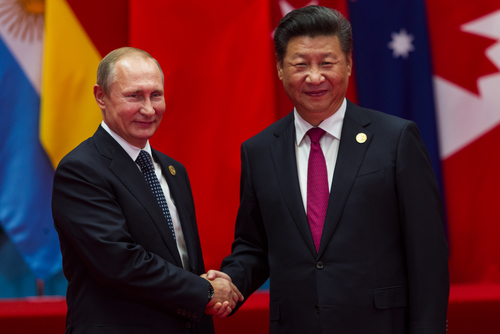
Even more significant was the joint coordination between China and Russia. Their foreign ministers condemned the operation together, calling it aggression that violates the UN Charter and explicitly rejecting policies aimed at overthrowing sovereign governments. Foreign Minister Lavrov labeled the operation a “deliberate, premeditated, and unprovoked act of armed aggression.” When you see diplomatic alignment before military alignment, it signals a shift in geopolitical blocs rather than an isolated event.
Russia offering to mediate while condemning the attack is strategic. China’s call for a ceasefire and negotiation is strategic. Neither is rushing into direct confrontation because their objective is not immediate war — it is long-term geopolitical repositioning. A prolonged Middle East conflict diverts US military resources and disrupts global energy markets.
What is critical here is that both nations framed the strike in terms of sovereignty and regime change rather than terrorism or religion. That aligns directly with the thesis outlined in my latest report, which argues that the real objective behind such conflicts is regime restructuring rather than religious confrontation. The rhetoric from Moscow and Beijing confirms they are interpreting this through the lens of strategic destabilization, not ideological warfare.
The real danger is not an immediate world war. The greater risk is a prolonged proxy escalation. Russia and China will not directly confront the United States militarily in the Middle East. But both will exploit the instability. This is no longer just a Middle East conflict. It is rapidly evolving into a geopolitical pivot, and the reactions from China and Russia confirm that they are already positioning for a long-term strategic confrontation, not a short-term regional war.
Posted originally on Mar 3, 2026 by Martin Armstrong |
The Western press is desperately trying to frame the Iranian people as either celebrating liberation or rallying behind their government. As always, the truth is far more complex. The Iranian population is deeply divided, and that division is precisely what unfolds when an external military strike hits a nation already suffering from internal political and economic stress.
Reports from inside Iran confirm that reactions are polarized. Some citizens were seen cheering, dancing, and even celebrating quietly after leadership figures were targeted, while others remained in shock and fear amid ongoing bombardments and heavy security presence. The same population that despises the regime is simultaneously terrified of war.
— Iran Military Daily (@Iranmilitary24) March 2, 2026
Life inside Tehran has been described as surreal, with residents watching the bombings from rooftops while taking shelter during blasts, illustrating a population balancing moments of relief with deep anxiety. At the same time, panic buying, evacuations, and clogged highways show that fear, not celebration, dominates daily civilian behavior.
The regime’s information control has led to mass confusion. Internet blackouts and communication shutdowns have been used repeatedly to isolate the population, suppress dissent, and prevent organized reactions. The people are unable to easily access information in real time, and the fear of the unknown has led to mass panic. No one wants war. The people have been told that the US is attacking the people of Iran rather than the government.
There are also documented cases of civilians celebrating the strikes and even toppling regime symbols. Yet, simultaneously, pro-government demonstrations and rallies have also been reported, showing that ideological loyalty, nationalism, and fear of foreign intervention still exist. People can hate their government and still reject foreign intervention at the same time. Analysts already note that while some Iranians are cautiously hopeful for change, many fear harsher repression or prolonged instability if the conflict escalates.
The real takeaway is not that the Iranian people are celebrating or mourning in unison. They are fragmented. Some see a potential end to decades of authoritarian rule. Others see the beginning of war, economic collapse, and national destabilization. Most ordinary civilians are not thinking in ideological terms at all. The majority are simply scared and thinking about safety, food, family, and survival.
A divided population under attack does not produce immediate revolution. It produces uncertainty, fear, and a temporary consolidation of internal power structures. And that is exactly the pattern now emerging inside Iran.
Posted originally on Mar 3, 2026 by Martin Armstrong |
Canada’s economy contracting by 0.6% in the fourth quarter should not be dismissed as a minor statistical fluctuation. Statistics Canada confirmed that GDP shrank at an annualized pace of 0.6% in Q4 2025, coming in well below expectations and marking the slowest annual growth since the COVID era, with full-year growth at just 1.7%.
What is particularly telling is not just the contraction itself, but the composition of that decline. Businesses drew down inventories by over C$23 billion instead of producing new goods, while residential investment also fell sharply, including a notable drop in housing and construction activity. Canada has been moving into stall speed for months. Monthly GDP was already flat into the end of the year, with manufacturing weakness and goods-producing sectors dragging on growth, confirming that the slowdown was not sudden but structural.
This fits perfectly with what I have warned about regarding highly leveraged Western economies that depend heavily on housing, commodities, and government spending to sustain growth. When inventory drawdowns replace production, it signals that businesses lack confidence in future demand. They are not expanding. They are liquidating stock to survive uncertain conditions.
Even more concerning is the decline in residential investment. Canada’s economy has been disproportionately tied to real estate and debt expansion for years. Once housing begins to soften, the ripple effect spreads across construction, banking, consumer spending, and provincial revenues. The data already shows spending on homes and condos declining in the same quarter GDP contracted.
The mainstream will attempt to spin this as a temporary inventory adjustment. That is surface-level analysis. Inventory depletion during weak growth phases reflects declining. Companies do not reduce inventories during a boom, rather, they reduce inventories when they fear demand ahead.
What we are witnessing is not a dramatic crash, but a slow erosion of economic momentum. Canada already saw volatility throughout 2025, including prior quarterly contractions and weak manufacturing output, indicating that growth has been unstable and heavily dependent on external trade and government support.
Posted originally on Mar 3, 2026 by Martin Armstrong |
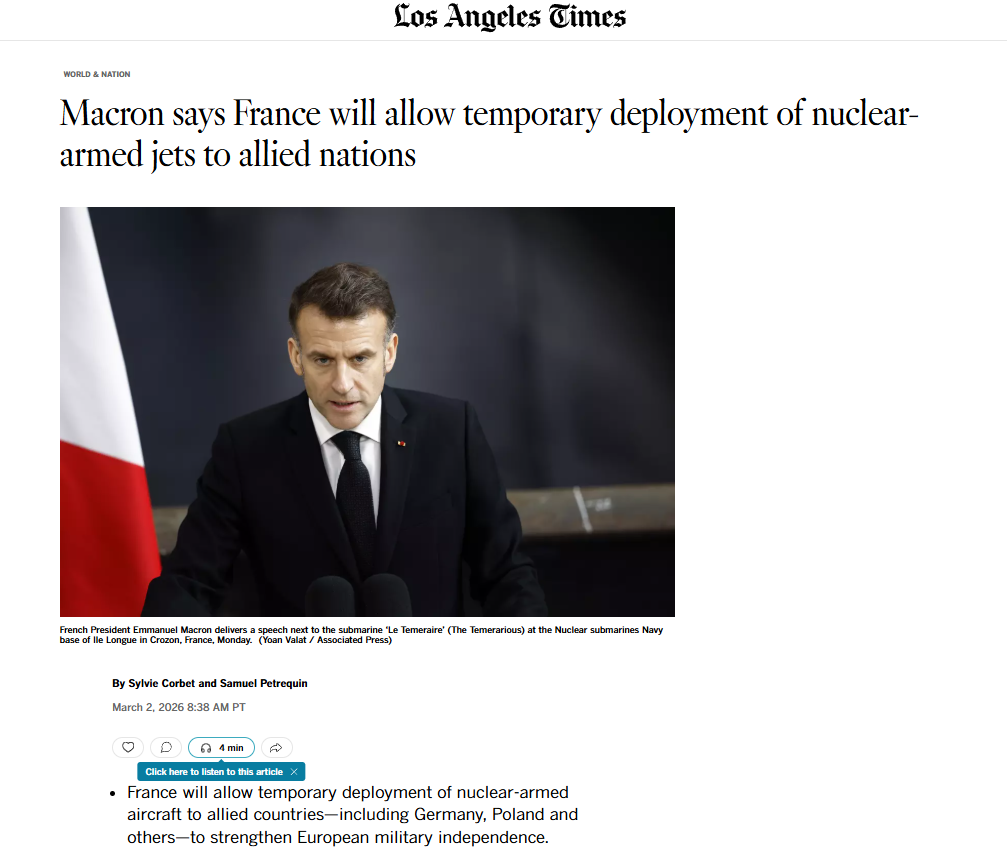
I have warned that Macron harbors the idea that France will lead Europe fulfilling Napoleon’s dream. Now he has offered to station his nuclear-armed aircraft to allied countries to replace the US and NATO as part of his nuclear strategy designed to assert Europe’s independence breaking away from the United States. As reported by the LA Times, Macron has boasted that France will replace the United States and will “provide for the temporary deployment of elements of our strategic air forces to allied countries,” but quickly added that he will not share any decision-making with any other nation regarding the use of France’s nuclear weapons. Sources there in the EU, say this is typical Macron always pushing for war with Russia and replacing the USA and NATO in Europe.
Posted originally on Mar 2, 2026 by Martin Armstrong |
COMMENT: Well, it’s easy to see why the neocons do not like you. You warned that regime change cannot be accomplished from the air. It will take boots on the ground. Trump just said that this war with Iran could last weeks and he just admitted he may have to send in American ground troops. Your scope of history is unmatchable while their’s is as you say these people’s view of history extends only to the previous week.
Thank you for being the voice of reason in the middle of fake news.
JD
QUESTION: Marty, if I recall, did they use to say there were Iranian hackers infiltrating US systems over the past few years?
Adam
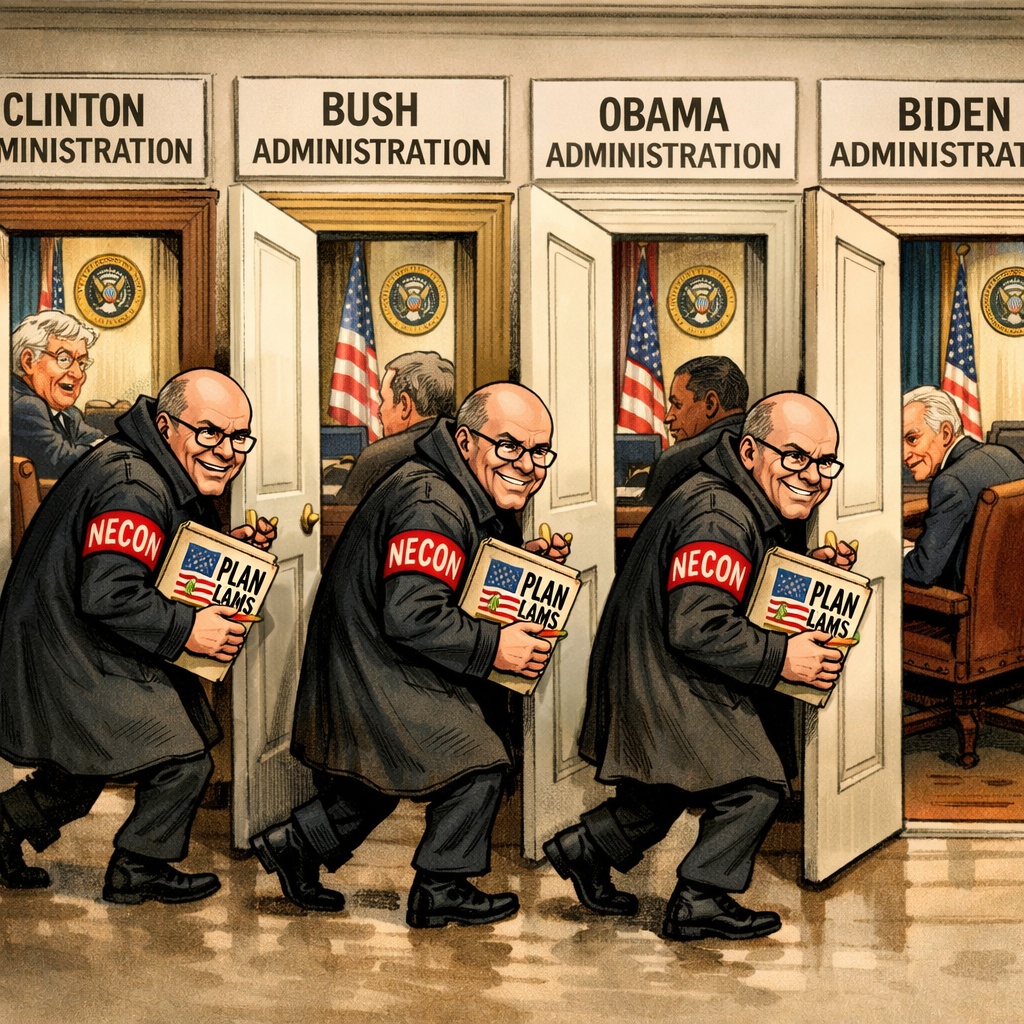
ANSWER: People have to wake up. They always blame the president never the UNELECTED people infiltrating our foreign policy for their own objective no matter who is the president. The Neocons broke Bretton Woods and the gold standard with the Vietnam war. If you look at the national debt, the bulk of it has been to fund these Neocon wars. We are still paying interest of World War I and II. It is the Neocons who are destroying our country with their endless wars.
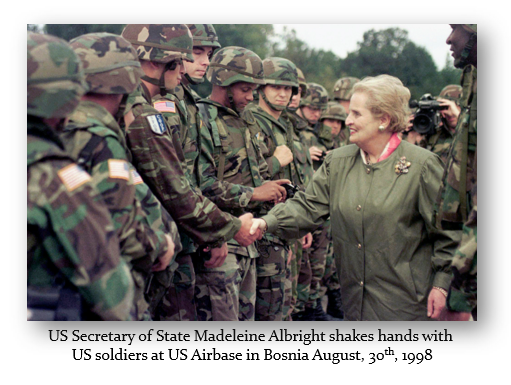
Madeleine Albright was another ruthless Neocon. She was compromised by her ethnic prejudices growing up in Czechoslovakia. She was a refugee from Czechoslovakia twice, first from the Nazis and then from the Russian Communists. For some reason, people forgave the Germans for the atrocities of the Nazis. However, to this day, they refuse to let go of the hatred of Russian Communists of the days when Stalin ruled.
Czechs and Serbs are distinct ethnic groups, each with its own language, culture, and historical background. Albright’s family was of Czech Jewish descent, though they converted to Catholicism. She was Czech and spoke Czech at home. Focusing on the Bosnian War (1992-1995), Albright was the U.S. Ambassador to the United Nations. In this role, she was a central figure in the US foreign policy cabinet. However, she was an incredibly powerful and vocal advocate for military intervention, and her influence was a critical factor in pushing the United States and NATO into decisive military intervention in a non-NATO region, bombing Serbs since they were pro-Russia between March 24th, 1999, and June 10th, 1999, all because of her disdain for Serbs and their ties to Russia. She chose sides: Croats vs. Serbs (Catholics vs. Orthodox).
Albright was the administration’s most prominent “hawk” by every means possible. She argued constantly, passionately, and consistently for lifting the arms embargo on the Bosnian Muslims and for using decisive NATO air power to crush the Serbian forces and what she called their atrocities. She famously clashed with many officials. It was clear that her ethnic hatred of Serbs and Russians, in fact, colored her decisions.
In a pivotal 1993 meeting, the Chairman of the Joint Chiefs of Staff General Colin Powell (1937–2021) clashed with Albright. Powell was against military action and put forth the “Powell Doctrine,” emphasizing the need for overwhelming force and a clear exit strategy before committing troops. The core of the disagreement with Madeleine Albright, Powell himself recounted in his memoir, My American Journey published 2003, about her challenging Powell, who was then Chairman of the Joint Chiefs of Staff, by asking,
“What’s the point of having this superb military you’re always talking about if we can’t use it?”
Powell’s reaction was one of deep concern. He saw it as a fundamental misunderstanding of the military’s purpose. He stated that military force should be used only as a last resort and with clear political objectives. Albright was just a Neocon who thought nothing of the lives lost. This is typical of a Neocon who does not care for even their country or the people. These people seem to have a personal vindetta and gravitate to a position of power to exercise their personal biases.
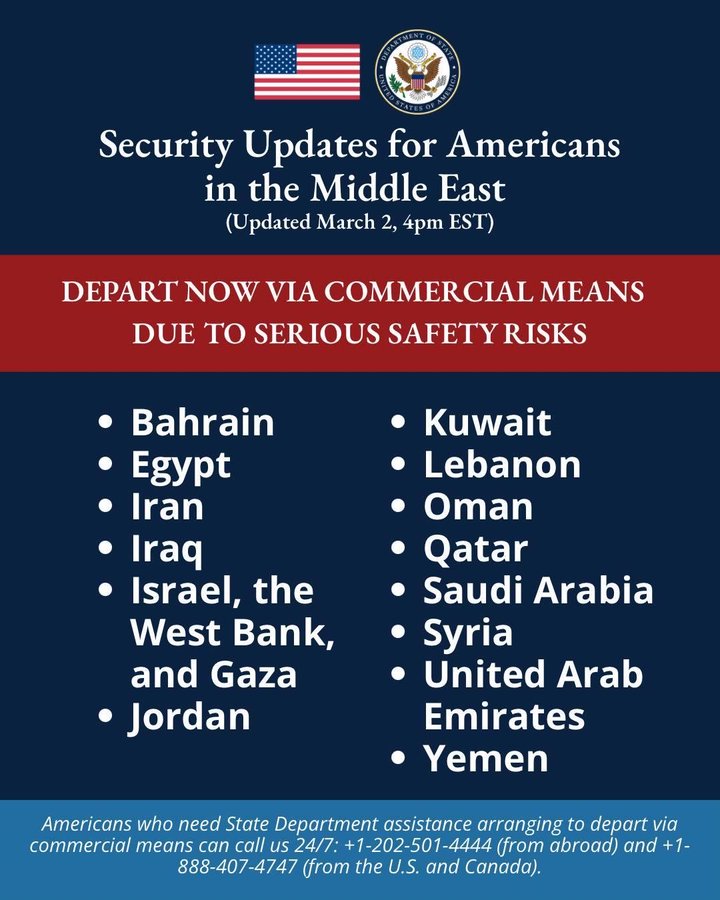
Now, the State Department has just warned Americans to leave ALL nations in the Middle East. They know they just stepped into one hell of a pile of shit. I had hoped that Trump would have ended these Neocon Wars. Once he installed Marco Rubio, I was told it was an olive branch to the Neocons. They do not care about Trump or his legacy. They know the president is always blamed for their actions. They are the real UNTOUCHABLES moving from one administration to the next. I believe there may have been 10 people in Congress who were anti-war. I think that they have been threatened by the Neocons and that is down to just two.
This all reminds me of that famous line from Laurel & Hardy – another fine mess you got us into.
The Iranians have been hacking Israel and Persian Gulf countries. It is just a matter of weeks when they will turn on the United States I would suspect by mid-month. Then we will see how much they have already infiltrated.
Posted originally on CTH on March 2, 2026 | Sundance
The U.S. State Department is now telling all U.S. Citizens from 14 middle east countries to make immediate plans to exit the region. These are not travel advisories, these are specific instructions to leave the region.
U.S. Assistant Secretary of State for Consular Affairs Mora Namdar posted on the social media site X that Americans in countries, including Iran, Iraq, Jordan, Lebanon and Israel, should “DEPART NOW” using any available commercial transportation.
The guidance comes as many major airlines have canceled flights to and from the region as the war that began when U.S. and Israel attacked Iran on Saturday. It has since grown into a wider regional conflict, touching nearly every country nearby.
A “boxcar effect” is now taking place. As each day passes without airline flights available, more and more travelers are stuck in the region as their planned departure is cancelled. What might begin day #1 as several thousand people stranded, can quickly become several tens of thousands in a few days. The instructions to exit appear timed as an effort to avoid the numbers continuing to climb. However, without airlines operating departures become problematic.
To all American citizens in the Middle East: your safety and security is our number one priority.
Posted originally on CTH on March 2, 2026 | Sundance
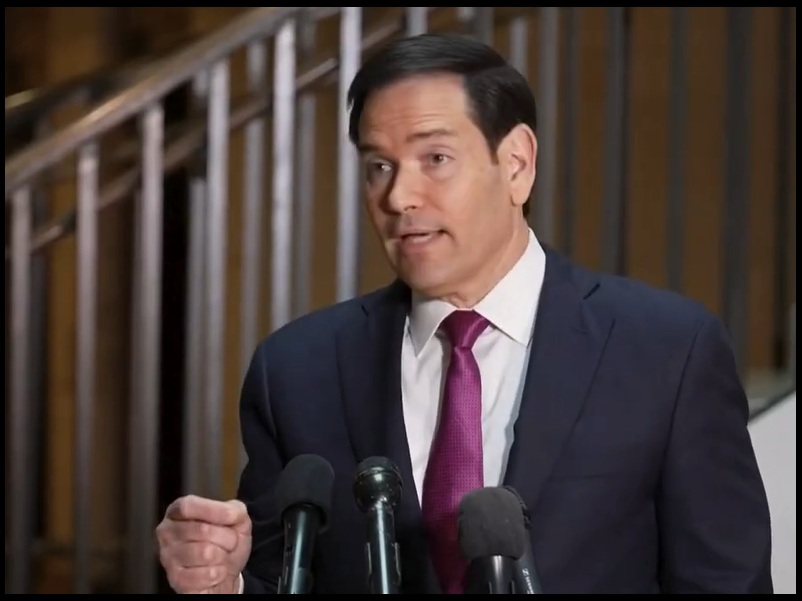
When pressed on how long the U.S. military would remain focused on Iran, secretary of State Marco Rubio said as long as it takes. “The hardest hits are yet to come from the U.S. military. The next phase will be even more punishing on Iran than it is right now,” he told reporters at the U.S. Capitol.
“How long will it take? I don’t know how long it will take,” Rubio said. “We have objectives. We will do this as long as it takes to achieve those objectives.”
“We would love for there to be an Iran that’s not governed by radical Shia clerics,” he said heading into a classified briefing on Capitol Hill. “That’s not the objective.” … “The objectives of this operation are to destroy their ballistic missile capability and make sure they can’t rebuild it and make sure that they can’t hide behind that to have a nuclear program,” he said. “That’s the objective of the mission.” WATCH:
Posted originally on CTH on March 2, 2026 | Sundance
At least from my limited perspective, the biggest surprise coming from Operation Epic Fury so far is the counterstrike reaction from Iran toward the rest of the region. I have reached out to several people about this, and everyone has a different response.
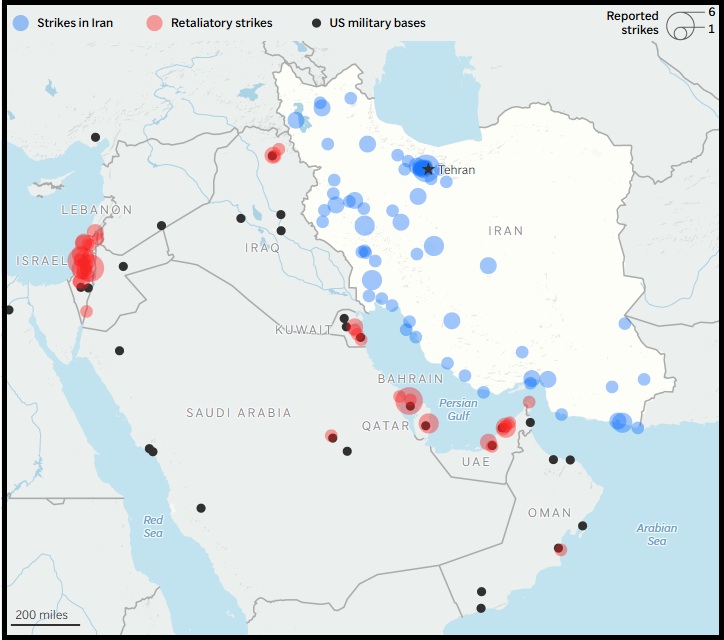
Within a few hours of the operation against Iran beginning, the Iranian regime began firing counterstrikes against the entire Arab region. Instead of their traditional approach toward striking back at limited U.S. military bases in/around Iraq and/or Israel, Iran began firing missiles and drones into the UAE, Kuwait, Oman, Jordan, Saudi Arabia, Qatar and Bahrain.
Brief recap map of the first 24 hours of attack sites, contrast with a map of known U.S. military bases.
This seemingly wanton striking out against the entire middle east region was not something CTH expected to see.
Additionally, the Iranian targets were not just limited to U.S. military bases, the missiles and drones were launching toward all kinds of random infrastructure throughout the Arab world. Most of these missiles and drones have been intercepted; however, no one has yet established a reasonable thesis as to why Iran chose this approach.
In a recent interview with Jake Tapper, President Trump also said the White House and Pentagon were surprised at the civilian targets selected by Iran for retaliatory strikes. The White House, State Dept and U.S. military did not expect to see Iran retaliate against regional allied partners, and the reaction has been for the Arab countries to be even more supportive of the attacks against Iran.
All of the Arab countries that seemingly would have sat on the sidelines and given tacit support, are now openly providing support and even expressing a willingness to get involved with their own military to assist. This is a first.
That said, the action by Iran doesn’t change the approach the U.S. is taking, but it does beg the question: why are they doing it?
Again, these are not U.S. military installations being targeted; Iran isn’t just shooting missiles and drones at U.S. bases, they are targeting nonmilitary infrastructure and even civilian targets (hotels, apartment buildings, commercial real estate).
The expenditure of the Iranian counterstrike armament, the targets they are selecting, doesn’t gain Iran any material benefit. So, why do it?
Any thoughts?
President Donald Trump told CNN's Jake Tapper in a nine-minute phone interview Monday morning that the US military is "knocking the crap" out of Iran – but the "big wave" is yet to come.https://t.co/0rhIowcppwpic.twitter.com/sWLrvDLmVi
Jake Tapper notes President Trump has said “a big wave is yet to come,” meaning the U.S is prepared to launch another phase against Iran that will hit even harder than the current targeting of military assets and infrastructure.
I’m left to wonder if the regional targeting by Iran is strategic, or if their top tiers of military command structure were so devastated the local command centers were essentially left to use their own targeting decisions, and that led to a random set of launches at just about everything they could program as a target set.
However, a “big wave yet to come” might make sense, if you think about Iran’s seemingly wanton striking at every regional nation as probing to destroy radar capacity and air defenses.
If Iran is holding back strategic hypersonic missiles for later strikes after probing or degradation strikes, then yes as soon as those hypersonic launch locations surface there would need to be a massive blitz of overwhelming force to preempt the launches.
Essentially, what a person might call “a big wave yet to come.”
Iran continues to maliciously launch ballistic missiles, indiscriminately targeting military and civilian locations throughout the region. U.S. forces remain on the hunt to eliminate this threat. As the President has said, our resolve has never been stronger. pic.twitter.com/SDdvaL38yp
BREAKING: The UAE is projected to exhaust its interceptor missile stock within one week at the current rate of fire, and Qatar within four days; both are urgently seeking additional military support from the United States – Bloomberg
I have created this site to help people have fun in the kitchen. I write about enjoying life both in and out of my kitchen. Life is short! Make the most of it and enjoy!
This is a library of News Events not reported by the Main Stream Media documenting & connecting the dots on How the Obama Marxist Liberal agenda is destroying America

 Centinel2012