Russia’s Bank Run — When Confidence Begins to Crack


Posted originally onAug 25, 2026 by Martin Armstrong |  

This is what a bank run could do to the Russian economy

A bank does not actually have everyone’s money sitting in a vault waiting to be returned. The entire system functions because everyone assumes they will not demand their money at the same time. Once that confidence begins to crack, the numbers on a balance sheet become secondary because people want CASH.

That is what we must now watch in Russia. Russians have been pulling billions out of the banking system, with demand for physical cash accelerating dramatically this summer. According to Russian Central Bank data cited in the press, nearly $3.4 billion was withdrawn during just the first two weeks of August after approximately $7.3 billion in July and more than $4.5 billion in June. The Central Bank itself reported that cash in circulation increased by roughly 700 billion rubles during July, compared with about 500 billion in June.

This does not mean the Russian banking system is collapsing tomorrow. Nevertheless, something much more important is taking place beneath the surface. Russians are becoming nervous about leaving their money inside the financial system. Rumors have circulated that the government could eventually freeze or commandeer private deposits to help finance the war, and once people begin questioning whether they will retain unrestricted access to their own savings, government assurances become increasingly meaningless. Fear of possible seizure has become one factor driving the movement into cash, alongside drone attacks, economic uncertainty, and disruptions to electronic payments.

This is always the danger with capital controls. Russia has already demonstrated that it will restrict access to money when the state believes national interests require it. Foreign-currency withdrawals remain restricted, and accounts belonging to various foreigners from so-called “unfriendly” nations have faced controls since the war began. Putin recently relaxed some restrictions affecting foreign depositors.

People forget that money is ultimately a question of confidence in government. You can raise interest rates to 20%, offer attractive deposits, and tell everyone that the banking system is perfectly safe, but none of that matters if people begin fearing that the state itself may change the rules. The greatest threat to a banking system is not necessarily bad loans. It is the realization among depositors that their money exists inside a political system whose rules can change overnight.

Russians line up at banks as ruble crashes amid sanctions

Russia is also confronting a growing liquidity problem inside its banking sector. The structural liquidity deficit reportedly exceeded 2.7 trillion rubles by August 13, the highest level since the crisis surrounding the invasion in March 2022. The Russian Central Bank argues that this particular measure should not be confused with the availability of deposits or credit and says the deficit remains manageable. That distinction is valid, but the fact that liquidity conditions are attracting attention at precisely the same moment people are increasing their demand for cash should not simply be dismissed.

The war is becoming increasingly expensive, and this is where the economic pressure begins to matter politically. Defense spending has absorbed enormous resources while high interest rates have squeezed the civilian economy. Russian businesses have also reportedly made hundreds of billions of rubles in so-called voluntary contributions to the federal budget. Whenever governments use the word “voluntary” when asking businesses for money during a war, everyone understands what that really means.

Whenever government becomes desperate for revenue. They begin with taxes. Then come special assessments, forced loans, restrictions on capital, controls over foreign exchange, and eventually increasingly creative definitions of what property actually belongs to the individual. Governments rarely wake up one morning and announce that private wealth no longer exists. They change the rules one piece at a time because the fiscal demands of the state continually expand.

This is why the rumors concerning Russian deposits are potentially more damaging than the actual withdrawals themselves. There does not have to be an official plan to confiscate deposits for the rumor to affect behavior. If enough people believe there is even a possibility that their savings could become trapped, converting a portion into cash becomes perfectly rational. Then your neighbor sees you withdrawing money and begins wondering what you know that he does not.

The Russians have been through this before. They remember the collapse of the Soviet Union, the destruction of savings through inflation, the 1998 financial crisis, repeated currency devaluations, and the banking panic surrounding the invasion in 2022. Western analysts often look at Russia through spreadsheets and completely ignore that historical memory. Russians understand from experience that governments and currencies can change far faster than politicians promise.

There is also a geopolitical consequence that the Europeans should think very carefully about. Europe froze hundreds of billions in Russian sovereign assets and openly debated using those assets to finance Ukraine. Whatever moral justification Brussels offers, every government in the world watched what happened. Russia responded with its own restrictions and seizures involving Western assets. The result is that both sides have demonstrated that property rights can become conditional when geopolitical conflict becomes severe.

Capital will always seek safety, and safety does not simply mean the highest interest rate. It means confidence that you can retrieve your money when you want it. This is precisely why capital controls always backfire over the long term. The moment government tells people they cannot move their money, it teaches everyone else to move theirs before the same restriction reaches them.

We should therefore watch Russia carefully through September. This is not merely about whether a few hundred billion rubles leave bank accounts. Russia is heading toward its September elections while the economic burden of the war is becoming increasingly visible domestically. The real question is whether these withdrawals stabilize once the immediate demand for cash subsides or whether Russians continue pulling money from the banking system because confidence itself has changed.

Categories:War
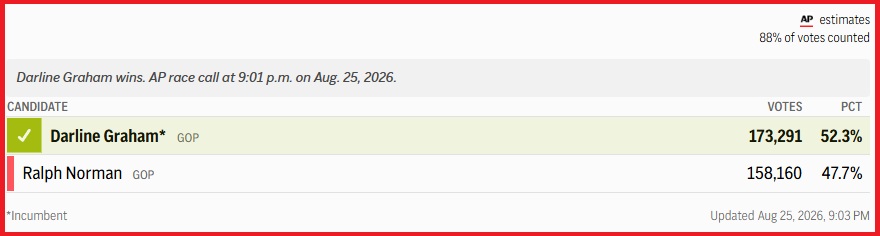
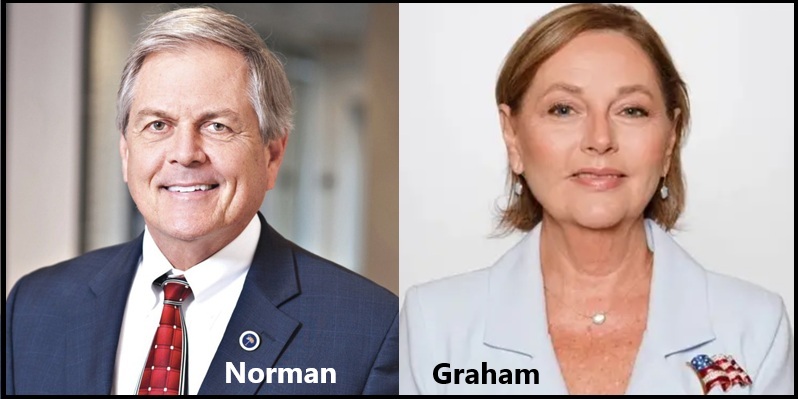
UPDATE: South Carolina Special Election: Ralph Norman -vs- Darline Graham, Polls Close at 7:00pm ET


Posted originally on the CTH onAugust 25, 2026 | Sundance | 275 Comments

UPDATE: Graham Wins – AP Calls the Race

The special election in South Carolina to fill the seat of Senator Lindsey Graham is today.  The polls close at 7:00pm ET in South Carolina and for President Trump there is a significant stake.

The opposition media are hoping that Ralph Norman defeats President Trump endorsed candidate Darline Graham so they

can write articles about how Trump has lost his political strength and now suffers election embarrassment. President Trump not only endorsed Darline Graham, but he also held a rally for her last Friday and instructed his SuperPAC to fund her campaign heavily

No one is sure how this special election is going to turn out.  What I find interesting is the lack of publicly displayed and discussed polling over the past week.  That doesn’t mean polls were not conducted, it only means conducted polls were never made public.  This one will be super interesting to watch unfold this evening.

NYT Election Results Here

AP Election Results Here

Should Darline Graham win she retains the entire staff of her deceased brother, Lindsey Graham, who have been guiding her as an interim appointed senator.  The South Caroline old guard GOP also has a stake in this race as the professionally Republican political class are not very supportive of President Trump and the MAGA coalition.

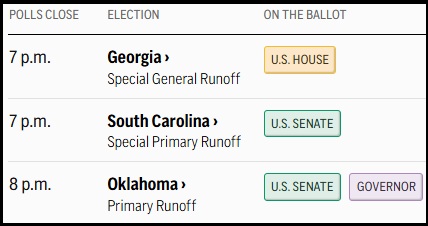
Consider this an open discussion thread for anything that relates to the special election and South Carolina politics.  There is also primary voting in Georgia and Oklahoma.  We will pin this thread to the top of the page until the final results are complete.

White House Press Release: “Ending Canada’s Free Ride”


Posted originally on the CTH on August 25, 2026 | Sundance | 

Hopefully CTH readers have followed this story close enough to be able to predict where it ends. The White House has released an official and scathing press release outlining the lengthy and long-term issues with Canada and trade disputes.

WHITE HOUSE – Canada has been ripping off the United States for decades — and President Donald J. Trump is done letting them get away with it. Last week, the U.S. offered Canada the most preferential market access of any country on Earth, with deep cuts on steel, aluminum, autos, lumber, and more. Instead of partnership, Canada chose unreasonable demands, walk-backs, and flat-out rejection.

The record of Canadian abuse is clear and deliberate:

  • FACT: Canada is joined only by the People’s Republic of China in choosing retaliation over negotiation. Their continued discriminatory treatment of U.S. commerce has burdened American workers, farmers, and businesses.
  • FACT: Canada alone imposed discriminatory 25% tariffs and company-specific quotas on U.S. motor vehicles — measures applied to no other country. As a result, U.S. vehicle exports to Canada crashed 22% over the last year.
  • FACT: Canada banned American wine, beer, and spirits in nearly every province and territory — while other countries have faced no such restrictions. As a result, U.S. alcohol exports to Canada collapsed 81% in a single year.
  • FACT: Canada locks out U.S. dairy with tariff-rate quotas far more restrictive than those given to Europe, plus over-quota tariffs of nearly 300% — rates so extreme they function as a near-total ban and rank among the highest agricultural tariffs in the developed world
  • FACT: Canada has extracted a persistent average annual goods trade deficit of roughly $50 billion from the U.S. over the last decade — while refusing reciprocal access.
  • FACT: Canada targeted American aerospace manufacturer Gulfstream for years. They effectively prohibited the sale of its G500, G600, G700, and G800 models while shielding its own competitor — until President Trump intervened.
  • FACT: Canada’s protectionist barriers — discriminatory auto quotas, alcohol bans, and dairy lockouts — have hammered American companies. This has cost U.S. producers billions in lost sales, forced layoffs, and driven market share to foreign competitors who face none of the same restrictions.
  • FACT: Without the United States, Canada could not survive. Canada sends roughly three-quarters of all its goods exports to America — and the U.S. market is where Canada gets the overwhelming majority of its money and economic oxygen.
  • FACT: Canada’s failed trade policies are driving its own manufacturers south. A recent survey found 42% of Canadian manufacturers have already moved or are planning to move production to the U.S.
  • FACT: Canada is doubling down on tariffs targeting American workers. Canada just announced an additional $27.6 billion in tariffs on American businesses — including a 50% tariff on American steel and aluminum, a 25% tariff on American fish, and a 25% tariff on American tools.
  • FACT: The U.S. economy is approximately 13 times larger than the Canadian economy and home to over eight times as many people. The United States has the clear leverage.

President Trump said it best: “Canada is easily the most difficult and unreasonable. They feel entitled, but they are not a State and will be entitled no longer!” Canadian leadership chose retaliation over partnership — and America is no longer willing to carry them.

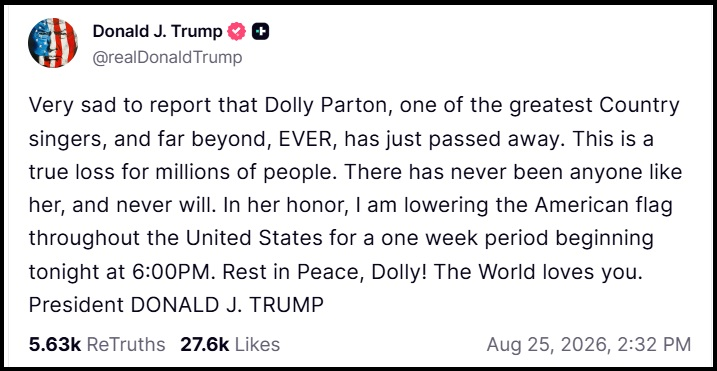
RIP Dolly Parton 1946-2026


Posted originally on the CTH on August 25, 2026 | Sundance | 171 Comments

The Announcement from her family:

“Dolly Rebecca Parton (January 19, 1946 – August 25, 2026) Global icon and humanitarian, Dolly Parton, known to the world as a beloved singer, songwriter, philanthropist, actress, playwright, and author died peacefully today in Nashville, Tennessee. She was 80 years old.

Dolly is preceded in death by her beloved husband of 59 years Carl Thomas Dean (1942 – 2025), her mother Avie Lee Caroline Owens (1923 – 2003), and father, Robert Lee Parton, Sr. (1921 – 2000).”

rhinestone life that shone bright enough for the world to see, Dolly will forever stand as an inspiration not only through her timeless music and prolific songwriting, but also her wit, warmth, and kindness that made us all feel like family. Dolly Parton’s legacy is one of love, compassion, and resilience. With a seven-decade career, she inspired multiple generations of artists and fans with her music and an unwavering commitment to making the world a better place. Her songs will continue to resonate with people of all ages, and her philanthropic work will have a lasting impact.

At Dolly’s request, a small, private service will be held for immediate family. Dolly’s fans and friends from around the world are encouraged to pay tribute to Dolly on social media by tagging @DollyParton or by leaving a message at http://www.dollyparton.com.

In lieu of flowers the family asks for donations to be made to Dolly Parton’s Imagination Library at http://www.imaginationlibrary.com.”

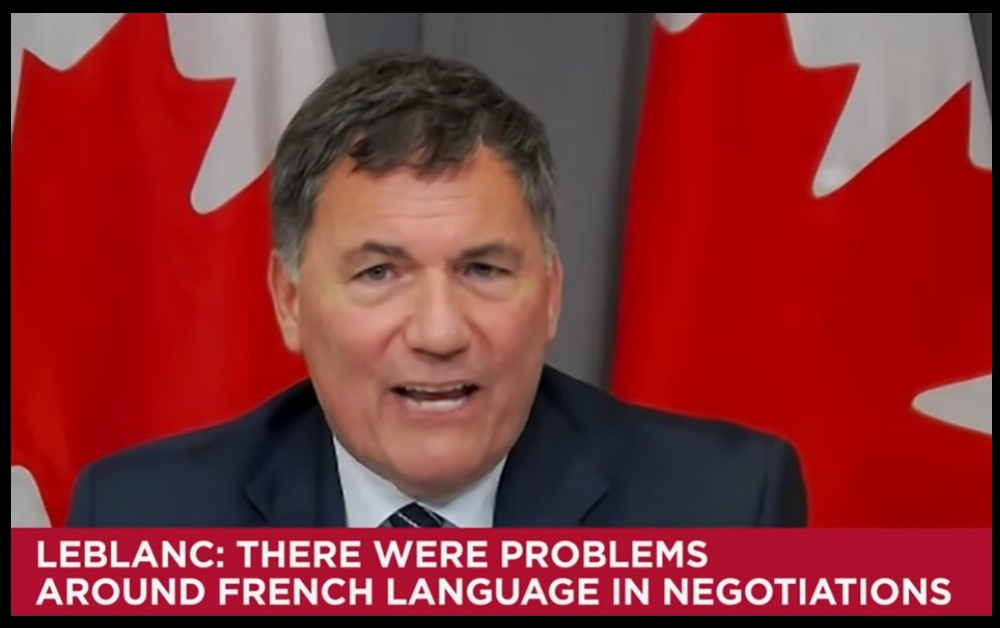
D’oh Canada – Canadian Trade Minister Dominic LeBlanc Outlines the Fracture Points and Makes Mark Carney Look Like an Idiot


Posted originally on the CTH on August 25, 2026 | Sundance

There are many people in Canada demanding to see the rough draft proposals of the U.S-Canada trade agreement so they can judge for themselves the issues that Carney claimed were irreconcilable.  For those people this interview today by Canadian Trade Minister Dominic LeBlanc will only embolden those requests.

Trade Emissary LeBlanc outlined the major fracture points that drove Prime Minister Mark to reject the deal. I’ll put the full interview below which everyone should watch because what LeBlanc outlined is rather funny.  Carney was obviously looking for a reason to walk away, because the fracture points were ridiculously small.

Essentially, it boils down to four issues. !1) Removal of tariffs on Canadian assembled Semi-Trucks. (2) U.S. streaming services writing code for “search engines” in the French language. (3) Canada demanding 5% of gross revenues from U.S. tech platforms, and the last one is silly because it already exists: (4) the U.S. having a right to reject a trade deal made by Canada with a non-market economy, ie. CHINA.

Taking the issues one by one we start with ♦U.S. tariffs on Canadian Semi Trucks.  Canada wanted tariffs on Big Rigs removed. The U.S. said no.

The reason is simple.  Big Rigs assembled/built in Canada are falling apart in the USA. Why? Because they are full of cheap Chinese component goods and parts that wear out quickly.  The U.S. wants two things on this issue. Either: (1) Make them in the USA, or (2) stop using cheap Chinese component parts.  The parts that Canada are using are not even available in the USA because we tariff and reject them, so why should we accept them when Canada installs them?  Either quit using Chinese parts (hence, the trade alignment against Chinese imports), or accept a tariff equal to the rate we would apply if the product was coming directly from China.

CIA Director John Ratcliffe Visited Moscow


Posted originally on the CTH on August 25, 2026 | Sundance | 148 Comments

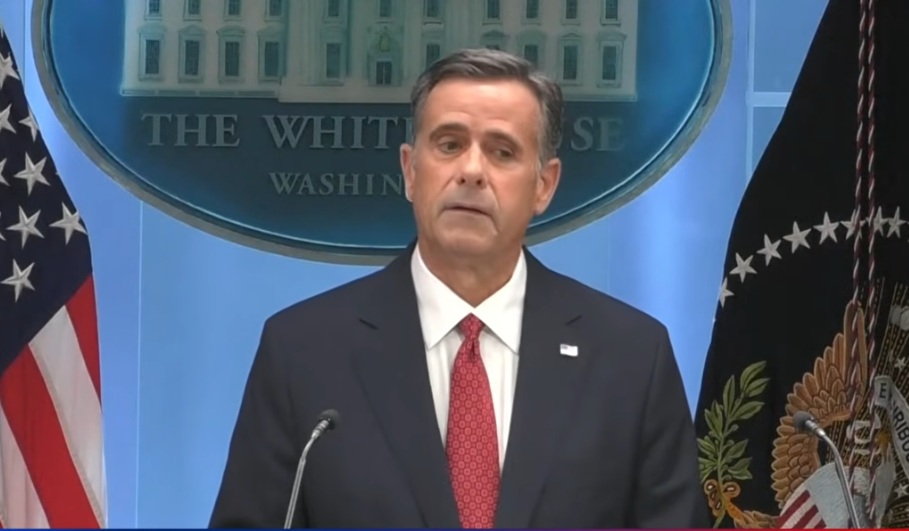
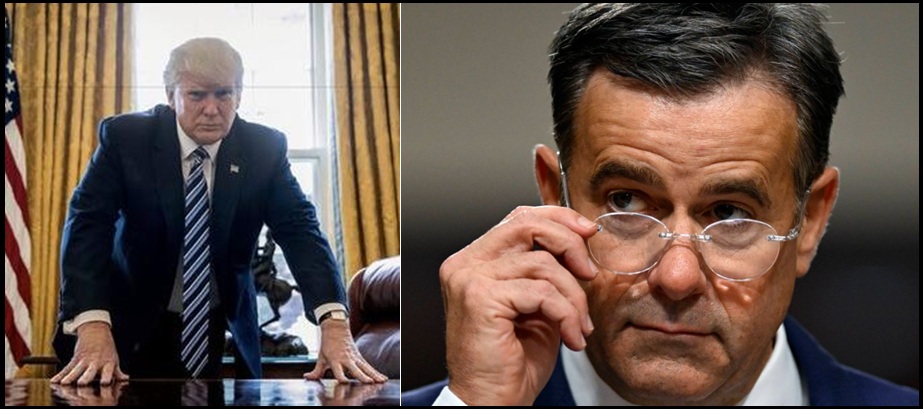
CIA Director John Ratcliffe made an unexpected visit to Moscow, Russia, today

According to flight data and new media reporting Director Ratcliffe flew into Latvia and from Latvia into Russia on a C-17 military transport plane.

According to flight data and new media reporting Director Ratcliffe flew into Latvia and from Latvia into Russia on a C-17 military transport plane.

VIA CBS – CIA Director John Ratcliffe is in Moscow, Russia, for meetings, sources familiar with the situation told CBS News on Tuesday.

News of his trip comes after a U.S. Air Force Boeing C-17A Globemaster III transport plane was spotted at a Moscow airport, along with a U.S. diplomatic motorcade. Neither the U.S. nor Russian governments has commented on the identity of the U.S. official in Russia or the purpose of the visit.

The CIA did not immediately comment.

It appears to be Ratcliffe’s first known trip to Russia as CIA director, though he has maintained contact with Russian intelligence counterparts. (more)

VIA AXIOS – CIA director John Ratcliffe is visiting Moscow on Tuesday for talks with Russian officials, two U.S. officials said.

Why it matters: This is Ratcliffe’s first trip to Moscow since he took office and the highest-level visit by a Trump administration official to Russia since January.

Ahead of Ratcliffe’s trip, the U.S. told Ukraine that a senior delegation was traveling to Moscow and asked it to suspend strikes until it leaves, according to a source with knowledge of the matter. (link)

We shall not speculate too much on the purpose and intent of the visit; however, overall, the direction points to intelligence sharing or notification.

Recently the British announced they would be sharing “storm shadow missile” technology with Ukraine in order for Ukraine to build them for themselves.  The Storm Shadow (also known as SCALP-EG in France) is a Franco-British, long-range, air-launched cruise missile used for precision deep-strike attacks against high-value targets.  Essentially, the Storm Shadow missile is the U.K version of the Tomahawk cruise missile.

Ukraine would be building those missiles with money provided by the EU from the confiscated Russian sovereign wealth fund. Russian Federation President Vladimir Putin likely doesn’t appreciate that very much.

According to Visegrad, “President Putin had a major event scheduled for today, with hundreds of people preparing for it. The event was canceled due to the visit of the CIA director, according to Kremlin pool journalists.”  CIA Director John Ratcliffe is now returning home from Moscow.

Prime Minister Mark Carney Pledges to Become a European Protectorate


Posted originally on the CTH on August 24, 2026 | Sundance

August 24, 2026 | Sundance | 145 Comments

Every time he has the opportunity, Canadian Prime Minister Mark Carney reminds the world he views Canada as a part of Europe.  As the trade conflict between the USA and Canada deepens, Mark Carney looks toward Europe for a financial and security lifeline.

During remarks earlier today Commonwealth Prime Minister Carney noted his intention to join with Europe this fall for increased economic and national security.  This is an alignment the former Bank of England head has been operating since his installation. [X Link]

From my perspective this is Commonwealth banker Carney’s financial hedge against the looming USMCA termination.

Carney will be counting on U.K and EU financial support when the Canadian dollar declines quickly.  You might remember the Bank of Canada warning about this.

May 2026: – […] A cascading series of events could cause a sharp loss of investor confidence and lead to a spike in demand for liquidity or rapid asset sales. Funding markets could come under pressure, and stress could spread more broadly.

To be clear, the FSR is not about what we expect will happen. It is an assessment of how existing vulnerabilities—or pockets of stress—could amplify shocks and ultimately spread across the financial system.” (more)

MUST WATCH – U.S. Trade Representative Jamieson Greer Explains the Breakdown Triggers in U.S-Canada Trade Talks


Posted originally on the CTH on August 24, 2026 | Sundance | 

In short, as Canadian conservatives suspected, Mark Carney lied about everything!

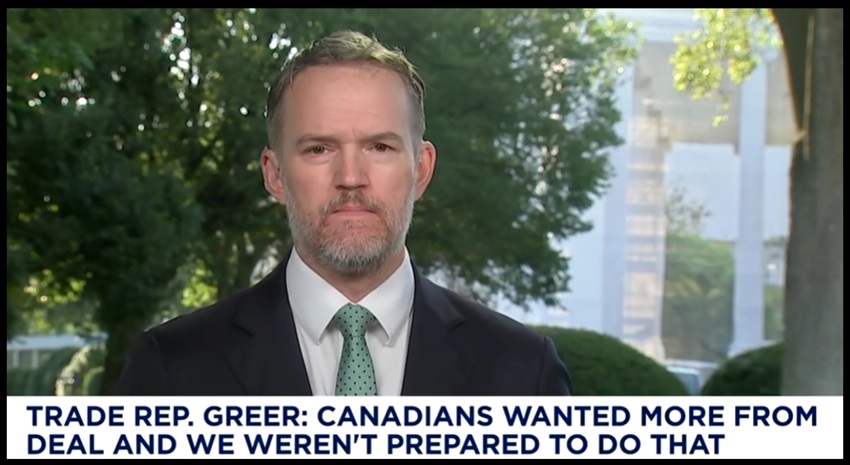
U.S. Trade Representative (USTR) Jamieson Greer appeared on CNBC this morning to discuss the trade agreement between the U.S. and Canada and what caused the final breakdown at the last minute.  Greer notes the Canadian team appeared to be negotiating at the end from the position of politics as the Canadian team were aligning themselves with a domestic effort.

Greer draws attention to the friction points being very small. The U.S. tariffs were on less than 5% of overall Canadian exports and less than .06% of U.S. imports.  The U.S. made several offers to present Canada with the best trade terms in the world; however, Canada wanted more.  Canada wanted to retain all their market barriers, retain all quotas, retain all tariffs and restrictions against.S. goods and services, but remove all the tariffs against them.

This is a really solid interview to watch because USTR Greer doesn’t need to pretend anything.  The terms offered were direct and consistent with benefit to both America and Canada.  On the language issue, Greer completely refutes the claims by Mark Carney about the U.S. seeking to change the language of Quebec and starts laughing at the premise. The issue relates to Canada demanding that five percent of all tech income be given to Canadian tech companies they compete against. That demand is ridiculous.  WATCH:

.

Posted in Auto Sector

Promethean Action Outlines the Background of Mark Carney Working with DNC Officials and Operatives


Posted originally on the CTH on24, 2026 | Sundance

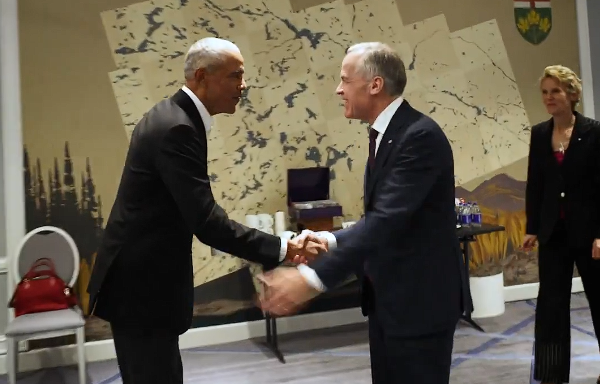
This is a pretty good encapsulation of the relationship between Canadian Prime Minister Mark Carney and the DNC officials within the United States. Although Kokinda missed mentioning the meeting between Barack Obama and Mark Carney shortly before the G7 summit in France.

After Prime Minister Mark Carney abruptly pulled Canada out of U.S. trade talks and framed the dispute as a “war,” this episode argues the rupture isn’t really about tariffs but about political and financial strategy aimed at the U.S. midterm elections. Citing U.S. Trade Representative Jamieson Greer’s account of negotiations and Canada’s unique retaliation, the script claims Carney is pursuing “geo-industrialization” and a “donut strategy” to go around the White House and influence American public opinion, aided by U.S.-connected advisers and outreach to mostly Democrats.

Kokinda also highlights comments from Iran’s foreign minister about U.S. debt and links the broader conflict to competing economic systems. The episode concludes that Treasury Secretary Scott Bessent is fighting a parallel battle to manage risks from the yen carry trade using tools like FIMA to prevent destabilizing Treasury selloffs.

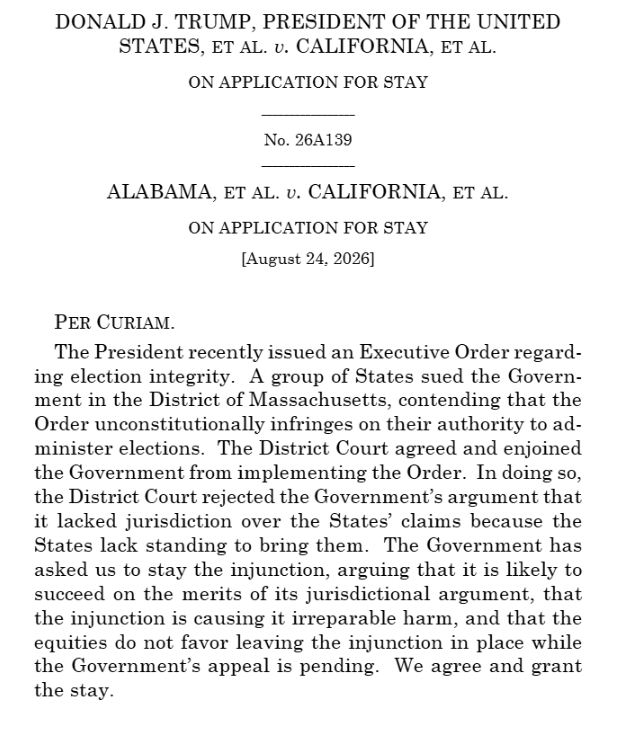
Supreme Court Lifts District Court Injunction Permitting Trump Administration to Move Forward on Postal Voting Plan


Posted originally on the CTH on 24, 2026 | Sundance 

t the core of the issue is the administration executive order that requires states to send their voter rolls to the U.S. Postal Service for mail service for mail-in ballots.  The USPS would then cross-check with DHS and Social Security records to ensure each of the names and addresses were eligible to vote before mailing them a ballot.

Obviously, the blue states -Democrat States- are refusing to comply with the USPS rule, the reason is simple.  A significant number of the blue state registered voters are not eligible voters (illegal aliens etc.)  If the states allowed cross-checking of their voter rolls the American people would see just how many illegal voters are registered; this would significantly reshape the U.S. election.  The scale of the issue is up for debate.

That said, the anxiety forms the baseline of opposition where blue states are suing in every court possible to stop the postal service requirement. The Trump executive order also directs the Postal Service to block delivery of mail-in ballots entirely from states that refuse to share voter lists with the federal government.

Today the Supreme Court ruled 6-3 [RULING HERE] that lifted one of the lower court injunctions that was filed as a lawsuit in Massachusetts. The court ruled that Boston-based Judge Indira Talwani (Obama appointee) engaged in “a string of speculations to find this suit justiciable.”

The three DEI justices (Brown-Jackson, Kagan, Sotomayor) all dissented from the majority opinion, because of course they did.

WASHINGTON – […] More than 20 blue states sued to block Trump’s order, saying it threatens to upend their planning for the midterms in November and intrudes on their authority to administer elections.

The Supreme Court’s conservative majority said those states lacked standing in part because it’s unclear just how the administration will implement the order, although the administration on Friday released a final Postal Service rule addressing more details.

“The Court’s disposition of this application does not mean that any measure taken by the Government to implement the Order will necessarily be lawful. On that score, time will tell. But the Order itself does not harm the States, so the District Court lacked jurisdiction to bar the Government from trying to implement it,” the court said in its unsigned majority ruling.

The high court faulted the judge who issued the injunction, Boston-based Obama appointee Indira Talwani, for engaging in “a string of speculations to find this suit justiciable.”

Voting rights and civil rights groups are also suing over Trump’s plan. Earlier this month, Talwani granted a separate injunction in that case blocking the Postal Service from complying with Trump’s order. It’s unclear how that litigation will be impacted by the high court’s order. (read more)