Russia Tells Banks to “Shoot Down Drones Yourself”


Posted originally on May 28, 2026 by Martin Armstrong |  

DragonFire military laser weapon obliterates drones in Scotland tests

The line between civilian society and war is disappearing completely. That is the real story behind Russia now authorizing its central bank and Sberbank to operate anti-drone systems and arm personnel to defend financial infrastructure. A country’s banking system is no longer simply processing transactions or moving money. It is now becoming part of the battlefield itself.

Russia passed a new law allowing the central bank, Sberbank, and the Russian Cash Collection Association to deploy their own drone defense systems after repeated Ukrainian strikes deep inside Russian territory. Staff at these institutions can now reportedly be armed as well.

This is what happens when modern war evolves into economic warfare. I have warned repeatedly that World War III would not resemble World War II where armies simply lined up across borders. The entire economy becomes militarized. Banks, energy grids, payment systems, telecommunications, ports, railways, factories, and data centers all become targets because modern civilization itself depends on interconnected infrastructure.

Ukraine understands this perfectly. Their drone strategy has increasingly focused on striking oil facilities, energy infrastructure, logistics centers, and economic targets deep inside Russia because they know they cannot defeat Russia conventionally in a prolonged war of attrition.

What is extraordinary here is not merely the drone attacks themselves. It is the admission that the Russian state can no longer centrally defend everything. Moscow is effectively decentralizing air defense responsibilities and telling major corporations and financial institutions: defend yourselves. That is a major shift psychologically.

The Guardian even framed it bluntly: Russia is telling its banks to “shoot down drones yourself.”

Sberbank City Building - ANT YAPI

This is precisely how long wars transform societies historically. Civilian infrastructure slowly merges with military infrastructure until there is barely any distinction left. During the later stages of major conflicts, factories become military targets, railroads become military targets, ports become military targets, and eventually financial institutions themselves become military targets because war is ultimately about resources and economic survival.

Sberbank is not some small regional bank. It is effectively intertwined with the Russian state itself. Sberbank controls roughly a third of Russian banking assets and acts as a pillar of the entire domestic financial system. The Russian central bank likewise sits at the core of wartime financing, sanctions management, currency stabilization, and capital controls.

Russia has pushed aggressively toward cashless payments, digital financial infrastructure, and central bank digital currency experimentation through the digital ruble system. But centralized digital systems become vulnerable during wartime because they create concentrated targets.

The more governments centralize financial systems digitally, the more vulnerable those systems become to cyberwarfare, EMP threats, sabotage, drone attacks, and infrastructure strikes. This is one reason governments are quietly preparing for a wartime financial environment globally.

What people fail to understand is that once banks become strategic military infrastructure, governments will justify virtually unlimited control over the financial system in the name of “security.” That is how capital controls are born historically. War always becomes the excuse for expanded government power.

The United States did exactly this during previous wars. Europe did exactly this. Gold confiscation, capital restrictions, currency controls, surveillance, transaction monitoring, frozen accounts, and restrictions on moving money abroad all emerge in wartime environments because governments become desperate to maintain internal stability.

Russia is already heavily centralized economically due to sanctions. But this trend is spreading globally. Europe is discussing CBDCs openly. Governments worldwide are building real-time payment surveillance systems. Financial privacy is disappearing everywhere because governments increasingly view the banking system as part of national security infrastructure.

Now we are reaching the next stage where banks themselves require physical anti-drone defenses. Imagine if JPMorgan or the Federal Reserve announced rooftop anti-drone missile systems surrounding Manhattan offices. That sounds absurd today, yet this is exactly where prolonged geopolitical escalation leads eventually.
Canada Moves to Destroy Encryption – Demands Backdoor Access to ALL Available Dataoriginally onCanada Moves to Destroy Encryption – Demands Backdoor Access to ALL Available Data


Posted originally on May 28, 2026 by Martin Armstrong |  

Canada is walking into extremely dangerous territory and most people do not understand the implications because governments always package surveillance laws as “public safety.” That is how this begins every single time historically. They sell fear first, then quietly expand state power behind the scenes while claiming only criminals should worry.

Now even Apple, Google, Meta, Signal, privacy experts, cybersecurity professionals, and members of the U.S. Congress are warning that Canada’s Bill C-22 could force technology companies to weaken encryption and build government access mechanisms directly into their systems.

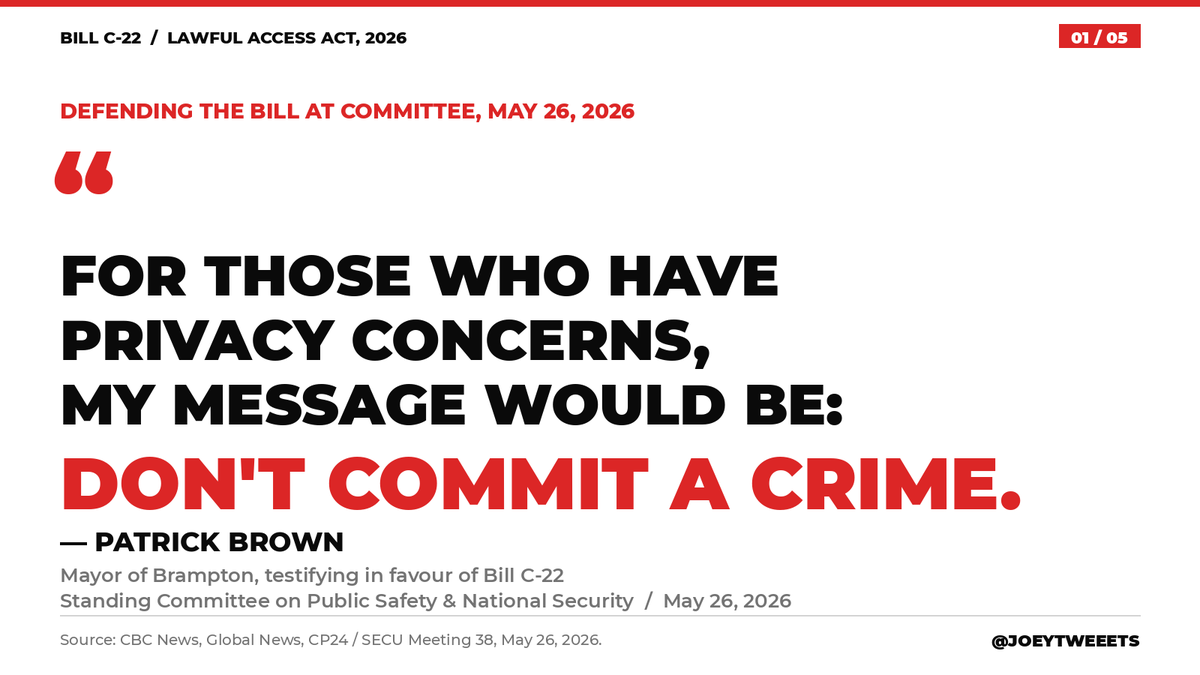
Brampton Mayor Patrick Brown, defending Canada's new mass surveillance bill at committee this week: "For those with privacy concerns, my message would be: don't commit a crime." That's Bill C-22, the Lawful

People need to understand what encryption actually is. Encryption is not some toy used only by criminals. Encryption protects bank accounts, corporate systems, private medical data, government communications, journalists, dissidents, businesses, lawyers, and ordinary citizens. Every time you use secure banking, send a private message, or protect sensitive data online, encryption is standing between you and cybercriminals.

The government always frames these laws as targeting terrorists, child exploitation, organized crime, or national security threats. But the mechanism itself never stays limited. Once governments establish the legal right to force “lawful access” into encrypted systems, the infrastructure for surveillance already exists. The temptation to expand those powers becomes overwhelming.

Apple warned directly that Bill C-22 could allow Canada to “force companies to break encryption by inserting backdoors into their products.” Meta warned the bill could require companies to “break, weaken, or circumvent encryption” and potentially install government spyware capabilities directly into systems. Signal reportedly stated it would rather leave Canada entirely than compromise its encryption promises.

Bill C-22 - The Lawful Access Act

There is no such thing as a “safe backdoor.” Once you intentionally weaken encryption for government access, you create vulnerabilities that hackers, hostile states, cybercriminals, foreign intelligence agencies, and malicious actors can eventually exploit. Government itself is composed of malicious actors for that matter.

The bill reportedly includes provisions requiring providers to maintain technical capabilities enabling authorized access while also retaining categories of metadata for up to one year. People underestimate how dangerous metadata itself becomes. Governments love pretending metadata is harmless because it does not always contain message content directly. Nonsense. Metadata reveals social relationships, movement patterns, communication habits, financial behavior, political affiliations, and entire personal networks. Modern surveillance increasingly relies on metadata because it allows governments to map society itself.

What is happening in Canada is part of a much larger global trend. Britain attempted similar measures against Apple recently. Australia passed controversial encryption-access laws years ago. The European Union continues pushing expanded digital surveillance frameworks. Governments worldwide are moving toward centralized digital monitoring systems because the financial and political pressures building globally are enormous.

This is exactly what I have warned about regarding the transition toward CBDCs, digital IDs, centralized payment systems, and cashless societies. Once governments gain the technical ability to monitor communications, financial transactions, movement, identity, and digital behavior simultaneously, you create a system where privacy itself effectively disappears.

That is how free societies slowly normalize surveillance infrastructure they once would have considered unimaginable. Governments globally are conditioning populations to accept the idea that privacy itself is suspicious. If you want secure communication, they imply you must have something to hide.

People better pay attention because once these systems are built, they rarely disappear.

Swiss Bank Accounts are DEAD – The New Banking Hub


Posted originally on May 28, 2026 by Martin Armstrong |  

Switzerland Today - SWI swissinfo.ch

For decades, Switzerland sold one thing better than perhaps any country on earth: privacy. That became its true export. People think of watches, chocolate, pharmaceuticals, or skiing resorts, but Switzerland’s real business was protecting capital from governments. That was the foundation of modern offshore banking.

Switzerland has destroyed the very industry that made it rich. Hong Kong has officially overtaken Switzerland as the world’s largest offshore wealth hub, managing roughly $2.95 trillion in cross-border wealth compared to Switzerland’s $2.94 trillion, according to the latest Boston Consulting Group report.

This was entirely self-inflicted. I warned years ago that Switzerland was committing financial suicide by surrendering banking secrecy under pressure from Washington, Brussels, the OECD, and the global tax authorities. Once Switzerland agreed to automatic information exchange treaties and effectively transformed Swiss bankers into tax informants for foreign governments, they destroyed the very reason international capital flowed there in the first place.

Offshore banking was never simply about taxes. It was about protection from political instability, confiscation, currency collapse, revolution, war, and predatory governments. Switzerland became wealthy because it remained neutral and outside the endless political insanity consuming Europe.

But after 2008, the entire Western financial system changed. FATCA turned foreign banks into enforcement agents for the IRS. CRS reporting standards spread globally. European politicians demonized offshore banking because governments drowning in debt cannot tolerate wealth escaping their reach. Suddenly, confidentiality itself became suspicious.

The politicians pretended this was about “fairness” and fighting tax evasion. Nonsense. This was about governments hunting capital because sovereign debt is spiraling out of control worldwide. Europe is collapsing economically under regulation, welfare spending, energy costs, migration pressures, and war expenditures. Once governments cannot sustain themselves honestly, they begin searching for private pools of wealth to confiscate.

Switzerland surrendered to that pressure completely. The famous Swiss numbered account became little more than mythology. Automatic reporting agreements gutted the entire purpose of Swiss banking secrecy. Once confidentiality disappeared, wealthy clients naturally began looking elsewhere.

That is where Hong Kong entered the picture. Hong Kong operates under an entirely different mentality. While Switzerland spent years apologizing to foreign governments and dismantling privacy protections, Hong Kong positioned itself as the gateway between Chinese wealth and global markets.

Hong Kong Panorama

Now this does not mean Hong Kong is some perfect banking paradise. Hong Kong has strict compliance laws, anti-money laundering rules, and increasingly close oversight connected to Beijing. In fact, banks in Hong Kong are now tightening controls even further after recent crackdowns from mainland Chinese regulators on cross-border capital flows. HSBC, Hang Seng Bank, and Bank of China Hong Kong have all reportedly begun requiring additional declarations and source-of-funds verification for mainland clients.

But the key difference is that Hong Kong still understands the importance of attracting capital instead of demonizing it. Hong Kong’s banking system remains designed around facilitating international trade, multi-currency transactions, corporate structures, and cross-border investment flows. It serves as a gateway into and out of Asia, particularly China. Switzerland increasingly became an extension of Western regulatory enforcement.

Hong Kong also still offers advantages that disappeared in much of Europe. Foreign ownership remains relatively open. Banking and corporate structures are integrated with global trade networks. Taxation remains comparatively competitive. English remains widely used throughout the financial system. Cross-border finance is treated as an industry to encourage rather than politically attack.

Switzerland voluntarily dismantled one of its greatest economic industries. Offshore wealth management supported enormous portions of the Swiss economy directly and indirectly through banks, law firms, wealth managers, accountants, real estate, hospitality, and luxury services. They destroyed a major national advantage because politicians feared international criticism.

Then came the collapse of Credit Suisse, which shattered the psychological aura surrounding Swiss banking stability. Once clients saw one of Switzerland’s historic institutions fail under political and regulatory pressure, confidence began shifting elsewhere.

Meanwhile, Asia is creating wealth while Europe destroys it. Hong Kong and Singapore are projected to continue expanding cross-border wealth at far faster rates than Switzerland through 2030. Europe has become hostile toward capital formation itself. Brussels regulates everything to death, taxes productivity, attacks energy production, and now openly discusses wealth taxes, exit taxes, CBDCs, and expanded financial surveillance.

Governments no longer merely want taxation. They want total visibility and total control over capital itself. CBDCs, digital IDs, transaction monitoring, beneficial ownership registries, cross-border reporting agreements, anti-cash laws, unrealized gains taxes, and capital controls are all moving in the same direction.

Offshore banking once acted as a barrier against total government financial control. Switzerland abandoned that role willingly. Now the money is moving east.

War Against Conservatives


Posted originally on Jan 10, 2021 by Martin Armstrong |  

Russian Revolution Lenin

People are leaving Facebook, Instagram, Twitter, and were moving to Parlar. Google and Apple removed the Parlar APP and then Amazon kicked then off of AWS. This is a complete purge going on of all conservatives. We are in the midst of nothing short of a real live Russian version of a revolution. Cheer up – you get to see what it was like to live history in a major confrontation between left and right. But make no mistake about it, the super-rich remains in power just behind the curtain. They own the press and social media while they use the virus to prevent people from gathering or organizing. It is their way or no way. Their motto: Resistance is Futile!

The SciFi Verison of Communism

Forecasting the Future


Posted originally on May 27, 2026 by Martin Armstrong |  

Analysis Forecasting the Future

QUESTION: Mr. Armstrong, our board has reviewed your forecasts for the past year against 3 others that our firm took. You were the only one correct. All others seem to be just personal opinions that got caught up in the crash scenario. Your forecast for the metals, which is our industry, was correct with the pullback into May when everyone else was calling for a stock market crash and a metals rally. I understand they call you the legend. I also understand that you will hold a special session for the Next Generation. I would like very much to bring my children. Do you have any idea when this will take place?

PD

Forecasting the Perpetual Crash

ANSWER: We are shooting for Tampa on July 25th. We are waiting for the hotel to confirm. We will be posting the tickets soon. I have always had to defend against the presumption that I have too much influence, and that is why the markets perform as forecast. That stems from a fundamental misunderstanding of how the economy functions, and it all goes back to Marx, who proposed that the government has the power to control the economy, a view supported by Keynes. Therefore, I have been judged by that perception because they do not want to hear that cycles exist, since that would mean the government cannot control the economy, which invalidates central bank policy. This is NEVER my opinion. My errors are not in that category; they are my misreading the computer, which I have always said Socrates has beaten me every time.

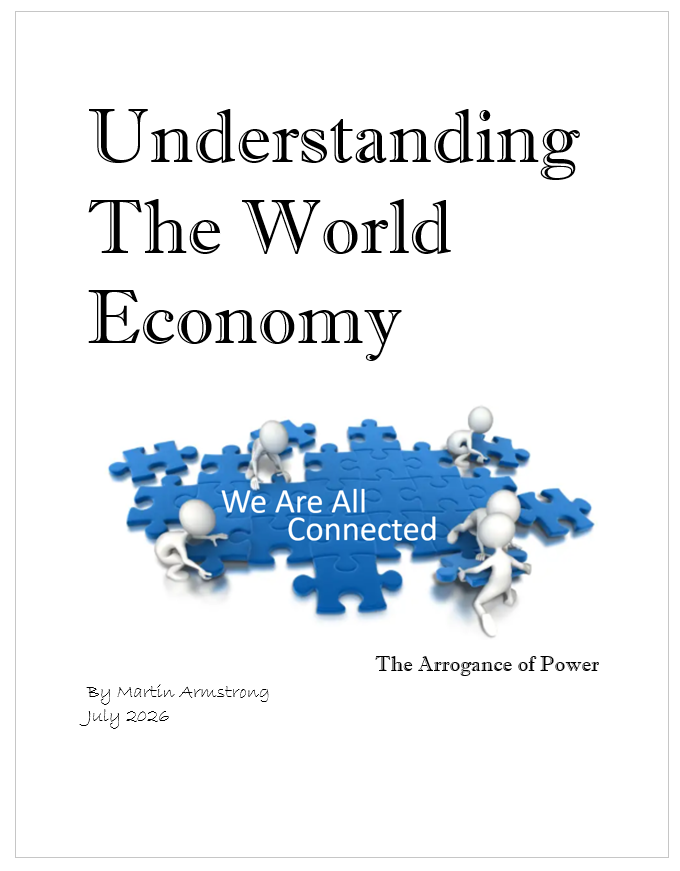
NEXT_Generation_Understanding_World_Economy July 25

Those who have been calling for the collapse of the stock market, as in 1929, base everything on chart patterns and completely fail to grasp that we live in a world economy and that everything is connected. That will be a special report I am doing for the Next Generation conference.

1924 Gold Hoard 3

I will do a Metals Update on the Private Blog

U.S. Ambassador to Canada Pete Hoekstra Discusses Trade Friction and USMCA Likelihood


Posted originally on CTH on May 27, 2026 | Sundance 

I never quite understood just how controlled the information flow is inside Canada until about two years ago when we began closely monitoring Canadian positioning for the upcoming USMCA (CUSMA) renegotiation/cancellation.  It quickly became obvious the majority of Canadians have no idea why it is almost a certainty the U.S. would exit the trilateral arrangement and position for a bilateral free trade agreement.

In the two years that have passed, now we see a few Canadians starting to realize the core issues of trade conflict that make any FTA between the U.S. and Canada almost impossible.  The largest issue centers around Canada’s net-zero carbon legislation that now completely disconnects them from aligned North American energy policy between the U.S. and Mexico.

A trilateral agreement requires core alignment on industrial manufacturing, and that requires similar abilities & similar energy policy.  You cannot make steel, iron and aluminum without coal and gas.  You need joules for heavy industrial manufacturing that cannot be achieved without exploiting coal, gas or oil (carbon materials).  Canada’s energy policy no longer aligns with industrial manufacturing. This core issue cannot be resolved at the current level of energy policy in Canada.

There are other issues like Canadian trade deals with China, non-tariff barriers, legislated rules over intellectual property and other points of significant friction that make alignment within North America challenging. However, the energy component makes compatible trade impossible.

In the interview below, U.S. Ambassador to Canada Pete Hoekstra appears on a podcast with David Leis, for a blunt conversation about trade, pipelines, critical minerals, China, and why the U.S. is growing frustrated with Canada’s direction.  At the end Hoekstra even explains why he is doing Canadian podcasts; because information within Canada is restricted by the government control of media – and that explains why most Canadians are clueless about the issues.

I’ve prompted the interview to the point that gets into the details. If you are interested to be fully understanding of what is coming, this is a solid reference point. Also, if you have financial investments associated with Canada or any system that is connected to the economic relationship between the U.S. and Canada, you need to watch this interview to proactively defend your financial interests.  VIDEO PROMPTED:

.

Watch it or listen to this roughly 30 minutes (prompted) as you cook, drive or go about your day. But listen to it and see the disconnect between Canada and the USA as outlined.  Things are going to get much worse in this relationship as the finality of it all suddenly starts to sink in north of the border with the average Canadian.

Additionally, there’s another short segment on U.S-Canadian trade as discussed by U.S. Trade Representative Jamieson Greer recently at a Council on Foreign Relations event.

QUESTION: “How serious is the fissures? Are the fissures with Canada, the rupture with Canada? And can you envisage USMCA being transformed into separate agreement with Mexico, separate agreement with Canada, or no agreement with Canada?”

USTR GREER: “Well, I would say that, you know, the team right now is in Mexico. My team, and they’re negotiating with Mexico on a bilateral basis. I speak with some regularity to my Canadian counterparts.

Our sense is that we have with Canada, you know, some some trade challenges, which, you know, to some people, you know, some people may think, oh, those are just irritants to us. They’re, they’re significant, and the reality is, we’ve spent the past year and a half going to countries, telling them we have to have some level of tariff on the globe to deal with this giant death that we’re dealing with, to try to reshore, etc.

And, and most countries have, you know, I know grudgingly, but they said we understand your policy, we understand so we’re going to negotiate with you, we’re going to remove some of these tariffs and non tariff barriers, etc. Canada’s approach has been different.

They like China retaliated against the United States. Two countries in the world retaliated against us, People’s Republic of China and Canada, so they’re just, they’re just in a different spot, and it’s, it’s hard to see necessarily where that ends.”

VIDEO PROMPTED:

Wait, What? – Twenty-Year CIA Senior Manager Arrested Following Raid on Home Revealing $40 Million in Gold Bars, $2 Million Cash and 35 Rolexes


Posted originally on CTH on May 27, 2026 | Sundance 

An interesting arrest that might warrant some background material prior to today’s events.  Keep in mind there are several indicted individuals from Venezuela and Mexico now said to be cooperating with the DOJ and federal law enforcement.

In addition to former Venezuela dictator Nicolas Maduro in the Southern District of New York, we should also note three Mexican officials connected to the Sinaloa cartel previously turned themselves in to U.S. federal officials and are said to be cooperating.

Earlier this month, Gerardo Mérida, a retired Mexican army general who served as public-security secretary in northwestern Sinaloa state surrendered in Tucson, ArizonaEnrique Inzunza Cazárez, who is also facing drug trafficking and weapon charges, was taken into custody in San Diego by the DEA. Sinaloa businessman Enrique Diaz Vega – another name from the SDNY indictment – also turned himself into U.S. authorities in Arizona.

As you read this story, also keep in mind the Defense Counterintelligence and Security Agency, falls under the authority of the Office of the Director of National Intelligence, Tulsi Gabbard, and that agency oversees a background check program, known as “continuous vetting.”

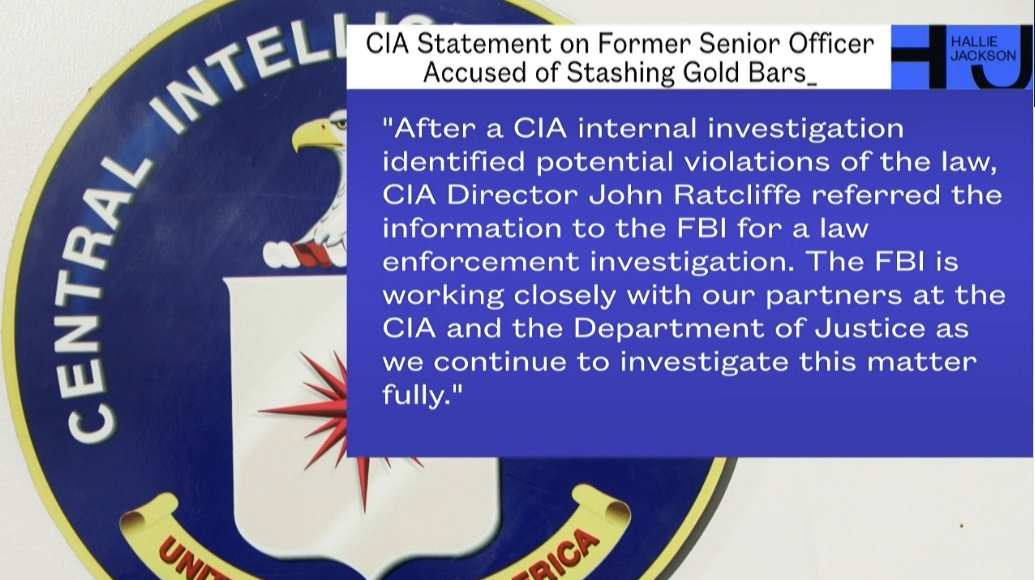
According to NBC News a 20-year veteran manger within the CIA named David Rush has been arrested on suspicion of embezzlement and theft.  The CIA operative was reported to have been referred to the FBI by CIA Director John Ratcliffe.

(VIA NBC) WASHINGTON — A former CIA senior officer with top secret-level clearance has been accused of secretly stashing millions of dollars in gold bars in his home that he said he needed for “work-related expenses,” according to court documents and two people familiar with his employment history.

David Rush, who held a management position, was charged with criminal theft of public money in a complaint filed last week in the Eastern District of Virginia. His lawyer didn’t respond to a request for comment.  He was also accused of lying to his employers about his background for nearly two decades.

Asked about Rush’s case, a CIA spokesperson said in a statement joint statement with the FBI that the FBI had arrested a person after a referral from the agency.

“After a CIA internal investigation identified potential violations of the law, CIA Director John Ratcliffe referred the information to the FBI for a law enforcement investigation,” the written statement said. “The FBI is working closely with our partners at the CIA and the Department of Justice as we continue to investigate this matter fully. We are committed to following the facts, ensuring accountability, and pursuing justice in accordance with the law.”

[…] It wasn’t clear how the investigation into Rush began, and it also wasn’t clear when he left the CIA. His home was raided just last week.

From November through March, Rush made several requests for funds, including for foreign currency and tens of millions of dollars in gold bars, according to an affidavit filed in federal court by an FBI agent investigating the case.

In a storage space near his office, investigators found only a portion of the funds. On May 18, federal agents searched Rush’s home and seized roughly 300 gold bars worth more than $40 million, court documents said. Agents also seized about $2 million in U.S. currency and 35 luxury watches, mostly Rolexes, according to the affidavit.

The affidavit alleges Rush knowingly took part of the money he requested for work-related expenses to his home for personal gain.

The court filing didn’t specify which agency employed Rush, but the two people familiar with his employment history said he was with the CIA. (link)

Separate allegations in the complaint accuse Rush of falsifying his background over nearly two decades in dealings with government employers.

President Trump Holds an Open Press Cabinet Meeting Outlining Current and Ongoing Events


Posted originally on CTH on May 27, 2026 | Sundance

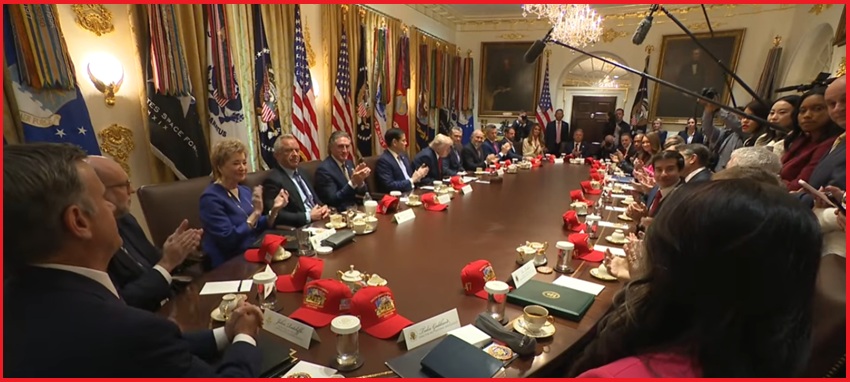
Earlier today, President Trump and Vice President JD Vance held a cabinet meeting in the White House.  The assembled press pool was invited to attend. Again, President Trump being the most transparent administration in history.

President Trump walked through many of the policy agendas within the various cabinet offices, and each cabinet head responded by discussing what their department was doing to combat waste and fraud and align for the strongest economic outcome. At 26:39 of the video, Secretary of State Marco Rubio walks through the current status of engagement with Iran, Venezuela and Cuba.  At 45:00 of the video, Secretary of War Pete Hegseth discusses the ongoing military operation in the Middle East, against Iran.  At 54:11 Secretary of Treasury Scott Bessent provides an update.

At 58:00 the media question session begins.  WATCH:

“Iran thought they were going to outwait me, you know: “We’ll out wait him, he’s got the midterms.” I don’t care about the midterms, look what happened last night, that was the prelude to the midterms. They want very much to make a deal. So far, they haven’t gotten there. We’re not satisfied with it, but we will be — either that or we’ll have to just finish the job. The strait’s going to be open to everybody. It’s international waters. Nobody’s going to control it. We’re going to watch over it.”

“Iran is negotiating on fumes, but we’ll see what happens. We can make a good deal right now, but maybe not a great deal, and if it’s not a great deal, we’re not making it. Iran will receive no concessions or sanctions relief in exchange for handing over its highly enriched uranium. Iran cannot be allowed to possess a nuclear weapon because it will use it immediately and without hesitation.”

Treasury Secretary Scott Bessent Give White House Press Briefing – 2:00pm ET Livestream


Posted originally on CTH on May 28, 2026 | Sundance

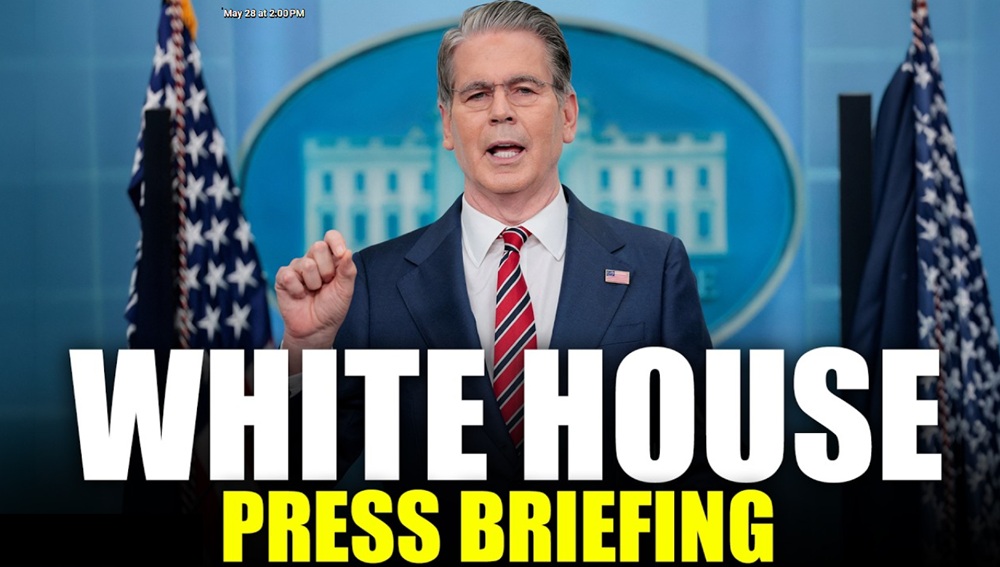
This should be interesting.  As White House Press Secretary Karoline Leavitt remains on maternity leave, the Trump White House has done something remarkable and very unique.  Cabinet members are taking turns delivering the White House press briefing.

Today, Treasury Secretary Scott Bessent steps up to the podium and will be delivering the White House briefing at 2:00pm ET.  Secretary Bessent has been one of the standout leaders throughout the first seventeen months. Livestream links below:

.

.

.

.

President Trump Praises DNI Tulsi Gabbard for Her Incredible Work at Reforming the Intelligence Community


Posted originally on CTH on May 27, 2026 | Sundance

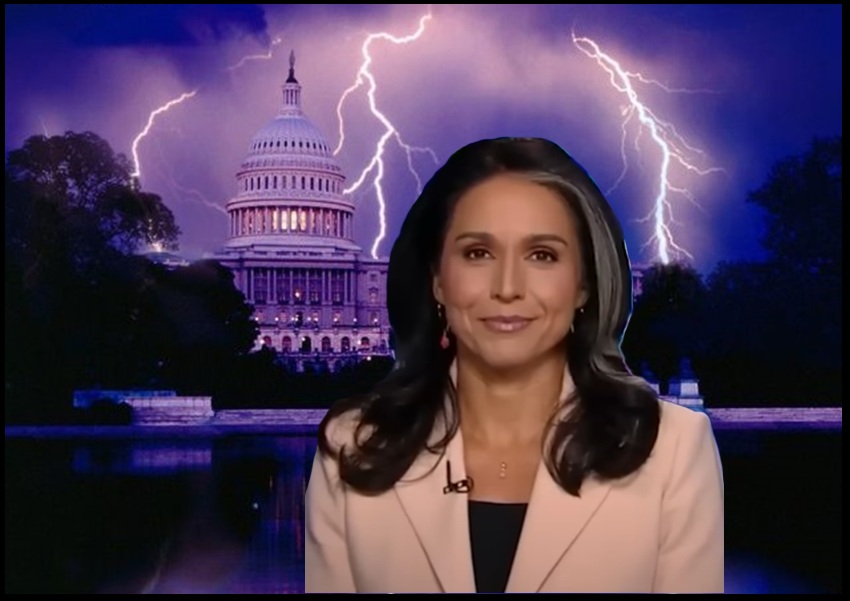
During a cabinet meeting today at the White House, President Trump took the opportunity to thank Director of National Intelligence, Tulsi Gabbard, for her exceptional work and focus within the intelligence system to organize strong reforms that will be around for a long time.

DNI Tulsi Gabbard has indeed been a transformative member of the cabinet, working through her office and agency while partnered with CIA Director John Ratcliffe and National Security Advisor Marco Rubio.  Mrs. Gabbard is leaving on June 30 to stand beside her husband Abraham as he battles a bone cancer diagnosis.  WATCH:

.

It is expected that DNI Gabbard will deliver more information to the American public through a series of declassifications prior to the end of her tenure. There is no immediate discussion of her replacement and Principal Deputy Director of National Intelligence, Aaron Lukas, will serve as Acting Director of National Intelligence following her departure.

REMINDER: There will likely be a great deal of rumor and speculation about a different permanent replacement.  One name sure to surface within the discussion is Devin Nunes, but I strongly doubt the former Chairman of the HPSCI would desire or accept the position.

If, and that is a very big ‘if’, Devin Nunes was to accept the role, that would indicate a remarkable change in his opinion about the overall intelligence apparatus. Therefore, I doubt this is an option. Devin Nunes believes in the historic fidelity of the intelligence institutions.  As a result, the DNI position has seemed smaller and less significant.

The only way Nunes would take the job is if two things changed.  First, he now believed the construct of the United States intelligence apparatus is teetering on the edge of irreversible corruption (he did not previously hold this position); and second, if he sees that Tulsi has now proven the power of the DNI in the intelligence apparatus.  As readers here will fully understand, until DNI Gabbard that power was never fully extended.

Former House Permanent Select Committee on Intelligence (HPSCI) member Elise Stefanik will likely be another name.  She would have the full support of the Susie Wiles grouping. The same network who advocated for Mike Waltz to be National Security Advisor.  However, Stefanik would greatly please Laura Loomer, Mark Levin and Ben Shapiro; while conversely providing fuel for Tucker Carlson and Megyn Kelly antagonisms.

Former National Security Advisor Michael Flynn would likely be another name.  Unfortunately, Flynn’s judgement is not stellar, and while he has been supportive of Mrs. Gabbard it’s not likely President Trump wants that kind of Flynn drama or the issues he brings with him for a nomination.  That said, if the political calculation is to fuel the core base, Flynn might stand a chance at nomination. But don’t overthink it, Flynn would be of no value in the DNI position for anything of substance.  Again, weak judgement (led to his former demise) and grifting tendencies.

Two other names of note:  Scott Perry from Pennsylvania who was a target of the FBI/IC for his support of President Trump, and Rick Crawford the current Chairman of the House Permanent Select Committee on Intelligence, a gang of eight member.  The IC has nothing to fear from either of these names. They are essentially Mike Waltz clones, though to be fair I might be a little harsh on Perry.

Rick Crawford, as HPSCI Chairman, allowed Tulsi Gabbard to review the Atkinson transcript. Still, he didn’t act until Gabbard asked to see it and later pushed to declassify it. While he had the authority to handle it himself, like many congressional IC members in both the House and Senate, he seemed wary of challenging the very system they’re tasked with overseeing.  [TIP: If whoever’s name it is currently falls under the IC oversight mechanism, they probably fear the “seven ways from Sunday” group, unlike Tulsi Gabbard. Accept this reality and adjust your perspective accordingly.]

GOPe types and “CONservative” influencers might also bring up Trey Gowdy or former HPSCI Chairman Mike Rogers.  If either of these names show up, there’s a problem. And anyone advancing these names…. well, they’re the problem.

One name that would seem to fit the role and responsibilities would be former Congressman Dan Bishop, currently serving as a U.S. Attorney in North Carolina.  Bishop was a member of the House Subcommittee on Govt Weaponization that frustratingly went nowhere as it was designed to fail by House Judiciary Chairman Jim Jordan.  Bishop himself was frustrated by the lack of assertiveness within the sub-committee structure.

There’s no immediate need for any speculative guesswork. ADNI Aaron Lukas will likely do a solid job.