CAPTAIN JAMES FANELL: The Chinese Tanker “Rich Starry,” Which Was Testing The US Naval Blockade, Has Been Turned Around. That’s A Tanker Of Oil That The Chinese Will Not Get!


Posted originally on Rumble on Bannon War Room on: April 14, 2026

Episode 5297: Off Ramp For The Iran War; Immigration Protests Continue In Ireland


Posted originally on Rumble on Bannon War Room on: April 13, 2026

WarRoom Battleground EP 987: Updates From South Carolina To Take Down Lindsey Graham; Manifestation Of Globalism In The EU


Posted originally on Rumble on Bannon War Room on: April 13, 2026

HARNWELL: the MSM has it all wrong — I really don’t think Hungary just rejected “Orbanism”


Posted originally on Rumble on Bannon War Room on: April 13, 2026

Paul Dans: “I’m gonna do everything in my power to get Mark Lynch across the finish line and get Lindsey Graham into retirement.”


Posted originally on Rumble on Bannon War Room on: April 13, 2026

Sam Faddis: “We can’t walk away now. If we walk away, leaving the Iranians effectively having won and dictating terms in the Middle East, the consequences would be unthinkable.”


Posted originally on Rumble on Bannon War Room on: April 13, 2026

Dr. Bradley Thayer on the protests in Ireland: This is being driven not really by the high fuel costs but by immigration. 1 out of every 5 people living in Ireland is not native born.


Posted originally on Rumble on Bannon War Room on: April 13, 2026

Curt Mills: “The president is unfortunately sacrificing a lot of political capital to get Israel’s war in Iran done, and I urge him to, at minimum, walk away from this.”


Posted originally on Rumble on Bannon War Room on: April 13, 2026

Used EV Market Exposes the Cracks


Posted originally on Apr 15, 2026 by Martin Armstrong |  

Tesla 1

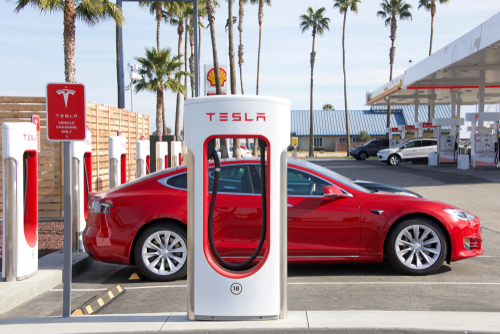
Reports indicate that a wave of used EVs is beginning to hit the market as leases expire, forcing automakers to rethink how they handle pricing and inventory. What was once sold as the inevitable future is now a dud cause with minimal demand. When those vehicles return to the secondary market, they must compete on price, performance, and practicality, not ideology. That is where the cracks begin to show.

This ties directly into what I have warned about with government attempts to force economic outcomes through policy. The Biden administration pushed aggressively toward electrification under the banner of climate policy and Net Zero, but this was never purely about the environment. It was about directing capital, restructuring industry, and attempting to control long-term consumption patterns. The problem is that markets do not respond to mandates the way politicians expect.

Nearly 4,000 US car dealers warned the Biden Administration that consumer demand would not keep pace with supply. You cannot force consumers into a product they are not ready to adopt, especially in an environment where the cost of living is already rising.

Electric vehicles still account for only about 7–8% of total US vehicle sales, yet federal policy aimed to push that figure toward 50% or more by 2032 through emissions rules that effectively function as mandates. At the same time, EVs remain significantly more expensive, with average transaction prices roughly $8,000 higher than comparable gas vehicles.

Government attempted to accelerate this transition through incentives and mandates. The Inflation Reduction Act introduced tax credits of up to $7,500 per vehicle, effectively subsidizing purchases to stimulate demand. Meanwhile, federal policy called for the entire government fleet to transition to zero-emission vehicles by 2035, impacting hundreds of thousands of vehicles.

You can already see the early signs of that correction in the used EV market. As more vehicles come off lease, prices are under pressure because supply is increasing faster than demand. Automakers are now adjusting strategies, trying to manage resale values and prevent a collapse in pricing. This is the same pattern we have seen in other sectors. When supply is artificially expanded through policy, it eventually overwhelms real demand.

The used car market in general is far beneath the levels witnessed in 2022. EVs are far more difficult to offload. Industry estimates show that more than 300,000 electric vehicles will come off lease in 2026 alone, with projections rising toward 500,000 or more as we move into 2027. This is a surge of supply that the market must absorb whether demand is ready or not.

New EV sales have already dropped 28% year-over-year in early 2026, while used EV sales have risen 12%, reaching nearly 93,500 units in a single quarter. Pricing confirms that shift. Used EV prices have fallen dramatically, in some cases dropping as much as 40% over the past year, and are now within roughly $1,300 of comparable gasoline vehicles. That is a market adjusting to oversupply. When prices fall that quickly, it reflects a mismatch between production and real demand.

Cost, convenience, infrastructure, and reliability all matter more than political objectives. The government will always fail when it attempts to artificially stimulate demand.

China’s Gold Strategy Is a Long-Term Move Against the Monetary System


Posted originally on Apr 15, 2026 by Martin Armstrong |  

China on the Rise

China is not reacting to events, it is executing a long-term strategy that has been unfolding quietly for years. The latest data confirms that it continues to accumulate gold month after month as part of a deliberate effort to reduce reliance on the existing monetary system. The People’s Bank of China has now extended its gold buying streak to roughly 15–16 consecutive months, bringing total holdings to approximately 2,300 tonnes, which equates to about 74 million ounces and represents close to 10% of its total reserves, placing it among the largest official holders globally.

This steady accumulation is not a short-term hedge against volatility, it is a structural repositioning that reflects a recognition that the global financial system is built on confidence in sovereign debt, particularly US Treasuries, and that confidence is becoming increasingly fragile as global debt levels exceed $310 trillion. China is not making headlines with dramatic announcements, instead it is quietly converting portions of its reserves into gold, which is the only reserve asset that carries no counterparty risk and cannot be sanctioned or frozen in the same way as foreign currency holdings.

At the same time, global trends reinforce this strategy as central banks worldwide have been buying gold at one of the fastest paces in modern history, often exceeding 800 to 1,000 tonnes annually, while the dollar’s share of global reserves has steadily declined from around 66% to roughly 57% over the past decade. This shift is not driven by ideology but by practicality, because as geopolitical tensions rise and financial systems become increasingly fragmented, nations seek assets that provide independence from external control.

China’s approach is methodical and patient, and that is what makes it significant because it is not waiting for a crisis to unfold, it is preparing in advance by building a reserve base that can withstand a loss of confidence in sovereign debt markets. This aligns directly with the broader pattern we are seeing, where central banks are not abandoning the system outright but are quietly hedging against its potential breakdown.