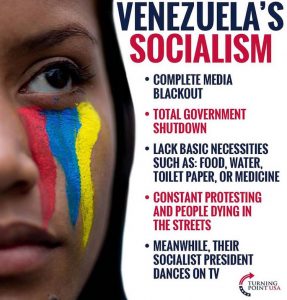
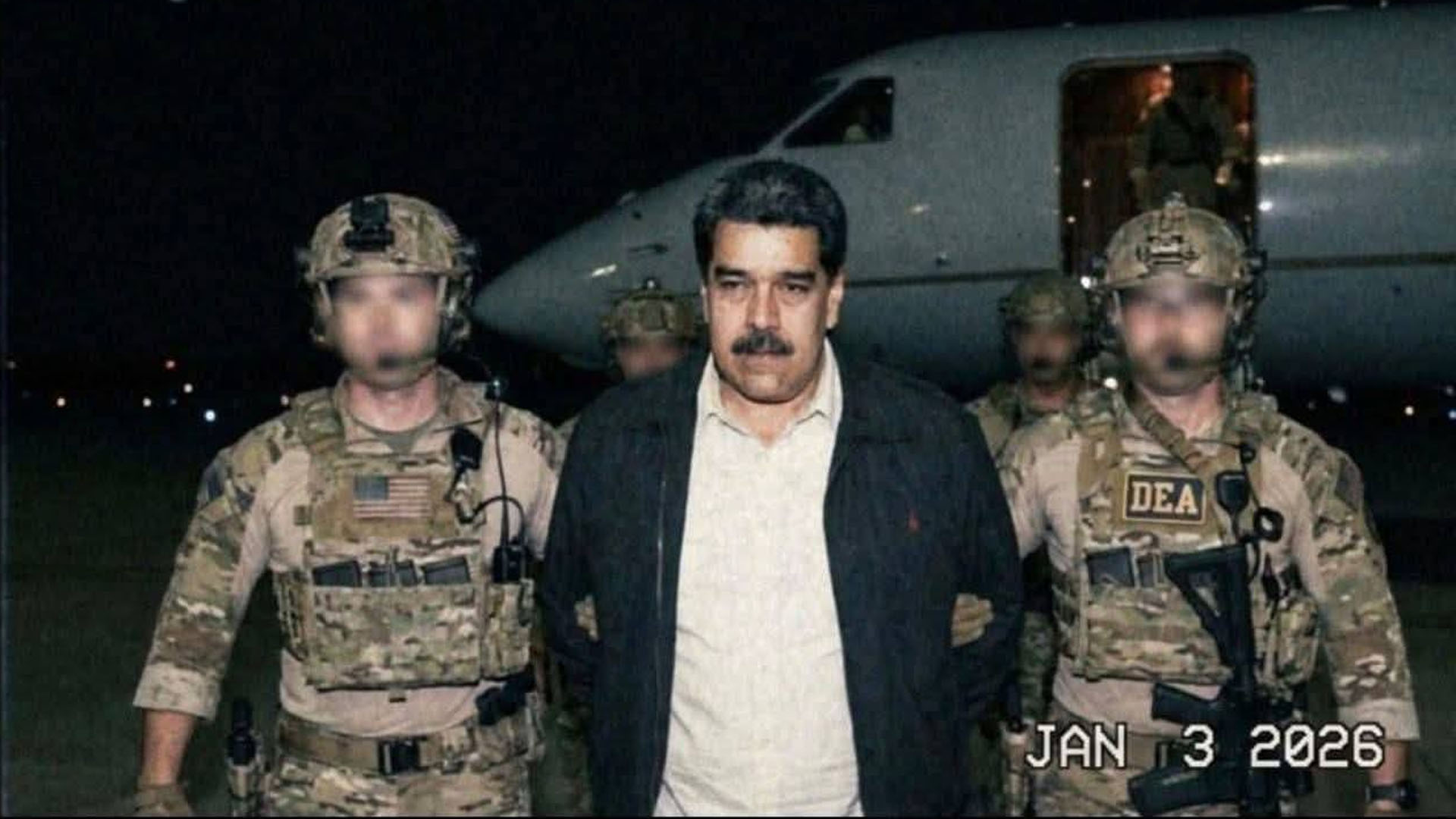
The people of Venezuela are celebrating Maduro’s departure. Those who have lived under socialism understand the depths of its destruction. Hugo Chávez is celebrated as a social justice warrior for eliminating capitalism in the 2000s. Socialism does not work because the system eventually runs out of other people’s money, as Margaret Thatcher once proclaimed. We only need to look at recent history to see the severe consequences of switching to this system. Venezuela first reported that it had a “nutritional emergency” in February 2016. President Nicolás Maduro also declared an “economic emergency” in January of the same year, providing him the power to rule by decree. Inflation was running at 141.5%, according to Venezuelan authorities, but the IMF believed the figure reached 270% in 2015 and had the potential to reach 500% by the end of 2016.
There were rumors going around that people under socialism faced such severe food shortages that they were forced to break into zoos and eat the animals. Unfortunately, this is a fact. Reports were circulating in Venezuela of people consuming zoo animals around 2016 and 2017. The animals that remained in these zoos starved to death or ate one another. The people were in such dire conditions that they were forced to consume dogs, cats, decaying meat, and anything else they could find.
The socialists claimed that acknowledging the food shortages could lead to American intervention, and Maduro consistently blamed US sanctions for his nation’s failure. As reported by a Spanish newspaper, this is how the average person waiting for their food rations: “Five hours in line to buy a chicken; kicks, pushes, and blows of all kinds to be one of the fortunate ones to enter the supermarket and get away with a bag of flour or rice, basic goods that Venezuela does not have available to everyone, unfortunately.”
Maduro told the people to grow their own food and gloated that he, too, was producing his own eggs and produce. The government owned the grocers and food production companies and intervened numerous times to prevent private-sector intervention. Politicians take no responsibility for the suffering caused by their policies, and this is precisely what a portion of the West is seeking to implement today.
Over 7.7 million people have fled Venezuela due to one of the worst economic collapses in modern history not attributed to war. GDP contracted 80% from 2013, according to the IMF. Inflation reached an astounding 130,060% by 2018, the bolivar collapsed, prices doubled daily, and people were forced to carry carts of worthless cash for basic purchases. Around 30% of the population lived in poverty in 2013. Fast forward to 2025, roughly 87% to 90% of the population lives in extreme poverty and despair.
People wonder why Venezuelans are cheering Maduro’s downfall from the safety of their first-world suburbs. Older generations remember a time when Venezuela was a thriving economic powerhouse before it rapidly fell under socialism. Oil was insufficient to sustain a system that rendered innovation and productivity worthless.
Now, Venezuela’s problems did not begin with Maduro. Maduro inherited a flawed socialist system and continued its mismanagement. Under Chávez, Venezuela was already in decline, but Maduro assumed power precisely as the country entered a major ECM down wave. Instead of reforming, he doubled down on the same policies that were already destroying confidence and refused to take ownership in typical bureaucratic fashion. The destruction was locked in long before sanctions became meaningful because the government destroyed confidence, property rights, and capital formation. Socialism wages war on capital, and capital is a pacifist that will willingly flee. Once you nationalize industry, confiscate private property, impose price controls, and criminalize profit, capital will flee and not return. Every war waged against capital results in a lost battle for the aggressor as it cannot be captured and the business cycle cannot be defeated.
Posted originally on Jan 6, 2026 by Martin Armstrong |
The minimum wage increased significantly in 19 U.S. states on New Year’s Day. Minimum wages are often portrayed in the mainstream press as a straightforward way to raise incomes for the lowest-paid workers, but this portrayal ignores the underlying economic mechanisms.
When the cost of labor exceeds the value the labor actually produces, companies begin to reduce labor costs. This has led to a massive shift to automation and outsourcing. Employers are often forced to reduce their workforce, and those who remain face reduced hours or increased responsibilities without commensurate pay increases.
Wages rise with productivity in a healthy economy. Currently, employers’ costs are growing faster than the value added by workers in numerous instances. Yes, the federal minimum wage has been stuck at $7.25 per hour for nearly a decade, and nowhere in the US is that salary sustainable. Washington state now mandates roughly $17.13 per hour; California’s state minimum is nearly $17; New York’s major cities approach $17; and other states set their minimums above $15. The market or demand does not determine these set wages.
California routinely selects groups of minimum-wage workers and determines that their skill set is now worth 10 times as much. The state in general increased the minimum wage to $16.50 per hour on January 1, 2026, while certain cities have raised the minimum to $19 per hour. Yet, hotel and airline workers in Los Angeles are to receive a minimum wage of $38 per hour within the next two years. Hotels are already struggling, with only 79% of the traffic they once experienced prior to the pandemic. The city shed 11,000 hotel jobs last year, and this proposal nearly ensures more jobs will be cut. The state saw the same phenomenon when minimum wage was raised for fast food workers—employers reduced staff and raised prices for consumers.
Should a hotel maid earn more than a teacher in Los Angeles? Do the people constructing the hotel deserve less than those paid to book rooms? Does replacing towels and bed sheets, or checking a boarding pass, warrant an $80K salary? Pay grades are no longer based on skill and experience but on industry pandering. Yet another reason for companies to relocate when possible, as we saw throughout 2025 and will continue to see in 2026.
Rest assured that the government will continue to raise taxes on the lowest-paid workers. Wages rise naturally in a real economic expansion when businesses compete for workers. That is how a free market functions. But when governments artificially raise wages, businesses respond logically—by cutting jobs, reducing hours, or passing the costs onto consumers through inflation. The very people politicians claim to be helping end up worse off, as their cost of living rises and entry-level jobs disappear.
I have created this site to help people have fun in the kitchen. I write about enjoying life both in and out of my kitchen. Life is short! Make the most of it and enjoy!
This is a library of News Events not reported by the Main Stream Media documenting & connecting the dots on How the Obama Marxist Liberal agenda is destroying America

![Minimum Wage Rate by State in the U.S. [2026]](https://www.paycor.com/wp-content/uploads/2023/12/MinimumWage_StateMap_740x560-768x582.png "MinimumWage_StateMap_740x560 768x582")

