Posted originally on Mar 17, 2025 by Martin Armstrong
COMMENT: Martin, I just had to commend you on your capital flow models. Anyone who does not acknowledge that is a fraud and not trustworthy. As your clip showed from 1991, everyone knew you invented that analysis. While others claim that capital is fleeing from the United States to Europe, they are fake news and inaccurate analysts. They do not understand how things work. You are correct about European intimidation to bringing cash and investments home. However, that is only among the regulated institutions that can be threatened. As your computer tracks, capital is being withdrawn globally in preparation for war.
We could not make decisions in our boardroom without consulting Socrates anymore. It is unbiased and that is the most valuable asset in times of such uncertainty.
God bless.
EKL
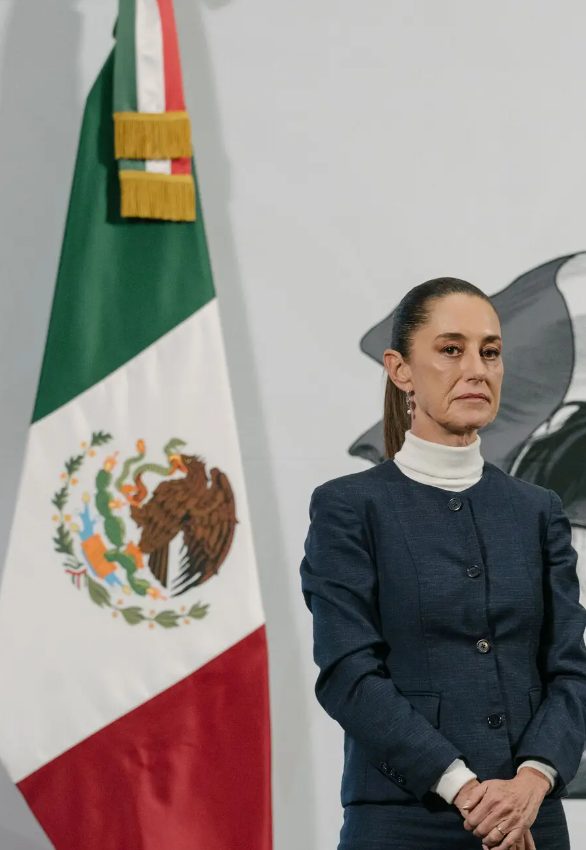
REPLY: Yes, you are correct. We are watching capital contracting into both the United States and Europe. It is even leaving Canada and Mexico. When Claudia Sheinbaum, a leftist, became president on Oct. 1, the first woman to ever govern Mexico, many had their doubts about how she would handle the relationship with the United States, especially if Trump won the election. She has stood up top some calling to enter Mexico and destroy the drug cartels. She opposes that idea, but some believe that there could be a war with Mexico over the drug issue. We see the capital fleeing Mexico based on those rumors right now.
In Canada, there is both capital fleeing and Canadians. This newly unelected PM Carney is only talking about RESIST while he distracts the people from the economic issues. So, exactly what does “resist” mean? More tariffs? Some politicians are claiming Trump will annex Canada. That is simply impossible under US or International law. Economically, this does not bode well for the future.
Posted originally on CTH on March 16, 2025 | Sundance
The issue of Canada becoming the 51st state arose from a conversation in Mar-a-Lago between Prime Minister Trudeau and U.S President Donald Trump.
As Secretary of State Marco Rubio outlined, Trudeau said if President Trump was to make the Canadian government pay reciprocal tariffs, open the USMCA trade agreements to force reciprocity, and/or balance economic relations on non-tariff issues, then Canada would collapse and cease to exist.
In essence, Canada cannot survive as a free and independent north American nation, without receiving all the one-way benefits from the U.S. economy. To wit, President Trump then said, if Canada cannot survive in a balanced rules environment, including putting together their own military and defenses (which it cannot), then Canada should become the 51st U.S state.
This is the first point of contention for the gender-correct qualifications of Canadian Ambassador to the U.S, Kirsten Hillman. Ambassador Hillman appears on Fox News Sunday’ to comment on U.S.-Canada relations, trade negotiations and how a federal election could impact the relationship between the two nations.
Ms. Hillman says Canadians will never give up their sovereignty. Let me repeat the non-pretending reality. If Canada loses all of the one-way benefits it receives from its relationship with the United States, the Canadian system of government and economics collapses.
Closed and non-competitive banking and finance sectors; a small military budget that does not even reach NATO expectations; an assembly or ‘pass through’ economy that doesn’t have heavy industry but instead assembles goods from foreign nations for transport into the United States; one-way excessive tariffs on American products. If these are ended, the lifestyle of the Canadian people immediately changes. Hence Trudeau saying, Canada cannot exist.
At the current rate of economic conflict, the Canadian dollar will lose 50% of its value by mid-summer 2025. This is the unavoidable reality Ms Hillman and the Canadian left-wing government will not openly discuss.
The only way for Canada to be a sovereign nation unattached to the United States, is if they drop all of their climate-change initiatives, drop their liberal economic rules and regulations, begin a system of heavy industry production again and get back to using cheap energy production as the fuel to drive it.
Canada would then need to discontinue most social welfare programs and instead divert that money to their military budget.
The leftist economic policies are why the Canadian banking system has to be closed, and all competition removed from the internal banking and finance equation. If reciprocity is demanded and enforced, Canada collapses; it’s that simple.
Posted originally on CTH on March 16, 2025 | Sundance
Together with Secretary of State Marco Rubio and special Envoy/Ambassador Steve Witkoff, National Security Advisor Mike Waltz is one of the three key delegation members negotiating with Ukraine and Russian officials.
Steve Witkoff has spent more time in direct face-to-face meetings with Russian President Vladimir Putin than any other official or diplomat in many years. Marco Rubio is the diplomat in charge as point of contact for all foreign stakeholders, and Mike Waltz talks directly to his peers in the security services of both Russia and Ukraine.
Mike Waltz appears on Fox News to discuss current foreign policy matters including the Russia-Ukraine war, the Israeli-Hamas war and the current U.S. targeting of Houthi terrorists in Yemen.
Posted originally on CTH on March 16, 2025 | Sundance
Together with Secretary of State Marco Rubio and special Envoy/Ambassador Steve Witkoff, National Security Advisor Mike Waltz is one of the three key delegation members negotiating with Ukraine and Russian officials.
Steve Witkoff has spent more time in direct face-to-face meetings with Russian President Vladimir Putin than any other official or diplomat in many years. Marco Rubio is the diplomat in charge as point of contact for all foreign stakeholders, and Mike Waltz talks directly to his peers in the security services of both Russia and Ukraine.
Mike Waltz appears on Fox News to discuss current foreign policy matters including the Russia-Ukraine war, the Israeli-Hamas war and the current U.S. targeting of Houthi terrorists in Yemen.
Posted originally on CTH on March 16, 2025 | Sundance
President Trump is likely to have another phone call with Russian President Vladimir Putin this week according to Trump’s envoy Steve Witkoff.
Witkoff was in Moscow Thursday for talks with President Putin and he shares how many specific details and issues were discussed. The conflict zone in Ukraine is 2,000 kilometers long, with Russian and Ukraine fire on multiple points. Despite a ceasefire on such a complicated scale, Steve Witkoff is optimistic it is possible. Video and Transcript Below:
[Transcript] – MARGARET BRENNAN: We go now to President Trump’s Special Envoy to the Middle East, Steve Witkoff, who joins us this morning from Miami Beach. Welcome back to “Face the Nation,” Ambassador.
SPECIAL ENVOY TO THE MIDDLE EAST STEVE WITKOFF: Thank you. Thank you, Margaret. Thanks for having me.
MARGARET BRENNAN: So, you just heard Secretary of State Rubio talk about these efforts to broker a ceasefire. You were the man face-to-face with Vladimir Putin. I wonder what your answer to the question is, in regard to whether this is a delay tactic or whether Vladimir Putin is sincere in seeking a ceasefire?
STEVE WITKOFF: Well, I was there for quite some time, Margaret, and I agree with the Secretary’s assessment. We made a lot of progress in that meeting. It was a meeting that was- it could have been as long as four hours, but it was certainly at least three. We talked about a lot of specifics, and I point to the large gap that existed between Ukraine and Russia prior to the inauguration, and where we are today. We have narrowed the issues between both of these parties, making a lot of progress, in my opinion, and I think that meeting underscores that.
MARGARET BRENNAN: So I heard you say on another program this morning that you do expect presidents Trump and Putin to speak this week. Is that a decision making call, or is this just next steps?
STEVE WITKOFF: Well, I would- I would assume that, you know, they have- they have a real- they have a real relationship from the president’s first term. They’ve talked already, after the first visit that- that I had with President Putin. And I think this is going to be a very positive and constructive call between the two men, between the two presidents.
MARGARET BRENNAN: And decisions will be made on whether to move forward with this 30-day ceasefire that the U.S. and Ukraine have agreed to, but Russia, at least publicly, has not?
STEVE WITKOFF: Well, President Trump is the ultimate decision maker, our decision maker. And President Putin, for the country of Russia, is their decision maker. I think it’s a very positive sign that the two of them will be talking at some point. I think that’s- that’s showing that there’s positive momentum, that there’s a- an inclination on- on the part of both countries, and by the way, this includes Ukraine as well, to get to a long term, durable peace here.
MARGARET BRENNAN: Well, France’s President publicly said yesterday that, in his country’s view, Russia is not genuine in seeking peace. They’re intensifying the fighting. We saw Vladimir Putin on television this week dressed in military fatigues. He made public comments about wanting to resolve root causes of the war. How different was his message in private?
STEVE WITKOFF: Well, I- look, I don’t- I don’t know what President Macron said. I think it’s unfortunate when people make those sort of assessments, and they don’t have, necessarily, firsthand knowledge. But I’m not going to comment on what he said, because I don’t know what he said. I know what I heard, the body language I witnessed. I saw a constructive effort over a long period of time to- to discuss the specifics of what’s going on in the field. There’s a 2,000 kilometer border between these two countries, and they are facing- shooting each other and facing each other across that 2,000 mile border. That’s a very, very, complicated ceasefire, and yet everybody is committed to have that discussion. Here we are, in the throes of having that discussion, with the Russians talking about sending technical teams, the United States, sending technical teams, a meeting in Saudi Arabia with our National Security Advisor, Mike Waltz, and Secretary of State Rubio that had a lot of positivity attached to it, my meeting, which I- I regard as promising. I think those are all very, very good trends, and hopefully inform on the possibility of a near term peace agreement.
MARGARET BRENNAN: So beyond the ceasefire, a peace agreement, you’re already talking about technicalities in terms of territory that would be given up?
STEVE WITKOFF: Well, I- what I- what I’m saying, the technical- what I’m saying is that a ceasefire involves how to get people to not be fighting with each other over a 2,000 kilometer border. That’s- that’s 1,200 miles.
MARGARET BRENNAN: Right.
STEVE WITKOFF: Nor does that include a main area of confrontation, which is Kursk. And so there’s different battlefield conditions. We’ve got to discuss that. There are regions that we all know the Russians are focused on. There is a nuclear reactor that supplies quite a bit of electricity to- to the country of Ukraine. That’s got to be dealt with. There’s access to ports. There’s the Black Sea potential agreement, there’s- there’s just- there’s so many elements, Margaret, to the implementation of a ceasefire here, and I compare it sometimes to Gaza. Gaza is a finite, defined, space, as compared to the- the battle- where the battle is being fought, in Ukraine, Russia. So this is a much more complicated situation, and yet no one is throwing their hands up in the air. What they are doing is, they are digging in, and everybody is committed, all stakeholders, including the Europeans, to doing everything we need to do to get to a successful resolution here.
MARGARET BRENNAN: You mentioned Gaza. I want to ask you what specifics you are looking at when it comes to relocating the 2 million Palestinians in Gaza. In the past, you’ve mentioned Egypt, you’ve mentioned Jordan. Are you talking to other countries at this point about resettling?
STEVE WITKOFF: I mean, I think we’re exploring, Margaret, all alternatives and options that leads to a better life for Gazans. And, by the way, for the people of Israel. So we’re exploring all of those things. But right now, what’s right in front of us, is coming to some sort of resolution on this conflict. And the recent experience that we had at the Arab Summit, where we spent seven and a half hours with leaders of various Arab countries, the recent experience we had with Hamas’ response was not encouraging. Now to me, we put a very sensible proposal on the table that was intended as a bridge to get to a final discussion and final resolution here, that would have incorporated some sort of demilitarization of Hamas, which must happen. That’s a red line for the Israelis. And maybe could have led to a long term peace resolution here. And yet Hamas- Hamas came up with their own construct, essentially disavowed what we discussed, and to my mind, that was a pretty poor ending, and I- I hope they reconsider, because the alternative is not so good for them.
MARGARET BRENNAN: Understood. Ambassador Witkoff, thank you for your time today. We’ll be back with more “Face the Nation.”
I have created this site to help people have fun in the kitchen. I write about enjoying life both in and out of my kitchen. Life is short! Make the most of it and enjoy!
This is a library of News Events not reported by the Main Stream Media documenting & connecting the dots on How the Obama Marxist Liberal agenda is destroying America







 Centinel2012