Posted originally on Apr 24, 2025 by Martin Armstrong
Donald Trump has come out to say that he had no plans to fire Federal Reserve Chairman Jerome Powell. “No, I have no intention of firing him,” Trump told reporters. “I would like to see him be a little more active in terms of his idea to lower interest rates,” the president added. “This is a perfect time to lower interest rates.”
Perhaps the president realized he did not have the power to fire the Fed Chair, as I have outlined. White House economic advisor Kevin Hassett declared less than a week ago that the administration was seeking loopholes to fire Powell. Around the same time, Trump declared that he did have the power to fire Powell, ““If I want him out of there, he’ll be out real fast.”
Powell, who was appointed under Trump’s first term, has face countless issues from presidents who refuse to align fiscal policies to meet monetary goals. Donald Trump has been pushing the Fed to lower interest rates dating back to his first term. Powell broke step with Washington and announced that former President Joe Biden’s reckless spending was endangering future generations. Now, Trump is once again pressuring Powell to drop rates despite the fact that QE policies have failed, and he is viewing the economy as a buyer rather than a lender.
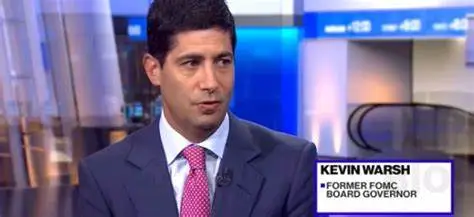
Powell is likely eager for retirement, slated for May 2026. The president does not have the power to fire the chairman, but he does have the authority to appoint the next one. Fed governor Kevin Warsh, National Economic Council Director Kevin Hassett, economist Art Laffer, and Larry Kudlow are all potential contenders for the job based on reports. Some believe Warsh is the frontrunner for the role, and Warsh himself advised Trump not to fire Powell before his term was due to expire.
Kevin Warch is an academic without real trading experience who has been part of the revolving door between Wall Street and Washington. Warsh, 55, has a hawkish stance on inflation, and although he backs Republican priorities such as reduced taxation and deregulation, he does not fully support Trump’s stance on how the Fed should operate.
Warsh served as a Federal Reserve governor from 2006 to 2011, and failed to see the underlying risks that would lead to the 2008 Great Recession. Warsh played a direct role in the negotiations that would later lead to the Lehman Brothers’ downfall, supporting the decision to allow Lehman to fail, spurring global financial panic. “The die was already cast” before bankruptcy, Warsh told CNBC. He failed to grasp the global nature of this decision, which was not a surprise but a deliberate choice to allow the firm to fail.
He was against the central bank’s QE policies in 2010 and warned that it would not aid in economy recovery. He resigned from the Fed’s Board of Governors in 2011 after opposing plans to purchase $600 billion in bonds to push more money into the US economy. Warsh blamed the central bank for enabling reckless government spending during the pandemic by excessively printing money. He sided with Trump in pointing blame at the Fed for permitting inflation to rise in the post-COVID economy. Warsh still believes in managing the economy through intervention, rather than letting the business cycle play out naturally. Tinkering with the system only causes the cycles to become more volatile.
May 7, 2026, is the next major target on the ECM–8.6 years from the August 2017 turning point, and two years from the critical May 2024 benchmark we just passed. Something historic is brewing for May 2026.
Posted originally on Apr 18, 2025 by Martin Armstrong
While the press bashes Trump over the tariffs and trade war, they continue to ignore the facts and will always take the opposite position from Trump. If Trump said he wanted everyone to live an extra 5 years to help the economy because of declining birth rates, the Press would advocate mass suicide like Jim Jones’ Jonestown, just to prevent anything Trump does.
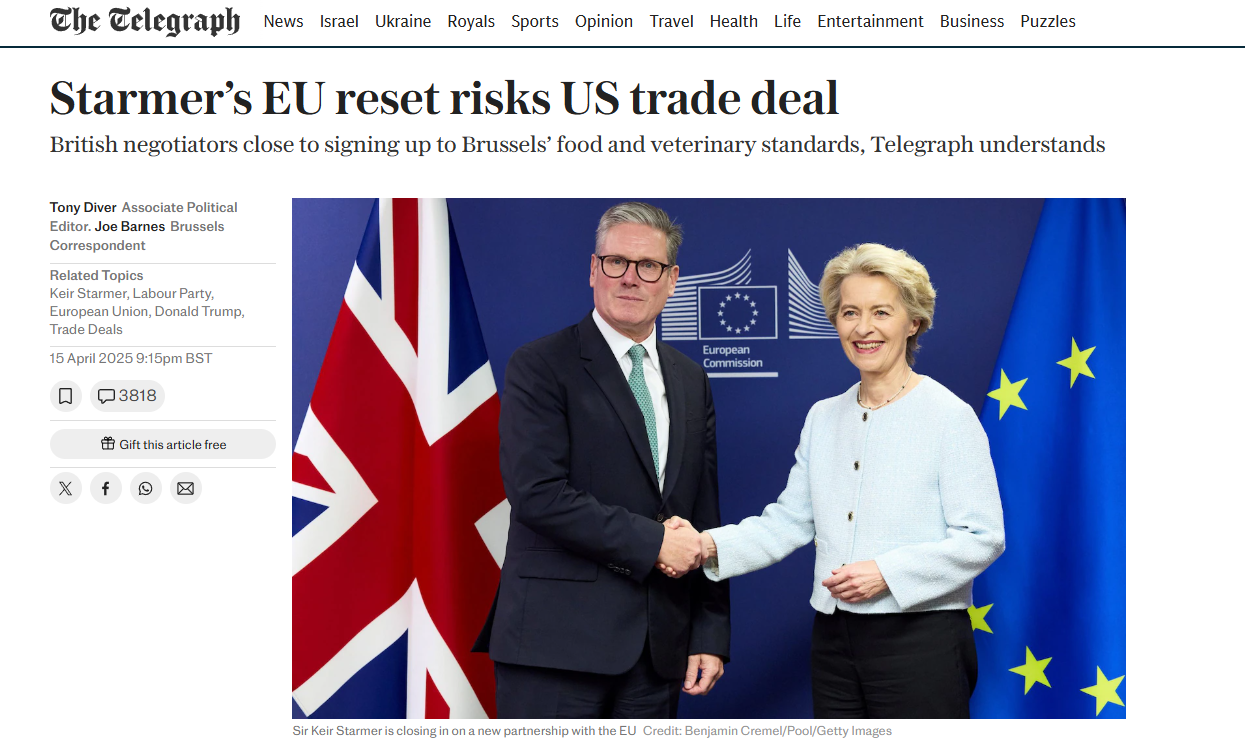
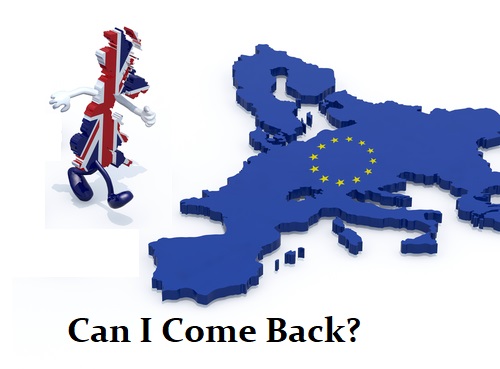
Starmer, the good Marxist follower, wants to reverse BREXIT, but knows that would be difficult. So he wants to join in trade and adopt all the regulations that the EU imposes, that has suppressed their economy from ever growing. As I have said, out of every $10 spent by consumers globally, the EU accounts for only $1.20 – a fraction of America, despite having 450 million people compared to the USA’s 330 million.
Even on a purely economic basis, Starmer is turning his back on the USA, which has a consumer market more than twice the size, for more regulations that will reduce trade with the USA. This is clearly not an economic decision – this is a Marxist political decision. Starmer is fulfilling our long-term forecasts. This year was a Directional Change, and next year is a Panic Cycle.
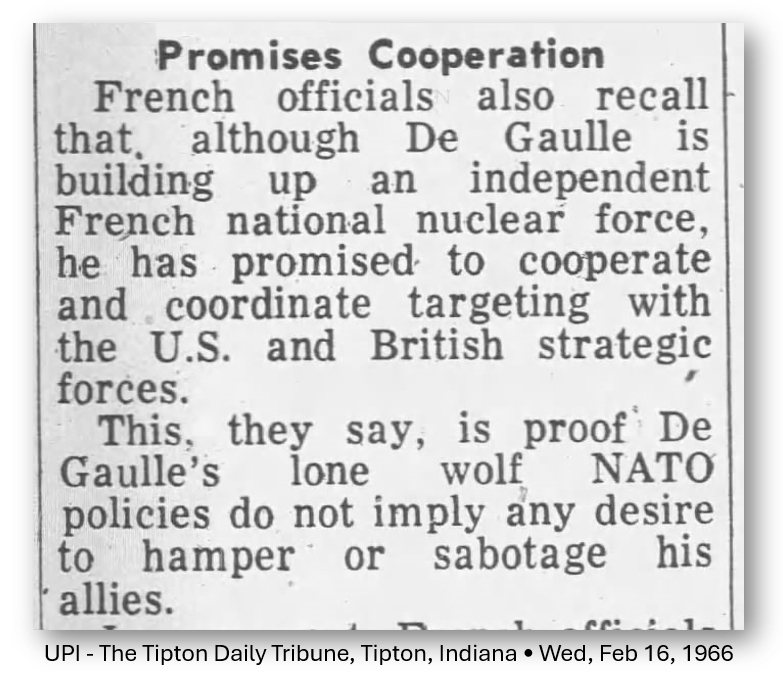
Europe has historically been the most hostile when it comes to trade. They cling to Marxism, and when they can’t justify tariffs, they regulate against allowing American products in. When Charles de Gaulle in 1966 said no American/NATO nukes in France, and he ordered all American military personnel to leave France, they asked if that applied to the dead Americans buried there to free France. This has been the position of the French elites. They still view the world as speaking French if Napoleon had won. They have not gotten over that.
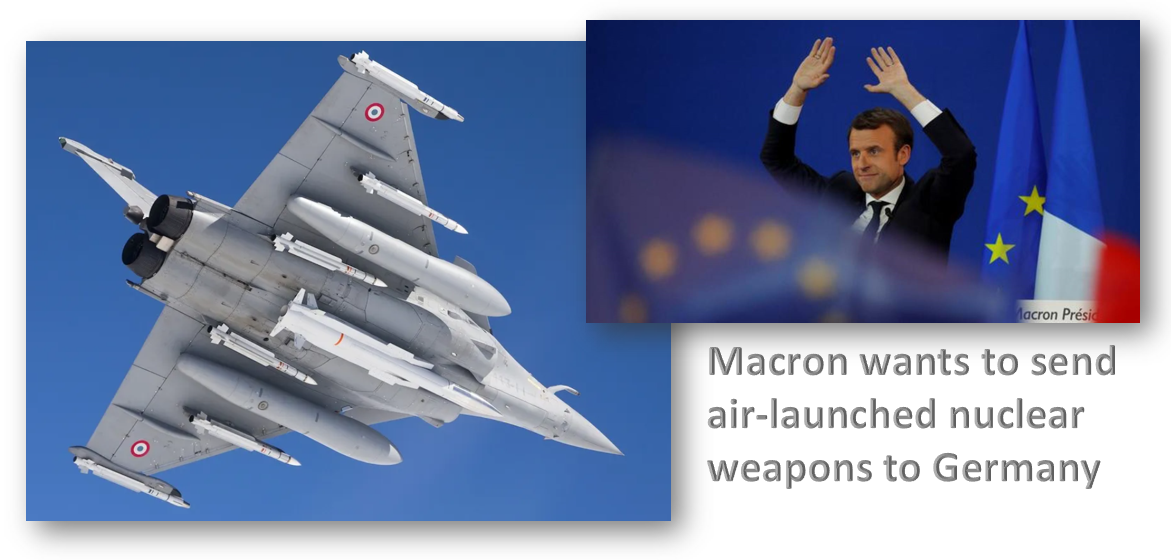
To this day, Macron is the most hostile, and he wants France to replace the United States, offering their nuclear power to shield Europe from Russia. This is why Macron was the first to say he wanted to send troops into Ukraine, knowing that would start World War III.
The European Union (EU) does not impose a blanket ban on all food and veterinary products from the United States. However, it does enforce strict regulations that can result in restrictions or prohibitions on specific products that do not meet EU standards. Key points include:
Hormone-Treated Beef: The EU prohibits beef from cattle treated with growth-promoting hormones, a common practice in the U.S. This has been a longstanding trade dispute.
Chlorine-Washed Poultry: The EU bans poultry treated with antimicrobial rinses (e.g., chlorine washes), favoring stricter farm-to-table hygiene controls instead.
GMOs (Genetically Modified Organisms): The EU requires rigorous authorization and labeling for GMO products, limiting some U.S. agricultural exports unless approved.
Ractopamine in Pork: The EU prohibits meat from animals treated with ractopamine, a feed additive used in the U.S. to promote lean muscle growth.
Veterinary Medicines: Restrictions apply to certain antibiotics and hormones used in livestock for non-therapeutic purposes, aligning with the EU’s precautionary principle and emphasis on animal welfare.
Mutual Recognition Agreements (MRAs): Since 2019, some veterinary products are covered by MRAs, easing trade for compliant products. However, U.S. exporters must still meet EU standards.
These measures reflect differences in regulatory philosophies that are used in reality as trade barriers. The EU prioritizes its regulations, knowing that there are different standards internationally. Trade negotiations (e.g., TTIP) have sought to bridge these gaps but with limited success. The restrictions are not actually becoming outright bans by requiring compliance with EU rules, which are stringent to prevent trade that pretends it is not the goal.
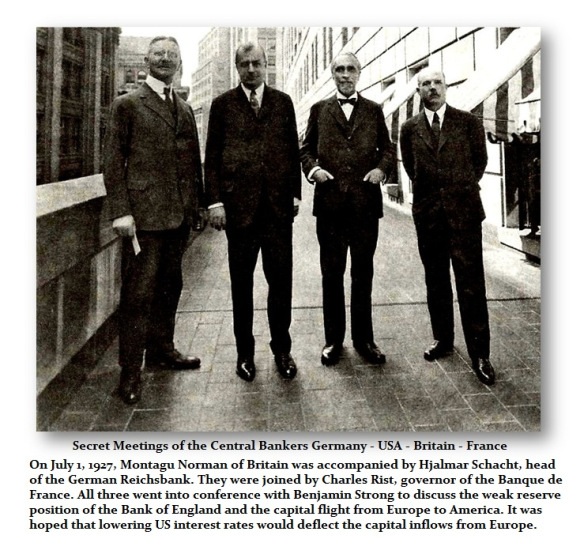
After World War I, European countries began imposing high tariffs in the early 1920s as part of a broader shift toward economic protectionism, driven by postwar reconstruction challenges, political instability, and efforts to shield domestic industries. France implemented significant protectionist measures, particularly through the 1927 Tariff Law (Loi du 3 août 1927), which marked a major shift toward economic nationalism. This law replaced the earlier Méline Tariff of 1892. It was enacted in response to post-World War I economic challenges, including the need to protect domestic industries and agriculture from foreign competition. At the same time, France was pushing the United States Federal Reserve to lower interest rates (G4) in an attempt to reverse the capital inflows to the United States.
The tariff increases were enacted in 1927, though France had maintained generally protectionist policies throughout the 1920s. The 1927 law formalized and expanded these measures sharply. The 1927 tariffs were part of a broader European trend toward protectionism in the interwar period. The 1927 law introduced a flexible tariff system, allowing the government to adjust rates based on reciprocal trade agreements or retaliation against foreign protectionism. Tariffs were applied differentially, with higher rates on agricultural goods (to protect French farmers) and certain industrial products.
France’s Agricultural products saw the implementation of tariffs on items like wheat, meat, and wine. These rose significantly, with some rates exceeding 30% (e.g., wheat tariffs increased to protect against cheaper imports from Eastern Europe and the Americas). The Industrial goods saw rates that were less restrictive yet still varied widely, targeting textiles and machinery. These sectors saw tariff rates between 15% and 25%, depending on the product and origin.
France also combined tariffs with import quotas (e.g., for coal and steel) to shield its economy further. Overall, France has always been the most protectionist of all European nations. Its cost of living is above average in the EU. According to Eurostat’s 2022 data, France’s price level index (with the EU average set at 100) was 116.5, placing it above the average but below several other EU countries. This compares to Denmark (141.7), Ireland (138.7), Luxembourg (134.0), Sweden (128.9), and Finland (123.3). The devil is in the details. While Paris is one of the EU’s more expensive cities to live in, the national average is lowered by cheaper costs in other regions.
The 1927 law made France one of the most protectionist economies in Europe by the late 1920s. While this was effective in shielding domestic sectors, these policies contributed to reduced international trade and economic fragmentation, exacerbating global tensions, leading to the Great Depression, and the US response in June 1930 by the Smoot-Hawley Act.
In the United Kingdom, there was the 1921 Safeguarding of Industries Act, which imposed tariffs on “key industries” like chemicals and optical goods deemed vital for national security. This was Post-WWI Economic Struggles, in which Britain lost the status of the Financial Capital of the world to New York. After the war, Britain faced industrial decline, unemployment, and foreign competition. Key industries critical during the war (e.g., chemicals, optics, scientific instruments) were all at risk of collapse. The Brits raised the National Security concerns of over-reliance on foreign imports for strategic goods, and this was the argument to impose tariffs to try to resurrect their industries.
Tariffs on Imports under this act imposed a 33.3% tariff on imported goods in strategic sectors, including chemicals, optical glass, and scientific instruments. This aimed to make foreign products less competitive and protect British industries. They also targeted industries that they deemed vital for national defense and economic resilience, reflecting lessons from wartime shortages. The Act was passed under Prime Minister David Lloyd George’s coalition government, though it aligned more with Conservative Party tendencies toward protectionism, marking a shift from Britain’s traditional free-trade stance.
The Act had mixed results at best. While it provided temporary relief for protected industries, critics argued it was too narrow, benefiting only specific sectors. Consumers faced higher prices, and retaliatory tariffs from other countries harmed British exports. The limited scope initially covered 6,000 items but was seen as insufficient to address broader industrial decline. Amendments in 1925–1926 expanded coverage to include more goods like lace and gloves. This Act shifted toward protectionism as Britain abandoned free trade, foreshadowing more extensive protectionist policies during the 1930s that followed the 1932 Import Duties Act, which expanded tariffs to most imports (except from the British Empire), formalizing protectionism during the Great Depression.
In the United States, the strong dollar resulted in making foreign goods cheap. The 1921 Act in Britain led to the US response in 1922. The Fordney-McCumber Tariff of 1922 was a significant piece of U.S. legislation that raised tariff rates on imported goods to protect American industries in the aftermath of World War I. It was signed into law by President Warren G. Harding in September 1922. Republican Congressman Joseph Fordney and Senator Porter J. McCumber have sponsored it. This reversed the lower tariffs of the 1913 Underwood Tariff. The tariff increases: did elevate import duties to historically high levels (averaging about 38.5%), targeting both agricultural and industrial goods to shield domestic producers from foreign competition due to the strong dollar. This tariff provided a flexible authority granted to the president, allowing him to adjust tariff rates by up to 50% based on recommendations from the U.S. Tariff Commission, although this flexibility was rarely used.
While tariff hikes began in the early 1920s (e.g., the UK in 1921), they did not prevent the bull market, nor did they prevent the Great Depression. This protectionist spiral fragmented global trade and worsened the Great Depression, but certainly did not create the economic crisis.
Posted originally on Apr 18, 2025 by Martin Armstrong
Socrates has honed in on 2025 becoming a year of great stagflation in the United States. The Federal Reserve has finally admitted that the data is undeniable—the United States will experience stagflation.
The economy is declining but prices are rising. Most understand inflation, especially in the post-COVID world, but few understand stagflation. Stagflation is when you have high inflation and stagnant economic growth at the same time. Normally, inflation is supposed to go hand in hand with rising demand and growth. But during stagflation, prices go up even though the economy is barely moving.
“Powell said the president’s tariffs announced so far had been ‘significantly larger than anticipated’, adding that ‘the same was likely to be true of the economic effects, which will include higher inflation and slower growth’,” as reported by every major media outlet. Powell “later added that those economic effects may place US rate setters ‘in the challenging scenario in which our dual-mandate goals are in tension’. The Fed’s dual mandate is to maintain the target 2% inflation while encouraging “maximum” employment levels.
“Maximum” employment is simply not possible during a period of stagflation. Investments dry up, confidence collapses, and businesses face higher costs in every area from wages to materials. Consumers lose purchasing power and are less likely to purchase nonessential goods at inflated prices, affecting business revenue and overall GDP. This then forces businesses to cut back on hiring instead of focusing on expansion. Many businesses will be unable to maintain large workforces if the revenue is not there.
The FOMC members seem to agree that stagflation is inevitable, although some argue about how long it will last. “Several Fed officials — including John Williams, head of the New York Fed, and Governor Christopher Waller — have said inflation is likely to surge in the coming months on the back of the administration’s proposed tariffs. While Waller thinks the impact of tariffs will prove short-lived, other members of the rate-setting Federal Open Market Committee, which Powell chairs, believe Trump’s tariffs have increased the odds that inflation will be a longer problem for US consumers.”
Now the central bank has maintained interest rates at 4.25-4.5% this year. Everyone is holding their breath for the Fed’s May announcement, but there is very little that the Fed can do here. Capital investment depends on confidence. Our models have honed in on May 19, 2026, as a major turning point in confidence where the next Panic Cycle will begin, and unfortunately, confidence will decline into 2028.
Posted originally on Apr 16, 2025 by Martin Armstrong
QUESTION: We all know who copies your work and pretends it is his. He is out now scaring the world that the dollar is going to crash, for the Chinese are selling dollars. You are the only person with a real database. What is your view on the dollar?
WKN
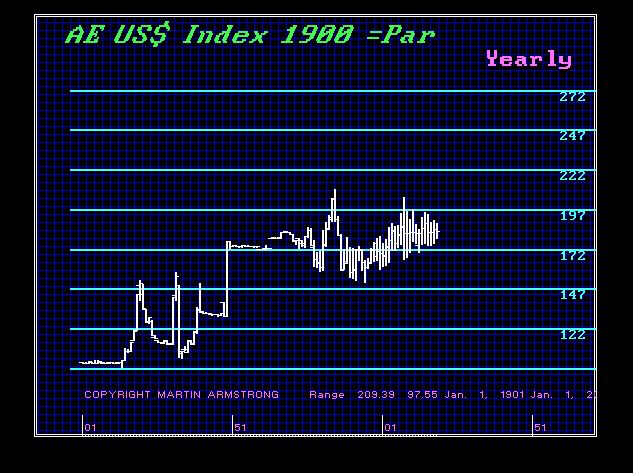
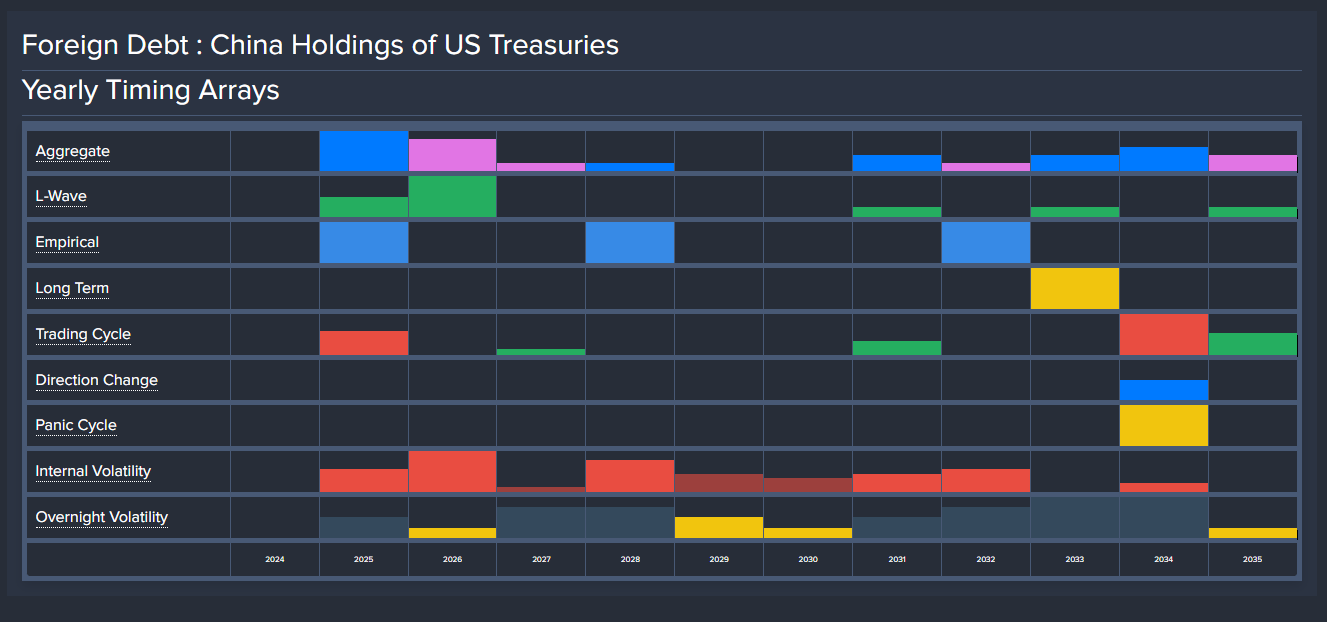
ANSWER: I know who you are talking about. I get emails about him all the time. He likes the notoriety but lacks the staff or the database to provide his self-proclaimed forecasts. I will provide the specifics on the private blog. However, April has been our target for many months. The often people out there constantly calling for the demise of the dollar are MORONS. They never look outside of the United States. They may be claiming that China is dumping dollars, but they began liquidating US debt in the tens of billions in 2013, and accelerated that because of Biden’s Neocons post-2022. They pretend this is something new, all because of Trump. They make it sound like they are on top of this, but where have they been since 2013?
Trump is fulfilling the cyclical forecast. We have been expecting a sell-off into 2025, which has been the biggest target identified by our computer for the past few years. I have conveyed my concerns to people in Congress. I am not so sure this does not just go over everyone’s head. The volatility will rise even further next year. If we penetrate the 2025 low next year, then this selling of US debt will continue into 2030, if not into 2032. That will be because NATO launches its contrived war against Russia and utterly destroys the European economy and extinguishes the EU.
Posted originally on Apr 8, 2025 by Martin Armstrong
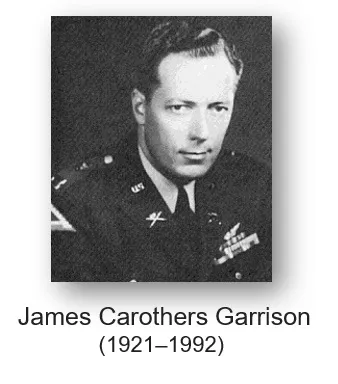
James Garrison served in the U.S. Army Air Forces during World War II, joining the year before the Japanese attack on Pearl Harbor. Jim Garrison’s military career trained him as a pilot and was assigned to the 8th Air Force in Europe. He flew reconnaissance missions over Nazi-occupied territories, contributing to intelligence-gathering efforts. His role involved photographing enemy positions and assessing bomb damage. By the end of the war, he attained the rank of lieutenant and was honorably discharged.
After WWII, Garrison joined the Louisiana National Guard while pursuing his legal education at Tulane Law School (graduated 1949). He remained in the National Guard throughout the 1950s, rising to the rank of lieutenant colonel. He retired from military service in 1957 to focus on his legal and political career. After the war, he obtained a law degree from Tulane University Law School in 1949. He then worked for the Federal Bureau of Investigation (FBI) for two years, stationed with the Seattle office.
His military experience informed his leadership style, but did not directly overlap with his later role as District Attorney of New Orleans (1962–1973). Garrison is better known for his controversial investigation into President John F. Kennedy’s assassination, which overshadowed his military contributions. Garrison’s military career demonstrated a commitment to service, though it remains a lesser-known aspect of his life than his legal and political endeavors.
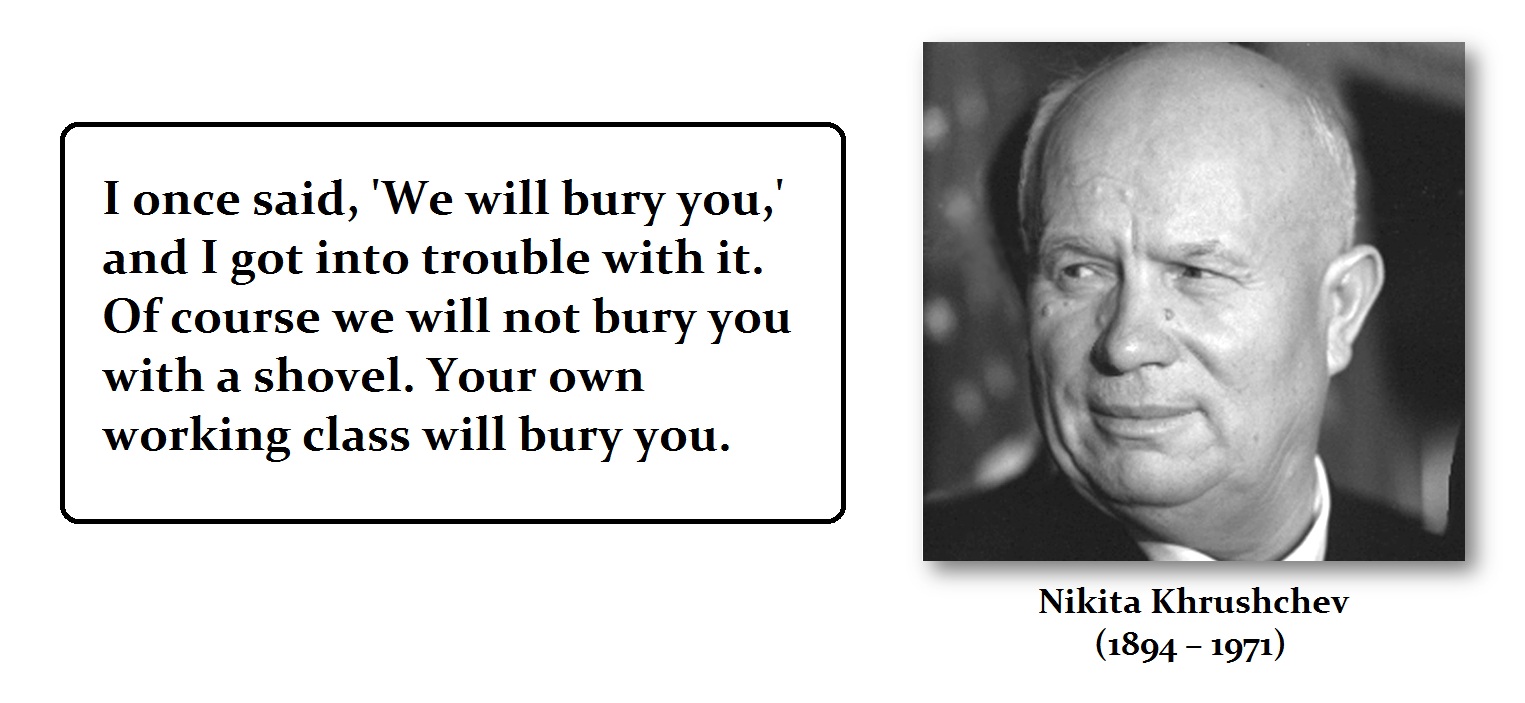
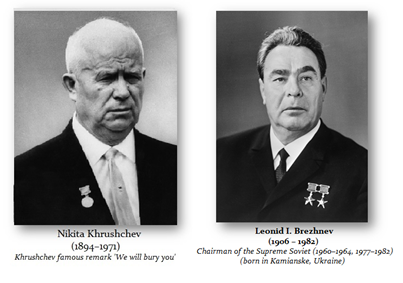
Jim Garrison stepped into the middle of the Neocons’ nest of corruption. During the 1960s, they were scheming to get us to (1) invade Cuba, and (2) invade Vietnam. In both cases, they assumed the Russians were behind both and with all of their conspiracy theories that Russia was trying to destroy the United States, thanks to Kruschev’s boast We will bury you, which launched their attempt to seize control of the United States’ foreign policy.
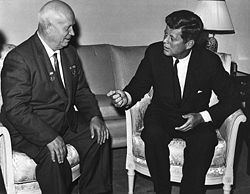
President Kennedy violated the NEOCON FIRST RULE – NEVER TALK TO A RUSSIAN!. Kennedy and Khrushchev first met at the Vienna Summit in June 1961. Before meeting face to face, their contact began when Khrushchev sent Kennedy a message on November 9, 1960, congratulating him on his presidential election victory and stating his hope that “relations between [the US and USSR] would again follow the line along which they were developing in Franklin Roosevelt’s time.”
There were some Russians who were anti-Khruschev and risked their lives to inform the US about his plans for Cuba and what became known as the Cuban Missile Crisis of 1962. What the Neocons ignored was that there was a coup in Russia to overthrow Khruschev. They hated all Russians, no matter what.
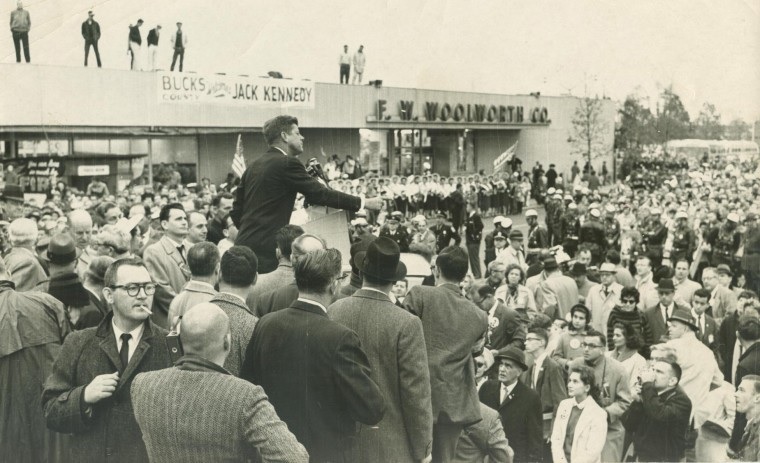
I was just 10 years old when my father took me to Willingborough, New Jersey, during the 1960 campaign to listen to JFK. I shook his hand, but unlike Bill Clinton, that did not make me want to become president. I remember the hatred of those days. First, it was that the Pope was going to run the United States because he was Catholic. Then later, I remember people calling him a traitor for meeting with Khruschev.
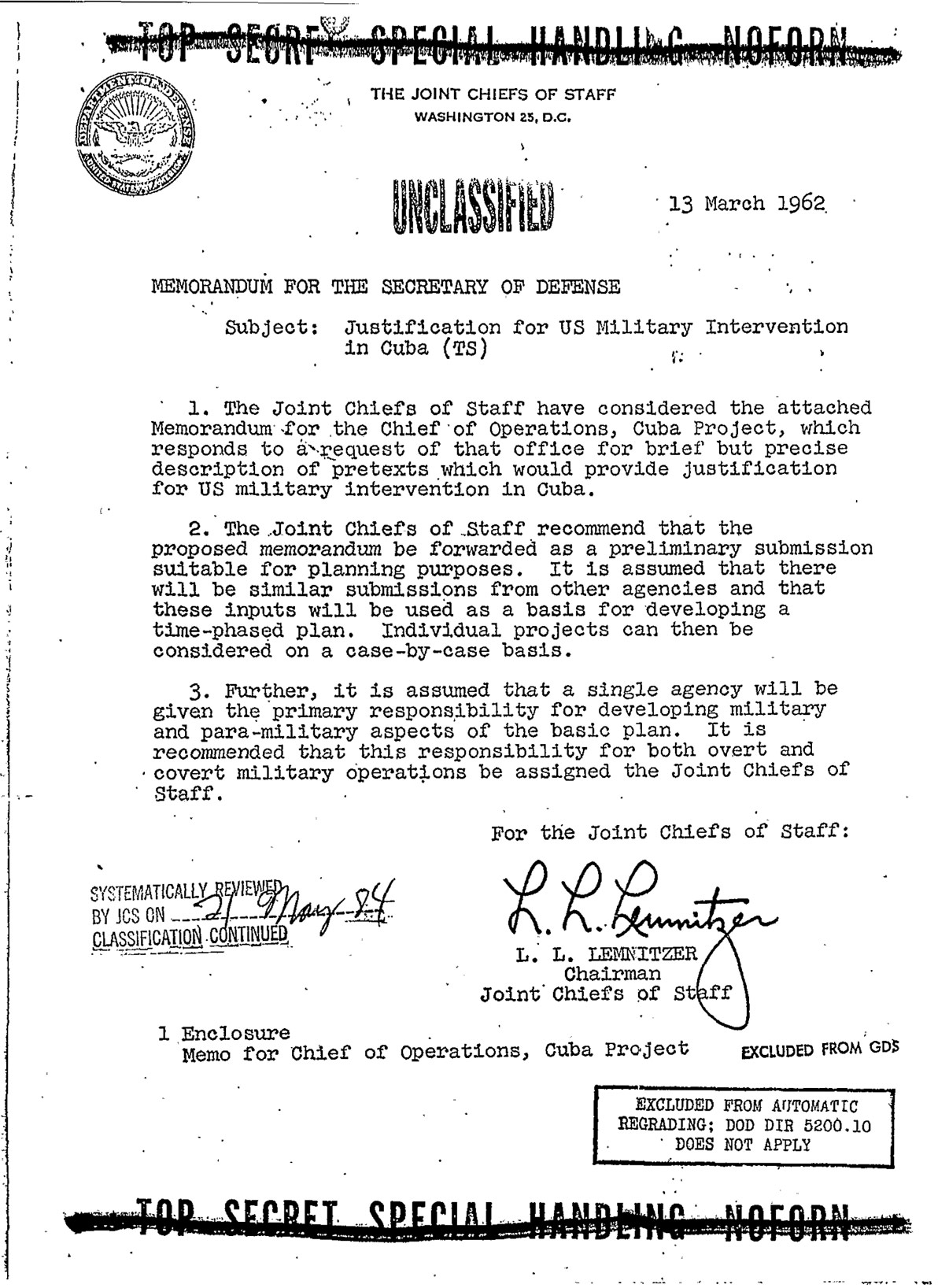
Then the CIA proposed on March 13th, 1962, to kill Americans to create a false flag to blame Cuba to justify an invasion. This was Operation Northwoods. JFK concluded that these Neocons were deranged, evil, and had no problem killing people to create war. He wanted to terminate the CIA. The CIA was pulling off covert operations that were never authorized. Established in 1961 by President John F. Kennedy to unite several foreign assistance organizations and programs under one agency, statute law places USAID under “the direct authority and policy guidance of the Secretary of State.”
The goal of this agency was to counter Soviet Union influence during the Cold War and to advance U.S. soft power through socioeconomic development. USAID was subsequently established by the executive order of President John F. Kennedy, who sought to unite several existing foreign assistance organizations and programs under one agency. Anyone dealing with Washington has always heard that this was a mega slush fund. It started with the CIA, but the Democrats used it to promote their Marxist agenda. Kruschev was right, our enemy would come from within. Despite Marxism failing every time, the Democrats still preach the class warfare hatred of Karl Marx.
Video Player
00:00
00:23
Then, on June 10th, 1963, after the Cuban Missile Crisis, Kennedy made what has been called his Peace Speech. That seemed to have been the turning point when I would hear people talking, calling him a traitor. Then, about 5 months later, the Neocons assassinated JFK. John F. Kennedy, the 35th president of the United States, was assassinated while riding in a presidential motorcade through Dealey Plaza in Dallas, Texas, on November 22nd, 1963
Beginning in March 1964, Supreme Soviet presidium chairman and thus nominal head of state Leonid Brezhnev began plotting Khrushchev’s removal with his colleagues. Brezhnev had initially considered having Khrushchev arrested for treason. Cooler heads prevailed, and it was decided that persuading members of the Central Committee to support the ousting of Khrushchev was the better choice to avoid civil war. Khrushchev was absent from Moscow between January and September 1964, allowing the dissent to fester inside Moscow.
Garrison said in response to an NBC program that was highly critical of his pursuit of the alleged Kennedy assassination conspirators in New Orleans. On July 15, 1967, NBC allowed Garrison to give that response on the air.
Oliver Stone’s famous film, JFK, followed the prosecution of Jim Garrison and the tremendous effort to cover up the assassination of Kennedy and the immense effort to exonerate the CIA and maintain that Oswald was a lone shooter. Oliver Stone did a second film, a documentary, JFK Revisited.
The day after Kennedy was assassinated, Johnson had a meeting about going to war in Vietnam, all because the Neocons assumed that Russia was behind that. Robert McNamara, before he died, apologized, saying that they were wrong – it was just a civil war, and Russia was not involved.
Some say there is an unanswered question about the following timeline:
On March 1, 1967, Garrison arrested and charged New Orleans businessman Clay Lavergne Shaw with conspiring to assassinate President Kennedy, with the help of Lee Harvey Oswald, David Ferrie, and others.
On July 15, 1967, NBC allowed Garrison to give his response to NBC’s critical program about him.
On January 29, 1969, Shaw was brought to trial in Orleans Parish Criminal Court.
On March 1, 1969, a jury took less than an hour to find Shaw not guilty.
The question is, when did NBC obtain the evidence that Oswald could not have shot Kennedy, because NBC has a photo showing Oswald on the street at the time shots rang out? If that evidence was in the hands of NBC before July 15, 1967, then NBC let Garrison perform a dog and pony show when he gave his response to NBC’s “highly critical” program about him on air on July 15, 1967. If NBC obtained the evidence after July 15, 1967, but before January 29, 1969, it withheld crucial evidence from a criminal trial and thereby acquired every bad attribute, badge, and brand that anyone who withholds evidence must bear forever – obstruction of justice involving the assassination of a president.
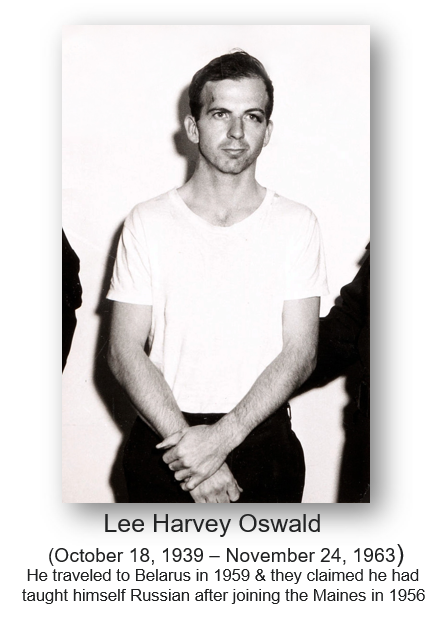
After JFK’s assassination, Marina cooperated with authorities, including the Warren Commission. She testified that Lee owned a rifle resembling the murder weapon and acknowledged his pro-Castro sentiments and erratic behavior. Her testimony contributed to the Commission’s conclusion that Oswald acted alone.
Expressed Doubts Over Time:
In subsequent years, Marina began to express doubts. She questioned whether Lee could have acted alone and suggested the possibility of a conspiracy. In her 1978 book “Marina and Lee” and interviews, she speculated about external influences or a setup, though she did not outright deny his involvement.
Later Statements:
By the 1990s and 2000s, Marina continued to voice skepticism about the official narrative, emphasizing gaps in evidence and the plausibility of a broader plot. However, she stopped short of definitively exonerating Lee, often maintaining ambiguity about his exact role.
–
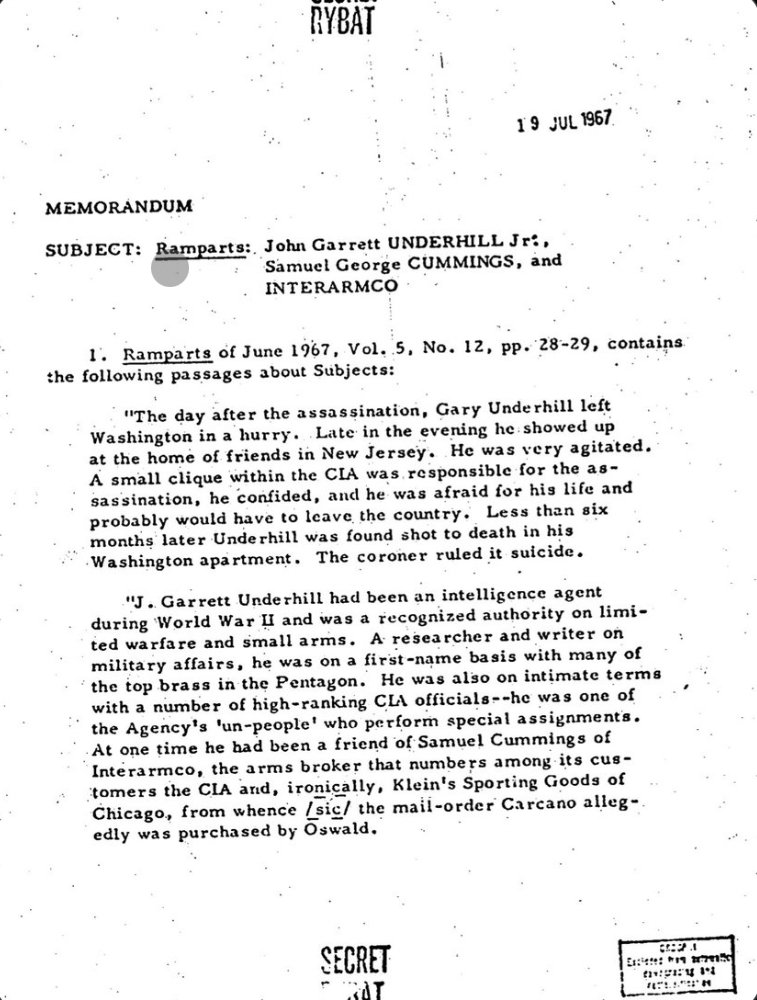
One document that the CIA has been hiding is the Gary Underwood document that states plainly that the CIA ASSASSINATED Kennedy. The reason this is important is that the Neocons are still running the show, lie about everything, and are in complete control of Europe, and are moving to achieve their ultimate goal – the total destruction of Russia, which is not fulfilling Ukraine’s ethnic cleansing of all Russians.
For example, Stone’s 1991 film “JFK” faced harsh pushback from historians for its suggestions that Kennedy’s death was the result of high-level conspiracies. Here, Oliver Stone appears after the most recent testimony before Anna Paulina Luna’s commission.
Conclusion:
Marina Oswald never categorically denied Lee’s involvement but evolved from initial cooperation with the official investigation to expressing persistent doubts about the lone-gunman theory. Her later remarks leaned toward skepticism, hinting at conspiracy possibilities without entirely absolving her husband.
World War III is unfolding before our eyes because the Neocons have been protected since the JFK assassination!
Posted originally on Apr 7, 2025 by Martin Armstrong
QUESTION: Mr. Armstrong, you have said that we have lost manufacturing because of taxes rather than tariffs. I believe you also said that a trade deficit is not a bad thing under your capital flow analysis. Can you please explain this? The press seems to say the opposite, but they are political fake news.
Thank you
GG
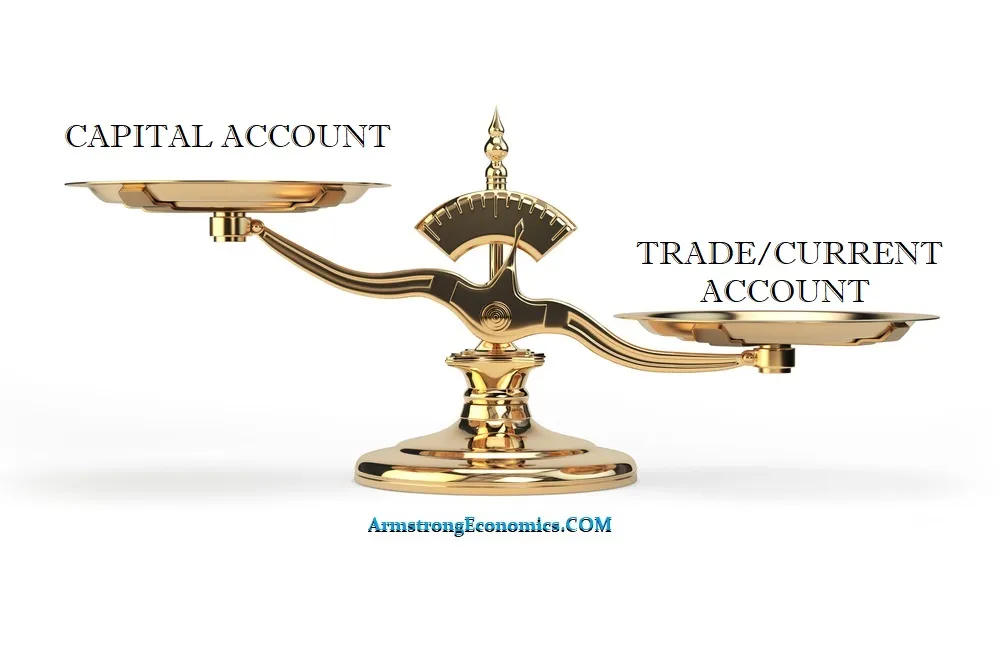
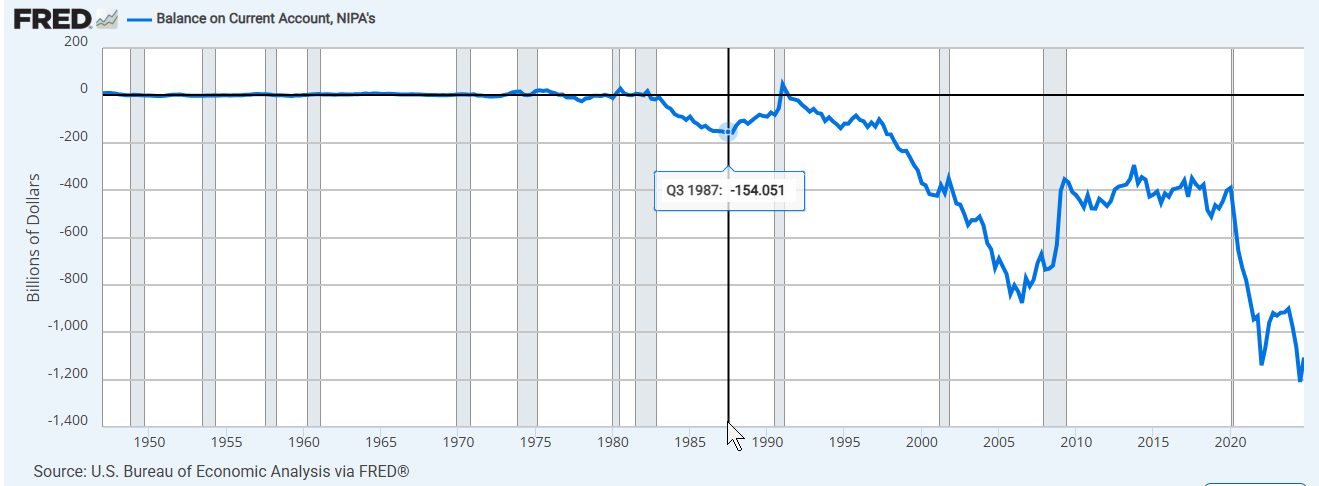
ANSWER: There are two account balances: the capital account and the trade/current account. Just because we have a trade deficit does not mean that it is negative for the economy. That is offset by the capital account, which is money coming in that is (1) foreign capital investing in the USA, from treasuries, shares, to real estate, and (2) US companies bringing capital home. Under Ronald Reagan, we had a rising trade deficit, but the economy was booming.
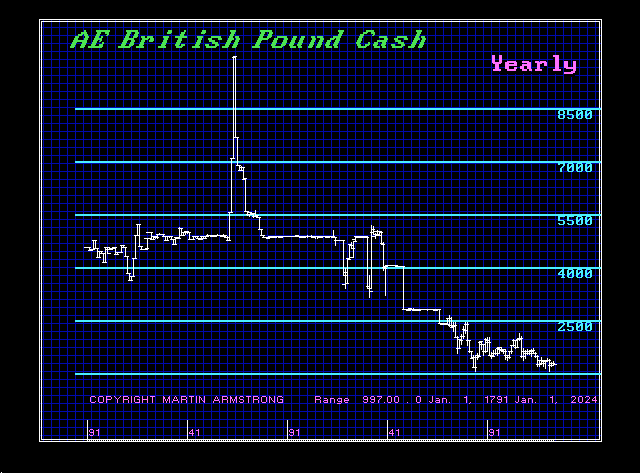
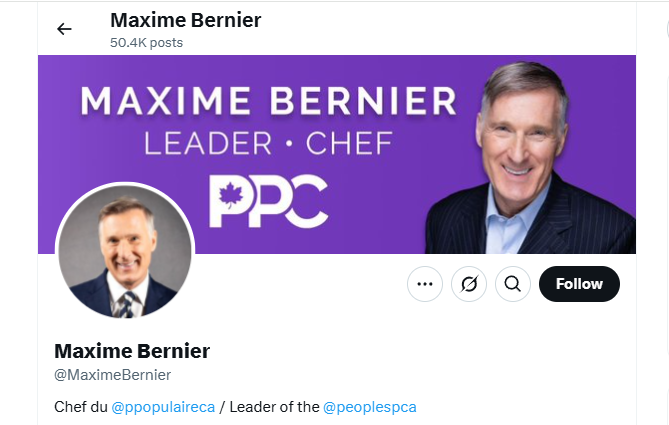
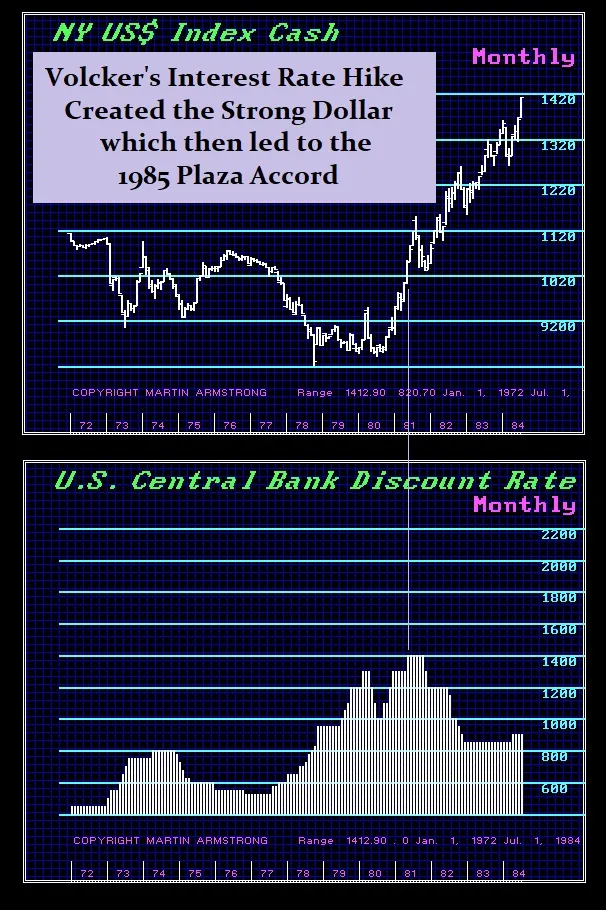
Volcker’s insane interest rates attracted foreign capital, causing the dollar to rise dramatically and sending even the British pound to nearly par in 1985. As the dollar rose, that brought down inflation, but it attracted foreign capital inflows. Interest expenditures flow through the current account when they flow outside the USA. That had nothing to do with goods or even services. It was interest payments on the debt.
The corporate tax rate in Michigan is a flat rate of 6% on federal taxable income (with certain adjustments) for C-corporations under the Corporate Income Tax (CIT), which replaced the Michigan Business Tax in 2011. The City of Detroit imposes a corporate income tax on businesses operating within its jurisdiction, a 2% tax on net income for corporations, and Michigan’s state corporate income tax rate of 6%.
If you look at where the US manufacturing hubs were, the local and state income taxes on top of federal taxes were the primary cause for manufacturing fleeing the USA. Add the fact that the Supreme Court ruled that because the federal income tax did not expressly exempt overseas income, that stupid decision meant Americans were subject to worldwide income on every level. I left New Jersey because if I held a conference in Hong Kong, I had to pay New Jersey 10% on top of the Feds for what? We held a conference in Philadelphia, and never again would I ever hold one there, for then I had to pay Philadelphia taxes, although I did not live or work there.
The Democrats make it sound like these corporations are greedy, and they go offshore because they get to pay $10 an hour instead of $20. That is the LEAST of the problem. It is always the taxes. You need accountants, and then lawyers, all to make sure to have crossed every “t” and dotted every “i” and all of these expenses are far more than anything you pay an employee. Now the latest is auditing you to see if you have “contract” employees instead of employees, since you do not take out taxes and match taxes on a contract employee. I just went through that audit, and it cost me $25,000 IN LEGAL AND ACCOUNTING FEES to prove I did not owe anything.
When the government looks in the mirror, it sees itself as all-powerful. It has no idea about humanity. It’s always about them and never the people. Just look at all the states where manufacturing used to be. They left, and it was not because they were paying someone else cheaper wages. The Democrats have blamed the “rich” and corporations for the damage that they have done to society, all for their corruption and greed.
The current account of the United States is a critical component of its balance of payments, reflecting the nation’s economic interactions with the rest of the world. It comprises four main elements. As you look at this list, you will see what I am talking about that this is by no means simply goods and services. All dividends, interest, and profits from multinational corporations that flow out to foreign investors. Thus, selling US Treasuries to foreigners expands the “trade” deficit as interest is paid. Since China has 10% of the US national debt and interest expenditures of $1 trillion, in theory, we send them $100 billion in interest. Tariffs are not going to reduce that, but they could result in selling domestic assets and returning that investment home, which would then go through the Capital Account, reducing the Trade/Current Account Deficit. The Press and even most Congressmen do not understand this.
1. Trade in Goods and Services (Net Exports)
Goods:
Exports: Physical products sold abroad (e.g., machinery, aircraft, agricultural goods).
Imports: Physical products purchased from other countries (e.g., consumer electronics, oil, automobiles).
The U.S. typically runs a trade deficit in goods due to high imports.
Services:
Exports: Financial, educational, tourism, and intellectual property services provided globally.
Imports: Services purchased from abroad (e.g., foreign travel, software licensing).
The U.S. often has a surplus in services, partly offsetting the goods deficit.
2. Primary Income (Net Income from Abroad)
Investment Income:
Earnings from U.S.-owned foreign assets (e.g., dividends, interest, profits from multinational corporations).
Payments to foreign owners of U.S. assets (e.g., interest on Treasury bonds held by foreign governments).
Compensation of Employees:
Wages paid to foreign workers in the U.S. (outflow).
Wages earned by U.S. residents working abroad (inflow).
3. Secondary Income (Net Current Transfers)
Government Transfers:
Foreign aid, grants, and donations (e.g., U.S. financial assistance to other countries).
Private Transfers:
Remittances sent by foreign workers in the U.S. to their home countries (outflow).
Gifts or inheritances received from abroad (inflow).
Current Account Balance
The sum of these components determines whether the U.S. has a surplus or deficit:
Deficit: The U.S. has run a persistent current account deficit, driven by:
A large goods trade deficit (imports > exports).
Outflows from secondary income (e.g., foreign aid, remittances).
Partial offsets come from services surpluses and primary income (e.g., returns on U.S. overseas investments).
Key Implications
Reflects the U.S. role as a net borrower globally, financing consumption and investment through foreign capital inflows.
Highlights structural economic factors, such as reliance on imports and the dollar’s role as a reserve currency, and exporting dividends and interest on US investments.
Posted originally on Apr 7, 2025 by Martin Armstrong
QUESTION: Mr. Armstrong, you have said that we have lost manufacturing because of taxes rather than tariffs. I believe you also said that a trade deficit is not a bad thing under your capital flow analysis. Can you please explain this? The press seems to say the opposite, but they are political fake news.
Thank you
GG
ANSWER: There are two account balances: the capital account and the trade/current account. Just because we have a trade deficit does not mean that it is negative for the economy. That is offset by the capital account, which is money coming in that is (1) foreign capital investing in the USA, from treasuries, shares, to real estate, and (2) US companies bringing capital home. Under Ronald Reagan, we had a rising trade deficit, but the economy was booming.
Volcker’s insane interest rates attracted foreign capital, causing the dollar to rise dramatically and sending even the British pound to nearly par in 1985. As the dollar rose, that brought down inflation, but it attracted foreign capital inflows. Interest expenditures flow through the current account when they flow outside the USA. That had nothing to do with goods or even services. It was interest payments on the debt.
The corporate tax rate in Michigan is a flat rate of 6% on federal taxable income (with certain adjustments) for C-corporations under the Corporate Income Tax (CIT), which replaced the Michigan Business Tax in 2011. The City of Detroit imposes a corporate income tax on businesses operating within its jurisdiction, a 2% tax on net income for corporations, and Michigan’s state corporate income tax rate of 6%.
If you look at where the US manufacturing hubs were, the local and state income taxes on top of federal taxes were the primary cause for manufacturing fleeing the USA. Add the fact that the Supreme Court ruled that because the federal income tax did not expressly exempt overseas income, that stupid decision meant Americans were subject to worldwide income on every level. I left New Jersey because if I held a conference in Hong Kong, I had to pay New Jersey 10% on top of the Feds for what? We held a conference in Philadelphia, and never again would I ever hold one there, for then I had to pay Philadelphia taxes, although I did not live or work there.
The Democrats make it sound like these corporations are greedy, and they go offshore because they get to pay $10 an hour instead of $20. That is the LEAST of the problem. It is always the taxes. You need accountants, and then lawyers, all to make sure to have crossed every “t” and dotted every “i” and all of these expenses are far more than anything you pay an employee. Now the latest is auditing you to see if you have “contract” employees instead of employees, since you do not take out taxes and match taxes on a contract employee. I just went through that audit, and it cost me $25,000 IN LEGAL AND ACCOUNTING FEES to prove I did not owe anything.
When the government looks in the mirror, it sees itself as all-powerful. It has no idea about humanity. It’s always about them and never the people. Just look at all the states where manufacturing used to be. They left, and it was not because they were paying someone else cheaper wages. The Democrats have blamed the “rich” and corporations for the damage that they have done to society, all for their corruption and greed.
The current account of the United States is a critical component of its balance of payments, reflecting the nation’s economic interactions with the rest of the world. It comprises four main elements. As you look at this list, you will see what I am talking about that this is by no means simply goods and services. All dividends, interest, and profits from multinational corporations that flow out to foreign investors. Thus, selling US Treasuries to foreigners expands the “trade” deficit as interest is paid. Since China has 10% of the US national debt and interest expenditures of $1 trillion, in theory, we send them $100 billion in interest. Tariffs are not going to reduce that, but they could result in selling domestic assets and returning that investment home, which would then go through the Capital Account, reducing the Trade/Current Account Deficit. The Press and even most Congressmen do not understand this.
1. Trade in Goods and Services (Net Exports)
Goods:
Exports: Physical products sold abroad (e.g., machinery, aircraft, agricultural goods).
Imports: Physical products purchased from other countries (e.g., consumer electronics, oil, automobiles).
The U.S. typically runs a trade deficit in goods due to high imports.
Services:
Exports: Financial, educational, tourism, and intellectual property services provided globally.
Imports: Services purchased from abroad (e.g., foreign travel, software licensing).
The U.S. often has a surplus in services, partly offsetting the goods deficit.
2. Primary Income (Net Income from Abroad)
Investment Income:
Earnings from U.S.-owned foreign assets (e.g., dividends, interest, profits from multinational corporations).
Payments to foreign owners of U.S. assets (e.g., interest on Treasury bonds held by foreign governments).
Compensation of Employees:
Wages paid to foreign workers in the U.S. (outflow).
Wages earned by U.S. residents working abroad (inflow).
3. Secondary Income (Net Current Transfers)
Government Transfers:
Foreign aid, grants, and donations (e.g., U.S. financial assistance to other countries).
Private Transfers:
Remittances sent by foreign workers in the U.S. to their home countries (outflow).
Gifts or inheritances received from abroad (inflow).
Current Account Balance
The sum of these components determines whether the U.S. has a surplus or deficit:
Deficit: The U.S. has run a persistent current account deficit, driven by:
A large goods trade deficit (imports > exports).
Outflows from secondary income (e.g., foreign aid, remittances).
Partial offsets come from services surpluses and primary income (e.g., returns on U.S. overseas investments).
Key Implications
Reflects the U.S. role as a net borrower globally, financing consumption and investment through foreign capital inflows.
Highlights structural economic factors, such as reliance on imports and the dollar’s role as a reserve currency, and exporting dividends and interest on US investments.
Posted originally on Mar 31, 2025 by Martin Armstrong
The USCongressional Budget Office is warning that the federal deficit has hit a point of no return. It is far too late to cut wasteful government spending. Politicians have kicked the can down the road for far too long and left us with a financial system held up through perpetual borrowing that cannot be reversed.
The CBO’s long-term forecast shows the federal deficit rising to 7.3% of GDP by 2055, but the figure is currently at 6.2% as of 2025 and this is an optimistic report. In contrast, the 30-year average from 1995 to 2024 was 3.9% of GDP. Public debt is projected to hit 156% of GDP by 2055, up from the 100% of GDP we face today.
Now the CBO mentioned that Trump’s tariffs could negatively impact the economy but we reached the point of no return years ago. Trump cannot be blamed for the current situation in the least. “Mounting debt would slow economic growth, push up interest payments to foreign holders of U.S. debt and pose significant risks to the fiscal and economic outlook,” the Long-Term Budget Outlook: 2025 to 2055 stated.
The Baby Boomer generation is at or nearing retirement and Social Security benefits are currently at 5.2% of GDP. The CBO believes this will reach 6.1% of GDP in 2055 but fail to recognize the fund is drying up. The Ponzi Scheme will come crashing down.
Interest expenditures alone have hit 3.2% of GDP as America. In 2024, the US spent $881 billion simple to finance its massive debt, and that figure is projected to reach $1.8 trillion by 2035. We spend more on servicing debt than we do on defense spending at this point.
Raising taxes cannot solve this massive issue, but that will not prevent the government from attempting to extort the people to cover their fiscal mismanagement. The government knows it is trapped and will continue to hold off on paying down their debt as long as possible. Worse still, other nations are decreasing their investments in Treasuries as we have seen with China and Russia. Japan is our main buyer now but they have their own colossal problems.
The debt crisis is global. America is far from the only nation facing an outright default, and as I have warned, we will see the pieces crumble one by one with America being the last frontier. This is precisely why Europe wants war because they are attempting to delay the inevitable collapse. Some believe they can confiscate Russian natural resources and save the day, but that is simply neocon fanfiction.
The ECM has pinpointed key turning points in the global economy, and the next phase of this crisis is unfolding right before our eyes. The sovereign debt crisis is inevitable, and as we approach 2028–2032, we will see capital flow away from the West once confidence in government collapses.
I have created this site to help people have fun in the kitchen. I write about enjoying life both in and out of my kitchen. Life is short! Make the most of it and enjoy!
This is a library of News Events not reported by the Main Stream Media documenting & connecting the dots on How the Obama Marxist Liberal agenda is destroying America




 Centinel2012