When It Comes to Suppressing Sexual Harassment Scandals, Bernie Sanders a Wolf in Sheep’s Clothing


Baa Baa Bernie

Judi McLeod image

Re-posted from the Canada Free Press By  —— Bio and ArchivesApril 30, 2020

When It Comes to Suppressing Sexual Harassment Scandals, Bernie Sanders a Wolf in Sheep’s Clothing

“BAA!” “BAA!, the sound of Senator Bernie Sanders as he follows, sheep-like in the suppression of Tara Reade’s sexual allegation by presumptive Democrat presidential nominee Joe Biden.

“Despite the growing uproar from many of his progressive supporters over the sexual assault allegation leveled against presumptive Democratic presidential nominee Joe Biden, Sen. Bernie Sanders, I-Vt., has remained quiet on the matter in recent days.” (Fox News, April 30, 2020)

Millennials can count on Socialist Sanders remaining on the q.t. about the Biden camp’s suppression of the Reade sexual assault allegation straight through the November 3rd election, no matter how betrayed they may feel.

The same “BAA!” “BAAs! can be heard coming from Sanders’ Squad Sister fans, Alexandria Ocasio-Cortez, Rashida Tlaib, Ilhan Omar and Ayanna Pressley.

“The only time Sanders mentioned the allegation against Biden was earlier this month during an interview with CBS, in which the Vermont lawmaker asserted that “any woman who feels that she was assaulted has every right in the world to stand up and make her claims.” But Sanders added that he did not know enough about the claims to comment further. (Fox News)

“I think that she has the right to make her claims and get a public hearing and the public will make their own conclusions about it,” Sanders said. “I just don’t know enough about it to comment further. All right.”

No, Senator Sanders, going along with the Democrat suppression of this sexual assault allegation is not “All Right”—even though you are in like flint with the Democrat Party.

“Sanders, who just days before that interview endorsed Biden’s White House bid upon dropping out of the race, has not publicly commented on the matter since. Fox News has reached out on multiple occasions to Sanders campaign officials and political aides, and has yet to receive a response.” (Fox News)

“The allegation against Biden was made by Tara Reade, a former Senate staffer, who claims that in 1993 she was asked by a more senior member of then-Sen. Biden’s staff to bring Biden his gym bag near the Capitol building, which led to the encounter in question.

“He greeted me, he remembered my name, and then we were alone. It was the strangest thing,” Reade told podcast host Katie Halper. “There was no like, exchange really. He just had me up against the wall.”

She continued: “His hands were on me and underneath my clothes, and he went down my skirt and then up inside it and he penetrated me with his fingers and he was kissing me at the same time and he was saying some things to me.”

“Reade’s claims have drawn a forceful blowback from many of Sanders’ supporters and former aides, with some calling on Biden to drop out of the presidential race and accusing Democrats of trying to suppress progressive voices within the party.

“Nick Brana, Sanders’ former national outreach coordinator, tweeted over the weekend that the Democratic National Committee should either force Biden to drop out or “admit that suppressing progressives is the true purpose of your party.”

Say what you want, but as far as the Democrat Party and its sidekick Justice Democrats are concerned, only Republicans can be accused—without proof or rule of law—as sexual predators.

Something that Brett Kavanaugh accuser Christine Blasey Ford already proved.

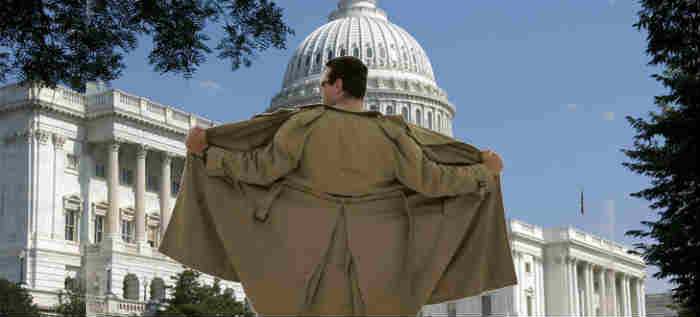
The truth is that sexual predators got a pass from Congress for 15 long years:

‘Congressmen exposing their genitals on the House floor—getting to go unnamed’ (Canada Free Press, Dec. 14, 2018)

“Why wasn’t it until it got to the stage where lawmakers in both parties agreed to move from “voluntary” support for sexual harassment awareness training to “mandatory” sexual harassment training for legislative branch staffers, and until it was revealed that “about $15 million in taxpayer dollars has been paid out by the house on behalf of harassers in the last 10 to 15 years,” that lawmakers saw fit to let their constituents in on the dirty secret that “congressmen expose their genitals and grab private parts—on the House Floor?!”

Three female reps, “Rep. Linda Sánchez (D-Calif.), “Rep. Jackie Speier (D-Calif.)  and “Rep. Barbara Comstock (R-Va.) who brought forward the charge about congressmen exposing their genitals and grabbing private parts—on the House Floor, told a tawdry tale.

The male flashers were never named and taxpayers were forced to pay for their dirty deeds.

“None of the three female lawmakers accused any of their colleagues practicing sexual harassment by name. Comstock said she heard the story secondhand and did not know the lawmaker’s identity, only that he is still a member of Congress. (CFP)

“How is it even possible that Comstock does not know the lawmaker’s identity but that he’s still a member of congress?”

“We do know there is about $15 million that has been paid out by the House on behalf of harassers in the last 10 to 15 years,” Speier revealed.

“Well, I think you do have the right to know. But right now, under the system, you don’t have a right to know,” Speier said at the time.”

“The reality is that until all Congress sexual harassers and Capitol Hill flashers are outed by name, the public can suspect all elected officials of dirty deeds.

“As of Dec. 20, 2018 Members of Congress will no longer be able to rely on taxpayer money to settle sexual harassment and sexual misconduct claims, thanks to legislation passed just this week.”

The last word against “BAA!” “BAA!” Bernie belongs to his 2016 campaign director Tezlyn Figaro:

“It’s shocking that this much time has passed and that he (Biden) is an actual nominee for president and they’re not asking the question,” Figaro told “Fox & Friends.” “If this were Donald Trump, would they treat it the same way? If this were Brett Kavanaugh did they treat it the same way? In other words, it’s politics and political agenda playing a role in objective reporting and asking the question.”

You get it Ms. Figaro. Problem is Bernie Sanders doesn’t.

Oh Dear, Kentucky Representative Thomas Massie Touches the Third Rail – Reveals DC’s Biggest Secret…


With congress saying they will not be returning to work next week, it appears Kentucky representative Thomas Massie has decided to use the opportunity to expose Washington DC’s biggest secret.  Something 99% of American voters do not understand:

Oh dear, he’s telling secrets.  You see, congress doesn’t actually write legislation.  The last item of legislation written by congress was sometime around the mid 1990’s.  Modern legislation is sub-contracted to K-Street.  Lobbyists write the laws; congress sells the laws; lobbyists then pay congress commissions for passing their laws.  That’s the modern legislative business in DC.

CTH often describes the background DC motives with the phrase: “There are Trillions at Stake.” The process of creating legislation is behind that phrase.  DC politics is not quite based on the ideas that frame most voter’s reference points.

With people taking notice of DC politics for the first time; and with people not as familiar with the purpose of DC politics; perhaps it is valuable to provide clarity.

Most people think when they vote for a federal politician -a House or Senate representative- they are voting for a person who will go to Washington DC and write or enact legislation. This is the old-fashioned “schoolhouse rock” perspective based on decades past. There is not a single person in congress writing legislation or laws.

In modern politics not a single member of the House of Representatives or Senator writes a law, or puts pen to paper to write out a legislative construct. This simply doesn’t happen.

Over the past several decades a system of constructing legislation has taken over Washington DC that more resembles a business operation than a legislative body. Here’s how it works right now.

Outside groups, often called “special interest groups”, are entities that represent their interests in legislative constructs. These groups are often representing foreign governments, Wall Street multinational corporations, banks, financial groups or businesses; or smaller groups of people with a similar connection who come together and form a larger group under an umbrella of interest specific to their affiliation.

Sometimes the groups are social interest groups; activists, climate groups, environmental interests etc. The social interest groups are usually non-profit constructs who depend on the expenditures of government to sustain their cause or need.

The for-profit groups (mostly business) have a purpose in Washington DC to shape policy, legislation and laws favorable to their interests. They have fully staffed offices just like any business would – only their ‘business‘ is getting legislation for their unique interests.

These groups are filled with highly-paid lawyers who represent the interests of the entity and actually write laws and legislation briefs.

In the modern era this is actually the origination of the laws that we eventually see passed by congress. Within the walls of these buildings within Washington DC is where the ‘sausage’ is actually made.

Again, no elected official is usually part of this law origination process.

Almost all legislation created is not ‘high profile’, they are obscure changes to current laws, regulations or policies that no-one pays attention to. The passage of the general bills within legislation is not covered in media. Ninety-nine percent of legislative activity happens without anyone outside the system even paying any attention to it.

Once the corporation or representative organizational entity has written the law they want to see passed – they hand it off to the lobbyists.

The lobbyists are people who have deep contacts within the political bodies of the legislative branch, usually former House/Senate staff or former House/Senate politicians themselves.

The lobbyist takes the written brief, the legislative construct, and it’s their job to go to congress and sell it.

“Selling it” means finding politicians who will accept the brief, sponsor their bill and eventually get it to a vote and passage. The lobbyist does this by visiting the politician in their office, or, most currently familiar, by inviting the politician to an event they are hosting. The event is called a junket when it involves travel.

Often the lobbying “event” might be a weekend trip to a ski resort, or a “conference” that takes place at a resort. The actual sales pitch for the bill is usually not too long and the majority of the time is just like a mini vacation etc.

The size of the indulgence within the event, the amount of money the lobbyist is spending, is customarily related to the scale of benefit within the bill the sponsoring business entity is pushing. If the sponsoring business or interest group can gain a lot of financial benefit from the legislation they spend a lot on the indulgences.

Recap: Corporations (special interest group) write the legislation. Lobbyists take the law and go find politician(s) to support it. Politicians get support from their peers using tenure and status etc. Eventually, if things go according to norm, the legislation gets a vote.

Within every step of the process there are expense account lunches, dinners, trips, venue tickets and a host of other customary financial way-points to generate/leverage a successful outcome. The amount of money spent is proportional to the benefit derived from the outcome.

The important part to remember is that the origination of the entire process is EXTERNAL to congress.

Congress does not write laws or legislation, special interest groups do. Lobbyists are paid, some very well paid, to get politicians to go along with the need of the legislative group.

When you are voting for a Congressional Rep or a U.S. Senator you are not voting for a person who will write laws. Your rep only votes on legislation to approve or disapprove of constructs that are written by outside groups and sold to them through lobbyists who work for those outside groups.

While all of this is happening the same outside groups who write the laws are providing money for the campaigns of the politicians they need to pass them. This construct sets up the quid-pro-quo of influence, although much of it is fraught with plausible deniability.

This is the way legislation is created.

If your frame of reference is not established in this basic understanding you can often fall into the trap of viewing a politician, or political vote, through a false prism.

The modern origin of all legislative constructs is not within congress.

“we’ll have to pass the bill to, well, find out what is in the bill” etc. ~ Nancy Pelosi 2009

“We rely upon the stupidity of the American voter” ~ Johnathan Gruber 2011, 2012.

Once you understand this process you can understand how politicians get rich.

When a House or Senate member becomes educated on the intent of the legislation, they have attended the sales pitch; and when they find out the likelihood of support for that legislation; they can then position their own (or their families) financial interests to benefit from the consequence of passage. It is a process similar to insider trading on Wall Street, except the trading is based on knowing who will benefit from a legislative passage.

The legislative construct passes from K-Street into the halls of congress through congressional committees. The law originates from the committee to the full House or Senate. Committee seats which vote on these bills are therefore more valuable to the lobbyists. Chairs of these committees are exponentially more valuable.

Now, think about this reality against the backdrop of the 2016 Presidential Election. Legislation is passed based on ideology. In the aftermath of the 2016 election the system within DC was not structurally set-up to receive a Donald Trump presidency.

If Hillary Clinton had won the election, her Oval Office desk would be filled with legislation passed by congress which she would have been signing. Heck, she’d have writer’s cramp from all of the special interest legislation, driven by special interest groups that supported her campaign, that would be flowing to her desk.

Why?

Simply because the authors of the legislation, the originating special interest and lobbying groups, were spending millions to fund her campaign. Hillary Clinton would be signing K-Street constructed special interest legislation to repay all of those donors/investors.

Congress would be fast-tracking the passage because the same interest groups also fund the members of congress.

President Donald Trump winning the election threw a monkey wrench into the entire DC system…. In early 2017 the modern legislative machine was frozen in place.

The “America First” policies represented by candidate Donald Trump were not within the legislative constructs coming from the K-Street authors of the legislation. There were no MAGA lobbyists waiting on Trump ideology to advance legislation based on America First objectives.

As a result of an empty feeder system, in early 2017 congress had no bills to advance because all of the myriad of bills and briefs written were not in line with President Trump policy. There was simply no entity within DC writing legislation that was in-line with President Trump’s America-First’ economic and foreign policy agenda.

Exactly the opposite was true. All of the DC legislative briefs and constructs were/are antithetical to Trump policy. There were hundreds of file boxes filled with thousands of legislative constructs that became worthless when Donald Trump won the election.

Those legislative constructs (briefs) representing tens of millions of dollars worth of time and influence were just sitting there piled up in boxes under desks and in closets amid K-Street and the congressional offices. Legislation needed to be in-line with an entire new political perspective, and there was no-one, no special interest or lobbying group, currently occupying DC office space with any interest in synergy with Trump policy.

Think about the larger ramifications within that truism. That is also why there was/is so much opposition.

No legislation provided by outside interests means no work for lobbyists who sell it. No work means no money. No money means no expense accounts. No expenses means politicians paying for their own indulgences etc.

Politicians were not happy without their indulgences, but the issue was actually bigger. No K-Street expenditures also means no personal benefit; and no opportunity to advance financial benefit from the insider trading system.

Without the ability to position personal wealth for benefit, why would a politician stay in office? The income of many long-term politicians on both Republican and Democrat sides of the aisle was completely disrupted by President Trump winning the election. That is one of the key reason why so many politicians retired immediately thereafter.

When we understand the business of DC, we understand the difference between legislation with a traditional purpose and modern legislation with a financial and political agenda.

Lastly, this is why -when signing legislation- President Trump often says “they’ve been trying to get this through for a long time” etc. Most of the legislation passed by congress and signed by President Trump in his first term is older legislative proposals, with little indulgent value, that were shelved in years past.

Example: Criminal justice reform did not carry a financial benefit to the legislative bodies, and there was no financial interest funding the politicians to pass the bill. If you look at most of the bills President Trump has signed, with the exception of a few economic bills, they stem from congressional construction many years, even decades, ago.

What Happens to the Money Politicians Raise After they Drop Out?


QUESTION: What happens to the money politicians raise and then they drop out? Do they keep it?

MH

ANSWER: Actually, they use to pocket it, tax-free of course. Did you ever wonder why CEOs of Goldman Sachs take high ranking positions and then leave? Due to the conflict of interest laws, they must sell their stock to take the job. Because they MUST sell their stock, it is tax-free.

With respect to politicians, they’ll often put their leftover funds toward their next race. If they choose not to run, they have to abide by the same FEC rules. However, prior to 1993, U.S. Representatives who took office before January 8, 1980, were allowed to keep any leftover campaign cash when they retired. Politicians were also spending millions in campaign donations on personal items like clothing, jewelry, artwork, personal travel, and dry cleaning. These corrupt practices of Congress were exposed so they passed a law negating this custom for the House; the Senate already had provisions in place so this wouldn’t happen.

Nevertheless, politicians usually find a way to make that cash still work for themselves often under state laws, which differ significantly from federal rules. For example, Chris Christie won reelection as New Jersey’s governor in 2014. He then used the excess money to cover the legal fees racked up during the Bridgegate scandal.

The FEC guide also tells us the money could be refunded to donors, spent on gifts (or “donations of nominal value”) to non-family members, moving expenses after leaving office, home security for officeholders, and work-related “travel expenses for a federal officeholder and his or her accompanying spouse and children,” although a 2007 law puts some restrictions on that. Interestingly, campaign cash can also be used prior to the election to pay candidates a salary – but not to incumbents, and it’s capped at the lesser of what they made last year or what the office they’re seeking pays.

Politicians routinely break the rules. There are no criminal penalties for that on their part. Obama was fined the most for taking illegal money than any politician in history. As long as they can claim some justification, they can use the money tax-free.

The only way to clean this up is to eliminate donations. The reelection cost should be covered by the government

What Happens when the People are Confronted by a Government Financial System that Crumbles before their eyes?


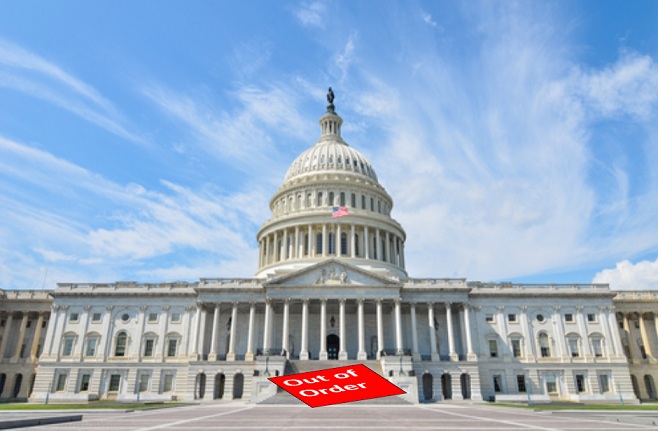
Congress has been out to breakfast, lunch, and dinner. The national debt keeps growing reaching around $23 trillion, yet Congress as an institution points fingers across the aisle toward the other party to always find a scapegoat. Both parties share the blame and neither party is ever interested in even discussing the problem no less listen to any possible solution. Congress is literally out of order. It is just broken and is beyond repair.  Congress passes measures to make it sound like they are addressing the problem, but when it actually impacts spending, like the spending caps, they suspend the measure quietly behind the curtain. Congress refuses to confront the issue of debt and politicians simply run always promising more goodies if you vote for them.

In health care, the issue of surprise medical billing (SMB) has become a top issue. Congress has, yet again, gotten it wrong. The solution for Congress is to push for price controls that will end up short-changing doctors and limiting choice for patients. Physician groups have been pointing out that the solution being proposed “could lead to market consolidation and artificially low payment rates.” The problem was created by insurance companies, yet the doctors and patients are paying the price. Nobody will address the insurance companies or the pharmaceutical industry. They always get special treatment.

The #1 lobbyist is the US Chamber of Commerce which spent a staggering $94,800,000 on lobbying in 2018. The National Association of Realtors spent $72,808,648 on lobbying in 2018. The Open Society Policy Center, of billionaire George Soros who seeks to buy politicians, spent $31,520,000 in 2018. The Pharmaceutical Research & Manufacturers of America is a trade association for drug manufacturers. They spent $27,989,250 on lobbying in 2018. The Chicago-based American Hospital Association spent $23,927,842 on lobbying efforts. The United States health insurance giant, Blue Cross, spent $23,604,221 on lobbying in 2018. Alphabet, which is the parent company of Google, spent $21,740,000 on lobbying in 2018. The American Medical Association spent $20,417,000 on lobbying in 2018. Telecommunications giant AT&T spent $18,529,000 on lobbying in 2018. Boeing aircraft manufacturer spent $15,120,000 on lobbying in 2018. Then there is the National Association of Broadcasters which spent $14,170,000 in 2018. You don’t have to guess which party got the lion share.

The only way to ever address the crisis we face in debt and government is a clean-sweep with term limits. If it is one-time and out, then we get to call lobbying what it really is – an anti-capitalistic system of rebranding the age-old practice of bribery.

We are facing the ultimate collapse of the government because they will not address the problems. The Democrats continue to run with promises of freebies without any sense of how the system functions and never addressing the crisis in debt. Both parties simply see this system as never-ending. What we face is going to be a major shock when the public is confronted by a system that crumbles before their eyes. What comes after that is the real question: Freedom or Authoritarianism?


DC’s Legislative Business…


CTH often describes the background DC motives with the phrase: “There are Trillions at Stake.”  Here we take a look at what that really means, and how DC politics is not quite based on the ideas that frame many reference points.

With people taking notice of DC politics for the first time; and with people not as familiar with the purpose of DC politics; we end up within two different references. Perhaps it is valuable to reset the larger frames of reference and provide clarity.

Most people think when they vote for a federal politician -a House or Senate representative- they are voting for a person who will go to Washington DC and write or enact legislation. This is the old-fashioned “schoolhouse rock” perspective based on decades past.  There is not a single person in congress writing legislation or laws.

In modern politics not a single member of the House of Representatives or Senator writes a law, or puts pen to paper to write out a legislative construct. This simply doesn’t happen.

Over the past several decades a system of constructing legislation has taken over Washington DC that more resembles a business operation than a legislative body. Here’s how it works right now.

Outside groups, often called “special interest groups”, are entities that represent their interests in legislative constructs. These groups are often representing foreign governments, Wall Street multinational corporations, banks, financial groups or businesses; or smaller groups of people with a similar connection who come together and form a larger group under an umbrella of interest specific to their affiliation.

Sometimes the groups are social interest groups; activists, climate groups, environmental interests etc. The social interest groups are usually non-profit constructs who depend on the expenditures of government to sustain their cause or need.

The for-profit groups (mostly business) have a purpose in Washington DC to shape policy, legislation and laws favorable to their interests. They have fully staffed offices just like any business would – only their ‘business‘ is getting legislation for their unique interests.

These groups are filled with highly-paid lawyers who represent the interests of the entity and actually write laws and legislation briefs.

In the modern era this is actually the origination of the laws that we eventually see passed by congress. Within the walls of these buildings within Washington DC is where the ‘sausage’ is actually made.

Again, no elected official is usually part of this law origination process.

Almost all legislation created is not ‘high profile’, they are obscure changes to current laws, regulations or policies that no-one pays attention to.  The passage of the general bills within legislation is not covered in media.  Ninety-nine percent of legislative activity happens without anyone outside the system even paying any attention to it.

Once the corporation or representative organizational entity has written the law they want to see passed – they hand it off to the lobbyists.

The lobbyists are people who have deep contacts within the political bodies of the legislative branch, usually former House/Senate staff or former House/Senate politicians themselves.

The lobbyist takes the written brief, the legislative construct, and it’s their job to go to congress and sell it.

“Selling it” means finding politicians who will accept the brief, sponsor their bill and eventually get it to a vote and passage. The lobbyist does this by visiting the politician in their office, or, most currently familiar, by inviting the politician to an event they are hosting. The event is called a junket when it involves travel.

Often the lobbying “event” might be a weekend trip to a ski resort, or a “conference” that takes place at a resort. The actual sales pitch for the bill is usually not too long and the majority of the time is just like a mini vacation etc.

The size of the indulgence within the event, the amount of money the lobbyist is spending, is customarily related to the scale of benefit within the bill the sponsoring business entity is pushing. If the sponsoring business or interest group can gain a lot of financial benefit from the legislation they spend a lot on the indulgences.

Recap: Corporations (special interest group) write the legislation. Lobbyists take the law and go find politician(s) to support it. Politicians get support from their peers using tenure and status etc. Eventually, if things go according to norm, the legislation gets a vote.

Within every step of the process there are expense account lunches, dinners, trips, venue tickets and a host of other customary financial way-points to generate/leverage a successful outcome. The amount of money spent is proportional to the benefit derived from the outcome.

The important part to remember is that the origination of the entire process is EXTERNAL to congress.

Congress does not write laws or legislation, special interest groups do. Lobbyists are paid, some very well paid, to get politicians to go along with the need of the legislative group.

When you are voting for a Congressional Rep or a U.S. Senator you are not voting for a person who will write laws. Your rep only votes on legislation to approve or disapprove of constructs that are written by outside groups and sold to them through lobbyists who work for those outside groups.

While all of this is happening the same outside groups who write the laws are providing money for the campaigns of the politicians they need to pass them. This construct sets up the quid-pro-quo of influence, although much of it is fraught with plausible deniability.

This is the way legislation is created.

If your frame of reference is not established in this basic understanding you can often fall into the trap of viewing a politician, or political vote, through a false prism. The modern origin of all legislative constructs is not within congress.

“we’ll have to pass the bill to, well, find out what is in the bill” etc. ~ Nancy Pelosi 2009

“We rely upon the stupidity of the American voter” ~ Johnathan Gruber 2011, 2012.

Once you understand this process you can understand how politicians get rich.

When a House or Senate member becomes educated on the intent of the legislation, they have attended the sales pitch; and when they find out the likelihood of support for that legislation;  they can then position their own (or their families) financial interests to benefit from the consequence of passage.  It is a process similar to insider trading on Wall Street, except the trading is based on knowing who will benefit from a legislative passage.

The legislative construct passes from K-Street into the halls of congress through congressional committees.  The law originates from the committee to the full House or Senate.  Committee seats which vote on these bills are therefore more valuable to the lobbyists.  Chairs of these committees are exponentially more valuable.

Now, think about this reality against the backdrop of the 2016 Presidential Election. Legislation is passed based on ideology.  In the aftermath of the 2016 election the system within DC was not structurally set-up to receive a Donald Trump presidency.

If Hillary Clinton had won the election, her Oval Office desk would be filled with legislation passed by congress which she would have been signing. Heck, she’d have writer’s cramp from all of the special interest legislation, driven by special interest groups that supported her campaign, that would be flowing to her desk.

Why?

Simply because the authors of the legislation, the originating special interest and lobbying groups, were spending millions to fund her campaign. Hillary Clinton would be signing K-Street constructed special interest legislation to repay all of those donors/investors.

Congress would be fast-tracking the passage because the same interest groups also fund the members of congress.

President Donald Trump winning the election threw a monkey wrench into the entire DC system…. In early 2017 the modern legislative machine was frozen in place.

The “America First” policies represented by candidate Donald Trump were not within the legislative constructs coming from the K-Street authors of the legislation.  There were no MAGA lobbyists waiting on Trump ideology to advance legislation based on America First objectives.

As a result of an empty feeder system, in early 2017 congress had no bills to advance because all of the myriad of bills and briefs written were not in line with President Trump policy. There was simply no entity within DC writing legislation that was in-line with President Trump’s America-First’ economic and foreign policy agenda.

Exactly the opposite was true. All of the DC legislative briefs and constructs were/are antithetical to Trump policy.  There were hundreds of file boxes filled with thousands of legislative constructs that became worthless when Donald Trump won the election.

Those legislative constructs (briefs) representing tens of millions of dollars worth of time and influence were just sitting there piled up in boxes under desks and in closets amid K-Street and the congressional offices.  Legislation needed to be in-line with an entire new political perspective, and there was no-one, no special interest or lobbying group, currently occupying DC office space with any interest in synergy with Trump policy.

Think about the larger ramifications within that truism. That is also why there was/is so much opposition.

No legislation provided by outside interests means no work for lobbyists who sell it. No work means no money. No money means no expense accounts. No expenses means politicians paying for their own indulgences etc.

Politicians were not happy without their indulgences, but the issue was actually bigger. No K-Street expenditures also means no personal benefit; and no opportunity to advance financial benefit from the insider trading system.

Without the ability to position personal wealth for benefit, why would a politician stay in office?  The income of many long-term politicians on both Republican and Democrat sides of the aisle was completely disrupted by President Trump winning the election.  That is one of the key reason why so many politicians retired immediately thereafter.

When we understand the business of DC, we understand the difference between legislation with a traditional purpose and modern legislation with a financial and political agenda.

Lastly, this is why -when signing legislation- President Trump often says “they’ve been trying to get this through for a long time” etc.   Most of the legislation passed by congress and signed by President Trump in his first term is older legislative proposals, with little indulgent value, that were shelved in years past.

Example: Criminal justice reform did not carry a financial benefit to the legislative bodies, and there was no financial interest funding the politicians to pass the bill.  If you look at most of the bills President Trump has signed, with the exception of a few economic bills, they stem from congressional construction many years ago.