The UK Rolls Out Largest National AI Surveillance Program


Posted originally on Jan 28, 2026 by Martin Armstrong |  

UK Home Secretary Shabana Mahmood announced the largest national AI surveillance program, using Live Facial Recognition (LFR) technology, to be deployed in cameras across England and Wales. “You can’t enjoy any of your liberties if you’re not safe,” she warned.

Police.AI is the new artificial intelligence branch of security that cost the government 140m pounds to develop. “For 20 years we’ve been talking about Big Brother societies, maybe for even longer than that, I just really reject that analysis. I think that law-abiding citizens going about their daily business can do so in security, nothing about that will change,” she decided, later adding, “We have seen what happens when facial recognition technology is rolled out without clear safeguards: children are wrongly placed on watchlists, and black people are put at greater risk of being wrongly identified.”

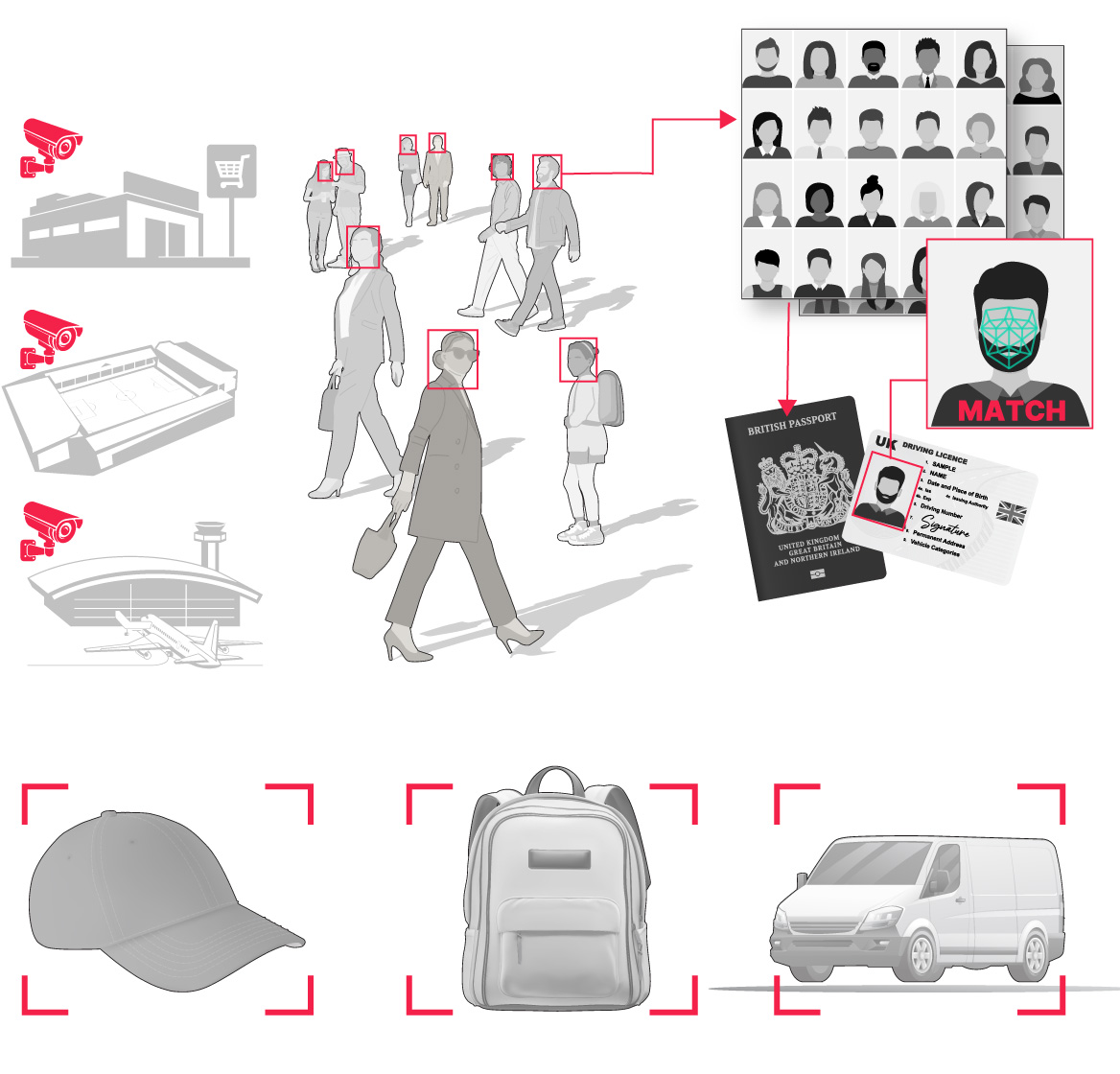
The AI branch of policing will rapidly analyze CCTV, phone, doorbell, and other sources of footage to pinpoint citizens based on their clothing, vehicles, and of course, facial recognition. The AI system can transcribe phone calls and sift through hours of information, constantly monitoring the public. Government claims it will equate to six million policing hours annually, or the workload of 3,000 officers.

The ethics behind such measures present a challenge. Who has access to this wealth of data? Individual organizations in the UK must obtain permission and be transparent about their policies, but no such restrictions exist for the government. We have seen countless data breaches in recent years, with independent hacker groups infiltrating every supposedly secure data center. Civil liberties groups believe the government is infringing upon human rights by spying on their every move, but governments no longer permit individual freedoms.

Everyone is a potential criminal—your face and likeness exist within a government database, and your file is ever-expanding. The Home Office has even stated it would monitor citizens’ emotions and body language at known suicide hot spots.

CCTV.UK_.Surveillance

UK Biometrics and Surveillance Camera Commissioner Fraser Sampson admitted that private companies will have access to user data. “We, the people, are now using sophisticated surveillance tools once the preserve of state intelligence agencies, routinely and at minimal financial cost,” he writes. “We freely share personal datasets – including our facial images – with private companies and government on our smart devices for access control, identity verification and threat mitigation. From this societal vantage point it seems reasonable for the police to infer that many citizens not only support them using new remote biometric technology but also expect them to do so, to protect communities, prevent serious harm and detect dangerous offenders.”

Live cameras are monitoring the public at all times. Both the private and public sector have access to your whereabouts at all times. This is one of the reasons why the UK is implementing a digital ID system, which will later become linked to digital payment systems and CBDC. At the final stage, everything will be linked to a social credit score that includes each citizen’s water and carbon footprint. The plans are well-documented but sound too dystopian for the public to accept, but this is not a conspiracy—they are watching you.

Kremlin Disconnects from Global Internet


Posted originally on Jan 13, 2026 by Martin Armstrong |  

Surveilence

Russia is slinking back into its old Soviet Union methods of spying on citizens. Beginning on January 1, 2026, internet providers in Russia are now required to store all text, audio, and video messages for three years. The Center for Countering Disinformation has access to every Russian’s digital footprint.

Per usual, authorities claim the measure is to protect against fraud. The true motive is control, instant punishment, and the notion that citizens will begin to self-censor their private correspondence to avoid criticizing the Kremlin.

The Roskomnadzor (the federal communications regulator) has the authority to disconnect the Russian internet segment (Runet) from external sources at whim. Regulators may block or permanently ban individual websites or services if they believe they are a threat to national security. Telecom operators must issue commands and control network traffic in accordance with the Roskomnadzor. The Russian internet will be completely isolated from the global network.

Fines and penalties have been inconsequential despite increasing severity. As of September 1, 2025, Russians face a 5,000 ruble fine for “intentionally searching extremist materials.” This was significant as it was the first time Russia punished citizens for viewing prohibited online content.

Over one million websites have been analyzed for pretrial blocking by Roskomnadzor and the Prosecutor General’s Office. Over 150 media organizations are currently blocked in Russia. The government has repeatedly shut down the internet on a regional basis throughout the Ukraine war, with authorities claiming the blackouts are needed to support drone warfare.

Social media channels such as Twitter/X, Reddit, META/Facebook, LinkedIn, SnapChat, and Discord are inaccessible. YouTube and TikTok may be used on a limited basis. Russians are forbidden to view BBC News, Deutsche Welle, Le Monde, Der Spiegel, and other news outlets. VPNs are illegal, although widely used, and Russia ranked #1 in the top internet outages in 2025.

Russians all know that Big Brother is monitoring them online and tapping their phones. People in former communist nations do not trust the government. They’ve been taught throughout the generations to keep a guard up. Unlike those in the West, the Russians and Chinese understand that the mainstream media is merely a propaganda tool. The information displayed on your TV screen or the front page of the newspaper has been pre-approved by the government; otherwise, it would not be permitted to air. I can proudly say that this website is one of them, and we are permitted to operate in both Russia and China.

The Kremlin and every other government authority has unlimited access to text messages and online searches. You can delete your texts and clear your search history, but government can still see your complete digital footprint. Governments sued internet and phone providers years ago to ensure they had full backdoor access to every outlet. Social media outlets were compromised, and those who failed to comply like TikTok were either banned or sold out. Digital privacy is not a protected right. Modern civilization depends on the internet for communication and information, making it a prime target for government surveillance. We will see governments continually restrict internet access in the years ahead as each nation aims to create a digital firewall to protect its citizens from sharing information, or worse, collaborating against the regimes controlling them.

UK to Monitor Citizens’ Emotions through CCTV Footage


Posted originally on Dec 15, 2025 by Martin Armstrong |  

CCTV.UK_.Surveillance

Your speech and social media usage could land you in jail in the United Kingdom, but now, authorities will be monitoring your emotions. Technology has enabled nations to become increasingly Draconian, with eerily detailed information available to government agencies at all times. Residents around the UK are well aware of the CCTV cameras monitoring their every move. The Home Office would now like to use that footage to monitor civilian behavior and facial expression to identify criminals.

The technology may be employed at known suicide hot spots to identify anyone who may seem distressed. Yet, the example was merely discussed as it is the most palatable. Facial recognition technology will be cross-referenced with mugshots in the national crime database. Everyone is a potential criminal—your face and likeness exist within a government database, and your file is ever-expanding.

Ministers would like police to have full access to citizens’ information, from passports to drivers’ licenses, that will be stored in a centralized database. There’s no need to ask for identification since the authorities will already know who you are before approaching you. These cameras will identify the clothes you wear, hats, bags, accessories, and of course, your vehicles.

Crime and Policing Minister Sarah Jones said, “Confident, safe, and consistent use of facial recognition and similar technologies at significantly greater scale requires a more specific legal framework. This will ensure law enforcement can properly harness the power of this technology whilst maintaining public confidence.” I highly doubt this move will “maintain public confidence,” instead, citizens will undoubtedly know that the government sees them as a potential threat and their guards must be up at all times.

The Association of Police and Crime Commissioners asked for access to doorbell cameras and body cameras when crime scenes are searched, even if that occurs in a private domicile. “’These technologies are increasingly invasive and sophisticated. If they are to gain the trust and support of the public… they require robust and independent assessment prior to deployment, meaningful oversight and accountability to the public when things go wrong,” the agency commented.

There has not been an instance in history when increased government surveillance led to a safer or happier nation. Governments are desperate and see control and confidence fading from their grip. The West will become increasingly Draconian as we move through this private wave because they believe the people are responsible for their crises.

Germany is Officially a Surveillance State – Civil Liberties Destroyed


Posted originally on Dec 10, 2025 by Martin Armstrong |  

biometricData

Germany granted itself legal permission to use AI technology to aggressively monitor the entire population in real-time. The Berlin House of Representatives passed amendments to the General Security and Public Order Act (ASOG) that grants government access to citizens’ personal data by any means necessary, including forcibly entering their private homes.

Interior Senator Iris Spranger (SPD) declared the new laws necessary to fight terrorism in the digital age. German investigators may now legally hack IT systems, but if remote access is unavailable, authorities may “secretly enter and search premises” a suspect’s personal residence to confiscate their digital devices. The government does not need to notify citizens that they are under investigation before entering their homes without warning.

Germany will equip public spaces with advanced surveillance technology. The cell tower query will be expanded to enable the government to access data from all private mobile phones. Network operators must be able to tell the government the movement and location of all citizens. License plate scanners will be installed throughout the nation, and that data will be sent to a centralized database.

Deutschland has finally achieved official “1984” status—the nation is implementing unmanned drones to monitor the population.

All personal data may be used for “training and testing of artificial intelligence systems.” Authorities have free rein to steal data from publicly accessible websites to collect biometric comparisons of faces and voices. The government will implement automated facial recognition software that enables it to identify citizens immediately. The database will tie into the nationwide surveillance platform.

You are being watched. Civil liberties do not exist. Freedom is merely an illusion; your likeness—face, voice, movement, finances, family–exists in an ever-expanding government database that may be used however the government sees fit.

Governments to Begin Collecting DNA at BIRTH


Posted originally on Nov 20, 2025 by Martin Armstrong |  

Birthing Person

El Salvador passed a law that requires newborns to submit their DNA to a government-wide database. President Nayib Bukele claims genetic verification is necessary to ensure the paternity of the child. “This is not a law against women, but against lies: there will be no more fathers raising children who are not their own,” the president declared. Yet, this initiative has become global. Of course, the majority of governments will not label these initiatives as DNA collection.

England’s NHA will offer whole-genome sequencing to every newborn beginning in 2026. The initiative is part of a 10-year “Generation Study” pilot program that aims to have every baby’s DNA sequenced at birth. The government claims that the data will be used to assess health risks and enable early preventative care.

The NHS will use blood or umbilical cord samples to collect data that will then be handed over to the government’s AI software that identifies disease risk. Everyone’s individual DNA genome will be analyzed and stores by the government. The National Genomic Research Library plans to use this data for future research.

The US conducts a heel prick test at birth as well to test for genetic defects. Parental consent is not required as it is considered standard care. A few states do permit parents to opt-out of this testing on religious grounds. However, the US has not stated that would be compiling a database to store biometric data.

Italy, Spain, Australia, India, Israel, and most developed countries perform some form of blood testing at birth, but that data was never collected and stored by the government until now. Governments will say that advanced technology is allowing scientists to study genetic conditions to ensure the optimal health of the nation. No one agreed to be part of a study or to permit the government to collect their child’s health information. Governments are labeling children as their own from the moment they enter the world. Unique data on every human born within the health care system will be permanently stored and used as governments see fit.