Posted originally on CTH on March 29, 2026 | sundance |
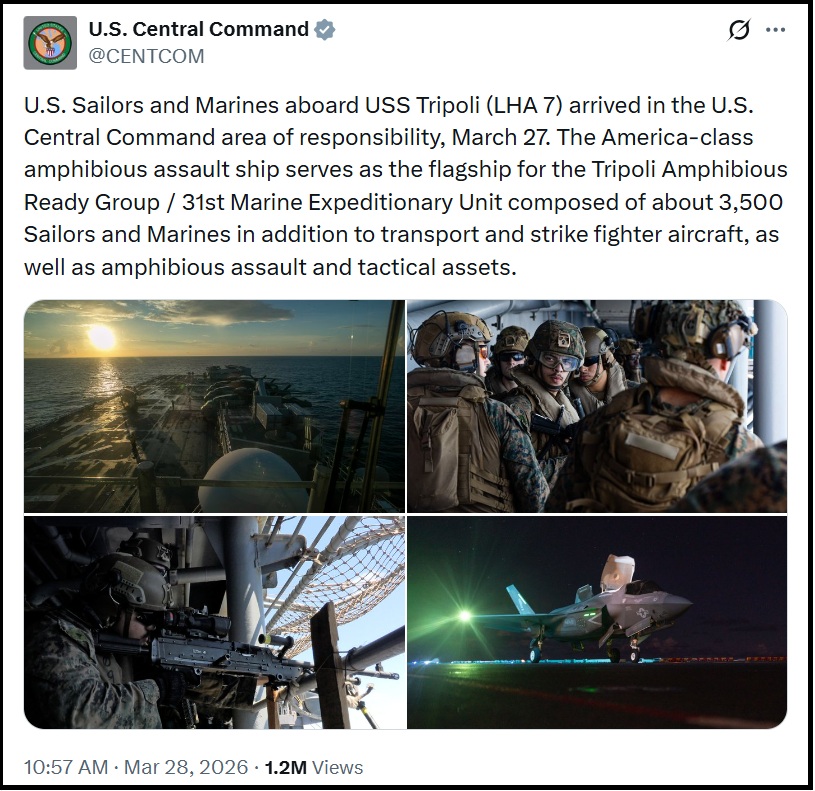
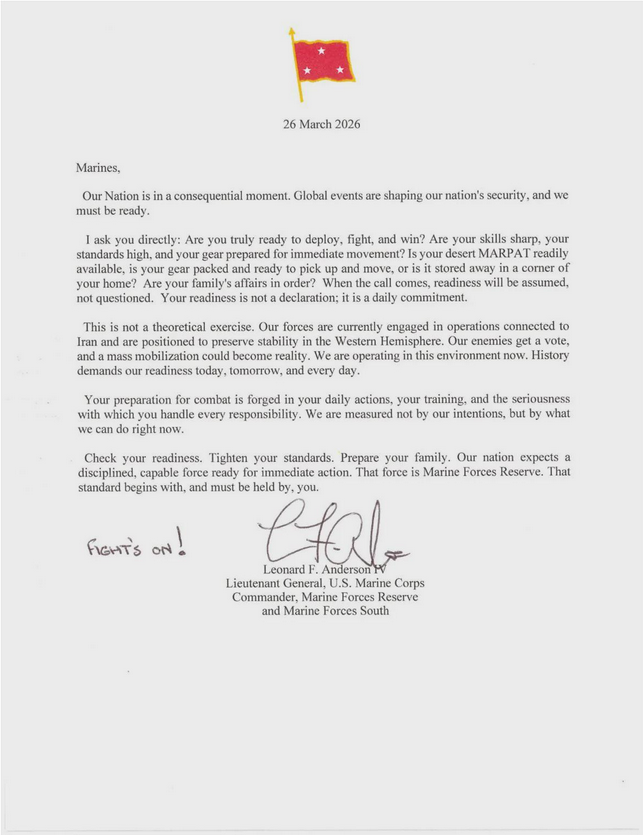
As the ongoing Operation Epic Fury military engagement continues, CENTCOM announces the arrival of 3.500 Marines from the 31st Marine Expeditionary Unit into forward position.
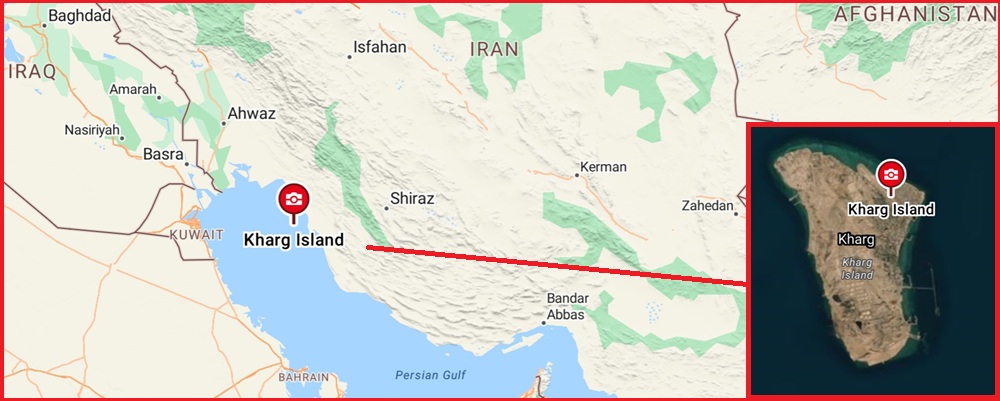
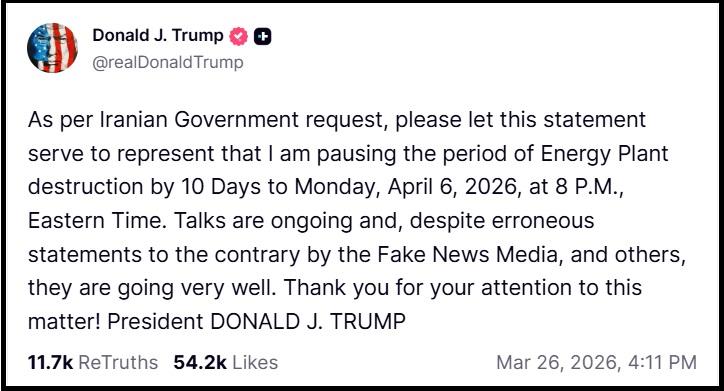
As negotiations with Iranian leadership are reported to be ongoing, it would appear that options are now present for President Trump to make a decision on the potential seizure of Kharg Island, a crucial oil export hub off Iran’s coast.
(Via Wall Street Journal) – The Pentagon is looking at sending up to 10,000 additional ground troops to the Middle East to give President Trump more military options even as he weighs peace talks with Tehran, Department of Defense officials with knowledge of the planning said.
The force, which would likely include infantry and armored vehicles, would be added to the roughly 5,000 Marines and the thousands of paratroopers from the 82nd Airborne Division who have already been ordered to the region.
It is unclear where precisely forces will go in the Middle East, but they will likely be within striking distance of Iran and Kharg Island, a crucial oil export hub off Iran’s coast.
Trump has repeatedly said he will open the Strait of Hormuz, with or without the help of U.S. allies. (read more)
Posted originally on CTH on March 29, 2026 | sundance
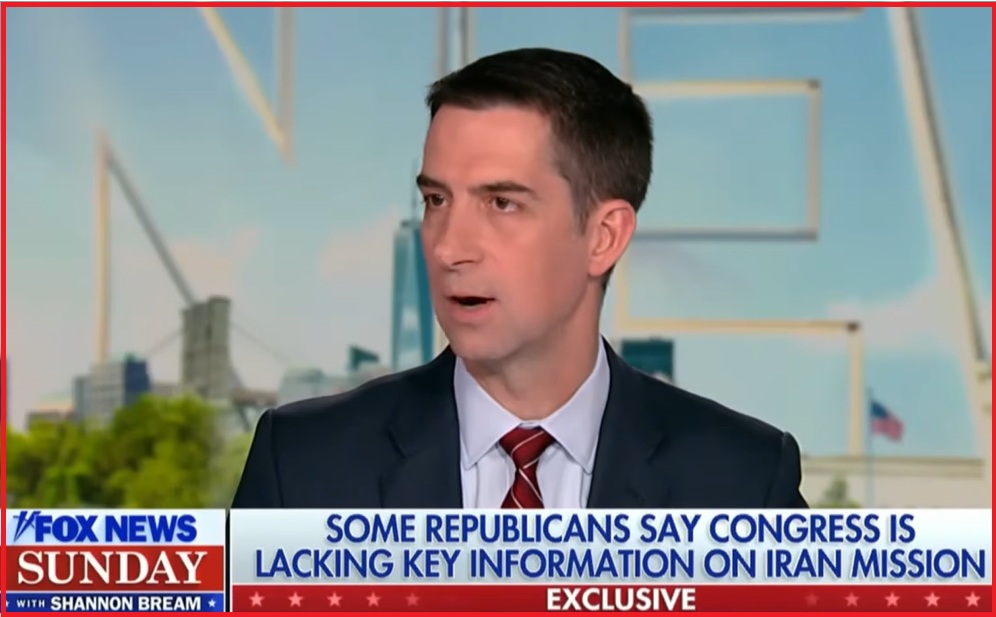
Senator Tom Cotton is the Chairman of the Senate Select Committee on Intelligence (SSCI), and in that position Cotton is an intelligence Gang of Eight member who receives regular updates and briefings at essentially the same level as the President.
Senator Cotton states that from everything he has seen and been briefed about, Operation Epic Fury continues to proceed on a timeline that he feels is confident to accomplish the task in weeks, not months. WATCH:
Posted originally on CTH on March 27, 2026 | Sundance
This is a rather remarkable and insightful short segment interview with the British Defense Secretary, who outlines how the great British Navy will defend their interests.
Once you realize what is said in this segment, you start to realize just how dependent NATO is on the protection provided by the United States. WATCH:
…”Britain was forced to ‘borrow’ a German vessel for a NATO operation next month, led by the United Kingdom, after HMS Dragon was deployed to Middle East.”…
Posted originally on CTH on March 26, 2026 | Sundance
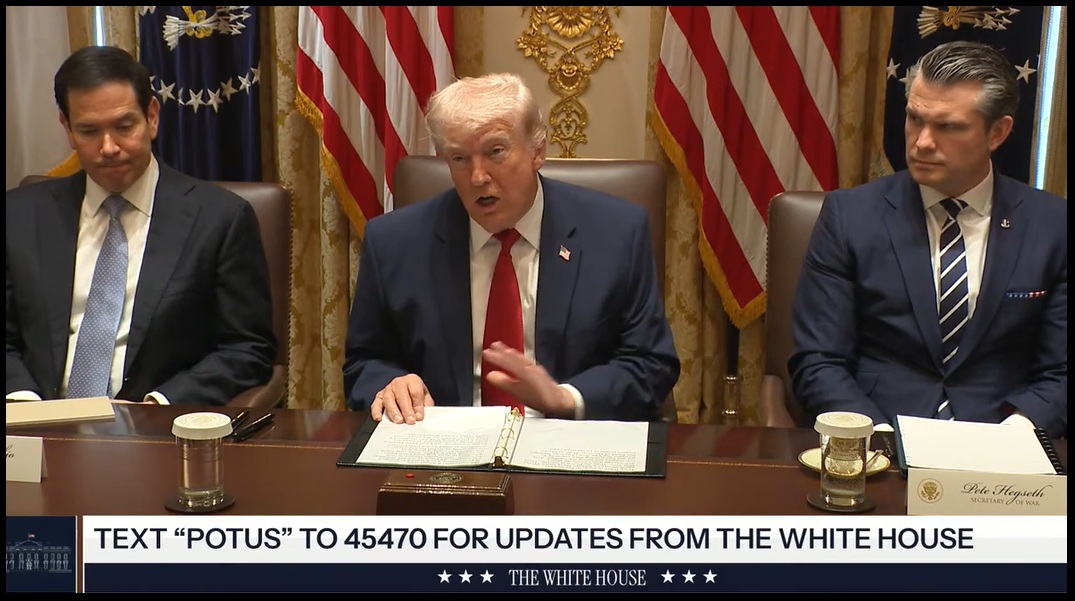
Earlier today, President Trump continued the process of allowing media to participate in the first segment of the cabinet meetings. President Trump begins with remarks on current events and then goes around the table for a discussion of action taking place in all executive cabinet agencies.
At 21:55JD Vance delivers his statement. At 23:57 Secretary of State Marco Rubio delivers his statement. At 27:05 Emissary and Negotiator Steve Witkoff delivers his statement. At 32:10 Secretary Pete Hegseth delivers his statement. At 57:14 Secretary Scott Bessent delivers a statement. At 1:02:23the media questions begin.
Posted originally on CTH on March 25, 2026 | Sundance
With a heavy sigh and a great deal of resignation, while understanding how the prior open border issue compounded things, CTH had already mentally accepted that FISA (702) reauthorization was going to happen.
I don’t like it at all, but I understand it.
That said, I would prefer to see the FISA (702) reauthorization leveraged toward passage of the SAVE America Act, at least that way we get something out of it.
PRESIDENT TRUMP – “Speaker of the House Mike Johnson and Senate Majority Leader John Thune have been working to pass a clean extension of FISA Section 702, a Law that was passed many years ago by Congress to collect Intelligence on Foreigners and Noncitizens.
When used properly, FISA is an effective tool to keep Americans safe. For these reasons, I have called for a clean 18-month extension, HOWEVER, the Critical and Common-Sense Reforms that were made in the last Reauthorization of FISA must remain intact to protect the American People from abuses.
Nobody understands this better than me, as I was a victim of the worst and most illegal abuse of FISA in our Nation’s History, by Radical Left Lunatics who lied to the FISA Court to spy on my 2016 Presidential Campaign in their attempt to RIG the Election in favor of Crooked Hillary Clinton.
That is why, since the first day of my already Historic Second Term, my Administration has worked tirelessly to ensure these Reforms are being aggressively executed at every level of the Executive Branch to keep Americans safe, while protecting their sacred Civil Liberties guaranteed by our Great Constitution.
With the ongoing successful Military activities against the Terrorist Iranian Regime, it is more important than ever that we remain vigilant, PROTECT our Homeland, Troops, and Diplomats stationed abroad, and maintain our ability to quickly stop bad actors seeking to cause harm to our People and our Country.
The fact is, whether you like FISA or not, it is extremely important to our Military. I have spoken to many Generals about this, and they consider it vital. Not one said, even tacitly, that they can do without it — especially right now with our brilliant Military Operation in Iran. Thank you for your attention to this very important matter!
CTH is relatively sure the military component surrounding FISA-702 relates to the advanced AI system target tracking that is currently active as part of the Palantir surveillance software suite.
Let’s get all of these illegal aliens the heck out of our country, and then maybe we can have a discussion about returning to a more constitutional approach that doesn’t include the ability of government to interface with privately created electronic metadata.
Posted originally on CTH on March 23, 2026 | Sundance
The noise can seem overwhelming at times. There are those who say the U.S-Israeli joint military operation against Iran is a catastrophic miscalculation. There are those who say the operation is strategically succeeding. Many interests even appear to be cheering for the military operation to fail; others want the operation to escalate.
It is difficult to find pragmatic facts about the events without shaped information to promote specific narratives. However, accepting there is a psychological component to the information flow, it seems like the best option to listen to the experts who are conducting the operation.
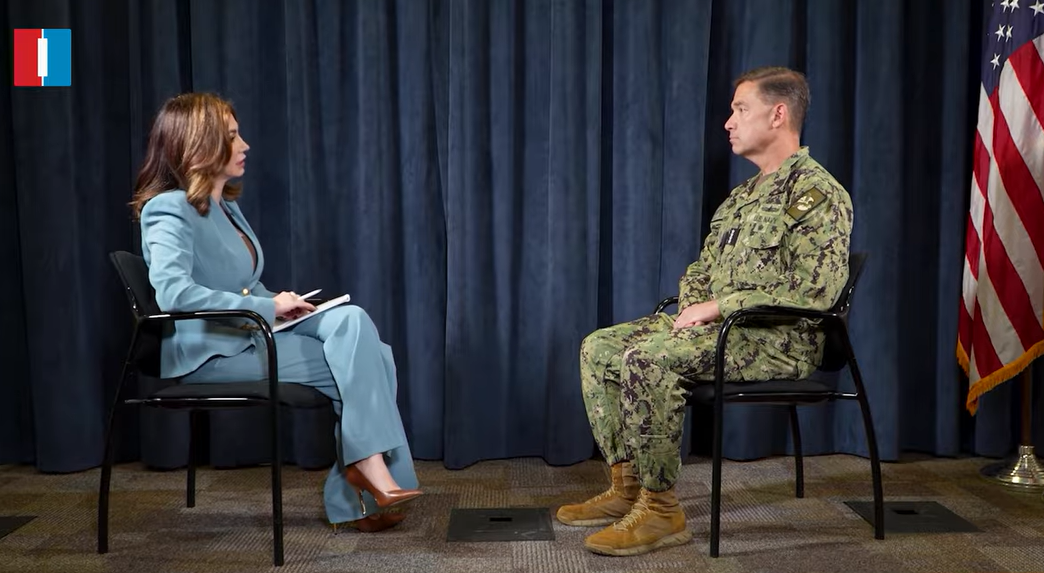
Giving his first interview since Operation Epic Fury began, CENTCOM Commander Bradley Cooper outlines the current status of the conflict and the elements he notes are of most importance. According to Adm. Cooper, Iran is “operating in a sign of desperation… In the last couple of weeks, they’ve attacked civilian targets very deliberately, more than 300 times.”
“The Strait of Hormuz is physically open to transit,” he said. “The reason ships are not transiting right now is because the Islamic Republic is shooting at them with drones and missiles.” WATCH:
“I’d like everyone to note is I’ve watched this over the last week, this extraordinary contrast between the comfort and protection that you’re seeing with the senior generals in the Islamic Republic, at least those that are still alive, who are up in deep bunkers and facilities in and around Tehran. And contrast that with the soldiers who are down on the ground who are unprotected. The generals are protected. The soldiers are not protected.”
“They’re launching missiles and drones from populated areas and you need to stay inside for right now,” he said. “There will be a clear signal at some point, as the President has indicated, for you to be able to come out.”
Posted originally on CTH on March 22, 2026 | Sundance
Margaret Brennan’s husband is a Syrian Muslim named Major Ali Iyad Yakub, who goes by the nickname ‘Yado’. He served in the U.S. military. Mrs. Brennan studied abroad at Yarmouk University in Irbid, Jordan, and Yakub’s sister, Samia Yakub, was her roommate. Mr. Yakub founded Y2 Global Advisory specializing in global intelligence, communications, and government relations. He also worked for Senator Joe Biden on the Senate Foreign Relations Committee. Margaret Brennan and Ali Iyad Yakub have two children together.
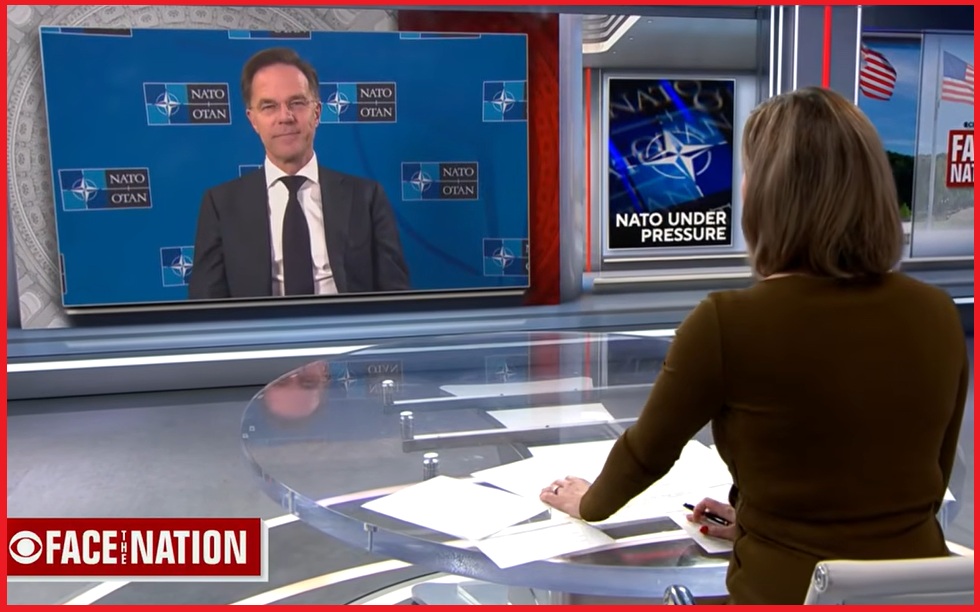
NATO General Secretary Mark Rutte appears on CBS Face the Nation to discuss the European opinion of the U.S. military operation against Iran, and outline how many countries within the NATO alliance are prepared to support the ongoing effort to eliminate the threat Iran represented. Video and Transcript Below:
[Transcript] – MARGARET BRENNAN: We turn now to NATO Secretary General, Mark Rutte, who joins us this morning from The Hague in the Netherlands. Welcome back to ‘Face The Nation.’
NATO SECRETARY GENERAL MARK RUTTE: Margaret, good to be back on the program. Good morning.
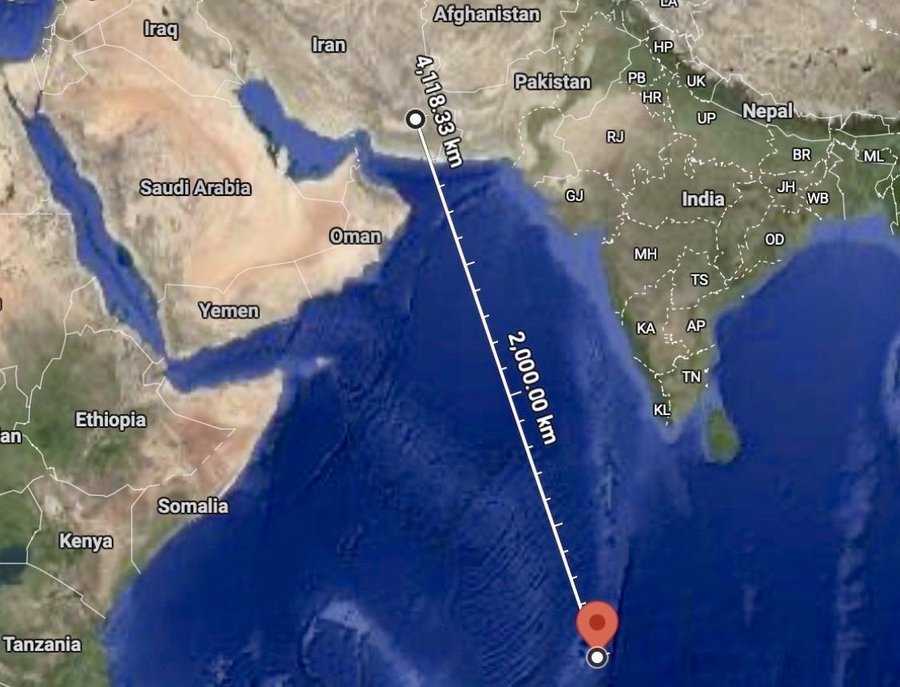
MARGARET BRENNAN: Good morning. We did see that Iran fired two missiles at Diego Garcia. That’s that island in the Indian Ocean, which houses a U.S. UK joint base. That was 4000 kilometers from Iranian territory, furthest Iran has ever gone. You just heard Ambassador Waltz say there might be a difference there in how Israel and the U.S. assess that capability Iran has in terms of what they fired. But Israel says these were intercontinental ballistic missiles that could hit Berlin, Paris and Rome. Does NATO share that Israeli assessment?
SECRETARY GENERAL RUTTE: We cannot confirm that at the moment, so we’re looking into that. But if this would be true, it is the more evidence that what the President is doing here, taking out the ballistic missile capability, taking out the nuclear capability from Iran, is crucial. And exactly as the ambassador just said, Ambassador Waltz, we have seen with North Korea, if we negotiate for too long, you might pass the moment where you can still get this thing done, and North Korea now has the nuclear capability. If Iran would have the nuclear capability, including, together with the missile capability, it will be a direct threat, a existential threat, to Israel, to the region, to Europe, to the stability in the world. So the president doing this is crucial, and I’ve seen the polling, but I really hope the American people will be with him, because he is doing this to make the whole world safer.
MARGARET BRENNAN: So but just to be clear at this hour, do you believe that Iran could bomb Berlin, Paris and Rome? Are they all within direct threat range?
SECRETARY GENERAL RUTTE: What we know for sure is that they are very close to having that capability, whether this case with the UK base, Diego Garcia, we are still assessing. But if it is true, it means they already have that capability. If it is not true, we know they are very close to having that capability. And that is exactly why I feel in Europe, that most politicians, it resonates with them. What the President is doing here, which is taking out- degrading Iran’s capability to be, again, an exporter of chaos, sheer chaos to the region, to the world.
MARGARET BRENNAN: Well, I’m sure the president appreciates your praise, but he has been very frustrated, and made that clear this week with NATO and the European allies. He called NATO quote a paper tiger without the US. He said they complain about high oil prices when they forced to pay but they don’t want to help open the Strait of Hormuz. Easy for them cowards. We will remember.
SECRETARY GENERAL RUTTE: I’ve been in several conversations this week with the president, and the good news is that, look, we had the U.S. for weeks planning for Epic Fury and for reasons of security and safety, they could not share with European allies and allies around the world and partner countries what they were doing, because that would have jeopardized the effect of the first- first attack–
MARGARET BRENNAN: –Or it would have allowed you to plan
SECRETARY GENERAL RUTTE: So it is only logical that European countries needed a couple of weeks to come together. But at this moment, the good news is this, that since Thursday, 22 countries, most of them NATO, but also Japan, Korea, Australia, New Zealand, Bahrain, the UAE, have come together to basically answer three questions, what do we need? When do we need it? And where do we need it? These three questions are now worked through to answer the president’s call, to make sure that we secure the free sailing through the Strait of Hormuz.
MARGARET BRENNAN: To be clear, the president has said four to six weeks for this war, that would put us in early April for an end to combat operations. But then he’s also sending troops. He’s also possibly asking Congress for more money. What’s the when part? When did he tell you your support from these European countries will be needed because from the sources I speak to, they are not willing to send in the midst of combat.
SECRETARY GENERAL RUTTE: Obviously, I cannot in a program which is aired around the world, and you have a lot of viewers, discuss with you what is discussed in secrecy, but I can assure you that, of course, and the UK is- is at the forefront of leading this effort of the 22 countries on the leadership of Prime Minister Starmer. I’ve been in the phone call this week with Prime Minister Starmer and President Macron, and again, this has led to 22 countries now signing up to this initiative. And indeed, one of the key questions is not only the what question and the where question, but also the when question. And this is why military planners are now working together to make sure that we are ready, to make sure that that street- that Strait of Hormuz, that we secure the free sailing there, which is crucial for the world economy.
MARGARET BRENNAN: The president seemed to say, though, that this will go beyond Iran in terms of the impact on his thinking about NATO and his willingness to help Europe. Take a listen to this.
[DONALD TRUMP SOT]
DONALD TRUMP: I think NATO is making a very foolish mistake. And I’ve long said that, you know, I wonder whether or not NATO would ever be there for us. So this is a this was a great test, because we don’t need them, but they should have been there.
[END SOT]
MARGARET BRENNAN: The president continues to frame this as sort of like a quid pro quo, and he’s also mentioned Ukraine in the same context, saying, I help Europe with Ukraine. Why aren’t they helping me? Are you worried that this is going to hurt NATO’s goals elsewhere?
SECRETARY GENERAL RUTTE: What I know is that we always come together. It was under President Trump’s leadership that we had the extremely successful Summit in the Hague where we agreed to spend 5% of our GDPs on defense, and therefore equalizing for the first time since Eisenhower. So this is quite some time- some time back in history, equalizing what the Europeans are spending and what Americans are spending, not only because it is fair that we all spend the same, and this was a wish from Trump 45 and now is Trump 47 he got this done, but also because we need it, because of the Russian threat and our other adversaries. Then on Ukraine, it is again the U.S. providing critical intelligence support and weapons flow, working together with Europeans to secure Ukraine’s fight against the Russians, making sure they have what they need. And now with Iran, I’m absolutely convinced, and I understand the president’s frustration that it takes some time, but again, I also ask for some understanding, because nations had to prepare for this, not knowing and for good reasons about the initial attack on Iran, but now coming together to make sure that we can be able to secure the Strait of Hormuz.
MARGARET BRENNAN: No but to be clear, I’ve spoken to some NATO members who say this is a defensive alliance, not an offensive one. We didn’t sign up to go do what the president is asking us to do. But on the Russia point you just made, the European Council president said the U.S. decision to lift sanctions on Russian oil exports. Is very concerning as it impacts European security. This is part of what President Trump’s doing to try to stop the spike in oil prices here at home, the Treasury Secretary says this means about $2 billion is going to Russia now, President Zelenskyy says it’s more like 10 billion. Doesn’t this benefit Vladimir Putin?
SECRETARY GENERAL RUTTE: Well, this is the thing the president has to balance all these different interests. I know that he is with his team, with Jared Kushner and Steve Witkoff and Marco Rubio. They are constantly working with the Ukrainians to put maximum pressure on the Russians to come to a deal. I know–
MARGARET BRENNAN: This isn’t maximum pressure.
SECRETARY GENERAL RUTTE: –I spoke an hour and a half with President Zelenskyy in London. He wants to get the deal done, and we have to make sure that we also take this to the Russians, to make sure that they are willing to play ball. It is the president putting that pressure together with the Europeans. But again, he has to balance all these different interests. So I’m not going to comment on each element of what is happening here, but his effort to bring the war in Ukraine to a successful end is crucial. He was the only one who was able to break the death lock with Putin when he made the first phone call in February last year, and he has consistently, with his team, done what is necessary to put that pressure, of course, on the Ukrainians, and they want to play ball. They show this. They want to end the war, and are also with the Russians.
MARGARET BRENNAN: Well, we’ll see if Vladimir Putin wants to play ball. Secretary General, thank you for your time, and we’ll be right back with a lot more ‘Face the Nation.’ Stay with us.
Posted originally on CTH on March 22, 2026 | Sundance
Recently when the Anthropic software and ideology conflict with the Pentagon surfaced as a result of limits placed by the provider, alternative provider Palantir’s CEO remarked that any AI developer who challenges the U.S. military application of the product was foolish because the U.S. government could just take control of the company under the claim of national security.
In essence, Palantir CEO Alex Karp was saying AI developers who contract with the govt ultimately become bound to the limits or lack thereof as determined by the govt. If software developers want to contract with the military, then fight the Pentagon over use of those software applications, they will lose.
In response to the Anthropic issue, the Pentagon withdrew from their purchase arrangements and blacklisted them from further federal contracts.
Now a report is highlighting that Palantir will take the lead position in providing the software, the Maven Smart System, for the core U.S. military functions.
As described, “Maven is a software platform that uploads information from drones, satellites, sensors, radar, and other battlefield intelligence sources. The system then analyzes battlefield data in real time, identifying and prioritizing potential targets — including buildings, enemy vehicles, and weapons and ammunition stockpiles — for intelligence analysts to review and act on.”
NEW YORK, March 20 (Reuters) – Palantir’s Maven artificial intelligence system will become an official program of record, Deputy Secretary of Defense Steve Feinberg said in a letter to Pentagon leaders, a move that locks in long-term use of Palantir’s weapons-targeting technology across the U.S. military.
In the March 9 letter to senior Pentagon leaders and U.S. military commanders, Feinberg said embedding Palantir’s Maven Smart System would provide warfighters “with the latest tools necessary to detect, deter, and dominate our adversaries in all domains”.
The decision is expected to go into effect by the close of the current fiscal year, which ends in September, according to the letter, which was reviewed by Reuters and has not been previously reported.
Maven is a command-and-control software platform that analyzes battlefield data and identifies targets. It is already the primary AI operating system for the U.S. military, which has carried out thousands of targeted strikes against Iran over the last three weeks. (read more)
Elon Musk (Tesla, SpaceX) and Alex Karp (Palantir)
According to multiple media and government accounts, Iran targeted the joint U.S-UK base at Diego Garcia in the Indian Ocean with two intermediate-range ballistic missiles (IRBM).
This is significant because Diego Garcia is 4,000 km away from where the missiles were launched and would indicate that all of Europe was within the strike zone as President Donald Trump previously warned.
Europe and the NATO alliance previously said Iran did not possess such capabilities. Apparently, they do.
As noted by Defense Security, “This attempted strike occurred around day 22 of the latest escalation cycle in the U.S.–Israel–Iran confrontation, reinforcing the view among defense planners that Tehran is prepared to expand its missile envelope to threaten strategic rear-area bases supporting Western operations rather than limiting attacks to regional targets within the Persian Gulf.”
“Diego Garcia’s distance of roughly 3,800 – 4,000 km from Iran makes the launch operationally significant because it suggests either the use of a lighter warhead estimated at approximately 300–500 kg or the deployment of a previously undisclosed extended-range variant, both of which indicate a deliberate demonstration of reach rather than a conventional strike attempt.”
According to the reports, one missile failed in flight whilst the other was engaged by a U.S. destroyer utilizing an SM-3 interceptor; however, as of this writing a successful interception was not confirmed.
Regardless, neither of the missiles hit the base. Iranian long-range precision missiles have not previously been publicly assessed as having this kind of range.
(VIA MSM) – Iran fired two intermediate-range ballistic missiles from roughly 2,400 miles away at the Diego Garcia base in the Chagos Islands, marking its first confirmed strike attempt at such a distance. US officials said one was intercepted by a warship’s SM-3 system and the other failed mid-flight. Iranian media hailed the attack as a “significant step” showing capabilities beyond the previously assumed 2,000 km range limit.
Military analysts, including Gen Sir Richard Barrons, said the strike proves Iran’s missile reach is greater than believed, potentially covering Western Europe. This revelation could force NATO and allied forces to rethink missile defence postures and regional force deployment. The capability leap also signals a shift in Iran’s deterrence strategy, potentially emboldening it in future confrontations. (more)
🚨 WOW. President Trump has just been proven right AGAIN on the world stage — Iran just proved they can fire missiles WAY BEYOND the Middle East
"2,500 miles away — previously, Iran said their missiles go only 1,300 miles!"
Posted originally on CTH on March 19, 2026 | Sundance
Secretary of War Pete Hegseth and Chairman of the Joint Chiefs of Staff, Air Force Gen. Dan Caine, hold a press briefing at the Pentagon.
Secretary Hegseth and General Caine spoke of attending the return ceremony for the refueling crews killed in the recent combat mission, then gave an operations update. General Caine noted the recent operation to drop 5,000/lb ground penetrating bombs along the coast to destroy underground missile and drone launch facilities.
General Caine also confirmed that A-10 Warthog fighters are deployed to hunt and destroy Iranian fast boat terror missions. The media Q&A begins at 20:05. WATCH:
I have created this site to help people have fun in the kitchen. I write about enjoying life both in and out of my kitchen. Life is short! Make the most of it and enjoy!
This is a library of News Events not reported by the Main Stream Media documenting & connecting the dots on How the Obama Marxist Liberal agenda is destroying America