Posted originally on CTH on May 18, 2025 | Sundance
Treasury Secretary Scott Bessent appears on NBC Meet the Press to discuss the current status of the trade negotiations, tariffs and pending trade deals. In addition, Secretary Bessent outlines the construct of President Trump’s tax proposals and the intended benefits therein to middle-class working Americans. WATCH (Transcript Below)
[Transcript] KRISTEN WELKER: Welcome back. There are new economic warnings after the credit ratings agency, Moody’s, downgraded the United States’ credit rating one notch from its AAA rating. Moody’s citing concerns over the nation’s rising debt. It comes as President Trump’s tax bill suffered a setback in Congress this past week. Joining me now is Treasury Secretary Scott Bessent. Secretary Bessent, welcome back to Meet the Press.
SEC. SCOTT BESSENT: Kristen, good to see you. Thanks for having me on.
KRISTEN WELKER: It’s wonderful to have you on after a long foreign trip. Thank you for being here. Let’s start right there with Moody’s downgrading the nation’s credit rating. And they do cite the debt. I want to read you a little bit of what Moody’s says. It says, quote, “If the 2017 Tax Cuts and Jobs Act is extended, which is our base case, it will add around $4 trillion to the deficit over the next decade.” Several Republicans, Mr. Secretary, are citing similar concerns. Does the president’s tax bill need to do more to address the nation’s debt and deficit?
SEC. SCOTT BESSENT: Well, Kristen, first – first of all, I – I think that Moody’s is a lagging indicator. I think that’s what everyone thinks of credit agencies. Larry Summers and I don’t agree on everything, but he said that’s when they – they downgraded the U.S. in 2011. So it’s – it’s a lagging indicator. And just like Sean Duffy said with our air traffic control system, we didn’t get here in the – in the past 100 days. It’s the Biden administration and the spending that we have – have seen over the past four years. We inherited 6.7% deficit to GDP, the highest when we weren’t in a recession, not in a war. And we are determined to bring the spending down and grow the economy.
KRISTEN WELKER:
Fair enough. But under President Trump’s first administration he added $8 trillion to the nation’s debt in his first term. So there’s plenty of blame to go around. Let me –
SEC. SCOTT BESSENT:
No, no, no, no, no. But let’s review. We were in the rescue portion of Covid. The Biden – the Biden administration was in the recovery portion. And Kristen, it would’ve been if not for Senators Manchin and Sinema, who are no longer the – in the Democratic caucus, that it would’ve been $4 trillion or $5 trillion more.
KRISTEN WELKER:
It did include the – the tax cuts as well. But let me ask you about Walmart, this big news from Walmart. It says it will start raising prices on its consumers, Mr. Secretary, as early as this month due to the tariffs. Now, President Trump out with a very stern warning on social media saying Walmart, quote, “should eat the tariffs,” adding the company made far more than expected last year. Is the president asking American companies to be less profitable?
SEC. SCOTT BESSENT:
I – I was on the phone with Doug McMillon, the CEO of Walmart, yesterday. And Walmart is in fact, going to, as you describe it, eat some of the tariffs, that – just as they did in ’18, ’19, and ’20. The other thing, though, that we are seeing that Doug passed along to me, that with their consumers, the single most important thing is the gasoline price. Gasoline prices have collapsed under President Trump. So we – we are seeing that. The other thing that will happen, that is a direct tax cut for consumers. Then the transportation costs are also a big input. So let’s see what happens. What you’re describing was Walmart’s earnings call. The other thing the companies have to do, they have to give the worst case scenario so that they’re not sued. So you know, I – I think overall we are seeing a decline in services, inflation, and I – and we saw inflation come down for the first time in four years.
KRISTEN WELKER:
Well, you know, in my conversation with former Vice President Mike Pence, he says he sees tariffs as a tax. How far, Mr. Secretary, is the president, is the administration willing to go to prevent CEOs from increasing prices?
SEC. SCOTT BESSENT:
Well, I – I think what we are hearing here is tax – people are saying tax increases are inflationary that – when I was testifying before Congress last week, one of the congressmen said that. And I said, “Well, Congressman, if taxes are inflationary, let’s cut taxes.” So let’s get this tax bill done, bring down taxes, which according to this line of thinking, should be disinflationary.
KRISTEN WELKER:
But the Federal Reserve has said that tariffs are inflationary. Just to be very clear, you said you called Walmart. Is that what CEOs can expect, that you, that the president, that other members of the administration will apply pressure to try to prevent them from passing on these prices to CEOs?
SEC. SCOTT BESSENT:
I – I didn’t apply any pressure. The – the – Doug and I have a very good relationship, so I just wanted to hear it from him rather than – than second, third-hand from the press. And again, as I said, this is all from their earnings call. And on an earnings call, you have to give the – the worst case scenario. Kristen, to go back to what you said, the Federal Reserve is not saying that tariffs will cause inflation. They’re saying they’re not sure, and that they’re in wait and see mode.
KRISTEN WELKER:
Let’s talk about the other big news that you were a part of a week ago in Switzerland, negotiating with China’s officials. You and the administration lowered tariffs from the high rate of 145% to 30% for 90 days, to allow talks to continue. But President Trump had said previously, and I’m quoting from him, “China needs to make a deal with the U.S. We don’t have to make a deal with them.” So why did the United States back down?
SEC. SCOTT BESSENT:
Neither side backed down. Both sides realized that this, as I had said, the – was unsustainable. So we had the equivalent of an embargo, which is not what either side wanted. You know, it was this constant tit-for-tat escalation. So both sides brought the tariffs down by 115%. So for 2025, we have increased tariffs on China by 30%, they have increased them by 10% on us. We now have a mechanism in place to continue talks.
KRISTEN WELKER:
Okay. On Friday, as a piece of this, President Trump, while he was on the foreign trip, said that countries should expect letters from you, from Secretary Lutnick, saying this is what the tariff rate is going to be. Mr. Secretary, does that effectively mean that these negotiations with other countries are over? And how high should they expect tariffs to go? Above 10%?
SEC. SCOTT BESSENT:
This means that they’re not negotiating in good faith. They are going to get a letter the – saying, “Here – here is the rate.” So I would expect that everyone would come and negotiate in good faith.
KRISTEN WELKER:
You expect that rate, though, that you would slap on any country that you think is not negotiating in good faith to be above 10%?
SEC. SCOTT BESSENT:
Well, I think that it would be the April 2nd level. Some countries were at 10%, some were substantially higher. And the negotiating leverage that President Trump is talking about here is if you don’t want to negotiate then it will spring back to the April 2nd level.
KRISTEN WELKER:
I have to ask you about the war in Ukraine. President Trump saying he is going to speak with President Zelensky and Putin on Monday. Former Vice President Pence told me, “It is time to impose harsh sanctions now.” What say you, Mr. Secretary: is it time to impose sanctions against Russia?
SEC. SCOTT BESSENT:
Well, I think we will see the – what happens when both sides get to the table. President Trump has made it very clear that if President Putin does not negotiate in good faith that the United States will not hesitate to up the Russia sanctions along with our European partners. What I can tell you is the sanctions were very ineffective during the Biden administration because they kept them low because they were afraid of pushing up domestic oil prices.
KRISTEN WELKER:
Very quickly, how long for the timeline until you move to sanctions? Obviously there’s a call. But if the president doesn’t feel like there’s progress how much time is he going to give them?
SEC. SCOTT BESSENT:
I – I – look, I – I’m not going to tie the president’s hands in his negotiations.
KRISTEN WELKER:
Let me ask you, former Vice President Mike Pence echoed several of President Trump’s, quite frankly, own allies in expressing concerns about this plane that Qatar has offered to President Trump. They are saying it sends the wrong message. It sends the wrong message and raises concerns ethically, raises concerns constitutionally and about security. Why is it appropriate for the president to accept a $400 million jet from Qatar?
SEC. SCOTT BESSENT:
Well, it’s not the president accepting it, it would be the United States government. And Senator Mullin said this weekend that the talks had actually begun under the Biden administration. So – but Kristen, what I can tell you is I think this is an off-ramp for many in the media not to acknowledge what an incredible trip this was. You know, President Trump has brought back trillions of investments in the United States. Every stop we made, the – the enthusiasm in – in Saudi Arabia, in Qatar, in the United Arab – Arab Emirates to invest in the United States that they want to push more and more, they have funds here. And if we go back to your initial question on the Moody’s downgrade, who cares? Qatar doesn’t. Saudi doesn’t. UAE doesn’t. They’re all pushing money in. They’ve made ten-year investment plans. So this administration, we’re doing peace deals, trade deals and tax deals.
KRISTEN WELKER:
And just very, very quickly, President Trump has said he plans to keep that plane in his presidential library after. But what do you say to some Republicans who argue it sends a message that the United States can be bought, or that other countries can curry favor if they offer gifts?
SEC. SCOTT BESSENT: I say that the gifts are to the American people. These trillions of dollars of investments that are going to create jobs in the U.S., whether it’s the UAE building this gigantic aluminum plant in Oklahoma, whether it’s these data centers that Qatar is going to do, is $600 billion on its way to $1 trillion from Saudi, it all accrues to the American people.
KRISTEN WELKER:
All right, Secretary Bessent, I know you’ve had a long week traveling with the president. Thank you so much for being here. We really appreciate it.
Posted originally on CTH on May 18, 2025 | Sundance
Former HPSCI Chairman Devin Nunes is a man very familiar with the Russiagate nonsense and the weaponization of the DOJ, FBI and CIA against candidate Donald Trump and later President Trump.
Within this interview Nunes hits on a few good points, the most accurate is his focus on the motives and intents of Special Counsel Robert Mueller, who was installed as the cover-up operation for Crossfire Hurricane. However, Nunes gets a part of the origin a little askew and inaccurately framed. My context after the interview. WATCH:
The original agreement between Clinton and Obama going back to 2008 was for Obama to take the nomination, the presidency and then eventually support Hillary Clinton’s 2016 election bid. Obama would appoint Clinton to Secretary of State, Hillary would then use her office to build wealth for herself and her family, and then HRC would exit the Dept of State to begin her presidential run.
John Podesta would enter the Obama administration as Hillary left in 2013. Podesta would look out for Hillary’s interests from his position inside the Obama White House. The Clintons and Obamas never fully trusted each other. Barack Obama would put all the mechanisms into place that would transition his administration into Hillary Clintons’. That was always the plan.
In 2015 Hillary Clinton and Barack Obama had a check-in meeting; just touching base to firm up the goals and objectives as Hillary began her campaign launch. Podesta left the White House to take up position inside the campaign, and Team Obama would maintain Clinton’s interests as planned without an insider.
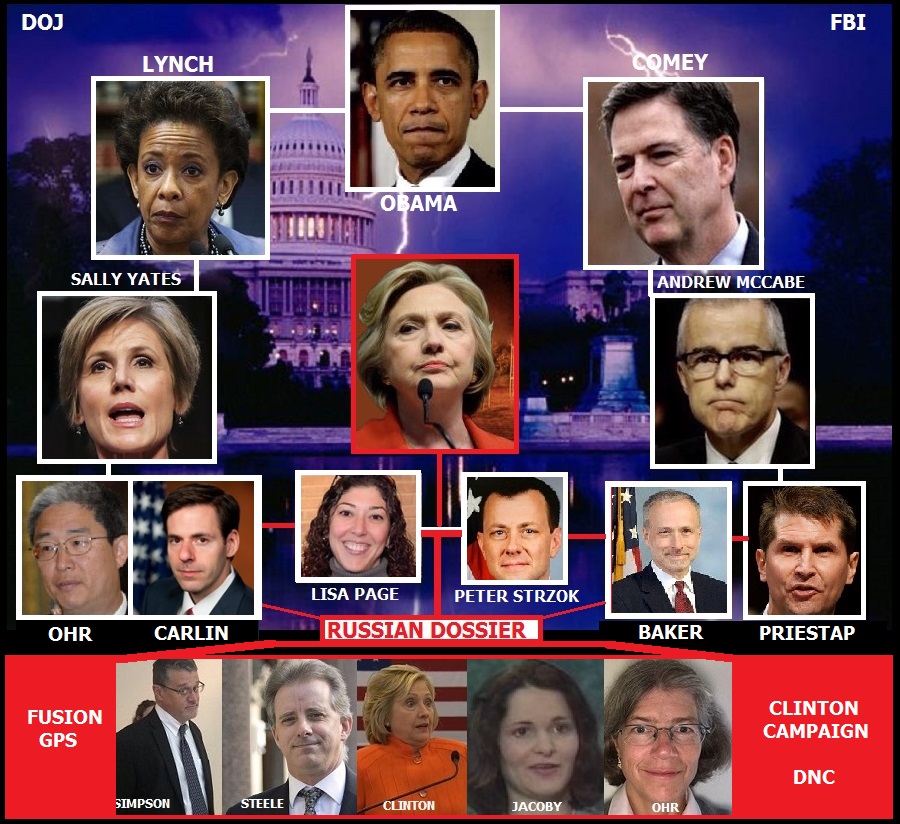
All of President Obama’s appointments in after 2015, were essentially through the prism of assisting Hillary Clinton to win in 2016. Attorney General Loretta Lynch (tarmac meeting), Deputy AG Sally Yates, Deputy FBI Director Andrew McCabe and FBI Director James Comey were all part of that.
Technically Hillary had eyes and ears all over the White House at the time, and with Hillary Clinton being a foregone conclusion per the expectations of Washington DC, everyone would fall in line during the transition from Obama to Clinton. Again, this was the general plan. Obama would show up in 2016 to campaign for Hillary and all would be seamless.
The FBI was aware of the plan for transition from Obama to Clinton, hence their role in eliminating the threat later presented by the Clinton, as Secretary of State, laptop scandal and the subsequent issues of classified information. Remember, Clinton’s motive as Secretary of State was to sell her position for material wealth; that’s why she used a personal email, maintained her own servers, and generally controlled how her activity could be monitored and tracked. [Also, she didn’t fully trust Obama]
When the Clinton campaign launched the Russia Collusion dirty trick move against her opponent Donald Trump, originally using Fusion GPS and Glenn Simpson, the role of the Obama administration was to facilitate the political hit, and at the very least not impede it. Hence, former CIA Director John Brennan briefing Barack Obama on the status of the Russia collusion hoax as it spread in 2016 via the Clinton campaign.
Specifically because President Obama was, by extension, now a participant in the Clinton created “Russia Collusion hoax,” and specifically because his administration officials were participants in the process (DOJ, FBI), when President Trump won the 2016 election President Barack Obama was now exposed by the threat the operation represented. This context is the impetus for the January 5, 2017, Susan Rice memo.
Following the surprising result in the 2016 election, the team around Obama was urgently framing plausible deniability.
President Obama did not orchestrate the Russia Collusion hoax; he facilitated it by not interfering with his administration officials who were assisting Hillary Clinton. This is a very key distinction. President Obama knew what was going on, he was willfully blind as it was carried out. However, the mess and fallout from the extreme lengths his FBI and DOJ officials went eventually represented a threat to Obama.
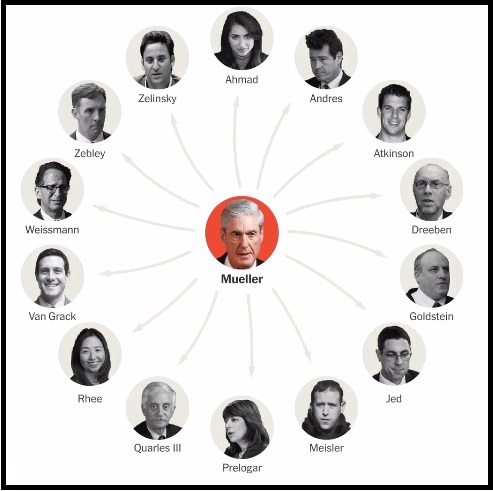
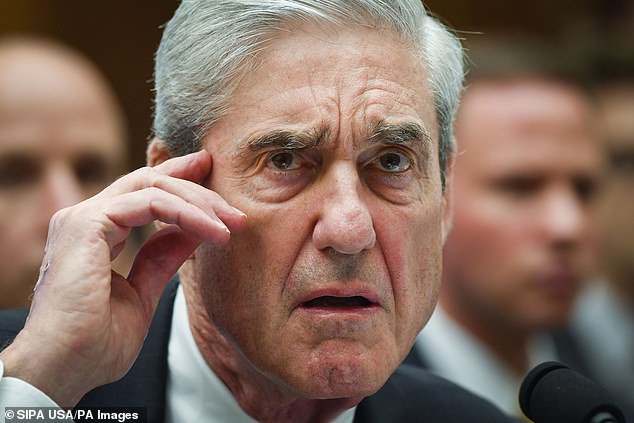
Robert Mueller and all 19 of his Clinton-aligned Lawfare operatives, were put into place to cover-up the entire mess created within the Russia Collusion operation. Mueller +19 continued the Crossfire Hurricane operation, while the extreme Lawfare strategy was deployed against the Trump administration.
That’s the short, encapsulated version.
The Russia Collusion hoax was created by Hillary Clinton, spread to media through Fusion GPS and given the patina of credibility by the DOJ and FBI. President Obama facilitated the operation by not interfering in the operation, until it became a threat to him personally.
Both the Obama and Clinton political teams supported and organized the Robert Mueller cover-up.
Posted originally on CTH on May 18, 2025 | Sundance
Rubio Outlines Ongoing CIA Attacks Against Trump Administration!
Secretary of State Marco Rubio appears on CBS Face the Nation to discuss on going geopolitical events. In addition to the discussion and outline of the ongoing talks with Russian officials, Secretary Rubio makes an interesting point about Tren de Aragua and an intelligence assessment made by the CIA sub-silo, the National Intelligence Council.
You might remember the recent report about DNI Tulsi Gabbard taking the National Intelligence Council out of the CIA parent silo and replacing both heads of the agency. I think Secretary Rubio just outlined why Director Gabbard made that decision. It appears the CIA-NIC was weaponizing the intelligence against the President Trump administration. WATCH BELOW and see it.
[TRANSCRIPT] – MARGARET BRENNAN: And joining us now is Secretary of State Marco Rubio from Rome. Mr. Secretary, you’ve had a very busy week. I know you have been at the Vatican, and they have offered to host a direct meeting between Ukraine and Russia. Given that Vladimir Putin was a no show at the talks he called for in Istanbul this past week, is there reason to believe that he will take up Pope Leo on the offer?
SECRETARY OF STATE MARCO RUBIO: Well, I think if you saw- again, I’m not a spokesperson for the Kremlin, but if you saw their statements, I believe yesterday, where they said that they would be open to such a meeting under the right conditions. So we’ll wait and see if that’s possible. Obviously, the Vatican has made a very generous offer to host anything, by the way, not just a meeting between Zelenskyy and Putin, but any meeting, including at a technical level, you know, any meetings that- that need to be hosted, they- they’ve expressed a willingness to do so. So it’s a very generous offer that may be taken up on. I mean, it would be a site that all parties would feel comfortable. So hopefully we’ll get to that stage where- where talks are happening on a regular basis and that the Vatican will have the opportunity to be one of the options.
MARGARET BRENNAN: The Russian Foreign Ministry is saying that you initiated a call to your Russian counterpart, Sergey Lavrov, on Saturday. What was that about? Are you talking about lining up that face-to-face meeting between President Putin and President Trump?
SEC. RUBIO: Well, we talked about a variety of things. We did talk about- I wanted to get his readout on his view of how the talks went yesterday. There- they were not a complete waste of time. For example, there were 1,000 prisoners that are going to be exchanged, and that, from a humanitarian standpoint, is very positive. He explained to me that they are going to be pre- preparing a document outlining their requirements for a cease-fire that would then lead to broader negotiations. So obviously, the Ukrainian side is going to be working on their own proposal, and hopefully that will be forthcoming soon. And if that does happen, and the proposal that comes forward from the Russian side and- and for that matter, from the Ukrainian side, are proposals that are serious and viable, then there’s been real progress, and we can work off of that. So we’ll have to wait and see. But he wanted me to know, and he communicated in our call, that they are- their side will be working on a series of ideas and requirements that they would have in order to move forward with a cease-fire and further negotiations. So we’ll await that, and hopefully it’s one- it’s a document that is close enough to what the Ukrainians want to be able to get to that point and maybe work out those differences.
MARGARET BRENNAN: You’ve said repeatedly it’s just a matter of days, though, in terms of the waning patience that the U.S. has for this diplomacy to succeed. So are- are they just tapping you along, as President Trump has said? Are they just seeking to talk- Are they just seeking to continue to talk to buy time?
SEC. RUBIO: Well, that’s what we’re testing. And that’s what we’ll know. Look, at the end of the day what I’ve said, and it’s happening now, we’re no longer flying all over the world trying to set up meetings. We’re responding to meetings that are set up and we’re willing- we always said we’re willing to do whatever it takes to bring them together if the opportunities present themselves. So I think your question is, are they tapping us along? Well, that’s what we’re trying to find out. We’ll find out pretty soon. They met last- yesterday or the day before in Turkey. From that they agreed they’re going to exchange paper on ideas that get to a cease-fire. If those papers have ideas on them that are realistic and rational, then I think we know we’ve made progress. If those papers, on the other hand, have requirements in them that we know are unrealistic, then we’ll have a different assessment. So, we’re going to try to find that out. And there’s a combination here. On the one hand, we’re trying to achieve peace and end a very bloody, costly and destructive war. So there’s some element of patience that is required. On the other hand, we don’t have time to waste. There are a lot of other things happening in the world that we also need to be paying attention to. So we don’t want to be involved in this process of just endless talks, there has to be some progress, some movement forward. And if at the end of this, in the next few days, we get a document produced by both sides, and it shows that both sides are being- making concessions and being realistic and rational in their approach, then I think we can feel good about continuing to remain engaged. If, on the other hand, what we see is not very productive, perhaps we’ll have a different assessment. I also agree that ultimately, one of the things that could help break this log jam, perhaps the only thing that can, is a direct- direct conversation between President Trump and Vladimir Putin. And he’s already openly expressed a desire and a belief that that needs to happen, and- and hopefully that’ll be worked out soon as well.
MARGARET BRENNAN: You’re planning on that?
SEC. RUBIO: Well, I don’t know. We’re- we’re certainly made the offer. The president’s made that offer already publicly. The mechanics of setting that kind of meeting up would require a little bit of work, so I can’t say that’s being planned as we speak in terms of picking a site and a date. But the president wants to do it. He wants to do it as soon as- as feasible. I think the Russian side has also expressed a willingness to do it. And so, now it’s just a question of bringing them- bringing everyone together, and figuring out where and when and that meeting will happen and what it will be about.
MARGARET BRENNAN: Yeah, I- I want to move on to other topics. But lastly, your- your Senate- former senate colleague, Lindsey Graham, was next to you in that meeting with the Ukrainian foreign minister. He has a- he has a veto-proof majority on this bill to put sanctions on Russia. How quickly do you want the option for more sanctions on Russia? Or are you asking him to wait?
SEC. RUBIO: No, we’re not- look, the Senate is going to act, ultimately. I mean, I think in the past, we’ve act- asked to give us a little time to see if we can make some progress on our talks. But we’ve also been pretty clear with the Russian side for weeks now, going back six or seven weeks. We’ve been communicating to the Russian side that this effort was- was being undertaken. That we anticipated that when all was said and done, it would have close to 80 cosponsors in the Senate, and I imagine a comparable percentage of support in the House, that that was an effort we couldn’t stop and don’t control, that ultimately, Congress and particularly the Republicans in the House and Senate, have tried to give the president space and time to negotiate something here. But we’ve- we’ve advised the Russians repeatedly now for almost two months that this was coming if no progress was made. So I think that’s just coming to fruition now. And it’s one of the- one of the things that I confirmed, again, being with Lindsey Graham this week in Turkey, is they’re now up to 77. He thinks they could get close to 80 or more. And that’s just- that’s just a fact, and something we’ve told the Russians about for weeks was coming.
MARGARET BRENNAN: I want to move on to another part of the world. You’ve been very involved in the administration’s efforts to crack down on this Venezuelan gang, TdA, that has been designated as a terror group by the U.S. Do you accept the intelligence community’s assessment that the Venezuelan gang is not a proxy force of the Maduro government? That was the ¹National Intelligence Council assessment.
SEC. RUBIO: Yeah, that’s their assessment. They’re wrong. In fact, the FBI agrees with me that they are. We- we- the FBI agrees that not only is Tren de Aragua exported by the Venezuelan regime, but in fact, if you go back and see a Tren de Aragua member, all the evidence is there, and it’s growing every day, was actually contracted to murder an opposition member, I believe, in Chile a few months ago. So, one of the warnings out there by the FBI is not simply that Tren de Aragua are- are a terrorist organization, but one that has already been operationalized, to murder a- to murder a- an- an opposition member in another country.
MARGARET BRENNAN: But that’s a different thing than being a proxy force controlled by the Maduro government. Part of this is at the heart of the legal arguments the administration is having over its ability to continue to deport suspected gang members. That’s why this assessment is so key. You completely reject that intelligence–
SEC. RUBIO: There- there–
MARGARET BRENNAN: –community finding?
SEC. RUBIO: Yeah, I agree 100 percent with the FBI’s finding. This is a prison gang that the Venezuelan government has actively encouraged to leave the country. A prison gang that, in some cases, they’ve been in cooperation- and by the way, Tren de Aragua members that have been returned to Venezuela on some of these planes that have gone back have been greeted like heroes at the airport. So we have no doubt, I have no doubt and the FBI has made clear, I mean, this is the gang that they hired in order to- to murder an opposition member in another country. So they- they- there’s no doubt in our mind, and in my mind, and in the FBI’s assessment that this is a group that the regime in Venezuela uses, not just to try to destabilize the United States, but to project power, like they did by murdering a member of the opposition in Chile.
MARGARET BRENNAN: South Africa’s president is traveling to the United States this week to meet with President Trump. The administration has prioritized bringing some white South Africans, Afrikaners, to the United States, despite the increased restrictions on refugees. President Trump claims there’s a genocide underway in South Africa. That’s a legal determination, the State Department would make it. Are you trying to determine that now?
SEC. RUBIO: I would determine that these people are having their properties taken from them. You can- they can call it whatever they want, but these are people that, on the basis of their race, are having their properties taken away from them, and their lives being threatened and, in some cases, killed. These are people that applied and made these claims in their applications and seek to come to the United States in search of- of refuge. I- we’ve often been lectured by people all over the place about how the United States needs to continue to be a beacon for those who are oppressed abroad. Well, here’s an example where we’re doing that. So I don’t understand why people are criticizing it. I think people should be celebrating it, and I think people should be supporting it–
(CROSSTALK)
MARGARET BRENNAN: Well is there evidence–
SEC. RUBIO: If in fact as many claim, they are in favor–
MARGARET BRENNAN: –of a genocide that you have?
(END CROSSTALK)
SEC. RUBIO: I think there’s evidence, absolutely, that people have been murdered, that people have been forcibly removed from their properties, both by the government, in some cases because of a law they passed, but also because of independent groups encouraged by political parties inside of South- inside of South Africa. So, listen, to move here from half a world away and leave behind the only homeland you’ve ever known, that’s not something people do lightly–
MARGARET BRENNAN: No.
SEC. RUBIO: –especially people who have spent generations farming their land and developing their property. That’s not something that you take lightly and do. These people are doing it for a reason. So we welcome them to the United States, and I think there may be more coming soon.
MARGARET BRENNAN: We will stand by to see if that determination of genocide is made. I want to ask you about the Middle East. The president says he wants to end wars, but Israel’s prime minister has said he is expanding this ground operation inside of Gaza, the IDF says is to seize strategic areas. Does the U.S. fully support expanding this war?
SEC. RUBIO: We expand the destruction of Hamas, the ending of Hamas. We support a future for the people of Gaza that is free of Hamas and full of opportunity. That’s what we support. And this is a group that came across on October 7 and carried out one of the most vile series of attacks, kidnappings, rapes, murders and hostage taking that we’ve ever seen. That’s what we support. Now that said, we also support an end of the conflict, a cease-fire. We don’t want people obviously suffering as they have, and we blame Hamas for that, but nonetheless, they’re suffering. And so we are actively engaged, even as I speak to you now, we are actively engaged in trying to figure out if there is a way to get more hostages out through some cease-fire type mechanism. We’re not going to do anything to undermine Israel and its security, but by the same token, if there is a possibility here to find a way forward that frees more hostages, including those who are alive, but also the bodies to their relatives, and potentially bring about an end to this war in a way that puts the people of Gaza on a pathway of peace and prosperity and being free of Hamas, we’re going to explore that. We think we’ve made some progress, but there’s more work to be done. Ambassador Witkoff is working on that on an hourly basis. It’s something we’re all very focused on and continue to be very supportive of. And I hope we’ll have good news soon in that regard, but I think some impediments remain.
MARGARET BRENNAN: Are you asking Israel to slow down this military push? And the Qatari prime minister told Fox News that there was a deal being put together for all hostages, or many hostages, to be released after Edan Alexander, that American-Israeli was released recently, but then the Israeli military bombed a hospital, killing 70 civilians, and everything went sideways. Is that your understanding of what happened–
SEC. RUBIO: Well, I would say that–
MARGARET BRENNAN: –it was this lack of care of collateral damage?
SEC. RUBIO: No, I- the way I would characterize it is that this war could end immediately. And Israel’s made that clear, it can end immediately if Hamas surrenders and gives up their weapons and demilitarizes and releases all the hostages, including the deceased ones. If they did that, this conflict would end. That’s been true from the very beginning. It’s been true for months now. They’re the ones that have chosen not to accept that offer. That said, we continue to work and do everything we can through diplomatic channels and private means to bring about an end to this conflict in a way that ends Hamas and provides the people of Gaza the opportunity at a prosperous and peaceful future that also ensures Israel’s security. So we’re working on that, and we’ve never stopped working on that. We’ve never stopped taking efforts to make that possible. And that continues. Even as I speak to you now, there are people working on that. So we’re going to continue to do that and that’s the outcome we want to see. And hopefully, the sooner the better.
MARGARET BRENNAN: Well, the president has said Prime Minister Netanyahu didn’t want to end the war. So the views are quite–
SEC. RUBIO: Well, I think what the–
MARGARET BRENNAN: –in contrast.
SEC. RUBIO: Yeah- no- what the president’s- no, no. I think what the president is saying is he doesn’t want to end the war until Hamas is defeated. This is a group that is a threat- if an ember survives, it will spark again into a fire. And that is the view of- there is no future. There can be no peaceful and prosperous Gaza as long as Hamas governs it by rule of arms. And that’s a- that’s a fundamental truth. Now that doesn’t mean that there isn’t some way that we can achieve that through a cease-fire and some peace mechanism, and that’s what we’re trying to accomplish here. Ending Hamas, ending its governance of Gaza, ending the conflict, freeing all of the hostages, including the bodies of those who have passed away and been killed and murdered by the Hamas terrorists, and then beginning the work of a future for Gaza and also of ensuring Israel’s security. That’s always been our goal. That remains our goal, and that’s what we continue to be focused on. But in the absence of that such agreement, we anticipate that, you know, Israel will continue forward with their operations. But that doesn’t mean we stopped working on trying to achieve a peaceful outcome that also protects Israel’s security and ends Hamas’s governance of Gaza, so that Gaza can have a free and prosperous future moving forward. That’s what the president wants to see as the end goal here. That is the end goal, and that’s what we’re working on through every means at our disposal.
MARGARET BRENNAN: You have said that Iran is, in your view, a threshold nuclear state, and we’re at a critical moment. The U.S. and Iran are talking again. Can you clarify what the U.S. policy is here? Is the bottom line that Iran cannot enrich any uranium, even if it is at low levels for civilian purposes? Do they need to fully dismantle the program?
SEC. RUBIO: Well, look, if you’re able to enrich at any level you’ve now are basically able to enrich at weapons grade very quickly. I mean, that’s just a fundamental fact, and everyone knows it, and that was the problem with the Obama deal. But the end goal here is simple, Iran can never have a nuclear weapon. And the president’s preference, because he doesn’t like war, the president’s preference is to achieve that through a peaceful negotiation. In fact, the president’s preference is not- not only that Iran not pursue nuclear weapons, but that Iran be a rich, peaceful and prosperous country where its people can be happy. He wants them to have a better future. He has said this, he’s a builder, not a bomber. That’s what he views himself as, and that’s what he is. He’s a president that wants peace, and so he’s offered that route, and that’s one we hope the Iranians will take. But he’s been very clear, Iran is never going to have the capability. They’re never going to have a nuclear weapon. It’s not going to happen. And we hope that that is achieved, that outcome is achieved through peaceful, diplomatic means, and that’s what we’re engaged on. We’re not going to negotiate it in the media, because it makes it difficult to get an outcome. But that is the ultimate goal here, is to have an Iran that does not have a nuclear weapon or the ability to threaten its neighbors, particularly Israel.
MARGARET BRENNAN: Mr. Secretary, I know you have a busy schedule. Thank you for your time this morning.
This is what Secretary of State Marco Rubio was inferring:
¹WASHINGTON DC – Director of National Intelligence Tulsi Gabbard has fired the top officials leading the National Intelligence Council – whom whistleblowers describe as “radically opposed to Trump” — and has moved the agency to the Office of the Director of National Intelligence, or ODNI, to ensure she can block any “politicization of intelligence,” Fox News Digital has learned.
Gabbard fired Mike Collins, who was serving as the acting chair of the National Intelligence Council, and his deputy, Maria Langan-Riekhof, Tuesday, senior intelligence officials told Fox News Digital. (read more)
What Secretary Rubio is outlining in his statement of disbelief toward the National Intelligence Council, is backed up by the action taken by DNI Tulsi Gabbard. In essence, a sub-silo within the parent CIA agency was weaponizing intelligence against President Trump in order to trigger a Lawfare attack. Gabbard intercepted the issue, removed the agency from the CIA and dispatched the two heads, Mike Collins and Maria Langan-Riekhof.
Last week CTH and TWE looked into the relationship of the CIA, NIC and how Collins and Langan-Riekhof operated. It is crystal clear the two heads were running an intelligence operation against President Trump. {SEE FULL INFORMATION HERE}
Good call by DNI Tulsi Gabbard. It’s obvious from the CBS interview that Margaret Brennan was prepared with “conflict IC” talking points that were manufactured by those CIA operatives. Kudos Tulsi!
Posted originally on CTH on May 18, 2025 | Sundance
FBI Director Kash Patel and Deputy FBI Director Dan Bongino sat down for a lengthy interview with Fox News host Maria Bartiromo.
Director Patel begins the interview noting how he and Deputy Bongino have spent the majority of the week attending ceremonies for law enforcement and visiting families and colleagues of fallen FBI heroes. Director Patel then begins to discuss reforming the FBI and his plan to correct all of the political corruption that has permeated his organization.
Patel notes the previous FBI Director and Deputy Director intentionally lied to the American people about their roles in the weaponization of the agency. Bartiromo plays her role in saying the duo are not going to do anything. Patel counters with his intention to keep delivering the documentary evidence that highlights how FBI leadership played a key role in the weaponization of government. Patel says, “you’re about to see a wave of transparency, just give us about a week or two.”
Deputy Dan Bongino says, “do you want it done right, or do you want it done correctly.” Additionally noting, “everything is a priority.” When referencing the possibility of an interconnected conspiracy within the prior threats and attempted assassination of President Trump, Bongino notes “there is no there, there.” It is a long and wide-ranging discussion. WATCH:
.
We all want Kash Patel and Dan Bongino to succeed. Things do take time, but the unwillingness of Patel and Bongino to call out the corrupt lower-level FBI activity that takes in DC and in various field offices is not confidence inspiring.
Bongino and Patel are passionate speakers about their jobs and objectives.
Director Kash Patel notes repeatedly throughout the interview that his team (the FBI Silo) is now sending documents to congress, presumably the Judiciary Committee (silo), the SSCI (silo) and the HPSCI (silo), as each of the silos continues their investigative work around government weaponization.
My simple question is, “why”?
Why send exclusive silo documents to other exclusive silos for further review? …. Because that’s the rules? …. Because that’s the process established by the same DC silo administrators who consider themselves as acceptable filters through which the material must be controlled, put into silo-affirming context, and released in a process that protects the interests of the DC silo creators? Is that the why?
Where in this equation are ‘we the people‘?
Does the executive need to engage the legislative just because the system is designed to enmesh all their collective interests?
Why not release the information publicly, with a notation, “this was sent to the (fill_in_blank)?”
Oh, wait, “ongoing investigations,” gotcha.
“Do you want it done right, or do you want it done correctly?” Where “correctly” are the DC rules.
Posted originally on CTH on May 17, 2025 | Sundance
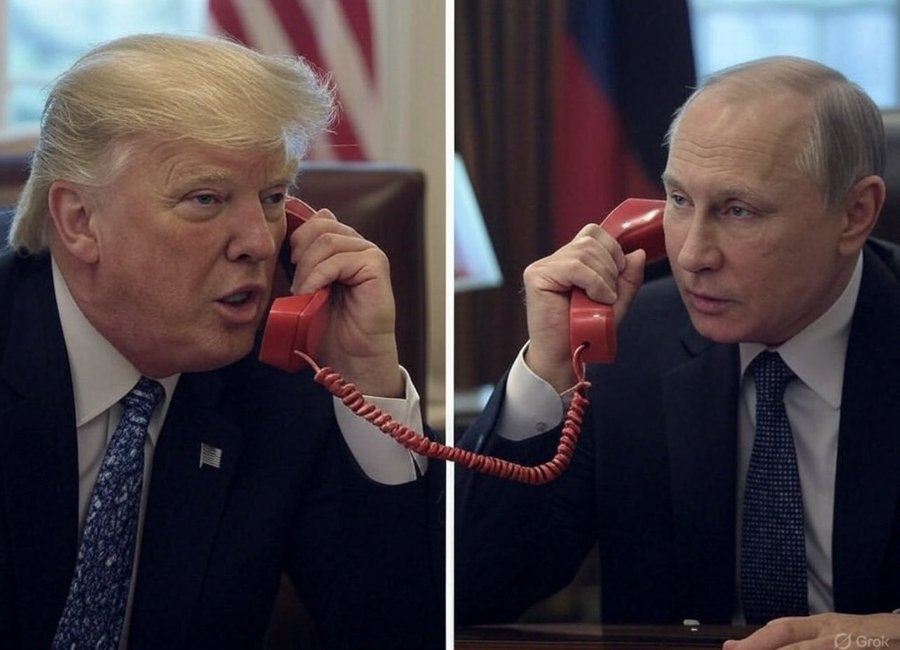
Making the announcement via his Truth Social account, President Trump notes he will be speaking with Russian President Vladimir Putin on Monday and then conducting further discussions with Ukraine President Volodymyr Zelenskyy and his NATO allies thereafter.
The principals phone call follows on the heels of Secretary of State Marco Rubio having a phone call with Russian Foreign Minister Sergey Lavrov.
WASHINGTON DC – US Secretary of State Marco Rubio held a phone conversation with Russian Foreign Minister Sergey Lavrov. During the call, Rubio delivered a message from US President Donald Trump.
During the conversation with Lavrov, the US Secretary of State welcomed the prisoner exchange agreement reached in talks between Ukraine and Russia on May 16 in Istanbul.
Rubio also conveyed a clear message from President Trump.
“The United States is committed to achieving a lasting end to the Russia-Ukraine war. The comprehensive peace plan proposed by the United States outlines the best way forward,” Rubio emphasized.
The Secretary also stressed President Trump’s call for an immediate ceasefire and an end to violence. (more)
I have created this site to help people have fun in the kitchen. I write about enjoying life both in and out of my kitchen. Life is short! Make the most of it and enjoy!
This is a library of News Events not reported by the Main Stream Media documenting & connecting the dots on How the Obama Marxist Liberal agenda is destroying America








 Centinel2012