Rice Crisis in Japan Continues


Posted originally on Jun 11, 2025 by Martin Armstrong 
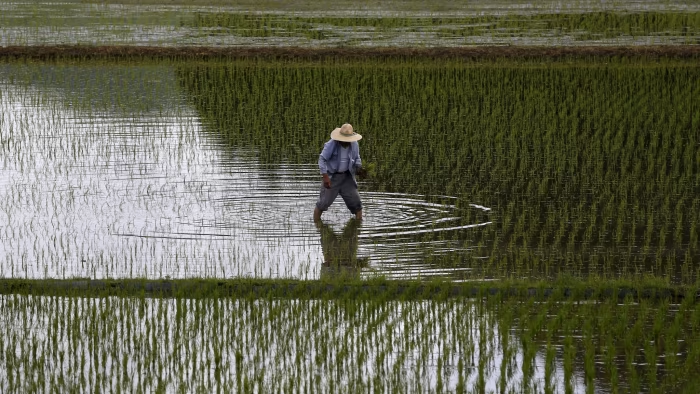
ricefield

The Japanese government announced that it has been forced to release 200,000 metric tons of reserves from its rice stockpile once again, as the nation has been unable to reverse shortages. The government last released over 300,000 metric tons of rice from its emergency reserves, that was intended to last through July, in addition to the 310,000 tons released since March, but this is not sufficient to meet demand, and consumers are highly dissatisfied with the government’s response.

Retailers and local rice sellers with milling capacity will receive the first 100,000 tons of rice from the 2021 harvest. “We want to continue responding without slowing down so that the stockpiled rice can reach consumers quickly and at a low cost,” Agriculture Minister Shinjiro Koizumi said during a press conference. “We must never allow the virtuous cycle of prices and wages in the Japanese economy as a whole to break down. If the cause lies with rice, then I believe we must address such issues promptly.”

Poor weather conditions in 2023 led to a significant decline in crop yields. The Japanese government placed high tariffs on imported rice, and Japanese consumers strongly prefer domestic varieties. Japan reluctantly began importing rice to meet demand. In February alone, Japan imported roughly 40% of what it imported in FY2023. Japan was self-sufficient in rice production, but was forced to purchase rice from South Korea for the first time in 25 years. Japan has also turned to the United States to fill the gap. Panic buying remains prevalent despite the high cost of rice, as it is a staple in the Japanese diet. A mass uptick in tourism following the end of COVID has also been blamed for increased demand, with foreigners increasing by a record 342,000 in 2024.

The Ministry of Internal Affairs and Communications noted that rice prices rose 92.1% year-on-year in March, and despite releasing reserves, prices continued to rise. In mid-April, a 5kg bag of rice reached ¥4,220 (about $29–$30), over an 80% YoY increase. Rice prices hit a record high of ¥4,285 yen ($29.97) for 5kg of rice during the week ending on May 18, with some premium brands like Koshihikari exceeding ¥5,000 yen ($35). As of June 1, the average 5k bag of rice cost about ¥4,223 yen, a 50% annual increase.
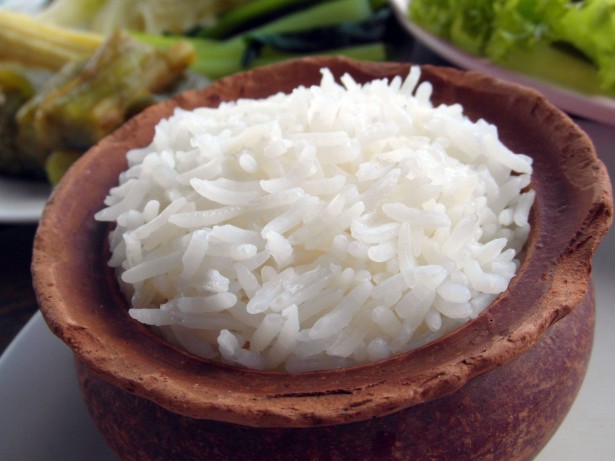
bowl of rice

This is an extremely serious issue in Japan. The rice crisis controversy is causing the public to lose confidence in the government at large. Prime Minister Shigeru Ishiba’s Administration approval rating sunk to an all-time low of 27.4%. Japanese Minister Taku Etō was forced to resign after stating that he personally has no concern for the rising price of rice. The Upper House election takes place in July, which is certainly unfavorable for the Liberal Democratic Party (LPD) who has been in power since 1955.

The next major rice harvest will be in August. The situation is pessimistic as only 1.458 million hectares were harvested, the lowest on record since at least 1900.

Farmers have been protesting against the government’s policy of rationing harvests. The EU and US allow farmers to produce as much as possible, and the government subsidizes any losses, while Japan has taken an opposite approach. The Japanese government believes it would lose $2.65 billion per year if it were to subsidize harvests, but it is already paying farmers $2.32 billion to ration production. Rice paddies are increasingly abandoned as the next generation has no desire to enter a low-paying industry that they believe has been stifled by government regulation. The Mi/OP: Ministry of Agriculture, Forestry and Fisheries (MAFF) has asked many farmers to focus on rice instead of other crops, but it will take years to replenish the reserves.

Japan has a much more serious issue on its hands as the nation is at risk of an outright default on its outstanding debt. For now, the rice crisis has caused the average person to become disgruntled with the leadership. They say the public is quiet and content when everyone is fat and happy, but now, every meal is a reminder of government mismanagement.

Lara Interviews Lance Schuttler from Ascent Nutrition


Posted originally on Rumble By Lara Logan on: Apr 9, 2025 at 12:00 am EST

Going Rogue with Lara Logan Episode 10 | Fauci, Chemtrails & Tesla Protestors


Posted originally on Rumble By Lara Logan on: Apr 8, 2025 at 3:00 am EST

SacredHuman Health Shares How Their Nature Based Products Can Boost Your Lifestyle


Posted originally on Rumble By Bannon’s War Room on: Mar 22 2025, at 1:00 pm EST

“Don’t Wait For A Health Scare.” Shemane Nugent On The Benefits Of Field Of Greens


Posted originally on Rumble By Bannon’s War Room on: Feb 26, 2025, at 1:00 pm EST

Why Egg Prices are Stable in Canada


Posted originally on Feb 26, 2025 by Martin Armstrong 

Chicken of Egg

Trump is not responsible for egg prices. Reminiscent of those who put Biden’s sticker on gas pumps, Americans are now seeing Trump stickers in the egg section of their local grocery store. Over 108 million chickens have been killed since 2022 to prevent the spread of the bird flu, according to the USDA. About 13 million were culled in recent months leading to a 15% uptick in egg prices this January. Egg prices in Canada have remained relatively stable despite the bird flu due to the egg supply management system and a different method of farming.

American egg farms can host millions of chickens, and while this usually leads to lower prices, it has become detrimental during the bird flu outbreak. The USDA will kill every chicken on a farm if the bird flu is detected. Now, Canada does not have this problem as commercial egg farms are not widespread, with the average egg farm hosting only 25,000 hens. Multiple Canadian farms could get hit with the bird flu, and it would not dent the overall industry.

Established in 1972, Canada’s supply management system was implemented to maintain prices. Production control is used to determine quotas and match egg supply with demand. Tariff Rate Quotas (TRQs). Provincial organizations often set prices. Yet, this system means Canadians typically pay more for egg prices in an average year and prices will vary by province. No one is profiting more from a fruitful harvest so to speak. Canada’s Food Price Report 2025 predicts a 6% increase in egg prices this year but that is nothing compared to the 20% uptick the USDA is forecasting.

The Canadian Food Inspection Agency (CFIA) also evaluates each flock of chickens for infection. The agency does not always demand that every bird be culled but it is far easier to quarantine and separate flocks on smaller farms. You simply cannot do that in giant commercial operations. These commercial farms are yet another reason so many animals are injected with antibiotics and vaccines since we are talking about MILLIONS of animals here.

It is not in America’s capitalistic nature to limit boom-bust periods with a supply management system. However, the industry may need to rethink farming practices. Absolutely everyone is complaining about egg prices, and there is little the US can do. Turkey has signed a deal with the US to ship a total of 15,000 tonnes of eggs or 700 containers until July. Eggs are more likely to be available as a result of this deal rather than seeing a notable price decrease. The issue really is that when a few commercial farms in the US are hit, the entire egg supply plummets. It is not an issue of farming practices rather than politics.

5.11.24: LT w/ Cloe at Parker Pastures, meat processing in many stores are corrupt and dangerous for our health. Pray!


Posted originally on Rumble By And We Know on: May 1, 2024 at 3:05 pm EST


Interview: You Need Two Years Worth of Food


Posted originally on May 11, 2024 By Martin Armstrong 

greg_hunter1
Marty.GregHunter

Click here to watch my latest interview on USAWatchdog.

Commentary from Greg Hunter:

“Legendary financial and geopolitical cycle analyst Martin Armstrong has new data on how well the Biden economy is doing.  Spoiler alert:  It’s not doing well, and the financial system is about to tank.  I asked Armstrong if the US government could default on its debt if countries around the world continue to stop buying it?  Armstrong explained, “I think the US could default on its debt as early as 2025, but probably in 2027.  We have kicked the can down the road as far as we can go.  It’s not just in the United States.  Europe is in the same boat.  So is Japan.  This is why they need war.  They think by going into war, that’s the excuse to default on the debt.  They simply will not pay China.  If they try to sell their debt–good luck.  We are not redeeming it.  The same thing is happening in Europe.  So, once that happens, you go into war, and that is their excuse on this whole debt thing to collapse, which wipes out pensions etc.  Then they can blame Putin.  This is the same thing Biden was doing before saying this was Putin’s inflation.  Then, with the whole CBDC thing (central bank digital currency) . . . .  the IMF has already completed its digital coin, and they want that to replace the dollar as the reserve currency for the world. . . . These people are desperately just trying to hang on to power.  Nobody wants to give it up, and nobody wants to reform.”

I asked Armstrong what should the common person be doing now?  Armstrong surprisingly said, “I think you need, safely, two years’ worth of food supply. . . .This is what I have.   It’s not just prices will go up, but mainly because there will be shortages.  Then, you do not know what they are going to do with the currency. . . . They will do whatever they have to do to survive.  That’s what governments always do.”

Armstrong says his most recent data suggests that government approval ratings in the USA are worse that Biden’s 8% approval rating.  Congress, according to Armstrong, is dragging the bottom with a 7% approval rating.  Armstrong has long said that people will buy gold and silver when faith in government crashes.  That is exactly what Armstrong is seeing around the world today.  Gold is bouncing around the $2,300 level, and Armstrong sees “a new gold and silver rally coming soon.”  War is also coming sooner than later with the announcement that Ukraine will be joining NATO as early as July.   When the next war starts, Armstrong warns, “You are going to have to watch the bank because long term interest rates are going to go up.  Nobody wants to buy government debt, and you are going to have to hunker down at that stage in the game.”

Armstrong is also predicting a big turn on or about May 7th of next week.  Armstrong predicts a recession will start then and go on until 2028.  GDP will continue to fall, and inflation will continue to rise.  Armstrong says it is the perfect storm for a dreaded “stagflation economy.”

There is much more in the 54-minute interview.

Join Greg Hunter of USAWatchdog.com as he goes One-on-One with Martin Armstrong, who will preview his “Mid-Year Seminar” in London May 24 & 25 for 5.4.24.”