Posted originally on CTH on March 2, 2026 | Sundance
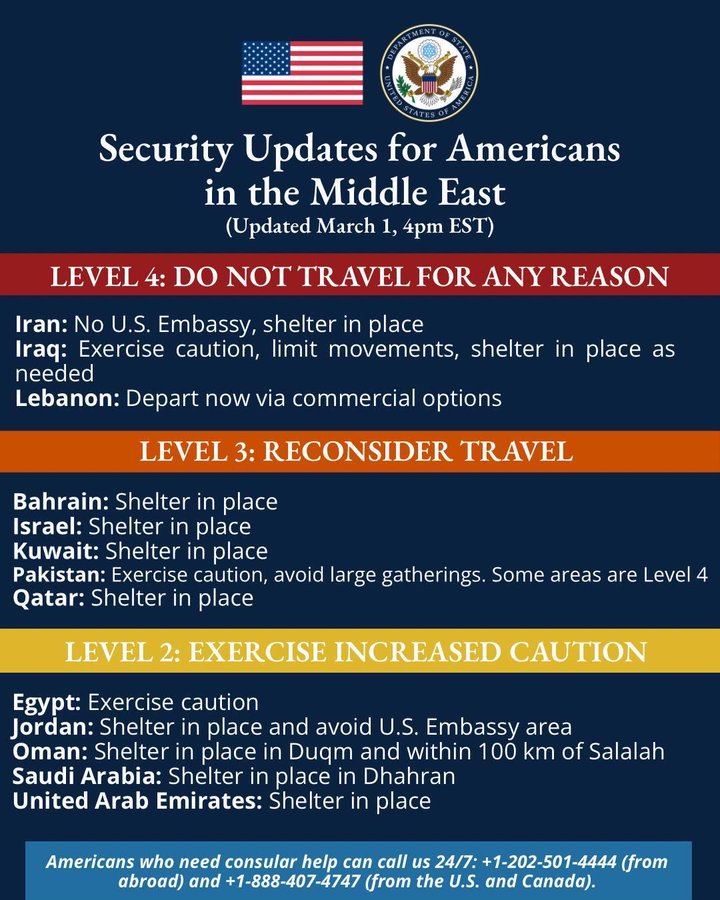
The U.S. State Department has provided an updated recap for those who are travelling and those who are currently abroad and transiting through the region of conflict. [State Dept. Website]
“Following the launch of U.S. combat operations in Iran, Americans worldwide and especially in the Middle East should follow the guidance in the latest security alerts issued by the nearest U.S. embassy or consulate. They may experience travel disruptions due to periodic airspace closures. The Department of State advises Americans worldwide to exercise increased caution.”
To get the latest updates visit http://travel.state.gov/destination and enroll to receive alerts directly at http://step.state.gov. Americans who need consular help can reach us 24/7 by phone: +1-202-501-4444 (from abroad) and +1-888-407-4747 (from the U.S. and Canada).
Posted originally on CTH on February 19, 2026 | Sundance
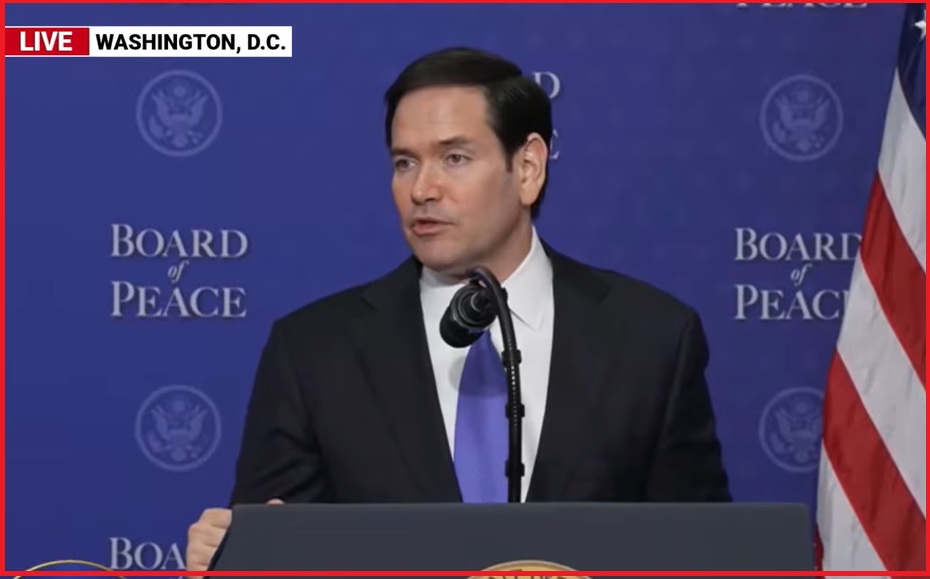
As the inaugural meeting of the Global Board of Peace gets underway, Vice President JD Vance, Secretary of State Marco Rubio and Special Envoy Steve Witkoff delivered speeches at the beginning of the Board of Peace session in Washington DC. WATCH:
Posted originally on CTH on January 28, 2026 | Sundance
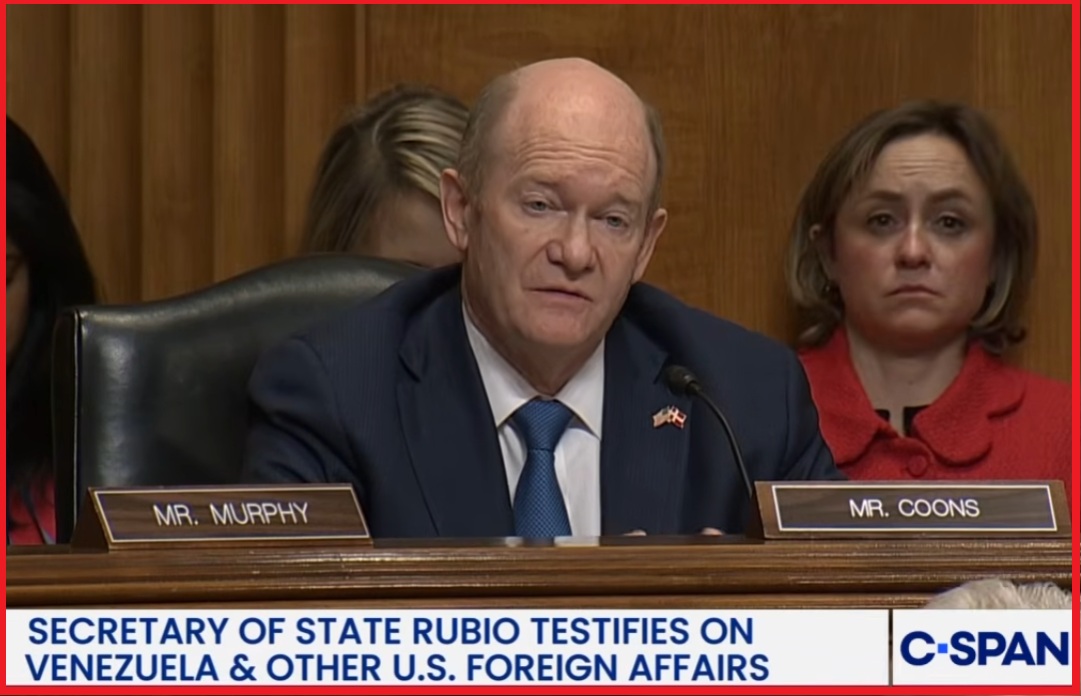
Delaware Senator Chris Coons questioned Secretary of State Marco Rubio about the Trump administration’s refusal to consult the Senate in advance about national security operations using the U.S. military. Specifically, Senator Coons expressed his anger about not being informed in advance of the operation to capture Nicholas Maduro.
Secretary of State Rubio reminded Senator Coons that operational security, and the desire to protect U.S. military servicemen, precluded the administration from permitting the Senate to warn Maduro of the pending operation. Senator Chris Coons then counters by saying, “The Gang of Eight has never leaked, it is critical you consult with Congress.” This is a false statement by Chris Coons, who has never been a ‘Gang of Eight’ member.
Virginia Senator Mark Warner was Vice-Chair of the Senate Select Committee on Intelligence (SSCI) and a Gang of Eight member, when he directed SSCI Security Director James Wolfe to leak a top-secret classified document (Title-1 warrant) to the media on March 17, 2017. The Gang of Eight does leak to the media, and Secretary Rubio should know. Secretary Rubio was also a member of the Gang of Eight as SSCI Vice-Chair.
The entire testimony by Secretary Marco Rubio is exceptional. You can even tell from the moderate responses from Democrats on the Senate Foreign Relations Committee that they were/are completely outmatched by Rubio.
Despite the background of Rubio, working against many of MAGA’s interests (2010 – 2024), I have never seen a more articulate Secretary of State with complete command of every granular aspect to U.S. foreign operations. The MAGA-Rubio is perhaps the most skilled and articulate voice we have ever seen on our side.
This is the same Marco Rubio who came out of the Florida Senate, supported Jeb Bush, worked for immigration amnesty, supported TPP, supported fast track TPA, supported TTIP, supported the Libya intervention model, worked against tariffs and traveled the world with Senator John McCain. In full honest review, Marco Rubio was to John McCain what John Thune was to Mitch McConnell.
I really hope someone can eventually ask Rubio what happened during his ‘¹road to Damascus’moment? What, specifically, is behind this transformation? Someone needs to ask.
Check out the look of defeat on the face of Senator Chris Coons (below) when Secretary of State Marco Rubio was finished with him. Incredible.
¹Saul, originally a Pharisee who persecuted Christians, became Paul after a transformative encounter with Jesus on the road to Damascus, which led him to become a devoted follower and missionary of Christianity. This event is often referred to as his conversion and marks a significant turning point in his life and the spread of the Christian faith.
Posted originally on CTH on January 13, 2026 | Sundance
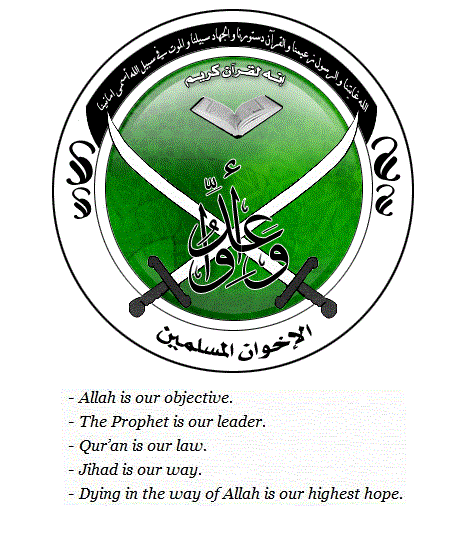
Secretary of State Marco Rubio has announced the first official set of Muslim Brotherhood chapters that are designated as “global terrorist” organizations. The first set will not come as a big surprise: Egypt, Jordan and Lebanon.
The Egyptian Muslim Brotherhood were chased out of the country by President Abdel Fattah al-Sisi over a decade ago. The Jordanian chapter is similarly aligned and was previously targeted by King Abdullah. The Lebanese faction is not as well known, but their support for Hamas is well understood.
Secretary of State Marco Rubio – Today, as a first step in support of President Trump’s commitment to eliminate the capabilities and operations of Muslim Brotherhood chapters that pose a threat to the United States as described in Executive Order 14362, the United States is imposing terrorist designations against the Lebanese, Jordanian, and Egyptian chapters of the Muslim Brotherhood.
The Department of State is designating the Lebanese Muslim Brotherhood as a Foreign Terrorist Organization and a Specially Designated Global Terrorist (SDGT), and the group’s leader Muhammad Fawzi Taqqosh as an SDGT. Concurrently, the Department of the Treasury is designating the Egyptian Muslim Brotherhood and Jordanian Muslim Brotherhood as SDGTs for providing material support to Hamas.
These designations reflect the opening actions of an ongoing, sustained effort to thwart Muslim Brotherhood chapters’ violence and destabilization wherever it occurs. The United States will use all available tools to deprive these Muslim Brotherhood chapters of the resources to engage in or support terrorism. (READ MORE)
Keep in mind, the Muslim Brotherhood is the fabric on the umbrella of political Islam. Each faction represents an individual spline on the umbrella construct, but the Muslim Brotherhood overall is a political extremist system for various levels of authentic Islam.
The regional chapters that really matter, the difficult ones to navigate, will be in Qatar, Syria and especially the Turkish factions. These are more politically connected to the home government interests.
Posted originally on CTH on January 10, 2026 | Sundance
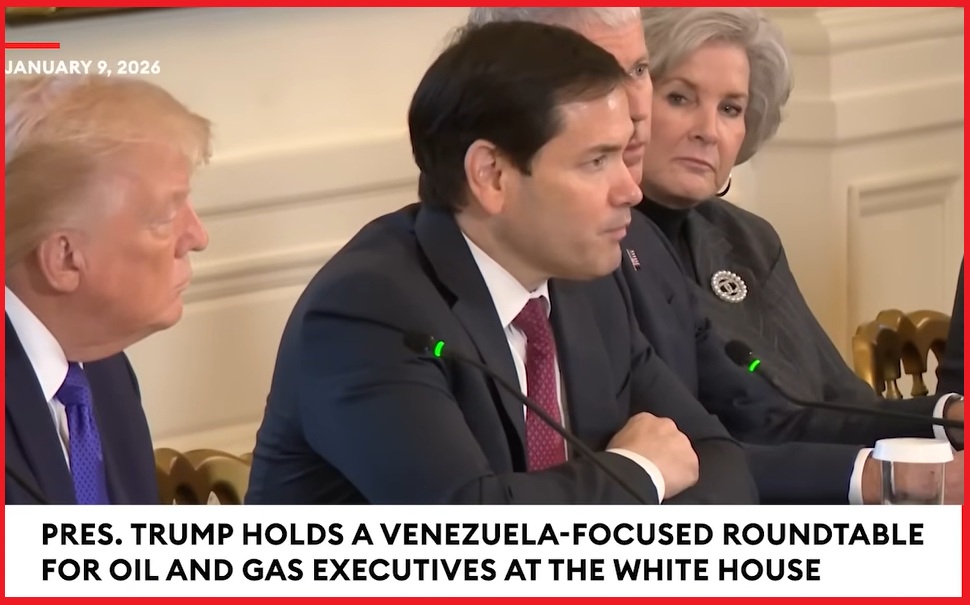
During the energy roundtable, Secretary Rubio made remarks outlining the three phases within the U.S. policy toward Venezuela. Essentially the core of the policy is: (1) Stabilization; (2) Transition, and (3) a Return to sovereign representative democracy.
The initial phase is ‘stabilization,’ where the U.S. government is working with existing leadership in Venezuela under tight controls and clear expectations. Reconciliation of political factions is supported. The U.S. leverage is maintained by financial and economic control, provided by the threat of U.S. military. Venezuela’s oil production pays for U.S. oversight.
The second phase involves ‘transition’, where the civic and governing responsibilities are shared between the existing Venezuelan leadership and aligned policy of the U.S. government. In the transitional phase the economic wealth is apportioned to the people of Venezuela with oversight by the U.S. government.
The third phase ‘sovereign representative democracy’ happens when the reformed government holds legitimate elections to decide the representative form of government, the voice of the people, within Venezuela. The U.S. influence then begins to withdraw, and new sovereign political leadership takes control.
Posted originally on CTH on December 1, 2025 | Sundance
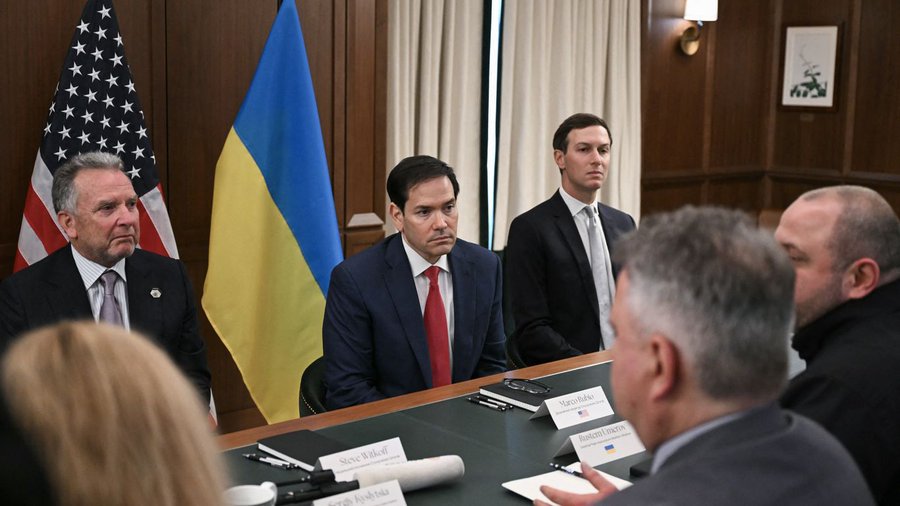
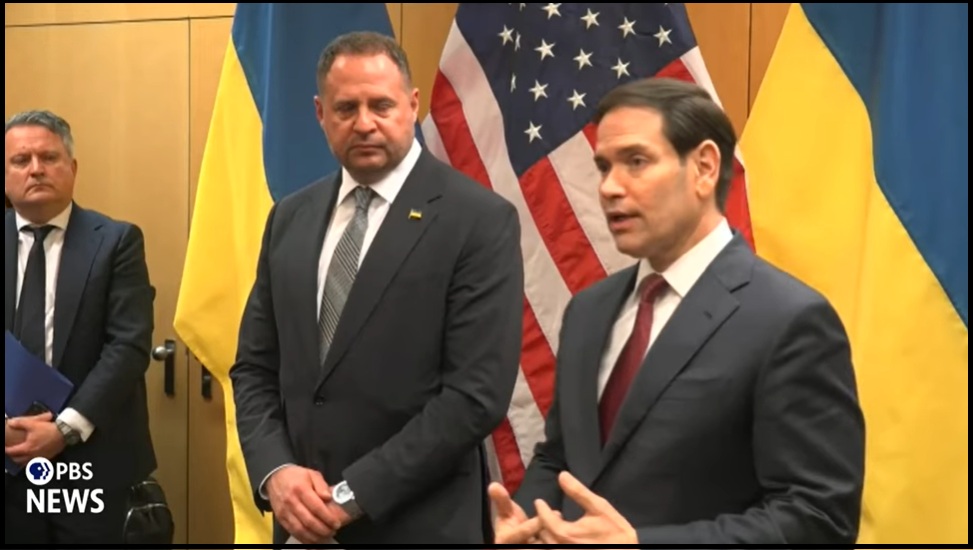
On Sunday, Secretary of State Marco Rubio, Trump emissaries Steve Witkoff and Jared Kushner met with the Ukraine negotiating team in Florida to further discuss acceptable terms for a broader ceasefire and end to the war.
Still trying to recover from corruption charges against his senior presidential team, Volodymyr Zelenskyy was not at the talks. Instead, the Ukraine delegation was led by State Security Council Secretary Rustem Umerov, while Zelenskyy went to Paris for an emotional support session with Emmanuel Macron.
Secretary Rubio and Secretary Umerov spoke before and after their 5-hour negotiation session. Secretary Rubio emphasized the main topic as securing the long-term future of Ukraine both from a security position and from an economic prosperity position.
This state security aspect comes as the Ukraine delegation is facing pressure to accept, they will lose most -if not all- of the Donbas region to Russia. “The end goal is obviously not just the end of the war. Obviously, that’s central and fundamental,” Rubio said. “It’s also about securing an end to the war that leaves Ukraine sovereign and independent and with an opportunity at real prosperity.”
In better-than-expected news, the EU is now saying they will not comply with any removal of sanctions against Russia. If the U.S-Russia and Ukraine work out a negotiated settlement that permits legal or economic relief for Vladimir Putin, the European Union will not agree and will instead make up their own decision on the issues.
Europe is holding this position as a threat, because President Trump is not fully consulting with them on all the granular details. However, this is the type of threat that is exactly beneficial to what appears to be the long-term strategy of Trump.
If Europe refuses to remove sanctions or legal threats against Russia, but the U.S. negotiates the removal of U.S treasury and financial sanctions against Russia, then the Europeans have chosen to stay behind the locked door of economic benefit. More than two-thirds of the world does not participate in the sanctions at all.
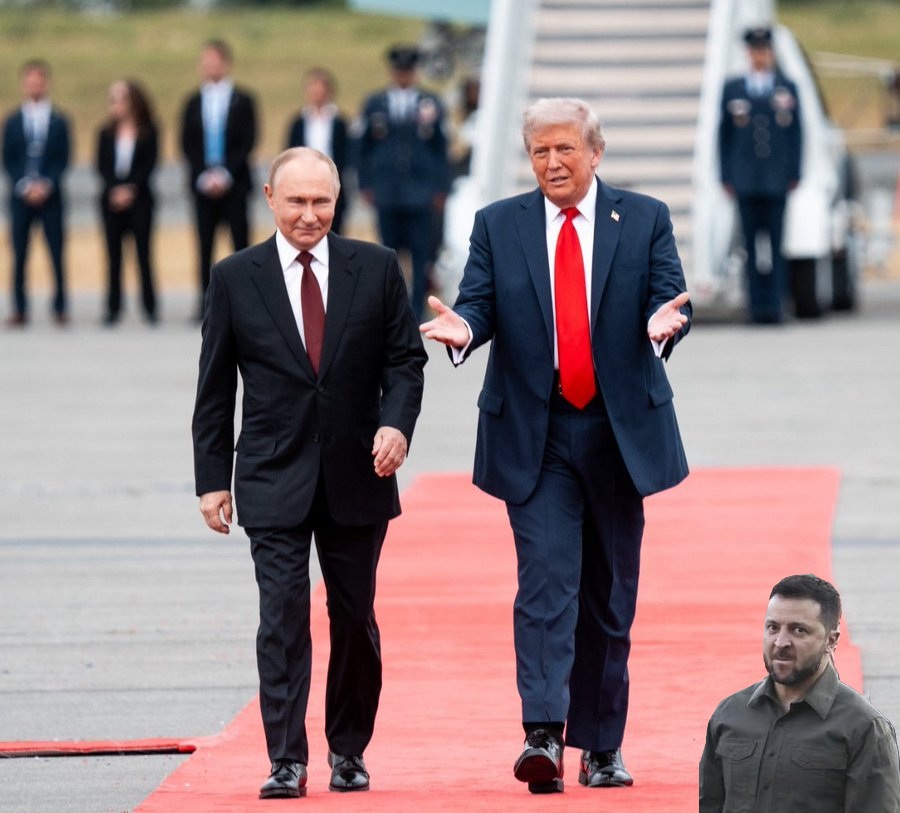
If Europe and Canada continue blacklisting Russia, the U.S-Russia energy development program gains exclusive benefits to Trump, Putin and other allies like Mohammed bin Salmon (Saudi Arabia), ASEAN nations and even Japan.
In very practical terms, someone like Viktor Orban (Hungary) would like nothing more than to violate ongoing Brussels sanctions against Russia, and as a consequence create a fracture point for European Union exit.
In practical terms, what would this look like? Well, the entire world would have lower energy prices, lower oil and natural gas prices, and lower gasoline prices by big margins. Meanwhile, Europe would have a massive disparity in their much higher energy costs – likely double the rest of the world. Think about the ramifications. Hungary, Georgia, Montenegro, and Serbia with 50% lower prices on gasoline and electricity than the EU. lolol It would be funny.
Unfortunately, with this in mind I find the EU threats hollow. As soon as the U.S-Russia-Ukraine work out a peace and security agreement, Europe will comply with whatever terms are negotiated for Russia. Failure to do so only isolates the Europeans and will create a problem amid their collective mindsets.
(Via Axios) Negotiations between the U.S. and Ukraine on Sunday focused on where the de facto border with Russia would be drawn under a peace deal, two Ukrainian officials tell Axios. They described the five-hour meeting as “difficult” and “intense,” but productive.
Why it matters: Russian President Vladimir Putin — who’s expected to meet with President Trump’s envoy on Tuesday — insists Russia won’t stop until it controls the entire Donbas region in eastern Ukraine.
After an hour in a wider format, the meeting narrowed to three officials from each side — with the line of territorial control virtually the only issue discussed, according to the two Ukrainian officials.
On the U.S. side were Witkoff, Secretary of State Marco Rubio and Trump’s adviser and son-in-law Jared Kushner. The Ukrainian side was represented by national security adviser Rustem Umerov, military chief of staff Gen. Andrii Hnatov and deputy head of military intelligence Vadym Skibitskyi.
After the talks with their teams ended, Umerov held another one-on-one meeting with Witkoff. Umerov then called Ukrainian President Volodymyr Zelensky to brief him on the talks.
“It was intense but not negative. We really appreciate serious U.S. engagement. Our position is that we have to make everything to help U.S. succeed without losing our country and preventing another aggression from happening,” one of the Ukrainian officials wrote to Axios after the meeting.
Between the lines: Ukrainian President Volodymyr Zelensky had wanted to discuss territory directly with Trump, but Trump said he’d only meet Zelensky or Putin again once a deal is close.
Umerov is expected to meet Zelensky in Paris on Monday and give him a more detailed report about the negotiations, Ukrainian officials say.
Witkoff plans to depart for Moscow on Monday and meet Putin on Tuesday.
“The main question is where the Russians stand and if their intentions are real. Let’s see what Witkoff brings from Moscow,” a Ukrainian official said. (more)
Posted originally on CTH on November 23, 2025 | Sundance
Treasury Secretary Scott Bessent appears on Meet the Press to debate Kirsten Welker’s formatted corporate media talking points. The source of most American division is found in the behavior of the media.
Video and Transcript Below:
[TRANSCRIPT] – KRISTEN WELKER: And joining me now is Treasury Secretary Scott Bessent. Secretary Bessent, welcome back to Meet the Press.
Good to see you this morning, Senator.
SEN. MARK WARNER (D-VA), INTELLIGENCE COMMITTEE VICE CHAIR: Good morning, Martha.
RADDATZ: What is your reaction to this peace proposal that is on the table?
WARNER: My reaction is it’s awful. It would make Neville Chamberlain’s giving in to Hitler outside of World War II looks strong in comparison. The fact that this was almost a series of Russian talking points, would require Ukraine to give the — totality of the Donbas, parts they still control, cut back their military forces going forward, never be able to join NATO.
This would be a complete capitulation. And it’s why I think you’re hearing from Congress, both sides, people pushing back. And, obviously, the Europeans feel like they’ve been totally left high and dry.
MARTHA RADDATZ, ABC “THIS WEEK” CO-ANCHOR: You’ve heard the deadline from President Trump, but then him saying that’s not — there’s room for negotiation here, it seems like. So, what do you think happens after today (ph)?
WARNER: I think what happens — it feels like this was a plan that they took almost entirely from the Russians, did no consultation with Congress, no consultation with the Europeans, obviously didn’t read in Zelenskyy and the Ukrainians, and now they’re getting ferocious pushback. So, one more time, Trump is changing his deadline.
Of course, how he picked Thanksgiving to start with, I have no idea. But now it — even with this — some of this back and forth that it’s not really an American plan, or isn’t an American plan, this is the kind of chaos that, unfortunately, represents so much of the Trump foreign policy.
RADDATZ: So, what do you think President Zelenskyy should do? He’s been through this before. It’s kind of back and forth with this White House. They support you. They pull it back. Do you think all of this, this proposal, which seems to heavily favor Russia, is that just a starting point again?
WARNER: Well, I would hope — I would hope so. Again, the Ukrainians have performed magnificently in the field. And they are reinventing the nature of warfare in terms of use — use of drones. To have this proposal forced upon them, I think as Zelenskyy said, Ukrainian dignity versus giving up a partner, I would hope the president would not be so weak as to try to force this plan on the Ukrainian and our other allies. It would, I think, send not only a horrible signal for Europe, but the person who’s watching this probably the most closely is President Xi in China. And if the Americans are willing to throw in their towel so much like this on Ukraine, you can bet that Xi is thinking, this gives him a clearer path in terms of taking Taiwan.
RADDATZ: But what does Zelenskyy do here? If on Thursday the president says, I’m telling you right now, take what we’ve got on the table and — and there will probably be some changes, or we’re done. What — what does Zelenskyy do, just hope that Europe rises and helps him out?
WARNER: Well, let’s — let’s, again, you have overwhelming support still for Ukraine. The last Ukraine aid package had 80 percent of the Congress. I think the president is seeing this one-sided plan kind of blow up in his face with pushback from the Ukrainians, from the Europeans, from members of Congress of his own party. And my hope is, he’ll come back and be a bit more reasonable.
RADDATZ: I want to turn to Venezuela. We’re all watching that this week. What can you tell us about what you think happens now. We’ve got this massive buildup. We’ve got this massive show of force. We have airline who aren’t — that aren’t flying there because of all the activity and the military activity right now.
Do you expect something more to happen?
WARNER: Well, historically, the United States’ intervention in Central America or South America has not always rolled out the way we’d hope. Maduro was a bad guy, frankly, under Biden. When the Venezuelan people voted in overwhelming numbers, Biden should have put more pressure on getting Maduro out then. It was a mistake.
But now, to have this much armed forces, we have not been briefed on any military action that would have been authorized. He keeps putting the word out that maybe he has authorized, maybe he’s not. We are trying to get the answer on that. But there is a real question. You know, to take this big a fleet, bring our largest aircraft carrier, put them there to further blow up boats that they claim have drugs on them, frankly they could have interdicted some of those boats and shown the world that there were drugs.
In terms of Venezuela, the legal opinion about the drug run — drug running doesn’t touch Venezuela at all. So, the president would have to come back and brief us.
RADDATZ: Trump says he’ll be speaking with Venezuelan President Nicolas Maduro. Do you think that is a good idea? And what can you say to him?
WARNER: Because I think the notion that Trump says he’ll talk to anyone, I think that is — I’m not going to critique him on that, if there’s a way to push Maduro out. Remember, our government and fifty other governments, almost all of Western Europe, don’t recognize the Maduro government as legitimate. But it does not feel like there is an organized plan. And coming down again, America only, without any of our other allies in South America or Central America again seems not the right approach to me.
RADDATZ: What could happen short of a show of force? When you have that massive a show of force, it’s almost like, you’re in a position where you have to do something or you might look weak. Short of Maduro saying, OK, I’ll leave, then what does he do?
WARNER: Well, again, that’s the million-dollar question. And as you know, when you’ve got this many forces down there, and you can’t keep the carrier positioned there forever, you also have the chance of an accident happening or a conflict between the Venezuelan air force or some of our planes that might —
RADDATZ: Do you think he wants to go to war with Venezuela? Do you think he wants (INAUDIBLE) —
WARNER: I don’t know. I don’t know. I think he is trying to put outside pressure on Maduro. But by doing it in this kind of America only approach, again without giving any sign to, I think, even his — the Republicans on The Hill what his plans are, I’m not sure is the right way to do foreign policy. You couple this Venezuela misadventure with this desertion of Ukraine and this is not making America safer, and it’s sure not putting America first.
RADDATZ: Thanks very much for joining us, Senator. Always appreciate it.
Posted originally on CTH on November 23, 2025 | Sundance
Delegations from Ukraine and the USA have been holding talks in Geneva on a draft peace plan. No statement has been officially released, but Ukraine and Russia had received the draft 28-point plan aimed at ending the war. President Trump put the general deadline date of Thursday for review.
Russian Federation President Vladimir Putin has said the plan could form the basis of an agreement, but Ukraine and its European money laundering stakeholders have expressed concern. Giving a brief update during discussions, Secretary of State Marco Rubio said the US and Ukrainian teams had held “probably the best meeting” since Trump returned to office.
Negotiations continued all day with Secretary Rubio noting significant progress has been made and talks will continue into tomorrow. Rubio noted, “we just need more time.” WATCH:
Ukraine President Volodymyr Zelenskyy has been using his X Account all day to message with allies and “stakeholders” about the negotiations. Zelenskyy is the performative face of opposition to the peace agreement and leveraging external pressure to maintain a fight that domestically has lost significant support.
President Trump has expressed frustration with Zelenskyy’s intransigence; however, if the reporting is accurate Zelenskyy has been informed this 26 or 28 point proposal is his last opportunity to negotiate in good faith before President Trump cuts off all assistance to Ukraine. Secretary Rubio seems very optimistic.
Posted originally on CTH on October 24, 2025 | Sundance |
Secretary of State Marco Rubio arrived in Israel just as Vice-President JD Vance departed. After touring the Civilian Military Coordination Center (CMCC) and talking to the U.S. team that is operating the center, Secretary Rubio delivered remarks to the media and answered questions. WATCH:
I have created this site to help people have fun in the kitchen. I write about enjoying life both in and out of my kitchen. Life is short! Make the most of it and enjoy!
This is a library of News Events not reported by the Main Stream Media documenting & connecting the dots on How the Obama Marxist Liberal agenda is destroying America




 Centinel2012