WWI & the Lusitania


Posted originally on Jun 28, 2025 by Martin Armstrong 
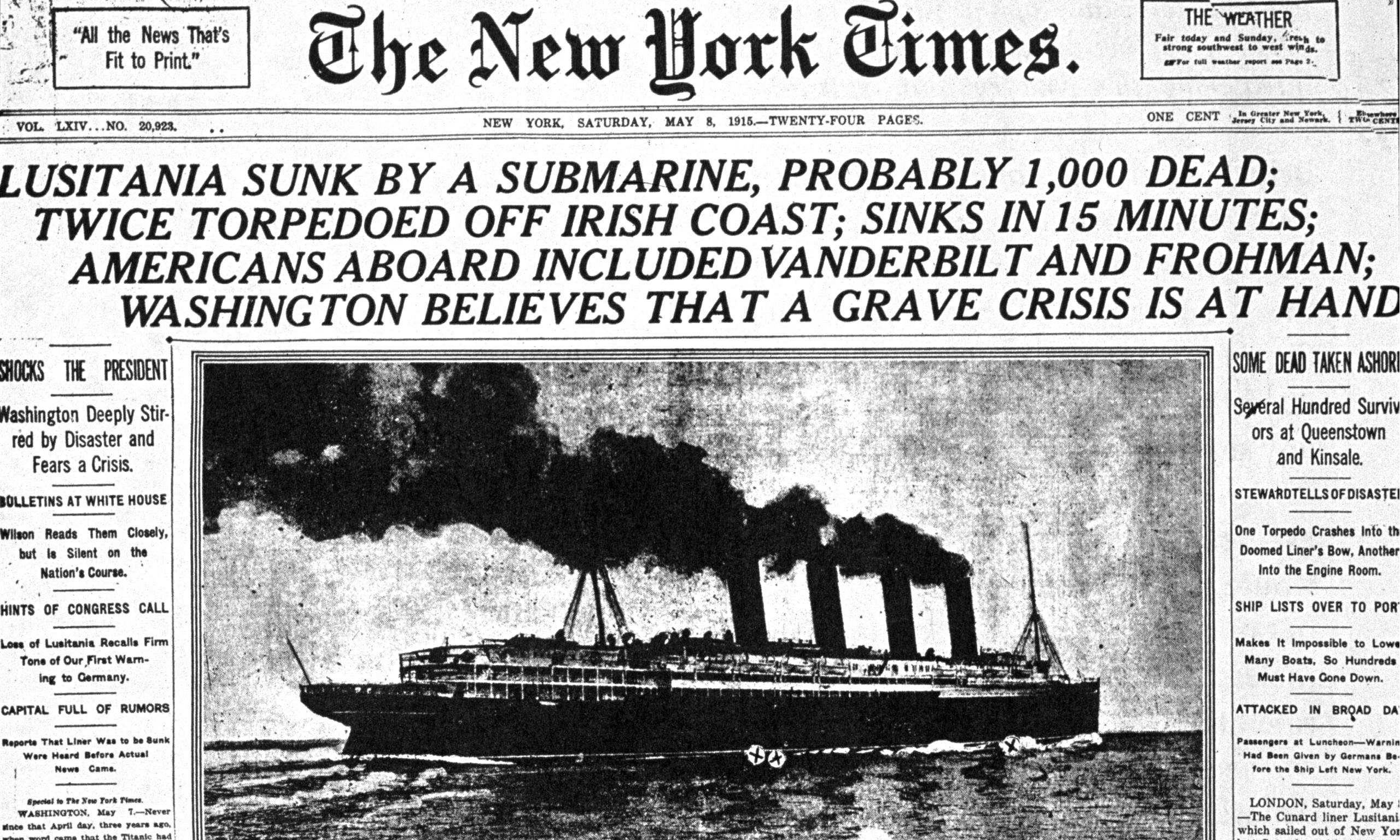
New York Times RMS Lusitania

COMMENT: Marty,

After reading AJP Taylor’s History of WW1 (an esteemed English historian), I realized that your statement about the Lusitania bringing the USA into WW1 is rather inaccurate: the Lusitania was sunk in May 1915; USA entered WW1 in April 1917, essentially two years later.

The real impetus was the unrestricted submarine warfare declared by Germany, which targeted US corporate profits that impelled the US to declare war on Germany, as Germany declared unrestricted submarine warfare in February 1917. Initially, this was a great success for Germany, but through the introduction of convoys, it failed dramatically, especially as it instigated the US ago enter WW1.

Hope you’re doing well,

LB
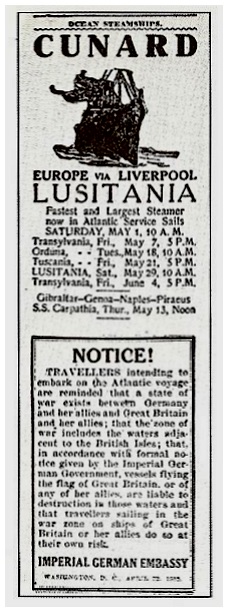
German Lusitania_warning

REPLY: In all analyses, you can never reduce anything to a single cause and effect. The sinking of the RMS Lusitania on May 7th, 1915, by a German U-boat was a major event during World War I, but it did not immediately cause the U.S. to enter the war. However, it significantly turned American public opinion against Germany and contributed to the U.S. eventually joining the conflict in 1917. Claiming that it was the unrestricted submarine warfare by Germany in 1917 that instigated the war downplays the role of the Lusitania and the likelihood of those in the Deep State who sought war back then, counter to President Wilson’s neutrality position.

The Lusitania was a British passenger ship carrying 128 Americans (out of 1,198 total deaths). The attack provoked outrage in the U.S., but President Woodrow Wilson initially sought a diplomatic response rather than war. Germany argued the ship was carrying munitions (which was true, though it was primarily a passenger liner). The US was using civilians as cover for arms transfer to Britain when they pretended to be neutral. As shown here, the Germans even took an advertisement in the NY newspaper warning people not to sail on the Lusitania. Following international pressure, Germany temporarily halted unrestricted submarine warfare in 1915 to avoid further provoking the U.S.

Zimmermann Telegram & Final Push to War (1917):

The resumption of unrestricted submarine warfare in February 1917 (sinking U.S. ships) and the Zimmermann Telegram (a secret German proposal for Mexico to ally against the U.S.) were the final triggers for U.S. entry into WWI in April 1917.

The Lusitania was a significant factor in shifting U.S. opinion against Germany because it was carrying civilians. Still, it was not the sole reason for the United States’ entry into the war. The combination of continued submarine attacks and the Zimmermann Telegram ultimately led to the U.S. declaring war in 1917.
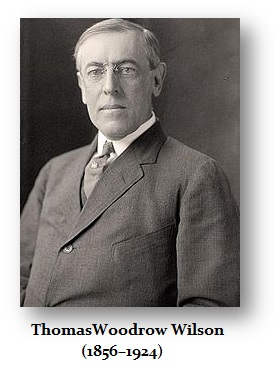
Wilson Woodrow

My main point about the Lusitania is that it was a Neocon quasi-false flag. After years of denying the German claims, the government lied as always to get us into every war. The CIA and Pentagon did not exist during the Lusitania incident. The relevant U.S. agencies were the State, Navy, and War Departments. These departments, particularly the State Department under William Jennings Bryan (1860–1925), were aware of and concerned about the British practice of carrying munitions on passenger ships.
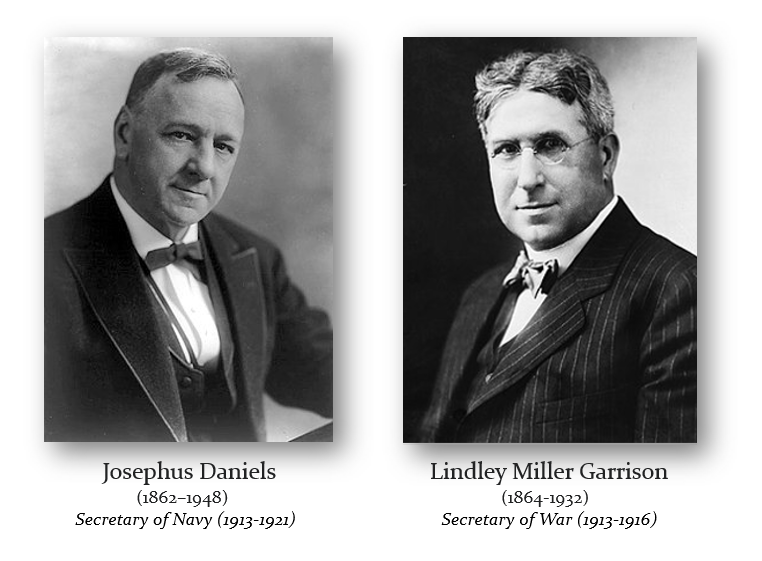
Wilsons Cabinet

The two members of Wilson’s Cabinet who were in a position over the question of war were the Secretary of the Navy, Josephus Daniels (1862-1948), who was the last member of the cabinet to advocate for war in 1917, and the Secretary of War, Lindley Garrison (1764-1932), the Neocon who was replaced after the Lusitania. There is no evidence that Secretary of War Lindley Garrison authorized or had any direct involvement in the munitions shipment aboard the Lusitania. His department (War) was responsible for the Army, not naval shipping or maritime commerce.

The decision to load munitions on passenger liners like the Lusitania was a British Admiralty policy aimed at utilizing fast liners for vital war supplies while maintaining passenger service to generate revenue and improve public perception, thereby covering up their shipments. US covert involvement was limited to customs oversight and the controversial policy of allowing passengers on ships carrying munitions.

Garrison was a strong advocate for military preparedness before and after the sinking of the Lusitania. He advocated for building up the U.S. Army and National Guard to be ready for potential threats. His “Preparedness Movement” gained momentum after the Lusitania, much like Homeland Security was born from the WTC 911 attack.  While Wilson pushed for neutrality and diplomatic responses even after the sinking, Garrison’s Neocon views clashed with Wilson and congressional leaders who felt his plans were too ambitious or militaristic. Garrison was compelled to resign in February 1916 primarily over disagreements with Wilson and Congress regarding the scale and control of military expansion. He had wanted a standing army of 140,000, which he called the Continental Army Plan, vs. strengthening the National Guard. The sinking of the Lusitania hardened attitudes towards Germany among many Americans.

While the sinking of the Lusitania caused massive outrage, shifted public opinion significantly against Germany, and led to demands for a strong diplomatic or even military response, it set in motion the calls to enter war and blamed the Germans as they hid the covert use of civilians to disguise the US violating its pretended neutrality position. By itself, it was not the final act to compel the US to enter the war. Secretary of War Garrison was pushing for a standing army. Garrison advocated for intervention using military force overseas, clashing with Wilson. This surfaced regarding Mexico. Garrison advocated for American intervention in the Mexican Revolution to restore order. In 1916, Garrison supported a plan for expanding the US military, which he referred to as the Continental Army Plan. Garrison’s proposal would establish a standing army of 140,000 and a national, volunteer reserve force of 400,000 men. Garrison encountered opposition from those who believed his plan went too far in establishing a large standing army. Allies in Congress convinced Wilson to back an alternative strategy which emphasized not Garrison’s national volunteer force, but a continued role for the states’ National Guard. Garrison resigned in February 1916 over these differences. Garrison’s public stance was that of a Neocon. He left office nearly a full year before the US actually declared war in April 1917.

While the U.S. government publicly downplayed the munitions cargo initially to maintain moral outrage against Germany, there’s no credible evidence, as always, that U.S. departments lied to President Wilson about its existence. Secretary Bryan claimed he actively warned Wilson because he believed munitions were present and made the ship a target. With the Germans taking out newspaper advertisements warning against sailing on the Lusitania, it is hard to imagine that there were no conversations, even at the Presidential level.

There was no specific Senate or House investigation focused solely on whether President Woodrow Wilson knew about the munitions aboard the RMS Lusitania before it was sunk in 1915. However, the issue was examined within broader contexts by other official U.S. bodies and touched upon in congressional hearings. Just as the investigations into whether FDR knew in advance about Pearl Harbor, no such committee will EVER admit the wrongdoing by the President that took the country into war.

Congress did not even launch a formal investigation specifically targeting Wilson’s foreknowledge of the Lusitania’s cargo. While there was significant public debate and congressional interest in the sinking and its role in pushing the U.S. toward war, no committee was empaneled with the primary purpose of investigating the President’s prior awareness of the munitions. They too, conspired to cover up the foreknowledge.
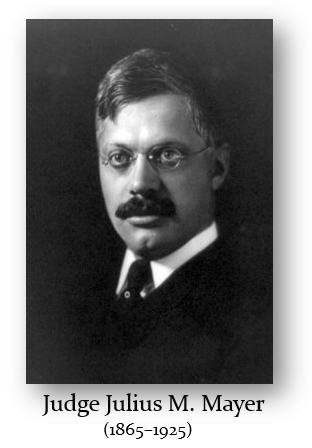
Mayer Julius Marshuetz Titanic Lusitania

The Mayer Arbitration (1915) was formed shortly after the sinking. The U.S. government initiated an investigation led by federal judge Julius Mayer, who was from the Second Circuit in New York City. He had presided over cases dealing with the Titanic. While primarily focused on establishing facts for potential legal claims against Germany, the investigation confirmed the Lusitania was carrying small-arms ammunition, claiming that they were non-explosive rifle cartridges and artillery shell casings (shrapnel shells without explosive charges). This information became part of the official record, meaning the government (including the administration) knew about the munitions after the sinking, but the investigation didn’t address what Wilson knew beforehand.

WILSON Woodrow

In the US, there were 67 claims for compensation filed against Cunard, which were all heard together in 1918 before the United States District Court for the Southern District of New York. Judge Julius Mayer as well. In the Titanic case, he had ruled in favour of the shipping company. Mayer had a reputation for being pro-government in matters of national interest. The two sides agreed before the jury trial that no question would be raised regarding whether Lusitania had been armed or carrying troops or ammunition as part of the cover-up. Evidence produced by the British was presented only behind closed doors. The Defence of the Realm Act was invoked to protect British witnesses, ensuring that the truth would not be heard.

The decision was rendered on August 23rd, 1918, and Mayer’s judgement was that “the cause of the sinking was the illegal act of the Imperial German Government”, that two torpedoes had been involved, that the captain had acted properly, and emergency procedures had been up to the standard then expected. He ruled that further claims for compensation should be addressed to the German government (which eventually paid $2.5 million in 1925).

 After WWI, this U.S.-German commission handled claims arising from the war, including those related to the Lusitania. Its findings (1923) explicitly stated that the presence of non-explosive munitions did not deprive the Lusitania’s passengers of their neutral rights or justify the attack without warning. Crucially, it found no evidence that the ship carried high explosives (like the German government claimed). Again, this established the nature of the cargo officially but didn’t investigate Wilson’s prior knowledge.

The Senate Foreign Relations Committee held hearings in 1916 on broader issues of preparedness and neutrality, leading up to the war. While the Lusitania was discussed, the focus was not on Wilson’s foreknowledge of its specific cargo. Critics of the administration questioned why Americans were allowed to travel on belligerent ships carrying contraband. Still, the hearings did not yield evidence or conclusions regarding Wilson’s personal knowledge before May 7, 1915.
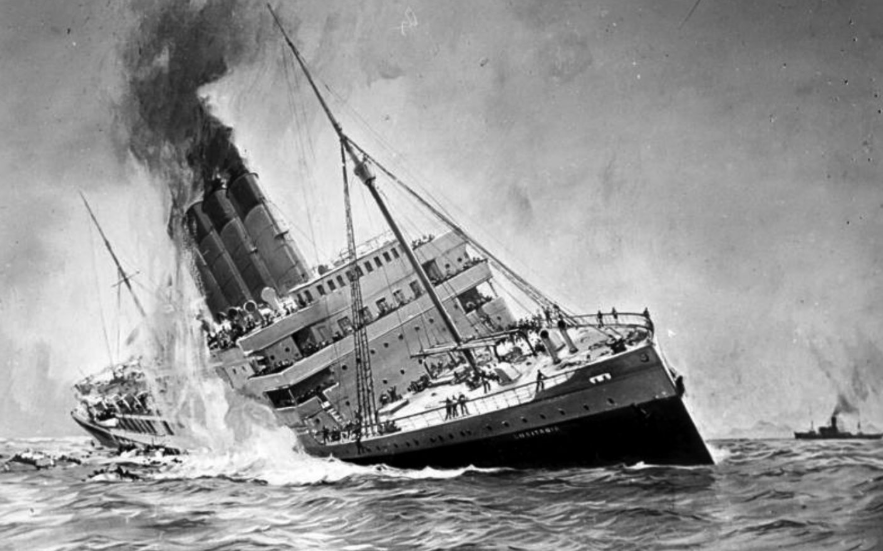
Lusitania on its side

Only during the 1030s, the Senate Special Committee Investigating the Munitions Industry (Nye Committee) investigated the arms industry and its influence on U.S. entry into World War I. It extensively documented the shipment of war materials (including those on the Lusitania) by U.S. companies to the Allies, often facilitated by the State Department despite U.S. neutrality. While it highlighted Wilson’s administration’s general awareness of and involvement in the arms trade with the Allies, it did not specifically focus on whether Wilson knew the Lusitania specifically carried munitions on that voyage before it sailed.
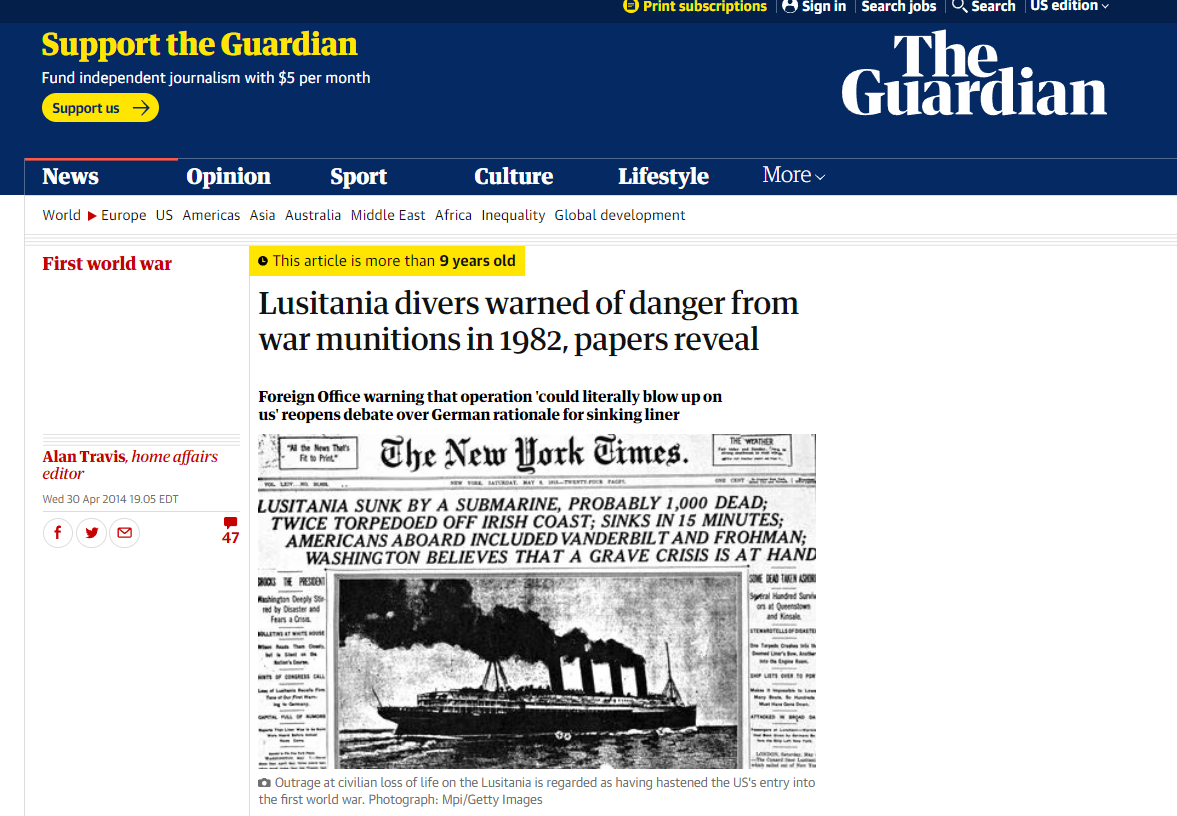
1981 Lusitania_divers_warned_of_danger_from_war_munitions

The U.S. government, particularly the State Department and Customs officials, was generally aware that British liners, such as the Lusitania, sometimes carried small arms and non-explosive munitions under the guise of passenger service, exploiting loopholes in neutrality rules. The government did everything it could to claim that President Wilson had no credible evidence that he received specific, advance warning about the exact nature and quantity of the munitions loaded onto the Lusitania for its final voyage before it sailed from New York. This was even though the German Embassy in Washington did place newspaper ads warning passengers that ships flying the British flag in the war zone were subject to destruction, but this was a general warning, not specific intelligence about the Lusitania’s cargo.

Wilson’s public stance after the sinking focused relentlessly on the illegality of attacking a passenger vessel without warning and the loss of civilian life, deliberately downplaying the munitions issue to maintain the moral high ground against Germany. While the fact that the Lusitania carried munitions was established by U.S. investigations after the sinking, and the broader policy of allowing munitions shipments to the Allies was controversial and later scrutinized (notably by the Nye Committee), there was never a dedicated Senate or House investigation specifically targeting President Wilson’s personal foreknowledge of the Lusitania’s cargo before its fateful voyage. Historians generally agree he likely knew such ships could carry contraband, but lacked specific, timely intelligence about the Lusitania’s final manifest.
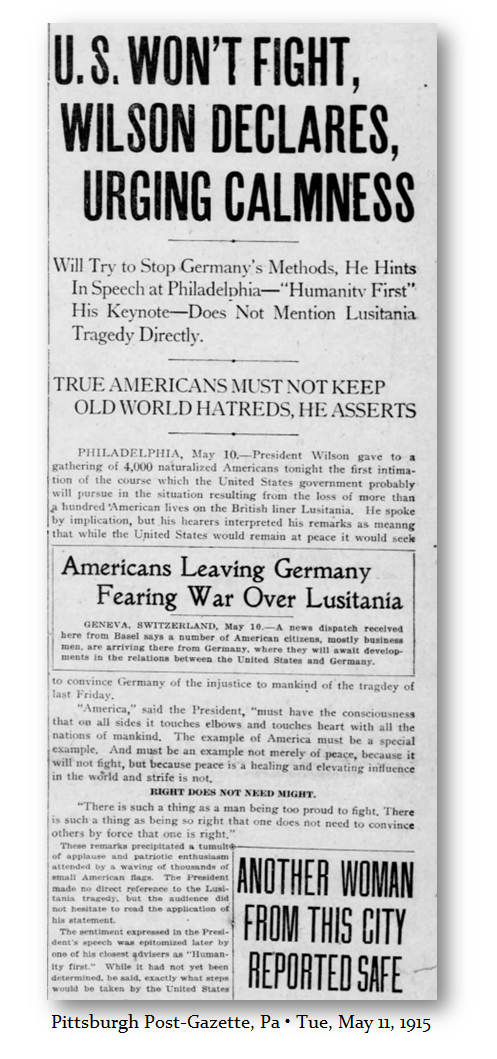
Lusitania Wilson Calm 5 11 15

Wilson was acutely aware of the deep public divisions and his own desire to avoid war if possible. He pursued a diplomatic path. His demands to Germany were extreme, pushing the US and Germany to the brink of war. Germany, wanting to avoid US entry at that time, eventually offered concessions and temporarily scaled back unrestricted submarine warfare (though it resumed in 1917). It is UNLIKELY that Wilson deliberately sought a false flag to enter World War I. Nevertheless, nobody wanted to look too closely at the actors in the State Department and the War Department who were eager to take the US into war against Germany.

Wilson was president between March 4th, 1913, and March 4th, 1921. Newton D. Baker (1871-1937), who had played an essential role in Woodrow Wilson’s nomination in the Democratic National Convention of 1912, was appointed Secretary of War by President Wilson, replacing Garrison. He remained in the Cabinet to the end of Wilson’s term of office. Although he was, as he himself said, so much of a pacifist that “he would fight for peace,” he soon submitted to Congress a plan for universal military conscription. He efficiently presided over the mobilization of more than four million men during World War I.

The press was divided back then and not entirely under the control of the Neocons, as they are today, pushing for World War III. Congress, while angry, largely followed President Wilson’s lead in pursuing a diplomatic solution first. The event marked a significant step towards war, erasing the pretense of neutrality and laying the groundwork for intervention. However, the actual, decisive push for war came nearly two years later, primarily driven by the resumption of unrestricted submarine warfare and the Zimmermann Telegram in early 1917.
Britain Warns Its People Prepare for War


Posted originally on Jun 25, 2025 by Martin Armstrong 

Britain Big Ben Flag

The UK government has warned that the nation must “actively prepare for the possibility of the UK coming under direct threat, potentially in a wartime scenario”, following a tense 12-day war between Iran and Israel, which threatened to spill over at any moment. The UK has also acknowledged, as has the US Department of Homeland Security, that domestic terrorism is likely because of the Iran-Israel War, but also war with Russia. The UK government said that “confrontation with those who are threatening security,” with Russia’s war in Ukraine described as “the most obvious and pressing example of this.” They added “Iranian hostile activity on British soil” is to be expected and that they will attempt to disrupt critical supply lines and energy infrastructure.

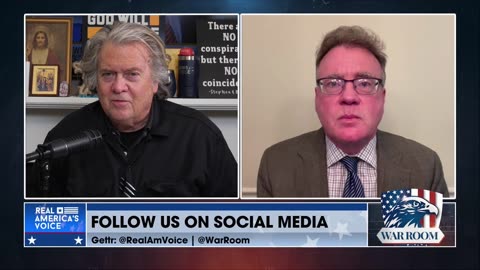
“There’s No Money In Peace” Tej Gill Reacts To Intel Leak Contradicting Iran Mission Success


Posted originally on Rumble By Bannon’s War Room on: June 24, 2025, at 11:00 pm EST

Is Middle East War Inevitable?


Posted originally on Jun 22, 2025 by Martin Armstrong 

Dollar Future 1

QUESTION: I understand you rely on the computer. The forecasts are not your opinion, and that is what makes you stand out among all the talking heads. What is your personal opinion? Do you think that if Trump had given diplomacy a chance, it would have worked, or was this inevitable?

FS

ANSWER: Looking at the computer, I could not see any other outcome. I do believe that Trump acted thinking that this would end the war and the terrorism of Iran. His mistake is judging Iran by what a rational state would typically do. Iran is a theocracy, and its government is driven by entrenched ideas that I do not see changing.

The differing stances towards Israel between many Shia-majority actors (notably Iran and its allies) and some Sunni-led states stem from a complex mix of religious, geopolitical, strategic, and ideological factors, rather than a fundamental theological difference between Shia and Sunni Islam regarding Palestine itself.

The 1979 Iranian Revolution established an Islamic Republic with a strong anti-Western and anti-imperialist ideology. Opposition to Israel (“The Little Satan”) became a core pillar of its revolutionary identity and foreign policy, framing it as a colonial implant, an extension of Western (particularly US) imperialism in the Middle East, and an oppressor of Palestinians.

The Iranian Revolution exported ideology and identity. Championing the Palestinian cause became central to Iran’s self-proclaimed leadership of the Muslim world (“Resistance Axis“) against Western influence and its regional rivals. Iran sees Israel as its primary regional adversary and a major strategic threat, closely aligned with its arch-rival, the United States, and Sunni powers like Saudi Arabia (historically).

Supporting anti-Israel groups such as Hezbollah in Lebanon, Hamas and Islamic Jihad in Gaza, and various Shia militias in Iraq and Syria became the key geopolitical tool for Iran. It projects power and influence far beyond its borders. This established a network of proxies to deter Israeli or US attacks on Iran. This is what I mean about religious issues, for it challenges the regional order dominated by the US and its Sunni allies. This “Axis of Resistance” is fundamentally built on opposition to Israel and the US.

We must comprehend that for Iran and its Shia allies, unwavering support for the Palestinian struggle against Israel is a source of domestic legitimacy and a way to claim leadership of the broader Muslim world, transcending sectarian divides. Portraying Sunni states that normalize relations as traitors to the cause reinforces this narrative. It remains to be seen if the Shia will instigate civil unrest within the Sunni states like Egypt, Jordan, and Saudi Arabia.

There are significant differences in Sunni approaches (pragmatism and shifting alliances) compared to those of the Shia (confrontation).

Some Sunni-led states (UAE, Bahrain, Morocco, Sudan) normalized relations with Israel based on pragmatic national interests, not theological shifts. They have a shared perception of Iran as the primary threat (especially for Gulf states). They are far more practical in terms of access to technology, trade, investment, and tourism. They also gained US favor, breaking diplomatic isolation. They have believed that engagement might yield better results than a boycott or prioritizing other concerns over it. Israel’s attacks on unarmed Palestinians in Gaza threaten that practical view.

It’s crucial to remember that Sunni Islam and Sunni-majority states are not monolithic. Many Sunni populations remain deeply opposed to normalization. Countries like Qatar maintain relations with Hamas but not Israel. Turkey has diplomatic relations but remains highly critical. Jordan and Egypt have peace treaties, but experience significant public opposition and cold relations.

Then there is the risk of state versus non-state actors. Established Sunni states often prioritize state sovereignty, stability, and economic interests. Non-state Sunni actors like Hamas or the Muslim Brotherhood frequently maintain hardline stances closer to Iran’s position (Hamas is part of the Resistance Axis).

Both Shia and Sunni Muslims revere Jerusalem (Al-Quds) as the third-holiest site in Islam. The Palestinian cause resonates deeply on religious grounds across the Muslim world. The difference lies in strategic emphasis. For Iran and its allies, opposing Israel is the central rallying cry and geopolitical strategy. For some Sunni states, while the religious significance remains, it competes with other pressing security and economic priorities in their foreign policy calculus. Iran weaponizes this perceived prioritization to criticize Sunni leaders.

Consequently, Shia opposition (Iran-led Axis) is primarily driven by revolutionary ideology, geopolitical strategy (countering the US/Israel/Saudi axis), regional ambitions, and the use of the Palestinian cause as a tool for legitimacy and proxy warfare. It’s a core part of their identity and foreign policy. This is why I personally am not optimistic, and I fear that Israel may stupidly think assassinating the Supreme Leader will end Iran, and it will return to the days of the pre-1979 Revolution. They put at risk the entire pragmatic national interests of the Sunni States that can see internal strife in response to such an action on top of the hard treatment of Palestinian civilians in Gaza. This can result in shifting regional dynamics that I am deeply concerned about. There is no religious Sunni theological shift on the importance of Jerusalem or Palestinian rights, and it faces significant public opposition within those countries.

The divergence is less about a fundamental Shia vs. Sunni theological difference on Palestine/Israel, and more about differing geopolitical strategies, national interests, and ideological priorities between the Iranian-led “Resistance Axis” and certain Sunni-led Arab states seeking new alliances and security arrangements in a changing Middle East. Iran uses maximalist opposition to Israel as its defining strategy, while some Sunni states have decided engagement serves their interests better, given the perceived greater threat from Iran.

I am not sure that there are people who understand this in the leadership of Israel or the United States. The huge mistake here is assuming that this strike will cause the Shia to throw down their arms and adopt the Sunni pragmatic position. I do not see that sort of religious upheaval.

Global War Is ‘On Schedule’ | Economic Collapse, 2032 & Geopolitical Shifts


Posted originally on Jun 22, 2025 by Martin Armstrong 

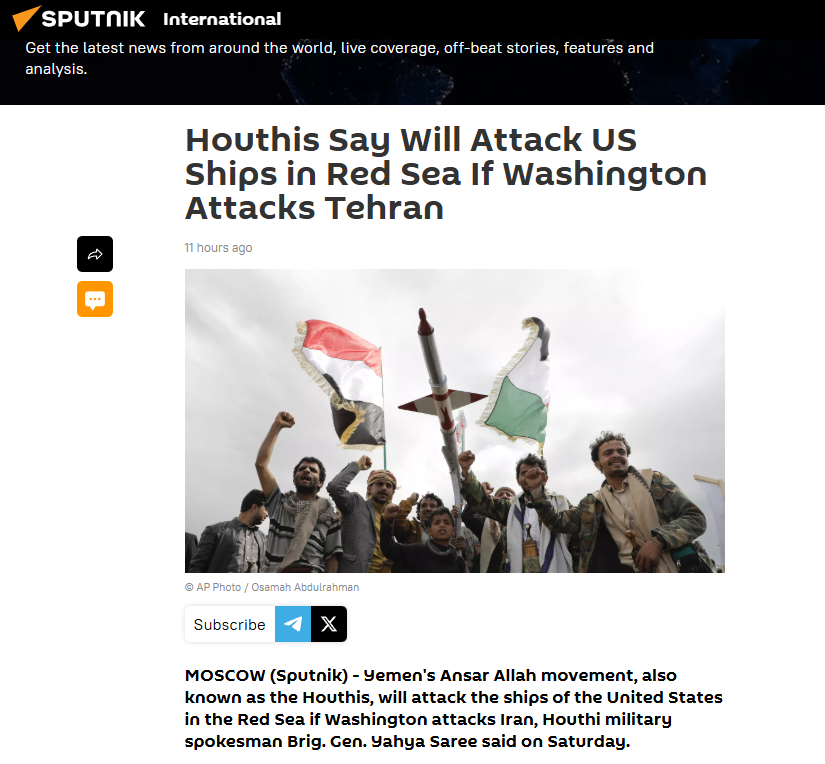
Houthis Threaten to Attack US Ships in Retaliation


Posted originally on Jun 21, 2025 by Martin Armstrong 

2025_06_21_22_27_33_Houthis_Say_Will_Attack_US_Ships_in_Red_Sea_If_Washington_Attacks_Tehran

USAWatchDog Interview: Neocons Dragging Trump into WWIII


Posted originally on Jun 21, 2025 by Martin Armstrong 

Neocons Dragging Trump into WWIII – Martin Armstrong

By Greg Hunter’s USAWatchdog.com  Two weeks ago, legendary financial and geopolitical cycle analyst Martin Armstrong was signaling a big turn toward war.  We all know Ukraine is out of control with no

Dr. Thayer: WWI Is A Classic Example Of A Regional Conflict Escalating Into A Great Power War


Posted originally on Rumble By Bannon’s War Room on: June 19, 2025, at 8:00 pm EST

Troll – Zelensky – Catherine the Great


Posted Jun 19, 2025 by Martin Armstrong 

Catherine_the_great Russia

QUESTION: I was told that there are trolls who hate you and bombard anyone you do interviews with, in an attempt to prevent you from being on again. I was also told that they trace to Ukraine, and the rumor is you are on the death list of Zelensky. Does that bother you?

annonymous

REPLY: This is not the first time I have been told that. Any show I have been on that listens to this is obviously not really someone you would trust, since they would be adhering to the censorship of free speech. I am NOT against the Ukrainian people. I am against the Neocons who couldn’t care less if ANY Ukrainian is still standing at the end of the day. They are using Eastern Europe to wage war on Russia, and that includes Poland and Romania. I have heard comments like the Eastern Europeans were communists anyway. Where has this war benefited Ukrainians?

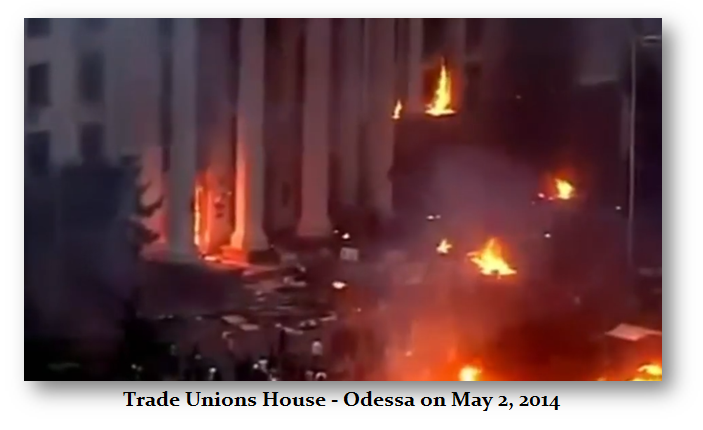
May 2 2014 Odessa Trade Unions House

Catherine II, the Great of Russia, ordered the founding and construction of the city of Odessa, where in 2014, the Neo-Nazi Ukrainians were openly killing Russians on the streets, which began this separatist movement. I have heard that I am on Zelensky’s death list. I believe he killed one of my sources in Ukraine, Gonzalo Lirawho was the first to expose that Zelensky was a coke-head.

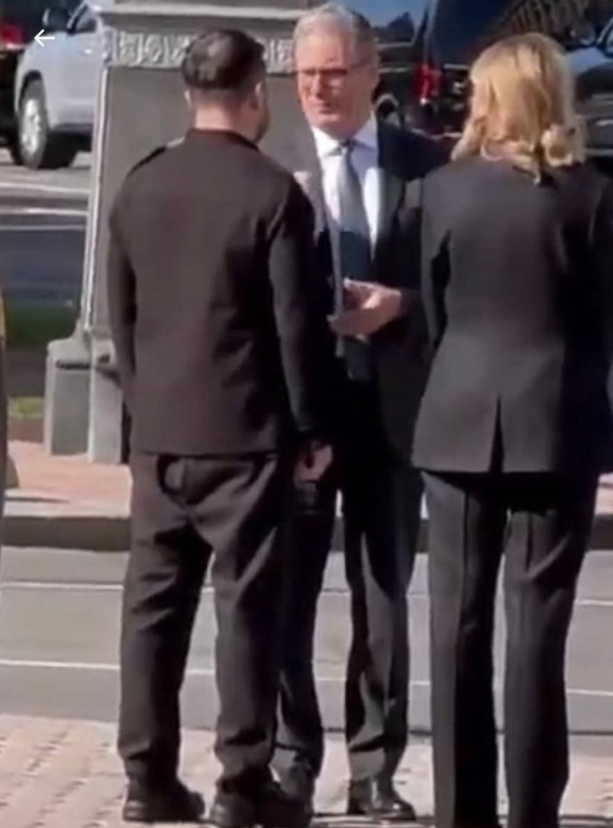
Zelensky Pants on Backwards

How do you put your pants on backwards and not notice it? This is the guy destroying Ukraine and sacrificing the Ukrainian people for this Neocon agenda. I just have no respect for these people, and the trolls can target everyone I do interviews with, and if they will not have me on again, they are not worth much in this world that is neck-deep in corruption. I was told by one host that he got 10 emails trolling me in 15 minutes, and that was a trolling farm, not actual people. We may have more institutions today than before because what I have been told – “Now I know you are not one of them.” 

Olbia

Odessa was indeed founded by Catherine II, The Great, not by Ukrainians. It was the port located at the exact site of the Ottoman settlement of Khadjibey. Odessa was first mentioned in 1415 when it was known as Khadjibey. They even erected a monument in 1900 to Catherine as the founder of the modern city. The city takes its name from the ancient Greek settlement of Odēssos (Ὀδησσός) located in the region of modern-day Bulgaria (near Varna), not because it was built on the same site, but as part of a trend in the Russian Empire to use classical Greek names for new settlements in the northern Black Sea region.

olbia Dolphins
proto arrow heads

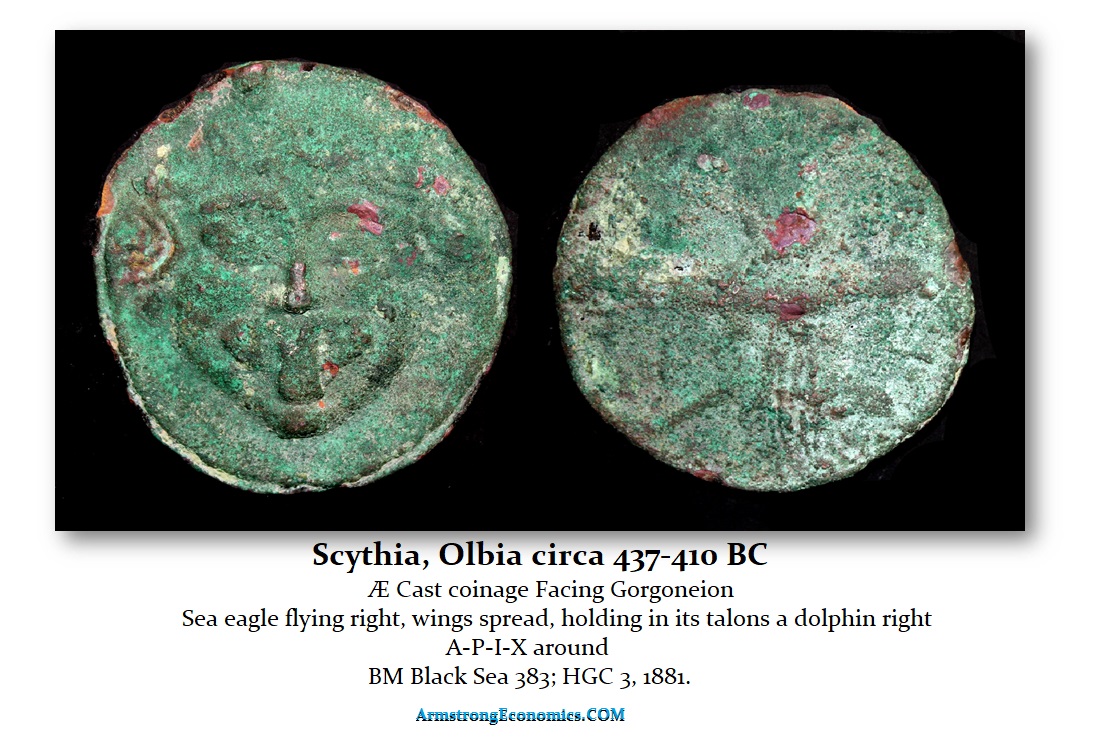
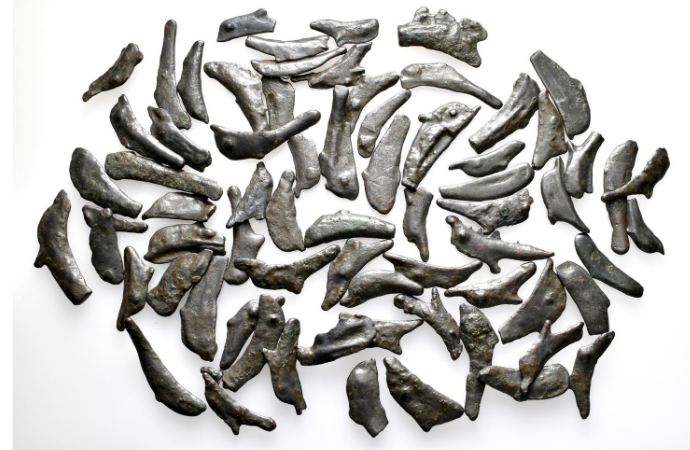
In essence, Olbia’s history is a story of Greek colonial ambition, remarkable prosperity built on frontier trade, deep entanglement with powerful nomadic neighbors, and a long, slow decline under relentless pressure from the steppe, finally succumbing to the Migration Period upheavals of late antiquity. Olbia was founded by settlers from the powerful Ionian Greek city of Miletus (in Asia Minor) around the middle of the 7th century BC (traditionally dated to 647/6 BC or 645 BC). It was an apoikia (colony) established primarily for trade and access to resources. This was the city-state that used bronze shaped in dolphins or arrowheads as money.

During the late 18th century, as the Russian Empire expanded southward and founded new cities in the newly conquered territories (New Russia), a deliberate policy was implemented to use names evoking the ancient Greek colonies that once dotted the Black Sea coast. This linked the new Russian cities to classical antiquity and European civilization. The specific name Odēssos was chosen. The most popular and enduring story involves Empress Catherine the Great. When discussing the founding of a new port city on the site of the captured Ottoman fortress of Khadjibey (Hacıbey) in 1794, someone suggested naming it after the nearby ancient Greek colony. However, the feminine form of the name was preferred to match the grammatical gender of “city” (gorod) in Russian. The ancient city’s name was masculine (Odēssos).

It’s often recounted that Catherine decreed the feminine form “Odessa” (Одесса in Russian Cyrillic). A persistent anecdote suggests that a French nobleman in her court, perhaps Armand-Emmanuel du Plessis (Duc de Richelieu, who later became Odesa’s famous governor), playfully referenced the Trojan War epic by saying something like “Que ce soit Odessa!” (“Let it be Odessa!”), alluding to the region’s Homeric connections (Odyssey -> Odessa). While this story is charming and widely told, historians consider it more a legend than a documented fact, although it reflects the classical influences of the time.

Catherine II The Great 10 Rubles

The name “Odessa” (Одесса) was formally established by Catherine the Great’s imperial decree on January 27, 1795 (new style calendar). The Neocons do not care about anyone but themselves. I feel sorry for the Ukrainian people. They had a country, they were free, until the Neocons decided to exploit them for their own personal hatred of Russians because the previous generation had been communists. They were just angry that communism collapsed all by itself, and they never got to shoot anyone. They cannot live without hating someone and waging wars endlessly to satisfy their personal vendettas.

These Neocons project onto Russians and Chinese the very same goals that they aspire to. They care nothing about history. There are NO Ukrainians there in Crimea. About 15% of the population are Tartars from the Mongol invasions. When the people of Crimea voted to join Russia, the Neocons claimed the vote was rigged. Why in God’s name would they want to be part of Ukraine with the ethnic cleansing and hated that the saw by the Neo-Nazis in Odessa in 2014? The people have a right to live in peace. The Minsk Agreement was intended to allow the Donbas to hold a referendum. This is not about human rights and more than Israel’s attack on Iran was about nuclear arms when they killed most of the leadership for this is about regime change.

Hold Elections in Ukraine – NOW!

End Zelensky’s Dictatorship and See What the People Want

Categories:Armstrong in the MediaRussia

“Take Out The Regime And It Opens Up To Civil War” Jack Posobiec Gives Iran Update Ahead Of NSC Meeting Results


Posted originally on Rumble By Bannon’s War Room on: June 17, 2025, at 8:00 pm EST