DC Mayor Announces City-Wide Curfew After Teenagers Create Mayhem


Posted originally on CTH on November 1, 2025 | Sundance

On Saturday, Washington DC Mayor Muriel Bowser announced an emergency order, with a city-wide curfew for anyone under 18, beginning Saturday night.

The curfew will go into effect at 11pm Nov. 1, through 6am the next morning, and will continue nightly until Nov. 5. The order gives Metropolitan Police Chief Pamela Smith the power to identify “high risk” areas in the city, where she can begin the curfew as early as 6pm.

[source]

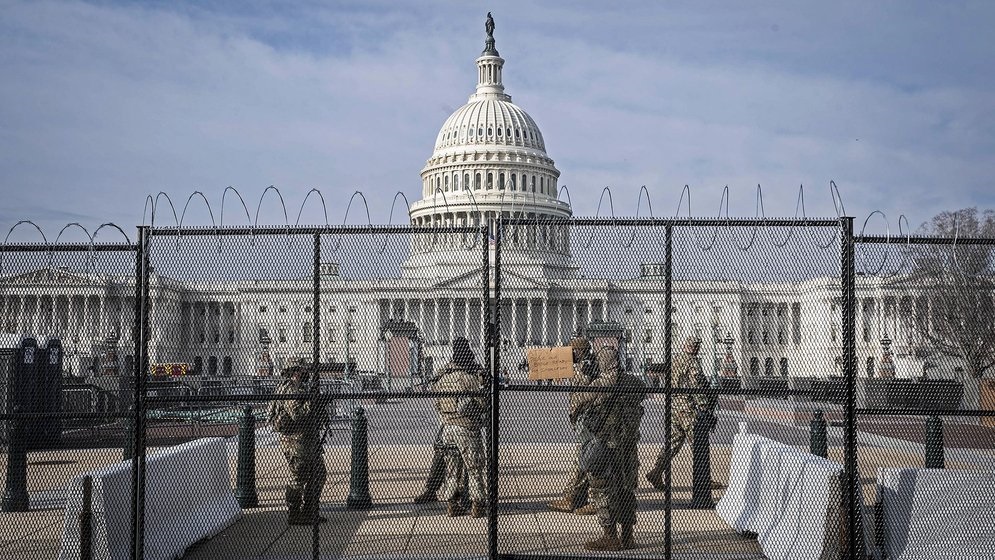
The emergency action by the DC Mayor is in response to chaos in the streets in/around the Navy Yard area where five teens were arrested and the National Guard were forced to break up several fights and try to restore law and order.

WASHINGTON DC – […] Bowser’s office said the curfew was a direct response to the hundreds of kids fighting in Navy Yard Friday night.

The curfew will go into effect at 11 p.m. Saturday until 6 a.m. on Sunday, and will continue nightly until Wednesday, Nov. 5, Bowser’s office said.

Bowser’s Emergency Order will also allow Metropolitan Police Chief Pamela Smith to designate parts of the city as “high risk for disorderly conduct by youths,” allowing her to implement a curfew as early as 6 p.m. Smith will also be able to declare an area as a curfew zone in areas where eight or more juveniles have or may soon gather. (read more)

DC Metro Police Alert HERE

Vice President JD Vance Discusses the Challenges with the Ukraine-Russia Conflict


Posted originally on CTH on November 1, 2025 | Sundance

Vice President JD Vance appears for a lengthy interview with Miranda Devine to discuss a variety of current issues that have presented themselves to the Trump administration. [Full Video Here]

In the segment below, Vice President Vance talks about the Ukraine-Russia conflict, and the significant challenges dealing with Ukraine President Volodymyr Zelenskyy.  As noted, Zelenskyy was used to getting everything he demanded from the former Biden administration; however, no end to the conflict was present in the prior policy.

President Trump is seeking to end the conflict, and has aligned policy toward that end.  Both President Putin and President Zelenskyy must be willing to engage with each other diplomatically to resolve the issues.  There is no current intention between both of the leaders toward a negotiated settlement.

President Trump has no intention to push U.S. policy into the middle of the conflict between Zelenskyy and Putin. WATCH:

.

Canadian Prime Minister Mark Carney Confirms He Apologized to President Trump for Reagan Ad Effort


Posted originally on CTH on November 1, 2025 | Sundance 

On Friday President Trump noted (off-the-cuff) he was ambivalent to the trade interests of Canada and had no intention to restart discussions. However, Trump also said he holds no personal animosity toward Canadian Prime Minister Mark Carney for the stupid and antagonistic move they made in purchasing a manipulative television ad intended to undermine the Trump trade position.

On Saturday, Prime Minister Mark Carney confirmed he did apologize to President Trump for the Canadian effort.

GYEONGJU, South Korea, Nov 1 (Reuters) – Canadian Prime Minister Mark Carney said on Saturday he had apologised to U.S. President Donald Trump over an anti-tariff political advertisement and had told Ontario Premier Doug Ford not to run it.

Carney, speaking to reporters after attending an Asia-Pacific summit in South Korea, said he had made the apology privately to Trump when they both attended a dinner hosted by South Korea’s president on Wednesday.

“I did apologise to the president,” Carney said, confirming comments by Trump made on Friday.

Carney also confirmed that he had reviewed the ad with Ford before it aired but said he had opposed using it.

“I told Ford I did not want to go forward with the ad,” he said.

The ad, commissioned by Ford, an outspoken Conservative politician who is sometimes compared to Trump, uses a snippet of Republican icon and former President Ronald Reagan saying that tariffs cause trade wars and economic disaster.

In response, Trump announced that he was increasing tariffs on goods from Canada, and Washington has also halted trade talks with Canada.

When departing South Korea earlier this week, Trump remarked he had a “very nice” conversation with Carney at that dinner but did not elaborate. On Friday Trump still said the United States and Canada will not restart trade talks. (read more)

Carney also noted he had great discussions with Chinese Chairman Xi Jinping but did not negotiate any trade deals.

Instead, the Canadian Prime Minister emphasized the release of Canadian citizens detained in China and requested that Beijing not interfere in Canadian domestic politics.

The irony is strong.

The current USMCA (CUSMA) trade pact covers approximately 60% of U.S-Canada trade; it is the remaining 40% is being debated and argued.

President Trump’s position is pragmatic. He would prefer to just deal with 100% of the trade sectors in one bilateral free trade agreement; hence, his ambivalence until the USMCA is dissolved.

Canada, on the other hand, is entirely dependent.  They demand all trade conflicts be resolved without opening up the USMCA. Again, another conflict. Canada is like the dependent spouse in a divorce arguing for child support payments when the “children” are in their twenties.

The current status is President Trump pulling back completely from discussions with Canada, while the various provincial Premiers and Prime Minister Mark Carney agonize over the issue.

At a certain point, when the entire national economic plan of Canada is based on “Donald Trump bad”, and all political messaging internally is to proclaim they have no alternative policy positions, the Canadians might not realize it, but they are confirming complete and total dependency on the nation Donald Trump represents.

What took place in last week’s tour of Asia, makes Canadian Prime Minister Mark Carney look very small.

DOJ and FBI Whistleblowers Continue Providing Evidence of Arctic Frost Targeting Operation


Posted originally on CTH on October 31, 2025 | Sundance 

Senator Ron Johnson underlines a key point being missed by many.  All of the revelations about the FBI’s Arctic Frost investigation against President Trump and his supporters, are being provided by evidence carried to congress by DOJ/FBI “whistleblowers.”

Pause and reflect on that observation for a few moments.  The public awareness of political targeting by the DOJ/FBI is coming from ‘whistleblowers’ to Senator Chuck Grassley.  It is not Attorney General Pam Bondi and FBI Director Kash Patel bringing forward the information about the weaponized use of their institutions.

If Pam Bondi and Kash Patel were in control of the root systems within their agencies, they would be the ones bringing forth the information; they are not. Bondi and Patel are not in control.  Instead, the sunlight is coming from a few people within the organizations who are pushing the evidence out. Senator Johnson is providing a very deliberate point here:

One of the ongoing frustrations within the current dynamic is Pam Bondi and Kash Patel continuing to talk publicly about the honor, integrity and fidelity of the institutions they lead; without a public admission and statement about their agencies being comprehensively corrupted by the operation that Barack Obama and Eric Holder carried out.

Operation “Arctic Frost” did not originate organically in response to the J6 protests or the Jack Smith investigation.  Arctic Frost was simply an extension of all former targeting operations that were carried out over the past ten years.

The targeting operation using the IRS.  The targeting operation using the NSA database. The targeting operation using Crossfire Hurricane.  The targeting operation using Robert Mueller.  The targeting operation using the CIA impeachment effort (Schiff/Nadler).  The targeting operation using J6 effort (Thompson).  The targeting operation using Jack Smith.  The Arctic Frost targeting operation.  These are all designated and evidenced identifiers of a continuum of government targeting operations that has its origin in Barack Obama and Eric Holder.

Two simultaneous realities need to be accepted if this mess is to get to the point of accountability.

First, the primary function of the FBI is to protect the interests of Washington, DC.  Within the body politic everyone knows what the purpose and agenda is for the FBI mission; there is no one in Washington DC who does not know this.  As a collective body they pretend not to know, because the ramifications of admitting knowledge are far greater than the actual corruption they pretend not to know exists.

Secondly, plausible deniability must be maintained by everyone in Washington DC as it pertains to their pretending.  The FBI operates to defend the pretending by targeting any entity who would appear with the evidence of the underlying corruption.  The FBI will attack any entity who brings forth the sunlight, because the sunlight itself destroys the illusions that all pretending is reliant upon.

To maintain the pretenses in Washington DC, the FBI must target anyone who brings evidence of corruption or unlawful activity.  This is the primary operating mission of the FBI and the Lawfare agents within the DOJ who are vicious in their alignment to keep powerful people protected.

If you think it’s bad, it’s actually worse.

[SOURCE]

Last point from my own personal experience in this Machiavellian network.

If we accept the outlook that Washington DC politics is essentially a UniParty when it comes to retention of the status quo for both affluence (money) and influence (power); then we must begin to accept the same dynamic also exists within DC media.

There are no allies for the American people within the construct of a Right/Left Washington, DC media perspective.  It simply does not exist.  The same way the FBI will attack any truthteller, the “conservative” DC media will do the same to isolate, ridicule and marginalize any voice who brings evidence of the corruption they must pretend not to know about.

The DC protectorate promote outrage as a distraction.

It takes skill to see the trees while standing in the forest.

In the example above, Ron Johnson is highlighting the obvious nature of the trees.

Vice President JD Vance Delivers Remarks at TPUSA Conference and Answers Questions – Full Video and Transcript


Posted originally on CTH on October 30, 2025 | Sundance | 

Vice President JD Vance Delivers Remarks at TPUSA Conference and Answers Questions – Full Video and Transcript

October 30, 2025 | Sundance | 79 Comments

A few days ago, Florida Governor Ron DeSantis took up lead position toward enlisting the TPUSA political movement for his future aspirations.  Vice President JD Vance quickly responds by attending a TPUSA at the University of Mississippi.  This is JD Vance’s first campaign rally for 2028.

The full remarks as well as the question-and-answer period are transcribed below the video.

[Transcript] – JD Vance (00:14): “Ole Miss, I got a question. Are you ready? Wow, that was impressive. They told me that would be impressive and they were exactly right. So, let me say a few words of thank you first to my dear friend and the widow of my dear friend Charlie Kirk. Erika, you have been such an amazing inspiration to the entire country. How much do we love Erika Kirk? She’s done a hell of a job. We have a couple of Mississippi senators here. We have both Senator Roger Wicker and Senator Cindy Hyde-Smith. Thank you guys for being here. We have the governor of Mississippi with us. We got an all star crowd here. Governor, thank you for being here. And most importantly, we have got over 10,000 students from across Mississippi.

(01:35) We are proud to have you and we know that you are the future of Charlie Kirk’s legacy, so thank you for being here. I got this whole speech written and I’m not going to deliver any of what I had written. I’m just going to speak from the heart, because that’s what Charlie would so often do. When I think about what we lost six weeks ago, it feels like forever ago when I was in a meeting in the West Wing, and one of my staff members came in and said that Charlie had been shot. And then I looked at my phone, and I saw all the text messages and realized that my dear friend had been very seriously injured. Now, in the West Wing at that time, we actually thought that Charlie had a chance. We didn’t know that he was eventually going to pass away.

(02:31) There were initial reports from the medical team that maybe things were going okay. And of course, eventually Charlie took his last breath, and went home to be with his Lord and Savior. I remember thinking at that moment, first, of course, about Erika and the children. They’ve got their oldest. Their daughter is very similar in age to our youngest child. And I remember thinking, what a terrible tragedy for that family. And the second thing that I thought was what a terrible tragedy for the United States of America, because Charlie wasn’t just a political figure. He wasn’t just a guy who went around campus, and said very interesting things and hosted all of these debates. He was a person who particularly to the young people of this country, to all of you, he had the very best advice.

(03:19) And I think that’s the most important way for me to honor Charlie, which is to repeat that advice. Something I found true in my own life. Charlie wanted all of you, whatever life path you chose, whatever career you chose, whatever you ultimately did for a living, Charlie wanted you more than anything to invest in the things that were worth having to build a life that was worth building. And that started. The most important advice he ever gave you was fall in love, get married, and start a family. And I can’t honor Charlie without repeating that most important advice. Now, most of you are probably too young to have found the person you’re going to spend the rest of your life with. Some of you are lucky enough to have found that person already.

(04:11) But I will tell you, if you’re as lucky and blessed as I have been, it hits you like a ton of bricks. And I found that person in my lovely wife, Usha, our second lady who is here with us today. She’s sitting in the audience somewhere. I don’t know where. But I love you, honey. And have children, that’s something Charlie also always told. I grew up in a generation. I’m 41 years old. I’m a millennial. And if you’re being uncharitable, you would call me a geriatric millennial, which I really hate. I really hate being called a geriatric millennial. But here I am at 41, talking to all of you like I’ve got great wisdom.

(04:51) Here’s the thing: The one regret, the only regret that I really have in my entire life, and I’ve made plenty of mistakes. But the one regret that I have is that frankly, I wish we had started having kids sooner. Because when you’re a young father, you realize what an incredible blessing they are, but they’re also very exhausting. And I know here at Ole Miss, we like to party a lot. And I know at Ole Miss, occasionally some of you will have a few drinks on a Friday or Saturday, or hopefully not a Tuesday night, but I’m sure that happens from time to time here in SEC Country. But here’s the thing, when you go out until 3:00 in the morning and wake up at 6:00 AM for class, the thing that I’ve learned in my old age is that incredible energy, God actually meant it for another purpose. And that purpose was to help take care of a family. So, while you’re young, have those babies if you’re able to. That’s something Charlie said all the time.

(05:57) But if you think of that advice, if you think of that advice, Charlie wanted you to get married. He wanted you to fall in love. He wanted you to build a family. He wanted you to find a vocation. That was the advice that he gave on campuses, but that’s not just about you. That’s also about our country and about our government. Because while you have the freedom to live life as you so choose, I have got a responsibility as your vice president to make the American dream as accessible as possible. And this is why, my friends, this is why we care about all the things that we care about. Why do I care so much about having a secure border in the United States of America? It’s because I believe that when you let in a flood of illegal immigration, what it does is it drives down the wages of young people and makes housing unaffordable for the entire American population. That’s why we closed down the border.

(06:58)The left will say our immigration policy is about hating immigration, hating immigrants. We don’t hate anybody. We love our fellow citizens. And because we want them to have the American dream, we shut that border down the very first day that Donald J. Trump was the President of the United States. I care about you being able to afford a home, which is why we fought so hard to fix the broken policies of the Biden administration. I want a lot of you… I’m sure there are military veterans in this room right now. I’m sure there are a lot of people who will join the military in the future. And we’re proud of you. But part of America First is ensuring that we never ask you to go and do the American people’s business, unless it is in the interest of the United States of America. And that’s how we honor the sacrifice of our truths. And that’s why, my friends, that’s why we care so much about free speech, as Charlie lived and died for the basic principle that we ought to be able to talk about our differences. We ought to be able to debate them. And we ought to have faith that the best way to make sure that the best idea wins is to actually just have a discussion. And that is what this event is all about. That is what Turning Points USA is all about. And I’m so proud. And most of all, I’m so grateful to each and every person, whether you’re a Republican or a Democrat, for coming out and honoring one of the most important parts of Charlie’s legacy, because we’re going to have a discussion tonight. And that’s what Charlie would want us to do.

(08:52)Now, I want to get to questions and I want to leave plenty of time for questions, but I want to make just a couple of final points about Charlie’s legacy and politics. The most important thing about Charlie is that he was a great husband and a great father. Erika told me probably 12 hours after Charlie had been pronounced dead, she was just absolutely devastated. If you’ve ever known anybody who’s grieving, sometimes they’re unable to even hold a single thought for more than a few seconds. And what Erika told me, and I’m going to get a little emotional, is that she said that Charlie never yelled at her, he never cussed at her. And that to me is a great legacy to leave as a husband and a father, for your wife to be able to say that my husband was always good to me. And Charlie was a good man.

(09:47)But he also had the legacy of believing in political debate. And he was the most effective person in politics that I have ever seen. And by the way, that’s not because Charlie always agreed with me and the president’s policies. I remember one time in particular where Charlie Kirk called me, and guys, he was mad. It was I wouldn’t say the last conversation that I had with him, but it was in the last few months of his life. And he called me and he said, “JD, I’m really worried. I’m really worried that what’s going on in the Middle East right now is going to lead the United States into a protracted military conflict.” I’ve never told anybody that, that Charlie was really worried about that in the final months of his life.

(10:33)Now here’s the thing, Charlie was so effective, and he was so trusted by both me and the President of the United States, that when Charlie made that phone call, I didn’t say, “Screw you. You don’t know what you’re talking about.” I listened to him. And I really believe that one of the reasons why the President of the United States knocked out the Iranian nuclear facilities, but never got the United States into a protracted military conflict, and never lost a single American in a Middle Eastern conflict, is because we had the wisdom and the good sense to recognize that the American people are done with American troops dying in unnecessary foreign conflicts. But Charlie Kirk reminded me of that. Charlie Kirk.

(11:26)So, that was a great moment for our country. It was a great moment for my friendship with Charlie Kirk, because friendship is not just about telling everybody what they want to hear. It’s not just about agreeing with everybody all the time. It’s about having the trust in another human being, that you can tell them they’re wrong and actually encourage them to change their mind. Or in that case, not necessarily even tell us that we were wrong, but make sure that we were thinking about all the options. And of course, under the president’s leadership, we were doing exactly that, but Charlie was so good at that. And I think that’s one of the ways in which I want all of you to honor your legacy. Obviously, you care about our great nation or you wouldn’t be here.

(12:08)A lot of you will go on to become future leaders in business or in politics. A lot of you will run campaigns. A lot of you will work on campaigns. A lot of you will be future leaders. There might even be a lowly future Vice President of the United States in this very room. But here’s the thing that I want all of you to remember. Charlie wasn’t effective just because he had opinions. A lot of people have opinions. Charlie was effective because he was courageous, because he worked very hard, and because he made his vision a reality. And so, if you care about this country, as I know all of you do, don’t just complain about social media. Get up and get involved in a campaign.

(12:56)If you want a better policy outcome, even from an administration that you voted for, then get out and get involved in making your voice heard. If you care about this country, love it enough to get involved in the process in how we govern it. That is the only way we are going to save the United States of America. And that is perhaps the greatest contribution that you can make to Charlie Kirk’s legacy is getting involved and saving this country. I’m in the fight and I know every single one of you are with me. God bless you and thank you for having me. Thank you. Thank you. Hey, please, I appreciate that, but we’re not even halfway done. I don’t know what you’re saying, but it sounds awesome. Let’s not get ahead of ourselves, ladies and gentlemen. What we’re going to do next is actually take some questions. And I remember one of my favorite things about Charlie, not that there aren’t going to be some questioners who agree with me. But if you disagree with me, I would ask that you come to the front of the line, because we want to talk to people we agree with. We also want to hear from people we disagree with. It is hard for me to see, because the spotlights are very bright. But whoever’s in line, go ahead and ask your question. Oh, there we go. Okay, now I can see you. How you doing?

Speaker 1 (14:43):Hi, Mr. Vice President. Thank you so much for being here. My name’s Lucy.

Speaker 2 (14:47):And I’m Ellie. And we’re with the Turning Point chapter for this question.

JD Vance (14:51):Thank you, guys.

Speaker 2 (14:52):Yes. Can you tell us how your faith helps you in your role as vice president?

JD Vance (14:57):Well, I appreciate that. That is a very good question. And this is another way in which Charlie has affected my life. I would say that I grew up, again, in a generation where even if people had very deep personal faith, they didn’t talk about their faith a whole lot. And I grew up in a country where you just didn’t hear political leaders talk about their faith. But the reason why I try to be the best husband I can be, the best father I can be, the reason why I care so much about all the issues that we’re going to talk about, is because I believe that I’ve been placed in this position for a brief period of time to do the most amount of good for God and for the country that I love so much.

(15:37)And that’s the most important way that my faith influences me is we all get a limited opportunity to make a difference. And if you believe as we believe, you believe that God, you believe that Jesus Christ has a plan. And sometimes we don’t understand that plan. By the way, one way I don’t understand that plan is why my friend lost his life six weeks ago. Sometimes I get pissed off about that. But what I remind myself is that there is a deeper rhythm, that Jesus Christ is the author of the fate of human history.

(16:07)And we are charged to do everything that we can to effectuate that vision, to make our country a more virtuous place, a more prosperous place, where people can raise a family and not be persecuted for their faith, but teach their children their faith. That recognition that all of us have a duty. And I have two very important duties as Vice President of the United States, to the American people and to God. And that’s the most important influence my faith has on me. Thank you.

Speaker 3 (16:42):I understand your view on illegal immigration is it should be a top priority, strengthening our southern borders and fighting the massive drug trafficking that’s taken place while securing jobs for the working class Americans. Also, deporting every single person who’s invaded our country illegally, which I 100%

Speaker 3 (17:00): Agree on. My question to you is what is your view on legal immigration. Personally, I have a girlfriend who’s studying in America off of visa. Our hope is eventually getting a Green Card. So what is your view on legal immigration? Should we reduce it? Also, what is your plan for a merit-based system?

JD Vance (17:17): Yes, sir. Well, I appreciate the question and, look, my honest view is that, right now, America, thanks in part to the Biden border invasion, but also thanks in part to a lot of bad immigration policy, right now, we have let in too many immigrants into the United States of America. That is just a fundamental reality. Now, look, legal immigration is complicated, because we let in about a million legal immigrants into the United States of America every single year, and I think the evidence is pretty clear that a lot of those immigrants are actually undercutting the wages of American workers. It’s one of the reasons why the President of United States, and a lot of us in the administration, have encouraged H-1B reform. Because if you look at the H-1B visa, what it’s supposed to be, what it’s supposed to be, is that you have a super genius who’s studying at an American university who’s working at a great company, you want that super genius to stay in the United States of America and not go somewhere else.

(18:16) What it’s actually used to do is hire an accountant at a 50% discount to an American citizen. I don’t think that we should be hiring accountants from foreign countries when we’ve got accountants right here in the United States that would love to work for a good wage. Now, you asked about, I think your girlfriend, you said, and I obviously don’t know the full details about your situation, but my view is, look, there are people who want to come to the United States of America, and some of them, I’m sure, can enrich the United States of America by coming here, but we have got to get our overall numbers way, way down. Too many people have come into the United States of America. I am married to the daughter of immigrants who came to the United States in the 1980s. I do believe that some immigrants, many immigrants, do in fact enrich the United States of America. But here’s the problem. We don’t even know how many illegal aliens we have. We don’t even know. The best guess is probably 25, 30 million people. I’ve heard estimates as high as 50 million. When something like that happens, you’ve got to allow your own society to cohere a little bit, to build a sense of common identity for all the newcomers to assimilate, the ones who are going to stay, to assimilate into American culture. Until you do that, you’ve got to be careful about any additional immigration, in my view. Thank you, sir.

Speaker 3 (19:43): Thank you.

Speaker 4 (19:49): Hello. I have a question about Israel and Trump’s policy towards it. Do you think it’s a conflict of interest for Miriam Adelson, an Israeli donor, to give millions of dollars to his campaign, and then Trump have pro-Israeli policies?

JD Vance (20:07): Well, if you’re asking, do I think the President of the United States has a conflict of interest? No, I do not, because I know how the President of the United States makes his decisions, and I see it behind the scenes. Now as the president himself has said, Miriam Adelson, who, by the way, I know and I have a very good relationship with her, she is very clear about the fact. She doesn’t hide the fact that she really loves Israel, and that is part of what motivates her political giving. That is a reality. At the same time, the President of the United States is America First through and through. And let me give you just a couple of examples of this.

(20:37) Number one, we have heard from some pro-Israel voices, some people who really love the state of Israel, that they don’t want us to have a relationship with certain Middle Eastern countries. Well, the president, his attitude is we need to build relationships with any country where we have shared interests, and he’s going to do it if it’s in the interest of the American people, and he’s done exactly that. Number two, there were people, and I remember this criticism of the President of the United States, I just raised it in the context of a conversation that I had with Charlie. I remember when people said that the President of the United States was going to get us into a multi-hundred thousand troop regime change war for Israel. This was four months ago. This was six months ago.

(21:20) Now the people who accused the President of the United States of wanting to get us into a regime change war for Israel, I wonder if they stepped back and said, “You know what? We were wrong about that, because the President of the United States did not want to get us into a regime change war for any other country, he wanted to knock out a nuclear facility and get everybody back home, and that’s exactly what he did.” So I understand there’s some frustrations out there, but I think the President of the United States, more than any president of my lifetime, is willing to stand up to anybody if he thinks it puts the interest of the American people first. Thank you.

Speaker 5 (21:58): Hello, Vice President Vance.

JD Vance (21:59): How you doing?

♦ Speaker 5 (22:02): Good. I have a question. Do you condone large private corporations, such as Palantir, hoarding data caches on US citizens?

JD Vance (22:09): No, I don’t condone it. And here’s the thing. So I get asked about Palantir a lot, because there’s this internet meme out there that somehow I am super in bed with Palantir. And here’s the thing that I’d say about this. Palantir is a private company. They sometimes do a useful service, and sometimes they’re going to do things that we don’t like. You should be demanding that your representatives do two things when it comes to Palantir or when it comes to any other technology company.

(22:36) Number one, protecting your data. What’s going on with artificial intelligence is going to mean that there are massive inducements to steal your data, to harvest it, and to use it against you to sell digital advertisements. That is not what I believe in, and I’ve been fighting against it, whether it’s Palantir or any other technology company, literally before I ran for office. When ran for office, I was criticized by Republicans in my Republican Senate primary, because I was talking then about Google and Facebook harvesting our data. It’s unacceptable. I don’t care who does it, I don’t want them to do it.

(23:10) Number two, and this is also very important. What’s going on with artificial intelligence we got to be worried about large scale surveillance. Okay? Everything … you asked about Palantir. Do you know that every time you make a credit card transaction, the credit card companies are collecting data on how you spend your money? Do you know that every time you linger over a link on the internet for more than a half second, the search engines are collecting data on you so that they can sell you advertisements? One of the biggest questions for American policy over the next 10 years is how to ensure that you are a sovereign citizen. And you cannot be a sovereign citizen if any private corporation or any government can steal something from you that belongs to you.

Speaker 5 (23:56): Yes, sir.

JD Vance (23:56): Thank you.

Speaker 5 (23:56): Thank you.

Speaker 6 (24:02): Vice President JD Vance. Good evening.

JD Vance (24:05): Thank you.

Speaker 6 (24:06): My question is the Republican Party, they stand for the right to bear arms, a lot of things the Founding Fathers really made a priority. And I feel as if requiring Christianity in public schools goes against the Founding Fathers wish of freedom of religion. What do you think about that?

JD Vance (24:26): Well, I guess … who is saying that we require Christianity in public schools?

Speaker 6 (24:32): Just from what I’ve seen on the media and the news, it seems like the Trump Administration had wanted to make praying in schools and Christian values incorporated.

JD Vance (24:44): Well, look, I think Christian values are a good thing, and I’ll talk to you about why I think that’s a good thing. But that’s separate from forcing people to pray, which I don’t think that anybody, certainly no Christian that I know, would ever support or ever endorse. And let me just say something generally about all the people, I see there’s a big line, and I hope I can get to everybody’s question. I remember when I was a sophomore in high school, I went to an event at my church, which was a book signing with Oliver North and Sean Hannity, the Fox News host. And this was back before … I mean, this was I guess 25 years ago.

(25:18) And so, neither of these guys was maybe as big as they are today. And I remember standing in line and I’m about to say hello to Oliver North and Sean Hannity, and I remember thinking to myself, I was so nervous, all I need to do is shake my hand or shake their hand, give them a firm handshake, and tell them my name. That’s what I’m thinking. Firm Handshake. Tell them my name. Firm Handshake. Tell them my name. And I get to the front of the line and Sean Hannity looks at me and he says, “How are you doing?” And I totally panic, and I go, “JD,” because I had rehearsed shaking and saying my name. My point is I admire your guys’ courage, and please don’t be nervous. If you need to work through a question, think about it, speak it. We’re all here to have a nice conversation and we’re all supportive of it.

(26:04) Here’s the thing, when you talk about forcing, let answer your question, forcing Christianity, forcing people to pray. There’s a liberal idea out there that I think is wrong, and that’s that liberalism is the source of freedom of religion. And actually, if you go back to the original Founding Documents of the United States of America, if you go back to the Anglo-legal tradition, well before there was ever a United States of America, what you find is that freedom of religion is actually a Christian concept. And the reason it’s a Christian concept is very simple. Because Christianity, Imago Dei, the idea that we are all made in the image of our Creator, means that we must respect the free will of every single person.

(26:59) Now, part of that is you have a conversation with people, having free will doesn’t mean that you’re not allowed to encourage somebody, that you’re not allowed to talk to somebody about your faith, that you’re not allowed to talk about certain values in school. When our founders talked about freedom of religion, they didn’t mean you weren’t allowed to say a Christian prayer in a public school or that you weren’t allowed to talk about Jesus Christ in a public forum, they just meant that nobody could force you to profess the Christian faith. That had to come from your own free will. And I believe that, and I think every Christian who I’ve ever spoken to believes that the source of your faith, the Christian understanding, must be your own free will.

(27:39) But here’s the thing about Christian values. There are a lot of Christian values out there that I think that we’ve just sort of assumed and we’ve, in fact, taken for granted. Christian values are the idea that you should respect every single person as an individual, whatever the color of their skin created in the image of God, that’s a Christian concept. And, in fact, it was a Christian Empire, Great Britain, that abolished slavery to begin with. The idea that we should eliminate child sacrifice. What did the Christian settlers find when they came to the new world? They found a lot of civilizations that were murdering babies in weird religious rituals. It was Christianity that said, “We don’t kill children just because they’re somehow inconvenient to people.” A lot of the things … human rights. The very idea that human beings have rights are a Christian concept.

(28:34) And so, I’d ask you, my assumption, based on the question, is that you’re skeptical of Christianity or at least of certain public professions of Christianity. One of my favorite Bible verses is by your fruits, ye shall know them. And I think that the fruits of the Christian faith are the most moral, the most just, and the most prosperous civilization in history. I make no apologies for believing that Christianity is the pathway to God, I make no apologies for thinking that Christian values are an important foundation of this country, but I’m not going to force you to believe in anything, because that’s not what God wants and that’s not what I want either.

Speaker 6 (29:13): So.

JD Vance (29:14): Go ahead.

Speaker 6 (29:16): The school system, do you agree that there should be Christian implementation or do you think that school system should be neutral and be focused on science, literature, reading, writing, arithmetic?

JD Vance (29:26): Well, I reject the idea that anything is purely neutral. Okay? There are, for example, let’s take a basic scientific fact. And this is a little spicy, I’m not trying to make this too controversial, but take the basic scientific fact of can you take a pill to change your biological gender? Now that’s something that 15 years ago, quite literally, every single scientist in the Western world would’ve said, “Absolutely not. That’s crazy.” And now people will.

(29:57) I actually, I think the premise of your question, I don’t totally share it, because I don’t think perfect neutrality is possible. What is [inaudible 00:30:05] … you talk about history. Was Christopher Columbus a great explorer or was he a guy who committed genocide against the native populations? These debates, I’m happy to have them, but I reject the idea that there are truly neutral debates. Anybody who’s telling you their view is neutral, likely has an agenda to sell you. And I’m, at least, honest about the fact that I think the Christian foundation of this country is a good thing. Next.

Speaker 6 (30:31): Okay, thank you. Thank you. And for the pill you were talking about, what do you mean specifically? Are you talking about testosterone, estrogen?

JD Vance (30:39): Yeah, I’m talking about hormone replacement therapy. That’s what I’m talking about. Just to be respectful, let’s keep it going. Thank you.

Speaker 6 (30:44): Yes, thank you. Have a good night.

JD Vance (30:45): You too.

Speaker 7 (30:49): Hello, Mr. Vice President. Thank you so much for giving this opportunity to talk here today. I did not agree with many of the things that you said right ahead of this, but I don’t think that’s my point to discuss here. What I want to ask is-

JD Vance (31:03): It’s okay.

Speaker 7 (31:04): … you are married to a woman who is not Christian. In her Wikipedia, I mean, I just looked that up, I wanted to know what her faith was, I didn’t know this before, but she still calls herself Hindu. You are raising two kids, three kids, in intercultural, racial, religious household. How are you maintaining, or how are you teaching your kids not to keep your religion ahead of their mother’s religion? Or how are you teaching them that your kind, they’re Dad kind, who got here just few years or few decades ago, is different or is better, than your mom’s kind who got here just a generation before? How are you balancing that?

(31:56) And when you talk about too many immigrants here, when did you guys decide that number? Why did you sell us a dream? You made us spend our youth, our wealth in this country, and gave us a dream. You don’t owe us anything. We have worked hard for it. Then how can you, as a vice president, stand there and say that we have too many of them now, and we are going to take them out, to people who are here, rightfully so. By paying the money that you guys asked us, you gave us the path, and now how can you stop it, and tell us we don’t belong here anymore? And one more thing. I’m sorry. One more thing. Do you have to be-

JD Vance (32:43): There’s a lot there. I don’t know if I’m going to remember all this, but I will try.

Speaker 7 (32:46): I’m sorry. I’m sorry. I had to say all of this and please take it with due … I mean, I’m saying all of this with due respect.

JD Vance (32:51): Of course. No, no, go ahead. Please. Thank you.

Speaker 7 (32:52): I have no intention of causing a scene here or anything, but –

JD Vance (32:55): We’re not close to causing a scene. Don’t worry.

Speaker 7 (32:56): But we talked about Christianity, all of this. I’m not even Christian, and I’m here standing to so support, why are we making Christianity one of the major thing that you have to have in common to be one of you guys, to show that I love America just much as you do? Why is that still a question? Why do I have to be a Christian or-

JD Vance (33:23): Okay, so there was a lot there, and I’m going to try to respond to as much of it as I can. So on the question of immigration. So first of all, I can believe that we should have lower immigration levels, but if the United States passed a law and made a promise to somebody, the United States, of course, has to honor that promise. Nobody’s talking about that. I’m talking about people who came in violation of the laws of the United States of America, and I’m talking about in the future, reducing the number, reducing the number of people … sorry, what?

Speaker 7 (00:00):

Speaker 8 (34:00): May I continue on that? Because when you just said you are not stopping with the people who came here legally, right? But you are pushing out policies that hurt us, and these policies are not even solving the problems. These policies are just creating chaos.

JD Vance (34:18): No ma’am. Okay, so again, I’m going to finish answering the question, and then if I’ve answered all nine of your questions in less than 15 minutes, then we can keep on going. We got to have a little fun, right? Here’s the thing. I can believe that the United States should lower its levels of immigration in the future, while also respecting that there are people who have come here through immigration, lawful immigration pathways that have contributed to the country. But just because one person, or 10 people, or 100 people came in legally and contributed to the United States of America, does that mean that we’re there by committed to let in a million or 10 million or 100 million people a year in the future? No, that’s not right. We cannot have … I’ll go and finish. We cannot have an immigration policy where what was good for the country 50 or 60 years ago binds the country inevitably for the future. There’s too many people who want to come to the United States of America, and my job as vice president is not to look out for the interest of the whole world, it’s to look out for the people of the United States. Now, you asked a personal question about our interfaith household, and yes, my wife did not grow up Christian. I think it’s fair to say that she grew up in a Hindu family, but not in a particularly religious family in either direction. In fact, when I met my wife, we were both, I would consider myself an agnostic or an atheist, and that’s what I think she would have considered herself as well. Everybody has to come to their own arrangement here. The way that we’ve come to our arrangement is, she’s my best friend, we talk to each other about this stuff. So, we’ve decided to raise our kids Christian, our two oldest kids who go to school, they go to a Christian school. Our eight-year-old did his first communion about a year ago. That’s the way that we have come to our arrangement, but thank you. My eight-year-old was also very proud of his first communion. Thank you guys. I’ll tell him that Ole Miss wishes him the best. But I think everybody has to have this own conversation when you’re in a marriage. I mean, it’s true for friends of mine who are in Protestant and Catholic marriages, friends of mine who are in atheists and Christian marriages, you just got to talk to … The only advice I can give is you’ve just got to talk to the person that God has put you with, and you’ve got to make those decisions as a family unit. For us, it works out.

(36:52) Now, most Sundays Usha will come with me to church. As I’ve told her, and I’ve said publicly and I’ll say now in front of 10,000 of my closest friends, do I hope eventually that she is somehow moved by the same thing that I was moved in by church? Yeah. I honestly do wish that. Because I believe in the Christian gospel, and I hope eventually my wife comes to see it the same way. But if she doesn’t, then God says, “Everybody has free will.” And so, that doesn’t cause a problem for me. That’s something you work out with your friends, with your family, with the person that you love.

(37:25) Again, one of the most important Christian principles is that you respect free will. Usha is closer to the priest who baptized me than maybe I am. They talk about this stuff. My attitude is, you figure this stuff out as a family, and you trust in God to have a plan and you try to follow it as best as you can. And that’s what I try to do.

(37:45) I want to make a final point. I don’t want to cut you off. I want to be respectful to all the people behind you in line, but I want to make this point about immigration. If you ask the question, “What is the exact right number of immigrants for the United States to let in?” It is just very specific on the context. If you go back to the 1920s, the United States passed an Immigration Reform Act that effectively cut down immigration to close to zero for 40 years in this country. And what happened over those 40 years? The many, many people, who had come from many different foreign countries and different foreign cultures, they assimilated into American culture. And there was an expectation that they would assimilate into American culture.

(38:29) I think we have two problems in our immigration system today, and my guess is you’re probably a slightly more leftist political persuasion, liberal political persuasion. Maybe not. But here’s the thing. I remember back in my establishment GOP days when I was still very early getting involved in Republican politics, I remember a conservative think tank person who told me that one of the reasons why immigration was really good is that if you had enough diversity in a country, people would mistrust each other and they wouldn’t join labor unions.

(39:04) Okay? So, when I see a lot of left-wing people who theoretically support organized labor saying, “We need to flood the country with a limitless number of immigrants,” they’re unwilling to set any limitations on it, my response to that is, you’re destroying the very social trust on which American freedom and prosperity was built, and that is really important to me. So, the honest answer to your question, ” What is the exact number of immigrants America should accept in the future?” Right now the answer is, far less than we’ve been accepting. We have got to become a common community again. And you can’t do that when you have such high numbers of immigration, which is one of the reasons why we have the immigration policy we do. Thank you. Next.

Speaker 9 (39:56): Good evening, Vice President Vance. I just want to say it’s an honor to actually be able to talk to you.

JD Vance (40:00): It’s an honor to be here. Thank you.

Speaker 9 (40:01): Thank you. One of my biggest questions is I feel like one of the biggest problems that America is facing today is that ever-growing social-political divide, and we’re seeing this on the Republican and Democratic side. But we’ve seen that a refusal to cooperate with the other side has led to some major issues, including right now the government shutdown. And I wonder, as the party empower, what are your plans to address that issue towards reaching that olive branch out to the other side to actually come to an agreement on how to go forward with our government?

JD Vance (40:38): Look, it is a very good question, and let me just say on the government shutdown in particular. The reality here is that there’s a very simple bill that just reopens the government. It does it through pretty much the end of the year. That got every single Republican in The House of Representatives to support it, and then it got 52 Republicans in the Senate and three Democrats in the Senate to support it. But because of weird senate procedural rules, it requires a 60-vote threshold. So, on that issue in particular, when you have every single Republican, with two exceptions in both Houses of Congress, I feel pretty confident. I know that I’m partisan. I know I have an R next to my name, but I feel pretty good saying the shutdown is the Democrat’s fault, because we voted again and again to open it.

(41:21) Now, look, there’s a broader question there, and I think most Americans, whatever their political persuasion, would actually like the country’s political parties to work together better to solve the problems. And look, and I agree with that. And my approach when I was in the United States Senate was to try to find some issues where we could agree with the other side on and try to work with them on it.

(41:46) And let me give you one example. I really worry about concentration in the corporate sector. I worry about big corporate monopolies. I worry that when you have only one or two companies dominating an entire sector, it’s bad for liberty and it’s bad for prosperity. So, you may be shocked to hear this, but I actually worked with Elizabeth Warren on some anti-monopoly stuff when I was in the United States Senate. But here’s the problem. The problem is, there is actually a lot of things where we could work across the aisle. There are a lot of … President Trump is, in my view, you haven’t seen organized labor ever get behind a Republican at least in 100 years like they have behind Donald J. Trump.

(42:28) There are a lot of areas of common ground on that question. The problem is, as reasonable as some of these people can be in private, in public the current obsession of the Democratic Party in leadership, I’m not saying every Democrat in the country. But the current obsession of every Democrat in Congress is, “Get President Trump, fight President Trump, attack President Trump.” It is impossible for us to work across the aisle, unless a person is willing to put down their partisan sword, shut the hell up about fake scandals related to Donald Trump and actually work with us. That’s the way you make this happen. Next, thank you.

Speaker 9 (43:12): Thank you.

JD Vance (43:13): Next, I want to try to get through as many as possible guys. Thank you.

Speaker 10 (43:18): Good evening, Mr. Vice president.

JD Vance (43:20): Hello.

Speaker 10 (43:20): Hi. I actually drove here all the way from Memphis, Tennessee. Go Tigers. I’m sure everyone here is aware of the Memphis Safe Task Force that has been in the city for about a month now, and I checked a little earlier, as of this morning, I believe they’ve arrested 1,700 people, and seized about 300 illegal guns. I want to ask, how does this law enforcement objective jive with Attorney General Pam Bondi’s pledge to make the Department of Justice a more pro-Second Amendment Department of Justice? Because I’m sure most people in here support the Second Amendment, so how can Republicans and this Department of Justice use the current gun laws that are on the books that a lot of pro-Second Amendment advocates disagree with that we wanted to overturn in the Big Beautiful Bill, but we didn’t get it?

JD Vance (44:32): Yeah, so I understand the question, and by the way, I supported some of those changes in the Big Beautiful Bill, I know the President of the United States did too. We didn’t have the votes to get them in there, and that’s as simple as that. But I know exactly what you’re talking about, because there were a couple of issues in particular, I talked to some of my Second Amendment friends. But here’s the basic issue. We don’t want people who have violated the law, who have committed felonies, the Second Amendment like every other amendment, it’s about due process. It’s that you don’t have your rights violated, unless there is due process of law. If you’re a person who’s committed four felonies and a court has lawfully ordered that you shouldn’t have a gun and you’re running around with a firearm, I don’t have any problem with law enforcement saying, “You don’t get to have that firearm that is illegally possessed, illegally obtained.” I think that’s basic law and order.

(45:17) Now, again, if you had somebody come in and say, “Well, we don’t think that person should have a firearm, but they haven’t violated any law,” that’s a totally separate question. That’s not what we’re focused on. What we’re focused on is violent crime and people who have violated the bodily autonomy of another human people, a person who has committed an act of violence against one of their fellow citizens. We’re going to clean up the streets, get those people off the streets, and make America safe for the American citizens again. That is our entire law and order policy, and I think we’re doing a pretty good job at it. Thank you.

Speaker 11 (46:01): Thank you for the opportunity to speak. I’m a Christian man, and I’m just confused why there’s this notion that we might have owed Israel something, or that they’re our greatest ally, or that we have to support this multi $100 billion foreign aid package to Israel to cover this, to quote Charlie Kirk, “Ethnic cleansing in Gaza.” I’m just confused why this idea has come around, considering the fact that not only does their religion not agree with ours, but also openly supports the prosecution of ours.

JD Vance (46:42): Yeah, so let me, let’s say things, a few things about this. First of all, when the President of the United States says America first, that means that he pursues the interests of Americans first. That is our entire foreign policy. Now, that doesn’t mean that you’re not going to have alliances, that you’re not going to work with other countries from time to time, and that is what the President believes. Is that Israel, sometimes they have similar interests to the United States, and we’re going to work with them in that case, sometimes they don’t have similar interests to the United States. This example, the most recent Gaza Peace Plan that all of us have been working on very hard for the past few weeks, the President of the United States could only get that peace deal done by actually being willing to apply leverage to the State of Israel.

(47:31) When people say that Israel is somehow manipulating or controlling the President of the United States, they’re not controlling this President of the United States, which is one of the reasons why would it be able to have some of the success that we’ve had in the Middle East. Now, you ask about sort of Jews disagreeing with Christians on certain religious ideas. Yeah, absolutely. It’s one of the realities is that Jews do not believe that Jesus Christ is the Messiah. Obviously, Christians do believe that. There are some significant theological disagreements between Christians and Jews. My attitude is, let’s have those conversations. Let’s have those disagreements when we have them. But if there are shared areas of interest, we ought to be willing to do that too. For example, I really care about, one thing I really, really care about is the preservation of the Church of the Holy Sepulcher in Jerusalem. Christians believe that that is the site where Jesus Christ was crucified, and also that his tomb is right there as well.

(48:29) My attitude is, if we can work with our friends in Israel to make sure that Christians have safe access to that site, that’s an obvious area of common interest, I’m fine with that. What I’m not okay with is any country coming before the interest of American citizens, and it is important for all of us, assuming we’re American citizens, to put the interest of our own country first. That’s what we’re going to do. That’s what we try to do every single day, I promise you. Thank you.

Speaker 12 (49:01): Hi, Mr. Vice President. I’m the president of our pro-life organization here at Ole Miss, Rebels for Life. And I myself as the president am 100% pro-life, and I know you’ve stated you being Catholic, that in the past you’ve stated that you’re 100% pro-life, but since joining the presidential campaign as the VP, you’ve kind of wavered how you see abortion. I’m just wondering what your stance is right now, and do you think that someone else’s right to liberty trumps someone else’s right to life?

JD Vance (49:43): Well, first of all, I appreciate your question and I appreciate the work that you do. You asked the question, “Do I think somebody else’s right to liberty trumps somebody else’s right to life?” No, I do not. I, in fact, do not believe that. Now, you said, and I’m going to take issue with something you said, just the premise of the question, which is that I’ve wavered on the pro-life issue. I really do believe that the President has been the most pro-life president in the history of the United States of America.

(50:08) Now, that said, there are two things that I think we have to keep in mind here. Now, one is the very, very hard question of, when we talk about our abortion policy, there are some very, very difficult education. There are cases where you’ve got an 11-year-old girl, who was raped, who it would be unsafe for her to bring the baby to term. You’ve got situations where bringing a baby to term would cause serious bodily harm, maybe death for the mother. That’s one of the reasons why we believe in the exception in these cases where you have, again, they’re edge cases, they’re rare. I think the pro-abortion community would have you believe that’s 90% of abortions. That’s not true, but we’ve got to be honest about the fact that there are some edge cases.

(50:51) The second thing I’d say about this is that we have to be prudential and practical in what can get accomplished. And there may be disagreements about what exactly that is,

JD Vance (51:00): … is, but if you look at the pro-life victories that the President of the United States has been able to achieve, he’s been able to achieve them because he has worked within the system that we have. If your attitude is, you are going to pursue the most aggressive pro-life option, even if it means you lose every election and every outcome, means that you’re going to be in a situation where the Democrats have abortion on demand up to the moment of birth to the very end. You’ve got to work within the political constraints that we have. Now here, let me just say something about this, and somebody asked me earlier about my Christian values. And one of the points I made is that when the Settlers came to the new world, they found a very widespread child sacrifice. I imagine there are some people who don’t agree with my view on the pro-life issue.

(51:49) Let me just make an observation. If you go to historical archeological sites where there were brothels, and the two oldest businesses in the world are gambling and prostitution, so there were brothels even in very ancient civilizations. If you go back to ancient brothels and you dig up the bones of the women who were working in these places, you will very often find a lot of children who were buried with them. And the answer is that whenever a society decides to discard Innocent babies, they also don’t treat their women very well. And whenever a society mistreats its women, it is very often the babies who come right after that. There is a reason why Christian civilization ended the practice of child sacrifice all over the world, and it’s one of the great accomplishments of Christian civilization. I believe that we should try to be protecting every unborn life. There’s a question of exactly how we do it, but I would never say that anyone’s right to life should be sacrificed. Thank you, ma’am.

Speaker 13 (53:02): First, I just have to say I am thrilled to hear you articulate Christian values on a stage like this, and to remind us that things we take for granted and things we value so much have a Christian origin. So thank you for that, I really mean that. However-

JD Vance (53:15): So much of liberalism, by the way, so much of the far-left is a sort of, if you really pay attention to it, it’s a kind of perverted version of Christianity. There’s nothing wrong, of course, with focusing on people who are disenfranchised, for example. That’s the focus of liberalism. But if you completely separate it from any religious duty, any civic virtue, then that can actually become, for example, an inducement to lawlessness. You can’t just have compassion for the criminal. You also have to have justice too, which is why I think that a properly rooted Christian moral order is such an important part of the future of our country. But sorry, I interrupted you. Go ahead.

Speaker 13 (53:56): Amen, absolutely. Now, as much as I hope and pray that we can be a nation of Christians, the idea of a Christian nation scares me. So I’d like to hear your feedback on a pretty nuanced argument here, that perhaps there should be a wall of separation, as at least one of our founders advocated, for between church and state at the national level. However, that line can and should get blurrier as we descend to the community level. And perhaps that is actually the system, the structure that our founders gave us when they said Congress shall make no law establishing a religious body. However, states did have close relationships with churches at that time.

JD Vance (54:37): Yeah.

Speaker 13 (54:37): Do you think that that is a rationale that works? Do you think that that is the way we should implement on the ground, these Christian values?

JD Vance (54:43): So this is a very nuanced point, and I want to just make sure that everybody’s kind of on the same page here. So if you go back to the first Amendment, it doesn’t say separation of church and state, it says Congress shall make no law respecting an establishment of religion. But if you go back to the founding time, there were actually a number of states that had formally recognized churches. So there was the Anglican Church of Virginia, that was the official state church of Virginia. Maryland at the time was the only majority Catholic colony or at least had a significant Catholic representation of the original 13 colonies. There’s a lot there. And yes, I do think that what happened is the Supreme Court interpreted Congress shall make no law respecting an establishment of religion, to effectively throw the church out of every public space at the federal, state, and local level. I think it was a terrible mistake and we’re still paying for the consequences of it today. But if, and I think this is your point, if you were to undo that, if you were to get back to a system actually meant by the founders where Congress is not setting up an established religion, but people in their local communities can kind of do whatever it is that they want to do, I think that would be a better system than what we have today. But I think the most important principle that we have got to remember, is you do not have to completely kick God out of the public square, which is what we’ve done in modern America. It’s not what the founders wanted, it’s not good for the United States of America. And anybody who tells you it’s required by the Constitution is lying to you. Thank you.

Speaker 14 (56:18): Hello, JD. How you doing today, man?

JD Vance (56:19): Good. How you doing?

Speaker 14 (56:20): In the wise words of Ricky Bobby? I don’t know what to do with my hands.

JD Vance (56:29): Don’t feel bad. Neither do I, half the time, man.

Speaker 14 (56:33): Okay. Okay. First off… Yeah, laugh it up, laugh it up. Okay. First off, I just want to say, I’m a huge supporter of the Trump administration. I was three months too late to vote for you guys, but if I could have, I would have. So I’m huge supporter of you guys before I make my argument, but there is something you guys are doing that is kind of disturbing me a little bit.

JD Vance (56:55): Okay, go ahead.

Speaker 14 (56:56): Thank you. You guys have sent the military into Washington DC and a few other cities that I can’t think of off the top of my head, which first off, they’ve had wonderful results. No one can deny the results of that. It’s wonderful. Some might even say the greatest. I’m a comedian.

JD Vance (57:18): I like this guy. Who is this guy?

Speaker 14 (57:22): Thank you, JD. I like you too.

JD Vance (57:24): Now he’s going to ask the question about all the shit that we did wrong, but that’s okay, go ahead and ask your question.

Speaker 14 (57:29): But yeah, I’m just wondering… Well, it’s not necessarily something you did wrong, but it’s what could someone else do wrong? Let’s say we get a complete tyrant in office, and let’s say Turning Point USA is having a huge protest against something really bad that we don’t like, and let’s say a president is saying that it’s getting violent. I’m trying to think. My mind’s gone blank.What is the difference between what you’re doing, and how could we prevent someone from abusing that power?

JD Vance (58:01): Yeah. So look, I understand where the question is coming from, and I think it’s a fair question. And it’s going to sound like I’m being sarcastic, and it really is not meant in any offense, but when you talk about what could another administration do, to take a wild, hypothetical example, totally off the top of my head, what if Joe Biden sent the Federal Bureau of Investigation to start arresting his political opponents? Okay? So here’s something that I want conservatives, I want every conservative to remember, it’s an important part of my entire political philosophy, is we cannot be afraid to do something because the left might do it in the future. The left is already going to do it, regardless of whether we do it. That is the takeaway of the last 40 years.

(58:53) And in particular, if you look at what we’re doing, if Joe Biden wanted to deploy the National Guard to a red state in a place where the murder rate was twice what it is in third world countries, to actually go after murderers, that would be a great use of the National Guard. Unfortunately, I don’t think Joe Biden would use it like that. What I’m worried about, frankly, is what the far left already did with American law enforcement, and that is the thing that we have to prevent against. And the answer to that question, is you make sure that people who did it face penalties for using the federal power against American citizens. And by the way, that’s exactly what we’re trying to do. Thank you.

Speaker 14 (59:34): Thank you, JD. Honored to meet you, man.

JD Vance (59:36): Good to meet you too, man.

Speaker 15 (59:42): This will be the last question.

JD Vance (59:44): Ricky Bobby, 2048, that’s who I’m voting for. This is the last… Oh, wow, we’ve been here over an hour, that’s amazing. Okay, I’m sorry, those of you who didn’t get to answer a question. I tried to be as quick as I could. Go ahead.

Speaker 15 (01:00:00): Mr. vice president, I’m humbled and honored to be here. Recently, President Trump endorsed a candidate to run against Republican representative Thomas Massie, who has opposed and criticized some of the Trump administration’s aims. How would you address those who fear that principal disagreement or independent thinking is discouraged within the party because of how it can be framed as a betrayal, instead of as internal accountability or an opportunity for debate and negotiation?

JD Vance (01:00:26): So it’s a very good question, and let me say, this one is hard for me. And the reason it’s hard for me is because Thomas Massie and I, he’s one of the first people that ever reached out to me about my book or about political office. I’ve known Thomas Massie well before I ever got involved in politics. Thomas’ wife died, well, maybe it was a year and a half ago, two years ago, it was a little while ago. She died very unexpectedly, was a very sweet and kind woman, and I was probably one of the first people that called Thomas to offer my condolences. I think the problem with Thomas, and I’ve told him this in private, and now I guess I’ll say it in public, is it’s one thing to disagree with the party on a particular issue. It’s one thing to have your independent stand on a number of questions. And by the way, some of the stuff where Thomas Massie has been independent against the Republican Party, I’ve agreed with him with.

(01:01:17) Thomas and I worked together during 2023 where I was trying to stop the limitless flow of American money to Ukraine, and Thomas was one of the people I was working closest with it. But that’s one thing. Being independent, having your own opinions is one thing. Voting against the party on every single issue, you’re eventually going to make too many enemies. And that is the problem that Thomas has had. It’s not one issue, it’s not three or four issues. It’s that every time that we’ve needed Thomas for a vote, he has been completely unwilling to provide it. That is why the President of the United States has trained his ire on Thomas Massie. It’s because we can never count on him for some of the most difficult votes. I wish that that weren’t the case. I say that as somebody who’s known Thomas well before I got into politics, but politics is politics. And when you always vote against the party, you can’t expect the party to actually back you. That’s the reality.

(01:02:14) So let me say just a couple of final things before I hit the road here. And one, it has been such an amazing honor to be with all of you this evening. I want to say two things. I want to say two things. Number one, when I was back in my agnostic days and I was thinking about returning to my faith, I remember talking to a friend of mine and actually talking about a number of things. And he said something to that was really interesting, and I was talking about all the things that were going wrong. I was looking to the future, I was talking about everything that was broken in the world. And I said to him, I said, “Things are just really, really dark.” And he said, and he stopped me in my tracks, he said, “JD, you’re right. There are a lot of things that are really dark out there, but despair is a sin.”

(01:03:14) Now, I know not all of you are Christians, but for the Christians out there, I think that it is very important to remember that despair is actually a sin. It’s okay to disagree, it’s okay to criticize, it’s okay to think that things aren’t going well with a particular issue, but we are called to never give up hope. But I think one of the critical lessons of Charlie Kirk’s life, to his dying breath, this was a man who never lost hope in his creator and never lost hope in the United States of America. So let’s remember that and carry that forward as a way to remember him.

(01:03:47) And the second thing that I want to say is in line with despair being a sin. Look, I can tell most of you apparently agree with a lot of what I said. I’m sure that a lot of you disagree with some of the things that I’ve said. That’s okay. We don’t need in our political movement, people who agree with us on every single issue. We got a couple of questions about Israel, we got a couple of questions about the National Guard deployments. We don’t need somebody who agrees with us on every single question or every single issue. What we need is people of good faith who love the United States of America and are willing to work hard to save it.

(01:04:32) So when you look at all the accomplishments, you look at the accomplishments of the last nine months, we inherited the worst border crisis in the history of the United States of America, we shut down the border, and net immigration is two and a half million lower today than it was in nine months. That means the total number of people that have been sent out of this country is two and a half million. We have two and a half million fewer illegal immigrants than we had. That’s a great accomplishment. We inherited a terrible affordability crisis from Joe Biden, and I’m not going to tell you everything’s perfect because it was a real bad situation that we inherited, but inflation is consistently below economists’ expectations, and we are chipping away at it every single day. We inherited an economy where we had the largest trade deficit in the history of the United States of America. In nine months, Donald Trump’s tariff policies have cut the American trade deficit by over half. That means we’re making more of our own stuff and we’re actually employing American workers to do it.

(01:05:43) And all that is to say that very often Charlie Kirk would call me and he would say, not “Attaboy,” but he would say, “Do more, do more, do more.” And I listened to Charlie because he was a dear friend and because I knew that he loved this country. My point is, the best way in your life to honor Charlie Kirk’s legacy, it’s not to despair, but to hope in the future of this country. If you disagree with something, then get involved in the movement to save this country. If you think that we could be doing more, then pick up the phone and get involved in the effort to change our minds and change the future of the United States of America in the process. My friends, the Rebels of Ole Miss, despair is a sin, do not give into despair, let’s keep fighting to save the United States of America.

Thank you and God bless you.”

[END TRANSCRIPT]

Secretary Scott Bessent Provides Background on Trump/Xi Discussions and Agreement


Posted originally on CTH on October 30, 2025 | Sundance |

Secretary of Treasury Scott Bessent appears on Fox News with Maria Bartiromo to discuss the Asia tour by President Trump and the trade delegation that culminated with a lengthy meeting between President Trump and Chairman Xi Jinping.

By locking down trade agreements with Australia, Malaysia, Cambodia, Vietnam, Philippines, Thailand, Japan and South Korea in advance of the meeting with Xi, President Trump had effectively boxed out the maneuvers of Beijing and isolated any contravening strategy.

Chairman Xi was facing a U.S. strategic trade reset with multiple options for replacement of Chinese goods and resources.  As a result, the Beijing trade delegation recognized President Trump had effectively neutered the scale of their economic power and influence over the U.S. economy.  Instead, the best play for big panda was to shake hands and come to agreeable terms.  WATCH:

.

Playing into President Trump’s hands was/is the strains currently ongoing within the Chinese domestic economy.  Further friction against the USA would have weakened Chairman Xi domestically.

The missing piece of the puzzle is now Russia.

President Trump Holds Presser Returning from Asia Trip


Posted originally on CTH on October 30, 2025 | Sundance

President Trump recapped the trip to both ASEAN and APEC conferences, along with the substantial trade agreements that took place with various nations. One of the key points of inquiry was the meeting between President Donald Trump and Chinese Chairman Xi Jinping.

President Trump released a recap via Truth Social (below video):

President Trump – “I had a truly great meeting with President Xi of China. There is enormous respect between our two Countries, and that will only be enhanced with what just took place. We agreed on many things, with others, even of high importance, being very close to resolved. I was extremely honored by the fact that President Xi authorized China to begin the purchase of massive amounts of Soybeans, Sorghum, and other Farm products. Our Farmers will be very happy! In fact, as I said once before during my first Administration, Farmers should immediately go out and buy more land and larger tractors.

I would like to thank President Xi for this! Additionally, China has agreed to continue the flow of Rare Earth, Critical Minerals, Magnets, etc., openly and freely. Very significantly, China has strongly stated that they will work diligently with us to stop the flow of Fentanyl into our Country. They will help us end the Fentanyl Crisis. China also agreed that they will begin the process of purchasing American Energy. In fact, a very large scale transaction may take place concerning the purchase of Oil and Gas from the Great State of Alaska. Chris Wright, Doug Burgum, and our respective Energy teams will be meeting to see if such an Energy Deal can be worked out.

The agreements reached today will deliver Prosperity and Security to millions of Americans. After this Historic trip to Asia, I am now heading back to Washington, D.C. I want to thank the Great Countries of Malaysia, Japan, and South Korea for being so generous, gracious, and hospitable — Also, Australia, Canada, New Zealand, Singapore, Thailand, and Vietnam, who were at the Dinner last night hosted by His Excellency Lee Jae Myung. Hundreds of Billions of Dollars are being brought into our Country because of them. Our Nation is Strong, Respected, and Admired. Again and, THE BEST IS YET TO COME!”

FBI Leadership Stakes a Position in Opposition to Expanded Authority of Director of National Intelligence


Posted originally on CTH on October 29, 2025 | Sundance 

It has often been said that a person cannot serve two masters.  Throughout years of reviewing the activity of the FBI, one larger picture is clear; the primary mission of the FBI is to protect the interests of Washington, DC – not to protect the interests of truth.

There are two recent sub-contexts for an internal conflict taking place between the Director of the FBI, Kash Patel, and the Director of the Office of National Intelligence, Tulsi Gabbard.

♦ The first issue surfaces from the ODNI’s office investigating the potential for foreign intelligence to have participated in the background of the Charlie Kirk assassination.  The director of the National Counterterrorism Center (NCTC), Joe Kent, has been reviewing the potential for Charlie Kirk’s assassin to have received influence or support from foreign interests, specifically foreign intelligence.

FBI Director Kash Patel is not happy that NCTC Director Joe Kent reviewed the investigative case file of Tyler Robinson as part of the NCTC review.  Presumably, Patel is worried that any investigation of potential support for the assassination may create reasonable doubt for a jury in the case against Robinson. {STORY HERE}

On one-hand the issue is somewhat territorial, with the FBI guarding their investigation in order to ensure a successful prosecution.  However, on the other hand, if the investigation is to find the truth of the issues behind the murder, then why would the FBI be concerned about the NCTC checking to see if associations in/around Tyler Robinson may have contributed to the assassination?  The truth should have no agenda.

♦ The second issue is even more concerning.  Congress is currently debating the final version of an intelligence policy bill, known as the 2026 Intelligence Authorization Act, and possible amendments to the structure of the counterintelligence systems and processes as carried out.  [Legislative Link Here] At issue is whether to put intelligence and counterintelligence operations under the purview of the Director of National Intelligence, Tulsi Gabbard. {STORY HERE}

Currently, the counterintelligence operations of the U.S. Intelligence Community are carried out by the sub-silo within the FBI, the FBI counterintelligence division.  However, as documented in the weaponized use of the FBI counterintelligence organization against President Donald Trump, there is a push to change the system to create oversight, insurance the FBI cannot politically weaponize this agency again.

DNI Tulsi Gabbard has said her goal is to chase down the exact origin of the FBI’s weaponized authority in the Crossfire Hurricane targeting operation and take measures to ensure such gross abuses of power do not happen again.  Many in Congress have been alarmed at how the FBI used the counterintelligence agency as an isolation silo to stop oversight, even their own leadership, from knowing what they were doing as they weaponized their authority.  Gabbard is seeking structural changes to make sure it can never happen again.  Kash Patel is against this change.

♦ Readers and online researchers who have used the CTH research library on these issues will note our continued position, proven by decades of evidence, that shows the FBI as a structural agency is compromised from top to bottom with “institutional corruption,” as confirmed by Senate Judiciary Chairman Chuck Grassley.

Decades of examples of FBI political motivation, including the recently discussed “Arctic Frost” operation, simply prove the FBI is a political agency akin to the Soviet era FSB.  The FBI targets any individual, group or entity, who would represent a threat to Washington, DC.  This is their primary mission and the reason why so many domestic terror threats were unnoticed.

The FBI is primarily focused on threats to the U.S. system of government, not to threats against the citizens of the nation.  At this point in our history, with hundreds of specific examples for citation, this outlook, opinion or view is no longer arguable.

Despite FBI Director Kash Patel continuing to deny the ‘institutional corruption’ of his agency, the corruption exists.

DHS Secretary Kristi Noem was also accurate in saying from her experience with the FBI tipping off drug cartels, money launderers and human trafficking operations targeted by CBP/ICE officials, the FBI is corrupt.

We are approaching an inflection point.

President Trump is demanding the institutions of Law and Order must be purged of corrupt actors and the institutions themselves must be cleaned up.  DNI Tulsi Gabbard is working through the process of identifying how the various govt silos were weaponized, who weaponized them, what role the intelligence community played in the targeting, and she is taking direct action to change the systems in place in order to take away their capability of doing harm.

FBI Director Kash Patel stands with one foot in agreement with the goals of DNI Gabbard, but also with one foot to maintain institutional power of the FBI while underneath him remains an entire operational system against the goals of Gabbard.  Again, in short, Director Kash Patel is trying to serve two masters.

Director of National Intelligence Tulsi Gabbard is not beholden to the retention of any silo agency, even her own office.  So far, she has been a steward on a mission for the truth regardless of how ugly that truth might appear.  This puts a big DC target on the back of Mrs. Gabbard, as the entire DC system is dependent on retention of a very corrupt intelligence information control and operational targeting system.

In examples we have already documented, the CIA (Directorate of Analysis), the DoD (Defense Intelligence Agency), and the Lawfare operatives within the DOJ have all targeted Tulsi Gabbard using DC schemes and manipulative leaks to media in an effort to undermine her and get her removed – they failed.  However, now the FBI is participating in the same risk avoidance measures.

DNI Gabbard represents a threat to the operational mission of an institutionally corrupt Federal Bureau of Investigation.

It must be considered that there is nothing more difficult to carry out nor more doubtful of success nor more dangerous to handle than to initiate a new order of things; for the reformer has enemies in all those who profit by the old order, and only lukewarm defenders in all those who would profit by the new order; this lukewarmness arising partly from the incredulity of mankind who does not truly believe in anything new until they actually have experience of it.

― Niccolò Machiavelli, The Prince

[SOURCE]

President Trump Participates in a Dinner Hosted by the President of the Republic of Korea


Posted originally on CTH on October 29, 2025 | Sundance |

President Trump participates in a dinner hosted by Lee Jae-myung, the President of the Republic of Korea.

PRESIDENT TRUMP – South Korea has agreed to pay the USA 350 Billion Dollars for a lowering of the Tariff’s charged against them by the United States. Additionally, they have agreed to buy our Oil and Gas in vast quantities, and investments into our Country by wealthy South Korean Companies and Businessmen will exceed 600 Billion Dollars. Our Military Alliance is stronger than ever before and, based on that, I have given them approval to build a Nuclear Powered Submarine, rather than the old fashioned, and far less nimble, diesel powered Submarines that they have now. A great trip, with a great President of South Korea! (link)

House Oversight Committee Releases 100-page Report on Joe Biden Autopen – Requests DOJ Open Investigation of All Executive Actions


Posted originally on CTH on October 28, 2025 | Sundance 

The House Oversight and Reform Committee has released a 100-page report [pdf HERE] highlighting how people around Joe Biden hid information about his cognitive incapacity and worked around the issue using his autopen signature to authorize presidential actions.

The House committee has released the video and transcript of all the witnesses questioned during their investigation [SEE HERE] to support their contention and referral to the Dept of Justice for a criminal investigation of the events.

WASHINGTON—Today, the House Committee on Oversight and Government Reform released a staff report titled “The Biden Autopen Presidency: Decline, Delusion, and Deception in the White House.” The report exposes how President Joe Biden’s top advisors, political operatives, and personal physician concealed the President’s mental and physical decline from the American people. The findings reveal that as President Biden’s condition deteriorated, his aides exercised presidential authority and facilitated executive actions without his direct authorization, including misusing the autopen and failing to properly document decision-making processes. 

Following the findings of its investigation, the Chairman James Comer (R-Ky.) sent a letter to the U.S. Attorney General Pam Bondi requesting the U.S. Department of Justice conduct a comprehensive review of all executive actions taken during the Biden presidency and scrutinize key Biden aides—Dr. Kevin O’Connor, Annie Tomasini, and Anthony Bernal—who pleaded the Fifth Amendment during the investigation. Chairman Comer also sent a letter to the District of Columbia Board of Medicine seeking its review of actions taken by Dr. O’Connor to determine any potential wrongdoing in his medical care of the former president. (more)

[SOURCE]