Secretary Bessent Announces “Narrowly Tailored, Short Term Sanction Relief” for Russia


Posted originally on CTH on March 13, 2026 | Sundance |

Trump, you magnificent bastard, I read your book!’

President Trump and Treasury Secretary Scott Bessent are facing mounting criticism for creating a window for Russia to sell oil and gas to the global market via “narrowly tailored, short-term” sanction relief.  However, few people are putting the issue into context, and the background here is exceptionally interesting.

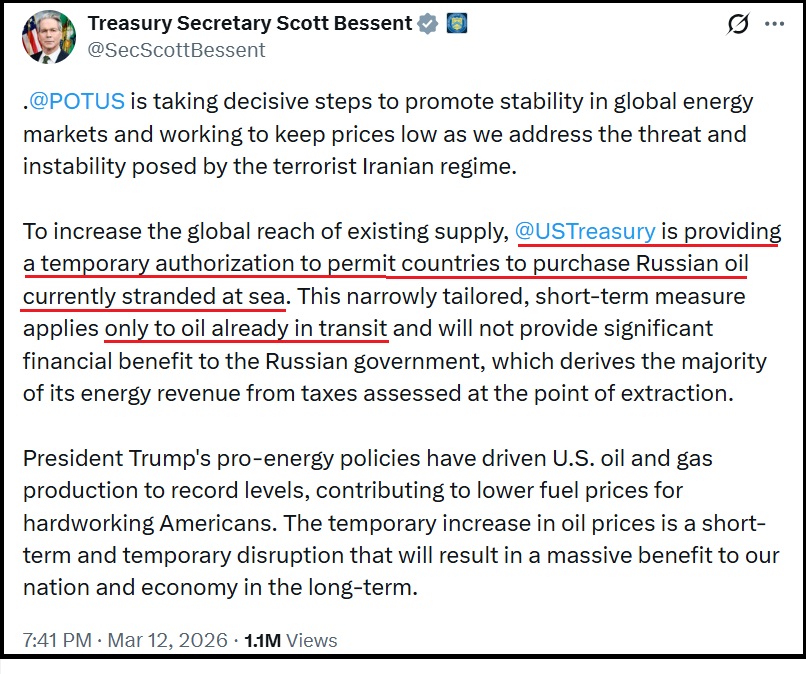
According to the terms announced by Secretary Bessent, the license to sell applies solely to Russian crude or petroleum products loaded onto vessels as of March 12 and is valid through midnight Washington time on April 11. [Treasury Notice Here – OFAC Technical Details Here]
[source]

The sanction relief license to sell will be done in globally recognized petrodollars and applies only to preexisting oil and petroleum products that are already in transit at sea.  However, here’s where it gets very interesting and the ramifications are significant.

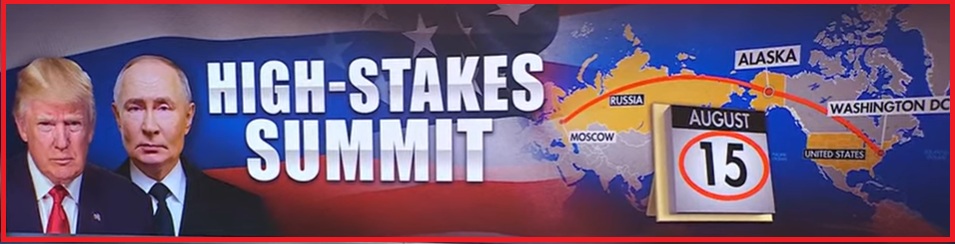
Immediately following the Alaska summit between Russian President Vladimir Putin and President Trump, Russia restarted Arctic-2 LNG terminals and began increasing oil production for storage on ‘floating platforms.’  President Trump met with Putin on August 15, 2025, and the curious increase in Russian production began on August 18, 2025.

In the past six months Russia has been pumping sanctioned oil and gas and storing it on ships and mobile sea platforms, seemingly (at the time) with no customers.  Suddenly, against the background of the Iran conflict, all of that previously stored ‘on the water‘ production, now worth double, is authorized for global sale (in petrodollars).

Either Russian President Putin is the luckiest guy in the world, or Russia knew something.

In 2025 what Russia did following the Alaska summit did not make sense; now it does and the ramifications are stunning.
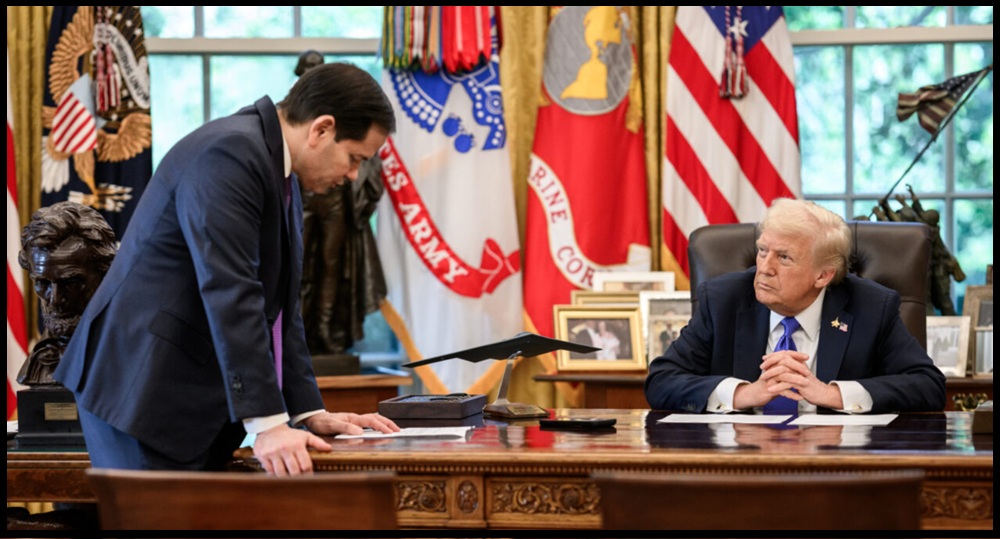
President Trump was looking for a way to organize a strategic partnership with Russia on the issue of energy production but was hampered by the preexisting sanction regime and strong opposition from domestic and international politics.

The ‘coincidental’ timing’ of Trump meeting with Putin and then subsequently Russia producing massive amounts of oil and gas for storage on the water suddenly starts to take on an entirely new light.  Did Putin know something was coming, something that would eventually make the Russian over production and ‘on the sea’ storage worth billions.

The implications here are quite remarkable; however, they simultaneously explain most of the behaviors since the Iran confrontation began.

Media reports highlight that Vladimir Putin was asked about a previous joint agreement for military support between Iran and Russia and why Russia did not respond when Iran was attacked.  Foreknowledge would explain that reaction.

Additionally, the Russian Federation president never responded to the Trump operation to take down Venezuelan dictator Maduro and seize control over Venezuela’s oil production.

If there was some discussion inferring that a ‘limited sanction relief’ protocol might be possible, that would explain why Russia began storing oil and gas at sea.

This fact pattern would also indicate that President Trump’s decision toward Iran was made at least six months ago, with a set of geopolitical events planned between the Alaska summit and the eventual confrontation with Iran.

TIMELINE: Trump and Putin meet. Three days later Russia begins pumping oil/gas and storing it at sea. President Trump then triggers the Venezuela western hemisphere security operation; Russia stays silent.  President Trump then triggers the confrontation with Iran; Russia rejects involvement. And then two weeks after the Iran confrontation begins, Trump removes sanctions on Russian oil/gas “in transit” at sea.

Suddenly all of the Russian produced and stored product ‘on the water’ has greater value and new customers.

Just a coincidence?  No way.
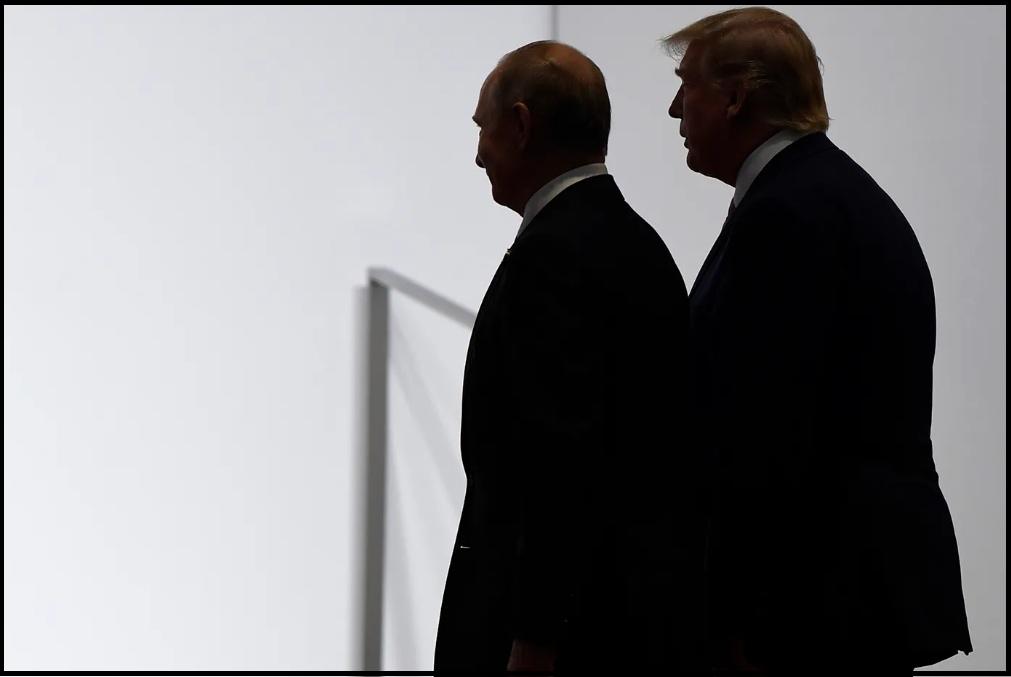
The United States needs the oil/gas market stability that Russia can provide.

Venezuela was/is to Trump as Ukraine was/is to Putin.

We’ll keep watching.

Enjoy the rest of your day.

.

.
USTR Greer Announces Launch of Sec 301 Trade Investigations into 16 Economies Including the EU


Posted originally on CTH on March 12, 2026 | Sundance 

When the Supreme Court made their ridiculous decision to nullify the import tariffs under the International Emergency Economic Powers Act (IEEPA) use, the high court noted several alternate approaches would not be legally problematic.  One of those approaches would be the use of Section 301 trade tariffs.

Yesterday USTR Jamieson Greer quietly announced that a Section 301 review would be taking place for the following countries: China, the European Union, Singapore, Switzerland, Norway, Indonesia, Malaysia, Cambodia, Thailand, Korea, Vietnam, Taiwan, Bangladesh, Mexico, Japan, and India.”

♦ Section 301 tariffs are a trade enforcement mechanism established under the Trade Act of 1974. They allow the U.S. government to impose tariffs on imports from countries that are found to be engaging in unfair trade practices. The Office of the United States Trade Representative (USTR) conducts investigations to determine if a country is violating trade agreements, and if so, it can impose tariffs as a corrective measure {SOURCE}

USTR PRESS RELEASE – WASHINGTON — Today, United States Trade Representative Jamieson Greer announced the initiation of investigations regarding the acts, policies, and practices of various economies under Section 301(b) of the Trade Act of 1974 relating to structural excess capacity and production in manufacturing sectors.

The investigations will determine whether those acts, policies, and practices are unreasonable or discriminatory and burden or restrict U.S. commerce. The economies subject to these investigations are: China, the European Union, Singapore, Switzerland, Norway, Indonesia, Malaysia, Cambodia, Thailand, Korea, Vietnam, Taiwan, Bangladesh, Mexico, Japan, and India.

“The United States will no longer sacrifice its industrial base to other countries that may be exporting their problems with excess capacity and production to us. Today’s investigations underscore President Trump’s commitment to reshore critical supply chains and create good-paying jobs for American workers across our manufacturing sectors,” said Ambassador Greer.

“The Trump Administration’s reindustrialization efforts continue to face significant challenges due to foreign economies’ structural excess capacity and production in manufacturing sectors. Across numerous sectors, many U.S. trading partners are producing more goods than they can consume domestically. This overproduction displaces existing U.S. domestic production or prevents investment and expansion in U.S. manufacturing production that otherwise would have been brought online. In many sectors, the United States has lost substantial domestic production capacity or has fallen worryingly behind foreign competitors.” (read more)

Additionally, Section 232 [Steel and Aluminum examples] of the Trade Expansion Act of 1962 (19 U.S.C. §1862, as amended) authorizes the President to impose trade restrictions—such as a tariff or quota—if the Secretary of Commerce determines, following an investigation, that imports of a good “threaten to impair” U.S. national security. {SOURCE}

Section 232 is currently covering all the steel and aluminum import tariffs.

Section 122 of the Trade Act of 1974 allows the U.S. president to impose tariffs of up to 15% to address “large and serious” balance-of-payments deficits. This authority can be exercised without prior congressional approval for a limited duration of 150 days. After this period, any tariffs must be extended by Congress. {SOURCE}

Section 122 has already been deployed to retain the “baseline reciprocity tariffs.”

USTR Greer is now walking through the process of deploying Section 301 and will eventually become the legal underpinning to replace Section 122 and retain all tariff status without congressional extension needed.   Most of this is technical and legal compliance as several of the aforementioned nations have already finalized free trade agreements.

Witkoff and Kushner Meet Russian Delegation in Florida – Reports Indicate Discussions of Strategic Economic Cooperation on Oil


Posted originally on CTH on March 12, 2026 | Sundance 

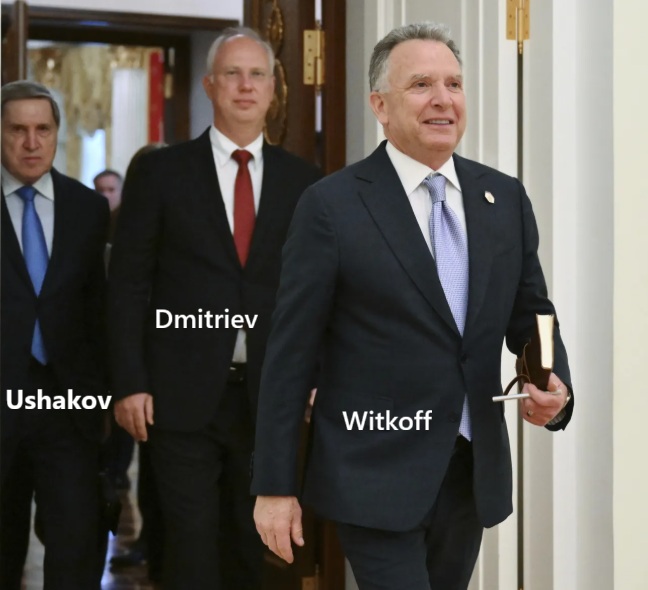
The fact that Team Russia and Team USA would be discussing a strategic economic alliance on the issue of energy is not a surprise to those who watched both President Putin and President Trump outline that same content discussion in Alaska last August.  However, given the current conflict with Iran and the escalating oil price issue, Russia and the USA discussing Russian oil capacity and U.S. sanctions therein takes on a new angle.

It has been obvious that domestic U.S. politics, in combination with the Russia-Ukraine war, has impeded President Trump from organizing a strategic reset with Russia pulling away from historic conflicts.  However, CTH is also clear-eyed on the longer-term ramifications for Eastern Europe when contrast with Putin’s ambitions to fix what he perceives as prior Russian Federation mistakes regarding the West (more on that at the end).

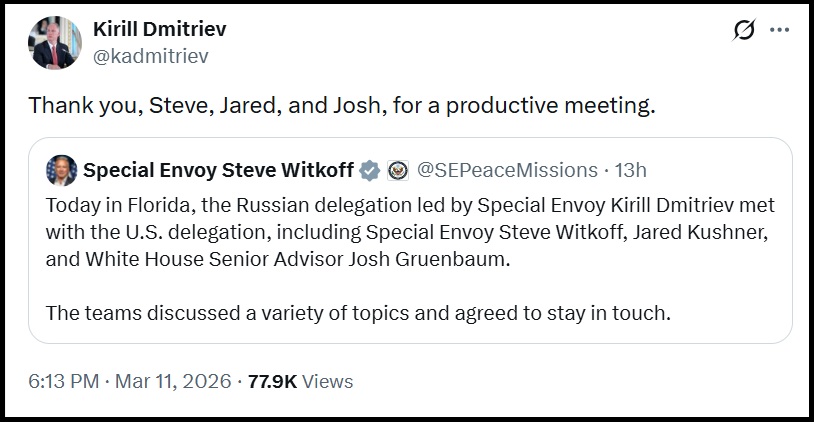
As noted in social media exchanges from Witkoff and Dmitriev, the discussion was productive.

[SOURCE]

All indications of this meeting give the appearance of less focus on progress in the Ukraine-Russia conflict, and a higher focus on current economic conditions -created by the Iran conflict- that could be enhanced with cooperation between the U.S. and Russia. {GO DEEP BACKGROUND}

According to Kirill Dmitriev, Russian special presidential envoy for investment and economic cooperation with foreign countries and director general of the Russian Direct Investment Fund (RDIF), relayed through the Russian News Agency (TASS), “he visited the US upon orders from Russian President Vladimir Putin, taking part in a meeting of the heads of a working group on economic cooperation between the two countries.”

According to the envoy, the meeting addressed both promising projects that can help restore Russia-US relations and the current crisis on global energy markets.

The US is becoming increasingly aware of the role of Russian oil and gas in ensuing the stability of the world economy, as well as of the [in]effectiveness of sanctions against Russia, Dmitriev said after the meeting. (source)

“We discussed promising projects that could contribute to the restoration of Russian-American relations and the current crisis on global energy markets,” Dmitriev also wrote in a Telegram post.

“Today, many countries, primarily the United States, are beginning to better understand the key, systemic role of Russian oil and gas in ensuring the stability of the global economy, as well as the ineffectiveness and destructive nature of sanctions against Russia.”

With the strong likelihood that Russia’s restart of their flagship LNG terminal Arctic-2 was directly related to the August summit in Alaska {SEE HERE}, there is already a baseline established for strategic cooperation.

President Trump would have no problem with Russia introducing millions of barrels of oil into the global market given the issues created by conflict in/around the Strait of Hormuz.  However, obviously the issues for streamlined Russia oil exports surround (1) preexisting sanctions, (2) domestic U.S. anti-Russia politics and (3) the political and economic position of the anti-Russia European Commission leadership.

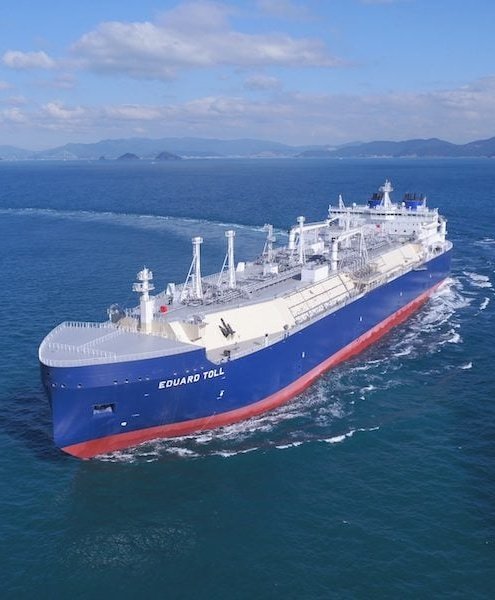
As we previously outlined with the Liquified Natural Gas (LNG) benefit, Russia previously extracted, liquified and pumped massive amounts of LNG into floating storage platforms from Arctic-2.  Those LNG supplies doubled and tripled in value in a few days once Qatar shut down their production facilities and are now being sold to various Asian countries.

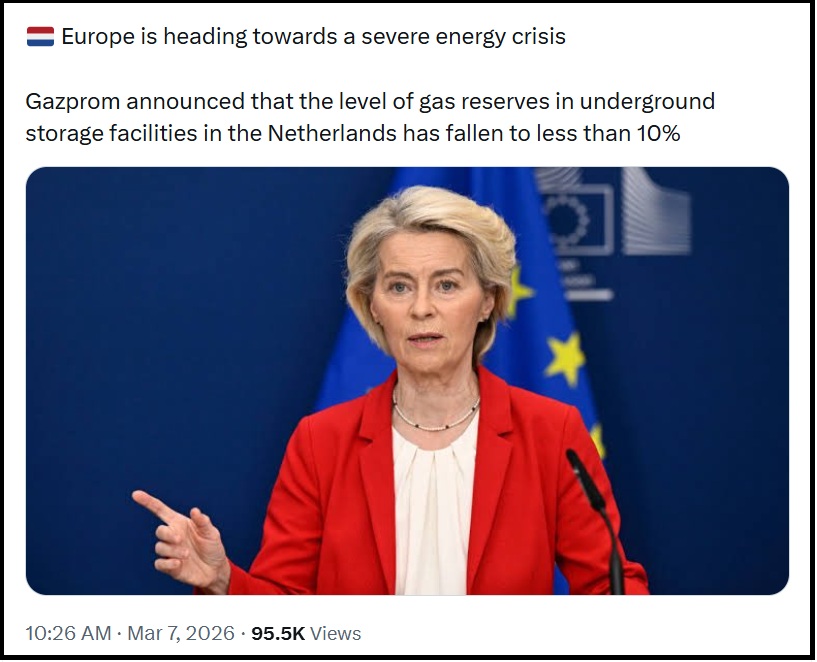
Europe has a massive energy problem with severely low LNG storage rates and now a shortage of oil, with EU gasoline prices rising much higher & faster than the rest of the world.  Europe is facing a severe energy crisis overall and now their preexisting economic troubles are being amplified.

More than ever Europe needs the Russian oil/gas, but ridged ideologues will never compromise on their anti-Russia position.  They have even steeper sanctions against Russian oil/gas scheduled to trigger at the end of this month.

It will be interesting to see how President Trump navigates the potential benefit from Russian energy products into the global market against the backdrop of all the geopolitical angst and political opposition against Russia.

…. AND that brings me to a point of discussion that I’ve had with a few dialed-in people.

When you look at the long term, and when you overlay the mindset of Russian President Vladimir Putin, almost everyone in Russia/Eastern Europe who evaluates the future can see the potential for Putin to exploit the EU’s self-created economic vulnerabilities for his own expansionist objectives.

Yes, some elements of the U.S. banter about further Russian expansion are not propaganda.  Most of it is, but there is an element to the future forecast -beyond the Ukraine conflict- that could see Russia in a much stronger position, and the EU in a position of significant weakness.

The MAGA-minded European and Russian people, the ones who have strong wisdom on the issues, can all see a specific set of dominos falling that could place Putin in a position to recapture the remaining pro-Russian geographies in Europe back into an expanded Russian Federation.

Given the highly unstable mindset and friction points within European leadership, that would be a very bad combination to contemplate.

A strategic USA reset with the Russian Federation is a reasonable and pragmatic goal.  There is no reason for America and Russia to be in conflict or opposition and pulling Russia away from a relationship with China has massive benefits for both countries.

The Russian people are not affectionate toward China at all, not even a little bit.  In reality, China is a necessary ally for Russia but not a choice they would select if other options were available and variables were changed.  The Russian people are exceptionally independent, incredibly strong and brutally proud; however, they are also more Western-minded (European, without self-flagellation) than Eastern-minded (Asian).

Here’s where/why Trump is being careful and pragmatic.  President Trump doesn’t want to see an outcome where Russia is eventually stronger than Europe.  There’s not enough frictionless history between the USA and Russia to trust Putin when he says the Federation has no plan to expand into Europe.

The USA can/should be strategic allies with Russia. However, it would be much better if a strong Europe existed at the same time.  Hence, Vice President Vance and Secretary of State Rubio continuing to emphasize that Europe needs to stop cowering in politically correct wokeness.  The EU is destroying itself at the same time Russia is getting stronger.

.

Last point, the Lyndon LaRouche team, Promethean Action PAC, are very happy with the ongoing fracture of the USA away from the UK/EU group.  However, be cautious around Political Action Committees who say, “President Trump needs people to understand what he is doing” and we are here as his official policy interpreters.

Remember, President Trump doesn’t need policy interpreters.

President Trump Notes Briefing on Iranian Sleeper Cells that Entered During Biden Open Border Era


Posted originally on CTH on March 12, 2026 | Sundance

During an impromptu press availability last night, President Trump was asked about potential Iranian sleeper cells or groups sympathetic to Iran that are active on U.S. soil.

Obviously, the threat from groups and individuals sympathetic to Iran creates an increased need for the Dept of Homeland Security and FBI to operate enhanced domestic surveillance, an unfortunate outcome that further enhances the need for FISA(702) authorities.

When this potential terror threat is combined with the millions of people who crossed the U.S. southern border during the Biden administration, the Palantir project within Customs and Border Protection (CBP), Immigration Customs Enforcement (ICE), the need for rapid and aggressive deportation tracking and the Dept of Homeland Security (DHS), we can reasonably be assured that domestic surveillance will expand.

On the positive side of the issue, recent reports highlight Iranian citizens helping U.S/Israeli drones to target Iran regime officers on the streets in Tehran which has caused the regime police to withdraw from roadblocks and checkpoints.  [Well-sourced data here] This type of operation empowers the voices of the citizen opposition to organize.  WATCH:

.

President Trump Impromptu Presser on Iran and SAVE America Act Departing the White House


Posted originally on CTH on March 11, 2026 | Sundance

President Trump answers questions from the media as he departs the White House for Ohio and Kentucky.  The majority of the questions surrounded Iran and the SAVE America Act.  WATCH:

.

Special Envoy Steve Witkoff Gives Background Information on Breakdown of U.S-Iran Diplomatic Discussions


Posted originally on CTH on March 11, 2026 | Sundance

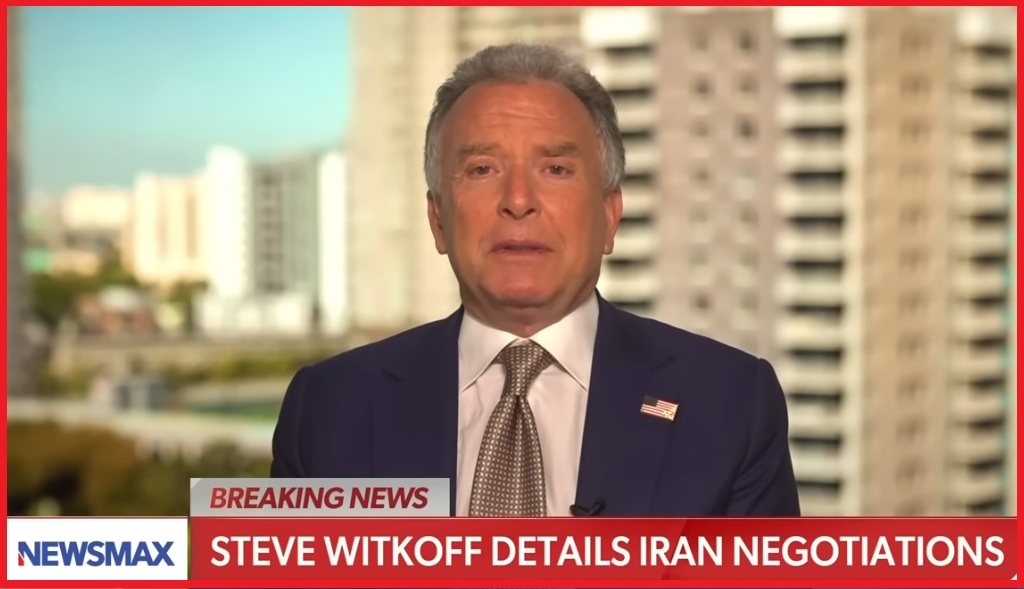
President Trump’s U.S. Special Envoy, Steve Witkoff, recently sat down with Greta Van Susteren to outline the point of diplomatic discussions with Iran’s Foreign Minister Abbas Araghchi when things broke down.

The Witkoff explanation is interesting as he outlines Iran’s unwillingness to even consider a cease to their ballistic missile program as part of the expanded security talks.  According to Envoy Witkoff, Foreign Minister Araghchi was intransigent on several key points of concern; even becoming loud and aggressive as he was pushed to explain why seeking ballistic missiles would be needed.

It’s an interesting background perspective that gives context to the decision that President Trump ultimately reached.  WATCH: 

.

 Auto Sector, Big Stupid Government, China, Climate Change, energy, Environmentalism, European Union, Germany, Glo-Bull Warming, media bias, Professional Idiots, propaganda, Transportation


Senate Majority Leader John Thune again reiterated there are not enough Senate votes to get the SAVE America Act to the status of a ‘talking filibuster.’ “The votes aren’t there for a talking filibuster,” Thune said Tuesday. “It’s just a reality.”

.

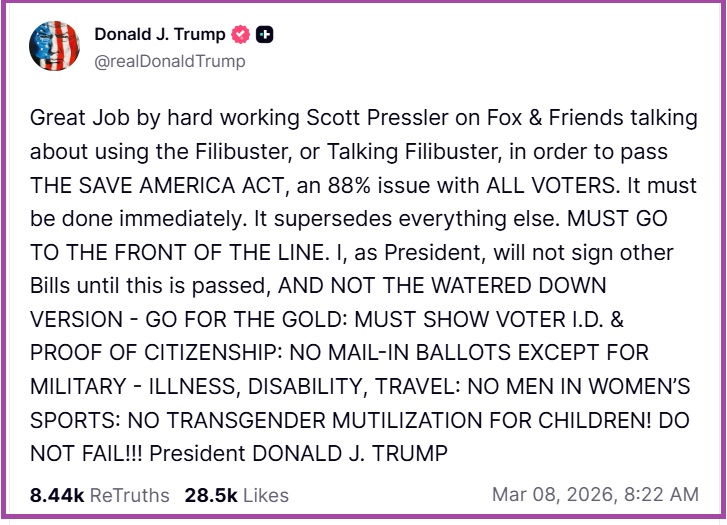
President Trump States He Will Not Sign Other Bills Until ‘Save America Act’ is Passed


Posted originally on CTH on March 8, 2026 | Sundance

President Trump is again urging the Senate to pass the Save America voting act that is a core element of restoring voter integrity in U.S. elections.  In his Truth Social post, President Trump notes he will not sign other legislation until the Save America Act reaches his desk.

[SOURCE]

This thread will refresh daily and appear above the Open Discussion Thread.

Mexico and USA Begin Bilateral Preparations to Dissolve USMCA Without Canada


Posted originally on CTH on March 8, 2026 | Sundance

One of the most curious aspects to the predictable USMCA review, ie. dissolution, has been the incapacity of the Canadian government or trade delegation to accept the United States is going to create two distinctly different bilateral trade agreements and eliminate the trilateral USMCA.

For 16 months the Canadians have refused to fathom the reality of what is going to happen this year.

The Canadians just cannot believe it is possible they will be forced to negotiate a free trade agreement without the cover of a multilateral construct. It has been remarkable to watch their dissonance.

Last week President Donald Trump and Mexican President Claudia Sheinbaum held a phone call. At the conclusion of the call, Sheinbaum publicly asserted the reality the Canadians just refuse to accept.

MEXICO – Mexico’s President Claudia Sheinbaum told reporters during her morning news briefing on Wednesday that her U.S. counterpart, Donald Trump, is open to doing away with the U.S.-Mexico-Canada trade agreement (USMCA) and replace it with individual trade deals with each country.

[…] “There might be revisions that create bilateral deals instead of involving the three countries because some things are more important between Mexico and the United Sates or between Canada and the United States,” said Sheinbaum. “Not everything has to be trilateral.”

Mexico’s president said the subject was brought up by Trump during a Tuesday phone conversation. […] According to Sheinbaum, her country is ready to consider possible changes. (read more)

Canadian Prime Minister Mark Carney finally started to realize President Trump was likely to ignore Canada and begin direct discussions with Sheinbaum. So, Carney went to Mexico to try and get assurances from Sheinbaum that Mexico would not proceed without Canadian interests in mind.

Essentially, Carney wanted Sheinbaum to be on his team.  However, as diplomatically noted in the phone call with President Trump, President Sheinbaum politely rejected the Canadian partnership. [Insert Trump’s position toward Mexican cartels as an overriding thought]

The Canadians have been talking to U.S. media looking for sympathetic ‘Orange man bad’ coverage.  However, within the contacts between Canadian government officials and U.S. corporate allies, the sentiment from team Trump is very clear:

“The key thing that has struck me, and I think it has struck all Canadians, is so many of these guys in the Trump administration, frankly, they just hate Canada,” said Brian Clow, former Prime Minister Justin Trudeau’s deputy chief of staff who led Canada-U.S. affairs. {source}

It’s not hatred, it’s annoyance.

Years of compounding parasitic annoyances and sanctimonious, ‘holier-than-thou’ pontifications from the arrogant and uppity Canadian government.

The only time Canada has been honest with themselves and with President Trump was when Justin Trudeau was exiting office and admitted Canada cannot function without all of the one-way benefits it receives from the USA {GO DEEP}.

That’s it. That’s the only time Canada has ever been honest about the nature of the economic relationship.  A time when Trudeau had already quit and would not be around to deal with the consequences.  However, the level of Canadian arrogance is not only visible to President Trump, even the Japanese can see it.

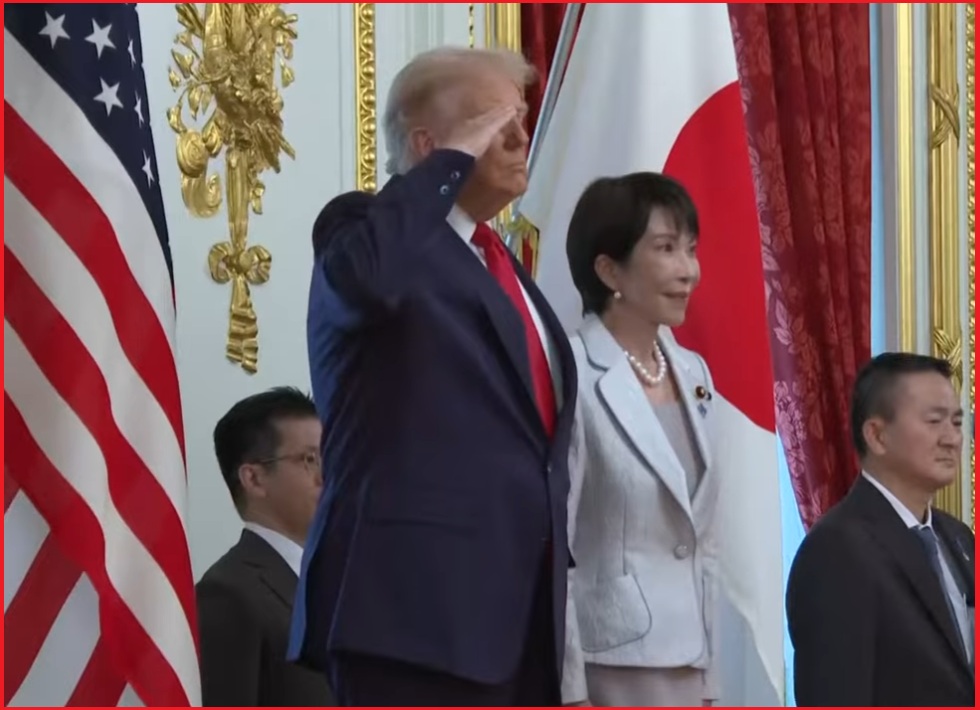
Remember that very close relationship between Japanese Prime Minister Sanae Takaichi and President Trump.  That professional, personal and respectful relationship is going to become strategically important this year.

Japan’s economic and trade representatives have told the Canadians that if the USMCA is dissolved, and if Canada no longer has the same trade access current available in the trilateral format, then Japan would rethink its entire investment portfolio in Canada, specifically the auto sector.

In essence, specifically as it pertains to the auto industry, Japan is saying if the USMCA is gone, Japan may pull all their cross-border manufacturing out of Canada and transfer it to the United States.

Prime Minister Mark Carney was recently questioned about the statements from Japan and he waxed nonsensically [SEE HERE] about how Canada would use Chinese BYD electric autos to replace lost Toyota manufacturing.

It’s a hot mess for Canada and getting worse.

Last Friday, Canada’s worst nightmare began unfolding:

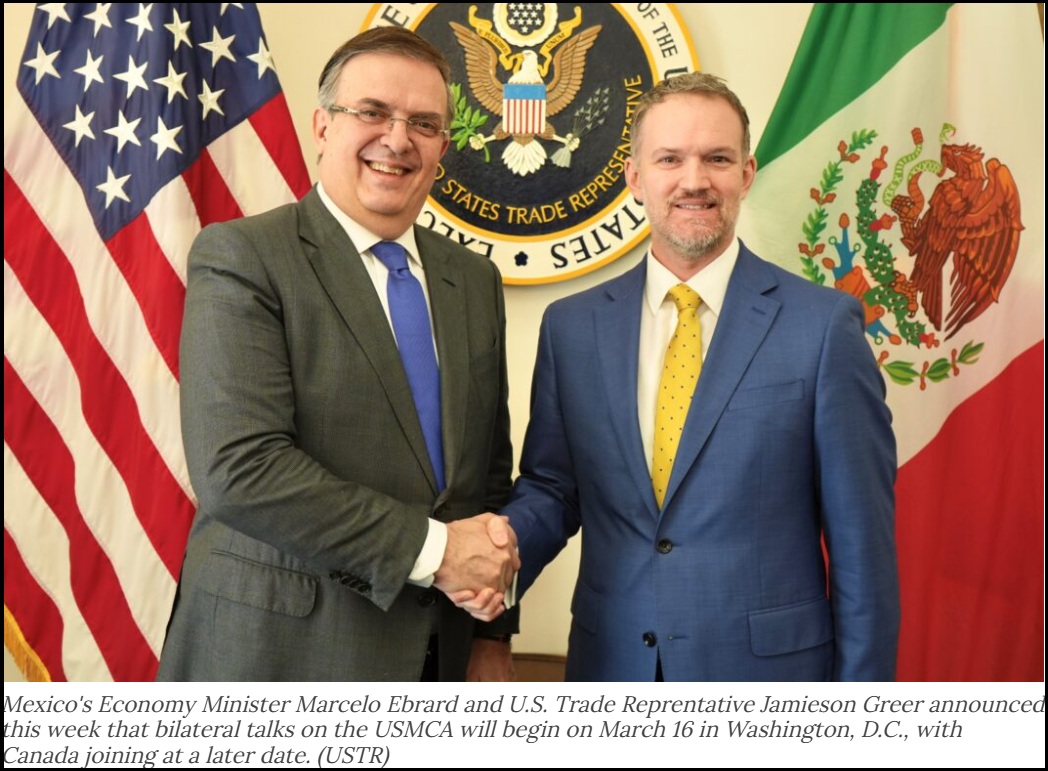
WASHINGTON – Today, U.S Trade Representative Jamieson Greer and Mexican Secretary of Economy Marcelo Ebrard announced the first round of bilateral discussions in preparation for the Joint Review of the United States–Mexico–Canada Agreement (USMCA).

The ministers instructed negotiators to begin a scoping discussion on the necessary measures to ensure the benefits of the Agreement accrue primarily to the parties, including by reducing dependence on imports from outside the region, strengthening rules of origin, and enhancing the security of North American supply chains.

Ministers expect negotiators to hold the first meeting the week of March 16 and meet regularly thereafter as part of the Joint Review. [LINK]

Right there, you can see the exact same thing that took place in early 2017, when President Trump began organizing a bilateral trade discussion with Mexico only, in advance of his preferred approach to dissolve NAFTA and use two distinctly different bilateral trade agreements to replace it.  USTR Robert Lighthizer was working with Mexico only.

USTR Jamieson Greer, the studious protege’ of Lighthizer, now has the task of organizing the USA and Mexico while delaying any substantive contact/discussions with Canada until President Trump is ready to drop the hammer.

I can assuredly say President Trump wants everything outlined and in place for a U.S-Mexico deal before he announces the dissolution (joint review withdrawal) to end the USMCA.

There is little to no chance President Trump wants to renew a trilateral trade agreement that allows Canada to keep exploiting their market access to the U.S. without accepting reciprocity.

Remember, Canada’s main export is energy, and Trump has diminished that leverage through the Venezuela operation. Perhaps another ‘ah-ha’ moment for deep weed walkers.  Yes, in addition to giving China a body blow, taking control of Venezuela oil and minerals also weakens the leverage position of Mark Carney.  Can you see it now?

Canada has one key card they can leverage, congress.

Prime Minister Mark Carney is counting on the UniParty in Washington DC to stand in his corner against President Donald Trump and block any attempt to end the USMCA.  However, this is not going to be a surprise to President Trump, because Justin Trudeau did the same thing in 2018 when he coordinated his approach toward NAFTA through then Speaker of the House, Nancy Pelosi.

As I have said with great eagerness, it is going to be a lot of fun to watch this unfold.

Part II – Europe and China Have an Energy Problem


Posted originally on CTH on March 7, 2026 | Sundance 

When President Donald Trump and President Vladimir Putin met in Alaska on August 15, 2025, the focus of the geopolitical world was on discussions surrounding Ukraine.  Unfortunately, it didn’t take long, merely a few hours, for both the U.S. and Russia to say that no progress was made.  However, also noted at the time was both the USA and Russia saying sideline discussions took place surrounding the possibility for a strategic relationship surrounding energy development.

What follows below is a review of the current energy dynamic, specifically surrounding LNG, against the backdrop of the Iran war with a hindsight review of that previous discussion between Putin and Trump.

What most people are missing in their current analysis was something that took place immediately following that Alaska summit six months ago.  Something that did not make any sense until now. {GO DEEP PART I HERE}

Three days after that summit meeting, on August 18, 2025, Russia announced they were restarting Russia’s Arctic-2 LNG production facility.  Russia would be more than doubling their capacity to generate and store liquified natural gas (LNG).

It absolutely did not make sense that Russia would start producing even more LNG considering the previously imposed western sanctions against them, and the fact that Russia was already overproducing LNG. As noted by analysts at the time:

AUGUST 18, 2025 – Russia’s Arctic LNG 2 export facility, which is sanctioned by the United States, is coming back to life after a year of no activity and is looking for buyers in Asia.

[…] The U.S. and EU sanctions on Russia’s Arctic LNG 2, which was billed as Russia’s flagship LNG project, have effectively frozen the start-up of the export facility in the Gydan Peninsula.

[…] Last year, Russia started shipping LNG from its flagship Arctic LNG 2 project—but not to customers. The shipments were made from the Arctic project to floating storage units either in Russia or in European waters, as potential customers were unwilling to buy the sanctioned LNG. {SOURCE}

In August of 2025, Russia was essentially producing more LNG than they could sell into the available market.  Russia was storing the overproduction from Arctic-1 on floating storage units and slowly selling to countries that did not align with the sanctions, specifically China and some Asian buyers.  Then suddenly, after the Trump summit, Russia decides to bring Arctic-2 online and produce even more LNG.  You can see how this did not make sense.

If they could not even sell all the Arctic-1 LNG output, then why would Russia bring Arctic-2 LNG production online?

That was six months ago.

Suddenly, with the war in Iran being triggered, and with Qatar almost immediately announcing they were shutting down all LNG production, there are dozens of new markets for liquified natural gas. And that current LNG is now worth 50% more than it was when Russia inextricably decided to start producing and storing it.

Apply some hindsight to this timeline.  Did Russia know or discover something in August of 2025 that the world would not discover until six months later?

Russia’s behavior in increasing LNG production, then storing that LNG in strategic venues, during a time when there was no reasonable incentive to trigger an LNG output increase, would seem to answer that question in the affirmative.

One thing is certain, all of that previously produced LNG is now worth double what it was when Russia created it, and now the global market is scrambling to get it.

Here is where it gets really interesting….

In October 2025, do you remember me asking why President Trump decided to fly East, to go West to the ASEAN summit in Asia?  It just didn’t make sense.

Previously in 2017 when President Trump went to the ASEAN summit, he flew West; Airforce One refueled in Guam.  This time in 2025, a few weeks after the meeting with President Putin in Alaska, President Trump flew East, to go West.

Where did he refuel?

That’s correct.  President Trump refueled in Qatar, and during the ‘unexpected’ stop he met, yet again, with Qatari leadership.

♦ In May 2025 President Trump traveled to Qatar and had numerous and lengthy conversations, signing multiple strategic defense and trade deals.  ♦ In August 2025, President Trump meets with Vladimir Putin, who then begins ramping up production of LNG.  ♦ In October 2025, President Trump travels back to Qatar for a curious and unexpected visit.

Less than 36 hours after President Trump began “Operation Epic Fury” Qatar announces they are halting the production of LNG, and as a consequence the price of LNG jumped and a massive supply shift in global trade was created.

The Financial Times – […] The global battle for gas is underway, with Europe on the front lines. Since Wednesday, March 4, at least four liquefied natural gas (LNG) tankers – factory ships with large, refrigerated tanks used to transport LNG over long distances – suddenly changed course. Initially headed for France, Belgium or Spain from Africa and the United States, they rerouted for Asia, according to data from the maritime analytics company Kpler. (read more)

MOSCOW, March 4 (Reuters) – Russia could halt gas supplies to Europe right now amid a spike in energy prices triggered by the Iran crisis, President Vladimir Putin warned on Wednesday, linking the possible decision to the European Union wanting to ban purchases of Russian gas and liquefied natural gas. (read more)

MOSCOW, March 6 (Reuters) – “Our companies are considering opportunities, ​without waiting for ​further restrictions from Europe, to conclude ‌new long-term contracts with ​our partners ​and redirect some of the gas from Europe to other countries, including India, Thailand, ​the Philippines and ‌the People’s Republic of China,” Russian Deputy Prime Minister Alexander Novak ​said.

Next announcement:

[SOURCE]

Six months ago, following a summit in Alaska with President Trump, President Vladimir Putin began producing and storing LNG at a scale and capacity that did not make sense.   Six months later, the now massive Russian inventory is worth twice as much as it was, AND the number of global buyers for the Russian LNG has exploded.

Meanwhile, “while China would suffer from oil outages, a Middle East crisis with disproportionate LNG outages might benefit the PRC. Natural gas accounts for a relatively small share of China’s primary energy consumption, the country enjoys substantial domestic production, and it can tap pipeline imports from Russia, Central Asia, and Myanmar. Significantly, many of the PRC’s competitors or rivals—the European Union, Japan, South Korea, and Taiwan—are substantially or even wholly reliant on LNG imports for their natural gas consumption. Dutch TTF natural gas prices are up more than 50 percent against last Friday’s close, fueling concerns of an energy-induced inflationary spike.”

Where is President Trump scheduled to go next?

WASHINGTON/BEIJING, March 3 (Reuters) – The U.S. military campaign against Iran has put Chinese leader Xi Jinping on the back foot ahead of an expected summit with U.S. President Donald Trump, who for the second time in as many months has turned America’s military against one of Beijing’s close partners.

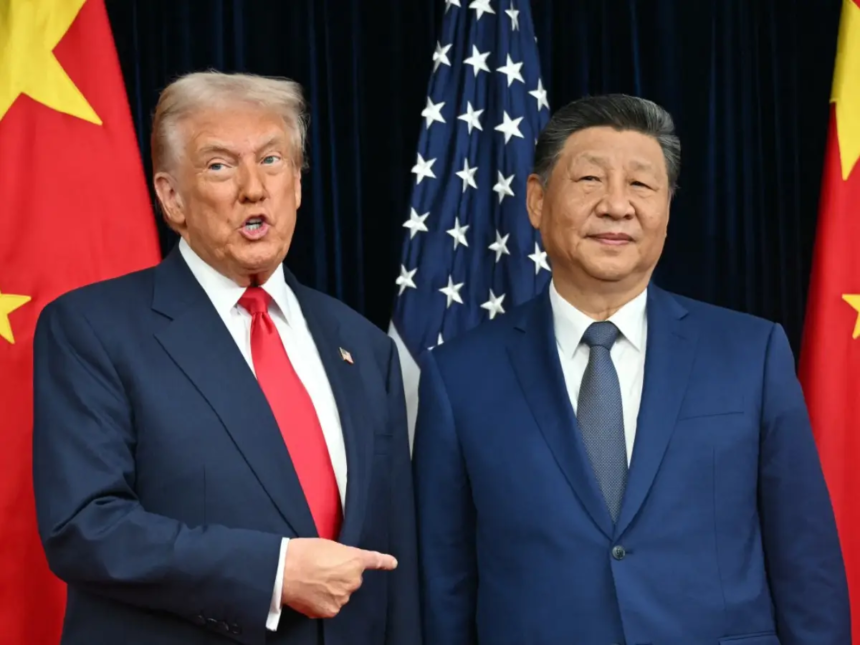
Trump is set to arrive in Beijing at the end of March following the ​U.S. capture of Venezuelan President Nicolas Maduro in a risky Caracas raid in January and the U.S.-Israeli air war that on Saturday killed Iran’s Supreme Leader Ayatollah Ali Khamenei, the former ‌leaders of two countries that have been major oil suppliers for China.

[…] Xi now faces the awkward prospect of feting Trump on the world stage or backing out of the proposed March 31 to April 2 ​meeting. Beijing has yet to confirm the summit dates. (read more)

.

Huh, imagine that….