Patrick K O’Donnell On How Individuals Agency Changed The Course Of History


Posted originally on Rumble By Bannons War Room on: Dec 25, 2024 at :12:00 pm EST

Patrick K O’Donnell On How John S. Mosby Created Strategic Intelligence During Civil War


Posted originally on Rumble By Bannons War Room on: Dec 25, 2024 at :12:00 pm EST

Patrick K O’Donnell On First Jessie Scout Raid During Christmas Time


Posted originally on Rumble By Bannons War Room on: Dec 25, 2024 at :12:00 pm EST

Patrick K O’Donnell On The Foundational Riffle Companies Of The U.S. Military


Posted originally on Rumble By Bannons War Room on: Dec 25, 2024 at :12:00 pm EST

Patrick K O’Donnell On The History Of The Battle Of Long Island


Posted originally on Rumble By Bannons War Room on: Dec 25, 2024 at :12:00 pm EST

The Christmas Of 1776


Posted originally on Rumble By Bannons War Room on: Dec 25, 2024 at :12:00 pm EST

The WWII Legacy Of Howard Chappell


Posted originally on Rumble By Bannons War Room on: Dec 25, 2024 at :12:00 pm EST

Patrick K O’Donnell On The Brenner Assignment


Posted originally on Rumble By Bannons War Room on: Dec 25, 2024 at :12:00 pm EST

US-Russia Relations Today Akin to US-Japan Relations before WWII


Posted originally on Dec 26, 2024 by Martin Armstrong 

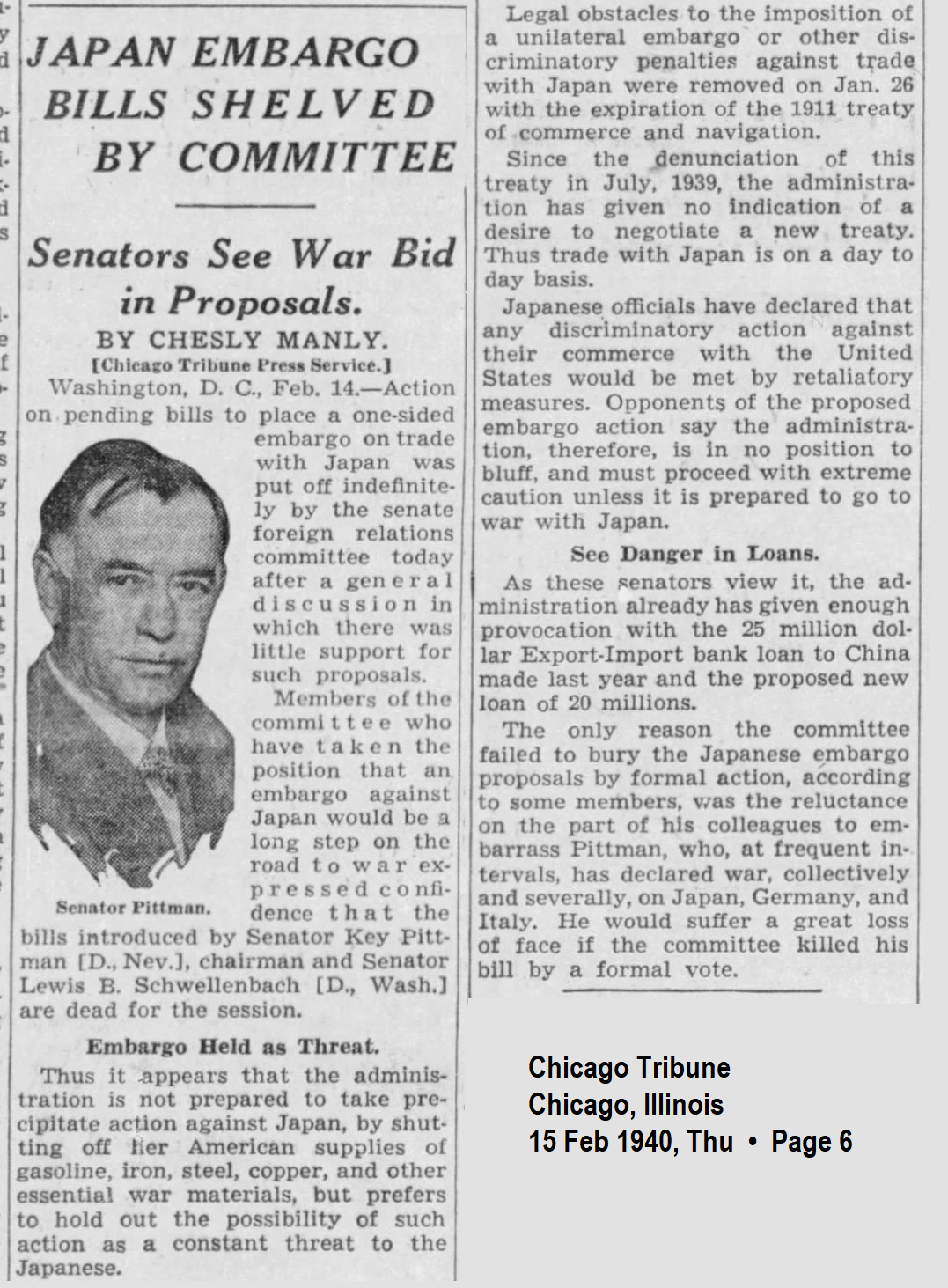
Embargo on Japan 2 15 20

The US government is treating Russia just as it treated Japan before World War II fully took hold.

President Roosevelt was inflicting embargos on the Japanese, freezing their money, and cutting them off from all energy. When they turned to buying fuel from other nations, Roosevelt threatened to blockade their ships. Is it any wonder why the Japanese attacked Pearl Harbor to eliminate the US fleet after the threat of an embargo?

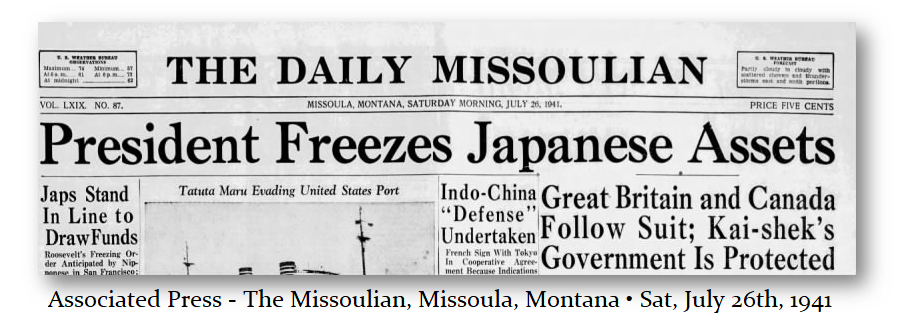
7 26 1941 US Freeze Japan Assets

The neocon strategy is taken right out of the war book used during the Roosevelt Administration. This is precisely what FDR did to get the United States into World War II. He was frustrated because Congress would not authorize joining the war. When FDR went to Boston, the Irish lashed out at him, saying that the British starved the Irish and they were now not going to go defend them. Many people who fled Europe to America wanted to be free of the hatred and politics in Europe. So, it was NOT a popular idea to come to the rescue of Europe, which they fled.

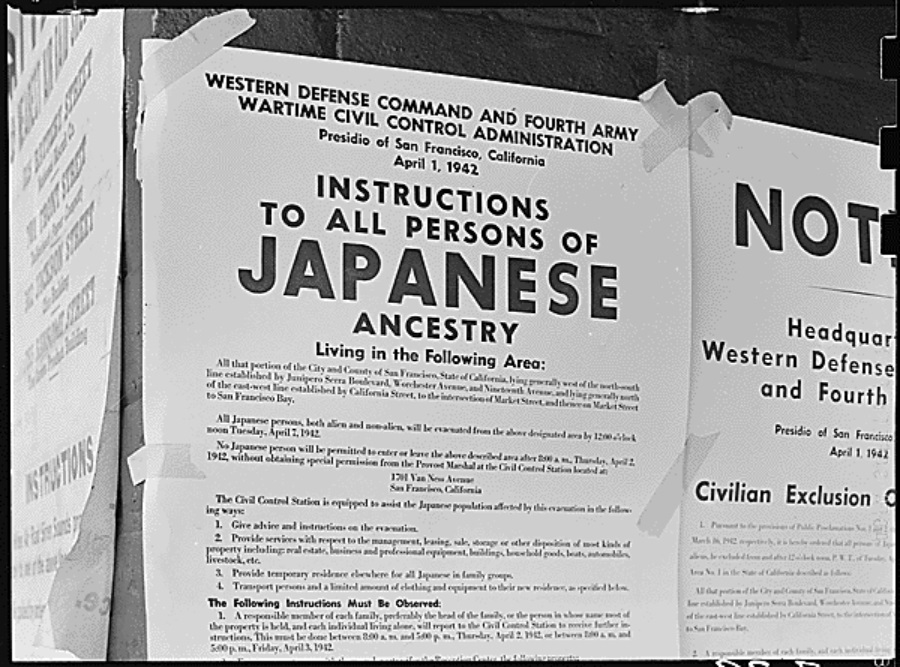
It may come as a surprise, but the US public was sympathetic toward China during this period. America saw Japan’s actions during the Second Sino-Japanese War as predatory. Similarly, many now view Russia as the aggressor and believe it must be quelled. The hatred of the Japanese later came to a head during the war as the US government imprisoned all Japanese people, women and children, and those born in the US.

1942 Japanese internment Camps

The Neocons, during the FDR Administration, followed a clever agenda to circumvent Congress as they are doing right now. They were racists and simply hated the Japanese, as is the case with Russians right now. They started in 1938 with a series of escalating highly restrictive trade restrictions imposed on Japan. The Neocons terminated the 1911 commercial treaty with Japan in 1939. They then tightened the Export Control Act of 1940, which was intended to prevent the scarcity of critical commodities in a likely prewar environment. In addition, this act directly targeted Japan to restrict the exportation of material to Imperial Japan.

This was followed by the United States embargoing scrap metal shipments to Japan and closing the Panama Canal to Japanese shipping. The Neocons were seeking to isolate Japan without engaging in a war that only Congress could declare Japan, at the time, imported about 74% of its scrap iron from the US and over 90% of its copper.

Then, on July 26, 1941, the US seized all Japanese assets in the United States in retaliation for the Japanese occupation of French Indo-China as they have done today with Russia’s reserves. This was followed on August 1 with an oil embargo and gasoline exports to Japan which also came from the United States. The oil embargo was the last straw when 80% of its energy supply came from the USA. The US also was proposing intervening to prevent Japan from getting oil from other sources.

The complete US oil embargo was the last straw. The Japanese had to then seize Southeast Asia for resources which expanded the war instead of the old hatred between China and Japan. They needed to do that before they ran out of resources. To secure themselves in the Pacific, they attacked Pearl Harbor with no intention of actually invading the United States.

What we are doing to Russia is exactly the same way Roosevelt treated the Japanese. There will be only one resolution – World War III. I do not believe that those in Washington and Brussels are this stupid. This is a deliberate attempt to provoke Russia to attack. They will then claim we wear the white hats and Russia is the aggressor with an unprovoked attack. It worked before. There was even a Senate investigation after the war into the fact that Roosevelt knew Pearl Harbor was to be attacked and pulled out the important ships, all to force Congress to enter the war.

When the US Government Defaulted on its Bonds


Posted originally on Dec 26, 2024 by Martin Armstrong 

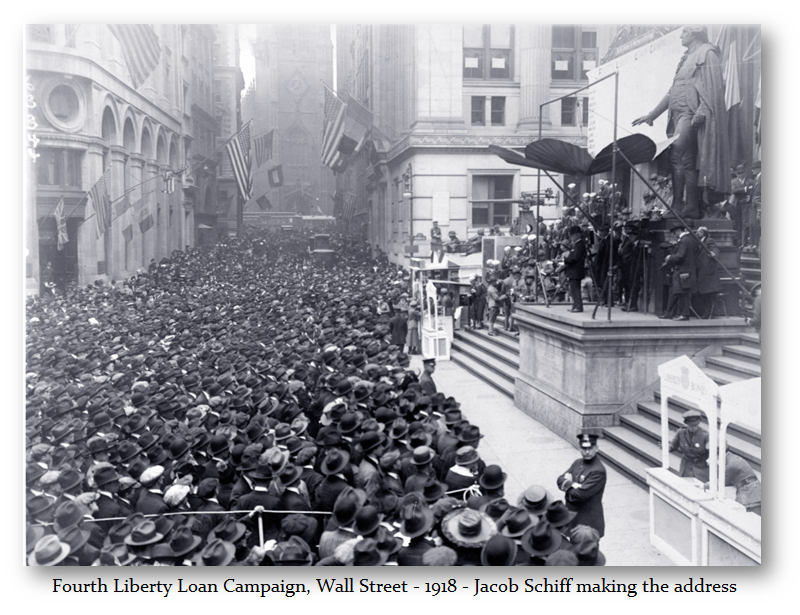
4th Liberty Bond Launch Wall Street 1918

The first three Liberty bonds and the Victory Loan, sold to fund World War I, were indeed retired during the 1920s. However, because the terms of the bonds included a Ponzi Scheme that allowed the bondholder to swap them for the newer bonds, with superior terms, most of the debt from the first, second, and third Liberty bonds had been rolled over into this fourth issue. The terms of this 4th issue were as follows:

Date of Bond: October 24, 1918
Coupon Rate: 4.25%
Callable Starting: October 15, 1933
Maturity Date: October 15, 1938
Amount Originally Tendered: $6 billion
Amount Sold: $7 billion

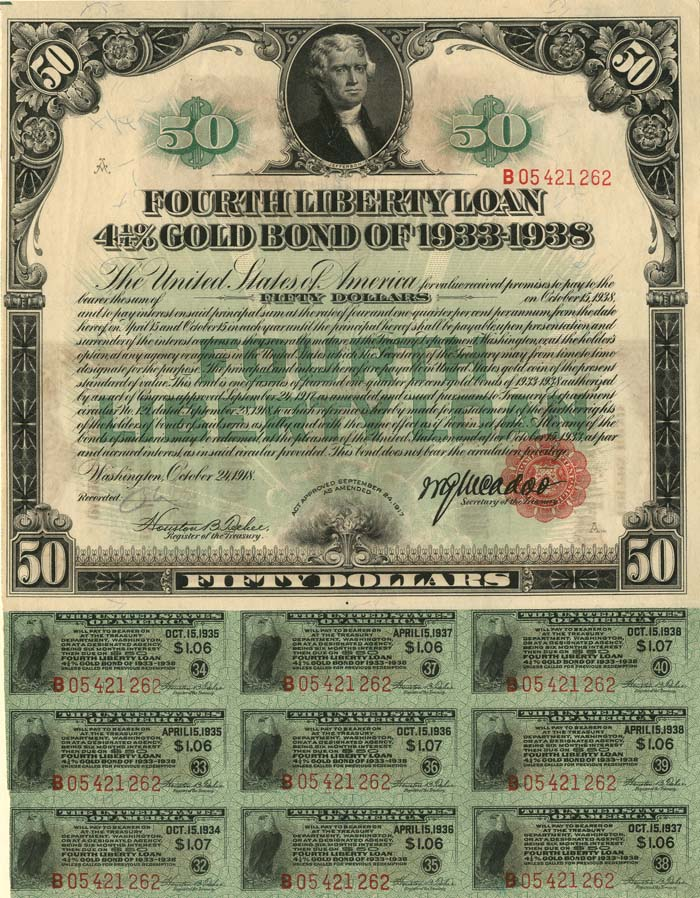
4th Liberty Bond

The terms of this Fourth Liberty Bond specified: “The principal and interest hereof are payable in United States gold coin of the present standard of value.” This was the typical “gold clause” that was found in most sovereign bonds, both domestic and international. In addition, private contracts and bonds also included this gold clause before Roosevelt. Generally, it was intended to guarantee that bondholders would not suffer from a currency devaluation – not inflation since even a gold standard does not prevent inflation.

The US defaulted on these bonds thanks to Roosevelt. The US Treasury called in this Fourth Liberty Bond on April 15, 1934, for redemption. However, the US defaulted on this term by refusing to redeem the bond in gold. They also ignored the dollar devaluation imposed by Roosevelt, which changed the dollar’s gold value from $20.67 to $35. The entire purpose of the gold clauses prior to Roosevelt was to protect against a currency devaluation. The 21 million bondholders lost 139 million troy ounces of gold, which caused the loss in international value terms to be approximately 70% of the bond’s principal.

The legal basis for the refusal of the US Treasury to redeem in gold was the gold clause resolution was Roosevelt’s effort to seize gold, devalue the dollar, and attempt to ensure that all profits would accrue to the government (Pub. Res. 73–10), dated June 5, 1933. The Supreme Court was petitioned to decide this issue, and what we will see is that Roosevelt just ignored the Supreme Court once again, showing that the Constitution means nothing when it constructs the government from its goal.

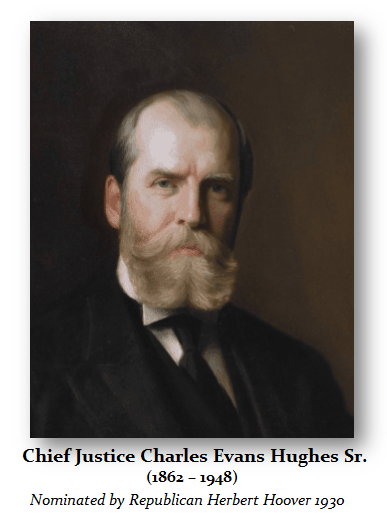
Charles Evans Hughes Sr. April 11 1862 – August 27 1948

Chief Justice Charles Evans Hughes wrote the decision in  Perry v. United States, 294 U.S. 330, 354 (1935). He made it very clear that the Joint Resolution of June 5, 1933, nullified the gold clause obligations of the United States and that they would only honor dollar for dollar, which was unconstitutional id /349. Furthermore, the Court held that Congress cannot use its power to regulate the value of money to invalidate the Government’s obligations.

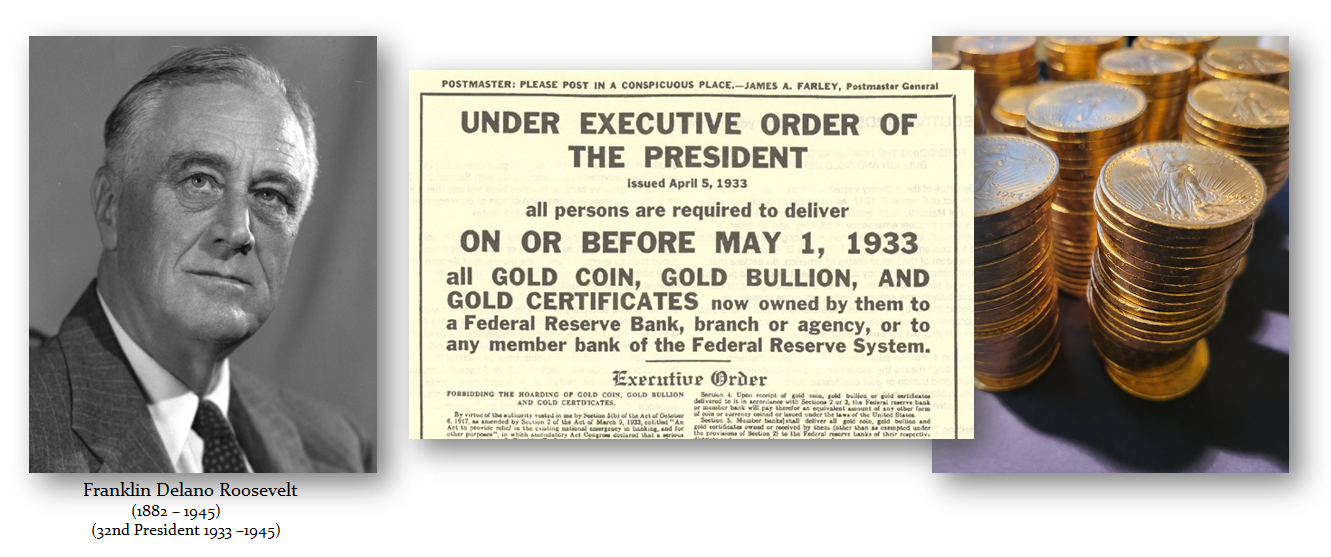
FDR Gold Confiscation

President Franklin D. Roosevelt’s closure of the open gold market and the removal of the domestic backing of the dollar with gold took place with the signing of Executive Order 6102 on April 5, 1933. The Supreme Court ruled that the bondholders’ loss was unquantifiable and, therefore, repaying them in dollars according to the 1918 standard of value would be an “unjustified enrichment.” FDR essentially defaulted on the US national debt, repaying it with depreciated dollars, reducing the debt by nearly 70%.

Default is Always a Sovereign Prerogative when Things get Tight.