
Posted originally on CTH on March 8, 2026 | Sundance
One of the most curious aspects to the predictable USMCA review, ie. dissolution, has been the incapacity of the Canadian government or trade delegation to accept the United States is going to create two distinctly different bilateral trade agreements and eliminate the trilateral USMCA.
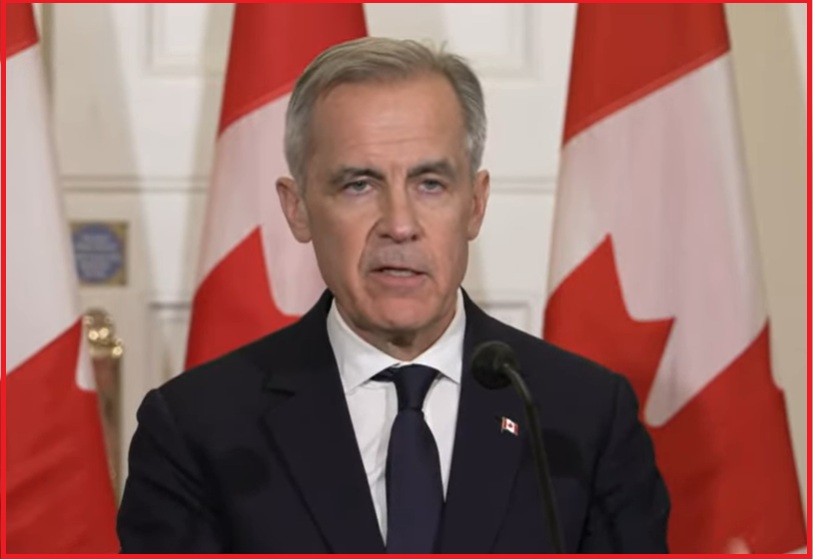
For 16 months the Canadians have refused to fathom the reality of what is going to happen this year.
The Canadians just cannot believe it is possible they will be forced to negotiate a free trade agreement without the cover of a multilateral construct. It has been remarkable to watch their dissonance.
Last week President Donald Trump and Mexican President Claudia Sheinbaum held a phone call. At the conclusion of the call, Sheinbaum publicly asserted the reality the Canadians just refuse to accept.
MEXICO – Mexico’s President Claudia Sheinbaum told reporters during her morning news briefing on Wednesday that her U.S. counterpart, Donald Trump, is open to doing away with the U.S.-Mexico-Canada trade agreement (USMCA) and replace it with individual trade deals with each country.
[…] “There might be revisions that create bilateral deals instead of involving the three countries because some things are more important between Mexico and the United Sates or between Canada and the United States,” said Sheinbaum. “Not everything has to be trilateral.”
Mexico’s president said the subject was brought up by Trump during a Tuesday phone conversation. […] According to Sheinbaum, her country is ready to consider possible changes. (read more)
Canadian Prime Minister Mark Carney finally started to realize President Trump was likely to ignore Canada and begin direct discussions with Sheinbaum. So, Carney went to Mexico to try and get assurances from Sheinbaum that Mexico would not proceed without Canadian interests in mind.
Essentially, Carney wanted Sheinbaum to be on his team. However, as diplomatically noted in the phone call with President Trump, President Sheinbaum politely rejected the Canadian partnership. [Insert Trump’s position toward Mexican cartels as an overriding thought]
The Canadians have been talking to U.S. media looking for sympathetic ‘Orange man bad’ coverage. However, within the contacts between Canadian government officials and U.S. corporate allies, the sentiment from team Trump is very clear:
“The key thing that has struck me, and I think it has struck all Canadians, is so many of these guys in the Trump administration, frankly, they just hate Canada,” said Brian Clow, former Prime Minister Justin Trudeau’s deputy chief of staff who led Canada-U.S. affairs. {source}
It’s not hatred, it’s annoyance.
Years of compounding parasitic annoyances and sanctimonious, ‘holier-than-thou’ pontifications from the arrogant and uppity Canadian government.
The only time Canada has been honest with themselves and with President Trump was when Justin Trudeau was exiting office and admitted Canada cannot function without all of the one-way benefits it receives from the USA {GO DEEP}.
That’s it. That’s the only time Canada has ever been honest about the nature of the economic relationship. A time when Trudeau had already quit and would not be around to deal with the consequences. However, the level of Canadian arrogance is not only visible to President Trump, even the Japanese can see it.
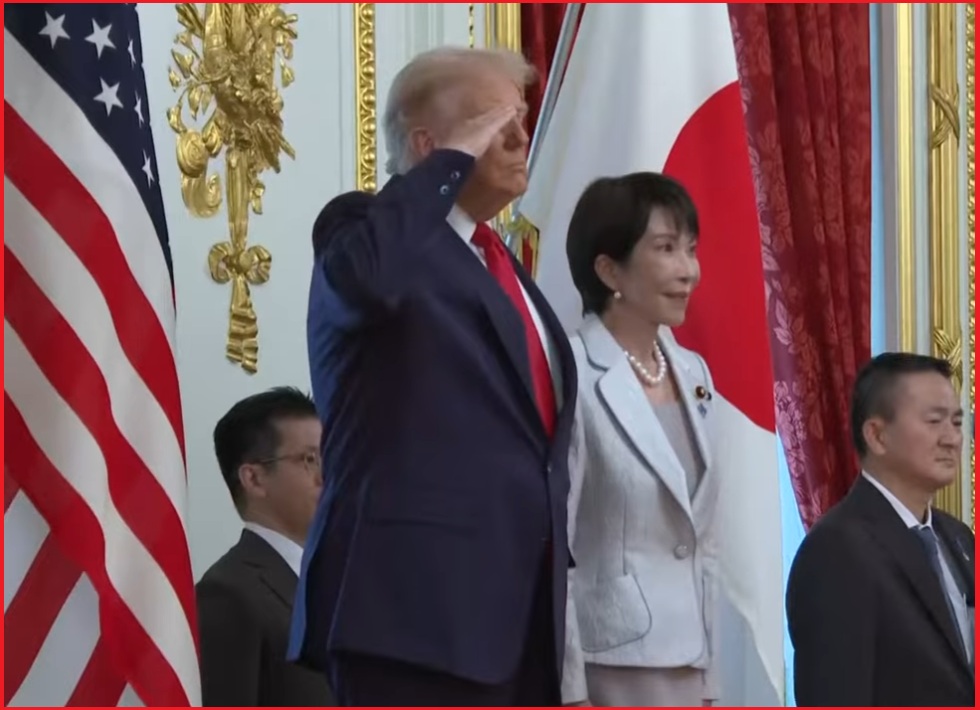
Remember that very close relationship between Japanese Prime Minister Sanae Takaichi and President Trump. That professional, personal and respectful relationship is going to become strategically important this year.
Japan’s economic and trade representatives have told the Canadians that if the USMCA is dissolved, and if Canada no longer has the same trade access current available in the trilateral format, then Japan would rethink its entire investment portfolio in Canada, specifically the auto sector.
In essence, specifically as it pertains to the auto industry, Japan is saying if the USMCA is gone, Japan may pull all their cross-border manufacturing out of Canada and transfer it to the United States.
Prime Minister Mark Carney was recently questioned about the statements from Japan and he waxed nonsensically [SEE HERE] about how Canada would use Chinese BYD electric autos to replace lost Toyota manufacturing.
It’s a hot mess for Canada and getting worse.
Last Friday, Canada’s worst nightmare began unfolding:
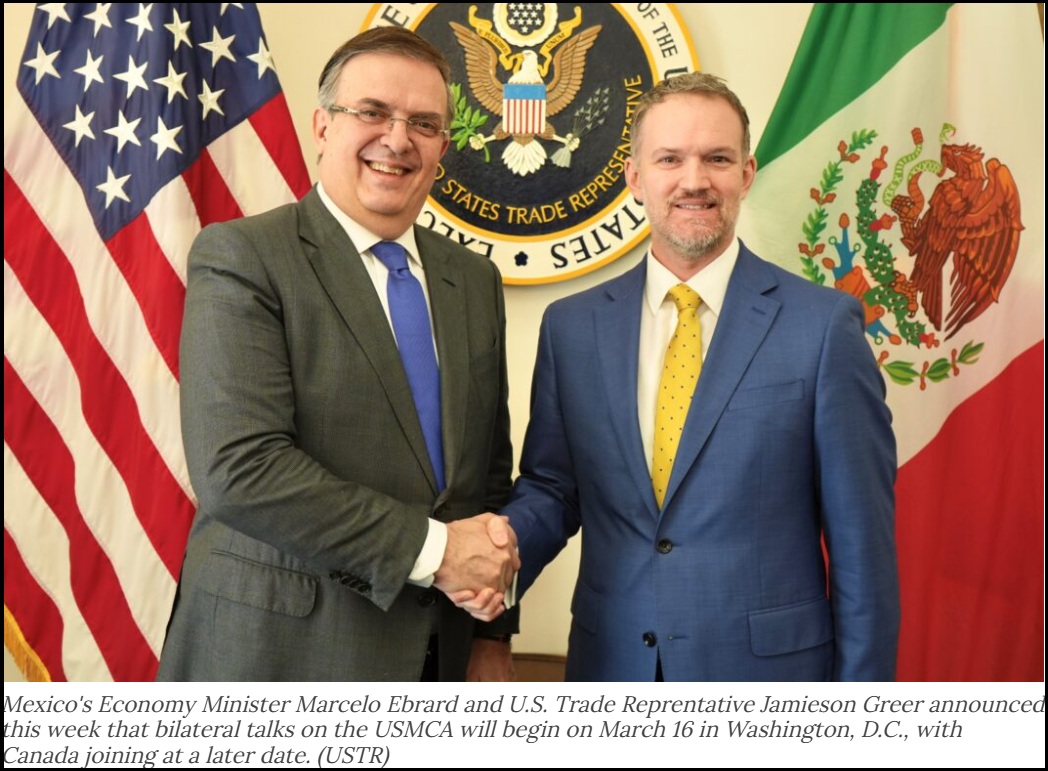
WASHINGTON – Today, U.S Trade Representative Jamieson Greer and Mexican Secretary of Economy Marcelo Ebrard announced the first round of bilateral discussions in preparation for the Joint Review of the United States–Mexico–Canada Agreement (USMCA).
The ministers instructed negotiators to begin a scoping discussion on the necessary measures to ensure the benefits of the Agreement accrue primarily to the parties, including by reducing dependence on imports from outside the region, strengthening rules of origin, and enhancing the security of North American supply chains.
Ministers expect negotiators to hold the first meeting the week of March 16 and meet regularly thereafter as part of the Joint Review. [LINK]
Right there, you can see the exact same thing that took place in early 2017, when President Trump began organizing a bilateral trade discussion with Mexico only, in advance of his preferred approach to dissolve NAFTA and use two distinctly different bilateral trade agreements to replace it. USTR Robert Lighthizer was working with Mexico only.
USTR Jamieson Greer, the studious protege’ of Lighthizer, now has the task of organizing the USA and Mexico while delaying any substantive contact/discussions with Canada until President Trump is ready to drop the hammer.
I can assuredly say President Trump wants everything outlined and in place for a U.S-Mexico deal before he announces the dissolution (joint review withdrawal) to end the USMCA.
There is little to no chance President Trump wants to renew a trilateral trade agreement that allows Canada to keep exploiting their market access to the U.S. without accepting reciprocity.
Remember, Canada’s main export is energy, and Trump has diminished that leverage through the Venezuela operation. Perhaps another ‘ah-ha’ moment for deep weed walkers. Yes, in addition to giving China a body blow, taking control of Venezuela oil and minerals also weakens the leverage position of Mark Carney. Can you see it now?
Canada has one key card they can leverage, congress.
Prime Minister Mark Carney is counting on the UniParty in Washington DC to stand in his corner against President Donald Trump and block any attempt to end the USMCA. However, this is not going to be a surprise to President Trump, because Justin Trudeau did the same thing in 2018 when he coordinated his approach toward NAFTA through then Speaker of the House, Nancy Pelosi.
As I have said with great eagerness, it is going to be a lot of fun to watch this unfold.

 Centinel2012