Acting Attorney General Todd Blanche Holds a Press Conference


Posted originally on CTH on April 7, 2026 | Sundance

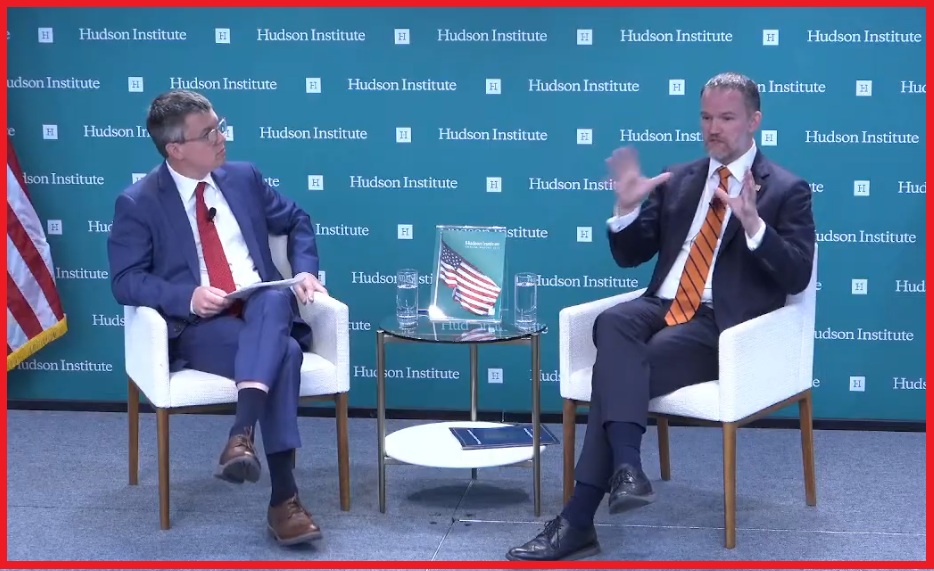
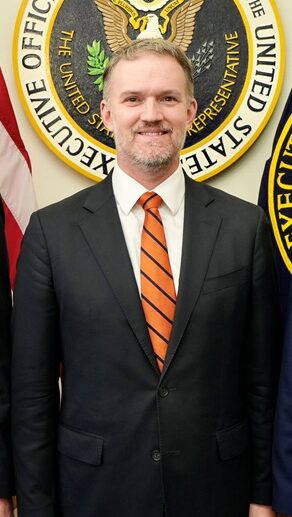
During an appearance at the Hudson Institute, U.S. Trade Representative Jamieson Greer is asked to summarize the administration’s approach to upcoming USMCA (CUSMA) renegotiations.

USTR Greer emphasized the focus is on outcomes in review of the USMCA, not focusing on the previous trade structure itself. The results carry more weight than reviewing what was intended.  On June 1st Greer anticipates telling congress that the U.S. intends withdrawal, pending unilateral negotiations with both Canada and Mexico to resolve conflict.

Greer describes two different protocols within any negotiation to deal with the structural differences between both Canada and Mexico.  Those differences include a completely different import/export profile with each country, different sectors of goods, difference in the wage rates within each country and a structural difference in the way each country is establishing their own, independent free trade agreements with other third-party countries.  These baselines form the reason to tell congress of the dissolution, and on July 1st inform both Canada and Mexico about it.

In the interim, the points of conflict are currently being negotiated with Mexico toward resolution.  The same negotiation is expected later between the U.S. and Canada; however, it sounds like that engagement will take place after congress is informed of the points of conflict.  WATCH (prompted):

.

U.S. Trade Representative Jamieson Greer Discusses USMCA Review and Two Different “Protocols”


Posted originally on CTH onApril 7, 2026 | Sundance

During an appearance at the Hudson Institute, U.S. Trade Representative Jamieson Greer is asked to summarize the administration’s approach to upcoming USMCA (CUSMA) renegotiations.

USTR Greer emphasized the focus is on outcomes in review of the USMCA, not focusing on the previous trade structure itself. The results carry more weight than reviewing what was intended.  On June 1st Greer anticipates telling congress that the U.S. intends withdrawal, pending unilateral negotiations with both Canada and Mexico to resolve conflict.

Greer describes two different protocols within any negotiation to deal with the structural differences between both Canada and Mexico.  Those differences include a completely different import/export profile with each country, different sectors of goods, difference in the wage rates within each country and a structural difference in the way each country is establishing their own, independent free trade agreements with other third-party countries.  These baselines form the reason to tell congress of the dissolution, and on July 1st inform both Canada and Mexico about it.

In the interim, the points of conflict are currently being negotiated with Mexico toward resolution.  The same negotiation is expected later between the U.S. and Canada; however, it sounds like that engagement will take place after congress is informed of the points of conflict.  WATCH (prompted):

.

Put this in the USMCA (CUSMA) elimination/negotiation file.  Europe has already been the visible example of what happens when you open your market to low price Chinese EVs.


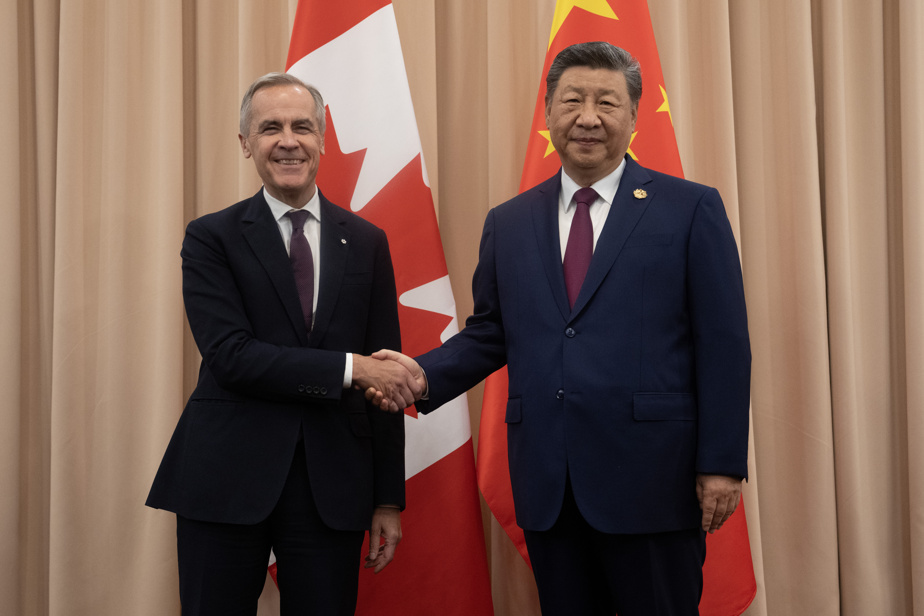
With the recent agreement by Canadian Prime Minister Mark Carney, Chinese auto manufacturers are now rushing to establish the dealerships, before the Beijing-Canada deal becomes an issue in the USMCA negotiation.

China is NOT going into Canada because they foresee a great market of Snow Mexicans purchasing their low price EVs.  They are going into Canada as a proactive measure to establish a North American footprint with an eye toward the USA.

(VIA MSM) – BYD and Chery are accelerating plans to establish a dealership network in Canada after the country introduced a quota allowing tens of thousands of Chinese-made EVs to enter at reduced tariffs. The rollout will begin in Toronto before expanding to other major cities, with BYD targeting about 20 dealerships in its first year. This marks a significant new front in North American EV competition, as Chinese automakers seek growth outside the U.S., where prohibitive tariffs keep them out.

Canada’s updated trade policy allows 24,500 Chinese-made EVs annually at a reduced 6.1% duty, giving BYD and Chery a rare North American entry point. This follows China’s surge to become the world’s top vehicle exporter, with similar pushes into Mexico, Europe, and Latin America. The quota’s scale is modest but strategically valuable for testing market response and building brand awareness.

The companies will launch in Toronto before moving into Vancouver, Montreal, and Calgary. BYD aims for around 20 dealerships in its first year, using consultants and internal teams to secure prime sites. While the network could strengthen visibility in key urban markets, experts warn the quota’s limited volume may test the viability of multiple outlets.

With U.S. tariffs exceeding 100% effectively barring entry, Canada offers Chinese automakers a platform to establish presence, gauge consumer interest, and potentially influence future trade talks. Similar strategies have been used in Europe, where Chinese EV makers have gained ground despite strong local competition. Success in Canada could pave the way for local assembly or increased quotas. (read more)

USDA Rural Announces a $115+ Million Investment to Expand USA Sawmills and Timber Development


Posted originally on CTH on March 23, 2026 | Sundance

This is one of those small stories that carries the potential for significant domestic economic gains.

As many are aware, the U.S. imports a lot of softwood lumber from Canada. Combined with the energy products the lumber sector represents the top two U.S. imports from Canada.  With Venezuela now potentially positioned to replace the former, USDA Rural Development now stimulates domestic lumber development potentially positioned to replace the latter.

Taken as a whole, these two approaches significantly weaken the Canadian leverage that could be deployed in a Free Trade Agreement negotiation.  Assuming, of course, the USMCA is dissolved in favor of two bilateral FTAs.

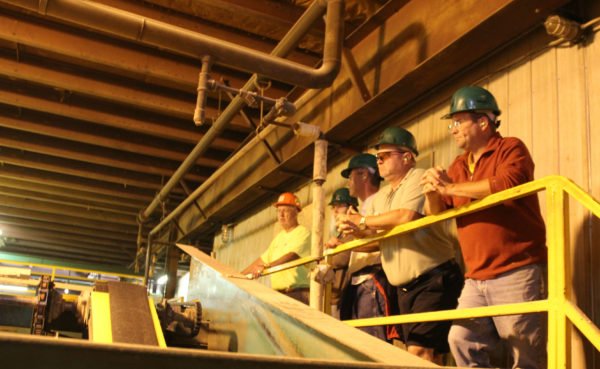
USDA Press Release – At the Advanced Bioeconomy Leadership Conference today, U.S. Department of Agriculture Administrator for the Rural Business and Cooperative Service J.R. Claeys announced the U.S. Department of Agriculture is guaranteeing $115.2 million across eight states through the Timber Production Expansion Guaranteed Loan Program (TPEP) to ensure sawmills and other wood processing facilities have the necessary funding to establish, reopen, expand, or improve their operations.

Today’s announcement includes recipients in the states of California, Idaho, Kansas, Louisiana, Maine, Oklahoma, Virginia, and Wisconsin.

These investments represent a commitment by the Trump Administration to expand American timber production by 25%, reduce wildfire risk, and save American lives and communities by strengthening domestic wood processing capacity.

“We cannot allow wildfires to devastate and destroy our rural communities,” said Administrator Claeys. “That’s why the USDA is taking bold action to stop the destruction of our forestlands by investing in sawmills and wood processing facilities that support sustainable timber harvesting. These actions strengthen local businesses, support rural prosperity, and create jobs for hardworking Americans.” (source)

This is not to say that expanded U.S. sawmill production would completely eliminate Canadian softwood lumber imports. However, it does create inventory and a stronger domestic supply chain that would diminish any applied leverage that Canadian trade negotiators would seek to deploy.

Without pipelines flowing East or West, Canada is stuck pumping their heavy oil south for processing.  Nothing about that is likely to change in the next few years, even if Canada abandoned their climate change policy (highly unlikely).

Then comes the cross-border auto manufacturing industry, and the realization that -sans USMCA- both U.S. and Japanese automakers are likely to stick with the manufacturing center where their greatest customer base exists, the USA.

Now overlay softwood lumber, and you can see the top three economic dependencies of the U.S and Canada are slowly being uncoupled, simultaneous with the trilateral USMCA provisions being reviewed starting with the U.S. and Mexico having direct conversations.

We keep watching.

Democrat Senator Ruben Gallego Urges President Trump to Renegotiate USMCA


Posted originally on CTH on March 12, 2026 | Sundance

It is transparently obvious now that Canada is going to rely on UniParty (Corporate) opposition to President Trump in the dissolution of the USMCA (CUSMA) in favor of two distinctly different bilateral trade agreements; one with Canada and one with Mexico.

A bilateral trade negotiation between the United States and Canada would be devastating to the interests of the Canadian government.  Particularly after the Venezuela operation and new strategic relationship with the United States, Canada has almost zero points of leverage to negotiate anything similar to their current exploitative trade position.

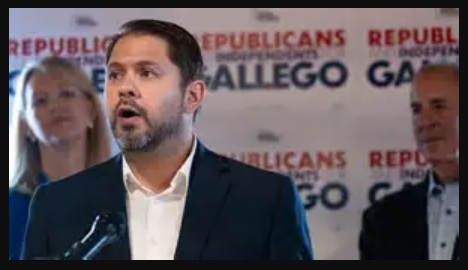
Canada is going to rely on congress to stop Trump from forcing reciprocity in the bilateral discussions. However, as a positive indicator that President Trump will factually have congressional support for the elimination of the USMCA, Democrat Senator Ruben Gallego has written a letter to President Trump requesting a comprehensive review. [LETTER HERE]

[SOURCE]

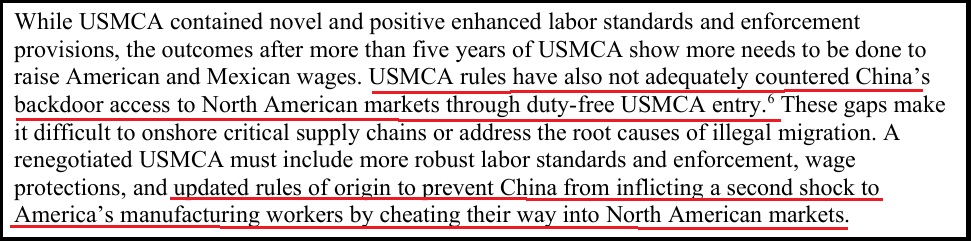
This is a key Senate democrat who notes the problem.  One of Gallego’s top points of concern is the loophole that Canada uses to assemble Chinese component parts into finished goods for tariff free distribution into the United States.

Ever since President Trump won the 2024 election, Mexico has been taking proactive independent action to block Chinese component goods. But Canada has done the opposite and begun to enhance their trade relationship with China to take even more Chinese component and finished goods.

Gallego writes to U.S. Trade Representative Jamieson Greer from the position of wanting to increase wages and enhance jobs in both Mexico and the USA, growing both economies. However, Gallego’s advocacy simultaneously bolsters why the USMCA should be dissolved and also puts Canada at a distinct disadvantage.

MEXICO – Mexico’s President Claudia Sheinbaum told reporters during her morning news briefing on Wednesday that her U.S. counterpart, Donald Trump, is open to doing away with the U.S.-Mexico-Canada trade agreement (USMCA) and replace it with individual trade deals with each country.

[…] “There might be revisions that create bilateral deals instead of involving the three countries because some things are more important between Mexico and the United Sates or between Canada and the United States,” said Sheinbaum. “Not everything has to be trilateral.”

Mexico’s president said the subject was brought up by Trump during a Tuesday phone conversation. […] According to Sheinbaum, her country is ready to consider possible changes. (read more)

Just like the original NAFTA dissolution, if Senate democrats agree the USMCA is structurally flawed then Canada will lose its only hope to retain the trilateral agreement.

It appears that some Senate democrats like Gallego recognize this issue and support the need for exceptional change.

There is a significant difference between Mexico and Canada as it pertains to trade.  Two distinctly different bilateral trade agreements would be the best outcome for the USA.

Team Mexico have already been holding bilateral discussions with USTR Jamieson Greer, and I suspect the broad outlines of a free trade agreement between the U.S and Mexico have already been agreed.

While Mexico has been working diligently for 16 months to get into alignment with the USA on a new free trade agreement, Canada has been doing everything possible to retain their “elbows up” position in opposition to the USA.  This will not work out well for Canada.

“The key thing that has struck me, and I think it has struck all Canadians, is so many of these guys in the Trump administration, frankly, they just hate Canada,” said Brian Clow, former Prime Minister Justin Trudeau’s deputy chief of staff who led Canada-U.S. affairs. {source}

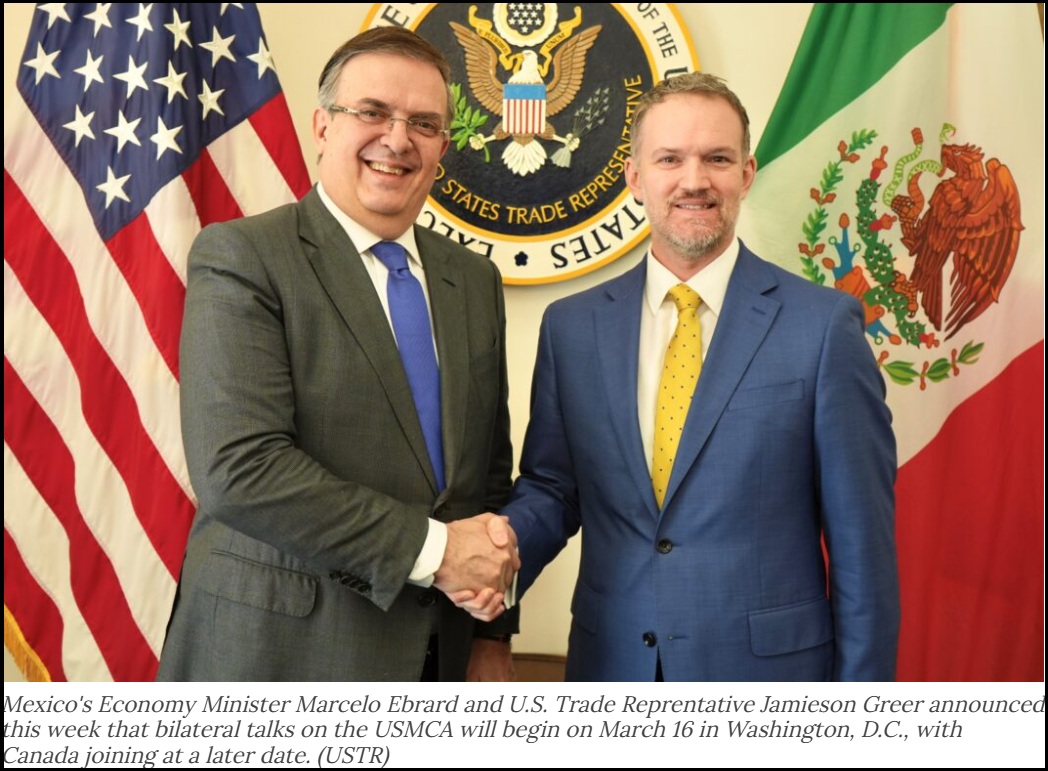
“Canada joining at a later date”? 😂🤣😂

Mexico and USA Begin Bilateral Preparations to Dissolve USMCA Without Canada


Posted originally on CTH on March 8, 2026 | Sundance

One of the most curious aspects to the predictable USMCA review, ie. dissolution, has been the incapacity of the Canadian government or trade delegation to accept the United States is going to create two distinctly different bilateral trade agreements and eliminate the trilateral USMCA.

For 16 months the Canadians have refused to fathom the reality of what is going to happen this year.

The Canadians just cannot believe it is possible they will be forced to negotiate a free trade agreement without the cover of a multilateral construct. It has been remarkable to watch their dissonance.

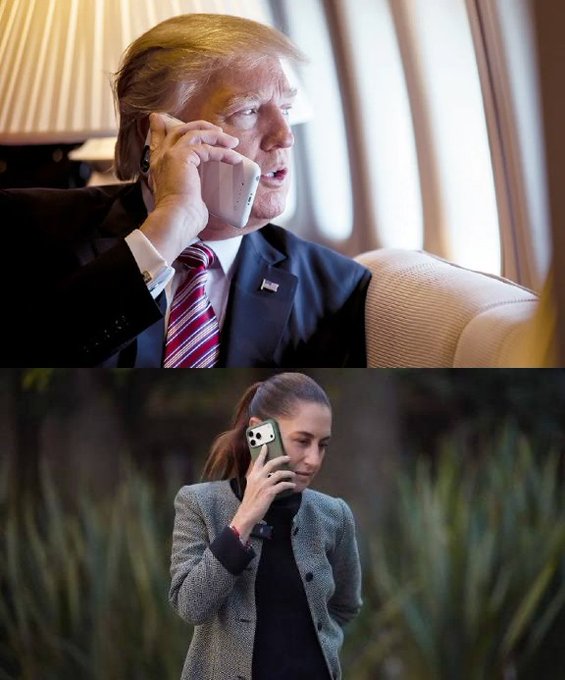
Last week President Donald Trump and Mexican President Claudia Sheinbaum held a phone call. At the conclusion of the call, Sheinbaum publicly asserted the reality the Canadians just refuse to accept.

MEXICO – Mexico’s President Claudia Sheinbaum told reporters during her morning news briefing on Wednesday that her U.S. counterpart, Donald Trump, is open to doing away with the U.S.-Mexico-Canada trade agreement (USMCA) and replace it with individual trade deals with each country.

[…] “There might be revisions that create bilateral deals instead of involving the three countries because some things are more important between Mexico and the United Sates or between Canada and the United States,” said Sheinbaum. “Not everything has to be trilateral.”

Mexico’s president said the subject was brought up by Trump during a Tuesday phone conversation. […] According to Sheinbaum, her country is ready to consider possible changes. (read more)

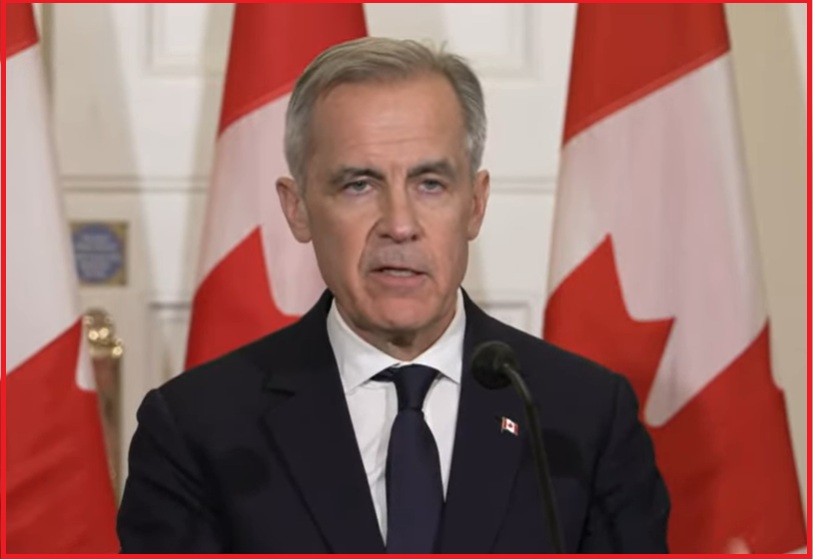
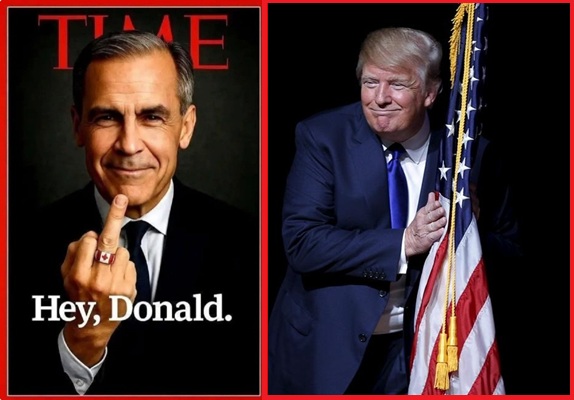
Canadian Prime Minister Mark Carney finally started to realize President Trump was likely to ignore Canada and begin direct discussions with Sheinbaum. So, Carney went to Mexico to try and get assurances from Sheinbaum that Mexico would not proceed without Canadian interests in mind.

Essentially, Carney wanted Sheinbaum to be on his team.  However, as diplomatically noted in the phone call with President Trump, President Sheinbaum politely rejected the Canadian partnership. [Insert Trump’s position toward Mexican cartels as an overriding thought]

The Canadians have been talking to U.S. media looking for sympathetic ‘Orange man bad’ coverage.  However, within the contacts between Canadian government officials and U.S. corporate allies, the sentiment from team Trump is very clear:

“The key thing that has struck me, and I think it has struck all Canadians, is so many of these guys in the Trump administration, frankly, they just hate Canada,” said Brian Clow, former Prime Minister Justin Trudeau’s deputy chief of staff who led Canada-U.S. affairs. {source}

It’s not hatred, it’s annoyance.

Years of compounding parasitic annoyances and sanctimonious, ‘holier-than-thou’ pontifications from the arrogant and uppity Canadian government.

The only time Canada has been honest with themselves and with President Trump was when Justin Trudeau was exiting office and admitted Canada cannot function without all of the one-way benefits it receives from the USA {GO DEEP}.

That’s it. That’s the only time Canada has ever been honest about the nature of the economic relationship.  A time when Trudeau had already quit and would not be around to deal with the consequences.  However, the level of Canadian arrogance is not only visible to President Trump, even the Japanese can see it.

Remember that very close relationship between Japanese Prime Minister Sanae Takaichi and President Trump.  That professional, personal and respectful relationship is going to become strategically important this year.

Japan’s economic and trade representatives have told the Canadians that if the USMCA is dissolved, and if Canada no longer has the same trade access current available in the trilateral format, then Japan would rethink its entire investment portfolio in Canada, specifically the auto sector.

In essence, specifically as it pertains to the auto industry, Japan is saying if the USMCA is gone, Japan may pull all their cross-border manufacturing out of Canada and transfer it to the United States.

Prime Minister Mark Carney was recently questioned about the statements from Japan and he waxed nonsensically [SEE HERE] about how Canada would use Chinese BYD electric autos to replace lost Toyota manufacturing.

It’s a hot mess for Canada and getting worse.

Last Friday, Canada’s worst nightmare began unfolding:

WASHINGTON – Today, U.S Trade Representative Jamieson Greer and Mexican Secretary of Economy Marcelo Ebrard announced the first round of bilateral discussions in preparation for the Joint Review of the United States–Mexico–Canada Agreement (USMCA).

The ministers instructed negotiators to begin a scoping discussion on the necessary measures to ensure the benefits of the Agreement accrue primarily to the parties, including by reducing dependence on imports from outside the region, strengthening rules of origin, and enhancing the security of North American supply chains.

Ministers expect negotiators to hold the first meeting the week of March 16 and meet regularly thereafter as part of the Joint Review. [LINK]

Right there, you can see the exact same thing that took place in early 2017, when President Trump began organizing a bilateral trade discussion with Mexico only, in advance of his preferred approach to dissolve NAFTA and use two distinctly different bilateral trade agreements to replace it.  USTR Robert Lighthizer was working with Mexico only.

USTR Jamieson Greer, the studious protege’ of Lighthizer, now has the task of organizing the USA and Mexico while delaying any substantive contact/discussions with Canada until President Trump is ready to drop the hammer.

I can assuredly say President Trump wants everything outlined and in place for a U.S-Mexico deal before he announces the dissolution (joint review withdrawal) to end the USMCA.

There is little to no chance President Trump wants to renew a trilateral trade agreement that allows Canada to keep exploiting their market access to the U.S. without accepting reciprocity.

Remember, Canada’s main export is energy, and Trump has diminished that leverage through the Venezuela operation. Perhaps another ‘ah-ha’ moment for deep weed walkers.  Yes, in addition to giving China a body blow, taking control of Venezuela oil and minerals also weakens the leverage position of Mark Carney.  Can you see it now?

Canada has one key card they can leverage, congress.

Prime Minister Mark Carney is counting on the UniParty in Washington DC to stand in his corner against President Donald Trump and block any attempt to end the USMCA.  However, this is not going to be a surprise to President Trump, because Justin Trudeau did the same thing in 2018 when he coordinated his approach toward NAFTA through then Speaker of the House, Nancy Pelosi.

As I have said with great eagerness, it is going to be a lot of fun to watch this unfold.

Canadians Embrace Cheap Chinese Electric Vehicles


Posted originally on CTH on February 17, 2026 | Sundance 

While the government of Canadian Prime Minister Mark Carney has inked a trade agreement with China to accept cheap imported vehicles in exchange for Beijing purchasing some agricultural products, President Trump has promised those cheap Chinese EVs will never cross the border into the USA.

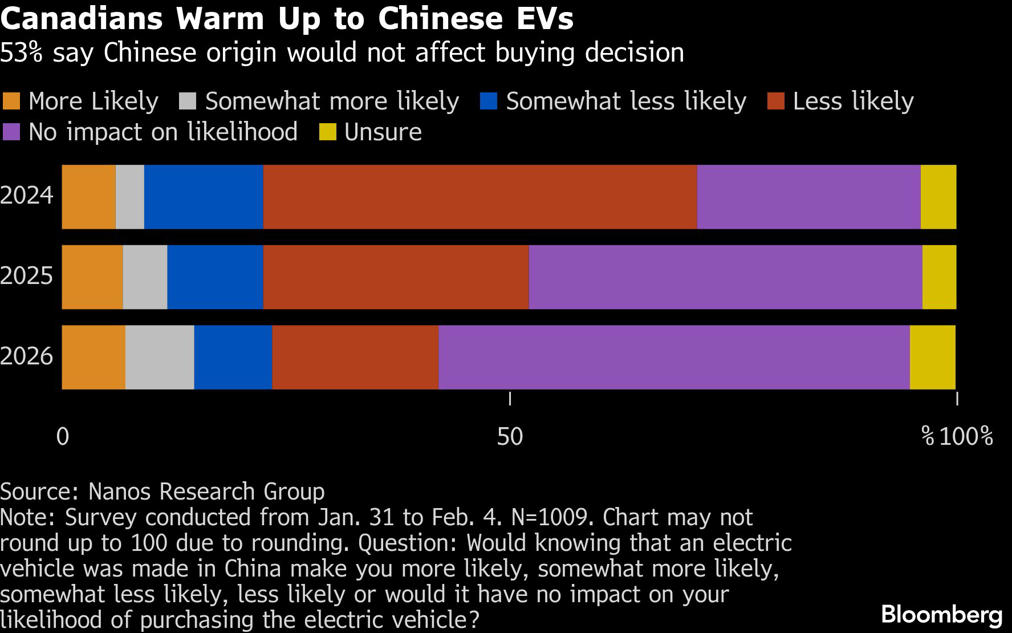
The Canadian polling on the issue has done a remarkable chang in the past few years.  Now, the majority of Canadians are willing to purchase cheap Chinese EVs. As outlined by Bloomberg, “More than half of Canadians, or 53%, say that knowing an EV was made in China would have no effect on their purchasing decision, according to a new poll by Nanos Research Group for Bloomberg News.”

Approximately 50,000 Chinese electric vehicles will enter the Canadian market in the first year. “The pact with China includes a provision that part of the quota will be reserved for electric vehicles priced at C$35,000 ($25,700) or less, the government has said.” {SOURCE}

The Canadian government wants a Chinese auto manufacturer, any Chinese auto manufacturer, to build factories in Canada to produce these electric vehicles.  Canada wants the jobs and economic activity because Canada is currently bleeding jobs and economic activity due to the trade conflict with the U.S.

Building cheap Chinese EVs in Canada might help offset a few thousand job losses, but building Chinese EVs in Canada only further ensures there will not be a substantive trade agreement between the USA and Canada once the USMCA (CUSMA) is dissolved.  [More on that coming]

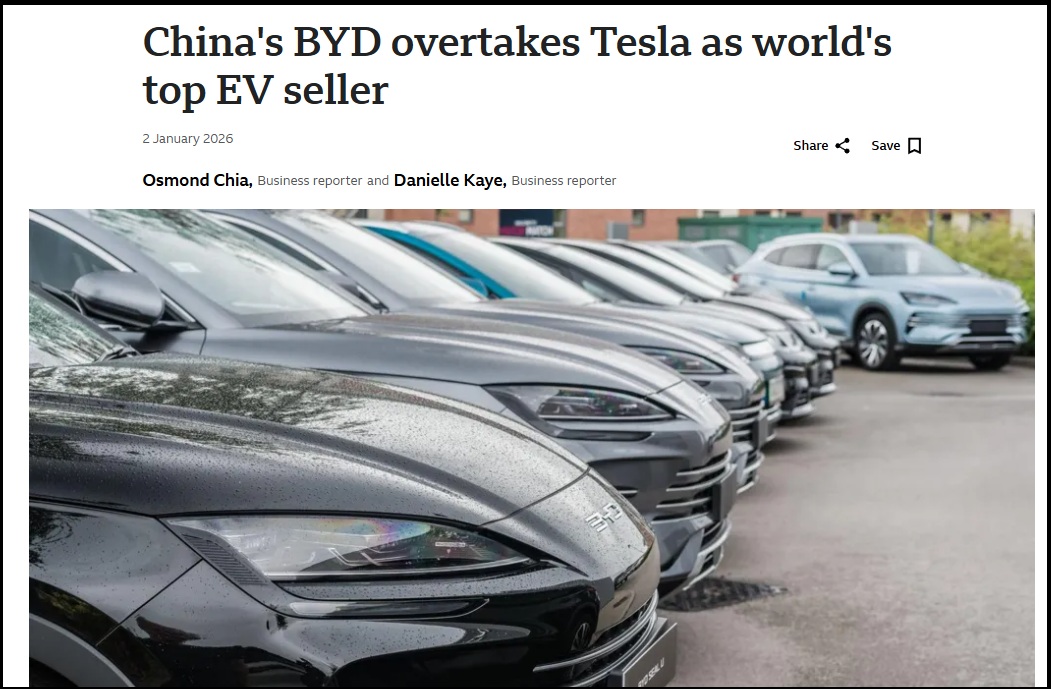
Meanwhile, Chinese EV company Build Your Dream (BYD) has announced they sold 4.6 million vehicles worldwide last year, far surpassing Tesla and even surpassing all of the Ford global auto manufacturing.  BYD is now the sixth largest auto manufacturing company in the world.

[Auto News] […] The 2025 sales figures place BYD at sixth largest among global automakers, meaning Ford slipped to seventh in total global deliveries. Toyota remains the dominant global seller with sales exceeding 10 million units followed by Volkswagen Group, Hyundai Motor (including Kia and Genesis), General Motors, and Stellantis.

BYD’s sixth position in the global automotive sales index is particularly notable for an auto maker that focuses almost exclusively on new energy vehicles (NEVs) — a category that includes battery-electric vehicles (BEVs) and plug-in hybrid vehicles (PHEVs). (more)

CTH previously outlined the specific explosion in BYD auto sales HERE.  Europe, Russia, Asia and Australia are flooded with cheap Chinese EVs particularly from the BYD brand.  Canada is now opening themselves to face the same issue.

President Trump Threatens Blockade of Almost Completed Michigan-Ontario Bridge


Posted originally on CTH on February 9, 2026 | Sundance 

Writing on a Truth Social post earlier this evening, President Trump is threatening to block the U.S. side of a new bridge that links Detroit, Michigan to Ontario, Canada:

(Truth Social) – “As everyone knows, the Country of Canada has treated the United States very unfairly for decades. Now, things are turning around for the U.S.A., and FAST! But imagine, Canada is building a massive bridge between Ontario and Michigan. They own both the Canada and the United States side and, of course, built it with virtually no U.S. content. President Barack Hussein Obama stupidly gave them a waiver so they could get around the BUY AMERICAN Act, and not use any American products, including our Steel.

Now, the Canadian Government expects me, as President of the United States, to PERMIT them to just “take advantage of America!” What does the United States of America get — Absolutely NOTHING! Ontario won’t even put U.S. spirits, beverages, and other alcoholic products, on their shelves, they are absolutely prohibited from doing so and now, on top of everything else, Prime Minister Carney wants to make a deal with China — which will eat Canada alive. We’ll just get the leftovers! I don’t think so.

The first thing China will do is terminate ALL Ice Hockey being played in Canada and permanently eliminate The Stanley Cup. The Tariffs Canada charges us for our Dairy products have, for many years, been unacceptable, putting our Farmers at great financial risk. I will not allow this bridge to open until the United States is fully compensated for everything we have given them, and also, importantly, Canada treats the United States with the Fairness and Respect that we deserve. We will start negotiations, IMMEDIATELY. With all that we have given them, we should own, perhaps, at least one half of this asset. The revenues generated because of the U.S. Market will be astronomical. Thank you for your attention to this matter!” ~PRESIDENT DONALD J. TRUMP

The USMCA renegotiation plan likely plays a big part in this announcement.  Don’t react, just watch.

Trade Watch – President Trump Has Conversation with President Sheinbaum About Upcoming USMCA Review


Posted originally on CTH on January 30, 2026 | Sundance January 30, 2026 | Sundance 

President Trump speaks to President Sheinbaum about upcoming USMCA renegotiation, while Mexican Economy Minister Marcelo Ebrard meets simultaneously in Washington with US Commerce Secretary Howard Lutnick and U.S. Trade Representative Jamieson Greer to discuss the upcoming trade review.

(VIA BLOOMBERG) Mexican President Claudia Sheinbaum said she had a “cordial” conversation with Donald Trump on Thursday, discussing trade and security issues ahead of the review of the North American free trade deal.

Sheinbaum said the review of the United States-Mexico-Canada Agreement will continue as planned and that she and the president discussed tariffs and non-tariff barriers in their latest call.

Mexico’s leader added that Trump invited her to the US but that no date has been set for what would be their second in-person meeting.

On security, Sheinbaum offered that both leaders are pleased with the level of cooperation so far between their two countries. Trump agrees “that we are making progress in the general understanding we have,” she told reporters at her regular daily media briefing, without offering more details.

Sheinbaum first revealed the latest phone call with Trump in a social media post. (read more)

We all know what is likely to happen, these small articles are like aperitifs while we await the main performance.   Meanwhile, the overwhelming majority of Canadians -sans possibly Alberta residents- are clueless.

Giddy Up – USTR Jamieson Greer and Mexican Secretary of Economy Marcelo Ebrard Begin Formal Trade Negotiations


Posted originally on CTH on January 28, 2026 | Sundance 

Here we go.  If you’ve been under the Treehouse branches for more than a few months, it is now officially time to pull up a rock take a front row seat and enjoy the show.  Don’t draw attention to yourself; however, please do bring your favorite beverage, relax and watch what no one else will admit is happening.  The 2026 operation to exit the USMCA is officially underway.

While the Snow Mexicans are gnashing their teeth talking about feelings and various shiny things, United States Trade Representative Jamieson Greer is meeting today with Mexican Secretary of Economy Marcelo Ebrard to strategize the best approach for a U.S-Mexican bilateral free trade agreement.

Please remember, in order to fully appreciate the moment, we must allow all negotiation pretenses to remain in place, giving the illusion of something that will no longer be present when the end goal is reached.

Jan 28 (Reuters) – U.S. Trade Representative Jamieson Greer and Mexican Secretary of Economy Marcelo Ebrard agreed during a meeting on Wednesday to begin formal discussions on possible reforms to the United States-Mexico-Canada trade agreement, Greer’s office said.

Possible reforms include stronger rules of origin for key industrial goods, more collaboration on critical minerals, increasing efforts to defend workers and producers, and efforts to combat dumping of manufactured goods, the USTR’s office said in a statement. (LINK)

As we noted at the end of last year, splitting the USMCA into two bilateral trade deals, one for Mexico and one for Canada, will be one of the most interesting and long-term economically significant moves in U.S. trade history.  It is going to be a lot of fun to watch these negotiations, and the pre-positioning gives us a preview of what is to come.

Mexico is doing everything almost perfectly in preparation for their bilateral deal.  Canada is doing exactly the opposite and positioning themselves for the worst possible outcome of a deal with the USA.  The disparity in approaches is so different, even now it is remarkable to watch.

President Trump is establishing an entirely new economic, trade and finance system. The era of the Marshal Plan is over; it has been factually deconstructed in the past 12 months.

Canadians and Europeans are desperately trying to offset the ramifications, hold on to their economic benefits and find a new mechanism to afford the domestic indulgences now eliminated by President Trump.

Needing alternatives for their economies, the EU and Canada are looking to India and China respectively as a financial offset.  Meanwhile, so far, Mexico is playing it smarter….