Sunday Talks: Energy Secretary Chris Wright Discusses Venezuela Next Steps – Video and Transcript


Posted originally on CTH on January 11, 2026 | Sundance

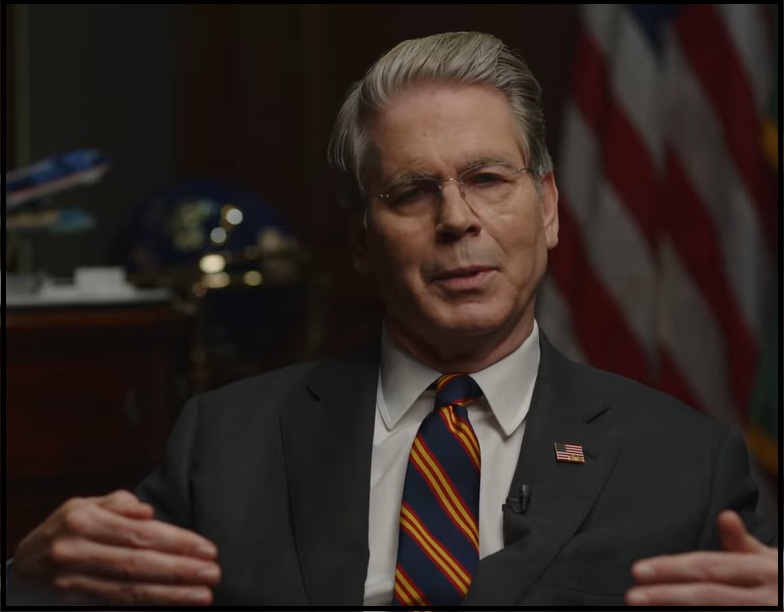
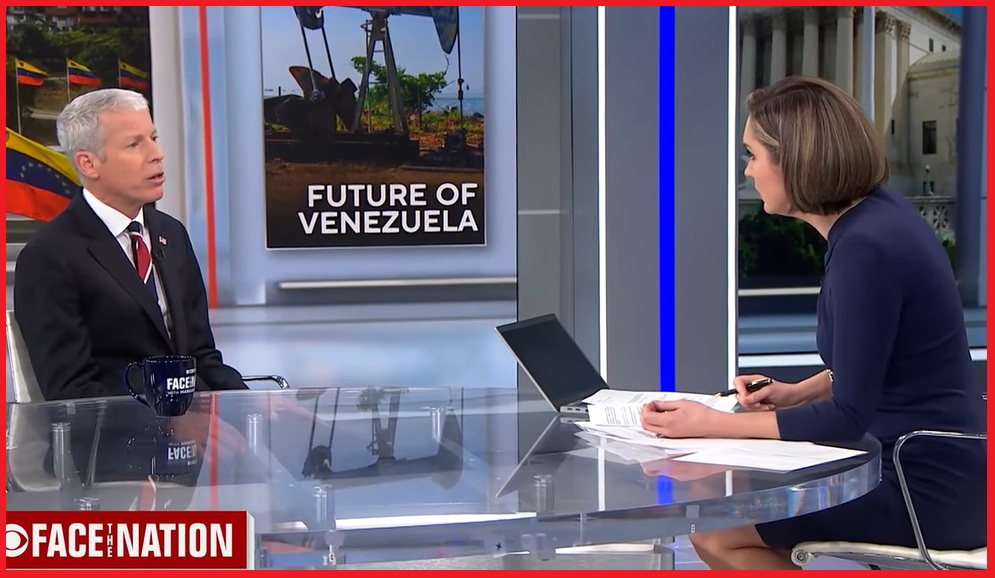
Energy Secretary Chris Wright appears on Face the Nation to discuss the current and future plans for oil production in Venezuela, while explaining how the current mechanism to sell the oil is operating.

[Transcript] – MARGARET BRENNAN: This morning, President Trump vowed that Venezuela now has the military protection of the US. This comes just one week after he said the US would run that country. Meanwhile, Venezuelan opposition leader Maria Corina Machado is expected to travel to Washington to meet with President Trump this week. For his part, Mr. Trump and his team met with dozens of US oil executives late last week, urging them to commit $100 billion to boost oil production there. Joining us now to discuss it all is the United States Secretary of Energy, Chris Wright, good to have you here in person.

SECRETARY CHRIS WRIGHT: Thanks for having me, Margaret.
MARGARET BRENNAN: Before I ask you about Venezuela, very quickly, these protests in Iran, not this country reliant on oil to keep its government-controlled economy afloat. The President has been briefed on military options. What is the US willing to do to help?

SEC. CHRIS WRIGHT: Certainly the President has been very outspoken about wanting to have freedom and rule of law and capitalism and great relations with the United States return. So we’ll see. I think his moral support has been strong. Certainly, he’s taken a strong stance against the mullahs in Iran in disabling their nuclear program. I think the people in Iran are rising up because they feel there’s a strong America that has their back. I won’t go into the specifics there, but we wish them well, and we’d love to see a free and democratic Iran again.

MARGARET BRENNAN: Will there be more interdictions of vessels carrying Iranian oil? Any more activity on that front?

SEC. CHRIS WRIGHT: I won’t reveal any change in position there.

MARGARET BRENNAN: Okay, let me ask you about Venezuela,

SEC. CHRIS WRIGHT: Yes.

MARGARET BRENNAN: where you have been very focused and very central to the President’s policy. The President said that Venezuela now has the United States, the most powerful military in the world, to protect them. To protect them, we will. Is the United States military providing security guarantees for American companies?

SEC. CHRIS WRIGHT: We’re not doing that right now, but what we, what he means, is we’re changing the game for what’s happening in the ground in Venezuela. Venezuela has purchased $20 billion of Russian weapons. They got Cuban mercenaries there. They supply oil to Cuba. They, they harbor the Hezbollah’s headquarters for the Western Hemisphere. Venezuela has been a very dangerous, very destabilized place going down the tubes. And with the United States influence now by controlling the sale of their oil and therefore the flow of funds into the country, we think we’re going to, we will see relatively rapid change, improvement on the ground in Venezuela. This is a process. We’re only eight days into the process, but it’s off to a strong start.

MARGARET BRENNAN: Well, it’s off to a quick start. You had the oil executives at the White House just Friday. That the President, excuse me, the State Department yesterday had a security alert I want to ask you about because it specifically cited the risk to Americans in Venezuela, and it said armed militias are setting up roadblocks, searching vehicles for evidence of US citizenship or support for the US. The man who runs those militias is Diosdado Cabello, who is the Minister of the Interior. Is he ordering the hunting of Americans?

SEC. CHRIS WRIGHT: Not that we are aware of, but we should be cautious. Look, this is, as they say, eight days into a change into a change of leadership there. The interim authorities are trying to establish power. Collectivos have been running wild over, over Venezuela for, for over a decade. So, yeah, you’re not going to–

MARGARET BRENNAN: Right. Well he controls them.

SEC. CHRIS WRIGHT: He does.

MARGARET BRENNAN: So is he safe in his position? Because right now the administration seems to be working with him.

SEC. CHRIS WRIGHT: We need to work with the people that have the guns today to ultimately move the country to a representative government and a better station. But what you’ve got to prevent in the mean term is a collapse of the nation. And I think the strong moves we’re making right now is to influence the people with the guns today, which is part of a process.

MARGARET BRENNAN: And you’re not concerned he’s going to undermine the more business minded President Delcy Rodriguez?

SEC. CHRIS WRIGHT: Oh, of course we’re worried about things like that. We need to get stability among the leadership in Venezuela. So yes, of course we’re concerned about those things.

MARGARET BRENNAN: So tell me broadly, is the Trump administration’s goal here to acquire the state oil company, PDVSA, and to run it. Are you going to put Americans on the board? How is this going to work?

SEC. CHRIS WRIGHT: Well, again, it’s a process. The first thing to do is to reduce the damage to the United States, the inflow of guns and criminals and immigrants and drugs into the United States, the destabilizing of a key part of the Western Hemisphere. We need to stop that. That’s why we’ve entered into Venezuela. Certainly, part of the way to improve Venezuela and to improve the Western Hemisphere and improve the lives of Americans is to get their very corrupt 25 years in decline, oil industry back going again.

MARGARET BRENNAN: Does that mean the United States government is going to run it? The president says we’re going to run the country. Are we running this as like as an American state owned oil company essentially?

SEC. CHRIS WRIGHT: No. Today we are running the sale of their crudes. You know, we have a quarantine around their ability to ship oil outside of Venezuela. All of that goes through American crude marketers, and then that crude goes out into the market. We collect those funds and bring them back to Venezuela to better the lives of Americans and Venezuelans. But in the long run, what will happen with Venezuelan oil resources? Yeah, of course, quite likely you’ll see American companies’ expanded presence there. You’ll see growing production. Of course, you’re going to see more American involvement in there. But exactly how that’s going to work, that’s going to unfold over time.

MARGARET BRENNAN: So back in November, us, Judge backed a bid by an American hedge fund to purchase Citgo Petroleum. The Treasury still has to approve that deal. The hedge fund is actually run by a big Trump donor, Paul Singer. Do you want to preserve Venezuelan ownership of Citgo? Do you want to have America have a financial stake in it, like Trump bought a big portion of an intel company, do you want to own portions of oil companies?

SEC. CHRIS WRIGHT: Again, that’s going to be up to American businesses. That’s certainly a very real possibility. The Citgo sale is part of, is part of bringing redress to creditors of the United States for the Venezuelan Government. And of course, one, one of the capital providers in that transaction is a hedge fund provider you just mentioned. There’s lots of American investors and American refining entrepreneurs that are involved in that so to take Venezuelan owned refineries that are in the United States and legally through an auction process, transfer them to American owners and American entrepreneurs in the refining business. I think that’s fantastic.

MARGARET BRENNAN: There’s concern about corruption here, though. Will there be Americans installed on these boards? And how do you respond to these allegations that some Trump donors are going to get preferential treatment?

SEC. CHRIS WRIGHT: I can assure you that is absolutely not the case. Absolutely not the case. Think of what President Trump has done for the American oil and gas industry. He’s driven down the price of oil. He’s dramatically reduced–

MARGARET BRENNAN: There’s an over supply of oil. And now you’re going to put more on the market.

SEC. CHRIS WRIGHT: Exactly. That’s not- That’s not good for American oil and gas companies.

MARGARET BRENNAN: Because it makes it less profitable for them to actually go and invest in drill, baby, drill.

SEC. CHRIS WRIGHT: Exactly. Democrats and President Biden are fantastic for American oil and gas companies because they try to restrict the supply to something that’s essential to life, which only has one possible impact, which is to drive up prices and grow profitability. So President Trump is no, is no helper to the oil and gas industry. And certainly there’s no corruption, preferential placement of people. There’s none of that. I can assure you of that. I’m in the center of this.

MARGARET BRENNAN: How are you going to decide the contracts? Is the Treasury going to approve the Citgo dominance there in that–

SEC. CHRIS WRIGHT: That went through a large auction to buy it.

MARGARET BRENNAN

Are you going to brief to Congress the decisions you’re making about which firms get access?

SEC. CHRIS WRIGHT: Absolutely. All that was an auction open to all American firms. There were many bidders, including the coalition of bidders you mentioned. We want those assets to get as much money as possible, to go back to the creditors of the Venezuelan Government. And we want American refinery assets owned by Americans that are going to increase the throughput, drive down the price of gasoline in America.

MARGARET BRENNAN: Okay. So Secretary Rubio said there’s a three point plan, stabilize, rehabilitate, transition. This sounds indefinite, even when you heard some of those oil executives, Chevron’s leadership, they’re already in Venezuela, we should say, said it will take 18 to 24 months to even increase oil production by 50%. So how long is this American involvement? Because he’s saying there, it’s at least a year and a half, two years.

SEC. CHRIS WRIGHT: They’ve been there for 100 years, and likely, Chevron’s going to be there 50 years from now.

MARGARET BRENNAN: But the United States government, how long does that role continue?

SEC. CHRIS WRIGHT: You heard the third part of Rubio’s question, which is transition. We want to bring a representative government to the people of Venezuela. I think then you’ll see the full sovereignty back to the government of Venezuela. We don’t have a legitimate government of Venezuela today. We’d like to move and get there, but America–

MARGARET BRENNAN: Is there a timeline?

SEC. CHRIS WRIGHT: 25 years, this country has gone in decline. President Trump out of the box, creative intervention has allowed us to change the game. But, yeah, I don’t know the timeline of that. It’s not weeks, it’s more months. Could be a year or two could be more.

MARGARET BRENNAN: Okay. Secretary Wright, thank you for your time today.

[END TRANSCRIPT]

Sunday Talks: Border Czar Tom Homan -vs- NBC Kirsten Welker


Posted originally on CTH on January 11, 2026 | Sundance

Border Czar Tom Homan appears on NBC to discuss the Minneapolis, Minnesota ICE shooting and the subsequent protests which have been organized to achieve maximum civil disorder.

.

U.K Asks Germany and France, EU NATO, to Support Expanded Presence in Greenland


Posted originally on CTH on January 11, 2026 | Sundance

Seriously folks, you would think that after all this time the Europeans would finally understand how President Trump manipulates the media cycle and gets them to do exactly what he wants – while they and the majority of their constituents think it’s exactly the opposite.  This stuff is just too funny now.

According to European media outlets, British Prime Minister Keir Starmer is in discussions with Germany and France to send a NATO alliance to Greenland to establish a stronger NATO military footprint. {LINK}

The media present this, hilariously, as if European NATO is going to defend Greenland against President Trump and the USA military. {{INSERT SEVERAL LAUGHING EMOJIS HERE}} I mean, think about it rationally.

The U.K, France and Germany are unwilling to send troops into Ukraine without the protection of the U.S. military.  But somehow, for some reason, the U.K, France and Germany are going to send troops to Greenland to defend against the U.S. military.

The narrative sounds silly when put into context, right?

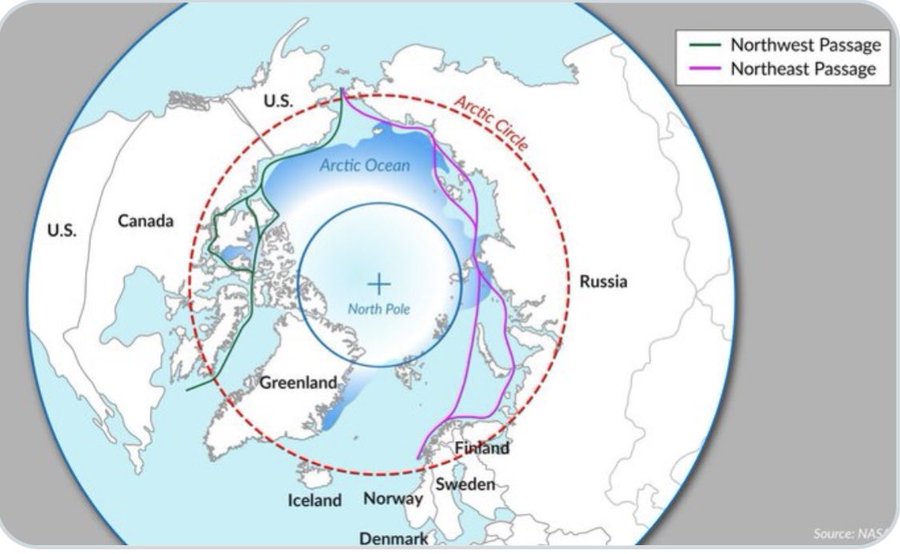
The reality is, for several years President Trump has been telling NATO they need to take the Arctic (Greenland) seriously and position more strongly against encroachment by China and Russia.   European NATO has not responded with urgency to the requests of President Trump… because orange man bad.

So, President Trump starts talking about the U.S. taking aggressive unilateral action to secure Greenland as a strategic national security matter.  Suddenly, ‘Voila!’ European NATO, under the auspices of defending their Denmark democracy, wakes up and says, ‘No, wait, you can’t just take Greenland, that’s bad.’  Then they assemble urgent talks to send EU NATO military resources to Greenland.  Exactly what President Trump has been requesting to formerly deaf ears.

See how that works?

The entire dynamic is so funny, it is difficult not to laugh.  It’s like being the only observer in a Candid Camera scenario when you know the entire group is being spoofed.

The former Dutch Chief of Defense, General Berlijn, even warns annexation of Greenland will cost the US its military bases in Europe. “Forget about Ramstein, Lakenheath, Mildenhall, Aviano, Alconbury, Lajes, Móron and Zaragoza,” he said.

As if forcing U.S. troops out of Germany is a threat.

Oh dear, you mean U.S. military can pull back from German bases? Cool.  And the EU will step up their own military to defend their own continent?  Again, super cool. Punish us with a good time, General Berlijn; please!

President Trump has pulled off the impossible

The current EU plan, and keep in mind – this is NOW the EU plan, is to increase NATO defense forces in/around Greenland and then expand their own military in Europe so they can kick out the USA.

Perfect.

Now, we all know that Europe will never do the last part of that; especially when these same voices are demanding that President Trump protect and defend their troops in Ukraine.  However, just reading about how they are talking about it is beyond funny.

Only President Donald J. Trump could achieve this masterstroke of geopolitical maneuvering, ending with him getting exactly what he wants and exactly what the EU previously didn’t want, while the EU proclaim it is their intention to give Trump what he wants by fighting against him.

You couldn’t make this stuff up if you tried.

EUROPE – […] In a joint statement, the leaders of the European nations stressed that it was for Denmark and Greenland to decide on the future of the vast, frozen territory. and that they would defend its borders.

They spoke out after Trump said he wants to gain control of the autonomous Danish territory now.

[…] They emphasised that security in the Arctic must be achieved “collectively”, in conjunction with Nato allies including the US, by upholding the principles of the UN Charter, “including sovereignty, territorial integrity and the inviolability of borders”.

They added: “These are universal principles, and we will not stop defending them.

“The United States is an essential partner in this endeavor, as a Nato ally and through the defense agreement between the Kingdom of Denmark and the United States of 1951.”

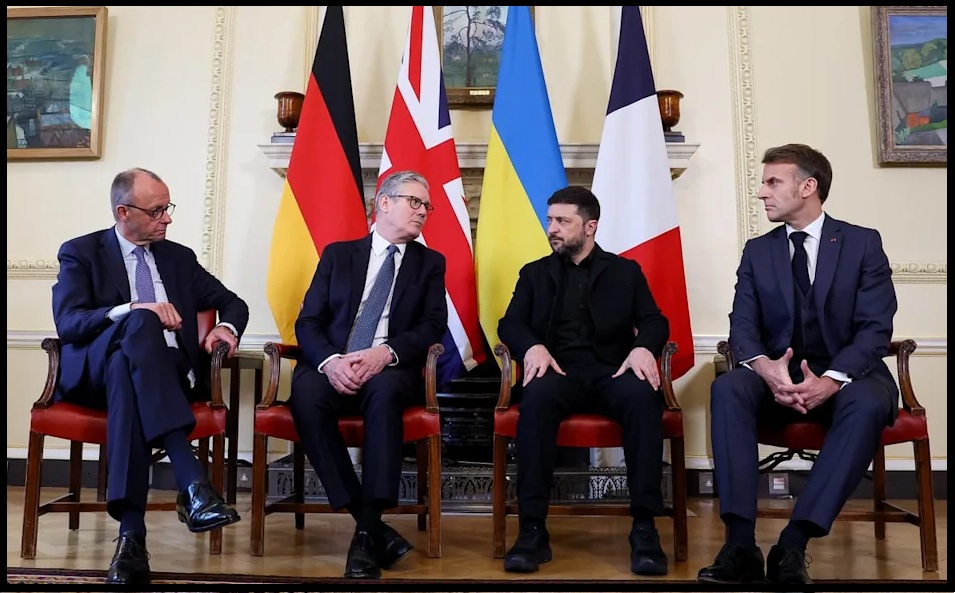
The statement was signed by Sir Keir Starmer, French president Emmanuel Macron, German Chancellor Friedrich Merz, Prime Minister Giorgia Meloni of Italy, Prime Minister Donald Tusk of Poland, Prime Minister Pedro Sánchez of Spain, and Prime Minister Frederiksen of Denmark. (Source)

“We’ve got him this time, fellas!”

Bessent Is Angry – Minnesota Governor Walz Refused to Provide Any Security for Treasury Secretary


Posted originally on CTH on January 11, 2026 | Sundance

It appears that Minnesota Governor Tim Walz is about to discover what happens when you anger the Treasury Secretary, who happens to be the IRS Commissioner.   WATCH (Prompted):

.

Maduro Bodyguard Reveals Stunning Information About U.S. Attack on Compound – Was a Sonic Weapon Deployed?


Posted originally on CTH on January 11, 2026 | Sundance

I first read and listened to the following account a few days ago and hesitated to share the story because what was described sounded surreal.  However, White House Press Secretary Karoline Leavitt has also shared these details giving the account some level of potential authenticity that did not exist before.

What is described about the attack on the compound of Nicolas Maduro is quite remarkable.  All electronic countermeasures, including radar were rendered ineffective after initial U.S. military strikes.

Then a wave of drones moved in and began targeting specific infrastructure.  Then a network of Venezuelan aircraft was destroyed on the ground. Then the helicopters arrived and the technology with the U.S. soldiers’ weapons was unlike anything the Cuban/Venezuelan military had ever encountered.

Maduro was being protected by approximately 300 armed soldiers. One of Maduro’s guards survived with injuries and gave an account in Spanish [LINK] that was also shared in English translation [LINK] The original video is below the transcript.

[TRANSCRIPT] – This account from a Venezuelan security guard loyal to Nicolás Maduro is absolutely chilling—and it explains a lot about why the tone across Latin America suddenly changed.

Security Guard: On the day of the operation, we didn’t hear anything coming. We were on guard, but suddenly all our radar systems shut down without any explanation. The next thing we saw were drones, a lot of drones, flying over our positions. We didn’t know how to react.

Interviewer: So what happened next? How was the main attack?

Security Guard: After those drones appeared, some helicopters arrived, but there were very few. I think barely eight helicopters. From those helicopters, soldiers came down, but a very small number. Maybe twenty men. But those men were technologically very advanced. They didn’t look like anything we’ve fought against before.

Interviewer: And then the battle began?

Security Guard: Yes, but it was a massacre. We were hundreds, but we had no chance. They were shooting with such precision and speed… it seemed like each soldier was firing 300 rounds per minute. We couldn’t do anything.

Interviewer: And your own weapons? Didn’t they help?

Security Guard: No help at all. Because it wasn’t just the weapons. At one point, they launched something—I don’t know how to describe it… it was like a very intense sound wave. Suddenly I felt like my head was exploding from the inside. We all started bleeding from the nose. Some were vomiting blood. We fell to the ground, unable to move.

Interviewer: And your comrades? Did they manage to resist?

Security Guard: No, not at all. Those twenty men, without a single casualty, killed hundreds of us. We had no way to compete with their technology, with their weapons. I swear, I’ve never seen anything like it. We couldn’t even stand up after that sonic weapon or whatever it was.

Interviewer: So, do you think the rest of the region should think twice before confronting the Americans?

Security Guard: Without a doubt. I’m sending a warning to anyone who thinks they can fight the United States. They have no idea what they’re capable of. After what I saw, I never want to be on the other side of that again. They’re not to be messed with.

Interviewer: And now that Trump has said Mexico is on the list, do you think the situation will change in Latin America?

Security Guard: Definitely. Everyone is already talking about this. No one wants to go through what we went through. Now everyone thinks twice. What happened here is going to change a lot of things, not just in Venezuela but throughout the region. {SOURCE}

.

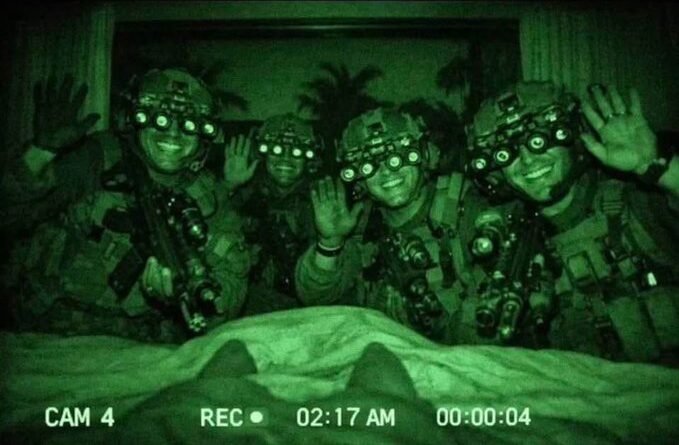
It sounds like the U.S. Delta Force was moving like this:

Was a Sonic Weapon Deployed?

The Minnesota Outrage – We’ve Watched This Unfold Several Times


Posted originally on CTH on January 10, 2026 | Sundance

The eruption of astroturfed outrage involving the organized leftist agitators and the self-defense shooting by an ICE official is a redo of a familiar pattern.  The players are all the same.

From the fabrications around the shooting death of Trayvon Martin, forward to the shooting of Michael Brown, to the ridiculous claims of brutality against Freddie Grey or George Floyd, the same people now aligned to beatify or canonize Renee Good all have the same agenda.

RevCom, Weather Underground, Anarchists, Occupy Wall Street, BLM or Antifa, they all follow the domestic communist playbook of social disruption.

This time in Minneapolis the same people who demanded the defunding of police while they organized fraud rings, are now demanding the removal of Immigration and Customs Enforcement officers.

Consider this an open discussion thread for anything related to the ongoing coordinated civil unrest.

President Trump Proposes One Year Cap on Credit Card Rates at 10 Percent


Posted originally on CTH on January 10, 2026 | Sundance

Details are scant, and I’m not exactly sure how this would work, but President Trump has proposed a one-year freeze on credit card rates at 10%.

[SOURCE]

As noted by Politico, previous “legislation sponsored by Sen. Bernie Sanders (I-Vt.) and cosponsored by Sen. Josh Hawley (R-Mo.) would impose a 10 percent cap on credit card rates for five years. Similar legislation has been introduced in the House.”  Yet, unilateral authority by a President does not seem evident.

If anyone has any information on how this could be accomplished, feel free to share. I’m not sure how this can be done.

Russia Strikes Back Using Hypersonic Missiles Against Kiev Following Drone Attack on Putin’s Residence


Posted originally on CTH on January 10, 2026 | Sundance 

President Trump, President Zelenskyy and the CIA continue to deny any involvement on the drone attack against Russian Federation President Vladimir Putin’s state residence.  However, Russia has released evidence from the drones that were shot down including the guidance and targeting systems.

Someone launched the drones from Ukraine and targeted them at Putin’s residence to send a message.  There is considerable debate online about it, but if President Trump and Volodymyr Zelenskyy are speaking truthfully, the most likely suspect who launched the drones was British intelligence inside Ukraine.  Then again, if the CIA was factually involved, everyone would have to deny it.

In retaliation for the December 29th attack, yesterday Russia fired a hypersonic Oreshnik missile and counterattack drones directly into the heart of Kiev, Ukraine.

The use of the Oreshnik missile comes just hours after Russian President Putin asserted publicly that Ukraine, Europe and NATO have no defenses against the hypersonics.

President Zelenskyy said the Russian attack involved 242 drones, 13 ballistic missiles, one Oreshnik missile and 22 cruise missiles. However, as with all things Zelenskyy, this dramatic claim seems to be slightly exaggerated.

Russia claims they targeted key electricity infrastructure as well as the production facilities for building drones in Kiev which are collocated in residential areas.

Images of the hypersonic missile warheads hitting their targets is shown at left.  Much of Kiev is now without power and electricity.

The Russian Defense Ministry said, “in response to the terrorist attack by the Kiev regime on the residence of the President of the Russian Federation in Novgorod region, launched on the night of 29 December 2025, the Russian Armed Forces launched a massive strike with high-precision long-range ground- and sea-based weapons including the Oreshnik mobile ground-based medium-range missile system as well as attack unmanned aerial vehicles at critically important facilities on the territory of Ukraine. All the assigned targets have been hit. Production facilities of unmanned aerial vehicles that were used during the terrorist attack as well as power infrastructure enterprises that supported the defense industry of Ukraine have been damaged.”

Moscow appears ambivalent to the demands of the EU/NATO as they pertain to a ceasefire, and it appears the Kremlin has comprehensively rejected the European 20-point peace plan solution based on President Putin’s rejection of the ‘security guarantees’ as outlined by EU leadership.

Statement from Russia: “The document turned out to be extremely far from a peace settlement. The declaration is not aimed at achieving a lasting peace and security but rather at continuing the militarisation, escalation and further conflict aggravation.

Its core element is the deployment of “a multinational force” on Ukrainian territory that the coalition will have to form to contribute to the “rebuilding” of the Ukrainian armed forces and “support deterrence” [against Russia] following the cessation of the hostilities.

The document also includes clauses on further consolidation of Ukraine’s and NATO’s military industrial sectors.

As clarified by British Prime Minister Keir Starmer and French President Emmanuel Macron, who signed the corresponding trilateral statement along with Zelensky, London and Paris plan to establish their own military bases in Ukraine post-ceasefire and build weapon and military equipment storage facilities.

The Russian Foreign Ministry warns that the deployment of military units and the setting-up of military facilities, storages and other Western infrastructure on Ukrainian territory will be qualified as foreign intervention that directly threatens the security of Russia and other European countries.

All such units and facilities will be considered as legitimate military targets for the Russian Armed Forces.

Warnings to this effect have been repeatedly made at the highest level and remain relevant.

We also reaffirm that a peaceful resolution of the conflict is solely possible through the elimination of its root causes, the re-establishment of Ukraine’s neutral non-aligned status, its demilitarisation and denazification, and Kiev’s observance of the language, cultural and religious rights and freedoms, including those of ethnic Russians, Russian-speaking people, and members of ethnic minorities, and through the recognition of the current territorial realities that emerged as a result of the peoples’ exercised right to self-determination.

All these goals will, undoubtedly, be achieved either by political and diplomatic means or in the course of the special military operation, in which the Russian Armed Forces are maintaining full initiative on the battlefield.

The new militarist declarations of the so-called Coalition of the Willing and the Kiev regime are forming a true Axis of war.

Its participants’ plans are becoming increasingly more dangerous and destructive for the future of the European continent and its residents, who are also forced by Western politicians to pay for such ambitions out of their own pockets.” {SOURCE}

President Trump was asked about the current status during his meeting with oil executives on Friday:

On the positive side, it is good to remember the U.S. has now established strong diplomatic ties for deconfliction between the U.S. and Russia.  The Europeans and many within the U.S. congress want and demand escalated conflict with Russia, President Trump does not.

The “coalition of the willing” (Brussels, Great Britian, Canada, France, Germany and Australia) cannot reasonably go to war with Russia without the assistance of the United States.  President Trump does not want to involve us in the growing quagmire either in Ukraine or any of the various ancillary venues the EU are promoting.

Italian Prime Minister Giorgia Meloni has recently joined with French President Emmanuel Macron to say perhaps it is time for the EU to engage directly with Vladimir Putin.  The EU has a position, a 20-point plan, that is not supported by President Trump because it is contingent upon American involvement.

Perhaps it is time for the EU to take responsibility for their own diplomatic efforts and figure out a solution.  In the interim, President Putin continues taking apart Ukraine bit by bit.

Chevron CEO Mike Worth Outlines Current and Future Production Capacity of Venezuela Oil


Posted originally on CTH on January 10, 2026 | Sundance 

Energy Secretary Wright asked Chevron CEO Mike Wirth to give some information about the current status of the Venezuelan oil industry.  Chevron has been on the ground in Venezuela for a long period of time and has significant infrastructure investment already in place.

Wirth notes that with current personnel (3,000) and equipment (4 locations) on site, Chevron could likely double capacity almost immediately, however, from there it would take approximately 18-months to gain more significant outputs.

President Trump asked if Chevron was in a position of advantage from already having their people and material already in operation, Wright noted generally yes, they do; however, the opportunities for industrial capacity gains are significant.

.

Secretary Rubio Outlines the Three Phases of Stabilization in Venezuela


Posted originally on CTH on January 10, 2026 | Sundance

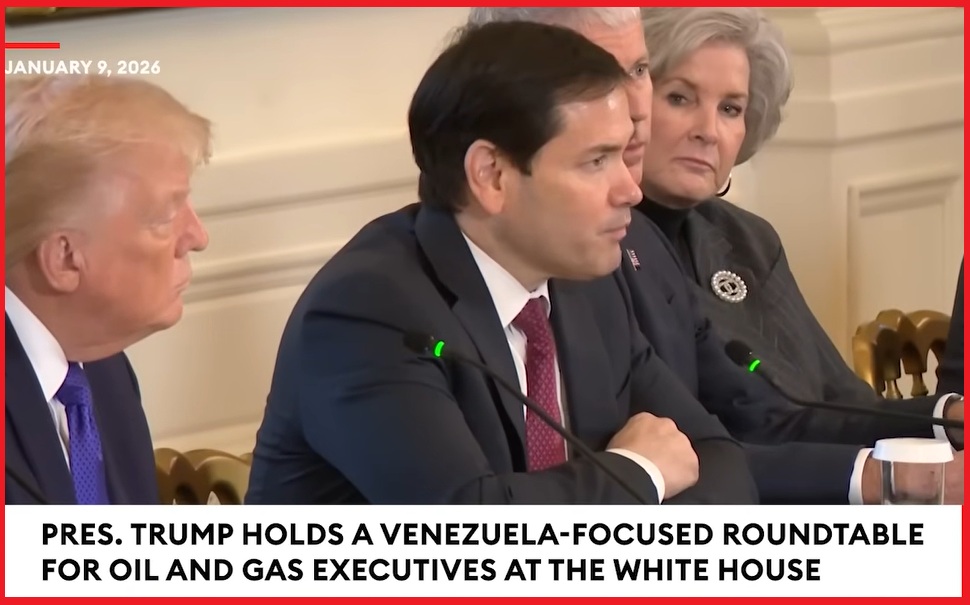
During the energy roundtable, Secretary Rubio made remarks outlining the three phases within the U.S. policy toward Venezuela.  Essentially the core of the policy is: (1) Stabilization; (2) Transition, and (3) a Return to sovereign representative democracy.

The initial phase is ‘stabilization,’ where the U.S. government is working with existing leadership in Venezuela under tight controls and clear expectations.  Reconciliation of political factions is supported. The U.S. leverage is maintained by financial and economic control, provided by the threat of U.S. military.  Venezuela’s oil production pays for U.S. oversight.

The second phase involves ‘transition’, where the civic and governing responsibilities are shared between the existing Venezuelan leadership and aligned policy of the U.S. government.  In the transitional phase the economic wealth is apportioned to the people of Venezuela with oversight by the U.S. government.

The third phase ‘sovereign representative democracy’ happens when the reformed government holds legitimate elections to decide the representative form of government, the voice of the people, within Venezuela.  The U.S. influence then begins to withdraw, and new sovereign political leadership takes control.

.