Posted originally on CTH on July 4, 2025 | Sundance
Details around this are scant and unpredictable; however, White House Press Secretary previously said President Trump would be signing the historic Big Beautiful Bill today around 5:00pm. RSBN livestream below.
Posted originally on CTH on July 4, 2025 | Sundance
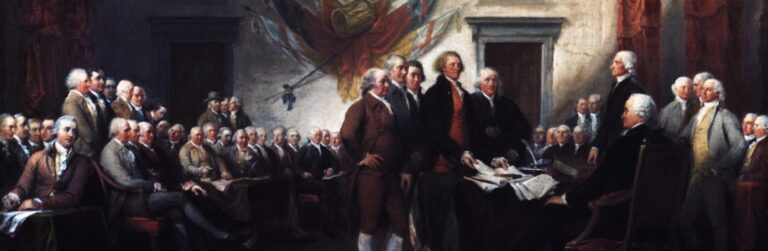
The colonies had been in conflict with England for over a year in June of 1776. A Continental Congress convened in Philadelphia on June 7 of that year. Richard Henry Lee from Virginia offered up a resolution with these now famous words:
“Resolved: That these United Colonies are, and of right ought to be, free and independent States, that they are absolved from all allegiance to the British Crown, and that all political connection between them and the State of Great Britain is, and ought to be, totally dissolved.”
Lee’s words spurred the drafting of the Declaration of Independence. A committee of five was appointed to draft a statement making the case for the colonies, a statement to the world of the intent and the reason behind that intent.
Members of the Committee were John Adams of Massachusetts, Roger Sherman of Connecticut, Benjamin Franklin of Pennsylvania, Robert R. Livingston of New York and Thomas Jefferson of Virginia. Jefferson took on the task of actually drafting the document as we know it today.
The Continental Congress reconvened on July 1, 1776, and on the following day, the resolution for independence by Lee was adopted by 12 of the 13 colonies, with New York not voting. Minor changes were made to the Jefferson document.
Work on the document continued through July 3 and into the afternoon of July 4, when the Declaration was officially adopted by the Congress. Of the 13 colonies, nine voted in favor of the Declaration, two — Pennsylvania and South Carolina — voted No, Delaware was undecided and New York again abstained.
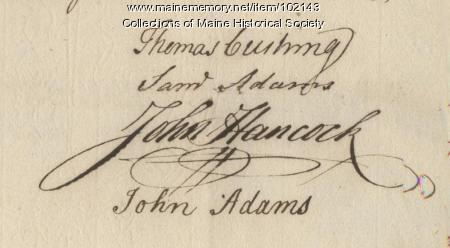
As we all know, John Hancock, President of the Congress made his signature large enough for King George to read “without his spectacles.”
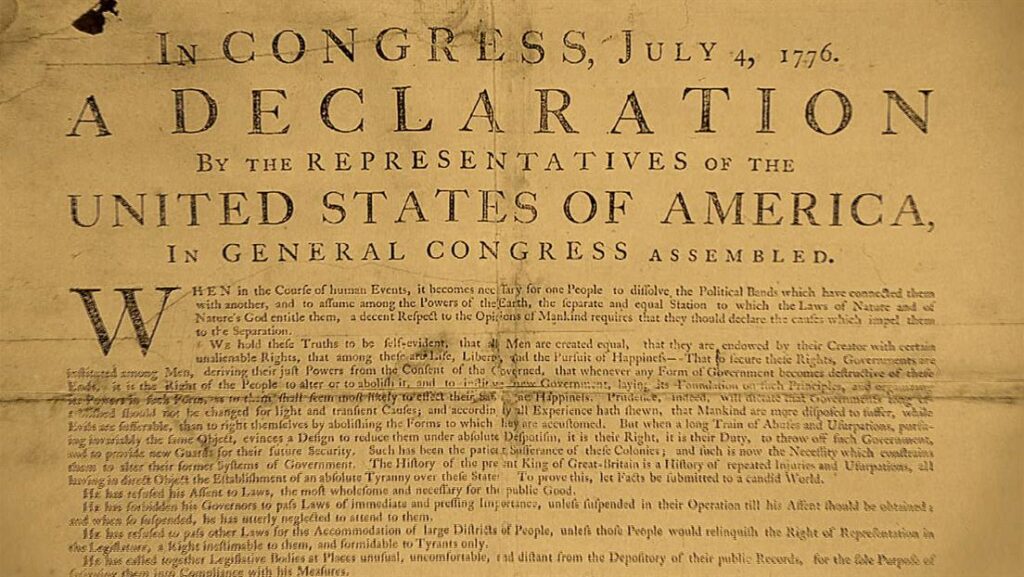
IN CONGRESS, July 4, 1776. The unanimous Declaration of the thirteen united States of America,
When in the Course of human events, it becomes necessary for one people to dissolve the political bands which have connected them with another, and to assume among the powers of the earth, the separate and equal station to which the Laws of Nature and of Nature’s God entitle them, a decent respect to the opinions of mankind requires that they should declare the causes which impel them to the separation.
We hold these truths to be self-evident, that all men are created equal, that they are endowed by their Creator with certain unalienable Rights, that among these are Life, Liberty and the pursuit of Happiness. – That to secure these rights, Governments are instituted among Men, deriving their just powers from the consent of the governed, – That whenever any Form of Government becomes destructive of these ends, it is the Right of the People to alter or to abolish it, and to institute new Government, laying its foundation on such principles and organizing its powers in such form, as to them shall seem most likely to effect their Safety and Happiness.
Prudence, indeed, will dictate that Governments long established should not be changed for light and transient causes; and accordingly all experience hath shewn, that mankind are more disposed to suffer, while evils are sufferable, than to right themselves by abolishing the forms to which they are accustomed. But when a long train of abuses and usurpations, pursuing invariably the same Object evinces a design to reduce them under absolute Despotism, it is their right, it is their duty, to throw off such Government, and to provide new Guards for their future security. – Such has been the patient sufferance of these Colonies; and such is now the necessity which constrains them to alter their former Systems of Government. The history of the present King of Great Britain is a history of repeated injuries and usurpations, all having in direct object the establishment of an absolute Tyranny over these States. To prove this, let Facts be submitted to a candid world.
He has refused his Assent to Laws, the most wholesome and necessary for the public good.
He has forbidden his Governors to pass Laws of immediate and pressing importance, unless suspended in their operation till his Assent should be obtained; and when so suspended, he has utterly neglected to attend to them.
He has refused to pass other Laws for the accommodation of large districts of people, unless those people would relinquish the right of Representation in the Legislature, a right inestimable to them and formidable to tyrants only.
He has called together legislative bodies at places unusual, uncomfortable, and distant from the depository of their public Records, for the sole purpose of fatiguing them into compliance with his measures.
He has dissolved Representative Houses repeatedly, for opposing with manly firmness his invasions on the rights of the people.
He has refused for a long time, after such dissolutions, to cause others to be elected; whereby the Legislative powers, incapable of Annihilation, have returned to the People at large for their exercise; the State remaining in the mean time exposed to all the dangers of invasion from without, and convulsions within.
He has endeavoured to prevent the population of these States; for that purpose obstructing the Laws for Naturalization of Foreigners; refusing to pass others to encourage their migrations hither, and raising the conditions of new Appropriations of Lands.
He has obstructed the Administration of Justice, by refusing his Assent to Laws for establishing Judiciary powers.
He has made Judges dependent on his Will alone, for the tenure of their offices, and the amount and payment of their salaries.
He has erected a multitude of New Offices, and sent hither swarms of Officers to harrass our people, and eat out their substance.
He has kept among us, in times of peace, Standing Armies without the Consent of our legislatures.
He has affected to render the Military independent of and superior to the Civil power.
He has combined with others to subject us to a jurisdiction foreign to our constitution, and unacknowledged by our laws; giving his Assent to their Acts of pretended Legislation:
For Quartering large bodies of armed troops among us:
For protecting them, by a mock Trial, from punishment for any Murders which they should commit on the Inhabitants of these States:
For cutting off our Trade with all parts of the world:
For imposing Taxes on us without our Consent:
For depriving us in many cases, of the benefits of Trial by Jury:
For transporting us beyond Seas to be tried for pretended offences
For abolishing the free System of English Laws in a neighbouring Province, establishing therein an Arbitrary government, and enlarging its Boundaries so as to render it at once an example and fit instrument for introducing the same absolute rule into these Colonies:
For taking away our Charters, abolishing our most valuable Laws, and altering fundamentally the Forms of our Governments:
For suspending our own Legislatures, and declaring themselves invested with power to legislate for us in all cases whatsoever.
He has abdicated Government here, by declaring us out of his Protection and waging War against us.
He has plundered our seas, ravaged our Coasts, burnt our towns, and destroyed the lives of our people.
He is at this time transporting large Armies of foreign Mercenaries to compleat the works of death, desolation and tyranny, already begun with circumstances of Cruelty & perfidy scarcely paralleled in the most barbarous ages, and totally unworthy the Head of a civilized nation.
He has constrained our fellow Citizens taken Captive on the high Seas to bear Arms against their Country, to become the executioners of their friends and Brethren, or to fall themselves by their Hands.
He has excited domestic insurrections amongst us, and has endeavoured to bring on the inhabitants of our frontiers, the merciless Indian Savages, whose known rule of warfare, is an undistinguished destruction of all ages, sexes and conditions.
In every stage of these Oppressions We have Petitioned for Redress in the most humble terms: Our repeated Petitions have been answered only by repeated injury. A Prince whose character is thus marked by every act which may define a Tyrant, is unfit to be the ruler of a free people.
Nor have We been wanting in attentions to our British brethren. We have warned them from time to time of attempts by their legislature to extend an unwarrantable jurisdiction over us. We have reminded them of the circumstances of our emigration and settlement here. We have appealed to their native justice and magnanimity, and we have conjured them by the ties of our common kindred to disavow these usurpations, which, would inevitably interrupt our connections and correspondence. They too have been deaf to the voice of justice and of consanguinity. We must, therefore, acquiesce in the necessity, which denounces our Separation, and hold them, as we hold the rest of mankind, Enemies in War, in Peace Friends.
We, therefore, the Representatives of the united States of America, in General Congress, Assembled, appealing to the Supreme Judge of the world for the rectitude of our intentions, do, in the Name, and by Authority of the good People of these Colonies, solemnly publish and declare, That these United Colonies are, and of Right ought to be Free and Independent States; that they are Absolved from all Allegiance to the British Crown, and that all political connection between them and the State of Great Britain, is and ought to be totally dissolved; and that as Free and Independent States, they have full Power to levy War, conclude Peace, contract Alliances, establish Commerce, and to do all other Acts and Things which Independent States may of right do. And for the support of this Declaration, with a firm reliance on the protection of divine Providence, we mutually pledge to each other our Lives, our Fortunes and our sacred Honor.
The complete list of those who signed were: John Hancock (president of the Continental Congress), Josiah Bartlett, William Whipple, Matthew Thornton, Samuel Adams, John Adams, Robert Treat Paine, Elbridge Gerry, Stephen Hopkins, William Ellery, Roger Sherman, Samuel Huntington, William Williams, Oliver Wolcott, William Floyd, Philip Livingston, Francis Lewis, Lewis Morris, Richard Stockton, John Witherspoon, Francis Hopkinson, John Hart, Abraham Clark, Robert Morris, Benjamin Rush, Benjamin Franklin, John Morton, George Clymer, James Smith, George Taylor, James Wilson, George Ross, Caesar Rodney, George Read, Thomas McKean, Samuel Chase, William Paca, Thomas Stone, Charles Carroll of Carrollton, George Wythe, Richard Henry Lee, Thomas Jefferson, Benjamin Harrison, Thomas Nelson, Jr., Francis Lightfoot Lee, Carter Braxton, William Hooper, Joseph Hewes, John Penn, Edward Rutledge, Thomas Heyward, Jr., Thomas Lynch, Jr., Arthur Middleton, Button Gwinnett, Lyman Hall, and George Walton.
Check out this link for the sobering fate of many of those who so pledged their lives, fortunes, and sacred honor.
Those are the facts about our Declaration of Independence, the history that we as school children have learned since the creation of this great nation that we celebrate, that we love and honor so.
Often we cannot adequately find words to express our own sentiments, let alone those of a nation and successive generations to come, but Jefferson and that Continental Congress did just that.
The words have stood throughout several centuries as a clarion call for freedom, for breaking free of tyranny, for men to put aside their individual causes and join together to battle for the right of every man, woman and child together to become a people united in goal and resolve.
Today as we celebrate, today as we pledge allegiance to a flag that has gone from 13 stars to 50, may we remember not only the sacrifice, but the resolve. May we honor not only the words, but the unity and deeds of our forefathers. May each of us dig deep into our hearts and work out our differences for the betterment of our nation and our children and grandchildren.
Say a prayer for America today. Rekindle hope today. Honor the past by determining the future.
Today we are just Americans; God loving and joyfully visible Americans, honoring our blessed country, its founding and within every moment, each other.
Posted originally on CTH on July 4, 2025 | Sundance
It was reported last night that President Trump held a quiet meeting with Saudi Arabia Defense Minister Prince Khalid bin Salman in the White House Thursday. This meeting is reported to cover discussions around de-escalation with Iran, the conflict in Gaza and what comes next.
The meeting also comes on the heels of President Trump having a phone call with Russian President Vladimir Putin and work throughout the middle-east region by President Trump Emissary Steve Witkoff and Israeli Strategic Affairs Minister Ron Dermer.
(Via Fox News) Saudi Defense Minister Prince Khalid bin Salman secretly met with President Donald Trump and other key officials in the White House on Thursday to discuss de-escalation efforts with Iran, multiple sources confirmed with Fox News.
Khalid, also known as KBS, is the younger brother of Saudi Crown Prince Mohammed bin Salman.
[…] The talks were also reportedly about ending the war in Gaza and negotiating the release of the remaining hostages – whether dead or alive – and about working toward peace in the Middle East. (more)
Previously it was reported by Israeli media that President Trump was working on a comprehensive solution to Gaza that would encompass peace in the middle-east by normalizing ties with Israel, isolating Iran and giving them fewer options for regional instability. Expanding the Abraham Accords provides the diplomatic vehicle for this approach.
Prime Minister Benjamin Netanyahu will visit the White House on Monday, July 7th.
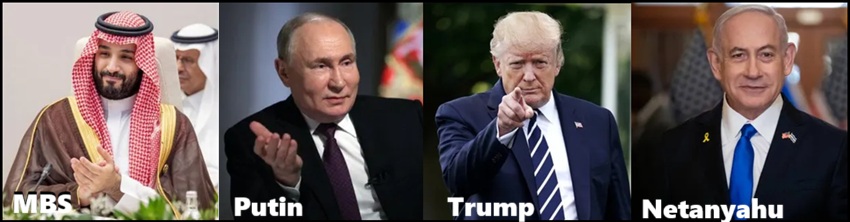
It is strongly rumored that Syria and Lebanon would soon join the Abraham Accords, with the possibility of Saudi Arabia joining thereafter. Saudi Crown Prince Mohammed Bin Salman (MBS) is a key figure hoping to bring a new era to the middle east absent of conflict and focused on prosperity.
According to Israel Hayom, there was a 4-way call (Trump, Netanyahu, Rubio, Dermer) after the Iran strikes. President Trump and Benjamin Netanyahu agreed to “fundamental principles in general terms” including:
♦ “Gaza hostilities will conclude within two weeks.” ♦ “Four Arab nations (including Egypt and the UAE) will administer the Gaza Strip, replacing the murderous Hamas terrorist organization.” ♦ “The remaining Hamas leadership will face exile to other countries (possibly Qatar and Turkey), while the hostages gain freedom.” ♦ “Multiple nations globally will accept numerous Gaza inhabitants seeking emigration.” ♦ “Abraham Accords expansion will bring Syria, Saudi Arabia, and additional Arab and Muslim countries to recognize Israel and establish official relationships.” ♦ “Israel will declare its willingness for future Palestinian conflict resolution under the ‘two states’ concept, contingent upon the Palestinian Authority reforms.” ♦ “The United States will acknowledge limited Israeli sovereignty implementation in Judea and Samaria.”
Saudi Arabia was previously on the cusp of signing up to the Abraham Accords, but retreated from the agreement when the Israeli-Hamas war erupted within Gaza. It would not be surprising to see them come back to that agreement with President Trump’s guidance and request.
If we think about the status of Syria, we can clearly see how President Trump has enticed the new Syrian government led by Ahmed al-Sharaa to the peace table based on economic benefits (sanctions removed). In fact there are large billboards all over Tel Aviv thanking President Trump for his efforts in the embattled nation. It is rather remarkable.
Put all that together, and yes there are significant indications well beyond the report by Israel Hayom that something rather remarkable is possible within the middle-east and specifically as they relate to Israel.
With Iran now effectively removed from their ability to antagonize the region, and with President Trump as the enforcer to stop their extremist tendencies, the path toward regional peace seems much more likely. This opens the door for a new era in mid-east politics.
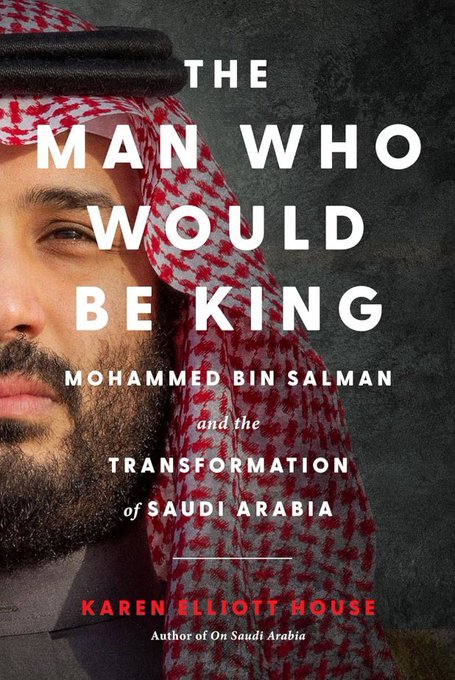
(VIA WSJ) – […] Ms. House compares MBS to the 17th-century Russian czar Peter the Great, and the comparison is apt. Both men are best understood as modernizing autocrats, driven to shake up traditional societies and so enable them to withstand the competition and stress of a rapidly changing geopolitical scene. Like Peter, who built St. Petersburg to serve as Russia’s bridge to the West, MBS hopes that his new city—known as Neom—will make Saudi Arabia a dominant force in technological innovation. And like Peter, who asserted political control over the Russian Orthodox church and personally shaved the beards of aristocrats resisting modernization, MBS has ruthlessly imposed his vision on both religious and tribal leaders skeptical of change.
[…] While earlier rulers took small steps to wean the economy from oil, MBS believes the time for half-measures has passed. Saudi Arabia, as MBS grasped years ago, cannot live by oil alone. But to lessen its dependence on oil, the social contract between Saudi citizens and their government has to change. New sources of revenue, like tourism, will have to supplement oil wealth. New industries, like data centers, will need to be welcomed into the kingdom, and new cities to house them will either have to grow from existing ones or, like Neom, be invented.(more)
If you think about the geopolitics behind much of the global conflict you may identify the U.S, U.K and EU as the historic source of influential instability. In the big picture BRICS was created as an economic hedge against this troubling influence, an alternative alignment of partners.
With U.S. President Donald J Trump challenging and changing the objectives of the ‘western alliance’, and indeed fracturing the western trade markets and the underlying economics therein, a new picture begins to emerge.
A strategic USA political and economic realignment based on peace, growth and independent stability, can unite America, Russia, Saudi Arabia and many emerging economies. However, the old financial guards within the UK, EU, Japan, Canada, Australia will likely fight this geopolitical shakeup.
All of that said, the ‘old guards’ biggest weapon to fight back against a global economic and peace realignment would be their control over the western-developed intelligence networks.
Is that the dynamic we have been seeing?
When contrast against visible recent events, that is a very interesting question to ponder.
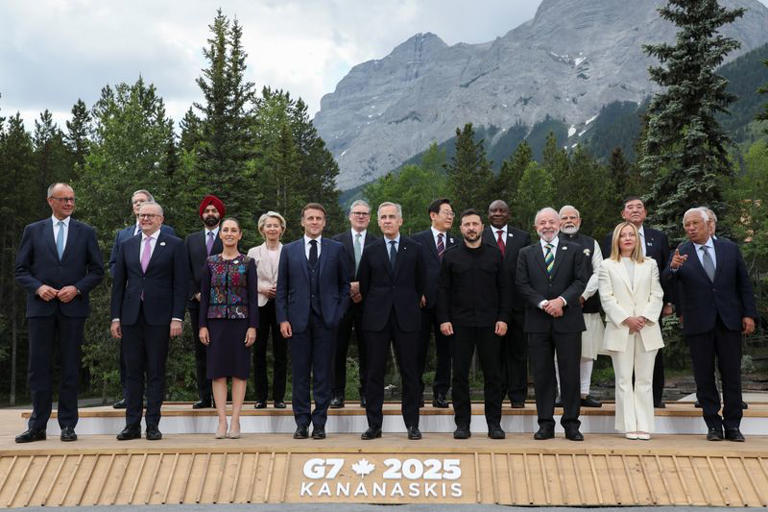
Hence, President Donald Trump’s departure from this picture is almost allegorical. Remember, President Trump departed the G7 in Canada just before this entire ‘western-aligned’ crew showed up.
Posted originally on CTH on July 4, 2025 | Sundance
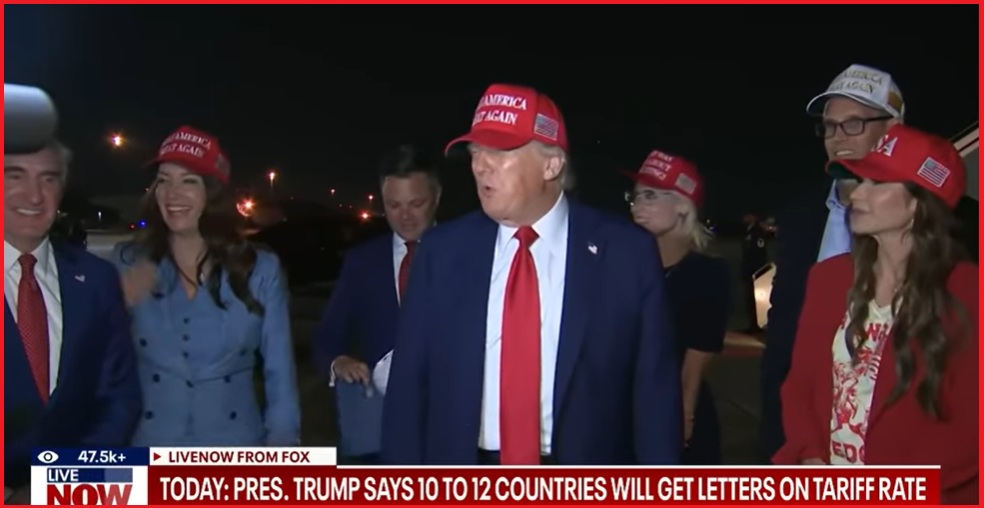
As President Trump, Secretary Noem (DHS), Secretary Rollins (Ag), Secretary Burgum (Int) and various administration officials arrive back to Joint Base Andrews from their visit to Iowa last night, the President delivers impromptu remarks to the assembled press pool.
Covering a wide range of topics and questions, President Trump and Ag Secretary Brooke Rollins also explained Trump’s controversial remarks about expanded visas for illegal alien farm workers to get them into compliance. Secretary Rollins states an expedited H2A guestworker visa is currently in the works.
President Trump also notes from his conversation with Russian President Vladimir Putin, likely focused on Iran, Trump does not think Russia is in a position to want to stop the current conflict with Ukraine and President Trump does not want to get pulled further into the conflict. WATCH:
President Trump also notes that he will begin sending letters to countries today specifying what tariff rates they will face on imports to the United States. The applied reciprocity rates will vary from 10/20 percent to 60/70 percent depending on the scale of the trade deficit and other factors.
Posted originally on CTH on July 4, 2025 | Sundance
It was reported last night that President Trump held a quiet meeting with Saudi Arabia Defense Minister Prince Khalid bin Salman in the White House Thursday. This meeting is reported to cover discussions around de-escalation with Iran, the conflict in Gaza and what comes next.
The meeting also comes on the heels of President Trump having a phone call with Russian President Vladimir Putin and work throughout the middle-east region by President Trump Emissary Steve Witkoff and Israeli Strategic Affairs Minister Ron Dermer.
(Via Fox News) Saudi Defense Minister Prince Khalid bin Salman secretly met with President Donald Trump and other key officials in the White House on Thursday to discuss de-escalation efforts with Iran, multiple sources confirmed with Fox News.
Khalid, also known as KBS, is the younger brother of Saudi Crown Prince Mohammed bin Salman.
[…] The talks were also reportedly about ending the war in Gaza and negotiating the release of the remaining hostages – whether dead or alive – and about working toward peace in the Middle East. (more)
Previously it was reported by Israeli media that President Trump was working on a comprehensive solution to Gaza that would encompass peace in the middle-east by normalizing ties with Israel, isolating Iran and giving them fewer options for regional instability. Expanding the Abraham Accords provides the diplomatic vehicle for this approach.
Prime Minister Benjamin Netanyahu will visit the White House on Monday, July 7th.
It is strongly rumored that Syria and Lebanon would soon join the Abraham Accords, with the possibility of Saudi Arabia joining thereafter. Saudi Crown Prince Mohammed Bin Salman (MBS) is a key figure hoping to bring a new era to the middle east absent of conflict and focused on prosperity.
According to Israel Hayom, there was a 4-way call (Trump, Netanyahu, Rubio, Dermer) after the Iran strikes. President Trump and Benjamin Netanyahu agreed to “fundamental principles in general terms” including:
♦ “Gaza hostilities will conclude within two weeks.” ♦ “Four Arab nations (including Egypt and the UAE) will administer the Gaza Strip, replacing the murderous Hamas terrorist organization.” ♦ “The remaining Hamas leadership will face exile to other countries (possibly Qatar and Turkey), while the hostages gain freedom.” ♦ “Multiple nations globally will accept numerous Gaza inhabitants seeking emigration.” ♦ “Abraham Accords expansion will bring Syria, Saudi Arabia, and additional Arab and Muslim countries to recognize Israel and establish official relationships.” ♦ “Israel will declare its willingness for future Palestinian conflict resolution under the ‘two states’ concept, contingent upon the Palestinian Authority reforms.” ♦ “The United States will acknowledge limited Israeli sovereignty implementation in Judea and Samaria.”
Saudi Arabia was previously on the cusp of signing up to the Abraham Accords, but retreated from the agreement when the Israeli-Hamas war erupted within Gaza. It would not be surprising to see them come back to that agreement with President Trump’s guidance and request.
If we think about the status of Syria, we can clearly see how President Trump has enticed the new Syrian government led by Ahmed al-Sharaa to the peace table based on economic benefits (sanctions removed). In fact there are large billboards all over Tel Aviv thanking President Trump for his efforts in the embattled nation. It is rather remarkable.
Put all that together, and yes there are significant indications well beyond the report by Israel Hayom that something rather remarkable is possible within the middle-east and specifically as they relate to Israel.
With Iran now effectively removed from their ability to antagonize the region, and with President Trump as the enforcer to stop their extremist tendencies, the path toward regional peace seems much more likely. This opens the door for a new era in mid-east politics.
(VIA WSJ) – […] Ms. House compares MBS to the 17th-century Russian czar Peter the Great, and the comparison is apt. Both men are best understood as modernizing autocrats, driven to shake up traditional societies and so enable them to withstand the competition and stress of a rapidly changing geopolitical scene. Like Peter, who built St. Petersburg to serve as Russia’s bridge to the West, MBS hopes that his new city—known as Neom—will make Saudi Arabia a dominant force in technological innovation. And like Peter, who asserted political control over the Russian Orthodox church and personally shaved the beards of aristocrats resisting modernization, MBS has ruthlessly imposed his vision on both religious and tribal leaders skeptical of change.
[…] While earlier rulers took small steps to wean the economy from oil, MBS believes the time for half-measures has passed. Saudi Arabia, as MBS grasped years ago, cannot live by oil alone. But to lessen its dependence on oil, the social contract between Saudi citizens and their government has to change. New sources of revenue, like tourism, will have to supplement oil wealth. New industries, like data centers, will need to be welcomed into the kingdom, and new cities to house them will either have to grow from existing ones or, like Neom, be invented.(more)
If you think about the geopolitics behind much of the global conflict you may identify the U.S, U.K and EU as the historic source of influential instability. In the big picture BRICS was created as an economic hedge against this troubling influence, an alternative alignment of partners.
With U.S. President Donald J Trump challenging and changing the objectives of the ‘western alliance’, and indeed fracturing the western trade markets and the underlying economics therein, a new picture begins to emerge.
A strategic USA political and economic realignment based on peace, growth and independent stability, can unite America, Russia, Saudi Arabia and many emerging economies. However, the old financial guards within the UK, EU, Japan, Canada, Australia will likely fight this geopolitical shakeup.
All of that said, the ‘old guards’ biggest weapon to fight back against a global economic and peace realignment would be their control over the western-developed intelligence networks.
Is that the dynamic we have been seeing?
When contrast against visible recent events, that is a very interesting question to ponder.
Hence, President Donald Trump’s departure from this picture is almost allegorical. Remember, President Trump departed the G7 in Canada just before this entire ‘western-aligned’ crew showed up.
Posted originally on CTH on July 3, 2025 | Sundance
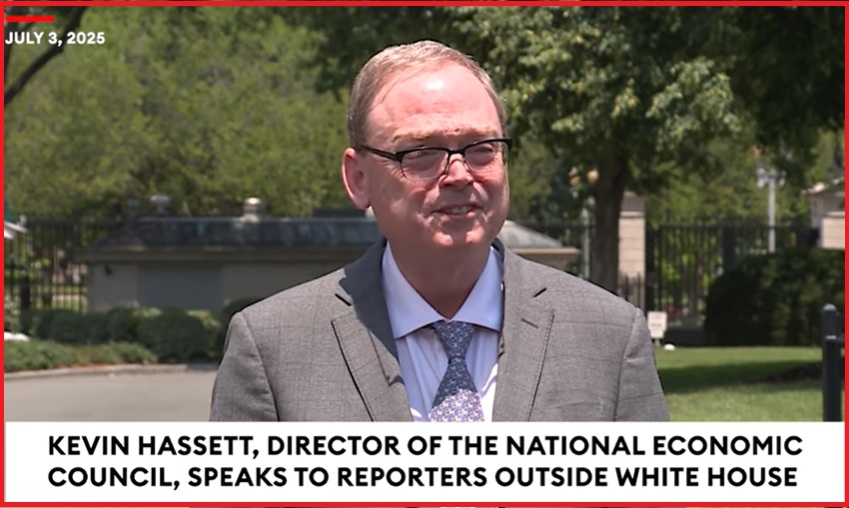
White House National Economic Council Director Kevin Hassett gives an impromptu press conference today giving a big picture overview of how the BBB passing will lift the economy. WATCH:
Posted originally on CTH on July 3, 2025 | Sundance
America 250 is proud to join a monumental July 4th celebration, kicking off a new era of American greatness, featuring special remarks by President Donald J. Trump. This 250th anniversary kick-off event will take place at the Iowa State Fairgrounds, offering patriotism, excitement, inspiration, and a glimpse into the grand festivities planned for America’s 250th anniversary year.
Additionally, the White House has announced that President Trump will be signing the Big Beautiful Bill in the White House on July 4th at 5:00pm. Good stuff. The livestream links to the celebration day event today are below. Anticipated start time 4:30pm ET.
Posted originally on CTH on July 3, 2025 | Sundance
President Trump speaks to reporters before departing Joint Base Andrews en route to Des Moines, Iowa, following the House of Representatives vote to send the Big Beautiful Bill to his Desk.
President Trump was asked about promises made to the GOP holdouts, the talk earlier today with Vladimir Putin, his thoughts and opinions of the Big Beautiful Bill overall, the ongoing issues with Iran and new trade agreements.
President Trump noted he was planning to send letters of notification to approximately 100 countries letting them know their tariff rate effective July 9th. Any nation not currently in trade negotiations with the U.S. will be given a notice of their import tariff rate; remember the baseline is 10% minimum for every nation – even those with FTAs.
Posted originally on CTH on July 3, 2025 | Sundance
You guys know the background. You know the context. You know the history. You know all the nuances and Machiavellian manipulations that have brought us to this very specific moment.
Now, you are President Donald Trump and you are in a conversation with Vladimir Putin; a geopolitical ‘adversary’ whose current status was created by the same intelligence system operators that created your defined ‘enemy’ status within your own country. You and Putin were both targeted by the same intelligence system, the CIA.
President Putin is essentially ambivalent to your targeted position, but defines his adversary as your Central Intelligence Agency. You want to cut the Gordian knot, change the geopolitical world, create a strategic alignment; but to do that you need Putin to accept you do not view him as the enemy. You also need to prove you have control over the apparatus he views as a threat. How do you prove you have control over the agency?
Perhaps President Trump instructs the CIA to send one public message. A message that: #1) outlines the CIA’s dual targeting of Trump and Putin; #2) that simultaneously proves your control over the CIA silo.
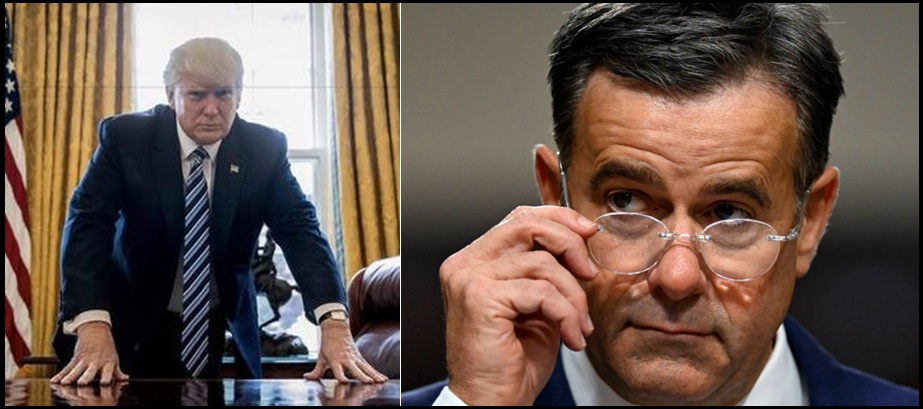
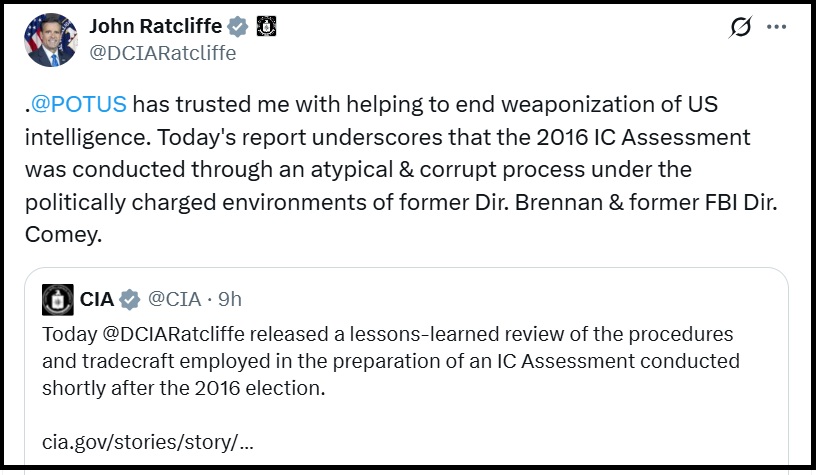
Was this the motive for the timing of the message from CIA Director John Ratcliffe?
As a singular datapoint a message to Putin through the CIA proving control sounds crazy.
However, when added to the timeline and overlaying even more events today, its not so crazy.
After the House sent the BBB to the Senate, President Trump went completely quiet about Russia-Ukraine conflict. However, as soon as the Big Beautiful Bill was completed, President Trump notes a call with President Putin.
On the other side of the dynamic, Vladimir Putin said this:
BREAKING: President Putin quickly left the stage to take a call with President Trump, joking that he didn’t want to keep Trump waiting—he might take it personally. pic.twitter.com/KWl9hJfZy4
President Trump then publicly says at the G7 in Canada, it was a big mistake to take Russia out of the G8; further saying -repeatedly- that sanctions hurt both sides, and there is a cost to sanctions.
President Trump then bombs the Iranian nuclear facilities; and two days later Putin says there is no doubt in his mind that President Trump is committed to peace.
Yesterday the U.S. says the 2016 predicate for removing Russian officials from the USA was based on fraud within the intelligence community, per CIA Director John Ratcliffe.
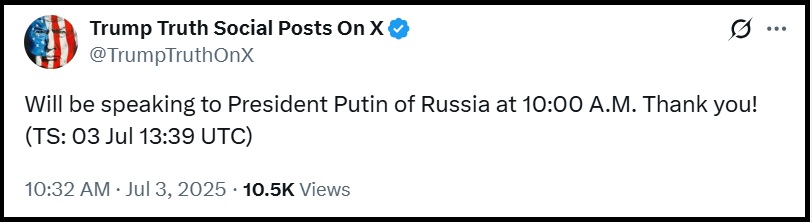
Today, after the BBB bill exits the Senate and is through the rules committee in the House – looking like a certain vote to approve; and after the CIA public statement outlining the false case against Russian diplomats, President Trump holds another phone call with Vladimir Putin.
.
If the CIA announcement was the ‘one ping‘ message to Putin highlighting the dynamics of control, it would make sense Putin and Trump would speak immediately thereafter. This timeline does not appear to be coincidental.
ADD: In much the same way that President Obama previously told outgoing Russian President Dimitri Medvedev: “This is my last election. After my election, I have more flexibility.” To wit Medvedev replies: “I understand. I transmit this (inaudible) to Vladimir,” President Trump is directly telling Putin a similar message after the BBB is beyond the Senate.
The difference between President Obama and President Trump in these geopolitical resets is the openness of Trump in his public communication toward similar issues.
I have created this site to help people have fun in the kitchen. I write about enjoying life both in and out of my kitchen. Life is short! Make the most of it and enjoy!
This is a library of News Events not reported by the Main Stream Media documenting & connecting the dots on How the Obama Marxist Liberal agenda is destroying America


 Centinel2012