Anti-Government Protests Sweep Serbia


Posted originally on Jul 1, 2025 by Martin Armstrong 

vucic.serbia

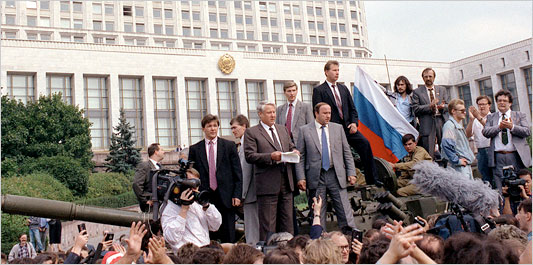
Anti-government protests swept throughout Serbia over the weekend, with tens of thousands taking to the streets to demand change. The student-led protests began eight months ago after the government covered up a railway station canopy collapse that claimed the lives of 16 people, but the discontent with government began many years ago. The Serbian people are now demanding early parliamentary elections and the resignation of President Aleksandar Vučić.
Tens of thousands of protestors took to the streets in the capital of Belgrade on Sunday and Monday, blocking a main bridge over the Sava River. In Novi Saf, protestors surrounded the office of the ruling populist Serbian Progressive Party and pelted it with eggs. Vucic deemed these acts domestic terrorism. “Serbia won. You cannot destroy Serbia with violence,” said Vucic. “They consciously wanted to spur bloodshed. The time of accountability is coming.” Yet, protestors believe the current administration is “illegitimate,” and the anger intensified after Vucic announced that the next national vote would not take place before the end of 2026.

Serbia no longer has the freedom of the press as entities closely linked to Vucic and his administration own the majority of Serbian media outlets. Opposition parties do not have access to state television and are silenced. Independent journalists have been murdered in suspicious cases.

Vucic has rotated between prime minister and president roles to retain control for over 12 years. The people believe that the elections are rigged with reports of NGOs participating in voter intimidation and vote-buying. Instances of third-party illegal polling stations were common. Since the ruling party controls all state media, it controls the narrative.

The European Parliament called for an international investigation into voting irregularities after the 2023 election, threatening to withhold funds if it found evidence of voter fraud. Yet, voting was repeated at 43 separate polling stations due to irregularities. Every independent assessment found that while the elections were technically held in a democratic manner, the ruling party has extreme systemic advantages that slanted the election in their favor.

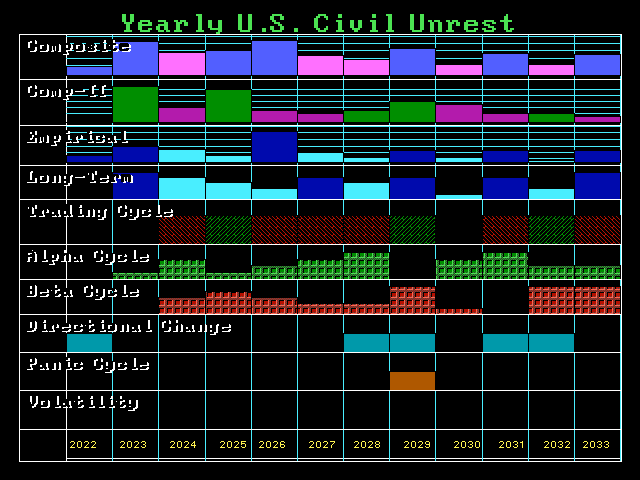
Serbia, a non-NATO member that has refused to impose sanctions on Russia, remains in a unique position that could cause external forces to intervene under the guise of supporting democracy. Aligning with the models, Serbia experienced significant unrest in 2023-2024 over election fraud allegations with tensions coming to a head in March 2025. The Balkans have been a historic battleground for the beginning of global conflict. Based on the model, the unrest will not quell and Serbia, as others, will continue to destabilize into 2027.

Building the Largest Army in Europe


Posted originally on Jul 1, 2025 by Martin Armstrong 

GermanyUkraineWarPropogandaRecruitment

They say it takes a generation to reshape the way a nation views its military allegiance. Germany dwindled its military capacity significantly after its defeat in the last world war, wearing their loss as a badge of shame. Neither the people nor the government wanted to reinvigorate Germany’s military power after the destructive nation building and expansion under the Third Reich. The times have changed, as they always do, and Germany is now on the defensive. German Chancellor Friedrich Merz envisions forming the largest army in Europe.

“Building up our military is our top priority,” said Merz. “From now on, the federal government will provide the military with as much money as it needs to ensure it becomes Europe’s strongest armed force. We are Europe’s most populous country and Europe’s biggest economy, and nothing less should be expected from us. Our partners not only expect this — they demand it.”

Merz stated that Germany will spend 3.5% of its GDP on military defense over the next decade, placing spending as a percentage on par with the United States. Germany already found a loophole to spend on defense indefinitely after declaring an emergency and deciding to ignore prior military spending limits. The Germany government now plans to spend $400 billion on defense alone through 2029. Simultaneously, the nation will not cut social programs or readjust its overall budget as a constitutional amendment now permits lawmakers to bypass the debt brake and borrow in perpetuity without calculating that spending in the federal budget.

War drummer_clear

Germany believes it is on the right side of history due to its backing of Ukraine, the world’s favorite underdog. A refugee favorite, the nation has allowed 1.2 million Ukrainians into its borders since the war began. The nation hit a record-high for population growth in 2022 due to the number of migrants it has accepted.

Now, Germany provides more funding to Ukraine than any other European nation, and is third globally behind the US and UK. Merz has been an outspoken critic of the United States under Donald Trump due to his reluctance to support Ukraine, and he believes he build an iron-clad military so powerful that the entirety of Europe will no longer need to depend on America for defense.

The Bundeswehr, Germany’s military, currently has around 262,000 troops, but it would like to boldly increase its size with 200,000 additional troops and will spend €100 billion in a special fund to modernize its military. German Defense Minister Boris Pistorius said in May 2024 that he was “convinced” that Germany “needs a form of military conscription.” While there is no conscription, Germans are required to register for a potential draft before they turn 18. By June of 2024, I was informed by multiple personal sources that this registration had been extended to include women. One reliable source informed me that her female family friend was sent a notice to register at 59 years old.

Germany is the core foundation of the entire European economy. As they used to say about America, if it catches a cold, the rest of the world suffers pneumonia. Germany’s trajectory toward war is not driven by a public desire for conflict, but by economic, political, and geopolitical pressures—and especially by its entanglement with the European Union, its energy crisis and the collapse of fiscal discipline across Europe. Net Zero initiatives and cutting off cheap Russian gas drastically hurt the German economy by raising energy costs and stifling its auto market. The entire European Union is collapsing, with Germany at the center as the bloc’s primary financier. The EU needs war to maintain the illusion of control, and Germany must be at the frontlines as the bloc’s richest nation.

NYC Mayoral Candidate Wants to Tax White Neighborhoods


Posted originally on Jul 1, 2025 by Martin Armstrong 

WhiteNeighborhoodsNYCmayor

New York City’s far-left mayoral candidate Zohran Mamdani is the human embodiment of the WOKE Socialist agenda. His “progressive” views are based on policies that have failed countless times. Mamdani’s most recent proposal has sparked controversy as he believes that predominantly white neighborhoods should pay higher taxes.

Socialists feed on increased taxation to support the welfare state, which comprises their voter base. They need people who are utterly dependent on big government to gain and maintain control. Equality to a Socialist means that everyone is equal in poverty. Not only does he want to raise property taxes, but he stated that “wealthier and predominantly white neighborhoods” in New York City should disproportionately shoulder the majority of the tax burden.

That’s right—he wants to raise taxes on people based on skin color. Naturally, he would have been banished from politics and forced to step down if he spewed this rhetoric at any other demographic. “That is just a description of what we see right now. It’s not driven by race. It’s more of an assessment of what neighborhoods are being under-taxed versus over-taxed,” the mayoral candidate confessed.

NYC ECM 51.6 year

Unfortunately, our models indicate that NYC will decline sharply in 2026. I warned in 2021 that the city was heading into a crash mode. It is fascinating how the 309.6-year cycle, marked by the time when NYC was on the brink of bankruptcy in 1975, aligns precisely with the year NYC was founded in 1665. It is striking how closely New York has followed the ECM model, which does not bode well for what is to come.

His proposed policy, “Stop the Squeeze on NYC Homeowners,” is based on the belief that less affluent neighborhoods are overtaxed. The plan would redistribute the tax burden from outer boroughs like Brownsville and Jamaica to more affluent neighborhoods where the demographic is predominantly white. In his words, he wants to target “predominantly white” neighborhoods specifically. The additional tax revenue will first fund the coffers of big government, which will multiply in size, and then seek to provide social programs to the “undertaxed,” such as universal childcare, free public transportation, rent freezes, and city-run grocery stores. Astonishing that a candidate could propose price controls and receive support.

Taxing white neighborhoods is one of many methods Mamdani plans to use to squeeze out every last penny from NYC residents. He said he approved of raising corporate taxes, income taxes, property taxes, and sales taxes, among others. The rich may be the first target, but his voter base does not realize that these taxes will eventually be passed on to absolutely everyone. The city could never profit enough in taxes to fund these social programs, and instead of shrinking government or admitting to failed policies, they will continue to raise the cost of living to fund those who completely rely on big government.

There is no quantifiable plan to fund these programs that sound nice on the campaign trail. It is not economically feasible. NYC residents already pay some of the highest taxes in the nation. Those in affluent neighborhoods pay far more into state and local taxes through income, property, sales—the list goes on, as there is nothing that the city will not slap a tax on and continue to raise year after year.

Cities begin to fall into ruin when high-net-worth individuals flee, and the government no longer has access to pockets to dip into. No one would have imagined something of this nature could happen in New York City, but realtors have begun reporting a surge in new home listings as higher-net-worth individuals want to get out before it’s too late. This is merely one of countless disastrous policies Mamdani is proposing.

The only people who succeed in such a system are the ruling elite who enjoy power and wealth created by corruption. The more the government tries to control the economy, the more freedom it must take away to enforce its policies. This is why every socialist system ultimately descends into authoritarianism. History proves this time and time again, yet people continue to believe that “this time will be different.”

The World’s First Climate Visa


Posted originally on Jun 30, 2025 by Martin Armstrong 

Tuvalu

The Polynesian island of Tuvalu is composed of nine coral islands across a 420-mile distance in the west-central Pacific Ocean. The ocean has come to reclaim the islands as the natural cycle of climate change has led the surrounding sea level to rise at about 3.9 mm annually, yet the island is only 2 meters above sea level. Australia is now offering the island’s 11,000 inhabitants the opportunity to apply for the world’s first climate visa.

NASA believes that the majority of the islands will be submerged by 2050. Tuvalu has begun the process of digital preservation to maintain records of its culture and landscapes before the islands are reclaimed.

Numerous studies have pointed to dynamic coral processes as the primary reason for rising sea levels. Dynamic coral processes reference the natural order of oceanographic forces that reshape coral reef structures. Certain marine life and reef-building corals produce calcium carbonate and accrue as gravel and sand.  The ocean waves and currents naturally break down these structures over time and cause reefs to shift, contract or expand. The reef masses themselves are living landforms that are susceptible to accretion and erosion. Overall, these are not structurally sound for long-term inhabitation.

Australia is currently opening 280 visas for Tuvalu citizens annually for a small registration fee of $16. Visa applicants will be selected at random. Over 3,000 Tuvaluans have applied for a visa thus far. “This is the first agreement of its kind anywhere in the world, providing a pathway for mobility with dignity as climate impacts worsen,” a spokesperson for Australia’s foreign affairs department said. “At the same time, it will provide Tuvaluans the choice to live, study and work in Australia,” Australia’s foreign affairs department said.

“For the first time, there is a country that has committed legally to come to the aid of Tuvalu, upon request, when Tuvalu encounters a major natural disaster, a health pandemic or military aggression,” Tuvalu Prime Minister Feleti Teo said at the time. “Again, for the first time, there is a country that has committed legally to recognize the future statehood and sovereignty of Tuvalu despite the detrimental impact of climate changed-induced sea level rise.”

Australia is not doing this as a humanitarian act. Australia is offering visas with the stipulation that Tuvalu permits Australia to have a final say in defense pacts. As it may be, Tuvalu is one of the twelve states that maintains relations with Taipei over Beijing.

Tuvalu will be uninhabitable prior to 2050 as skilled workers flee to Australia. Australia, in turn, has control over the small island chain. Tuvaluan is seen as a stark warning to those who fear climate change, and yet, this is a naturally occurring phenomenon that humans cannot create or prevent.

Did Low Voter Turnout Cause Harris to Lose?


Posted originally on Jun 30, 2025 by Martin Armstrong

Walz.Harris

Some Democrats believe that Kamala Harris would have secured the presidency if it had not been for low voter turnout. Others, like Nancy Pelosi, have blamed Joe Biden for not stepping down sooner. Harris’s running mate Tim Waltz complained that millions of Biden voters stayed home. However, a new study by Pew Research aligns with the findings of a New York Times poll—Harris would have lost either way.

In 2020, 89% of Trump supporters voted compared to 85% of Biden supporters. The following presidential election saw the second-highest voter turnout since 1960 at 64%. However, 26% of eligible voters did not bother to vote in the past three presidential elections. A portion of the people who skipped the 2020 election felt the need to participate in 2024, with 54% of new voters casting a vote for Trump compared to 42% for Harris.

Over that four-year period, Trump retained 85% of his supporters. Harris, on the other hand, only secured 79% of Biden’s voter base from the previous election, and around 15% of those who voted for Biden in 2020 did not bother participating in the next presidential election.

Pew Research asked those who declined to participate in the election how they would have voted, and around 44% said they would have supported Donald Trump compared to 40% who would have backed Kamala Harris. When the same question was posed in 2020, 46% said they would have voted for Biden compared to 35% for Trump. Therefore, if all eligible American voters turned up to the polls, Trump likely would have secured more votes.

Interestingly, immigrants did not immediately back Kamala Harris. Biden beat Trump for the naturalized citizen vote in 2020 by 21 percentage points or 59% to 38%. Naturalized citizens composed 9% of the overall voters in 2024, with 51% backing Harris compared to 47% for Trump.

Record-high inflation under Biden was likely a key reason that Democrats lost a portion of their voter base. Open border policies, rising crime, a fixation on woke ideology, and his handling of the COVID-19 pandemic likely also contributed to Trump’s victory. The American public was not happy with the Build Back Better agenda that Biden and Harris were promoting. Bidenomics failed and the majority is in a worse place financially after four years of Democratic leadership. So no, a higher voter turnout would not have helped Kamala enter the Oval Office.

The Four Faces of War


Posted originally on Jun 30, 2025 by Martin Armstrong 

2025 Cycle of War

QUESTION: You are pessimistic about a resolution in the Iran-Israel conflict. Why is this different from Ukraine or even Vietnam?

Jake

Kaganovich Lazar 1893–1991

ANSWER: This conflict between Iran and Israel is far more serious because it is Religious, not Ethnicphilosophical, or Conquest. The Ukraine conflict is ethnic. Ukrainians wrongly hate Russians because Stalin took their food and starved millions. What they REFUSE to admit was that this was retribution by Stalin’s right-hand man Kaganovich, who was from Kiev and was a Jew who was in charge of the operation that most saw as retribution for Ukrainian neo-Nazis who were slaughtering Jews.

There are four primary distinctions between war and its underlying causes. I will address this in a report on the 2025 Cycle of War, many have asked for an update. I will address how each can be resolved and what history teaches us. Wars unfold for different reasons internationally, whereas civil wars, more often than not, unfold because of unfair and oppressive taxation that favors one group over another.

Lucius Verus AR Parthia Victory

There is also a strong correlation between migrations and civil war, as well as disease. Many plagues have followed invasions by the Mongols, bringing the Black Plague to Europe. Alternatively, returning Roman soldiers from waging war on Persia brought the Antonine Plague, which even claimed the life of Emperor Lucius Verus. Here is his coin celebrating his victory over Parthia (Persia).

Trebonianus Gallus AR Ant Plague

The Plague of Cyprian (249-262 AD) most likely originated in Ethiopia. Evidence strongly suggests it was brought into the Roman Empire via troops returning from campaigns on the eastern frontiers, once again involving Persia. It was probably the war against the Sassanid Persians or conflicts in the region. Here is a coin of Trebonianus Gallus (251-253AD) appealing to Apollo Salvtari, who they hoped would protect society. Descriptions by St. Cyprian (Bishop of Carthage) suggest symptoms consistent with a viral hemorrhagic fever (like Ebola or a filovirus) or possibly a severe form of influenza or typhus. Some scholars also propose a re-emergence or mutated form of smallpox or measles. The exact pathogen remains uncertain.

Hostilian Caesar AU Aureus

Bishop Cyprian of Carthage, whom the plague is named after, and Dionysius of Alexandria) report that bodies were being piled in the streets. There was widespread fear and social disruption. The worst was the significant depopulation of cities and countryside, with an estimated loss of between 10% and 20% of the entire population—the impact on the Roman army and government function was profound. Even the emperor Hostilian died from this plague.

This catastrophic pandemic hit during the tumultuous Crisis of the Third Century. This caused massive mortality, further crippled the economy and military, fueled social unrest, and contributed to the empire’s near-collapse. It coincided with barbarian invasions and political instability.

Columbus Landing

The Europeans who invaded America brought diseases, and we cannot pinpoint a single exact percentage of the Indian population that died from disease. However, the overwhelming consensus among historians, anthropologists, and epidemiologists is that introduced European diseases killed somewhere between 80% and 95% of the Indigenous population of the Americas within roughly a century to a century and a half after contact. This represents a loss of tens of millions of lives and constitutes one of the most profound demographic disasters ever recorded. It fundamentally reshaped the societies, cultures, and landscapes of the entire hemisphere. (Sources: Alfred W. Crosby Jr. The Columbian Exchange; Noble David Cook Born to Die; Charles C. Mann *1491*; William M. Denevan The Native Population of the Americas in 1492)

1918 Influenza Depot

The returning soldiers from World War I also brought back the Spanish Flu. In summary, roughly 675,000 Americans died from the Spanish flu, representing about 0.65% of the population at the time, with the majority of deaths occurring during the final stages of WWI and the immediate months following the Armistice. Again, just

The Plot Against the ECM


Posted originally on Jun 29, 2025 by Martin Armstrong 

Teaching ECM

QUESTION: Mr. Armstrong, why is it that the press and academia are not beating down your doors when you are the only one who had forecasted a recession into 2028 years in advance? I can only assume that this is a deliberate conspiracy to prevent others from understanding that the world economy is not random and, as you say, it’s all a confidence game. Do you think this is a conspiracy against you, aimed at preventing you from educating society?

HL

ANSWER: Yes, it is a conspiracy insofar as they do not want people to see that the economy is ordered and not random chaos. Here is Larry Summers saying that if you could forecast the future, then it would be self-fulfilling, which is how they view me. I even had the Commodity Futures Trading Commission file a complaint against me, demanding that I turn over a list of all my clients. They told the court that I was manipulating the world economy, and if I turned over my client list, they could prove it. My lawyer asked the court where the statute was that said I could not manipulate the entire world right down to his salary. He agreed, laughed, and denied them their crazy subpoena.

What’s at stake here? You vote for a politician who promises to solve a problem that they cannot. Democrats cannot blame Trump’s tariffs if the economy is turning down with or without his tariff war. WE are headed into war as the computer forecast because these people are on the verge of collapse. They need war as a decoy to blame Putin, just as Biden blamed Putin for the rise in gasoline prices when it was Biden who imposed the sanctions, not Putin. They MUST go to war for  72 years of borrowing with no intention of paying anything back, is now bringing the entire financial system to a grinding halt. The people in Europe will be storming the Parliaments with pitchforks, for they have ordered that, on average, 70% of pension funds must hold “safe” government debt. A sovereign default wipes out private pensions.

Influence

I put out the ECM, and it forecasted a peak in May 2024, from which we would turn down into a recession that would not bottom until 2028. This is not my opinion so it cannot be my influence. Those against me claim I am too influential, and that is why the forecasts are correct. Otherwise, they have to admit everything from Politics to Keynesian Economics is wrong. It cannot be that they are wrong; it must be that I am the problem. Human Nature has a very dark side, and I’m tired of being their target practice.

Volcker Rediscovery
Volcker Rediscovery
Burns Arthur

I had a good conversation with Paul back in 1999. He told me I was correct. The business cycle was about 8 years. Even the previous Fed Chairman, Arthur Burns, who presided over the collapse of Bretton Woods, concluded that the Business Cycle always wins. They have done everything they can to shut me up. I even survived the orchestrated attempt to assassinate me. I woke up from that coma to their dismay, and sometimes I wish I had not.

Order v Chaos

The entire sales pitch behind socialism is that you need government because ONLY they can bring ORDER to the CHAOS of randomness. As I have said, in physics class, they stated that nothing is random, and in economics class, they claimed that everything is random, so the government can manipulate society to eliminate recessions and depressions. But if the ECM is correct, then the BS they espouse cannot be accurate.

Einsteing dice

Kerry Lutz on the World War III Playbook


Posted originally on Jun 29, 2025 by Martin Armstrong 

Check out Kerry Lutz’s book “The World According to Martin Armstrong – Conversations with the Master Forecaster.” 

KerryLutzBook

WWI & the Lusitania


Posted originally on Jun 28, 2025 by Martin Armstrong 

New York Times RMS Lusitania

COMMENT: Marty,

After reading AJP Taylor’s History of WW1 (an esteemed English historian), I realized that your statement about the Lusitania bringing the USA into WW1 is rather inaccurate: the Lusitania was sunk in May 1915; USA entered WW1 in April 1917, essentially two years later.

The real impetus was the unrestricted submarine warfare declared by Germany, which targeted US corporate profits that impelled the US to declare war on Germany, as Germany declared unrestricted submarine warfare in February 1917. Initially, this was a great success for Germany, but through the introduction of convoys, it failed dramatically, especially as it instigated the US ago enter WW1.

Hope you’re doing well,

LB

German Lusitania_warning

REPLY: In all analyses, you can never reduce anything to a single cause and effect. The sinking of the RMS Lusitania on May 7th, 1915, by a German U-boat was a major event during World War I, but it did not immediately cause the U.S. to enter the war. However, it significantly turned American public opinion against Germany and contributed to the U.S. eventually joining the conflict in 1917. Claiming that it was the unrestricted submarine warfare by Germany in 1917 that instigated the war downplays the role of the Lusitania and the likelihood of those in the Deep State who sought war back then, counter to President Wilson’s neutrality position.

The Lusitania was a British passenger ship carrying 128 Americans (out of 1,198 total deaths). The attack provoked outrage in the U.S., but President Woodrow Wilson initially sought a diplomatic response rather than war. Germany argued the ship was carrying munitions (which was true, though it was primarily a passenger liner). The US was using civilians as cover for arms transfer to Britain when they pretended to be neutral. As shown here, the Germans even took an advertisement in the NY newspaper warning people not to sail on the Lusitania. Following international pressure, Germany temporarily halted unrestricted submarine warfare in 1915 to avoid further provoking the U.S.

Zimmermann Telegram & Final Push to War (1917):

The resumption of unrestricted submarine warfare in February 1917 (sinking U.S. ships) and the Zimmermann Telegram (a secret German proposal for Mexico to ally against the U.S.) were the final triggers for U.S. entry into WWI in April 1917.

The Lusitania was a significant factor in shifting U.S. opinion against Germany because it was carrying civilians. Still, it was not the sole reason for the United States’ entry into the war. The combination of continued submarine attacks and the Zimmermann Telegram ultimately led to the U.S. declaring war in 1917.

Wilson Woodrow

My main point about the Lusitania is that it was a Neocon quasi-false flag. After years of denying the German claims, the government lied as always to get us into every war. The CIA and Pentagon did not exist during the Lusitania incident. The relevant U.S. agencies were the State, Navy, and War Departments. These departments, particularly the State Department under William Jennings Bryan (1860–1925), were aware of and concerned about the British practice of carrying munitions on passenger ships.

Wilsons Cabinet

The two members of Wilson’s Cabinet who were in a position over the question of war were the Secretary of the Navy, Josephus Daniels (1862-1948), who was the last member of the cabinet to advocate for war in 1917, and the Secretary of War, Lindley Garrison (1764-1932), the Neocon who was replaced after the Lusitania. There is no evidence that Secretary of War Lindley Garrison authorized or had any direct involvement in the munitions shipment aboard the Lusitania. His department (War) was responsible for the Army, not naval shipping or maritime commerce.

The decision to load munitions on passenger liners like the Lusitania was a British Admiralty policy aimed at utilizing fast liners for vital war supplies while maintaining passenger service to generate revenue and improve public perception, thereby covering up their shipments. US covert involvement was limited to customs oversight and the controversial policy of allowing passengers on ships carrying munitions.

Garrison was a strong advocate for military preparedness before and after the sinking of the Lusitania. He advocated for building up the U.S. Army and National Guard to be ready for potential threats. His “Preparedness Movement” gained momentum after the Lusitania, much like Homeland Security was born from the WTC 911 attack.  While Wilson pushed for neutrality and diplomatic responses even after the sinking, Garrison’s Neocon views clashed with Wilson and congressional leaders who felt his plans were too ambitious or militaristic. Garrison was compelled to resign in February 1916 primarily over disagreements with Wilson and Congress regarding the scale and control of military expansion. He had wanted a standing army of 140,000, which he called the Continental Army Plan, vs. strengthening the National Guard. The sinking of the Lusitania hardened attitudes towards Germany among many Americans.

While the sinking of the Lusitania caused massive outrage, shifted public opinion significantly against Germany, and led to demands for a strong diplomatic or even military response, it set in motion the calls to enter war and blamed the Germans as they hid the covert use of civilians to disguise the US violating its pretended neutrality position. By itself, it was not the final act to compel the US to enter the war. Secretary of War Garrison was pushing for a standing army. Garrison advocated for intervention using military force overseas, clashing with Wilson. This surfaced regarding Mexico. Garrison advocated for American intervention in the Mexican Revolution to restore order. In 1916, Garrison supported a plan for expanding the US military, which he referred to as the Continental Army Plan. Garrison’s proposal would establish a standing army of 140,000 and a national, volunteer reserve force of 400,000 men. Garrison encountered opposition from those who believed his plan went too far in establishing a large standing army. Allies in Congress convinced Wilson to back an alternative strategy which emphasized not Garrison’s national volunteer force, but a continued role for the states’ National Guard. Garrison resigned in February 1916 over these differences. Garrison’s public stance was that of a Neocon. He left office nearly a full year before the US actually declared war in April 1917.

While the U.S. government publicly downplayed the munitions cargo initially to maintain moral outrage against Germany, there’s no credible evidence, as always, that U.S. departments lied to President Wilson about its existence. Secretary Bryan claimed he actively warned Wilson because he believed munitions were present and made the ship a target. With the Germans taking out newspaper advertisements warning against sailing on the Lusitania, it is hard to imagine that there were no conversations, even at the Presidential level.

There was no specific Senate or House investigation focused solely on whether President Woodrow Wilson knew about the munitions aboard the RMS Lusitania before it was sunk in 1915. However, the issue was examined within broader contexts by other official U.S. bodies and touched upon in congressional hearings. Just as the investigations into whether FDR knew in advance about Pearl Harbor, no such committee will EVER admit the wrongdoing by the President that took the country into war.

Congress did not even launch a formal investigation specifically targeting Wilson’s foreknowledge of the Lusitania’s cargo. While there was significant public debate and congressional interest in the sinking and its role in pushing the U.S. toward war, no committee was empaneled with the primary purpose of investigating the President’s prior awareness of the munitions. They too, conspired to cover up the foreknowledge.

Mayer Julius Marshuetz Titanic Lusitania

The Mayer Arbitration (1915) was formed shortly after the sinking. The U.S. government initiated an investigation led by federal judge Julius Mayer, who was from the Second Circuit in New York City. He had presided over cases dealing with the Titanic. While primarily focused on establishing facts for potential legal claims against Germany, the investigation confirmed the Lusitania was carrying small-arms ammunition, claiming that they were non-explosive rifle cartridges and artillery shell casings (shrapnel shells without explosive charges). This information became part of the official record, meaning the government (including the administration) knew about the munitions after the sinking, but the investigation didn’t address what Wilson knew beforehand.

WILSON Woodrow

In the US, there were 67 claims for compensation filed against Cunard, which were all heard together in 1918 before the United States District Court for the Southern District of New York. Judge Julius Mayer as well. In the Titanic case, he had ruled in favour of the shipping company. Mayer had a reputation for being pro-government in matters of national interest. The two sides agreed before the jury trial that no question would be raised regarding whether Lusitania had been armed or carrying troops or ammunition as part of the cover-up. Evidence produced by the British was presented only behind closed doors. The Defence of the Realm Act was invoked to protect British witnesses, ensuring that the truth would not be heard.

The decision was rendered on August 23rd, 1918, and Mayer’s judgement was that “the cause of the sinking was the illegal act of the Imperial German Government”, that two torpedoes had been involved, that the captain had acted properly, and emergency procedures had been up to the standard then expected. He ruled that further claims for compensation should be addressed to the German government (which eventually paid $2.5 million in 1925).

 After WWI, this U.S.-German commission handled claims arising from the war, including those related to the Lusitania. Its findings (1923) explicitly stated that the presence of non-explosive munitions did not deprive the Lusitania’s passengers of their neutral rights or justify the attack without warning. Crucially, it found no evidence that the ship carried high explosives (like the German government claimed). Again, this established the nature of the cargo officially but didn’t investigate Wilson’s prior knowledge.

The Senate Foreign Relations Committee held hearings in 1916 on broader issues of preparedness and neutrality, leading up to the war. While the Lusitania was discussed, the focus was not on Wilson’s foreknowledge of its specific cargo. Critics of the administration questioned why Americans were allowed to travel on belligerent ships carrying contraband. Still, the hearings did not yield evidence or conclusions regarding Wilson’s personal knowledge before May 7, 1915.

Lusitania on its side

Only during the 1030s, the Senate Special Committee Investigating the Munitions Industry (Nye Committee) investigated the arms industry and its influence on U.S. entry into World War I. It extensively documented the shipment of war materials (including those on the Lusitania) by U.S. companies to the Allies, often facilitated by the State Department despite U.S. neutrality. While it highlighted Wilson’s administration’s general awareness of and involvement in the arms trade with the Allies, it did not specifically focus on whether Wilson knew the Lusitania specifically carried munitions on that voyage before it sailed.

1981 Lusitania_divers_warned_of_danger_from_war_munitions

The U.S. government, particularly the State Department and Customs officials, was generally aware that British liners, such as the Lusitania, sometimes carried small arms and non-explosive munitions under the guise of passenger service, exploiting loopholes in neutrality rules. The government did everything it could to claim that President Wilson had no credible evidence that he received specific, advance warning about the exact nature and quantity of the munitions loaded onto the Lusitania for its final voyage before it sailed from New York. This was even though the German Embassy in Washington did place newspaper ads warning passengers that ships flying the British flag in the war zone were subject to destruction, but this was a general warning, not specific intelligence about the Lusitania’s cargo.

Wilson’s public stance after the sinking focused relentlessly on the illegality of attacking a passenger vessel without warning and the loss of civilian life, deliberately downplaying the munitions issue to maintain the moral high ground against Germany. While the fact that the Lusitania carried munitions was established by U.S. investigations after the sinking, and the broader policy of allowing munitions shipments to the Allies was controversial and later scrutinized (notably by the Nye Committee), there was never a dedicated Senate or House investigation specifically targeting President Wilson’s personal foreknowledge of the Lusitania’s cargo before its fateful voyage. Historians generally agree he likely knew such ships could carry contraband, but lacked specific, timely intelligence about the Lusitania’s final manifest.

Lusitania Wilson Calm 5 11 15

Wilson was acutely aware of the deep public divisions and his own desire to avoid war if possible. He pursued a diplomatic path. His demands to Germany were extreme, pushing the US and Germany to the brink of war. Germany, wanting to avoid US entry at that time, eventually offered concessions and temporarily scaled back unrestricted submarine warfare (though it resumed in 1917). It is UNLIKELY that Wilson deliberately sought a false flag to enter World War I. Nevertheless, nobody wanted to look too closely at the actors in the State Department and the War Department who were eager to take the US into war against Germany.

Wilson was president between March 4th, 1913, and March 4th, 1921. Newton D. Baker (1871-1937), who had played an essential role in Woodrow Wilson’s nomination in the Democratic National Convention of 1912, was appointed Secretary of War by President Wilson, replacing Garrison. He remained in the Cabinet to the end of Wilson’s term of office. Although he was, as he himself said, so much of a pacifist that “he would fight for peace,” he soon submitted to Congress a plan for universal military conscription. He efficiently presided over the mobilization of more than four million men during World War I.

The press was divided back then and not entirely under the control of the Neocons, as they are today, pushing for World War III. Congress, while angry, largely followed President Wilson’s lead in pursuing a diplomatic solution first. The event marked a significant step towards war, erasing the pretense of neutrality and laying the groundwork for intervention. However, the actual, decisive push for war came nearly two years later, primarily driven by the resumption of unrestricted submarine warfare and the Zimmermann Telegram in early 1917.

Interview: Terrifying Iran War Prediction (PREPARE FOR THE WORST)


Posted  originally on Jun 28, 2025 by Martin Armstrong