Europe Is Already Preparing for War


Posted originally on Jul 2, 2026 by Martin Armstrong |  
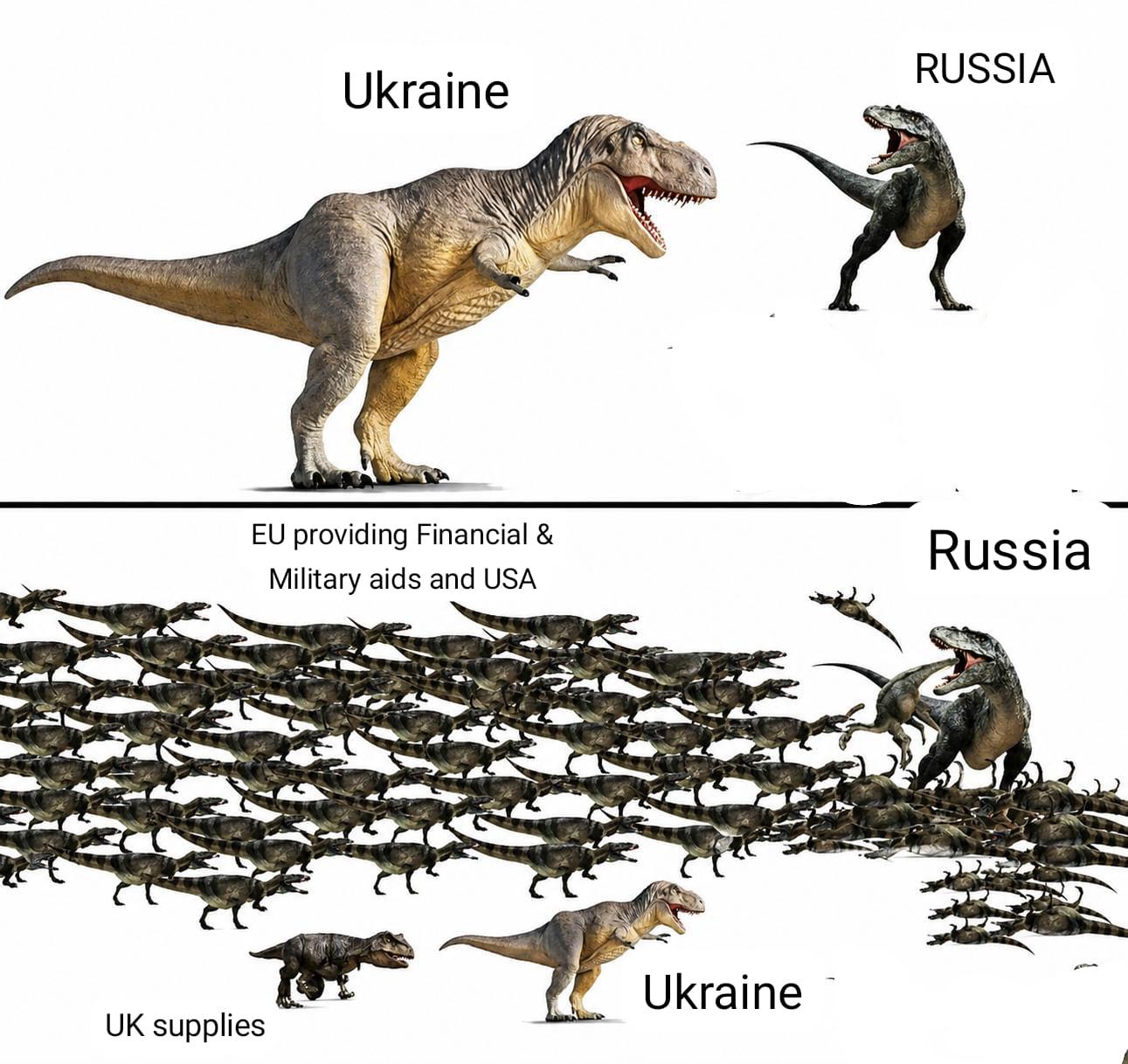
UkraineWarDinosaurs

People keep asking when World War III will begin. They are asking the wrong question. Europe is already behaving as though it is at war. I have warned for years that the politicians in Brussels would never allow peace because the sovereign debt crisis requires an external enemy. Every week, another European government announces more military spending, another mobilization plan, another emergency measure, another speech warning the public to prepare for conflict. This is no longer speculation. It is policy.

Now Poland’s foreign intelligence chief, Col. Paweł Szota, has made one of the clearest admissions yet. He warned, “The level of Russian aggression is very high, and the risk of military confrontation is real.” He added that Poland “must operate as if war with Russia is inevitable because waiting until conflict begins would be too late. Those are extraordinary statements from the head of a NATO intelligence service. Governments do not talk this way unless they are already planning for the next stage.

Szota explained that Russia “is systematically pushing red lines, testing NATO’s responses,” and argued that the Kremlin views Poland and NATO’s eastern flank as “an obstacle to achieving its imperial ambitions.” He also warned that Moscow could continue the war in Ukraine for years, sacrifice its own economy, and expand hybrid operations against NATO members, including provocations in the Baltic region. Europe is no longer speaking about diplomacy. It is openly discussing escalation scenarios and military contingencies.

EU-Russia Sanctions: An Unsteady Deadlock - BTI Blog

This is precisely what our computer has been forecasting. The 2026 Panic Cycle was never simply about financial markets. It marked the acceleration of geopolitical instability. Governments always require a crisis when they cannot solve the debt problem. Europe is entering an economic depression while military budgets are exploding. Germany is debating conscription once again. Poland is rapidly expanding one of the largest armies in Europe. NATO members are increasing defense spending toward 5% of GDP. Civil defense campaigns are appearing across the continent. These are not the actions of governments expecting peace. They are the actions of governments preparing their populations psychologically and financially for war.

Once governments convince themselves war is inevitable, they begin making decisions that ensure it becomes inevitable. Every mobilization by one side is interpreted as aggression by the other. Every sanctions package invites retaliation. Every troop deployment produces another deployment in response. History shows that wars often become unavoidable long before the first shots are fired because political leaders eliminate every possible path back to diplomacy.

I have repeatedly stated that the sovereign debt crisis and the War Cycle are converging. Europe cannot finance its welfare state, its Green agenda, and endless military expansion simultaneously. Something has to give. Throughout history, governments buried under debt have repeatedly turned toward external conflict because war postpones domestic political reckoning. It creates an excuse for deficits, emergency powers, censorship, and capital controls while redirecting public anger toward a foreign adversary.

Ukraine has become the catalyst, not the destination. The computer has consistently warned that 2026 marks the beginning of the Panic Cycle, 2027 carries the highest risk of broader international war, and the economic consequences will intensify into 2028 as recession and civil unrest spread. Europe is no longer preparing to avoid war. Its own intelligence chiefs are now publicly telling their citizens to prepare because they increasingly believe war is coming. That should concern every investor far more than the daily fluctuations in the stock market.

June ADP – Continued Trend in Labor


Posted originally on Jul 2, 2026 by Martin Armstrong |  

Jobs

The employment picture continues to soften despite every attempt to paint the economy as resilient. ADP reported that private employers added only 98,000 jobs in June, below expectations of roughly 118,000 and down from May’s 122,000. Nearly all of the hiring came from the service sector, particularly education and health services, while leisure and hospitality barely managed to add jobs despite the FIFA World Cup taking place across North America. Manufacturing remained weak, and natural resources and mining continued to shed workers.

The report exposes an economy that is slowing rather than collapsing. That distinction is important. ADP Chief Economist Nela Richardson admitted that it is taking people longer to find work while some industries are simultaneously struggling with labor shortages. That is precisely the type of distortion that emerges late in an economic cycle. Businesses are becoming increasingly cautious about expanding payrolls, yet structural shortages remain because the labor force no longer matches where demand exists. This is not the healthy labor market politicians continue to advertise.

Looking beneath the headline, the gains were concentrated in a handful of industries. Education and health services accounted for nearly half of all new jobs, while financial activities added modestly and information technology posted only small gains. Small businesses generated most of the hiring, adding roughly 53,000 positions, while medium-sized companies added 29,000 and large firms only 25,000. Wage growth continues to cool. Workers who remained with the same employer saw annual pay gains of 4.4%, while job changers received 6.6%, suggesting the intense wage competition that followed the pandemic has eased considerably.

The financial markets immediately interpreted the weaker report as increasing the odds of lower interest rates. That is the standard Keynesian response, but it completely ignores the sovereign debt crisis that is unfolding globally. Markets have become conditioned to believe every sign of economic weakness guarantees monetary easing. The problem is that inflation has not disappeared, geopolitical tensions continue to threaten commodity prices, and governments everywhere remain buried under unprecedented debt. The next Federal Reserve chairman cannot simply slash rates because Wall Street demands it. As I have explained before, if inflation begins to accelerate again, policy makers will be forced into a position they would rather avoid.

Our computer has been warning that 2026 would be a Panic Cycle year marked by increasing volatility rather than outright economic collapse. This report fits that model perfectly. Employment is no longer accelerating, consumers are becoming more cautious, and confidence is beginning to erode. The labor market is usually one of the last pillars to weaken before broader economic conditions deteriorate. Once businesses stop hiring, consumer spending inevitably slows, corporate earnings come under pressure, and governments experience declining tax revenues at precisely the moment debt servicing costs continue to rise.

The official government employment report will be released shortly, and it may differ from ADP because the methodologies are not the same. Nevertheless, the broader trend is becoming increasingly difficult to ignore. Hiring has slowed, job seekers report that it is taking longer to find work, and businesses remain reluctant to expand despite years of government spending and monetary stimulus. This is exactly the type of environment our computer has projected as we move toward the more volatile period ahead.

July Conference is For Everyone


Posted originally on Jul 1, 2026 by Martin Armstrong |  

Understanding the World Economy

Just to clarify, this conference is open to all. I was asked to present a session on “how the world works” as a way to pass knowledge on to the next generation, and I’m happy to say I’ve committed to doing it. So here it is.

Please note: the book will be given only to those who attend the conference in person. For anyone unable to attend, a recorded video will be made available after the event. Since we’re keeping costs low, we won’t be live-streaming—so the video will be offered separately, and you won’t need a conference ticket to purchase it.

The book itself will also go on sale to the general public after the conference concludes.

European Taxpayers Spend 3.9B Euros on Drones for Ukraine


Posted originally on Jul 1, 2026 by Martin Armstrong 

Wartime Assistance to Ukraine from the US and EU - CEPA

The European Union just sent another €3.9 billion to Ukraine to buy drones. This is not humanitarian aid. This is war financing. Reuters reported that the latest transfer is part of the EU’s new €90 billion loan program designed to keep Kyiv funded through 2026 and 2027. The money is being directed toward Ukraine’s drone procurement, meaning European taxpayers are now openly financing the weapons system that has become central to this war.

Do not let anyone pretend Europe is a neutral party. The EU Council itself says support for Ukraine has reached €211.3 billion since the war began. That figure includes military, financial, humanitarian, and refugee-related support. Now Brussels is adding a €90 billion loan on top of that to cover Ukraine’s budget and defense needs for the next two years. This is not charity. This is Europe admitting it intends to keep the war going because Ukraine cannot finance it on its own.

The EU sent nearly €2.8 billion earlier in June, Reuters reported another €3.2 billion tranche under the broader loan structure, and now another €3.9 billion is being pushed out for drones. Ukraine’s reconstruction costs are estimated at $588 billion over the next decade, while Kyiv is signing more than 160 recovery agreements worth over €10 billion. Europe is no longer merely supporting Ukraine. It is building the financial architecture for a permanent war economy.

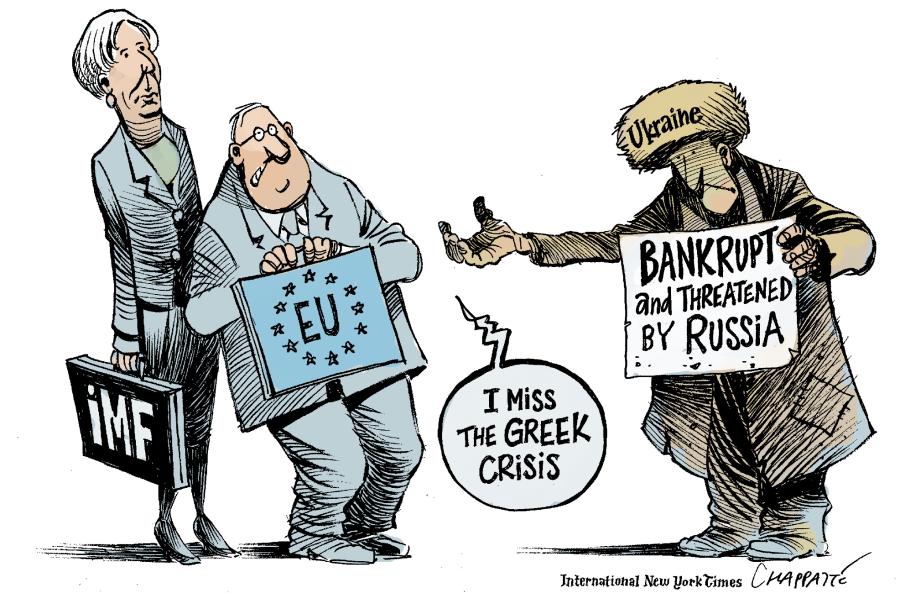
The Ukrainian problem | Globecartoon - Political Cartoons - Patrick Chappatte

This is precisely what I have warned about with the War Cycle. Governments buried under sovereign debt always need an external enemy. Europe cannot pay for its welfare state, its green agenda, its migrant crisis, its collapsing pensions, and now a permanent military commitment to Ukraine. Yet Brussels keeps borrowing, spending, and pretending this is sustainable. It is not. Debt becomes the weapon. War becomes the excuse.

They told the people this was about defending democracy. Then they censored dissent. They told taxpayers this would be temporary. Now they are financing Ukraine through 2027. They told everyone sanctions would collapse Russia. Instead, Europe entered depressionary conditions while Russia adapted. Now they are funding drones because the battlefield has shifted into a technological meat grinder.

The most disturbing part is that Europe is already acting as if it is at war. It is restricting Ukrainian men of military age from receiving new refugee protections, increasing defense spending, discussing conscription, and financing weapons production. The European Commission wants temporary protection extended until March 2028, but newly arriving Ukrainian men of military age without authorization from Kyiv may be excluded.

Europe is not trying to end this war. It is funding the next phase. The computer has warned that 2026 is a Panic Cycle, 2027 carries the serious risk of broader war, and 2028 brings the economic consequences. This latest €3.9 billion is not just another payment. It is another step down the road to a conflict Europe’s leaders seem determined to create.

Open Borders Contributed to Real Estate Inflation


Posted originally on Jul 1, 2026 by Martin Armstrong |  

MigrantCrisis

Politicians continue insisting that mass migration carries no economic consequences. Anyone who questions the policy is immediately accused of being anti-immigrant. That has always been the tactic. Rather than debate the economics, they attack the person asking the question. Yet reality eventually catches up with political slogans, and now even economists are beginning to quantify what common sense should have told us years ago.

A new working paper from economists at the Federal Reserve Bank of Dallas examined the unprecedented surge in unauthorized immigration between 2021 and 2024. The researchers estimate that unauthorized immigrant workers accounted for roughly 30% of employment growth in the average metropolitan area during that period. More importantly, they found that in markets where housing supply could not expand quickly enough, a 1% increase in unauthorized worker inflows was associated with approximately a 2.2% increase in home prices and about a 1.4% increase in rents.

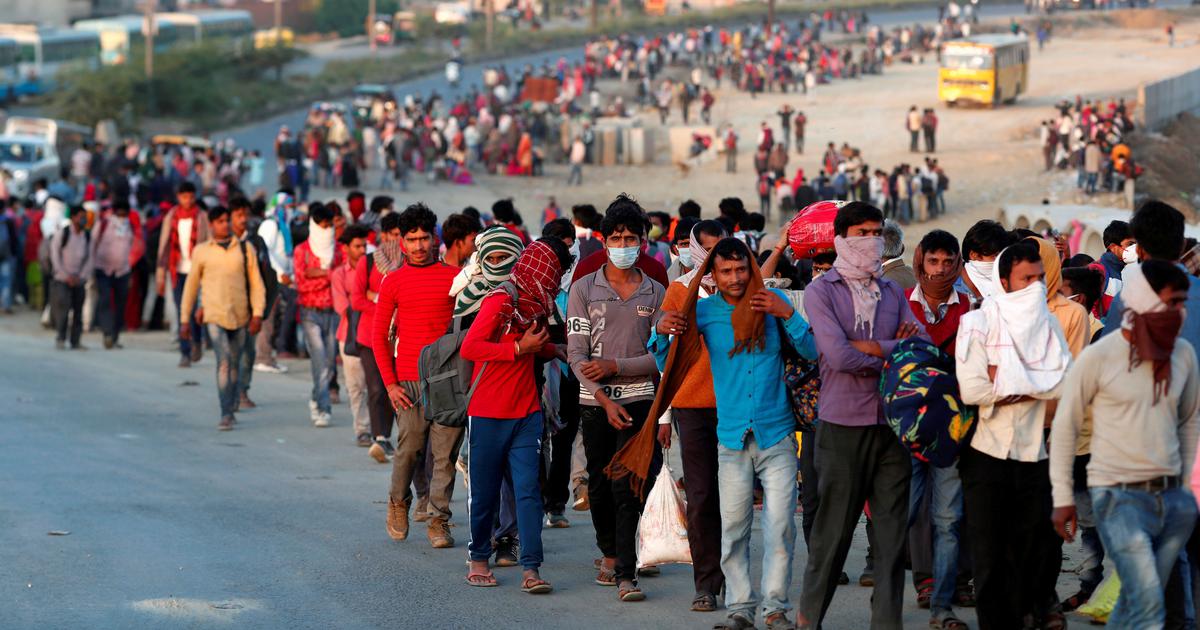
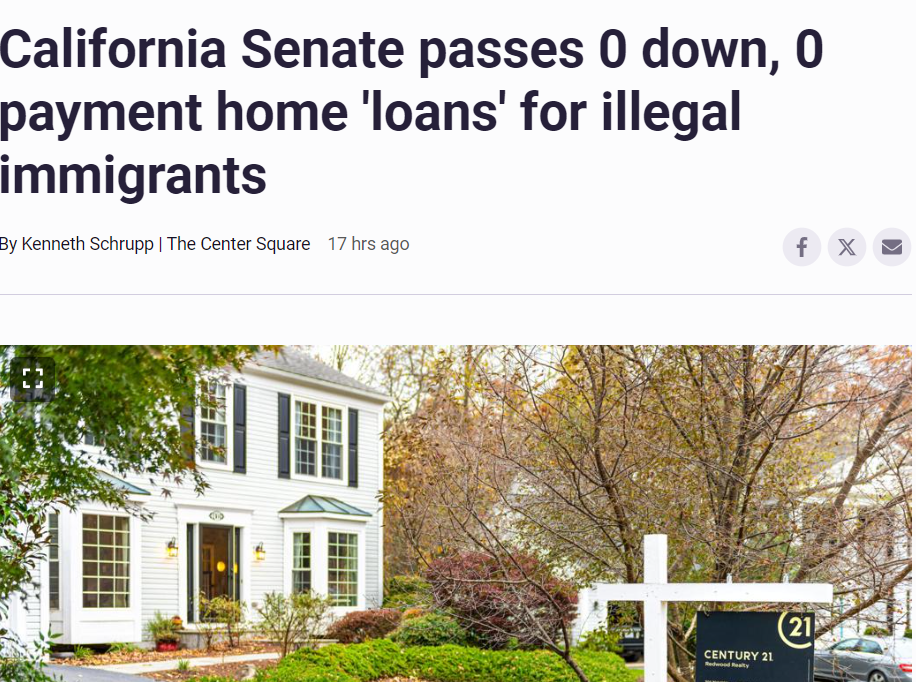
California.Migrant.FreeHousing
migrantcrisis.sanctuarycities.democrats

When population rises rapidly while housing construction fails to keep pace, prices climb. More people competing for a limited number of homes means higher prices. Demand rises faster than supply. The laws of supply and demand do not disappear because politicians prefer open borders. The Federal Reserve researchers also noted that housing construction did not expand sufficiently to absorb the additional demand, leaving existing residents competing for the same inventory. This is basic economics that governments have chosen to ignore.

The numbers illustrate just how severe the housing shortage has become. Freddie Mac estimates the United States remains short roughly 3.7 million housing units. The National Association of Realtors has repeatedly reported that existing home inventory remains well below historical norms, while the median existing-home price reached another record high during 2025. Meanwhile, mortgage rates have remained around 6% to 7% for much of the past two years, dramatically increasing monthly payments and pushing homeownership further out of reach for younger Americans. The result has been exactly what our computer projected years ago, employed adults increasingly remaining with their parents because housing has become unaffordable.

Politicians will inevitably try to blame investors, landlords, or speculators. Those factors exist, but they are only part of a much larger picture. Housing costs have also been driven higher by inflation, elevated interest rates, soaring insurance premiums, rising construction costs, zoning restrictions, and years of underbuilding following the 2008 financial crisis. Mass immigration adds another layer of demand on top of an already constrained market.

Civil unrest rises whenever governments ignore economic reality. Housing affordability has become one of the defining issues across the Western world, not just in the United States but throughout Canada, Britain, Australia, and much of Europe. You cannot continue adding demand while restricting supply and expect prices to remain stable.

The Drone Has Replaced the Tank


Posted originally on Jul 1, 2026 by Martin Armstrong |  

Hi Tech World War III

Military strategists are still fighting the last war while the battlefield has already changed. Every major conflict throughout history has been defined by a technological revolution. Gunpowder ended the age of castles. Tanks transformed World War II. Precision missiles reshaped modern warfare. Now we have entered the age of the drone. The military that cannot dominate the skies with unmanned systems will lose, regardless of how many tanks, aircraft, or soldiers it possesses.

South Korea has reached the same conclusion. Its Defense Ministry announced that it will train approximately 500,000 soldiers, sailors, airmen, and marines as “drone warriors.” Defense Minister Ahn Gyu-back said every service member should become as proficient with drones as they are with their personal weapons. The plan calls for procuring 11,000 commercial drones by the end of 2026, expanding to 60,000 training drones by 2029, while also acquiring more than 20,000 low-cost combat drones by 2030. Seoul is accelerating production of loitering munitions, AI-enabled drone swarms, laser weapons, and microwave systems designed to destroy incoming drones.

They are responding to the lessons of Ukraine, where inexpensive FPV drones costing only hundreds or thousands of dollars routinely destroy tanks worth millions. The battlefield has become saturated with unmanned aircraft. Ukraine plans to manufacture roughly 7 million military drones in 2026 after producing about 4 million in 2025. According to Ukrainian officials, drones now account for the overwhelming majority of battlefield strikes, fundamentally changing military doctrine. Entire branches of both the Ukrainian and Russian militaries are now dedicated solely to unmanned systems.

A modern drone operator can eliminate armor, artillery, supply convoys, or individual soldiers from miles away while sitting in relative safety. Fiber-optic drones have largely defeated electronic jamming. AI-assisted targeting is reducing operator workload. Swarm attacks can overwhelm traditional air defenses that were designed to intercept aircraft, not hundreds of inexpensive autonomous systems arriving simultaneously. Ukraine has even developed interceptor drones whose sole mission is to hunt other drones, creating an entirely new layer of aerial combat.

South Korea is not alone. Russia formally established its Unmanned Systems Forces, with Ukrainian military estimates claiming the branch could expand from roughly 80,000 personnel today to more than 165,000 during 2026 and perhaps over 200,000 by 2030. NATO countries are pouring billions into drone production, counter-drone technologies, autonomous weapons, and electronic warfare. The United States, China, Israel, Turkey, and Europe are all racing to build domestic drone industries because they understand the next war will not be won by the side with the largest army. It will be won by the side that can produce, replace, and innovate faster than its opponent.

This is precisely why I have warned that the War Cycle is changing the global economy. Wars no longer require decades to build fleets of battleships or thousands of heavy tanks. A nation with sufficient manufacturing capacity can produce tens of thousands of drones every month. The barriers to entry have collapsed. Software updates now matter as much as ammunition. Engineers have become as important as infantry.

The defense industry is no longer limited to traditional contractors producing aircraft carriers and fighter jets. Semiconductor manufacturers, AI companies, battery producers, optics firms, communications specialists, robotics companies, and rare-earth miners have all become part of the defense sector. This is why governments are scrambling to secure critical minerals, expand chip production, and protect supply chains. They are preparing for a world where industrial capacity determines military survival.

Our computer has consistently projected that 2026 marks the acceleration of the international War Cycle. The military transformation unfolding before our eyes confirms that forecast. The next great conflict will not resemble Iraq, Afghanistan, or even the opening stages of Ukraine. It will be fought by autonomous systems, artificial intelligence, electronic warfare, and millions of inexpensive drones operating continuously across every battlefield. The drone has become what the machine gun was in World War I and what the tank became in World War II. Anyone who fails to recognize that reality is preparing for a war that no longer exists.

Trump Blamed for Killing 1300 Frenchmen?


Posted originally on Jun 30, 2026 by Martin Armstrong |  

Pulvar Audrey

Audrey Pulvar, deputy mayor of Paris for international relations, on social media.

Blames Trump for the 1300 deaths in France from the Heat Wave

She wrote:

“Dear American journalists and social media ‘influencers’: for days, some of you have been criticising and making fun of Paris because the city does not have A/C in every room…OMG, this is so rich!”

“As the second-largest emitter of greenhouse gas emissions in the world, you bear a significant amount of responsibility for global warming and the consequences we, in France, are experiencing. Your cities, which are 90 per cent air conditioned, are not unrelated to this.”

No wonder Macron wants WWIII. Perhaps Russia will nuke all the air conditioning in the US to save France

Categories:France

Rare Earths in Kazakhstan


Posted originally on Jun 30, 2026 by Martin Armstrong |  

Geography of Kazakhstan - Wikipedia

The United States is now chasing critical minerals because Washington finally realized that outsourcing everything to China was national suicide. Tungsten is not some luxury commodity. It is used in missile warheads, fighter aircraft, semiconductors, and defense technology. Kazakhstan has one of the largest undeveloped tungsten deposits in the world, and the project could eventually produce around 12,000 metric tonnes per year, roughly equal to America’s entire annual imports.

But here is where the story begins to stink. According to India Today, before the Kazakhstan deal was finalized, the Trump administration was prepared to back the project with up to $1.6 billion in federal financing. Within weeks of negotiations, companies linked to Donald Trump Jr., Eric Trump, and Commerce Secretary Howard Lutnick’s family acquired financial interests in entities connected to the mining project.

Documents reviewed by The New York Times, as reported by India Today, show that Dominari Securities, an investment firm based in Trump Tower and partly owned by Donald Trump Jr. and Eric Trump, joined investors in acquiring a 20% stake in a company tied to the Kazakhstan venture. Around the same time, Cantor Fitzgerald, formerly led by Howard Lutnick and now overseen by his sons Brandon and Kyle, helped ASP Isotopes raise $210 million. Those transactions can generate millions in fees for an investment bank.

This is exactly why people no longer trust government. They are told every deal is about national security, then the same political families and connected banks somehow appear near the money. The article reports that companies connected to the Trump or Lutnick families have financial interests in at least 14 mining ventures pursuing projects backed by the U.S. government, involving more than $8.9 billion in federal financing or regulatory approvals. That does not prove illegality, but it absolutely raises the question every taxpayer should ask, who benefits?

The White House denied wrongdoing, saying, “The only special interest guiding the Trump administration’s decision-making is the best interest of the American people.” Eric Trump said he was “a passive investor with absolutely no management role.” Fine. Then disclose everything. If taxpayer financing is involved, if federal approvals are involved, and if the sons of the president or commerce secretary are financially positioned around the deal, the public has every right to demand full transparency.

This is how empires rot. Strategic resources become political prizes. Government financing becomes a pipeline for insiders. The public is told it is all for national security while the connected class quietly buys into the projects before the money flows. I have no problem with America securing tungsten. I have a problem when those close to power appear positioned to profit from government-backed deals.

The deeper trend remains clear. The world is moving from globalization into resource nationalism. Critical minerals are the new oil. China controls too much of the supply chain, and the United States must rebuild access to strategic materials. But if Washington turns that necessity into another insider enrichment scheme, then it will only accelerate the collapse in confidence. The resource war has begun, and the political class is already circling the spoils.

One Million Obamacare Filers Lack Social Security Numbers


Posted originally on Jun 30, 2026 by Martin Armstrong |  

Social Security Cards

How many times have politicians stood before the American people claiming Social Security is “running out of money?” That is the biggest fraud of all. I have said for decades that Social Security is nothing more than a Ponzi scheme. Your payroll taxes are not sitting safely in an account waiting for retirement. They were spent by Washington years ago. The so-called Social Security Trust Fund is filled with government IOUs, not real assets. Every administration kicked the can down the road while pretending there was a trust fund. There never was. They borrowed every dime and spent it on everything except what workers were promised.

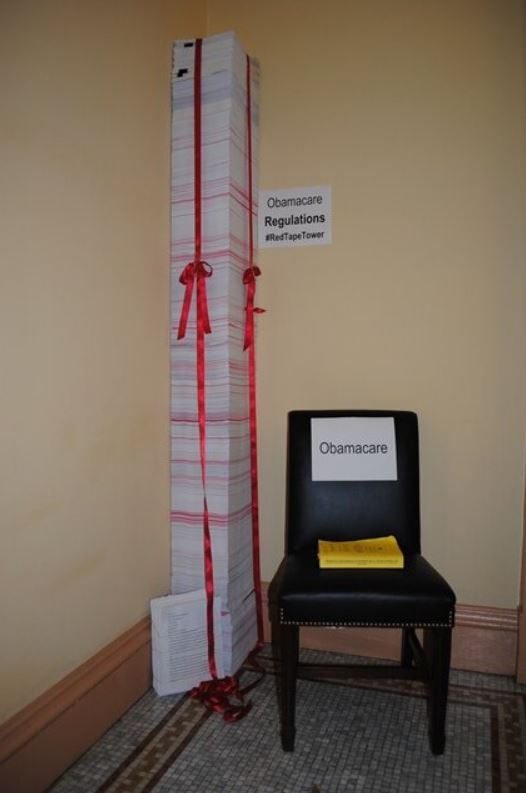
Now look at what has surfaced inside Obamacare. According to Health and Human Services Secretary Robert F. Kennedy Jr., more than one million Obamacare enrollments lacked Social Security numbers. Kennedy stated, “The Obamacare marketplace is plagued by fraud in large part because the Biden administration dismantled basic program integrity guardrails.” He then asked the question every taxpayer should be screaming at Congress: “Why are we paying people we don’t know if they actually exist?” The administration says it has already removed roughly 2.8 million improper enrollments after reviewing eligibility and broker activity, yet they estimate over one million broker-assisted enrollments were submitted without Social Security numbers. That should terrify every American who pays taxes.

Want a quick look at the scope of Obamacare fraud and zero-claim  enrollment? These two charts give an overview of the numbers: ? Improper  enrollees ? Zero-claim enrollees ? Automatic renewals ?

Dr. Mehmet Oz exposed another layer of the scandal. “Some of these agents refuse to follow basic rules like providing their clients’ Social Security number. That, my friends, is a huge red flag.” CMS officials say certain brokers enrolled people without their knowledge simply to collect commissions from taxpayers. Once again, Washington’s answer is never accountability. Billions disappear, fraud flourishes, nobody goes to prison, and then politicians return to the microphone demanding more money from the productive class.

Meanwhile, they continue claiming Social Security is going broke because Americans are living too long. Give me a break. In 2025 alone, Social Security paid roughly $1.6 trillion in benefits to more than 73 million Americans. Workers continue paying 12.4% of wages into the system through payroll taxes, yet every surplus collected for decades was loaned directly to the federal government and spent. Today, the Trust Fund holds Treasury securities, promises from a government already drowning in over $40 trillion of federal debt. They stole from one pocket, stuffed an IOU into the other, and now expect everyone to pretend the money is still there.

This is what governments do when they reach the end of the sovereign debt cycle. They waste trillions overseas, finance endless wars, expand every bureaucracy imaginable, tolerate massive fraud, and then have the audacity to tell retirees they must sacrifice because “the system isn’t sustainable.” No, Washington isn’t sustainable. Social Security did not fail because retirees collected too much. It failed because politicians treated workers’ retirement savings as their personal checking account.

Do not expect this to improve. Governments never admit failure. They always look for someone else to blame. First, it was the rich. Then it was retirees. Tomorrow, it will be anyone with savings left. As confidence in sovereign debt continues to erode into the next phase of this crisis, every entitlement program becomes another political weapon. The real crisis has never been Social Security. The real crisis is a government addicted to debt that has spent future generations into oblivion while pretending every promise can somehow be honored.

Understanding the World Economy Free Download


originally on Posted Jun 29, 2026 by Martin Armstrong |  

Understanding the World Economy

For this July 25th Conference for the Next Generation, I have written a book that those attending will be able to get if the printer finishes it on time. This will be the first edition of knowledge I and trying to pass on. We won’t be able to live stream this event because are trying to keep costs to a minimal so that anyone can join. I am including the the first 86 pages here as a preview, which you can download. I won’t be doing this again. We are trying to keep this at cost. Even renting a room these days is $10,000.

NEXT Generation-F Part I

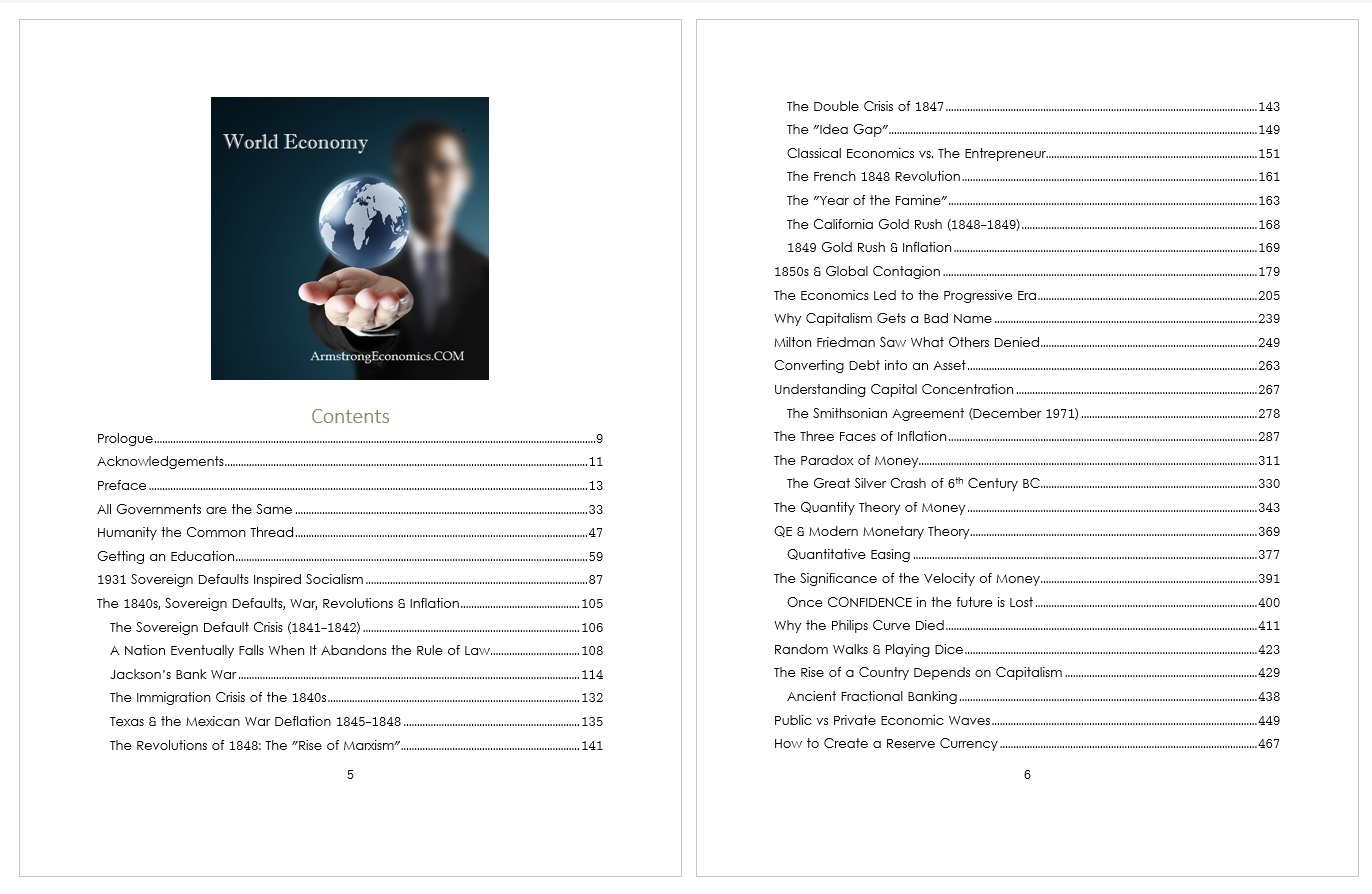
Understanding the World Economy Index 1
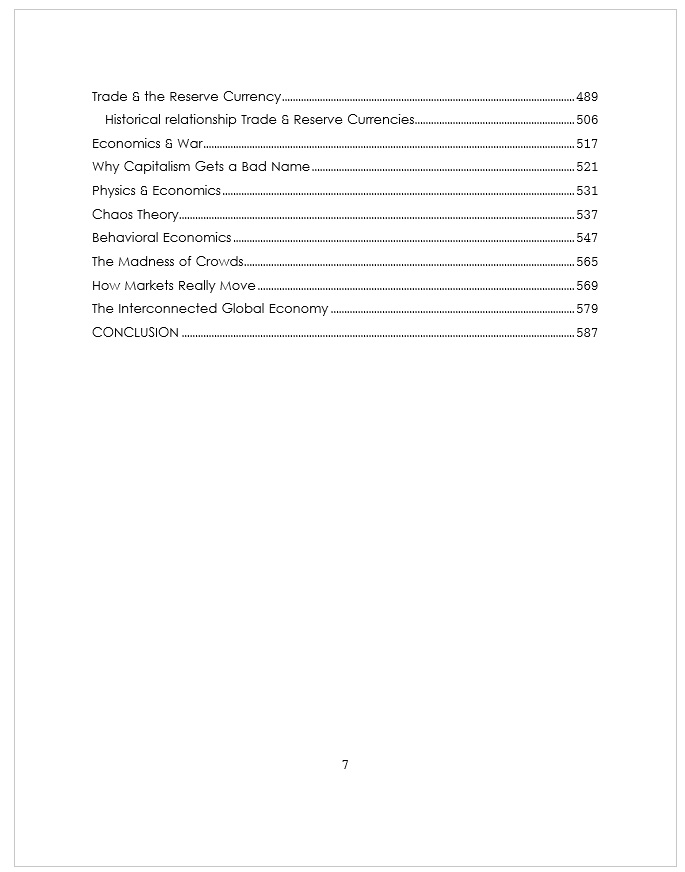
Understanding the World Economy Index 2