A newly published peer-reviewed study in Scientific Reports confirmed what many refused to even consider during the height of the COVID narrative—COVID harmed fertility rates. Researchers examined hundreds of men and found that those exposed to COVID-19 showed statistically significant declines in key fertility markers. Total sperm count dropped, progressive motility declined, and DNA fragmentation increased, which is critical because it directly impacts the ability to conceive and carry healthy offspring.
In the longitudinal portion of the study, where they tracked the same men before and after infection, the deterioration was unmistakable. Total sperm count, motility, and quality all declined after infection, while DNA fragmentation rose. In plain terms: the data showed that after COVID, sperm became fewer, slower, and more damaged.
Now this is where the real issue emerges, and it is precisely where governments and institutions become very quiet. We have hard clinical evidence that the virus itself had measurable negative effects on male fertility, and yet, the powers that be are still refusing to prosecute anyone for creating, studying, or “leaking” the virus.
COVID was not simply an “act of nature” as the public was led to believe. There is a growing body of evidence, including congressional investigations and internal communications, showing that gain-of-function research was funded, directly or indirectly, through U.S. agencies and funneled into laboratories studying bat coronaviruses. Dr. Anthony Fauci repeatedly denied under oath that such funding existed, only for documents later to surface showing that organizations like EcoHealth Alliance had indeed received grants tied to this type of research.
We shut down the global economy, mandated experimental injections, censored dissent, and now we are discovering measurable biological consequences from the virus itself, including potential long-term damage to fertility. Yet those who approved the funding, those who oversaw the research, and those who controlled the narrative have faced no meaningful accountability.
The population has been declining across the developed world long before COVID ever appeared because people no longer have confidence in the future. When you destroy economic stability, when you drive up the cost of living, when young people cannot afford homes or raise families, birth rates fall. That is a natural consequence of economic mismanagement. We have seen this countless times throughout history, from the collapse of Rome to modern Europe.
What COVID did was accelerate a trend that was already in motion, and that is the key point everyone keeps missing. Population decline does not happen overnight from a single event. It unfolds when confidence in the future begins to collapse, and COVID became the catalyst that pushed that process forward far more aggressively than anything we have seen in modern times.
You shut down the global economy, you destroy small businesses, you force people into isolation, and you create widespread uncertainty about health, employment, and stability. That does not inspire people to start families. We saw birth rates decline across multiple developed nations following the lockdown period, and that was entirely predictable. When people do not know if they will have a job next year, or if the world is becoming increasingly unstable, they postpone or abandon the idea of having children altogether.
At the same time, you have to factor in the biological side that is only now beginning to emerge in the data. Studies have already shown that COVID infection itself can reduce sperm quality, lower motility, and increase DNA fragmentation. That introduces another layer to the equation as there is evidence of a physical component that may also be contributing to reduced fertility in some cases. When you combine economic uncertainty with potential biological impacts, the effect on population becomes compounded.
Posted originally on Apr 20, 2026 by Martin Armstrong |
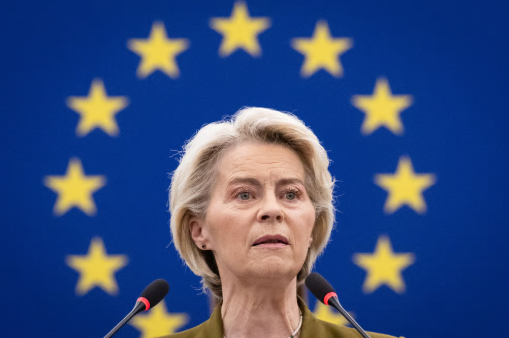
The defeat of Viktor Orban in Hungary last weekend may have been celebrated in Brussels with their typical propaganda that Orban had established single-party rule in Hungary. The ultimate hypocrisy is that this claimed victory for democracy is celebrating the one-minded globalist party to govern Europe and ultimately the world, which is neither democratic nor accountable to citizens. In Hungary, people could vote for a leader, but in the EU, Ursula never stood for elections.
The people of Hungary did not vote directly for Viktor Orbán. Instead, Hungary operates under a parliamentary system, in which the Prime Minister is elected by Parliament.
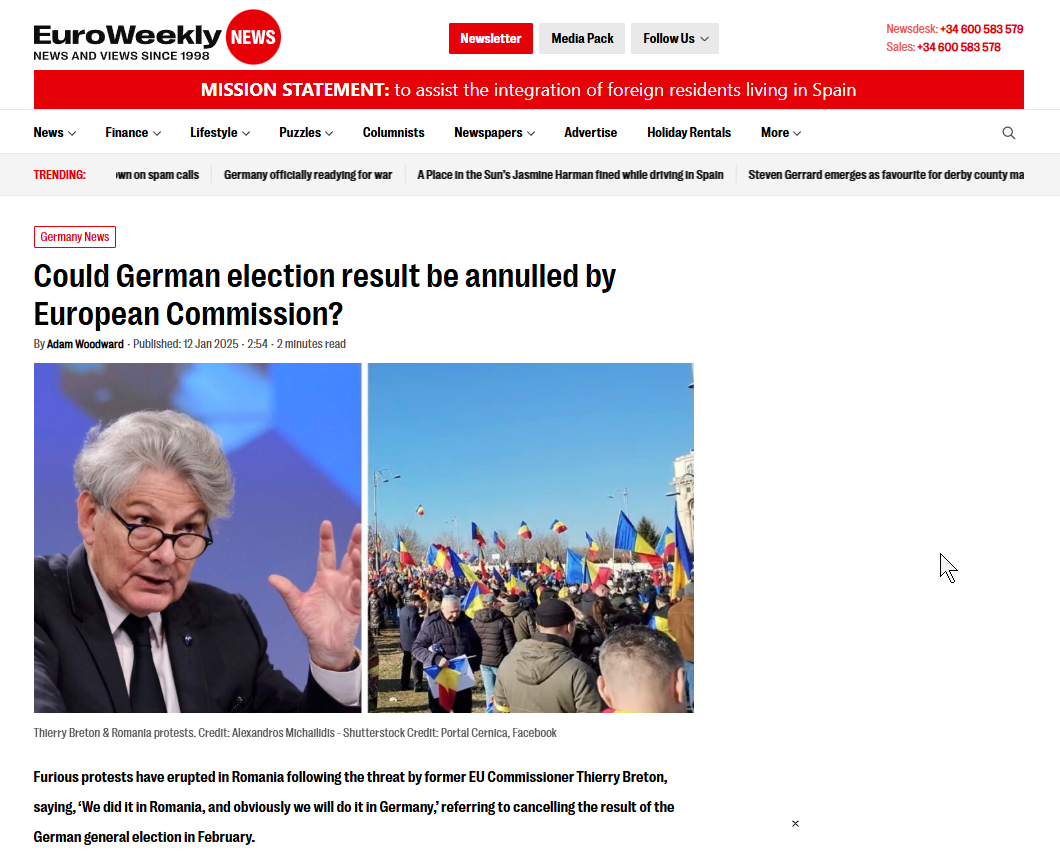
The Ursula Von der Leyen directed the European Union to take sides in the Hungarian election and to undermine Orban, who asserted national priorities in disputes with the EU. The EU Commission rigged the Italian elections staging a coup against Berlusconi in Italy because he too opposed centralized control. Speaking on television, Thierry Breton, former European Commissioner for Internal Market, proclaimed that if the European Commission decides that the election in Germany was in some way influenced by foreign interference, they would seek to annul the result of the election in the same way they have just done with the Romanian election. Even the Scottish Independence vote in 2014 was rigged, The people sent in to count the votes were from the EU.
The EU has interfered in the Scottish, Italian, Romanian, Hungarian, and even the German election all to retain power. Ursula even sent in her spies to infiltrate the government. No sooner had Orban conceded defeat than a jubilant President Ursula von der Leyen called for the final coup de grace to national identity and sovereignty: the elimination of nations’ ability to stand against EU policies. So much for democracy.
Ursula did everything to overthrow Orban because of his ties to Russian President Vladimir Putin and his lack of support for Ukraine. Ironically, the EU accused Orban of being authoritarian and corrupt, which seemed to be projecting their agenda on Orban.
Now we will see the unintended consequences of this election. Ursula interfered in the Hungarian election to elect the pro-EU Peter Magyar. He would surrender Hungary’s national dignity and render it subservient to Ursula’s dictatorial commands to achieve the EU’s ultimate exercise of authoritarian power. The EU was refusing to provide billions in funding to Hungary because Orban objected to the war in Ukraine.
Ursula has already given Magyar a list of 27 demands he must meet before she will hand over those billions. She publicly said that the EU needed to “use the momentum now” to consolidate its authoritarian power. She fails to comprehend that this authoritarianism is what will ultimately break the EU into pieces.
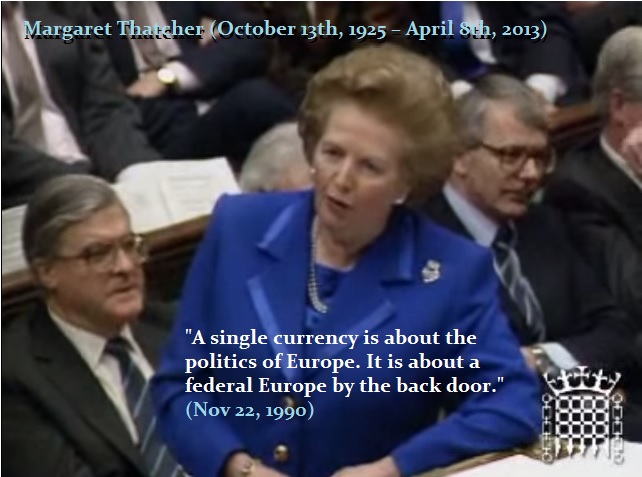
Ursula now has the audacity to eliminate the last vestige of national sovereignty, promising from the outset that the EU would never become tyrannical, since nothing would pass unless it was unanimous. She is pushing to eliminate the veto exercised by its member states. She wants absolute dictatorial power by eliminating member states’ control over their domestic policy, ensuring that they are forced to adhere to the priorities and values of the EU majority. This was precisely what Margaret Thatcher warned would be the outcome.
Amazingly, Ursula has flipped everything upside-down. She insists that the EU will now become a dictatorial regime no longer concerned about member state sovereignty. She has publicly stated: “Moving to qualified majority voting in foreign policy is an important way to avoid systemic blockages, as we have seen in the past.”
I have warned that centralized governments are the very reason empires, nations, and city-states have collapsed throughout history. The EU is following the same pattern, and this deliberate rigging of the Hungarian election demonstrates that it is Ursula who seeks dictatorial power – not Orban. Ursula is not just terminating national sovereignty; she is calling for a single European military command, completing a major globalist goal.
In the Peace Plan (Free Download) I wrote to present to President Putin at the request of the White House, I stated that our real enemy was NOT Russia but the EU. We have rejected the insane environmentalist and WOKE agendas of the EU that have destroyed their future and reduced its economic growth to nearly 50% of the United States, wiping out the living standards of Europeans in the years ahead.
The EU has torched the idea of free speech as part of its totalitarian agenda. Not only are member states to be stripped of a veto over centralized policies by unelected people in the halls of the EU, but the same policy is now being applied to individuals.
We are seeing European pressure to impose hate speech, which is opening the door to the denial of free speech. We saw that with COVID, where anyone who objected was silenced and de-platformed.
This is the threat to our American way of life. They seek to eliminate personal rights in the name of equality. That is why everything is headed for disaster as we head into 2032. This push for totalitarianism in the EU is inherently unstable and will ultimately collapse. We have witnessed how the EU has worked relentlessly to dismantle national sovereignty, cultural identity in its member states, and eliminate free speech. Historically, such systems always collapse as they have moved into the final stage of tyranny.
The world is under threat from this globalist agenda of ultimate power. We must take this seriously, for this is the threat of a global governance system of a one-world government posed in the backrooms and hallways from the WEF to the corridors of the EU, seeking to now infect passageways within Washington and Capitol Hill as well.
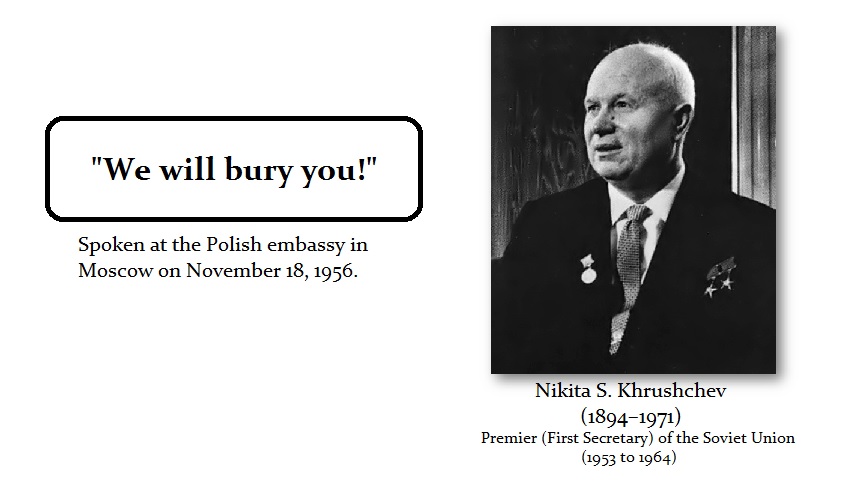
When Ursula Von der Leyen said she has the “momentum now” for the globalists, the enemy is the EU, and it seeks to spread globalism, no different from Nikita Khrushchev, who once boasted, “We will bury you” as Communism would conquer Capitalism. This is the same thing with a different label, allowing private ownership but regulating and taxing everything while exercising complete and utter control over what you say, where you live, and what you eat.
Posted originally on Apr 19, 2026 by Martin Armstrong |
QUESTION: Marty, I know you taught Socrates how to analyze rather than what. I remember you saying it checks every possible avenue, because you cannot predict what might replace fossil fuels as an energy source in the future. I really am amazed, and I can see why they tried to get you to turn over the code. For nothing on this planet has been able to forecast this Iran war so accurately, right up to the ceasefire and its collapse this week, even with Socrates having a Directional Change.
COVID sent many companies into bankruptcy. Spirit Airlines is reportedly facing potential liquidation as early as this week. The airline is struggling with rising fuel costs and ongoing bankruptcy issues, which have significantly impacted its financial stability. When I looked at the various airline stocks, they, too, are targeting June onward.
Is this what Socrates is doing, checking also the industries dependent on energy that this war has created a crisis?
Robert
PS: Do you think if we all wrote to Trump, he would bring you into that Situation Room to save our country and the world?
ANSWER: Yes, Socrates is correlating so many things that no human analyst could possibly match in 5 minutes, which would take weeks of manual work. I taught it how to analyze. I did not create a neural net and hoped it would figure it out on its own. That approach is why IBM sold Watson for scrap. I cannot explain completely. I did my best to incorporate my personal experiences and knowledge of analysis.
This war is an absolute disaster in so many ways, from economics to geopolitics. Perhaps if everyone wrote a letter to Trump, enough might be able to circumvent the Neocons. Who knows? Yet, behind the headlines, Iran is the largest oil reserve in the world. The Iranian people are certainly among the most educated in the world.
From a youth literacy standard, Iran ranks 9th in the world, with a youth literacy rate exceeding 99%, closing the gender gap and placing it above many developed nations. This is a dramatic increase from 36% in 1979. Ironically, the Islamic Revolutionary Government has educated its youth. When we look at how Iran ranks among countries with Science & Engineering graduates, it ranks 2nd globally, with 31% of its university students in science and engineering fields. Iran’s education system excels at producing literate youth and a high volume of university graduates, particularly in science and engineering.
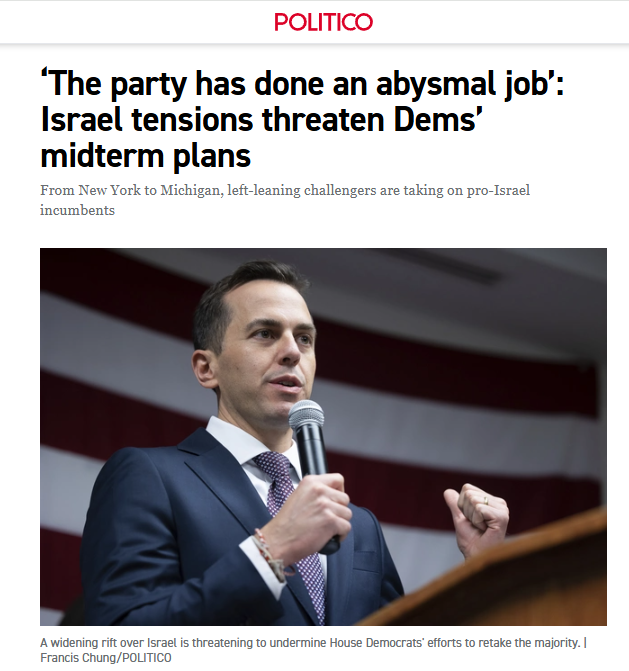
What our sources are showing is that Netanyahu is single-handedly destroying the image and support for Israel. The polling in the USA of Israel has collapsed among the youth, and this is hitting Congress very hard. Those who once supported Israel are becoming critics. Every Democrat in the Senate who has their eye on a presidential run in 2028 voted against arms sales to Israel. Thus, some 40 Democrats in the Senate voted to block arms sales to Israel. That has jumped from just 15 last year. In the House, some Democrats are also turning their back on Israel, which was the lunatic fringe 5 years ago.
The holdouts are the Evangelicals and older Republicans living in yesterday. Nevertheless, support for Netanyahu among the American public has significantly eroded, reaching new lows in 2025 and continuing into 2026. A major April 2026 poll by Pew Research highlights this shift, with 59% of U.S. adults now saying they have little or no confidence in Netanyahu to “do the right thing regarding world affairs.” This is a notable increase from 52% in 2025. Only 27% of Americans express trust in his leadership. Overall, favorable views of Israel have also dropped. 60% of U.S. adults now hold an unfavorable view, up from 53% in 2025. In 2022, favorable views stood at 55%.
This negative sentiment is most pronounced among Democrats. Approximately 80% of Democrats now view Israel unfavorably, and 76% lack confidence in Netanyahu. The 58-point partisan gap in Netanyahu’s favorability is the widest ever recorded. I wrote in the Special Report, The Fate of Israel, that even the USA will eventually abandon Israel because of Netanyahu.
Posted originally on Apr 17, 2026 by Martin Armstrong |
Iran is cleverly trying to divide the US from Israel with this latest proposal that they will open the Strait for the duration of the ceasefire between Israel and Lebanon. The Iranian Foreign Minister Seyed Araghchi made the announcement proposing opening the Strait in return for the 10-day ceasefire between Israel and Lebanon. Araghchi said in an April 17 post on social media.
“In line with the ceasefire in Lebanon, the passage for all commercial vessels through Strait of Hormuz is declared completely open for the remaining period of ceasefire, on the coordinated route as already announced by Ports and Maritime Organisation of the Islamic Rep. of Iran.”
As I have said, Jared Kushner and Steve Witkoff are Jewish, and you do NOT send them to negotiate with Iran with the involvement of Israel. Those who led the Iran negotiations with Vice President JD Vance not only lack the expertise and diplomatic experience needed to secure an agreement, but they are ethnically compromised in the Middle East when this is a religious war. They should be replaced forthwith.
Iran is not stupid. They understand that Trump is trapped by Netanyahu. This is turning back on Netanyahu. The question is will Netanyahu claim they violated the agreement by June to create the image to win reelection.
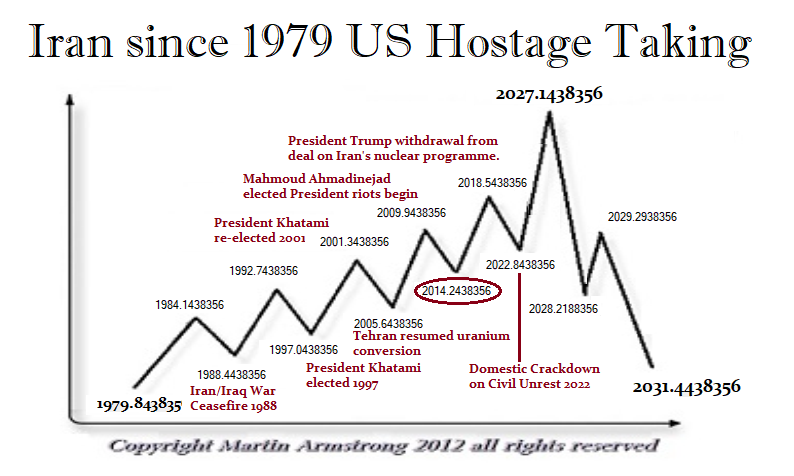
The nonsense that we cannot allow an Islamic country to have a nuke overlooks that Pakistan has nukes. Just because they are Islamic does not mean that they casually push the button. Like Pakistan, Iran sought nukes as a deterrent against Israel, which also has nukes. The excuse that they will have a nuke is not really the issue. It has always been that their rhetoric to boost their support among their religious following and to suppress their domestic opposition by painting them as supporters of evil. They have been always preaching Death of America and Israel for the last 47 years to retain power. We still see Iran will peak out in early 2027.
Posted originally on Apr 17, 2026 by Martin Armstrong |
COMMENT: Marty, you’re article about using digital tools to control our spending was spot on. Just this week, I had a situation with Coinbase where they would not let me transfer my USDT (Tether) out to buy something!
I had uploaded $12,000 in good U.S. funds from my bank account and then made the trade into the cryptocurrency. After that cleared, I tried to make the transfer out and they sent me a bunch of questions about fraud risk, which I answered. And then, once they determined that I’ve been a customer since 2022 and have had no issues, they still blocked my transfer. They weren’t familiar with the site I was sending the crypto to and didn’t approve it. They said that I could make the transfer after May 2nd. This was on April 2nd. I tried to appeal, but they said, ” No, that the decision is made by the computer, and there’s nothing they (a compliance person) could do.
I removed all my money, closed my account, and opened one on another site. Hopefully I won’t have the same trouble.
Jay
REPLY: This is the new world. Your money is under scrutiny. We are being drive back to barter. I’ll give you a can of beans for corn.
Posted originally on Apr 17, 2026 by Martin Armstrong |
The Banco Central do Brasil has raised gold’s share of reserves from 3.55% to 7.19% in just one year, effectively doubling its exposure and making gold the second-largest reserve asset after the US dollar, while total reserves stand at approximately $358.23 billion and the dollar’s share has declined to about 72%, marking a record low. This is not a marginal adjustment or routine diversification, it is a structural repositioning that reflects a growing unease with sovereign debt markets.
When a central bank reduces dollar exposure while increasing gold holdings, it is not acting randomly but responding to a shift in confidence, and this aligns directly with the broader trend we are witnessing globally as central banks collectively purchased roughly 863 tonnes of gold in 2025 and are expected to remain strong buyers into 2026. The driving forces behind this are not inflation in the traditional sense, but geopolitical fragmentation, the weaponization of reserves, and the realization that sovereign debt levels are no longer sustainable without continued central bank intervention.
Brazil’s move mirrors what we have been warning about for years, which is that capital flows, not trade balances, dictate the strength of currencies, and once confidence begins to erode in government debt, that capital begins to migrate into assets that are not someone else’s liability. Gold fulfills that role because it cannot be printed, defaulted on, or frozen by a foreign government, and this becomes critical in a world where sanctions and financial restrictions are increasingly used as political tools.
The significance of Brazil’s decision is that it is not repatriating gold like France or Germany, but instead reallocating reserves in a way that quietly reduces dependence on the dollar without triggering market disruption. This is often how such transitions begin, as they unfold incrementally until they reach a tipping point. This is not about abandoning the dollar overnight, it is about gradually preparing for a world where confidence in sovereign debt is no longer taken for granted.
The push toward digital currency is being framed as innovation and efficiency, but when you strip away the marketing language, what is unfolding is a structural transformation of the financial system that shifts control away from individuals and concentrates it within governments and central banks. The Bank for International Settlementshas confirmed that more than 90% of central banks are now actively researching, developing, or piloting central bank digital currencies, which is not coincidence or experimentation but a coordinated global direction. This aligns directly with what I have been warning, that when governments face a sovereign debt crisis they will turn to mechanisms that allow them to monitor and control capital flows because they cannot solve the debt problem through traditional means.
In the United States, more than 95% of transactions are already digital in some form, whether through credit cards, debit systems, ACH transfers, or mobile payment platforms, which means the infrastructure for surveillance is already largely in place. Cash has not been eliminated yet, but it has been marginalized, and that is the first step because once transactions become digital, every movement of money creates a permanent record. Governments already have the ability to access financial data through banks, but a central bank digital currency removes the intermediary entirely and places that visibility directly within a centralized system controlled by the state.
This is where the real shift takes place because a CBDC is not simply a digital version of existing currency, it is a programmable financial instrument. That means money itself can be controlled, restricted, or directed according to policy decisions. Transactions could be approved or denied in real time, spending could be limited to certain categories, and funds could even be given expiration dates to force consumption. These are not theoretical concerns as these capabilities have already been discussed openly in central bank reports and demonstrated in pilot programs around the world, including China’s digital yuan, which integrates payment systems with state oversight.
The connection to the sovereign debt crisis is critical because governments are reaching a point where they cannot sustain spending without either raising taxes, inflating the currency, or imposing controls on capital. Digital currency provides a mechanism to do all three simultaneously. Real-time taxation becomes possible because transactions can be monitored instantly, eliminating the lag between earning and reporting income. Capital controls can be enforced automatically by restricting transfers, preventing withdrawals, or limiting how funds are used. Inflation can be managed politically by directing spending into specific sectors or suppressing activity in others. This is the level of control that governments have never had before, and it changes the entire structure of the financial system.
The transition is being rolled out gradually because it cannot be imposed overnight without resistance. Digital systems will continue to coexist with cash and traditional banking for a period of time, but the direction is clear. As digital adoption increases, incentives will be introduced to encourage usage while restrictions on cash will slowly expand. Limits on cash transactions, reporting requirements, and regulatory pressure on banks are all part of this process. Eventually, participation in the digital system becomes not a choice but a necessity because alternatives are either restricted or eliminated.
There is also a geopolitical dimension to this shift because digital currencies can be used to bypass existing financial networks such as SWIFT, allowing countries to conduct transactions outside the traditional Western-dominated system. At the same time, within domestic economies, these systems give governments the ability to enforce policy at the individual level. This creates a dual structure where digital currencies are used externally to avoid sanctions and internally to impose control, and that combination is what makes this development so significant.
What is rarely discussed openly is how this ties into the broader expansion of surveillance. Financial transactions do not exist in isolation, they are connected to identity, location, and behavior. Once money is fully digital and centrally managed, it becomes possible to integrate financial data with other forms of monitoring, creating a comprehensive view of individual activity. This is where the line between financial regulation and social control begins to blur, because the same system that tracks spending can also be used to enforce compliance with policies that extend beyond economics.
The issue ultimately comes down to control rather than convenience because while digital systems offer efficiency, they also eliminate anonymity. Cash has always provided a degree of financial privacy because transactions could occur without leaving a trace. Once that disappears, every economic action becomes visible and potentially subject to oversight. That fundamentally alters the relationship between individuals and the state because financial independence is replaced with conditional access to money.
When you look at this within the context of the sovereign debt crisis, the direction becomes clear. Governments cannot allow capital to move freely when confidence begins to decline, and digital currency provides the mechanism to manage that risk. The ability to track, restrict, and direct financial activity ensures that capital remains within the system and under control. This is not about modernization, it is about maintaining authority in a system that is under increasing strain.
The transition is already underway, and once it reaches a critical mass, reversing it will not be simple because the infrastructure will be embedded in everyday life. The real question is not whether digital currency will be adopted, but how it will be used once it becomes the dominant form of money, because that will determine whether it serves as a tool of efficiency or a mechanism of control.
Posted originally on Apr 16, 2026 by Martin Armstrong |
QUESTION: Do you think the blockade will be effective in bringing Iran to collapse? You also said that Iran is winning. Could you explain that?
Will
ANSWER: Regardless of how you might feel about the Iran war, as I previously stated, when I was called in to give me a briefing on Russia, I was told that we would NOT be at war with Russia – it would be with China. As they say, you only know who your friends are in times of trouble. This war has revealed that our supposed allies are really enemies waiting for the opportunity to stab this upstart colony called America in the back. In reality, they were always enemies, jealous that they lost their power to this fledgling upstart. The United States has only been feared – not admired.
Everyone has an opinion. That does not make one right and another wrong. Opinion requires experience – not second-guessing. To think for one minute that this blockade will force Iran to collapse and yield to everything demanded by the Trump administration is rather naive. It is a desperate effort on the Trump Administration because they know that they cannot bomb Iran to end the Persian Civilization. What nobody seems to address is the one major point of Iran – a US guarantee that Iran will NOT be attacked again by the rogue Netanyahu. That is something Trump cannot deliver for Netanyahu, who is also up for election, and he, too, needs a victory. As mentioned, there have been open discussions in Israel about nuking the granite tunnels the Iranians have dug because no bunker-buster bomb can possibly destroy their nuclear program.
Turkish Straits
Then there is what is being presented as absurd, that Iran wants a toll to pass through the Strait of Hormuz. Every other seaway that is a chokepoint, ships must pay a toll from the manmade Panama Canal and the Suez Canal, and between Canada & USA in the Saint Lawrence Seaway. The Turkish Straits are a unique legal exception to the principle of free passage through natural waterways. Comprising the Bosphorus and Dardanelles straits, they form a critical maritime chokepoint connecting the Black Sea to the Mediterranean. Under the 1936 Montreux Convention, Türkiye has the authority to regulate transits and collect fees, which are legally defined as “navigation service costs” rather than tolls on the passage itself. Iran can do the same and not call it a “toll” but “navigation service costs.”
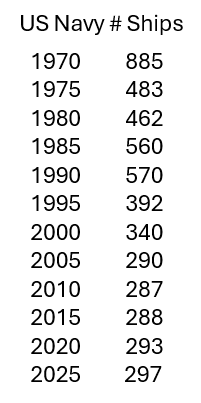
Then an embargo on Iran is an embargo on China, impacting their national security. China must know what I was told in that briefing, which means this is also an indirect confrontation with China. This war has seriously depleted the US capability to wage war since it relies on high-tech. Our Navy has only about 33% of the number of ships the President had back in 1970. For decades, money was shifted from military to social spending, and the US became increasingly sophisticated in its weapons to offset the decline in the raw size of the force.
We have entered a new world of warfare that the vast majority are still blind to. This is a new strategy that can defeat the United States and Israel much more easily than anyone realizes. We do not even see this coming because of the one-sided reporting of the Western Press that constantly prints the Neocon propaganda.
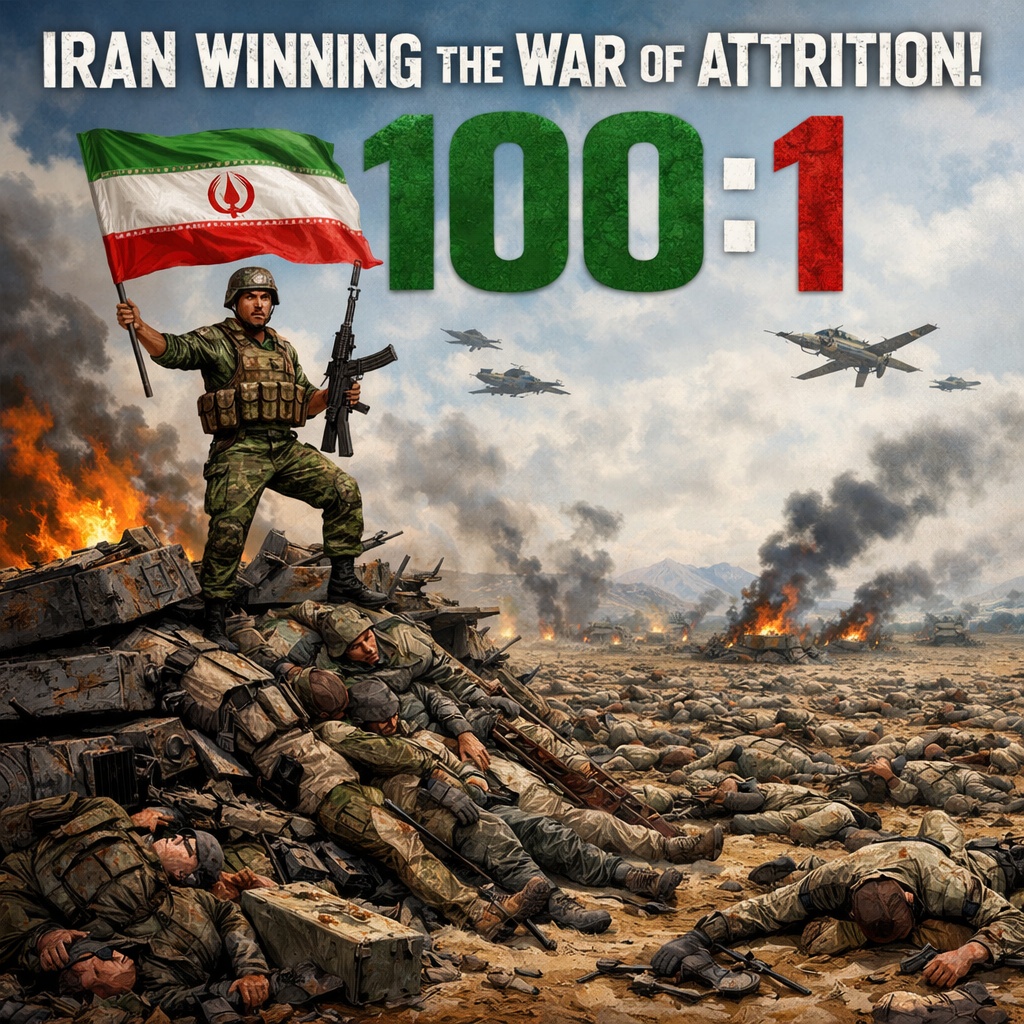
Let’s put it this way. You and I go to war against each other. You want to pretend you are the richest and most powerful. So, you have fancy silver bullets that cost you $100 each. I have cheap copper bullets that cost me $1 each. I can produce 100 bullets to your one. Who do you think will win in a long-drawn-out war?
US air-defense inventories have been significantly drawn down by defending Israel and its own forces from Iranian attacks, but NOT to the point of functional depletion. The U.S. still retains sizable reserves, but the pace of use has exposed a critical gap in its ability to replenish stocks quickly in a major conflict.
Terminal High Altitude Area Defense (THAAD) U.S. forces fired 100 to 150 interceptors (approx. 25% of its inventory) during a 12-day war in June 2025 to defend Israel against Iranian ballistic missiles. This was the most significant operational use of the system to date. Production and replenishment have been a major concern, with only 11 new interceptors produced in 2024, 12 expected in 2025, and a plan for 37 in 2026. To address the shortage, the Pentagon authorized an extra $2 billion to Lockheed Martin to replenish stocks.
Standard Missile (SM) Family (SM-2, SM-3, SM-6) The Navy’s Standard Missiles have been heavily expended. From October 2023 to December 31, 2024, the Navy expended an estimated 168 SM-2s, 17 SM-3s, and 112 SM-6s in the Red Sea. During the 12-day 2025 war, the Navy increased its destroyer presence in the region from two to five to support Israel, further drawing on these stocks. The fleet has been expending these missiles faster than they can be replaced, with senior Navy officials describing the rate as “alarming”.
Patriot Missiles Depletion: While specific depletion figures for the Patriot system are not detailed in the search results, it’s understood that the system has faced significant demand. The U.S. produces roughly 600 to 650 Patriot PAC-3 MSE missiles annually, but analysts warn that in a high-intensity war, even a year’s production could be consumed within weeks.
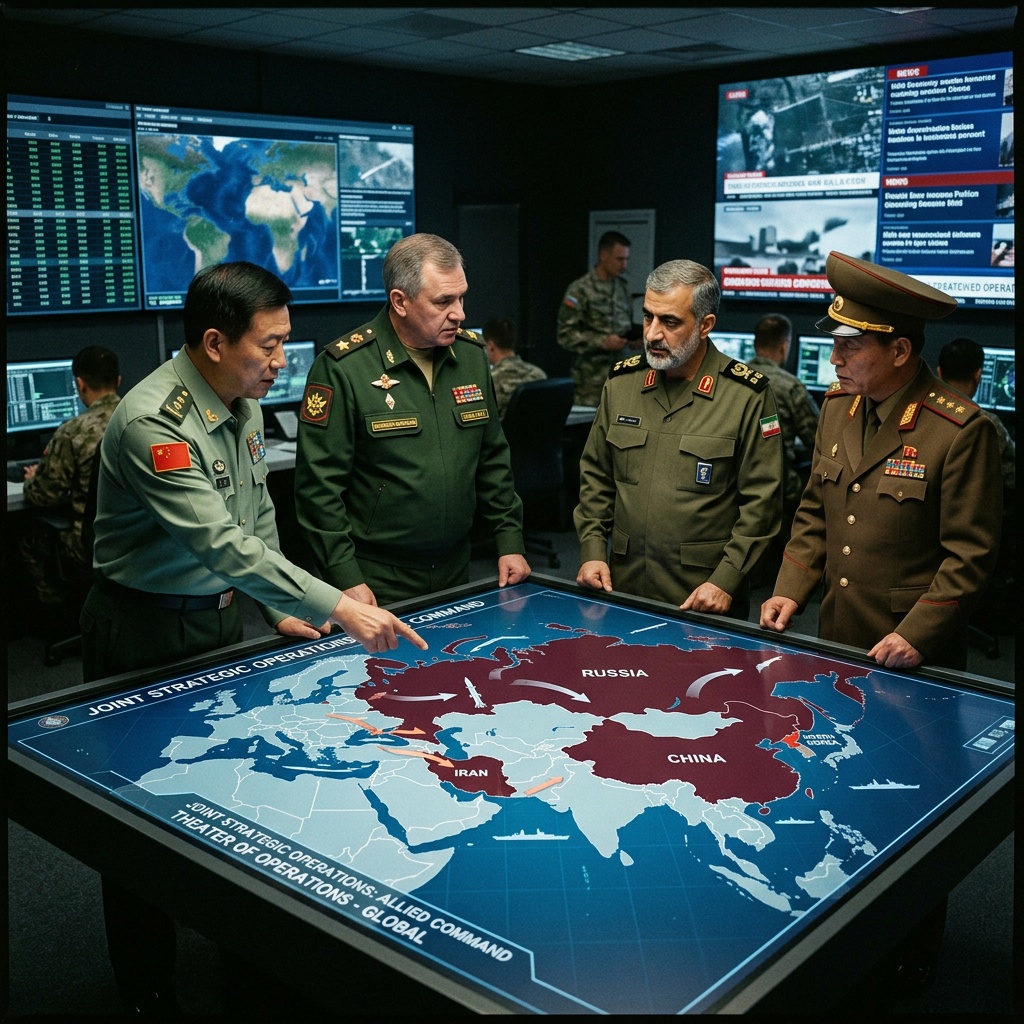
The U.S. still has significant missile stocks for now, but the strategic risk is that the US has moved to high-tech rather than normal weapons, and that has reduced the supply, increased the cost, and reduced the ability to mass-produce such weapons to replenish during a war, as we are witnessing with Iran. Fighting on multiple fronts was a central and decisive factor in the military defeats of both Napoleon and Hitler. While not the only reasons, the immense strain of splitting their forces made them vulnerable to the very thing they tried to avoid: a war of attrition fought against powerful coalitions. Both ultimately collapsed under the pressure of coordinated enemies they could no longer overwhelm with speed and decisive victories. I have warned that the way to strategically defeat even the United States is for a joint coalition of China, North Korea, Russia, and Iran. Waging a war of attrition is a crippling strategy.
The military has seven THAAD systems and eight Patriot battalions, each with substantial interceptors. However, the depletion of THAAD has exposed serious vulnerabilities. The critical issue is the Replenishment Rate. The current U.S. production capacity is far too slow for a high-end conflict. It could take years to replace interceptors used in just two weeks of fighting!
Then we have the Strategic Risk. The drawdown has hollowed out U.S. defense capacity against China. Given that we are already struggling to deal with threats from Iran, how do we think we’re going to do against China?” The U.S. Sixth Fleet’s local inventory of SM-3 interceptors was nearly depleted after helping defend Israel from the October 1 Iranian missile strike.
We have strategically incurred the unsustainable cost of trying to fight a war. The economic burden is immense, to put this mildly, despite the pro-war contingent and the analysts preaching that Iran has lost. THAAD interceptors cost roughly $12.7 million each, while SM-3s range from $9 million to $12 million. By mid-April 2024, the Navy had already spent close to $1 billion on munitions defending against Houthi attacks
In short, the U.S. missile inventory may not yet be exhausted, but the recent pace of operations has revealed a dangerous gap between peacetime production rates and wartime demands.
The higher the Tech, the greater the cost, and the fewer bullets you have to fire. Knowing this is not the Achilles Heel of modern warfare. The Iranian attacks in 2025 involved tactics specifically designed to force Israel to expend its expensive air defense arsenal, leveraging an economic war of attrition. However, the 2025 war was a “two-way bleed“—while Israel was forced to fire costly interceptors, Iran’s own missile and launch infrastructure was also devastated. Iran’s approach relied on overwhelming Israel’s defenses through saturation and exploiting a massive cost asymmetry.
Iran cleverly adopted a saturation and the Economic Warof Attrition. Iran’s strategy was a direct response to the layered Israeli air defense network, which includes the Iron Dome (rockets), David’s Sling (short-to-medium range missiles and drones), and the Arrow system (long-range ballistic missiles). Iran employed two specific tactics. First, by launching mass waves of threats from multiple directions (Iran, Iraq, Lebanon, Syria, and Yemen), Iran aimed to overwhelm Israel’s multi-layered defenses with more targets than they could handle at once. The core of this tactic was economic warfare. Each interception by a sophisticated Israeli system costs tens or hundreds of times more than the cheap drone it destroyed.
The Iranian Shahed Drone cost was $20,000 – $50,000 A very low-tech, one-way attack drone. The Israeli David’s Sling cost $1,000,000 per launch Interceptor for short-to-medium range threats. Israeli Arrow 3 System $3,500,000 – $4,000,000 per interception. Exo-atmospheric interceptor for long-range ballistic missiles.
Was the Strategy Successful? The tactic was partially successful. It placed immense strategic pressure on Israel but did not achieve total victory in 2025. The financial burden on Israel was staggering. For example, during the June 2025 “12-Day War,” the combined cost of U.S. and Israeli defensive operations was between $1.48 billion and $1.58 billion. A senior Israeli official estimated a single night’s defense could cost $1-1.3 billion. Israeli intelligence warned that if attacks continued at their peak rate, Israel’s defense reserves might only last 10 to 12 days.
Iran’s cost is cheaper, but the sheer volume of attacks still costs Iran significantly, with estimates of its missile and drone expenditures ranging from $1.1 billion to $6.6 billion during the 12-day war. The U.S. and Israeli DEPLETION during the conflict also put a major dent in the U.S. inventory, which was already stressed from supporting Ukraine. The U.S. used up an estimated 14% of its global stockpile of THAAD missile interceptors in just 12 days, and at current production rates, it would take three to eight years to replenish them!
In essence, the 2025 conflict showed that while Iran’s economic-attrition strategy was a potent NEW form of warfare, it was not a silver bullet. It forced Israel to expend critical resources at an alarming rate, but the war’s kinetic phase ended with Iran’s launch infrastructure in ruins, highlighting the extreme risks of such a direct confrontation for both sides.
Iran has made a decisive and public shift towards a strategy of economic warfare and attrition. The 2025 war is now seen as a blueprint that forced a hard pivot in their approach, moving away from seeking a decisive military victory to a long-term strategy designed to bankrupt their enemies. The most tangible evidence of this shift is the staggering 10-fold increase in production of attack drones in just the seven months after the war. This industrial surge is the engine of their economic warfare, designed to overwhelm air defenses through sheer, cheap numbers.
Iran possessed an estimated 80,000 to 100,000 Shahed drones at the start of this 2026 war, with a monthly production capacity of up to 500 for sustained pressure, or over 12,000 during wartime peaks. This strategy exploits the massive cost gap, where a $35,000 drone can force the use of a $4 million Patriot missile, creating an economic calculus that is “100 times” in Iran’s favor. By forcing two interceptors per target, they accelerate the depletion of American and Israeli stockpiles.
I have been warning about the sheer stupidity of the Neocons and their arrogance that Having the Biggest Military automatically means you win. Because we Cannot win a war of attrition, this means the only weapon they will be able to deploy when they run out of bullets is nuclear.
I have created this site to help people have fun in the kitchen. I write about enjoying life both in and out of my kitchen. Life is short! Make the most of it and enjoy!
This is a library of News Events not reported by the Main Stream Media documenting & connecting the dots on How the Obama Marxist Liberal agenda is destroying America



















 Centinel2012