Digital Currency and the End of Financial Privacy


Posted Apr 17, 2026 by Martin Armstrong |  

CBDC Cover

The push toward digital currency is being framed as innovation and efficiency, but when you strip away the marketing language, what is unfolding is a structural transformation of the financial system that shifts control away from individuals and concentrates it within governments and central banks. The Bank for International Settlements has confirmed that more than 90% of central banks are now actively researching, developing, or piloting central bank digital currencies, which is not coincidence or experimentation but a coordinated global direction. This aligns directly with what I have been warning, that when governments face a sovereign debt crisis they will turn to mechanisms that allow them to monitor and control capital flows because they cannot solve the debt problem through traditional means.

In the United States, more than 95% of transactions are already digital in some form, whether through credit cards, debit systems, ACH transfers, or mobile payment platforms, which means the infrastructure for surveillance is already largely in place. Cash has not been eliminated yet, but it has been marginalized, and that is the first step because once transactions become digital, every movement of money creates a permanent record. Governments already have the ability to access financial data through banks, but a central bank digital currency removes the intermediary entirely and places that visibility directly within a centralized system controlled by the state.

This is where the real shift takes place because a CBDC is not simply a digital version of existing currency, it is a programmable financial instrument. That means money itself can be controlled, restricted, or directed according to policy decisions. Transactions could be approved or denied in real time, spending could be limited to certain categories, and funds could even be given expiration dates to force consumption. These are not theoretical concerns as these capabilities have already been discussed openly in central bank reports and demonstrated in pilot programs around the world, including China’s digital yuan, which integrates payment systems with state oversight.

The connection to the sovereign debt crisis is critical because governments are reaching a point where they cannot sustain spending without either raising taxes, inflating the currency, or imposing controls on capital. Digital currency provides a mechanism to do all three simultaneously. Real-time taxation becomes possible because transactions can be monitored instantly, eliminating the lag between earning and reporting income. Capital controls can be enforced automatically by restricting transfers, preventing withdrawals, or limiting how funds are used. Inflation can be managed politically by directing spending into specific sectors or suppressing activity in others. This is the level of control that governments have never had before, and it changes the entire structure of the financial system.

The transition is being rolled out gradually because it cannot be imposed overnight without resistance. Digital systems will continue to coexist with cash and traditional banking for a period of time, but the direction is clear. As digital adoption increases, incentives will be introduced to encourage usage while restrictions on cash will slowly expand. Limits on cash transactions, reporting requirements, and regulatory pressure on banks are all part of this process. Eventually, participation in the digital system becomes not a choice but a necessity because alternatives are either restricted or eliminated.

There is also a geopolitical dimension to this shift because digital currencies can be used to bypass existing financial networks such as SWIFT, allowing countries to conduct transactions outside the traditional Western-dominated system. At the same time, within domestic economies, these systems give governments the ability to enforce policy at the individual level. This creates a dual structure where digital currencies are used externally to avoid sanctions and internally to impose control, and that combination is what makes this development so significant.

What is rarely discussed openly is how this ties into the broader expansion of surveillance. Financial transactions do not exist in isolation, they are connected to identity, location, and behavior. Once money is fully digital and centrally managed, it becomes possible to integrate financial data with other forms of monitoring, creating a comprehensive view of individual activity. This is where the line between financial regulation and social control begins to blur, because the same system that tracks spending can also be used to enforce compliance with policies that extend beyond economics.

The issue ultimately comes down to control rather than convenience because while digital systems offer efficiency, they also eliminate anonymity. Cash has always provided a degree of financial privacy because transactions could occur without leaving a trace. Once that disappears, every economic action becomes visible and potentially subject to oversight. That fundamentally alters the relationship between individuals and the state because financial independence is replaced with conditional access to money.

When you look at this within the context of the sovereign debt crisis, the direction becomes clear. Governments cannot allow capital to move freely when confidence begins to decline, and digital currency provides the mechanism to manage that risk. The ability to track, restrict, and direct financial activity ensures that capital remains within the system and under control. This is not about modernization, it is about maintaining authority in a system that is under increasing strain.

The transition is already underway, and once it reaches a critical mass, reversing it will not be simple because the infrastructure will be embedded in everyday life. The real question is not whether digital currency will be adopted, but how it will be used once it becomes the dominant form of money, because that will determine whether it serves as a tool of efficiency or a mechanism of control.
Yellen Denies Food Inflation


flation

Posted Jul 2, 2024 By Martin Armstrong 

Biden Yellen

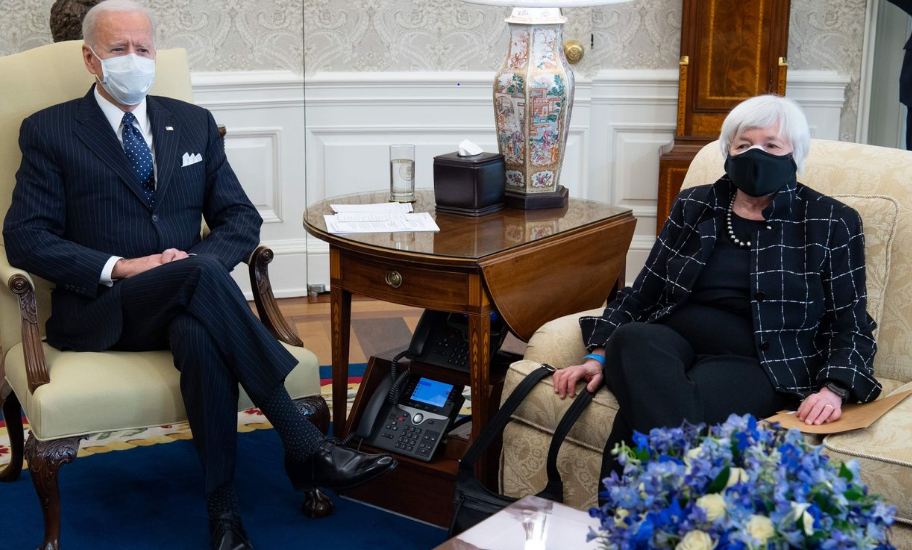
Treasury Secretary Janet Yellen once again is once again gas lighting the public to believe that the Biden Administration has inflation under control. When questioned about the rising prices at grocery stores, Yellen denied that prices have soared astronomically.

“I think largely it reflects cost increases, including labor cost increases that grocery firms have experienced, although there may be some increases in margins,” Yellen, who has a net worth of $20 million, stated.  She later touted that she met with several grocery store CEOs who said they were cutting costs. After all, Biden has continually blamed “greedy corporations” for rising food prices. “I think that’s to be applauded, I think that kind of thing is helpful, but I would be reluctant to agree that we should be centralizing agriculture,” Yellen added.

She also stated, once again, that the Fed will reach the arbitrary 2% target by next year. Treasury Secretary Janet Yellen is proof that the establishment is completely clueless when it comes to the lives of the average citizen. This is the same Treasury Secretary who touted, “People are better off than they were pre-pandemic.” She is all-in on the globalist agenda to sacrifice the economy of the United States on behalf of foreign interests.

Yellen has said that the US has not done enough for Ukraine, despite sending more money than Zelensky has time to spend or circulate back into the military-industrial complex. When questioned about America’s immediate involvement in Israel after the Hamas attack, the Treasury Secretary proclaimed America could “certainly” afford two wars, or rather, the government would “certainly” be willing to tax the public to afford the cost of two wars and send your sons and daughters to die fighting them.

https://www.tiktok.com/embed/v2/7384568413810691371?lang=en-US&referrer=https%3A%2F%2Fwww.armstrongeconomics.com%2Farmstrongeconomics101%2Finflation%2Fyellen-denies-food-inflation%2F&embedFrom=oembed

A popular video is circulating the internet of a man who was shocked to discover that the exact same groceries he purchased in 2022 for $126.67 now cost an alarming $414.39. He was shopping at Walmart, arguably one of the most affordable grocery chains. Yet they alter the numbers to claim that food inflation has come down since last year. They say food inflation in America eased to 2.1% in May, making similar claims of declining costs throughout the West. Food inflation has run rampant, and the figures projected by governments are a LIE.

We once had Treasury Secretaries who actually attempted to align national interests with policies. That is no longer the case within Biden’s cabinet for absolutely everyone has sold out to the globalist cabal. It was Yellen who admitted America’s largest spending package, the Inflation Reduction Act, was merely a scheme to push forward the climate change agenda.  “The Inflation Reduction Act is, at its core, about turning the climate crisis into an economic opportunity,” Yellen admitted earlier in the year.  She has never been concerned about inflation or the average American citizen who has been forced to reduce their quality of life.

Fed Holds Rates – What Tools Are Left?


Posted originally on Jun 13, 2024 By Martin Armstrong

Federal Reserve Eagle

The Federal Open Market Committee unsurprisingly voted to maintain rates at 5.25% to 5.5%. The numerous cuts others were anticipating are completely off the table, as the central bank said there might be one reduction for the year compared with their optimistic tone forecast made in March of three rate reductions in 2024.

“In recent months, there has been modest further progress toward the Committee’s 2 percent inflation objective,” the voting members of the Fed said in their statement. They changed their forecast on inflation from “a lack of” to “modest” progress toward the 2% inflation objective.

Four voting members do not believe the central bank should raise rates at all this year. The central bank continues to exclude food and energy, two of the primary drivers of inflation when creating their summaries and dot plots. They certainly would never include taxation in those figures. The Fed claims there will be multiple rate cuts come next year, but they would never cut rates in the face of war which is completely inflationary and produces nothing.

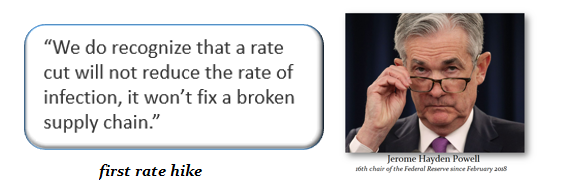
Raising interest rates can have no impact on demand, as the government will simply borrow more, and the central banks simply have no say. Fed Chair Powell has repeatedly said that government spending is completely unsustainable and the Biden Administration is borrowing against future generations.

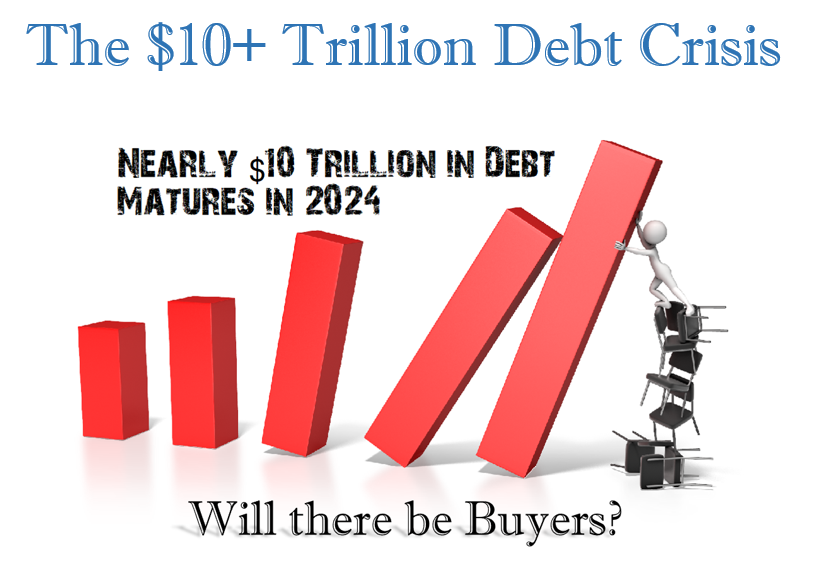
I explained in an earlier post why Keynesian Economics is collapsing. That theory was created when the US had a balanced budget and the government was actually expected to repay what they borrow. They still mistakenly believe that the business cycle can be manipulated. There is not much that the Federal Reserve can do at this point in time besides hope and pray for a miracle before that $10 trillion in debt is due to expire this year.

Credit Card Delinquencies Spike Among the “Rich”


Posted originally on Jun 6, 2024 By Martin Armstrong 

CreditCardDelinquency_byClass

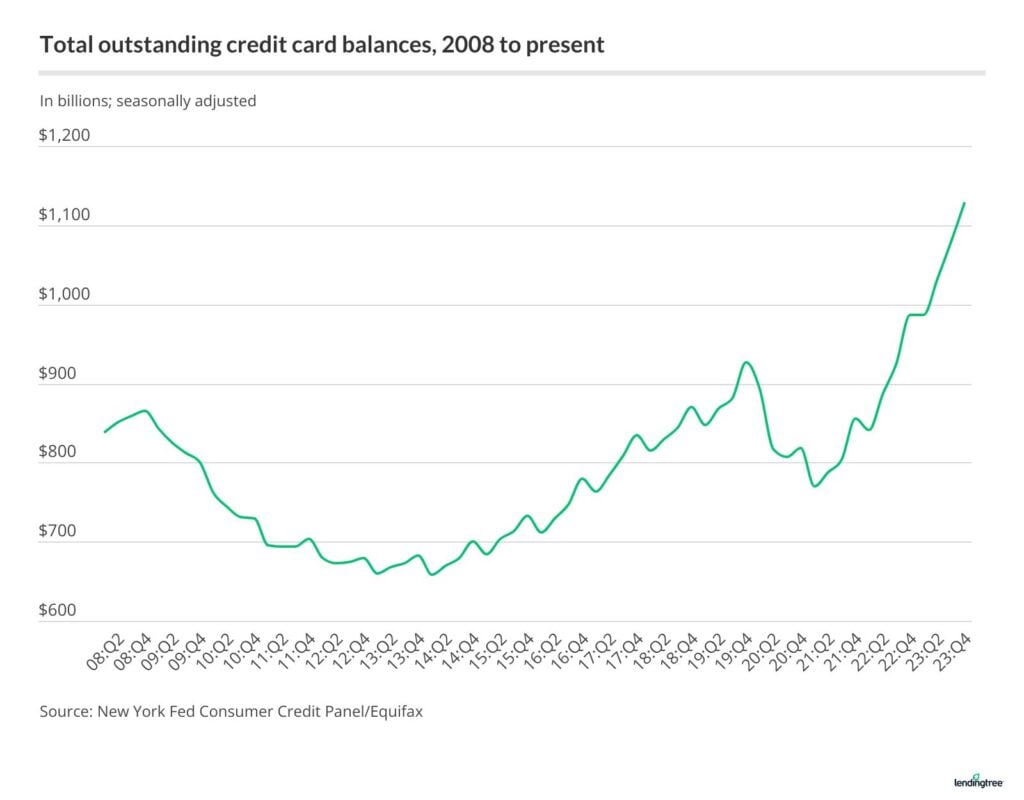
Inflation can be felt at every tax bracket. Federal Reserve Bank of Minneapolis President Neel Kashkari came out this week and said the public “viscerally hates high inflation,” and for good measure. Everyone is seeing the impacts of inflation on their quality of life. Those defined as rich, the demographic one side of the political spectrum believes must be taxed into oblivion, have not come out of this inflationary cycle unscathed, as indicated by a new report from the St. Louis Federal Reserve.

Credit card delinquencies (missing a payment by over 30 days) have been steadily rising across America. The poorest Americans experienced the hardship first, and now those in higher tax brackets are also falling behind on bills. Delinquencies have increased for the last eight to 11 quarters, as indicated by the Fed. Among the poorest zip codes in the US, delinquency rose from 11% in Q2 of 2021 to 17.4% in Q1 of 2024 or 58%. Every region in America has experienced an increase in delinquencies by AT LEAST 32.2% in relative terms.

CreditCardDebt.Chart_

“The richest 10% of ZIP codes have experienced the greatest proportional increase; their delinquency rate climbed from 4.8% in the second quarter of 2022 to 7.4% in the first quarter of 2024, or 54% in relative terms,” the Fed noted. “For the poorest 10% of ZIP codes, the delinquency rate increased from 14.9% in the third quarter of 2022 to 21% in the first quarter of 2024, or 41% in relative terms.”

Credit card delinquencies are now exceeding pre-pandemic levels, and the Fed believes this suggests “that a trend which began prior to the pandemic has accelerated.” Discontent will grow as people are forced to stretch their dollars and watch their quality of life decline. The discontentment is fueling this political upheaval and the people can not vote their way out of this current situation because it is becoming apparent that the elections are not fair. We the people have been discarded by our government.

These delinquencies will fall on the banks eventually. The government does not realize that reckless spending and raising taxes has an impact on absolutely everyone. The people who push for more taxes and social programs fail to realize the larger implications.

Interest on US National Debt Hits New Record


Posted Jun 6, 2024 By Martin Armstrong

NationalDebtNYCVBillboard

Government spending has consequences. The US national debt has surpassed $34.6 trillion at the time of this writing and continues to grow every minute. America has never been in a deeper deficit. The Committee for a Responsible Federal Budget (CRFB) has reported that America was forced to pay $514 billion in the first seven months of FY2024 on interest costs alone.

This means that America paid more in servicing its debt than on any other program besides Social Security ($837 billion), which is a separate problem entirely. To put it into perspective, the US shelled out $498 billion on national defense, funding 2.5 wars, during this time. Around $465 billion was spent on Medicare, with an additional $355 billion spend on Medicaid, and neither surpassed the amount paid on simply holding onto debt.

US debt to China Buy Bullets
10 trillion Debt Crisis Default

What can be done when the government refuses to curtail spending? Biden audaciously labeled one of the largest spending packages in the nation’s history the “Inflation Reduction Act,” and expects the people to believe that it has not greatly contributed to the rising costs of goods and services. Every week, Biden signs a new check to Ukraine or a climate change agenda, but no one can stop him from draining the Treasury. Even the Federal Reserve is utterly helpless and can do nothing besides sit back and watch as America spirals down.

Imploding this situation is China’s rightful refusal to purchase US debt. Other central banks see how careless US politicians have become with their spending and question if they ever intend to pay off their growing debt. How could they at this point? No one in Washington has a clue on what to do. Instead, they will continue spending with no concern for the long-term consequences that are inevitable.

Retail Sales Falling in the US – a Softer Tone


Posted originally on May 17, 2024 By Martin Armstrong 

Online Shopping

Retail sales in the US fell short of expectations this month, according to data compiled by the Commerce Department. Retail spending decreased 0.6% from April to March, undermining forecasts of a 0.4% decrease. Yet, Americans are spending MORE on the essentials such as groceries. How is this a shocking admittance to anyone?

Even online sales fell by 1.2% from March to April. Americans spent 1.6% less at clothing retailers, and 0.9% less at hobby stores on a monthly basis. Again, of no surprise, gasoline sales rose 3.1%.

The Fed is attempting to smooth over the data, using rhetorical language such as the economy is presenting a “softer tone.” Federal Reserve Bank of New York President John Williams, who believes monetary policy is “in a good place” albeit “restrictive.” Williams, like Chair Powell, said that there are no indicators stating a need to lower interest rates. “I don’t expect to get that greater confidence that we need to see on the inflation progress towards a 2% goal in the very near term.”

The Fed held rates loosely for so long that there was not much it could do, in addition to the utter disaster that is America’s fiscal policy. I explained in another post why the Fed simply cannot attain the 2% target.

People do not have the disposable income to spend on retail at this point, and those who do prefer to invest or save those funds as confidence has vanished, leading to a pullback in spending on nonessentials. Bad news for America’s consumer-based economy.

April’s CPI is up 3.4% YoY, slightly down from March’s 3.5% posting. I do not believe they are accurately calculating prices. No one believes them at this point. So, we should expect the Fed to maintain the 5.25% to 5.50% rates at the next FOMC meeting. Inflation is here to stay.

Powell Pessimistic After Q1


Posted Originally on May 16, 2024 By Martin Armstrong 

Powell Rate Hike

Powell reiterated this week that he does not see any short-term need to lower interest rates. The Fed remains delicate in its speech to the public. They knew that inflation would continue rising due to various factors but had to say they were awaiting incoming data. The data is in for Q1 and nothing indicates that inflation is easing, therefore, expect rates to hold.

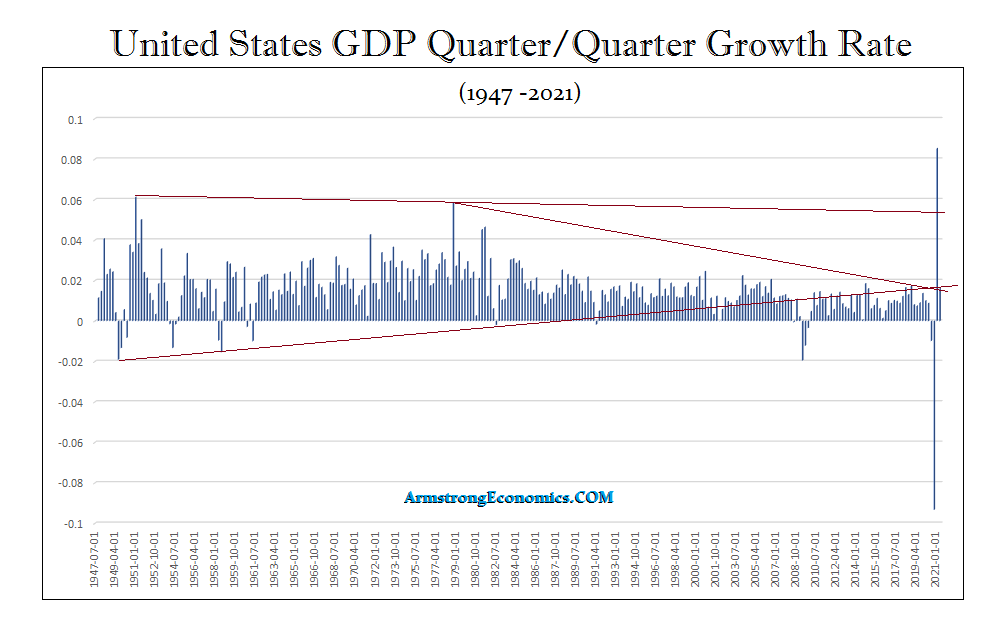
The Labor Department noted that the PPI rose to 0.5% in April from May, up 2.2% since the year prior. PCE, the Fed’s primary inflation indicator, rose 2.7% in Match from 2.5% in February. The US economy overall advanced 2.7% from October to December. We are looking at inflation beginning to rise faster than economic growth, which will lead to stagflation.

I have pointed out numerous times that the various measures provided to the public drastically downplay the dollar’s loss in purchasing power. Americans can feel it daily every time they make a purchase or check their bank accounts.

GDP Quarterly 1947 2021

I explained that we already began experiencing stagflation in 2021. Normally, the standard definition of “stagflation” has been explained as slow economic growth with relatively high unemployment/or economic stagnation that takes place with rising prices. Some have also defined it as a period of inflation combined with a decline in the gross domestic product (GDP).

Stagflation became a term that defined the 1970s because economic growth was still positive, but the rate of inflation was far greater due to the price shock of the OPEC embargo. The  Democrats are constantly pushing to raise taxes, and sent corporations fleeing offshore, and it was NOT merely because of the tax rate. Back then, I testified before the House Ways & Means Committee on taxation, and they wanted to know why NO American company got a contract from China to construct the Yellow River Dam. I explained that German companies were NOT taxed on worldwide income, and as such, they were already 40% less than an American company because Americans pay taxes on worldwide income, and the ONLY other country to that was Japan. Thus, American companies moved offshore, NOT because labor was cheaper, but so they could complete.

Now, we have additional regulations that are making it increasingly difficult for American businesses to prosper. The capital gains tax will be a nail in the coffin. The recent tariff slap on China will also cause the price of goods to rise and harm the supply chain.

Remember, inflation was only 1.4% when Joe Biden took office – far beneath the Fed’s target. Inflation has risen as a direct result of fiscal policies under Bidenomics. The government has completely ignored the Fed’s warning that it must curtail spending. We are sacrificing our economy for the interests of the globalists.

Episode 3604: Wasteful Spending To Just Buy Votes


Posted originally on Rumble By Bannons War Room on: May 11, 2024 at 06:40 pm EST

Why Does the Government Borrow Its Own Currency?


Posted May 11, 2024 By Martin Armstrong  

The problem with people’s attitudes toward the national debt is that everyone has forgotten why we borrowed in the first place. The theory was that if you borrowed rather than printed money, you were NOT increasing the existing money supply, and therefore, in theory, it would not be inflationary.

US Debt accumulated Interest as Percent of total

However, the Democrats forgot how to run for government without their Marxist agenda of bribing the people to vote for them. This led to always creating deficits. Add to this the NEOCONS who have done nothing but wage wars ever since World War II to defeat Communism and have spent money lavishly on trying to conquer the world.

Kennedy_Nixon_Debat_(1960)

October 13, 1960 Debate Transcript

During the Presidential Third Debate of 1960, the question about the outflow of gold from the USA reserves arose. This sparked a Gold Panic in the London gold market, whereby gold rallied to $40 for the first time, showing that the Bretton Woods System was beginning to collapse. The United States’ outflow of gold was not really from a trade deficit but from the fact that the USA was defending the world with its military establishing bases everywhere. That meant capital was leaving. Gold rallied again to $40 in the late 1960s, and finally, it forced the collapse of the convertibility of gold under the Bretton Woods System in 1971. Kennedy’s words were:

“Now, on the question of gold. The difficulty, of course, is that we do have heavy obligations abroad, that we therefore have to maintain not only a favorable balance of trade but also send a good deal of our dollars overseas to pay our troops, maintain our bases, and sustain other economies. In other words, if we’re going to continue to maintain our position in the sixties, we have to maintain a sound monetary and fiscal policy. We have to have control over inflation, and we also have to have a favorable balance of trade. We have to be able to compete in the world market.” 

The dollars were being spent not to benefit our economy but to fulfill the dreams of the Neocons; when Communism fell, they refused to accept any real change.

Trajan Welfare Youth

Rome takes care of widows and orphans.

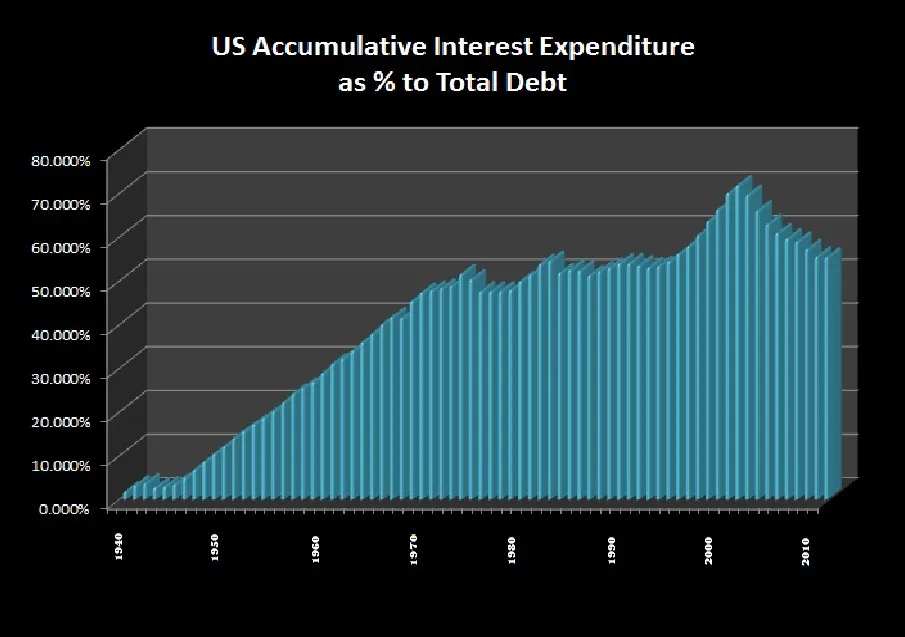
We borrow, which is worse than printing because we have to pay interest on constantly rolling the debt. This year, we will spend about $1 trillion on interest, the total national debt when Reagan took office in 1981. At times, 70% of the national debt is accumulative interest. That means it went nowhere to improve society or care for widows and orphans, at least as the Romans did. Had we printed the money instead of borrowing, it would have been less inflationary and the capital would have created more jobs instead of investing in government debt which has only funded the Neocons’ wildest dreams.

Phillip Patrick Predicts Federal Debt Rising By $1 Trillion Every 90 Days


Posted originally on Rumble By Bannons War Room on: May 4, 2024 at 05:00 am EST