Posted originally on Feb 23, 2026 by Martin Armstrong |
The latest PCE inflation data for December 2025 once again confirms inflation is not collapsing the way politicians and central banks keep suggesting. The Federal Reserve’s preferred inflation gauge rose 0.4% for the month, with headline PCE running about 2.9% year-over-year and core PCE around 3.0%, remaining well above the Fed’s 2% target.
What this actually shows is that inflation has never been transitory. Despite aggressive monetary tightening and constant claims that inflation is coming down, the core trend is stabilizing near 3%, which historically signals price pressures rather than a temporary spike. Inflation does not simply disappear because interest rates are adjusted, rather, it declines when confidence and demand contract, and we are not seeing that type of collapse in consumer spending, which also rose alongside prices in December.
Governments and central banks focus on headline narratives, yet the core PCE, which excludes food and energy, is still running near 3%, indicating underlying inflationary pressure in the real economy. The political narrative continues to blame inflation on interest rates, tariffs, or isolated policy factors, but historically, inflation is far more tied to fiscal policy, deficits, and monetary expansion than any single variable. Even with inflation well below the 2022 peak, the data suggest the Fed is unlikely to rush into rate cuts because inflation progress has stalled rather than decisively reversed.
In reality, this confirms the broader trend I have outlined in Manipulating the World Economy: inflation peaks do not end in a straight line decline. They plateau, fluctuate, and remain above target far longer than policymakers expect. The real risk is not hyperinflation, but persistent inflation combined with slowing growth gives us the stagflationary undertone that emerges when governments expand spending while central banks attempt to maintain credibility.
When inflation stabilizes above target despite tightening, it signals a structural shift in the economy’s cost base, not a temporary anomaly. And that is precisely what this PCE data is quietly confirming beneath the surface.
Posted originally on Feb 23, 2026 by Martin Armstrong |
A dialogue on Ukrainian TV: – Every Ukrainian must speak Ukrainian. If they speak Russian, they’re not a real Ukrainian! – Then why are you speaking Russian? – Oh… right. I forgot.😐 pic.twitter.com/HiOnhLPCOL
Erasing a language equates to erasing a cultural identity. I have repeatedly addressed the language issue in Ukraine because it was one of the earliest political flashpoints that contributed to division long before the military conflict escalated. Following the 2014 change of government, there were immediate moves to downgrade the legal status of the Russian language, which was widely spoken across eastern and southern Ukraine.
The attempt to restrict or marginalize the Russian language was not simply about national identity; it was perceived in the eastern regions and by Russia as a direct challenge to cultural and historical ties that go back centuries. You cannot redraw linguistic identity by legislative decree without expecting political backlash, especially in a nation that has long been divided between Western European alignment and Eastern historical integration with Russia.
I have consistently stated that civil conflict historically begins with identity suppression, whether linguistic, regional, or cultural, because it signals to a portion of the population that they are no longer fully represented within the state. Once that perception takes hold, geopolitical actors exploit the division, and the crisis escalates beyond domestic politics into international confrontation.
Under Zelensky’s government, Ukraine continued and expanded policies that reinforced Ukrainian as the primary language in education, effectively phasing out Russian-language instruction in most schools under the 2019 language and education frameworks that were further implemented during his presidency.
Putin noted in his interview with Tucker Carlson that his primary goal was to unify the Russian population of Ukraine. Zelensky, on the other hand, demands that Russians erase their identity and conform. Ukraine and Russia share deep historical roots. These nations were not linguistically or culturally isolated from one another. Bilingualism was a reflection of shared history.
The younger generation is increasingly socialized to view Russia not merely as a geopolitical adversary, but as a cultural and historical enemy. Media and formal education now demand that citizens conform to one isolated identity. One must prove they are a “real” Ukrainian by denouncing everything Russian, even if it includes their bloodline and cultural ancestry.
Posted originally on Feb 23, 2026 by Martin Armstrong |
COMMENT: Mr. Armstrong, your computer pinpointed Ukraine three years in advance. Your computer also targeted the week of the Israel attack. Now your computer targeted Iran for February last year. Honestly, it is so obvious why they targeted you and wanted the source code after you also forecast the collapse of the USSR. They always claimed you had too much influence rather than try to understand how the world works. The media will not write one word about you because they fear it would only increase your influence. I understand your frustration because you have accomplished something nobody else has and they refuse to listen. But when it came time to write a peace plan, they still came to you because you have contacts others only dream of.
I admire your courage. I agree with you. No worthwhile journalist will dare write about your accomplishments. That just shows it is all fake news. What you have done is for the betterment of society. If no journalist will dare write about your accomplishments, they are not interested in helping society. They do not care about the future of their own family. What kind of person is that? Perhaps your name will be acknowledged after you are gone as you remarked. For then they won’t fear the powers that be and they can’t say your are influencing the world from your grave.
Pete
REPLY: Thank you. I never thought of such a career that I have found myself in. I tell youth who ask me how did I develop this career since there is no degree in this stuff, I explain shit happens. I was asked to write a peace plan because nobody else was. But the $10 billion they wanted me to fund their regime change of Russia was to be put into Hermitage Capital Management. When Yeltsin was blackmailed and he had to find a successor who was not an oligarch and not a communist, he turned to Putin, who the seized Hermitage Capital Management. Coming to me was strategic for (1) I could get the plan to Putin, and (2) Putin knew I refused to be part of the regime change in 2000. Because it came from me, it had more credibility insofar as I was not a Neocon nor a NY market manipulator.
Forecasting war cannot be done with just opinion. The computer is tracking everything. China is the primary buyer of Iranian oil, importing over 80% of Iran’s oil exports through unofficial channels that circumvent sanctions. China provides cybersecurity and intelligence support to Iran, and in January 2026 began implementing a strategy to replace Western technologies in Iran with secure Chinese systems. Just as the US provides satellite targeting for Ukraine to attack Russia, China is now providing that level of satellite coverage for Iran so they can target a carrier.
Russia and China simply do not want to be dragged into an Israel-Iran confrontation and have ensured that their cooperation and strategic alignments with Iran will not force their hands. They’ll provide weapons, intelligence, diplomatic cover, and economic support—but not direct military intervention. If this gets really out of hand and Iran can seriously damage a carrier, then the US will lose its mantle of invincibility. No carrier has been sunk since World War II.
Ayatollah Ali Khamenei acknowledged that a U.S. Navy aircraft carrier is formidable but said “An aircraft carrier is a dangerous machine, but even more dangerous than that is the weapon capable of sending it to the bottom of the sea”
While there is no officially confirmed evidence that Iran possesses nuclear weapons, many analysts believe that the Islamic Republic may have the ability—and potentially the will—to secretly develop and hide a limited nuclear arsenal. If produced, such weapons would almost certainly be stored in fortified underground military facilities. This “nuclear ambiguity” could mirror early-stage doctrines used by countries like Israel or Pakistan during their initial programs. The US has been claiming Iran is close and that was their view in 2007 as then expected they would achieve that by 2009. They may not have tested such a weapon to keep it secret. But this confrontation could result in using such a weapon when there is a clear intent to overthrow the Islamic State.
The People’s Republic of China and Russia have both signed strategic partnership agreements with Iran—without a mutual defense clause. Russia and China showed rhetorical support for Iran, including drafting a joint UN Security Council resolution calling for a ceasefire, that was ignored.
Video Player
Here is Larry Summers express the prevailing view that if you could forecast, then you would have too much influence. The whole Marxist/Keynesian theory is that the economy is random so they can manipulate it at will. Even Paul Volcker in his 1979 book stated Keynesian Economics failed in 1974-1976 Recession. If I am correct, then they CANNOT manipulate society. Instead of respecting that I may have discovered something, they try to discredit it claiming it’s just my “”influence” so they have felt they must stop me.
Here is the main stream British press, the Evening Standard, when it wanted to taint the grand opening of the Forecaster in London. They went out of their way to use a head-hunter with the name of Martin Armstrong to try to discredit the film with a headline supporting the bankers using his comments but they used my photo. Klaus Schwab did the same thing to claim I joined the WEF. There has always been a concerted effort to try to prevent people from even looking at our computer to keep people ignorant so the market manipulators and government can control society. Clearly, if the computer did not work, they would not bother.
This career has had me digging my own grave. Besides the government, I have had groups trying to infiltrade my company so many times. I have turned down so many offers even from the Rothschilds. I have never been motivated by money. I don’t sell advertising because I do not want people to get ripped off or think I have endorsed something. There are those who just hate my guts because I will not play by their rules.
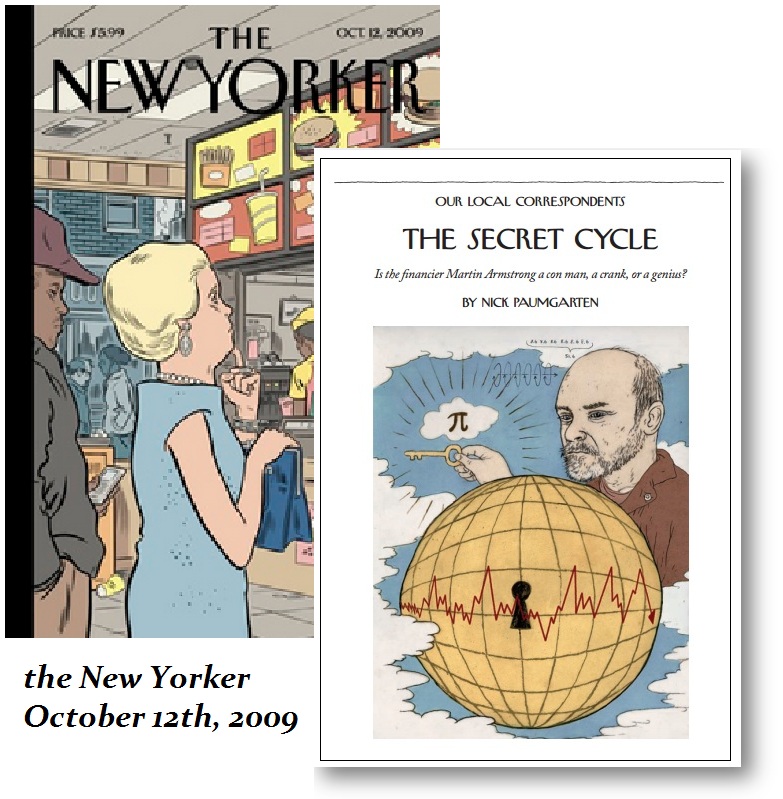
The precession of the equinoxes is approximately 25,800 years. (3 x 8.6 – 25.8) What I have discovered is the universal cycle of the Universe. The New Yorker Magazine called it the Secret Cycle. After they published that article, I believe the journalist was intimidated.
At this point, the Democrats have taken the absurd position to block ID to vote insulting the minorities as if they could not vote because they are too stupid to have ID is just astonishing. You cannot get welfare, drive a car, or take a flight no less even go to Canada without ID. The derogatory argument of Chuck Schumer is an insult to everyone. The ONLY people without an ID would be an illegal alien. When you are born, you get a Social Security number. They have completely flipped their argument because Trump is making it now.
A number of states have “stop and identify” statutes. These laws require a person who is lawfully detained (not just casually stopped) to state their name for the police. In the landmark 2004 case Hiibel v. Sixth Judicial District Court of Nevada, the U.S. Supreme Court upheld these laws, ruling that requiring a suspect to disclose their name during a valid investigative stop does not violate the Constitution.
While the Supreme Court has affirmed that states can require voters to be citizens, it has also upheld that, for federal elections, this requirement can currently be satisfied by a sworn attestation (under penalty of perjury) rather than by providing documentary proof of citizenship. So, they must swear under oath that they are a citizen and if they lie that is 5 years in prison.
The Court has never struck down a law requiring voters to be U.S. citizens. However, the U.S. Constitution does not explicitly grant a universal, affirmative right to vote for all citizens. Instead, it prohibits specific forms of discrimination (e.g., based on race, sex) and allows states to set voter qualifications, like citizenship and age, as long as they don’t violate federal laws or constitutional provisions.
In the 2013 case Arizona v. Inter Tribal Council of Arizona, the Supreme Court ruled that states must “accept and use” the federal voter registration form, which only requires an applicant to swear they are a citizen under penalty of perjury. States may NOT unilaterally demand documents like birth certificates or passports for those registering to vote in federal races. States can regulated ONLY state elections. The Court has allowed states to create a two-tiered system. A voter who attests to citizenship but cannot provide documents may be registered as a “federal-only” voter, meaning they can only vote for President and Congress.
So, what the hell is Chuck Schumer doing blocking ID. Is he just consumed with Trump Derangement Syndrome, where he must oppose whatever Trump says? Trump says the sky is blue, Schumer says no its red. If Trump said he will do something tomorrow, Schummer retorts and says tomorrow never comes because it is always today?
NYC Mayor Zohran Mamdani has called on New York residents to volunteer as emergency snow shovelers, but they need TWO forms of ID. So you need ID to shovel snow, but nothing to vote?
Posted originally on Posted Feb 22, 2026 by Martin Armstrong
|
00:00
00:19
COMMENT: Marty, thank you for that post. You have explained a risk I have not heard from any source. I know you met John McCain. I think you said on stage that you felt like you needed a shower after shaking his hand. Perhaps you will recall, in 2007, while campaigning for president, he was asked a question about the U.S. military and sang the words “bomb, bomb, bomb, bomb, bomb Iran” to the tune of the Beach Boys’ song “Barbara Ann.” He also said that they would have nuclear weapons by 2009. Here we are in 2026 and still they say Iran is close.
FH
REPLY: I never met someone who was so obsessed with war than McCain. I believe because he was captured and read communist propaganda for the Vietnamese, he had this revenge streak in him especially against Russia because back then they wrongly believed that Russia was behind Vietnam. The Neocon McNamara did his video apologizing that they were wrong. The Russians were not behind it, it was just a civil War.
They turned McCain’s remake of the Beach Boys into a song all about the his dream of bombing Iran.
Our Neocons always assume victory. Their arrogance NEVER considers defeat. The Romans had suffered defeats the understood the risks of war. The Roman Republic suffered several major defeats, but two stand out as particularly devastating, each for different reasons. The single bloodiest day, took place at the Battle of Arausio. If you are asking about the most famous tactical masterpiece that shook the Republic to its core, the answer is the Battle of Cannae, Hannibal’s Masterpiece in 216BC.
It was the Battle of Arausio (105BC) according to the ancient historian Livy, some 80,000 Roman soldiers and 40,000 auxiliary troops and camp followers were killed . This total of 120,000 casualties surpasses the estimated losses at Cannae. The defeat was not due to being out-fought, but to being out-led. While Maximus attempted negotiations, Caepio launched a reckless, unilateral attack on the Cimbri camp. His force was destroyed, and the victorious Germanic tribes then turned and wiped out Maximus’s army, which was pinned against the Rhône River with no escape
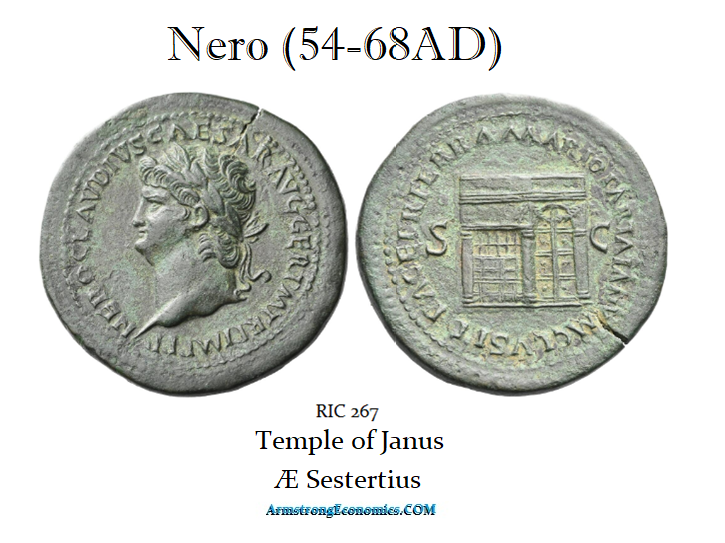
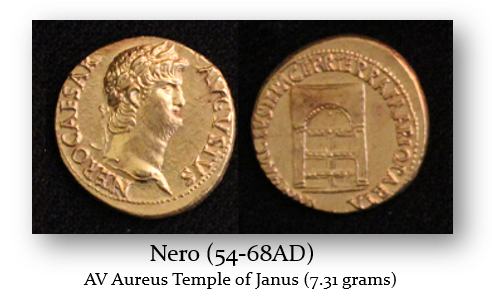
The Roman Temple of Janus symbolized the inherent risk of war, which the arrogance of our warmonger ignore. The open doors of the Temple of Janus was an acknowledgment that the outcome of war was uncertain and that the god’s presence was needed to secure a favorable one so Janus was released. This coin of Nero portrays the Temple doors closed, showing brief period of peace.
The coins of Nero bearing the Temple of Janus motif are generally accepted as referring to the peace following the cessation of Corbulo’s campaigns against the Parthians. Therefore, Nero used the image of the temple of Janus on this coin to commemorate the end of the Parthian campaign and the peace treaty. Nero closed the doors of the Temple of Janus in 66AD, for the first time this had been done since the reign of Augustus (27BC-14AD) when the doors were closed three times in 29BC, 25BC and 13BC.
Posted originally on Feb 22, 2026 by Martin Armstrong |
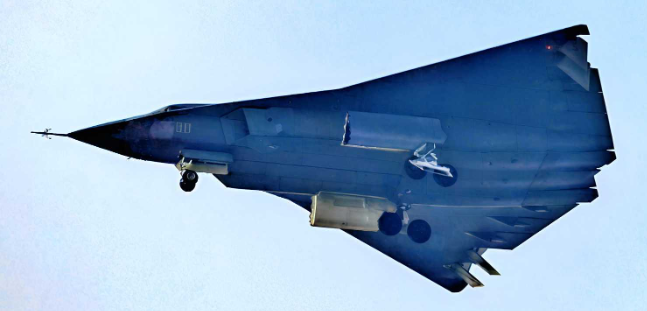
China’s military has for the first time shown a new, tailless combat aircraft widely identified by analysts as their sixth-generation fighter jet J-36, a large, unconventional prototype that flew in public alongside a J-20 chase plane and has reignited debate about whether Beijing is closing the technology gap with the West.
The alarm over China’s J-36 stems from its potential to fundamentally alter the strategic balance in the Asia-Pacific. It represents a generational leap beyond the F-22, not just in technology, but in its very concept of how air combat will be fought. Where the F-22 is a dedicated “air dominance” fighter, the J-36 is designed as a massive, stealthy “flying command center” built for long-range operations.
The J-36 is reported to operate effectively above 65,000 feet (20,000 meters), giving it a literal “high ground” over the F-22, which has a service ceiling around 59,000 feet (18,000 meters). This allows the J-36 to spot the F-22 first while remaining harder to detect itself. The 2023 incident where an F-22 struggled to intercept a Chinese balloon at 65,000 feet (20,000 meters) is often cited as a practical example of this limitation.
The J-36 likely carries the PL-17 missile with a range of over 245 miles (400 km), more than double that of the F-22’s AIM-120D (approx. 100 miles (160 km)). Combined with a potentially more powerful AESA radar, the J-36 could theoretically detect, target, and fire upon an F-22 well before the F-22 could even get into firing range. This is a great concern.
If an F-22 survives the Beyond Visual Range phase and closes to visual range, its superior agility, thanks to thrust vectoring, would give it a significant advantage in a traditional dogfight against the much larger J-36, which is not designed for that kind of maneuvering.
The J-36 is designed with a “smart” skin and powerful onboard systems to process vast amounts of data and potentially employ directed-energy jamming. It could use its electronic warfare suite to disrupt the F-22’s sensors and communications, blinding it while feeding targeting information to its own missiles or accompanying drones.
The concern is not about a one-on-one dogfight. It’s about how the J-36’s design would allow China to project power and challenge U.S. operations in a way the F-22 cannot counter.
The J-36 vs. F-22 matchup is essentially a contest of “system vs. platform.” The F-22 is an incredibly capable but finite platform. The J-36 is the centerpiece of a networked system designed to dominate a battle-space. The alarm in the U.S. comes from the realization that China has not only fielded a prototype of a sixth-generation aircraft before the U.S. has finalized its own NGAD/F-47 design , but that its design philosophy directly targets the key vulnerabilities of the U.S. way of war in the Pacific.
In short, the US is alarmed because the J-36, if it enters production as advertised, could neutralize America’s primary tactical advantage in the region by leveraging superior range, altitude, and battlespace awareness to dictate the terms of an engagement.
That means the US may find it difficult to defend Taiwan altogether.
QUESTION: I just saw you on Russia Today explaining the Supreme Court decision. You said this will have a psychological impact on Trump internationally. Would you elaborate?
GR
PS. I agree it is strange how you will appear on TV in Asia and Europe even in Russia but not in America.
ANSWER: President Trump said the Supreme Court’s tariff ruling was “deeply disappointing.” He also said “I’m ashamed of certain members of the court—absolutely ashamed for not having the courage to do what’s right for our country.”
I said on Podcasts that I would have voted against the use of that statute. Justice Roberts wrote that Trump “asserts the independent power to impose tariffs on imports from any country, of any product, at any rate, for any amount of time.” But the chief justice wrote that the law Trump invoked to do so “cannot bear such weight”
Chief Justice John Roberts delivered the opinion, joined by Justices Sotomayor, Kagan, Jackson, Gorsuch, and Barrett. Justices Clarence Thomas, Samuel Alito, and Brett Kavanaugh dissented. Chief Justice Roberts wrote that under the government’s interpretation of IEEPA, the president is “unconstrained by the significant procedural limitations in other tariff statutes and free to issue a dizzying array of modifications at will.” All it takes to unlock that extraordinary power is a Presidential declaration of emergency, which the Government asserts is unreviewable.
Chief Justice Roberts further wrote: “IEEPA contains no reference to tariffs or duties. The Government points to no statute in which Congress used the word ‘regulate’ to authorize taxation. And until now no President has read IEEPA to confer such power.”
Trump particularly emphasized the tariffs would boost manufacturing and generate revenue. However, Trump promised that imposing the highest tariffs since the Great Depression would spark a renaissance in U.S. manufacturing. But factories have been in a slump for most of the last year, shedding 108,000 jobs in 2025. I have disagreed with that and pointed out that it was TAXES and REGULATION that led to every auto manufacture to leave Detroit, which because of the fiscal mismanagement defaulted on their debt in 1937. Sorry, but companies have left because of crazy progressive regulations and taxation. They they blame the Chinese for their own stupidity.
Over 60% of total tariff revenue in 2025 stemmed from tariffs imposed under IEEPA, which has never before been used to implement tariffs. This includes country-by-country or “reciprocal” tariffs ranging from 34% for China to a 10% baseline for the rest of the world, and a 25% tariff Trump imposed on goods from Canada, China and Mexico for what the administration said was their failure to curb the flow of fentanyl.
The decision does not affect ALL of Trump’s tariffs, leaving in place ones he imposed on steel and aluminum using different laws. U.S. Customs and Border Protection collected about $133.5 billion of tariff revenue under IEEPA in fiscal year 2025 and in fiscal year 2026 through December 14, representing about 60% of total tariff revenue collected during that time. Trump could seek to reimpose some tariffs using other laws. Companies that had to pay the tariffs may be able to seek a refund from the Treasury Department. Hundreds have already sued.
The Statutory Framework: Duties vs Tariffs
There is indeed a substantial difference between traditional tariffs requiring Congressional approval and various duties, fees, and restrictions the President can impose unilaterally under existing statutory authority. Trump’s first term demonstrated willingness to exploit these authorities aggressively, and a second term will likely see even more creative use of executive power to reshape trade flows without seeking Congressional authorization.
Congress has delegated broad trade authority to the President through various statutes enacted over the past century. These delegations were intended for specific circumstances—national security emergencies, unfair trade practices, international negotiations—but the statutory language is often vague enough to permit aggressive interpretation. Trump demonstrated that these authorities, when pushed to their limits, provide enormous unilateral power over trade policy.
The key distinction is this: Article I, Section 8 of the Constitution grants Congress the power “to lay and collect Taxes, Duties, Imposts and Excises” and “to regulate Commerce with foreign Nations.” However, Congress has chosen to delegate much of this authority to the President through statutes. Once delegated, the President can act without further Congressional approval unless Congress revokes the delegation—which requires passing legislation that can survive presidential veto, a high bar given partisan polarization. This is what Congress does most of the time. They delegate powers to unelected agencies. I believe this undermines the entire Constitutional framework, but that is just my personal opinion.
Section 232: National Security Tariffs
The most powerful tool is Section 232 of the Trade Expansion Act of 1962, which authorizes the President to impose tariffs or other import restrictions when imports threaten to impair national security. This provision was rarely used until Trump weaponized it during his first term. I cannot explain what he did not use this statute. I think whomever advised him was trying to covertly undermine him.
The statute requires the Commerce Department to investigate whether imports threaten national security, but “national security” is undefined and interpreted broadly. The President has essentially unreviewable discretion to determine what constitutes a national security threat.
During Trump’s First-Term, he imposed 25% tariffs on steel and 10% on aluminum under Section 232 in 2018, affecting imports from virtually all countries including allies like Canada and the European Union. The ratification was that domestic steel and aluminum production capacity is essential to defense industrial base—without it, America cannot manufacture tanks, aircraft, ships, and weapons during wartime. The legal arguments were stretched but survived judicial challenge. Courts have been extremely deferential to presidential determinations of national security, recognizing this as a core executive function.
Section 232 authority could theoretically be applied to virtually any critical industry. For example, semiconductors and electronics were targeted during first term but not fully implemented. The argument is straightforward. Modern weapons systems depend entirely on advanced semiconductors. If America cannot produce these domestically and depends on Taiwan, which is vulnerable to Chinese invasion thanks to Biden & Pelosi as well as South Korea, which is vulnerable to North Korean attack. In such cases, national security is imperiled.
This could justify 25-50% tariffs on semiconductor imports from China, Taiwan, South Korea, and potentially even allied producers like Japan and Europe to force production back to the United States. As I have articulated, nobody wants to look at the real reason manufacture left in the first place – excessive progressive taxation line Newsom in California or Mandami in NYC. The CHIPS Act provides subsidies for domestic production; Section 232 tariffs would provide the stick to complement the carrot.
Turning to the Pharmaceuticals and Active Pharmaceutical Ingredients, here too America imports approximately 80% of active pharmaceutical ingredients, predominantly from China and India. The COVID-19 pandemic exposed this vulnerability when supply chains disrupted. Section 232 could justify tariffs forcing pharmaceutical production back to America or trusted allies.
Then there is the Rare Earth Elements. Here, China controls 60-70% of global rare earth production and 90% of processing. These materials are essential for electronics, batteries, magnets in defense systems, and countless other applications. To make onw F35 you need 900 pounds of Rare Earths. Section 232 tariffs could target rare earth imports to incentivize domestic production, though this would be economically painful given the lack of current U.S. capacity.
Trump repeatedly threatened to impose Section 232 tariffs on automobile imports, arguing that domestic auto manufacturing capability is essential to defense industrial base, which is BS. They argue that vehicles, engines, manufacturing expertise is transferable to military production in time of war. So you should pay double for a Toyota or BMW to make it more profitable for over-regulated manufactures that only support further socialism. This was NOT implemented during the first term but remains available.
A 25% tariff on automobile imports would be catastrophic for foreign manufacturers and would force massive restructuring of the industry. It would also significantly increase vehicle prices for American consumers, creating political backlash. I think if Trump tried this, he would be bounced out of office.
Lithium, cobalt, nickel, copper, and other materials essential for batteries, electronics, and defense applications could justify Section 232 actions. America imports the vast majority of these materials, creating strategic vulnerability.
As you can see, there is an advantage of Section 232 is that it provides unilateral authority with minimal procedural requirements and virtually no judicial review. Once the Commerce Department investigation concludes (a process controlled by the administration), the President can impose restrictions immediately.
Section 301: Unfair Trade Practices
Then there is Section 301 of the Trade Act of 1974 authorizes the President through the U.S. Trade Representative to investigate and retaliate against foreign unfair trade practices, including intellectual property theft, forced technology transfer, discriminatory regulations, and trade agreement violations. The USTR must investigate and determine whether foreign practices are “unreasonable or discriminatory and burden or restrict U.S. commerce. Upon such determination, the President can impose tariffs, quotas, or other restrictions.
Here, under Trump’s First Term, the China tariffs affected over $350 billion in annual imports. They were imposed primarily under Section 301 authority based on USTR investigation finding systematic Chinese IP theft, forced technology transfer, and unfair industrial policies. These tariffs started at 10-25% on various product categories and escalated during the trade war, ultimately affecting nearly all Chinese imports. The Section 301 authority provided legal basis without requiring Congressional approval.
The Biden administration maintained most Trump-era China tariffs and even increased some. A second Trump term could expand these to 60% or higher as Trump proposed during the 2024 campaign on all Chinese imports, effectively attempting to decouple the economies. That would increase geopolitical tensions.
Section 301 investigations could target EU digital services taxes affecting American tech companies, agricultural subsidies harming American farmers, or regulatory barriers like GDPR compliance costs. Retaliatory tariffs on European automobiles, luxury goods, wine, cheese, and other products could be justified under Section 301.
Then there is the Indian pharmaceutical manufacturing advantages partly result from regulatory arbitrage and IP protections weaker than U.S. standards. Section 301 could justify tariffs on Indian pharmaceutical imports or generic drugs. This could put a lot of people at health risk.
Vietnam and Southeast Asia countries have become transshipment points for Chinese goods attempting to evade tariffs. Section 301 authority could be used to impose tariffs on countries facilitating Chinese circumvention.
The Section 301 process requires investigation and findings but remains under executive control. The USTR can initiate investigations at presidential direction and reach conclusions supporting administration policy objectives.
There are a lot of other means available:
International Emergency Economic Powers Act (IEEPA) Countervailing Duties and Anti-Dumping Reciprocal Tariffs and “Mirror Tariffs” Import Licensing and Quota Systems Currency Manipulation Tariffs Border Adjustment Mechanisms
The proliferation of presidential trade authorities creates flexibility to implement protectionist policies without Congressional approval:
Section 232 for national security-related industries
Section 301 for unfair trade practices
IEEPA for emergency situations or coercive diplomacy
CVD/AD for industry-specific protection
Quotas and licensing for quantitative restrictions
Currency-based measures for exchange rate issues
A comprehensive Trump trade strategy could layer these authorities, using different legal bases for different objectives while maintaining that each action is legally justified under existing statute. This approach is legally defensible (though challengeable) while politically controversial.
The fundamental question is whether Congress will tolerate continued expansion of executive trade authority or will attempt to reassert legislative control. Given partisan polarization and dysfunction, reassertion seems unlikely unless trade actions become so economically painful that bipartisan opposition emerges.
The Psychological Impact
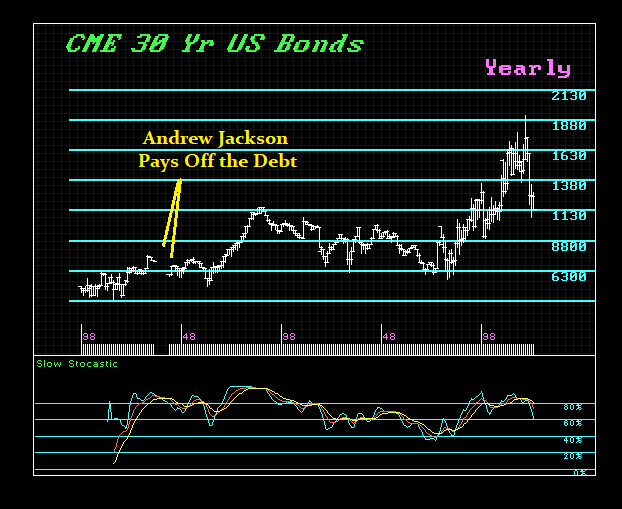
I am more concern that this will create the image that the US debt will rise sharply. The computer is already showing that bonds are entering a bear market. Trump can scream all he wants at the Federal Reserve, it is the free markets that set the long-term rates. You can see that using our datavase back to the inception of US debt, we are entering crash mode. If things heat up with Iran, this will impact China who get most of their energy from Iran and this too can undermine confidence in the invincibility of the USA.
Trump possesses extensive authority to impose duties, fees, and trade restrictions beyond traditional tariffs through Section 232 national security provisions, Section 301 unfair trade practice retaliation, IEEPA emergency powers, countervailing and anti-dumping duty processes, quota systems, and various other mechanisms. These authorities allow imposition of trade restrictions affecting hundreds of billions in imports without Congressional approval, fundamentally reshaping global trade flows through executive action. The legal basis for each mechanism varies in strength, but judicial deference to presidential authority in trade and national security matters makes successful challenges difficult.
The economic consequences would be significant make no mistake and could be political suicide for the Midterms. This would result in higher consumer prices, supply chain disruption, foreign retaliation, all as our computer is pointing to a sharp global recession into 2028. The strategic rationale is bringing back critical industries, reducing dependence on adversaries, and using trade policy as leverage for non-trade objectives like immigration control, may be noble goals. But there is NOBODY in the Trump Administration will to even look at the regulatory and taxation issues that forced many industries offshore in the first place. I even warned back in 1985 that UNLESS the CFTC and SEC were merged, the only way to provide professional funds management was to move offshore.
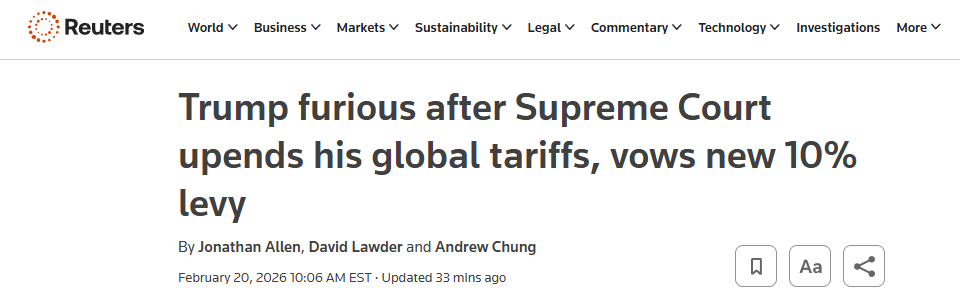
Trump has reacted claiming he will just impose a 10% tariff on everything. He was wrong to behind with listening to stupid legal advice that had to be deliberate when there were so many other rational paths to achieve the same thing. This represents a very dangerous economic nationalism that only confirms the sharp global decline into 2028. What is indisputable is that the legal authority exists, precedent has been established, and political will to use these tools aggressively has been demonstrated. The constraints are economic and political rather than legal. Trump is endangering his legacy.
His idea of bringing back American jobs may be noble, but he is listening to old-school economic that has failed and pays no attention to the progressive regulations and this constant taxing the rich and corporations and expecting them to just pay with no impact. Communism collapsed for this very same reason. It is just our turn.
The Supreme Court has ruled as I expected. I have said on Podcasts that the power over tariffs lies with Congress, not the president. I also suggested that I did not expect the Supreme Court to overrule the statue as unconstitutional. To me, the plain language was very clear: IEEPA authorizes the President to:
“investigate, block during the pendency of an investigation, regulate, direct and compel, nullify, void, prevent or prohibit . . . importation or exportation.” §1702(a)(1)(B).
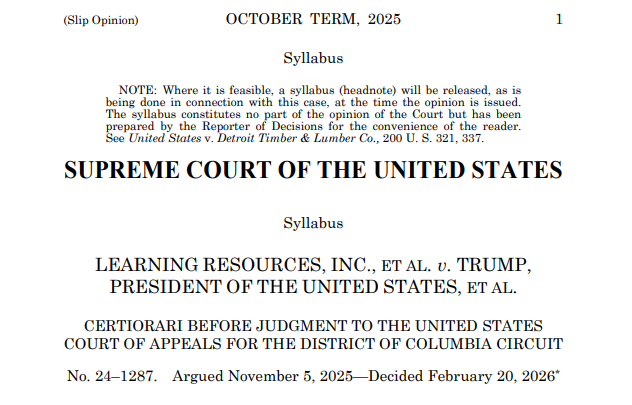
Nowhere does it authorize the power of tariffs. IEEPA does not authorize the President to impose tariffs plain and simple. I believe those in the Administration knew this would be the outcome. The judgment was vacated, and the case was remanded with instructions to dismiss for lack of jurisdiction; the judgment in No. 25–250 is affirmed. The Order states:
The judgment of the United States Court of Appeals for the Federal Circuit in case No. 25–250 is affirmed. The judgment of the United States District Court for the District of Columbia in case No. 24–1287 is vacated, and the case is remanded with instructions to dismiss for lack of jurisdiction.
We also had a renegade anti-Trump judge in the mix. The Government moved to transfer the Learning Resources case to the Court of International Trade (CIT). It argued that the District Court lacked jurisdiction under 28 U. S. C. §1581(i)(1), which gives the CIT “exclusive jurisdiction of any civil action commenced against” the Government “that arises out of any law of the United States providing for . . . tariffs” or their“administration and enforcement.” The District Court denied that motion illegally seizing jurisdiction since it was anti-Trump and granted the plaintiffs’ motion for a preliminary injunction, concluding that IEEPA did not grant the President the power to impose tariffs. 784 F. Supp. 3d 209 (DC 2025). That judge clearly had NO JURISDICTION whatsoever to make such a ruling. This is a continuing problem in our legal system. This judge should be penalized if not dismissed for an equally unconstitutional ruling our ot personal animosity.
Tariffs have helped the United States collect nearly $99 billion so far this fiscal year, which started on Oct. 1, 2025, according to the Daily Treasury Statement published on Jan. 7. To me, the law allows presidents to regulate imports during times of emergency, but it was questionable whether that regulation included tariffs, and, in particular, Trump’s large-scale tariffs.
The Trump administration argued that a 1977 law allowing the president to regulate importation during emergencies also allows him to set tariffs. Other presidents have used the law dozens of times, often to impose sanctions, but Trump was the first president to invoke it for import taxes. He classified them as “reciprocal” tariffs on most countries in April 2025 to address trade deficits that he declared a national emergency. Those came after he imposed duties on Canada, China and Mexico, ostensibly to address a drug trafficking emergency.
Multiple federal courts had ruled that Trump’s tariffs exceeded what was allowed under the law. Days after oral argument, Trump indicated in a Nov. 11 post on Truth Social that a negative decision by the Supreme Court could implicate trillions of dollars.
“The ‘unwind’ in the event of a negative decision on Tariffs, would be, including investments made, to be made, and return of funds, in excess of 3 Trillion Dollars.”
He added that the situation “would truly become an insurmountable National Security Event, and devastating to the future of our Country – Possibly non-sustainable!”
I looked at the tariffs and the only grey area was that Trump was imposing a tariff ON TOP OF what Congress authorized, he was not actually altering the Congressional tariff. The tariffs decision doesn’t stop Trump from imposing duties under other laws. While those have more limitations on the speed and severity of Trump’s actions, top administration officials have said they expect to keep the tariff framework in place under other authorities.
Can Trump still impose tariffs? The answer to that question is Yes!.
Posted originally on Feb 20, 2026 by Martin Armstrong |
The latest Eurostat release on business registrations and bankruptcies in Q4 2025 is perhaps one of the most revealing datasets on the real state of the European economy, and it confirms precisely the type of slow deterioration in confidence that I have warned about for years regarding the EU’s policy direction.
On the surface, bureaucrats will point to the 0.5% quarterly increase in business registrations across the EU as a sign of resilience. Yet at the very same time, bankruptcy declarations rose by 2.5% compared to the third quarter of 2025.
Looking deeper into the sector data makes the situation even more concerning. Registrations increased most in information and communication (+6.4%) and industry (+4.9%), while sectors tied directly to consumer demand, such as trade and construction, showed declines. Meanwhile, bankruptcies surged in accommodation and food services (+8.6%), transport (+5.6%), and even information and communication (+7.9%).
When bankruptcies rise across 6 out of 8 sectors, that reflects declining economic confidence and tightening margins across the entire economy. It is far easier to start a business than it is to maintain one. Bureaucrats choose to look at business starts rather than bankruptcies.
The sharp rise in bankruptcies in hospitality and services is particularly telling given Europe’s inflation in energy, labor costs, and regulatory compliance. Small and mid-sized businesses cannot absorb these costs the way multinational corporations can. The result is a slow liquidation cycle beneath the surface of headline GDP numbers. Entrepreneurs are the first to react to declining confidence in future policy stability. When bankruptcies rise faster than new firm formation, capital becomes less confident in long-term profitability.
The sector divergence also reflects the deeper structural transformation underway in Europe. Digital and information sectors are still attracting registrations, while traditional consumer and service sectors face insolvency pressure. That is consistent with an economy being reshaped by regulation, energy policy, and declining industrial competitiveness.
Rising bankruptcies do not immediately show up in political narratives, but they erode the tax base, increase unemployment risk, and force governments into further intervention. That intervention historically leads to more regulation and taxation, which only accelerates the liquidation cycle.
The ECM has long warned that the 2026 period would mark rising volatility driven by declining confidence in government. Rising bankruptcies alongside only marginal business creation are not a healthy expansion phase. It is the early-stage warning that the private sector is under pressure while policymakers continue to insist that the system is stable.
I have created this site to help people have fun in the kitchen. I write about enjoying life both in and out of my kitchen. Life is short! Make the most of it and enjoy!
This is a library of News Events not reported by the Main Stream Media documenting & connecting the dots on How the Obama Marxist Liberal agenda is destroying America








 Centinel2012