Episode 4989: The Fight For Indiana Against The RINOS And Republican Establishment


Posted originally on Rumble on Bannon War Room on: December 11, 2025

Episode 4990: Mike Lindell Announces Run For Governor Of Minnesota


Posted originally on Rumble on Bannon War Room on: December 11, 2025

FREDERICKS: We Need 26 GOP State Senators To Vote Yes In Indiana. We Have 40 Republicans Total. We Had 23 Yeses, But Are Now Down To 22 Because One “Solid Yes,” Ryan Mishler, Bailed Wednesday Night: “Sorry Going To Florida; Hope Things Work Out”


Posted originally on Rumble on Bannon War Room on: December 11, 2025

BANNON: You Still Have The Democrats Beating The Drum Of “Diversity Is Our Strength.” That’s Absolutely Incorrect. Our Strength Is American Citizens. Every Last Illegal Invader Is Going Home


Posted originally on Rumble on Bannon War Room on: December 11, 2025

BANNON: We’re In A Fight Now. We’re In A Dogfight. It’s Not Going To Be Easy To Hold The House, But There Is No Substitute For Victory!


Posted originally on Rumble on Bannon War Room on: December 11, 2025

WarRoom Battleground EP 908: Slander And Pedophilia, Both Recieving The Same Sentence


Posted originally on Rumble on Bannon War Room on: December 11, 2025

Episode 4988: The Threat Of Radical Islam And Sharia Law; Trump Says We’re Leading In AI


Posted originally on Rumble on Bannon War Room on: December 11, 2025

The EU and Canada Collaborate on Digital IDs


Posted originally on Dec 12, 2025 by Martin Armstrong 

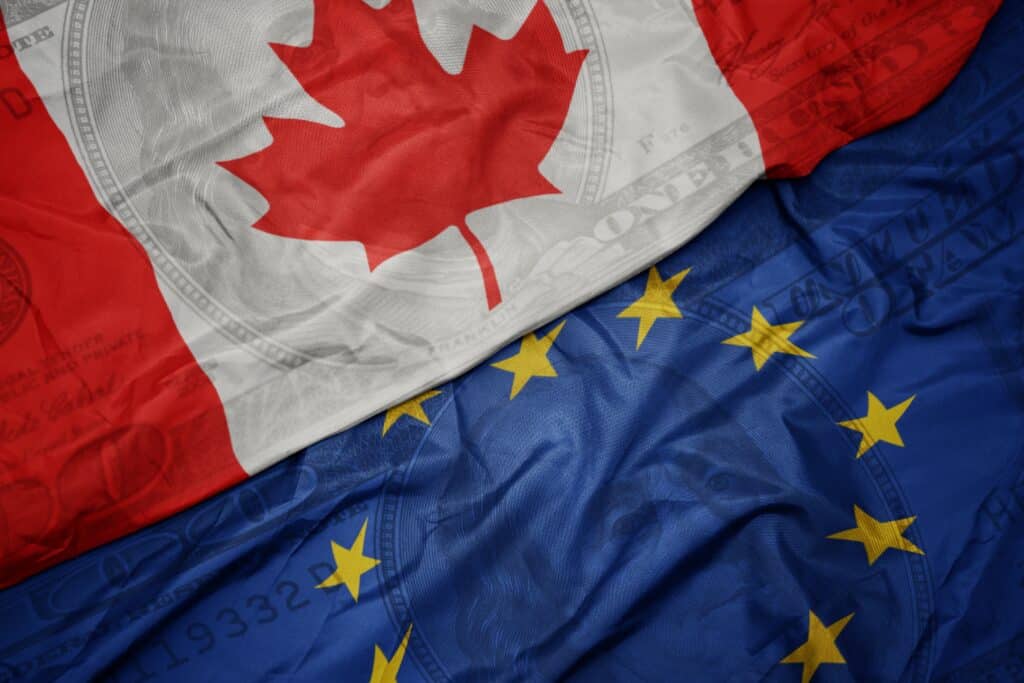
EU and Canada agree to collaborate on digital ID mutual recognition, pilots

The latest agreement between the European Union and Canada to collaborate on mutually recognized digital IDs is simply another step in what I have been warning about for years. Whenever government confidence collapses, the political class tightens control. Digital ID is not about convenience; it is about tracking capital and controlling movement as the global sovereign-debt crisis accelerates.

The danger here is obvious. Mutual recognition means a unified framework. They’re building a foundation to establish a GLOBAL digital ID. Once these systems talk to one another, you have created the architecture for a worldwide database controlled by the political elite. This is precisely what the EU has been pushing with its Digital Services Act and the infamous “digital wallet” proposal. Now they are exporting it, just as they exported their disastrous ideas on Net Zero and financial regulation. Canada, collapsing economically and politically, is following Brussels into the abyss.

The EU and Canada will jointly test a pilot for digital identity wallets. Why do two separate continents need their systems to integrate? You cannot have a cross-border digital ID without a central authority. And once the state has the ability to monitor every transaction, every movement, every piece of identification, they will inevitably link this to taxation, travel permissions, banking access, and even political compliance. This is how governments always respond in the final stage of their fiscal life cycle. Rome imposed travel permits. The Soviet Union created the internal passport. Now the West is doing the same with better technology.

Capital will flee regions that move toward centralized digital identification. This is why we are seeing the migration of capital away from Europe and increasingly away from Canada. Both are moving toward a Marxist model where the citizen exists solely to fund the state. The push for digital ID aligns perfectly with the rising authoritarian wave into 2032 as governments fight to retain power in the face of systemic collapse.

Bulgaria’s Government Resigns Amid Civil Unrest


Posted Dec 12, 2025 by Martin Armstrong |  

The entire Bulgarian government has resigned after nationwide protests following the government’s decision to join the European Union. “The government resigns today,” Rosen Zhelyazkov announced. “People of all ages, ethnic backgrounds and religions have spoken out in favour of resignation. That is why this civic energy must be supported and encouraged.”

The media portrayed the initial civil unrest as a reaction to the 2026 budget, but the root of the agitation lies with the nation relinquishing sovereignty to join the euro. The Bulgarian government resignation is symbolic; true power lies with the unelected bureaucrats in Brussels.

“The decisions of the National Assembly are meaningful when they reflect the will of the people. We want to be where society expects us to be,” Zhelyazkov said, referring to the anti-government protests. “We have no doubt that the government will receive support in the upcoming vote of no confidence. Regardless, the decisions of the National Assembly are important when they reflect the will of the sovereign,” the prime minister said.

There is massive corruption in the Bulgarian government, hence the need to hold seven snap elections after the 2020 uprising. The people will no longer have the ability to elect their representatives.  Citizens have no trust in their government and do not bother with voting, as voter turnout reached only 34.4% in June 2024. Yes, they may elect who rules Bulgaria, but the EU determines the direction the nation must take. Over 6.4 million citizens must convert to the euro on January 1.

Once Bulgaria joins, it will no longer be able to devalue its currency to remain competitive. That’s how small economies adjust in a floating system. But inside the eurozone, you’re stuck. All monetary policy decisions are made by the ECB in Frankfurt, which answers to no elected body. If Bulgaria experiences a downturn, they can’t cut rates or devalue—just like Greece in 2010. They will be told to cut pensions, raise taxes, and accept IMF mandates. That’s not sovereignty.

Bulgaria now has the luxury of taking on more debt through the European Central Bank. It may now join a war on behalf of the EU against a nation with which it had diplomatic ties throughout the years. Bulgaria is the poorest member of the union; Brussels is not going to allow it to sway the course of the EU agenda in any capacity.

Americans Charged $1 Billion to Buy Now Pay Later Platforms over Black Friday


Posted originally on Dec 12, 2025 by Martin Armstrong |  

Debt Burden

The private debt crisis, coupled with a consumer-based economy, is a recipe for disaster. Americans followed the age-old thinking of “buy now if it will cost more tomorrow” during Black Friday and Cyber Mondy sales, leading to the strongest year of sales on record. The problem is that a large percentage of buyers opted to “pay later” through Buy Now Pay Later (BNPL) payment plans, which are contributing to nationwide household debt levels.

Over $1 billion in sales over Black Friday/Cyber Monday was charged through BNPL platforms, a 4.2% YoY increase, according to shopping data from Adobe, which predicts total BNPL spending will reach $20.2 billion by the end of the holiday season.

BNPL offers interest-free installment payment options and is listed as a payment option during most online checkouts. BNPL loans grew from 16.8 million in 2019 to 180 million in 2021 for a total of $2 billion. By 2022, popularity grew and nearly a quarter of US consumers reported using BNPL for a charge. Those with subprime credit are more likely to use this option. The younger generations who favor mobile purchases are also far more likely to use this option as they may not have a credit card. Worse, BNPL provides an illusion of stronger purchasing power.

About 41% of BNPL users were unable to make payments on time, up from 34%, and 60% of users hold multiple loans. These purchases are generally not for big ticket items. In fact, the average loan is $142 per transaction. Apparel, clothing, shoes, and accessories account for up to 45% of all BNPL orders, followed by electronics at 30%. There has been a rise in consumers using this method for essentials like grocery—a massive red flag for the economy.

Total US household debt hit a record $18.585 trillion in Q3 2025, up from $18.39 trillion in Q2. The average debt per consumer stands at around $105,000 per the New York Fed’s Household Debt and Credit Reporting. Around 70% of that debt ($13.072 trillion) is tied up in mortgages. Yet, American consumers are taking on more debt than necessary or sustainable and holiday spending using “pay later” options are a negative indication of what’s ahead.