Big Problems Erupt in Angola – Chinese Citizens Flee as Anger Erupts Due to Belt and Road Consequences


Posted originally on CTH on August 20, 2025 | Sundance

HatTip to Ben for calling attention to this remarkable story.

Essentially China’s “Belt and Road” initiative is a system of China putting massive infrastructure investment funds into a targeted country in exchange for their ability to extract resources needed for Chinese expansion. However, several nations are now rising up against the Chinese influence as it surfaces in the lives of the citizens.

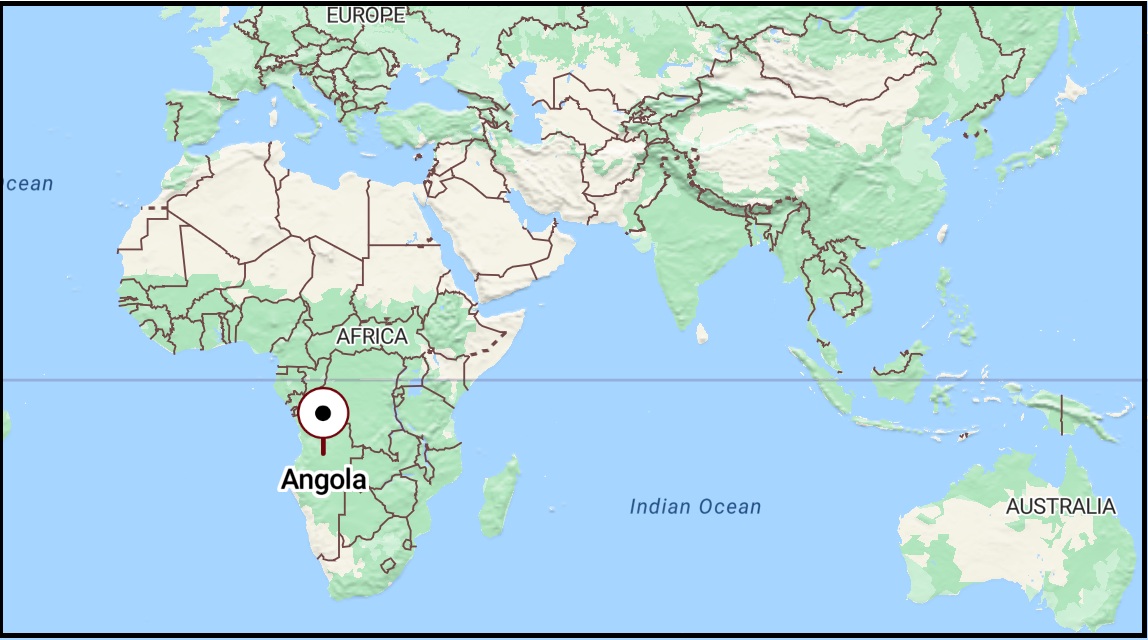
Angola is a case study in China investing billions and with the investment a large number of Chinese citizens arrive set up businesses there.  Over time resentment against the Chinese has been building.  Then a flashpoint with a massive jump in gas prices.  Suddenly, anarchy erupts, and all the Chinese businesses are looted, some even killed in the violence.

[READ STORY HERE]

China is now evacuating some of the 300,000+ Chinese citizens from the region, and the Chinese embassy is urgently warning people about the escalating crisis.

Remember when Tunis erupted at the origin of the “Arab Spring”?  That was a combined economic and cultural flashpoint. This escalating problem in Africa has a similar theme to it.
People often talk about the ‘strength’ of China’s economic model; and indeed within a specific part of their economy -manufacturing- they do have economic strength.  However, the underlying critical architecture of the Chinese economic model is structurally flawed and President Trump with his current economic team understand the weakness better than all international adversaries.

Lets take a stroll and lightly discuss.

China is a central planning economy.  Meaning it never was an outcropping of natural economic conditions.  China was/is controlled as a communist style central-planning government; As such, it is important to reference the basic structural reality that China’s economy was created from the top down.

This construct of government creation is a key big picture distinction that sets the backdrop to understand how weak the economy really is.

Any nations’ economic model is only as stable (or strong) as the underlying architecture or infrastructure of the actual country.

Think about economic strength and stability this way: If a nation was economically walled off from all other nations, can it survive?  …can it sustain itself?

In the big picture – economic strength is an outcome of the ability of a nation, any nation, to support itself first and foremost.   If a nations’ economy is dependent on other nations’ for it to inherently survive it is less strong than a nation whose economy is more independent.

You might not realize it, but China is an extremely dependent nation.

When the central planning for the 21st century Chinese Economy was constructed, there were several critical cultural flaws, dynamics exclusive to China, that needed to be overcome in order to build their economic model.  It took China several decades to map out a way to economic growth that could overcome the inherent critical flaws.

♦Because of the oppressive nature of the Chinese compliant culture, the citizens within China do not innovate or create.  The “Compliance Mindset” is part of the intellectual DNA strain of a Chinese citizen.

Broadly speaking, the modern era Chinese are not able to think outside the box per se’ because the reference of all civil activity has been a history of box control by government, and compliance to stay (think) only within the approved box.  The lack of intellectual thought mapping needed for innovation is why China relies on intellectual theft of innovation created by others.

American culture specifically is based around freedom of thought and severe disdain of government telling us what to do; THAT freedom is necessary for innovation.  That freedom actually creates innovation.

Again, broadly speaking Chinese are better students in American schools and universities because the Chinese are culturally compliant.  They work well with academics and established formulas, and within established systems, but they cannot create the formula or system themselves.

♦ The Chinese Planning Authority skipped the economic cornerstone.  When China planned out their economic entry, they did so from a top-down perspective.  They immediately wanted to be manufacturers of stuff.  They saw their worker population as a strategic advantage, but they never put the source origination infrastructure into place in order to supply their manufacturing needs.   China has no infrastructure for raw material extraction or exploitation.

China relies on:  importing raw material, applying their economic skillset (manufacturing), and then exporting finished goods.  This is the basic economic structure of the Chinese economy.

See the flaw?

Cut off the raw material, and the China economy slows, contracts, and if nations react severely enough with export material boycotts the entire Chinese economy implodes.

Again, we reference the earlier point: Economic strength is the ability of a nation to sustain itself.  [Think about an economy during conflict or war]  China cannot independently sustain itself, therefore China is necessarily vulnerable.

♦The 800lb Panda in the room is that China is arguably the least balanced economy in the modern world.  Hence, China has to take extraordinary measures to secure their supply chain.  This economic dependency is also why China has recently spent so much on military expansion etc., they must protect their vulnerable interests.

Everything important to the Chinese Economy surrounds their critical need to secure a strong global supply chain of raw material to import, and leveraged trade agreements for export.

China’s economy is deep (manufacturing), but China’s economy is also narrow.

China could have spent the time to create a broad-based economy, but the lack of early 1900’s foresight, in conjunction with their communist top-down totalitarian system and a massive population, led to central government decisions to subvert the bottom-up building-out and take short-cuts.  Their population controls only worsened their long term ability to ever broaden their economic model.

It takes a population of young avg-skilled workers to do the hard work of building a raw material infrastructure.  Mine workers, dredge builders, roads and railways, bridges and tunnels etc.  All of these require young strong bodies.   The Chinese cultural/population decisions amid the economic builders precluded this proactive outlook; now they have an aging population and are incapable of doing it.

This is why China has now positioned their economic system as dependent on them being an economic bully.  They must retain their supply chain: import raw materials – export finished goods, at all costs.

This inherent economic structure is a weakness China must continually address through policies toward other nations.  Hence, “One-Belt / One-Road” is essentially their ‘bully plan’ to ensure their supply chain and long-term economic viability.

This economic structure, and the reality of China as a dependent economic model, also puts China at risk from the effects of global economic contraction.

China’s Industrial Robots are Changing Manufacturing


Posted originally on Aug 20, 2025 by Martin Armstrong |  

China is leading the world in industrial robots or programmable machines that are pioneering fast and cost-effective manufacturing. China currently holds over 50% of the world market share in industrial robots capable of assembly, production line handling, service tasks, machine feeding, palletizing, packaging, and more. Automation is fueling Chinese manufacturing in every sector from automotives to electronics. The advancement of AI will soon provide China with a cutting-edge ability to usher in a new era of humanoid robots that will become a portion of the future workforce.

China installed around 290,000 new industrial robots in 2024, nearly twice as many as the European Union, the United States, and Japan combined. Around 86,000 industrial robots went onto the market across the EU last year, while Japan implemented 43,000 and the US around 34,000. The market share of industrial robots was expected to surpass 2.1 million in 2024, valued at around $9.4 billion USD.

Chinese manufacturers are bypassing rising labor costs and an aging workforce through the use of robots. Factories are scaling their operations to turn China into the world’s manufacturing base. China has the ability to produce these robots at one-third the cost of other nations as it produces 90% of the components required for AI industrial robots. However, China is heavily reliant on exports for the remaining 10% of key components. Foreign robot makers like FANUC, ABB, and Yaskawa have major production facilities in China, facilitating knowledge transfer to Chinese firms.

Will robots and AI replace human workers? They’ve already begun to do so. Some estimates believe that automation has replaced 1.7 million workers in China over the past 25 years. Around 80% to 90% of low-skilled labor that only requires simple or repetitive tasks has been assigned to robots. In auto manufacturing, for example, robots have been trained to perform 70% of assembly from welding to painting. Estimates believe that around 35.8% of China’s entire workforce will be automated by 2049, replacing 278 million Chinese workers.

These robots are advancing rapidly. They’ve proven effective in manufacturing, but with machine learning and language models, they’re beginning to seep into virtually every sector, including health care and education. The Chinese government has stated it plans to become a world leader in humanoid robots by 2027, inserting $138 billion into a state venture investment fund and providing private sector incentives for any company wishing to invest in the technology.

New robots are equipped with real-time sensor data and the ability to make decisions, collaborate with human workers, and perform multi-step advanced tasks. To train the AI robots, China has developed major human-robot hybrid training warehouses.

Focusing solely on the basic industrial robots, China has pioneered modern manufacturing. Cheap labor was once China’s stronghold over manufacturing, but now, the nation is relying more on trained technology than a human workforce. Creative destruction is happening at a rapid pace where the future workforce will be indistinguishable from what we see today.

Comment from Visitor of Washington, DC


Posted  originally on Aug 19, 2025 by Martin Armstrong |  

Washington DC Night Capital Building

COMMENT FROM DC VISITOR:

D.C. was clean and safe. There were some National Guard troops walking around, but most of them were just kids fooling around and taking pictures in front of monuments like the rest of the tourists.

The city was skewed heavily to the left. I saw a few anti-Israel and anti-Trump protestors who seemed a little unhinged. The people I spoke with said the city was in absolute chaos during the George Floyd/BLM protests and that the National Guard and ICE raids were nothing in comparison.

I also went to the Spy Museum, which was a lot of fun. They had a wall honoring Ukraine with a picture of Putin in the crosshairs of a gun scope. The Cold War was the pinnacle of US espionage in recent history, and Russia and the USSR were used interchangeably. I skipped the 9/11 hall because it was a giant lie–we know what happened. The museum also claimed that only rogue spies in the US used torture mechanisms in modern days. There was one sentence on MKUltra and no mention of Project Monarch or any of the psychological warfare tactics.

I think they should send troops to the other big cities where crime has been allowed to run rampant in recent years. It felt safe to walk around at night, which is more than I could say about Philly or NYC. I’m sure the criminals cleared out because law and order were actually required and visible. Violent crime shouldn’t be downplayed. It’s preventable, and it would be nice if America became a high-trust society where we don’t fear other civilians on the streets. The troops and NG weren’t bothering anyone, but their presence alone probably commanded some basic civility.

President Trump and President Zelenskyy Hold a Short Press Availability in the Oval Office


Posted originally on CTH on August 18, 2025 | Sundance 

President Trump and Ukraine President Volodymr Zelenskyy hold a press availability in the Oval Office before going into a HIGH STAKES bilateral discussion and later meetings with European leaders.

President Trump notes that immediately following the discussions, he is scheduled to call Russian President Vladimir Putin to give him an update on the discussion and potentially schedule a trilateral meeting between Putin, Zelenskyy and Trump.

.

President Trump Hosts Ukraine President Zelenskyy and EU Leaders at the White House – 12:30pm ET Livestream


Posted originally on CTH on August 18, 2025 | Sundance

President Trump hosts Ukrainian President Volodymyr Zelensky and European leaders at the White House. Livestream Links Below:

  • 12:00PM – European Leaders arrive at The White House
  • 1:15PM – President Trump greets Ukrainian President Zelensky, holds Bilateral Meeting
  • 2:15PM – President Trump greets European Leaders, participates in a Family Photo
  • 3:00PM – President Trump holds Multilateral Meetings with European Leaders

.

.

Thought Crime Hosts Discuss the Significance of President Trump’s Meeting With Putin in AK


Posted originally on Rumble By Charlie Kirk show on: August,16, 2025

The Alaska Summit + Oil and AI + AMA | Kovalik | 8.15.2025


Posted originally on Rumble By Charlie Kirk show on: August, 16, 2025

Why President Trump’s Pro-Energy Agenda is So Crucial For America


Posted originally on Rumble By Charlie Kirk show on: August, 16, 2025

The Buried Lede of President Trump’s Sit-Down With Putin That No One is Talking About


Posted originally on Rumble By Charlie Kirk show on: August, 16, 2025

Breaking Down the Geopolitical Stakes of President Trump’s Meeting With Putin


Posted originally on Rumble By Charlie Kirk show on: August, 16, 2025