Powell Concerned Over Central Bank Independence


Posted originally on Jan 29, 2026 by Martin Armstrong |  

JeromePowellFedChair

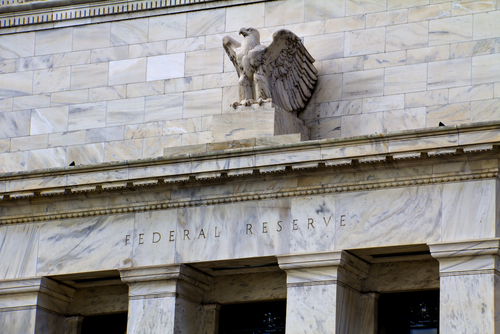
Jerome Powell came out to defend the integrity and sovereignty of the Federal Reserve. “The point of independence is not to protect policymakers or anything like that. It is just that every advanced economy and democracy in the world has come around to this common practice. It’s just an institutional arrangement that has served the people well, and that is to have a separation between — to not have direct elected official control over the setting of monetary policy,” he said.

“The reason is that monetary policy can be used, you know, through an election cycle to affect the economy in a way that will be politically worthwhile,” Powell said. “If you lose that, it’s going to be hard to retain it, and we haven’t lost it. I don’t believe we will… it’s enabled central banks generally not to be perfect, but to serve the public well.”

I do not agree with Trump that political leaders should control the Federal Reserve or dictate monetary policy. That would be a serious mistake. Politicians operate on short election cycles and will always favor policies that produce immediate results, regardless of the long-term consequences. However, that does not mean the Federal Reserve is genuinely independent, nor does it mean that its structure has “served the people well,” as Powell claims.

The Federal Reserve is appointed by politicians, confirmed by politicians, and ultimately exists to support government financing. Its primary function today is to ensure that government debt can be issued and serviced. If it were truly independent, it would refuse to accommodate endless deficit spending. It does not. Instead, it responds to fiscal excess by monetizing debt and then pretending inflation is something mysterious beyond its comprehension.

The Fed was created in 1913 as a regional system precisely because capital flows change with the seasons. Crops are planted, money flows one way; harvest arrives, it flows another. That design worked because it was decentralized. What destroyed that structure was not politicians meddling in interest rates, but war. World War I forced the Fed to abandon its original mandate and become a funding arm of government debt. From that moment forward, independence ended.

The Fed today is appointed by politicians, confirmed by politicians, and operates entirely to accommodate government borrowing. If it were truly independent, it would refuse to monetize debt. Instead, it has enabled the largest expansion of government liabilities in human history while claiming neutrality. This is why the entire debate between “Fed independence” and “political control” is a distraction that neither can control inflation, and confidence itself is eroding.
December’s CPI Report – USA


Posted originally on Jan 14, 2026 by Martin Armstrong |  

Inflation up

The Consumer Price Index (CPI) report for December 2025 has been released, and although it may appear uneventful on the surface, it confirms the broader trend. Headline CPI rose 0.3% last month and 2.7% year-over-year, matching November’s pace and forecasts. Core inflation, excluding food and energy, rose 2.6% on an annual basis. The reality is that the Federal Reserve’s 2% target has not been attainable.

Price pressures have remained persistent since 2020. The basic necessities for survival continually increase. Shelter accounts for over one-third of CPI and is up 3.2% on the yearly and 0.4% monthly. Food prices are up 0.7% monthly and 2.6% annually, with energy coming in at 0.3% and 2.3% respectively.

Every time inflation rises, the same two culprits are dragged out by the press and politicians: tariffs and the Federal Reserve. Prices rise, and immediately we are told tariffs are “taxes on consumers” or that the Fed “printed too much money.” Both explanations are simplistic, politically convenient, and fundamentally wrong.

Tariffs have not caused food and shelter to continually rise. Inflation is born on the fiscal side of government, not the monetary side. This is the critical distinction that most economists either do not understand or deliberately ignore.

The Federal Reserve does not create inflation. It creates debt instruments. When the Fed expands its balance sheet, it is not dropping money out of a helicopter into the hands of the public. The Fed is merely swapping one asset for another. Inflation emerges when the government, the largest borrower, spends beyond its productive capacity.

Printing money without spending it does nothing. Borrowing money without spending it does nothing. Inflation occurs only when government deficits are monetized through fiscal policy, where money is injected into the economy to cover political promises, wars, social programs, and bailouts. This is why inflation exploded after 2020 when governments worldwide unleashed trillions in direct spending while halting productive output to zero.

The Federal Reserve reacts to inflation, but it does not create it. Trump is wrong for demonizing Powell and attempting to pin criminal charges on him. Removing the Fed chairman will not somehow tame inflation or reduce it by a single basis point. If anything, arresting the head of the central bank would only further erode confidence. The FOMC could drop rates into the negatives but it would not erase the trillions in deficits or offset reckless spending.

The Federal Reserve Was Brilliant Until Politics Destroyed It


Posted originally on Dec 1, 2025 by Martin Armstrong |  

Federal Reserve map usa 12 districts

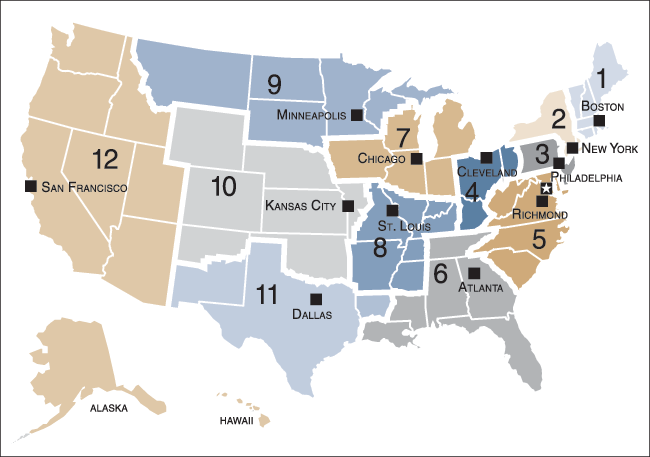
People love to blame the Federal Reserve for everything under the sun because it is easier than admitting the real problem: government. The tragic part of this entire monetary experiment is that the Fed, as originally designed in 1913, was brilliant. Each regional branch operated independently, responding to local capital flows instead of political agendas in Washington.

Money moved with the seasons. When crops were planted, capital flowed one way; when the harvest came in, it flowed another. The system was designed to absorb these fluctuations smoothly. It was never supposed to be a political arm of the federal government. In fact, the Fed was owned by the member banks and functioned as a true lender of last resort — buying corporate paper, not government debt. That allowed elastic money that expanded and contracted with economic activity. Corporate paper matures. Government debt does not.

Then came World War I, and with it, the beginning of the end.

Washington needed to borrow staggering amounts of money, so the government told the Fed: stop buying corporate paper and buy our debt instead. From that moment forward, the independence of the branches was eroded. The original structure was discarded in favor of centralized political control. Roosevelt finished the job during the New Deal by usurping the authority of all the regional banks and concentrating everything in Washington under a single chairman. What should have remained a decentralized system responding to capital flows became a one-size-fits-all political tool.

Federal Reserve Eagle

This is why I say the central bank does not need reform, but the government does.

The Fed does not create inflation; the fiscal side of the ledger does. Once Washington discovered that it was less inflationary to borrow than to print outright, the entire system became debt-driven. And because government debt never expires, the money supply never contracts. If the Fed does absolutely nothing, the money supply still expands because the government continually rolls the debt and pays interest on interest. That is why we are in a perpetual cycle of rising obligations.

The Fed has been politically gutted. Every time Washington meddles with the structure, nothing is ever restored afterward. There is no long-term planning, no institutional memory. When I go down to Washington and speak with people, I feel as though I’m explaining basic arithmetic to a grade-school classroom. The political class does not understand markets, capital flows, or historical monetary structure.

The Fed was designed to stabilize regional capital flows. Today, it is blamed for inflation it does not create, forced to manage debt it does not issue, and expected to solve political failures it did not cause. The lender-of-last-resort function only made sense when the Fed bought corporate paper that rolled off the books. Government debt has destroyed that mechanism. Once money becomes tied to sovereign debt, it never contracts, rather it becomes perpetual.

This is why our monetary system is collapsing into the Sovereign Debt Crisis. Not because of the Fed, but because government destroyed the very architecture that once allowed the economy to breathe.

Bannon: They Only Talk About The 1st Amendment When They’re Losing, We Don’t Give A Tinker’s Damn About Your Thoughts On The 1st Amendment


Posted originally on Rumble on By Bannon’s War Room on: September, 18, 2025