Posted originally on CTH on April 28, 2025 | Sundance
Attorney General Pam Bondi makes her 79th appearance on Fox News to outline the current DOJ results from the ongoing illegal alien deportation operations, border security operations and drug enforcement operations.
Within the interview Attorney General Bondi gives results from the ICE/DHS/DEA raid in Colorado Springs and other enforcement measures around the country. WATCH:
Posted originally onApr 28, 2025 by Martin Armstrong
Countless nations have increased their customs requirements as the freedom of movement slowly becomes restricted. The European Union now requires ETIAS for entry. The United Kingdom now requires an Electronic Travel Authorization (ETA). The United States has recently made headlines for enforcing stricter border patrol, but the stories are extremely misleading and intended to paint the United States as increasingly authoritarian under the Trump Administration.
The US Embassy in Tokyo announced that Japanese individuals applying for a DS-160 or nonimmigrant visa may need to submit their social media accounts. Travelers may be asked to submit any form of social media they’ve used during the past five years. The US government can deny entry to anyone who fails to comply with the requirements. This has produced misleading reports that the US government is specifically targeting Japanese travelers, but the government has the authority to search anyone from any nation, including US citizens.
The US Department of State (DOS) and the US Citizenship and Immigration Services (USCIS) began conducting limited social media account reviews for visa applicants and immigrants in 2019, although these searches are rare. Border Patrol has the right to inspect the electronic devices of any traveler. However, this was not a requirement for entry.
“We are looking solely for social media identifiers. Consular officers will not request user passwords. The information will be used, as all information provided during a visa interview and on the visa application, to determine if the applicant is eligible for a visa under existing U.S. law. Collecting this additional information from visa applicants will strengthen our process for vetting applicants and confirming their identity,” the FAQ’s on the updated 2019 guidelines stated. “Consular officers cannot deny visas based on applicants’ race, religion, ethnicity, national origin, political views, gender, or sexual orientation,” the original guidelines state. One must question whether political views will be ignored in 2025.
“Any traveler entering the U.S. is subject to CBP inspection,” CBP Assistant Commissioner Hilton Beckham said in a statement to USA TODAY. “CBP follows strict policies and directives when it comes to searching electronic media. These searches are rare, highly regulated, and have been used in identifying and combating serious crimes, including terrorism, smuggling, human trafficking, and visa fraud. Any claims of politically motivated searches are completely unfounded.”
Additionally, the United States is NOT the only nation that can search through social media accounts. The European Travel Information and Authorization System (ETIAS) outright asks travelers to submit their social media history. Social media information is now required for visa-free travel authorization under ETIAS. Actual searches at the border are thought to be less common because the governments already have that information.
The Tokyo embassy’s report led to numerous Japanese travelers angrily taking to the internet to claim that they will never travel to the United States, as they are being specifically targeted. It is fake news. The media is keen to run any story regarding travelers turned away at the US border, but nearly all of those cases are the result of improper documentation. We never hear stories of Americans turned away at foreign borders, but it happens every day. You cannot enter a foreign nation without proper documentation — end of story. Legacy media is attempting to mislead the world into believing the United States is a dangerous nation under a fascist dictator who is eager to deport anyone without a red MAGA hat to El Salvador. It is all absolute nonsense. There should be far more concern regarding the new ETIAS and ETA programs if anything.
Posted originally on Apr 28, 2025 by Martin Armstrong
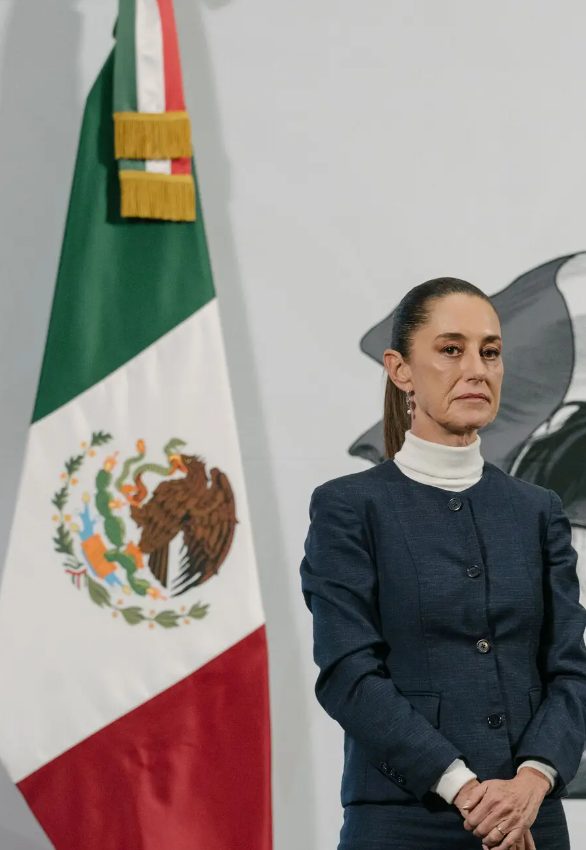
Mexican President Claudia Sheinbaum has launched a new employment program as the nation braces for thousands to return home amid America’s deportation campaign. BBVA Research believes there are around 4.1 Mexican nationals illegally residing in the US, accounting for around 37% of the total undocumented population. Sheinbaum’s new proposal has been met with much criticism by the Mexican people, as they believe the government abandoned rural areas long ago.
The Conexión Empresarial Paisano platform is listing 63,880 new job openings through 220 companies across all 32 states. The current plan is to provide 50,000 of these new openings to people deported or willing to return from the United States. “Mexico wants them to know they are welcome and that they can find dignified, well-paying work,” said Francisco Cervantes Díaz, president of the CCE, to Síntesis.
Salaries are pennies in comparison to US minimum wage, although the cost of living in Mexico is drastically less. Operational roles will begin with a monthly salary between $424 and $843, while tech jobs will earn between $800 and $1,600 monthly. The average cost of living in Mexico for a single person is around $1,300 per month, according to some estimates, with a family of four averaging a bit beneath $3,000. One-bedroom rentals range from $329-$563 monthly, while a three-bedroom could cost upward of $990. Naturally it is cheaper to live outside major cities, as monthly housing costs in places like Monterrey or Mexico City are much higher.
It is clear to see why people fled Mexico for a better life in the United States, with even the lowest paying part-time jobs offering more. Based on 2024 data from BBVA Research, 35% of Mexicans fell in the “working poor” category, which is a historic low. Yet, in 2022 43.5% of the population lived in poverty. The average person earns a mere $373 monthly or 7,441 pesos.
It will be difficult for someone earning a living in the US on the USD to return to a nation offering a fraction of the pay in pesos. Millions were sending dollars back to their families in Mexico, aiding the Mexican economy in general. People are justifiably upset that the government is now offering jobs to people who have already chosen to flee the nation, believing this is merely political virtue signaling.
Posted originally on CTH on April 27, 2025 | Sundance
President Trump holds an impromptu press conference traveling back to the White House from Morristown, New Jersey.
President Trump departed Marine One with Philadelphia Eagles Super Bowl Champion Saquon Barkley, then takes questions. The topics covered his message to President Putin, the Zelensky meeting, Iran – no bombs needed, Zelensky meeting #2, what Zelensky said, Crimea, opinion on Russian President Putin, actions vs Russia, taxes and tariffs, the Russia deadline, relationship with Zelensky, the Crimea factor, Virginia Giuffre, Tariffs Talks with China, Melania’s birthday dinner, and the Wisconsin Judge arrest. WATCH:
Posted originally on CTH on April 27, 2025 | Sundance
Secretary of State Marco Rubio appears on NBC Meet the Press to discuss the ongoing negotiations to bring a ceasefire to the conflict between Ukraine and Russia.
Secretary Rubio notes the ongoing discussions have positive indications but also concerning elements where there are demands that are challenging to fulfill. Ultimately, the goal is to stop killing people and achieve peace. At the end of the day the USA has funneled billions of dollars into what appears to be a never-ending conflict, and our willingness to maintain support is close to an end. WATCH:
[Transcript] QUESTION: And joining me now is Secretary of State Marco Rubio. Secretary Rubio, welcome back to Meet the Press.
SECRETARY RUBIO: Good morning. Thanks.
QUESTION: Well, good morning to you. Thank you so much for being here. President Trump is about to mark his 100th day in office. It comes as a key campaign promise is to end the war in Ukraine and against the backdrop of that extraordinary meeting between President Trump and President Zelenskyy. Mr. Secretary, is Russia and Ukraine now closer to a deal in the wake of that meeting?
SECRETARY RUBIO: Well, I think they’re closer in general than they’ve been any time in the last three years, but it’s still not there. And as I said and he has said and others have said, he’s done an extraordinary job at the highest levels of our government. The President has put out everybody you can imagine – Ambassador Witkoff, myself, the National Security Advisor, the Vice President – been involved and engaged in this effort to bring the two sides closer so we can have a path to peace.
By the way, that’s something that should be celebrated. He’s trying to end a three-year war that has no military solution, where every day people are dying, especially on the Ukrainian side, in many cases civilians and children, as we’ve seen the images over the last few weeks. He’s trying to bring this war to an end. And we’ve made real progress. But those last couple steps of this journey were always going to be the hardest ones, and it needs to happen soon. We cannot continue, as I said, to dedicate time and resources to this effort if it’s not going to come to fruition.
So the last week has really been about figuring out how close are these sides really, and are they close enough that this merits a continued investment of our time as a mediator in this regard.
QUESTION: What is the timeline? Are you talking weeks or months? How long are you willing to give them to reach a peace agreement?
SECRETARY RUBIO: Well, I always think it’s silly to set a specific date or whatever. But I can just tell you that almost a hundred days into this presidency, the President has dedicated a tremendous amount of time and energy to this, and we think we’ve brought the sides closer than they’ve been in a very long time. But we’re not there yet, and it needs to start happening. We need to start – I think this is going to be a very critical week. This week is going to be a really important week in which we have to make a determination about whether this is an endeavor that we want to continue to be involved in, or if it’s time to sort of focus on some other issues that are equally if not more important in some cases.
But we want to see it happen. There are reasons to be optimistic, but there are reasons to be realistic, of course, as well. We’re close but we’re not close enough.
QUESTION: Let’s talk about what we’ve heard from and seen from President Trump online, who now says he wants to deal with President Putin quote “differently” through banking or secondary sanctions. Will President Trump follow through with imposing new sanctions against Russia?
SECRETARY RUBIO: Well, first of all, I’m not going to – the President – we have multiple options, frankly, to address this and to deal with all of this, but we don’t want to get to that point. This is still not the time. I think what the President is saying, and has been saying for some time now, is he is aware that he has these options – people ask him about it all the time – but what he really wants is a peace deal. He wants the dying and the killing to stop.
This is a terrible war. It’s cost the lives of thousands of people. Billions of dollars and generational destruction on the – especially on the Ukrainian side. We want the war to end. You saw yesterday at the Pope’s mass there was talk about war and how it needed to stop. The Pope – the late Pope was celebrated for being a peacemaker and trying to talk about these things. We should all be happy that we have a president of the United States in Donald J. Trump who wants to end and prevent wars, and that’s what we’re trying to do here.
And so ultimately, look, if it doesn’t happen, it doesn’t come to fruition, then as a nation-state there are options that we have for those who we hold responsible for not wanting the peace. But we prefer not to get to that stage yet because we think it closes the door to diplomacy.
QUESTION: Well, the President has made a number of demands against Ukraine. Just last month the President told me he might impose penalties against Russia. I guess given the frustrations that he is voicing, Mr. Secretary, why hasn’t he imposed sanctions yet?
SECRETARY RUBIO: Well, because I think we’re still hoping to see that this effort works out in diplomacy and that we can bring these two sides closer together. I mean, the minute you start doing that kind of stuff, you’re walking away – you’re walking away from it. You’ve now doomed yourself to another two years of war, and we don’t want to see it happen.
I think what’s important and really weighs is there is no other country, there is no other institution or organization on the earth, that can bring these two sides together. No one else is talking to both sides but us, and no one else in the world can make something like this happen but the President.
This is a very significant responsibility and a really important opportunity, and we want to make sure that we work it all the way through, that we don’t walk away from something that can actually work or that can actually lead to peace. But we also don’t want to continue to spend time on something that’s not going to get us there. So throughout this process, it’s about determining do both sides really want peace, and how close are they or how far apart they are after 90 days of effort here, over 90 days of effort. That’s what we’re trying to determine this week.
There are reasons to be optimistic, and there are also reasons to be concerned. It’s complicated. If this was an easy war to end, it would have been ended by someone else a long time ago. But right now, the only one who can bring these two sides together to end this war is our president, President Trump, and we’re doing everything we can to see if we can get that done here over the next few days.
QUESTION: But let me ask you about some of the language you’ve taken. Just three years ago you co-sponsored a Senate bill barring the United States from recognizing Russian claims to any portion of Ukraine’s land. Let me read you part of what you said. Quote:
“Vladimir Putin is the real aggressor in this war, and he is attempting an unjustified takeover of a sovereign democratic country. The United States cannot recognize Putin’s claims or we risk establishing a dangerous precedent for other authoritarian regimes like the Chinese Communist Party to imitate. What message does it send to China and other adversaries if the United States allows Russia to keep the land it’s illegally claimed?”
SECRETARY RUBIO: Well, first of all, I would say that right now there’s a lot of press reports about this, that, or these concessions or that concession. A lot of things have been discussed. And the reason why those things are being discussed is very simple, not because we’re going to force anyone to do anything or pressure anyone to do anything like this, but because we need to understand what are the options to bringing about an end to the war. We need to be grownups and realistic here. In any negotiated end to a war, both sides get something and both sides have to give something up. That’s a reality.
Without speaking specifically about that or another, you wrote a – you talk about – that was back in September of 2022. Since September of 2022, this war has continued. Thousands of more people have died, generational destruction that Ukraine’s going to spend two generations rebuilding from. This is a war that needs to end now.
And so in order for this war to end, there are things Russia wants that it will not get, and there are things Ukraine wants that it will not get. If it wasn’t the case, that would have been done a long time ago. No one here is claiming that one side is going to unconditionally surrender to the other and bring this to an end, but that’s why diplomacy can be difficult and time-consuming, but it is the only way to end this conflict.
There is no military solution to this war. The only solution to this war is a negotiated settlement where both sides are going to have to give up something they claim to want and are going to have to give the other side something they wish they didn’t. That’s how you end wars and that’s what we’re trying to achieve here so more people won’t die. There are people who will die today in this war because there is no peace. We don’t want to continue to have to say that. Every time you turn on the news and they said, well, another missile strike, another – all these things will continue to happen. This could get even worse in the months to come.
QUESTION: Yeah. President Putin has never acknowledged Ukraine’s right to exist, so why do you trust that he won’t invade Ukraine again or another European country?
SECRETARY RUBIO: Well, I don’t think peace deals are built on trust. I think peace deals have to be built on verification, have to be built on facts, have to be built on action, have to be built on realities. So this is not an issue of, well, we’re – of trust. It’s an issue of building in these sorts of things – verification, security guarantees, things that have been discussed in the past. All these things are being talked about here, all of these things.
QUESTION: Yeah.
SECRETARY RUBIO: But right now its not the time – we’re trying to bring two sides together. The last thing you want to do is give some side – one of the two sides an excuse to walk away from this effort. We’re just trying to achieve peace. At the end of the day, let me remind everybody what we are trying to do is end a war that has cost a lot of money to us, to our allies; cost a lot of lives; destroyed a lot of lives; forced people by the millions to leave their country, millions of Ukrainians that no longer live in the country and have not been able to come back. We just want all this stop, and we’re trying to find whether we can play a role to make that happen.
I hope – everyone should hope that we’re successful. Instead of rooting against President Trump, everyone should be hopeful that President Trump can bring this war to an end because it truly at this point is not good for anybody. It may not work out. Peace deals are hard. But we are trying, and I think the President deserves credit for spending this much time and this much energy and these many resources to try to bring about this outcome of peace.
QUESTION: All right, Mr. Secretary, let’s turn to China and the President’s trade war. President Trump said he has spoken directly with President Xi Jinping. Chinese officials, though, say that no talks have taken place about a trade war. Can you help us to understand where this stands? Has President Trump spoken to President Xi after imposing those 145 percent tariffs?
SECRETARY RUBIO: Well, I mean, just like the previous answer, I think I’m not going to be commenting on who talked to who and what they talked about, because obviously this is also a high-stakes negotiation. The fundamental fact is this: For 30-something years, the Chinese have gotten away with unfair trade practices – not just unfair, outrageously unfair trade practices.
QUESTION: Yeah.
SECRETARY RUBIO: It’s just very simple. Chinese companies can do whatever they want in America. American companies can only do what the Chinese allow them to do in China, and it’s very limited, and every year it gets more and more limited. They flood not just us but they flood the world with exports, but they push back against any imports. They are 100 percent favorable to their – unfairly favorable to their companies and unfair to ours.
They steal our intellectual property. They reverse-engineer things they get ahold of. I mean, it’s on and on and on unfair, and they’ve been allowed to get away with it. And finally – almost too late, really, but finally – we have a president that stood up to it.
And it’s not just us that needs to be standing up to it, by the way. Europe is concerned about the number of electric cars that China tried to dump on them. China has had trade problems with Canada and with others. This needs to stop.
So the bottom line is that the President is dealing with something that should have been dealt with a very long time ago, and it was almost too late.
QUESTION: So, Mr. Secretary, just to be clear, you can’t confirm that a phone call has taken place between President Trump and President Xi of China post the —
SECRETARY RUBIO: Well, I don’t comment on the phone calls the President makes —
QUESTION: Okay.
SECRETARY RUBIO: — with foreign leaders.
QUESTION: All right. Sorry.
SECRETARY RUBIO: Yeah, I think I’d direct you to the White House.
QUESTION: Okay.
SECRETARY RUBIO: It’s for the President to tell you who he’s talked to. I’m not going to get in the way of those negotiations.
QUESTION: Okay. Let’s talk now about some new reporting that came in overnight. I want to just go through it for you and for our audience. Three U.S. citizen children have been deported with their mothers. Now, this is according to The Washington Post. The family’s lawyer says one of them is a four-year-old with stage four cancer deported without medication or ability to contact doctors. The family’s lawyers are also saying their clients were denied communication with family and legal representatives before being deported, and it’s raising concerns about the issue of due process, that it’s being violated.
So let me ask you: Is everyone on U.S. soil, citizens and non-citizens, entitled to due process?
SECRETARY RUBIO: Yes, of course. But let me tell you it looks – in immigration standing, the laws are very specific. If you’re in this country unlawfully, you have no right to be here, and you must be removed. That’s what the law says.
Somehow, over the last 20 years, we’ve completely lost this notion that somehow – or completely adopted this idea that, yes, we have immigration laws but once you come into our country illegally it triggers all kinds of rights that can keep you here indefinitely. That’s why we were being flooded at the border. And we’ve ended that, and that’s why you don’t – you see a historically low number of people not just trying to cross our border but trying to cross the border into Panama all the way down in the Darién Gap. I mean, it’s been a huge help for those countries as well.
On the headline, that’s a misleading headline, okay? Three U.S. citizens ages four, seven, and two were not deported. Their mothers, who are illegally in this country, were deported. The children went with their mothers. Those children are U.S. citizens. They can come back into the United States if there’s their father or someone here who wants to assume them.
QUESTION: Yeah.
SECRETARY RUBIO: But ultimately, who was deported was their mother – was their mothers, who were here illegally. The children just went with their mothers. But it wasn’t like – you guys make it sound like ICE agents kicked down the door and grabbed the two-year-old and threw him on an airplane. That’s misleading.
QUESTION: Yeah.
SECRETARY RUBIO: That’s just not true.
QUESTION: Just to be clear, because I do want to get to the overhaul at the State Department, is it the U.S. policy to deport children, even U.S. citizens, with their families – and I hear what you’re saying – without due process? Just let’s be very clear there.
SECRETARY RUBIO: Well, no, no, no. Again, if someone is in this country unlawfully, illegally, that person gets deported. If that person is with a two-year-old child or has a two-year-old child and says, I want to take my child with you – with me, well, then what? You have two choices. You can say yes, of course you can take your child, whether they’re a citizen or not, because it’s your child; or you can say yes, you can go, but your child must stay behind. And then your headlines would read: “U.S. Holding Hostage Two-Year-Old, Four-Year-Old, Seven-Year-Old, While Mother Deported.”
So the mother – the parents make that choice. I imagine those three U.S. citizen children have fathers here in the United States. They can stay with their father. That’s up to their family to decide where the children go. Children go with their parents. Parents decide where their children go.
QUESTION: Okay.
SECRETARY RUBIO: The U.S. deported their mothers, who were illegally in America.
QUESTION: Mr. Secretary, I want to talk to you about this overhaul of the State Department. You slashed U.S.-based employees by 15 percent, actually less than what the White House was recommending, which was about 50 percent, it’s my understanding. Are you finished with the cuts, or are more coming?
SECRETARY RUBIO: We haven’t slashed anything yet. What we did is reorganize the agencies because we have a – the world, the globe, the planet, is the exact same size that it was 20 years ago, but the State Department is somehow almost double the size. So the world hasn’t gotten any bigger, but somehow the State Department continues to grow.
But this is not just about saving money. This is about – primarily about making sure that every bureau and every office in the State Department has a purpose and it’s fulfilling them and they work together. What this really is about is empowering what’s called the regional bureaus and our embassies. We want to return more power and more influence and more responsibility to our embassies and to the regional bureaus that oversee those embassies. That’s what this reorganization is about.
The 15 percent you’re referring to is, after we’ve reorganized, we’re going to ask that the bureau heads and the assistant secretaries, many of whom are career Foreign Service officers, to look at their bureaus and at their operations and suggest to us 15 percent reductions, suggest to us 15 percent reductions. Then we’ll look at that. That’s not an unreasonable number.
But this is a reorganization that should have been done 10, 15 years ago. Multiple secretaries of state from both – appointed by presidents both Democrat and Republican would have loved to have done it. I just happen to be fortunate to work for a president that allowed us to do it, that actually asked us to do it, and I’m excited about it. I think it’s going to make the State Department more nimble, more effective, and it’s going to empower our very talented diplomats to finally be able to do their jobs in ways they’ve been held back from doing in the past because of bureaucracy and redundancy within the State Department.
QUESTION: Mr. Secretary, very quickly because we’re out of time already, but Canadians, as you know, head to the polls tomorrow for their parliamentary elections. Have you taken any steps to carry out President Trump’s plans? He says he wants to annex Canada.
SECRETARY RUBIO: Any what? I’m sorry.
QUESTION: Any plans to carry out —
SECRETARY RUBIO: I missed the last part of your question.
QUESTION: Absolutely. I’ll repeat it. Have you taken any steps to carry out President Trump’s plans, as he has said he would like to annex Canada? Have you taken any steps in that direction?
SECRETARY RUBIO: No, I think what the – no, no, what the President has said, and he has said this repeatedly, is he was told by the previous prime minister that Canada could not survive without unfair trade with the United States, at which point he asked, well, if you can’t survive as a nation without treating us unfairly in trade, then you should become a state. That’s what he said.
They’ll have their elections this week. They’re going to have a new leader and we’ll deal with the new leadership of Canada. There are many things we work with cooperatively on Canada on, but we actually don’t like the way they treated us when it comes to trade. And the President has made that point when he responded to the previous prime minister in regards to this.
QUESTION: So does the President – does the U.S. – still want to make Canada the 51st state?
SECRETARY RUBIO: I think the President has stated repeatedly he thinks Canada would be better off as a state. I mean, and he has said that based on what he was told by the previous prime minister, who said Canada can’t survive unless it treats the U.S. unfairly in trade.
QUESTION: All right, okay. Secretary of State Marco Rubio, thank you so much. We covered a lot of ground today. Really appreciate your joining us.
Posted originally on CTH on An underground illegal nightclub in Colorado Springs became the focus of a multi-agency immigration task force. The raid ended up capturing 100 illegal aliens including known gang members. Additionally, 12 active U.S. military servicemembers were acting as security for the illegal club, those have been referred to military authorities.
(COLORADO SPRINGS) — In the early morning hours of Sunday, April 27, the Drug Enforcement Administration’s Rocky Mountain Field Division (DEA RMFD) led an operation at an illegal underground nightclub in Colorado Springs where drug trafficking and prostitution were identified through a months-long investigation.
With the help of 300 law enforcement personnel representing 10 other federal agencies and local partners, including the Colorado Springs Police Department (CSPD) and the El Paso County Sheriff’s Office (EPSO), the DEA RMFD led the operation, which began around 3:45 a.m. on Sunday near South Academy Boulevard and Airport Road.
“This is an underground, illegal nightclub and what was happening inside was significant drug trafficking, prostitution, crimes of violence, [and] we seized a number of guns in there,” said DEA RMFD Special Agent in Charge Jonathan Pullen.
Over a dozen active-duty service members were also found at the club, according to Pullen.
“We had active duty service members who were running security at the club and involved in some of these crimes, and in fact, we had over 100 illegal aliens inside as well, and… the illegal aliens were taken into custody by ICE.” (read more)
PRussian Foreign Minister Sergey Lavrov appears on CBS Face the Nation to discuss the position of the Russian Federation toward the ‘ceasefire’ in Ukraine. The interview took place on Thursday April 24th and was broadcast today.
This interview also takes place one day before President Trump Special Envoy Steve Witkoff flew to Moscow for his fourth meeting with Putin to discuss the settlement of the war in Ukraine. According to the Kremlin, the conversation between Witkoff and President Putin lasted about three hours.
Following the last meeting between President Putin and Ambassador Witkoff, Kremlin spokesman Dmitry Peskov stated President Putin is willing to meet with President Volodymyr Zelenskyy without any preconditions. According to Peskov, the statement was made at a meeting with Trump’s special representative, Steve Witkoff. “Putin at the meeting with Witkoff confirmed Russia’s readiness for negotiations with Kyiv without any preconditions” according to the Kremlin.
In this interview, Sergey Lavrov dismisses the narrative building, maintains respect for the integrity of private negotiations, and outlines an optimistic view the terms of a ceasefire can be agreed between President Trump and President Putin. It is the CIA and their operative Volodymyr Zelenskyy that represent the challenge that might cause President Trump and Marco Rubio to walk away. WATCH:
[Transcript] – MARGARET BRENNAN: We go now to Russia’s Foreign Minister, Sergey Lavrov. Good morning, Minister Lavrov, I want to ask you about what happened in Kyiv. There was a large Russian attack on that capital city about one o’clock in the morning. President Trump has said publicly, the Russian strikes are not necessary and very bad timing. “Vladimir, STOP!” was his quote. What made it worth killing civilians when Ukraine says it’s ready for a ceasefire?
FOREIGN MINISTER SERGEY LAVROV: We only target military goals or civilian sites used by the military. President Putin expressed this for so many times, and this is not different this time as well. We never consciously target civilian sites unlike- unlike the Zelensky regime.
MARGARET BRENNAN: So was this an intentional attack, then? Not a mistake?
MINISTER LAVROV: If this was a target used by the Ukrainian military, the Minister of Defense, the commanders in the field have the right to attack them.
MARGARET BRENNAN: So just to be clear, when the President of the United States says, “Vladimir, STOP!” Is this a rejection of that request? Was the assessment that, because of what you say regarding the concerns that this loss of civilian life made it worth it?
MINISTER LAVROV: Well, I can assure you that the target attacked was not something absolutely civilian like TV center in Belgrade in 1999- this was an intentional attack against civilian target. In our case, we only target those sites which are used by the military. And regarding the ceasefire and the regarding the call to stop, President Putin immediately supported President Trump’s proposal few weeks ago to establish a 30 day ceasefire provided- provided we do not repeat mistakes of the last 10 years, when deals were signed and then Ukraine would violate those deals with the support and with encouragement from Biden administration and from European countries. This was the fate of the deal of February 2014 then the- this was the fate of the Minsk agreements, and this was the fate of the deal reached on the basis of Ukrainian proposals in Istanbul in April 2022. So President Putin said, ceasefire, yes, but we want the guarantees that the ceasefire would not be used again to beef up Ukrainian military and that the support of arms should stop.
MARGARET BRENNAN: Ukraine accepted on March 11, that idea of a U.S. brokered ceasefire without preconditions. You’re saying the preconditions are a negotiation to end something else?
MINISTER LAVROV: No, it is not a precondition. It is the lessons learned after at least three times the deal’s similar to the one which we are discussing now–
MARGARET BRENNAN: But Russia has not accepted that call for a ceasefire–
MINISTER LAVROV: –But Ukrainian regime has a strong support from European capitals and Biden administration. If- if you want a ceasefire, just to continue supply arms to Ukraine, so what is your purpose? You know what- what Kaja Kallas and- what’s his name- Mark Rutte said about the- the ceasefire–
MARGARET BRENNAN: –The NATO Secretary General and the European Union–
MINISTER LAVROV: They bluntly stated that they can support only the deal which, at the end of the day, will make Ukraine stronger, would make Ukraine a victor. So if this is the purpose of the ceasefire, I don’t think this is what President Trump wants. This is what Europeans, together with Zelenskyy, want to make out of President Trump’s initiative.
MARGARET BRENNAN: Will Russia continue targeting Kyiv despite President Trump saying, “Vladimir, STOP!”
MINISTER LAVROV: You’re not listening to me. We will continue to target the sites used by the military of Ukraine, by some mercenaries from foreign countries and by instructors whom the Europeans officially sent to help target Russian civilian sites. If you- if you take a look at the- at the situation in the Kursk region of Russia, for example, there is no single military target for the last six months which the Ukrainians would- would- would fire at. And there was also a proposal by President Trump immediately support President Putin to have a one month moratorium on that text on energy infrastructure–
MARGARET BRENNAN: Right that’s expired.
MINISTER LAVROV: We never violated this- this commitment of President Putin. And Ukrainians violated what Zelensky seemed to support several hundred times and I sent to Marco Rubio and to the United Nations the list of those attacks. It’s really very- very telling and eloquent.
MARGARET BRENNAN: And Ukraine disputes that. But putting that aside, I want to ask you about what President Trump said on Wednesday. The President of the United States says he thinks the U.S. and Russia have a deal, let’s get it done. Does President Putin agree?
MINISTER LAVROV: Well, the President of the United States believes, and I think rightly so, that we are moving in the right direction. The statement by the president mentions a deal, and we are ready to reach a deal, but there are still some specific points- elements of this deal which need to be fine-tuned. And we are busy with this exact process, and the President of the United States did not spell out the elements of the deal, so it is not appropriate for me to do this.
MARGARET BRENNAN: But he did say there was a deal, and that he was sending his envoy, Steve Witkoff, to meet with Vladimir Putin Friday in Russia. Is that meeting still happening? And should we expect a deal this week?
MINISTER LAVROV: Well, you don’t trust the word of the President of the United States?
MARGARET BRENNAN: I was asking your president’s word. What will he tell the U.S. envoy?
MINISTER LAVROV: We- we continue our contacts with the American side on the situation in Ukraine, there are several signs that we are moving in the right direction. First of all, because President Trump is probably the only leader on Earth who recognized the need to address the root causes of this situation, when he said- said that it was a huge mistake to pull Ukraine into NATO, and this was a mistake by Biden administration, and he wants to rectify this. And–
MARGARET BRENNAN: — Ukraine is not part of NATO–
MINISTER LAVROV: — Marco Rubio expressed yesterday, I think, also the assessment that they had the American team now is getting a better understanding of the Russian position and of the root causes of this situation. One of this root causes, apart from NATO and creation of direct military threats to Russia just on our borders, another one is the rights of the national minorities in Ukraine. Everything Russian- media, education, culture, anything was prohibited by a law in Ukraine. And to get out of this, of this crisis, you cannot just forget about human rights. When- whenever we discuss–
MARGARET BRENNAN: — It’s not illegal to speak Russian–
MINISTER LAVROV: — Iran- North Korea, anything American negotiators put on top human rights. They have claims in this regard to China, to us, to anybody. But whenever Europeans and other Western nations speak about Ukraine, nobody can mumble the words human rights. Just nobody. On the contrary, what- what Ursula von der Leyen and other people, Brussels and in Europe say that- that Ukraine is defending the European values. So one of these values is canceling the Russian language. Imagine, if–
MARGARET BRENNAN: –It is not illegal, Minister Lavrov, to speak Russian. The President of Ukraine speaks Russian–
MINISTER LAVROV: — If Israel cancel Arabic language in- in Palestine. Just imagine.
MARGARET BRENNAN: Yeah. You mentioned that the US and Russia need to work on some of these fine points of a deal have you–
MINISTER LAVROV: — Yeah, do you want this to be spelled out?
MARGARET BRENNAN: Well, of course, I’d love that. But my question was–
MINISTER LAVROV: This is not the way we–
MARGARET BRENNAN: –European sources say that the US proposal is really just kind of a list of bullet points. Does Russia have details, the details you need at this point in terms of a formal proposal?
MINISTER LAVROV: We are really polite people, and unlike some others, we never discuss in public what is being discussed in negotiations. Otherwise, negotiations are not serious. To ask for somebody’s opinion regarding the substance, go to Zelensky. He is happy to talk to anybody through media, even to President Trump. He presents his- his claims. We are–
MARGARET BRENNAN:– Well, he said he hasn’t received a formal proposal, so I was wondering if you had–
MINISTER LAVROV: — We are- we are serious people and we consider serious proposals. We make serious proposals, and this is a process which is not supposed to be public until the end of it.
MARGARET BRENNAN: Okay, so no deal is imminent?
MINISTER LAVROV: I didn’t say this. Now- now I understand, by the way, why you wanted to get the brief answers to your questions. You want some slogans to be- to be-
MARGARET BRENNAN: — No, the president of the United States said there was a deal with Russia. So I wanted to ask Russia if there is a deal with the United States. So, I just want to be clear.
MINISTER LAVROV: So, we made our comments on this statement. The- the negotiations continue, and until the end of the negotiations. We cannot disclose what it is about.
MARGARET BRENNAN: Okay. The National Security Adviser Mike Waltz said last month that President Trump is asking for thousands of Ukrainian children who were taken into Russia to be released now as part of what he called confidence building measures. What steps has Russia taken to meet Mr. Trump’s request?
MINISTER LAVROV: Look, long before the request coming from Washington, we have been addressing the issue of the fate of the kids who during the conflict found themselves outside the- their homes, outside their families. Most of these kids were attending- were attending- what you call it, the place where people without parents–
MARGARET BRENNAN: Orphanage.
MINISTER LAVROV: Orphanage. Orphanage. And as soon as and we announce whatever- whatever details we have about those kids, and as soon as relevance- I mean, the parents or other relevant- relatives make themselves available. They are getting the kids back. This has been the process for the last almost three years between the ombudsman of Russia and Ukraine.
MARGARET BRENNAN: So there’s no new release of thousands of Ukrainian children at the request of President Trump?
MINISTER LAVROV: No, there was the- nobody- nobody knows why- why some experts advise the President about thousands of Ukrainian children. Every now and then, once in two- three months, we organize exchanges with Ukrainians with the help of Qatar, Saudi Arabia, United Arab Emirates, who do not, you know, make any noise about what they’re doing. They just do something which we are participating in- in very constructive manner. Bringing kids back to the parents or relatives.
MARGARET BRENNAN: But what confidence building measure can Russia offer now, particularly after this strike in Kyiv, where the President of the United States is saying, “Vladimir, STOP!” How do you convince the United States that Russia is actually serious about peace?
MINISTER LAVROV: Well, confidence building measures have been plentiful in the last 10 years. I mentioned–
MARGARET BRENNAN: –The strike was overnight.
MINISTER LAVROV: You want a brief answer, right? As I- as I understand from your initial words, or you want an answer which is explaining the situation. The proposal by President Trump on a 30 days moratorium on the strikes against the energy infrastructure was supported by President Putin and observed strictly. This was a confidence building measure against the policy and action taken by Zelenskyy regime. As I said several hundred times, civilian energy infrastructure was trapped. Another confidence building measure was the proposal of President Trump and his team to resume the deal on Black Sea and the delegations met in Istanbul, in Riyadh, the delegations exchanged the views how this can be implemented in practical terms, and the proposals made by Russia are being considered by the United States. There are many other examples about confidence building measure. But if- if you believe that it’s only Ukraine who is interested in confidence building, I think a short answer would be, this is an illusion.
MARGARET BRENNAN: Do you take President Trump at his word when he says, if Russia is unable to make a deal on ending the bloodshed in Ukraine he’ll put secondary tariffs, I think he means sanctions there, on oil coming out of Russia. Or do you think that at this point, the relationship between Russia and America has been rebuilt and that won’t happen?
MINISTER LAVROV: Well, I cannot comment on what you think President Trump meant when he said something.
MARGARET BRENNAN: What do you think he meant when he said secondary tariffs on oil coming out of Russia?
MINISTER LAVROV: Well, we hear many things coming from President Trump. President Trump said that he’s sick and tired of the situation in this settlement, especially yesterday when he commented the statements by Zelenskyy. And President Trump has his own proposals and has his own style in mentioning those proposals in his public speeches. We concentrate, as I said, on the real negotiations which President Trump supports and instructed his people to continue to engage in these negotiations. I’m sorry the answer was a bit longish, but it’s difficult to explain otherwise.
MARGARET BRENNAN: So I ask about the threat of sanctions, or secondary tariffs, because you recently said in an interview, if you had to personally pick sides, you would keep the existing sanctions in place on Russia. You said you’ve restructured the economy to be self-sufficient, and there is a growing fear that, quote, “cunning Americans will lift sanctions all of a sudden to flood our market with services and technologies.” So if that’s the case, why should the United States consider lifting sanctions at all?
MINISTER LAVROV: Why do you ask me? You just quoted my statement, and this statement is clear for me and clear to all those who read it. If you have questions to the American side, how they treat the situation. It is not, it is not the right address to raise it with me.
MARGARET BRENNAN: So you want to keep sanctions in place. Is that really the Russian position?
MINISTER LAVROV: I don’t want to re-explain what I explained, I think, in quite- in quite clear manner. And you quoted, I think–
MARGARET BRENNAN: –I quoted–
MINISTER LAVROV: –very close to the real content. Yeah. It was a bit longer than normally you prefer. I know, I know.
MARGARET BRENNAN: Well, back in February, though, one of your colleagues Kirill Dmitriev, who runs the sovereign wealth fund and has been active in the diplomacy with the United States, said something a bit different. That’s why I’m asking for clarification. Because he said there is the expectation that American companies would return to the Russian market in the second half of 2025.
MINISTER LAVROV: Well, the President of Russia commented upon this situation. He said that we have nothing against American company, but those companies who decided to leave their business in Russia might find that their place has been occupied already by Russian or other foreign investors, and in this case, we would not make any decisions which would discriminate those who came to invest in Russia instead of Americans. If American companies would like to come to a place which is not yet occupied, if they want to- to propose a project, a new project, on top of the previous business ties, of course, we will look into this. And if we found- if we find balance of our interests, I think it would be only natural to get into business together.
MARGARET BRENNAN: Well, what areas has the U.S. offered to lift sanctions on, because it wouldn’t be possible for an American, many American companies, to enter the Russian market right now, under the existing sanctions.
MINISTER LAVROV: It is up to them to decide.
MARGARET BRENNAN: So no offer has been made?
MINISTER LAVROV: No, how can we offer something?
MARGARET BRENNAN: The United States to Russia?
MINISTER LAVROV: Well, the United States clearly tells us that they are interested in doing business together. We never reject business proposals, provided they are based on the equal opportunities and the treatment of each other and lead to a balance of interest. Specific proposals which are being mentioned in the media, I cannot comment upon. This is not serious. We are not- people- we are not acting like the people in Kyiv who talk to the world through the media, including talking to Presidents of great countries.
MARGARET BRENNAN: So if I understand you correctly, you neither fear sanctions nor want them lifted.
MINISTER LAVROV: Look, you quoted my statement.
MARGARET BRENNAN: Yes
MINISTER LAVROV: And you quoted it right. That’s my- that’s my position.
MARGARET BRENNAN: Okay, so when President Trump threatens new sanctions, that’s not of concern?
MINISTER LAVROV: You’re asking this for the third time.
MARGARET BRENNAN: Yes, just trying to get–
MINISTER LAVROV: This was a brief answer. This was a brief answer.
MARGARET BRENNAN: You are being brief and direct on that part. I was asking on the sanctions for clarity and directness. Broadly speaking, when you look at what’s happening in the battle space in Ukraine right now, analysts say about 18% of Ukrainian territory is under the control of Russian forces. U.S. intelligence says battlefield trends are in Russia’s favor. So if that’s the case, why should the U.S. believe Russia is serious about ending the war if everything is in your favor?
MINISTER LAVROV: Well, we judge by the reaction of our American colleagues to what we tell them, and this is being done during negotiations. They’re confidential as any serious negotiation, and they know our position. And they, as- as I quoted Marco Rubio, he publicly said that they- now, they better understand the Russian position and the reasons for what is going on. And he said that nobody in Washington lifted a finger to do the same, to understand- to try to understand Russia during the Biden administration, and- and this- this implies that the dialogue continues, that the dialogue is supported by the United States, and I reiterate that it is supported by- by the Russian Federation, and this dialogue continues.
MARGARET BRENNAN: So President Trump said he expects to meet soon with Vladimir Putin. What’s an acceptable time and location? Why should they meet?
MINISTER LAVROV: Look, the presidents are masters of their own destiny and of their own schedule. I heard President Trump say that he is planning to be somewhere mid-May, and that after that, he would be suggesting some days. I cannot add anything else.
MARGARET BRENNAN: Right. He said- he was asked about meeting with Vladimir Putin, specifically in Saudi Arabia, and he said, most likely not, that’s in mid-May, but shortly thereafter.
MINISTER LAVROV: You said the same thing as I.
MARGARET BRENNAN: Right. Well, what are you planning?
MINISTER LAVROV: So we read the same newspapers and watch the same channels on TV.
MARGARET BRENNAN: Right, but I can’t pick up the phone and call Marco Rubio the Secretary of State, like you can. What plans are you making for the two to meet?
MINISTER LAVROV: Look, I hope your listeners understand very well that it is not ethical for a foreign minister to prejudge, to presume what presidents might or might not discuss.
MARGARET BRENNAN: But you think it would be good for the two leaders to meet soon? Do you expect that that’s what Envoy Witkoff is negotiating?
MINISTER LAVROV: We’re always- we’re always in favor of meeting with people who are ready for a dialogue. President Putin repeated this thousands of times, and when we met- when we met in Riyadh together with President Putin’s foreign policy adviser Ushakov, with Marco Rubio and Mike Waltz, the American colleagues clearly stated that the U.S. policy is based firmly on U.S. national interests. They understand that the Russian policy, led by President Putin, is also based on Russian national interest, and that it is the responsibility of great powers to make sure that whenever those national interests do not coincide, and this is in most of the cases, this difference should not be allowed to degenerate into confrontation, and that’s what dialogue is for. But, they also added that when the national interest of two countries- more countries coincide, it would be stupid to miss an opportunity to translate this coincidence into some material, mutually beneficial projects. And this is absolutely our position.
MARGARET BRENNAN: You know that President Trump is coming up on 100 days in office, and he has made clear his patience is wearing thin with the diplomacy here. Do you expect the U.S. and Russia to continue to talk after these potential peace talks fall apart? I mean, is the rebuilding of the relationship so significant now that you think it could withstand the peace talks–
MINISTER LAVROV: Russia–
MARGARET BRENNAN: –in Ukraine falling apart.
MINISTER LAVROV: First, Russia is always available for a dialogue, so you have to address your question to the American side. Second, you prejudge the current process by saying that eventual collapse of the talks. We concentrate on doing business, not on thinking, you know, failures or victories about anything. Unless you concentrate on the facts, that’s what we do, you cannot be serious about what you are doing.
MARGARET BRENNAN: Well, President Trump and Secretary Rubio said that the window was closing, that time is running out here. That’s not my opinion, that’s what they said. I want to ask you a little- Go ahead, sorry.
MINISTER LAVROV: Wait a second, I just quoted Marco Rubio, who yesterday said about better understanding of the Russian position, so maybe, maybe you missed that.
MARGARET BRENNAN: Well, he also said a decision in days needed to be made, and that the U.S. has other things to focus on.
MINISTER LAVROV: We understand, we understand the impatience, because in- in American culture, you create expectations, and you ignite tension around those expectations. This does not help to do realpolitik. But in our case, as I said, we are always ready for dialogue, ready for negotiations, and we would not, you know, begin by banking on a failure. This would be a characteristic of bad deal makers, inexperienced deal makers.
MARGARET BRENNAN: Others in the Russian government have proposed that the U.S. and Russia could work together in the Arctic. Are there specific areas of discussion for cooperating right now?
MINISTER LAVROV: You always want me to disclose things–
MARGARET BRENNAN: Well, this is a public statement.
MINISTER LAVROV: –things- things which might be, might be discussed by respective officials of Russia and the United States, by those who are responsible for trade, economic cooperation, investments and so on and so forth. How do you expect a participant of negotiations which are still to reach some kind of specific understanding to disclose details in public. It is not serious.
MARGARET BRENNAN: I’m just- I’m asking what you think the potential is.
MINISTER LAVROV: I read- I read- I read President Trump’s book, the art to make a deal, and he does not advise to disclose information before- before it’s time.
MARGARET BRENNAN: Respectfully, President Trump speaks quite a lot about the things he would like to do with Russia and opportunities to work together. I understand you don’t want to. On the specific things President Trump has said in public – one of the things he brought up is that the U.S. could work with Ukraine to operate the largest nuclear power plant in Europe, which is in an area you know, Zaporizhzhia. Russians control it, that area right now. Do you agree with President Trump’s public statements that the best security would be for the U.S. and Ukraine to operate that together?
MINISTER LAVROV: No, we- we never received such an offer and if we do, we will explain that the power station, Zapor- Zaporizhzhia power nuclear power station is run by the Russian Federation state corporation called Rosatom. It is being under monitoring of the IAEA personnel permanently located on the site. And if not for the Ukrainian regular attempts to attack the station and to create a nuclear disaster for Europe and for Ukraine as well, the safety requirements are fully implemented and it is in very good hands.
MARGARET BRENNAN: So that’s a no?
MINISTER LAVROV: No, I don’t think- I don’t think any change is conceivable.
MARGARET BRENNAN: Okay, because that was in a public statement from the White House to the media.
MINISTER LAVROV: We- we, as I said, we did not receive any proposal which would be specific. So, you know, I understand that journalists have to speculate. We cannot speculate on something which is really not being- not being mentioned during the negotiations.
MARGARET BRENNAN: Zaporizhzhia is not being negotiated right now?
MINISTER LAVROV: Shall I said it for the third time?
MARGARET BRENNAN: Well, I’m trying to reconcile public statements, but- I heard you, but I just want to be abundantly clear, because that is also widely reported to be in the U.S. proposal currently on the table.
MINISTER LAVROV: Why don’t you ask me about President Trump’s position on Crimea?
MARGARET BRENNAN: You liked what President Trump said about Crimea yesterday, when he said that it had been under Russian control since 2014?
MINISTER LAVROV: It’s not about- It’s not about liking or disliking. It’s about the fact that he said the truth and when–
MARGARET BRENNAN: So he said something specific you liked?
MINISTER LAVROV: And when Zelensky said that this is absolutely excluded, because Crimea is part of Ukraine according to the constitution. Nobody in in Europe or in- in the States, by the way, reminded him that, apart from territorial issues, the Ukrainian constitution guarantees, I quote, the free development, the use and protection of the Russian and other national minorities language in Ukraine, and they guarantee the development of ethnic cultural, language and religious identity of all peoples and national minorities in Ukraine. This is also in the constitution, but as I mentioned already, and you decided not to- not to go deeper into this topic, nobody in the west even mentions human rights when they demand that Ukraine defeat Russia in the battlefield.
MARGARET BRENNAN: President Trump said Crimea is not even being discussed right now.
MINISTER LAVROV: Yes, because this is a done deal.
MARGARET BRENNAN: You mean Russia occupies and controls and will not negotiate the future of Crimea? Is that what you’re saying?
MINISTER LAVROV: Russia- Russia do not negotiate its own territory.
MARGARET BRENNAN: So that’s one, one specific thing that you do want in the public space. You said everything else that I’ve asked you about in the US proposal is too sensitive to discuss. Is there any other part of the U.S. proposal that you do like?
MINISTER LAVROV: No, no, no. I only commented what was- what was said publicly, and I also said that normal negotiators, I emphasize this once again, normal negotiate- negotiators do not negotiate by through a microphone. They meet and they discuss, they listen to each other, they try to understand, they try to see where of interest can be reached, and this is how our contacts with the American representatives are organized.
MARGARET BRENNAN: Respectfully, you’ve been in the top levels of Russian diplomacy for 30 years.
MINISTER LAVROV: For how many?
MARGARET BRENNAN: For at least 30 years. I mean, you’ve been in very key diplomatic roles within the top of the Russian diplomatic system for a very, very long time. I don’t think any part of this is- is typical or normal to use the word you used. Steve Witkoff is the envoy. Kirill Dmitriev
is Vladimir Putin’s envoy here. Do you think it’s unfortunate that the international system of diplomacy isn’t being used more, and that it’s this kind of one on one personal envoy structure?
MINISTER LAVROV: You did not express your disappointment that the international system of diplomacy was not used for the entire duration of the Biden administration.
MARGARET BRENNAN: No, I was asking your- whether you were disappointed–
MINISTER LAVROV: You did not- you did not mention that Europeans are really very nervous that they’re being marginalized. But I can quote a lot of what Europeans stated. I mentioned already Kaja Kallas and also Von der Leyen, who said any deal must make sure that Ukraine is stronger and that Ukraine is on top of Russia. Look, do you need negotiators who believe in this kind of logic and who don’t want to look for honest balance of interest? The bi- the Trump administration is interested in searching for a balance of interest. They sincerely want to understand better the Russian position, and they’re getting this understanding, and we understand better the American position through negotiations and meetings and discussions which we take- which we have with them.
MARGARET BRENNAN: Back in January, Russia signed a deal with Iran to become a strategic partner. Would Russia be willing to sever that relationship at the request of the U.S. if it meant better relations with America?
MINISTER LAVROV: There was never any request like this, and we welcome the process which was initiated between the United States and Iran. We are ready to be helpful if the parties believe this can be the case, and they know this.
MARGARET BRENNAN: You were the negotiator back in 2015 on behalf of Russia for that landmark international agreement, the JCPOA. And part of how Russia was helpful was destroying Iran’s enriched nuclear material. Is that an offer you would do again?
MINISTER LAVROV: We were not involved in destroying Iran’s nuclear material–
MARGARET BRENNAN: Disposing–
MINISTER LAVROV: The part of- the part of the deal was to move some amount of this material to Russia for keeping.
MARGARET BRENNAN: Okay, so not destroying, but keeping. Would you keep Iran’s enriched nuclear material that they’ve made in the past few years? Is that an offer to the U.S.?
MINISTER LAVROV: We are not putting our nose in the negotiations between two countries, one of which is not Russia. And I said very clearly, I believe, but you wanted a brief answer, I will have to be longer, since it is not probably getting through. We welcome the dialogue between the US and Iran. We would be certainly ready to help, if both parties believe this is going to be useful, and they know that we are ready.
MARGARET BRENNAN: Well, back then, there were sanctions and pressure at the UN. It’s a very different dynamic now. I want to ask you quickly about nuclear weapons, because Russia is such a nuclear powerhouse. According to U.S. intelligence, Russia is developing a new satellite meant to carry a nuclear weapon which would knock out other satellites and devastate the U.S., if it’s used. That’s in publicly published material. Does Russia intend to violate past treaties and actually put a nuclear weapon in space?
MINISTER LAVROV: Well before asking this question, you have to check whether this is true or not.
MARGARET BRENNAN: This is what U.S. intelligence says.
MINISTER LAVROV: U.S. intelligence. I was listening to President Trump about his views of what is the list of achievements of U.S. intelligence, and I have my own facts on which I- I rely. We have been promoting for many years in the United Nations a resolution prohibiting put- putting any nuclear weapons into outer space. The country which is categorically against it is the United States. At the same time, the United States promotes an approach, according to which they want to prohibit putting- putting conventional weapons in outer space. And they cannot answer the question, “Does this mean that nuclear weapons, they would be planning to move to the orbit?” So my answer is very clear: we have been championing in the United Nations a legal prohibition of placing any nuclear weapons in outer space. And the United States, at least during the Biden administration this was the case, they were categorically against it.
MARGARET BRENNAN: It was the Trump administration’s intelligence community that published those findings just a few weeks ago. Are you saying the Trump administration’s intelligence community findings are incorrect in regard to Russia developing a new satellite meant to carry a nuclear weapon?
MINISTER LAVROV: We- we denied those allegations. We, once again, cannot help repeating, have been promoting for years in the United Nations a treaty, not a declaration, a treaty prohibiting placing weapons in outer space. And the United States is against. I cannot comment about the validity of the intelligence reports. As I told you, we never received any facts which would confirm the allegations.
MARGARET BRENNAN: Do you have any interest in arms control talks with the United States, with the Trump administration?
MINISTER LAVROV: It was- it was the United States which broke the proc- the process of strengthening strategic stability. And as- if the United States is willing to get back to this track, we will see what are- what are the conditions under which this might be possible. As long as in the U.S. doctrinal document- doctrinal documents, we are described as “adversary,” when the officials in Washington called, some time ago, called us “enemy.” So we want to understand what Washington thinks of our relationship and whether Washington is ready for,I would emphasize once again, an equal, mutually respectful dialogue heading to finding a balance of interest. If this is the approach, everything is possible.
MARGARET BRENNAN: Minister, we are- we are coming up on time. But just, before I let you go, from everything you laid out, I haven’t heard from you that Russia is willing to make any concession on anything to date.
MINISTER LAVROV: No, my brief answer is you are wrong.
MARGARET BRENNAN: What concessions has Russia offered?
MINISTER LAVROV: Wait a second. Wait a second, please. I have been emphasizing repeatedly, in relation to Ukraine, in relation to strategic relations with the United States, I have been emphasizing our readiness to seek balance of interests. If- if this is not what your station considers readiness for negotiations, then I don’t know how to be even less eloquent in trying to be brief in my answers.
MARGARET BRENNAN: Well, there have been very clear, specific things said by the Trump administration, such as the vice president saying that the current lines of contact in Ukraine would freeze and end up fairly close to where troops are right now. Do you actually consider that a concession?
MINISTER LAVROV: I don’t discuss publicly the details of what is being subject of negotiations. I understand that you love rumors, because rumors–
MARGARET BRENNAN: The vice president of the United States said it on camera.
MINISTER LAVROV: Was it a question?
MARGARET BRENNAN: Oh, well, rumor- rumor. You said it was a rumor. The vice president said it. Perhaps you missed it.
MINISTER LAVROV: No, I said about us, we are not discussing things which are subject to negotiations.
MARGARET BRENNAN: Okay. Minister Lavrov, thank you for your time this morning.
MINISTER LAVROV: Thank you.
[END TRANSCRIPT]
osted originally on CTH onApril 27, 2025 | Sundance
I have created this site to help people have fun in the kitchen. I write about enjoying life both in and out of my kitchen. Life is short! Make the most of it and enjoy!
This is a library of News Events not reported by the Main Stream Media documenting & connecting the dots on How the Obama Marxist Liberal agenda is destroying America







 Centinel2012