Posted originally on CTH on February 12, 2026 | Sundance
The Obama-Biden administration couldn’t get the votes needed in Congress to amend the Clean Air Act and regulate “greenhouse gases.” So, they both decided to ignore the law and create trillions in regulatory costs on the American people.
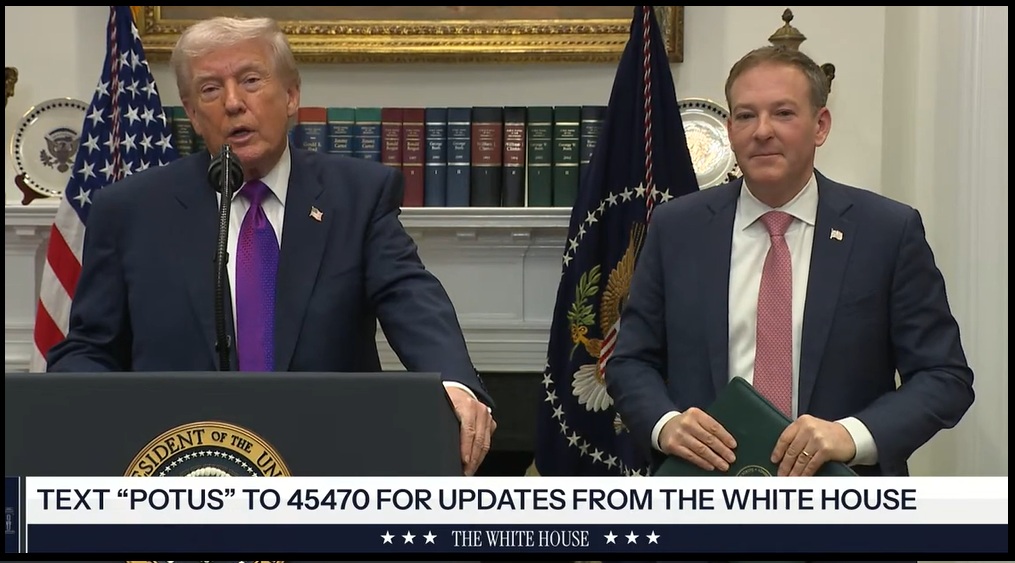
As noted by EPA Administrator Lee Zeldin, “The Trump Admin is proudly following the law, saving $1.3 TRILLION for the American people, lowering new car costs by over $2,400 per vehicle, and getting rid of the climate participation trophy for manufacturers to install Obama Switches that shut vehicles off at red lights and stop signs.” WATCH:
Posted originally on CTH on February 12, 2026 | Sundance
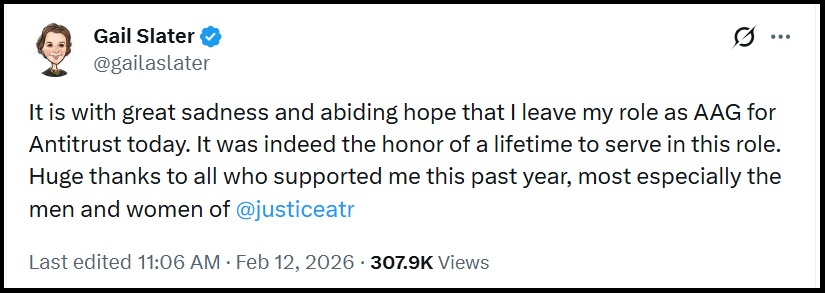
Asst Attorney General Gail Slater was the head of the Antitrust Division of the Dept of Justice. Today she announces she has “left her role.” CNN is reporting that AAG Slater was fired.
Gail Slater was in charge of the antitrust division and a hawk on the mergers and acquisitions of Big Tech and Big Corporate media. As head of the DOJ Antitrust Division, Slater’s view on competition was against the interests of the major Big Tech billionaires and corporate media conglomerates who intersect with them.
Slater was in a position to influence the Warner Brothers-Discovery’s deal to sell the Warner Bros. studio and HBO to Netflix, which Paramount (David Ellison) is trying to stop.
If you have followed the influence of Larry Ellison (Oracle, TikTok) and his son David Ellison (Paramount, CBS) in/around the Trump administration as it relates to Elon Musk (a beneficiary of Ellison), then the timing of Gail Slater’s removal doesn’t look good at all.
Gail Slater came into the administration as a part of the JD Vance network (Peter Thiel, Palantir, etc.), and it looks like that same Vance network stood aside and watched Larry Ellison leverage his position to see her removed.
Slater was a solid MAGA voice in a critical Antitrust position against the interests of Big Tech and Big Corp. However, I said on Christmas Day 2024 – we were likely to be very disappointed by the influence of Big Tech/Big Corp in the White House {SEE HERE}.
Via CNN[…] Slater said in her Thursday post on X: “It is with great sadness and abiding hope that I leave my role as AAG for Antitrust today. It was indeed the honor of a lifetime to serve in this role.”
The anti-trust division is expected to play a critical role in assessing Netflix’s Warner Brothers Discovery’s deal to sell the Warner Bros. studio and HBO to Netflix, which Paramount is trying to stop by appealing straight to shareholders with its own bid. (CNN is owned by Warner Brothers Discovery.)
In an NBC interview last week, Trump said, “I’ve decided I shouldn’t be involved. The Justice Department will handle it.” But Paramount CEO David Ellison returned to the White House last week to meet privately with Trump, two sources familiar with the matter told CNN. (read more)
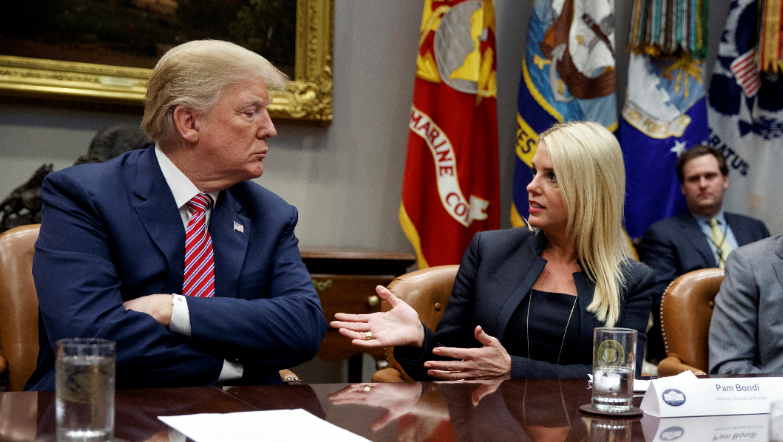
There may be something else in the background that we do not understand. However, when former lobbyists and political consultants become key administration officials (Wiles, Bondi) these types of outcomes are possible.
Posted originally on CTH on February 11, 2026 | Sundance
This is one step further than simple Lawfare, this story is about lower court judges openly strategizing ways to stop the enforcement of laws they are supposed to uphold.
Last week the Fifth Circuit Cout of Appeals ruled that detaining illegal aliens during the deportation proceedings is entirely following current immigration law [SEE HERE]. Now, according to Politico, federal judges in Texas are openly strategizing ways to work around that higher court ruling and keep giving bond releases to illegal aliens under the guise of “liberty interest.”
POLITICO – […] two federal district court judges in Texas, who are bound by the New Orleans-based 5th Circuit’s ruling, said the 2-1 decision left an opening for them to continue granting immigrants’ release on other grounds, primarily constitutional arguments against detaining people who have established roots in the U.S. without due process. Those roots amount, in legal parlance, to a “liberty interest” that the Constitution says cannot be taken away without at least a hearing before a neutral judge.
“This conclusion is not changed by the Fifth Circuit’s recent decision,” Judge Kathleen Cardone, an El Paso based appointee of George W. Bush, ruled late Monday in at least five cases, concluding that the circuit’s decision “has no bearing on this Court’s determination of whether [the petitioner] is being detained in violation of his constitutional right to procedural due process.”
Judge David Briones, an El Paso-based Clinton appointee, reached a similar conclusion.
“The Court reiterates its original holding that noncitizens who have ‘established connections’ in the United States by virtue of living in the country for a substantial period acquire a liberty interest in being free from government detention without due process of law,” Briones wrote.
The decisions from the Texas-based judges are notable in part because the administration has often rushed detainees there after their arrests in other states such as Minnesota.
A spokesperson for the Department of Homeland Security did not immediately respond to a request for comment.
A Justice Department official, granted anonymity to speak candidly, said the rulings were in keeping with the view that there are rogue judges who continue to make results-oriented decisions to suit their personal policy preferences.
The 5th Circuit’s ruling has yet to percolate through federal courts across Texas and Louisiana, where detained immigrants have been filing so-called “habeas” petitions in extraordinary numbers to seek freedom from what they say is illegal detention without the opportunity for bond. The losing parties in Friday’s ruling may still appeal the decision to the full bench of the 5th Circuit or the Supreme Court. (more)
Lower courts trying to circumvent higher court rulings, even before any plaintiff brings them a case or argument.
Posted originally on CTH on February 11, 2026 | Sundance
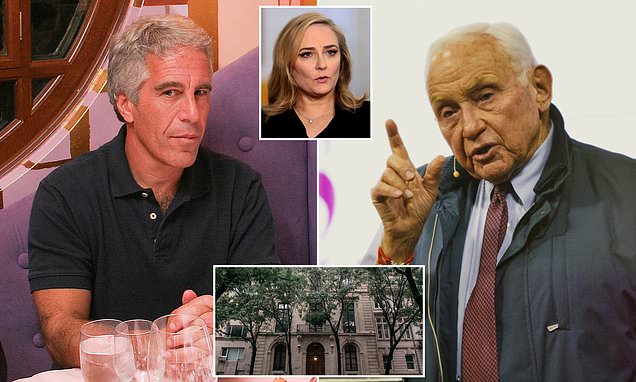
I said Monday on Twitter: “Seriously. Correct me if I’m wrong. For more than a decade we have known that billionaire Les Wexner from Victoria’s Secret was the originating money man behind Jeffrey Epstein.
This should not be some kind of revelation, as it was widely discussed by those who researched Epstein over a decade ago. Wexner’s money was the originating capital for what would later become Epstein’s influence empire.
Additionally, and again, stop me if this old news is incorrect, well over a decade ago it became openly known that the “PINK” brand of Victoria’s Secret was specifically created due to the sexuality of young girls becoming part of the marketing influence of Epstein.
Wexner created the original VS girls, and the influence of Epstein (underage sexual perversions) then led to the adding of the VS “PINK” sub-brand.
Are we supposed to understand this is all new information? Honest question. No snark. I’m just confused by this sudden newness of it. We been knew.”
Full 2001 VH1 segment, glorifying Jeffrey Epstein while showing Epstein's allegiance with Bill Clinton and Kevin Spacey.
They also point out he has his own chemistry lab in the basement and world class scientists which he pays "20 Million dollars a year to perform WHATEVER… pic.twitter.com/JVXVrdubo0
The above VH1 segment was from 2007; however, even ten years prior to that it was commonly known that Les Wexner from Victoria’s Secret was the source of most of Jeffrey Epstein’s start-up finances. The resulting social network was fraught with sexual weirdos, and the VS brand alignment just fit with the club.
Suddenly, Representative Thomas Massie, a Sea Island asset if ever there was one, is proclaiming the Epstein file information outlining the relationship with Wexner is new information, stunning in scope and worthy of extraordinary time to explore. It’s all weird.
🚨🇺🇸 REP MASSIE NAMES LES WEXNER AS CO CONSPIRATOR IN THE EPSTEIN FILES
Massie confirmed the “well known retired CEO” previously blacked out and labeled a co conspirator is none other than Victoria’s Secret founder Les Wexner. pic.twitter.com/lWId4H9TFZhttps://t.co/6YmH1NaeWL
VIA NBC – […] The newly released version of the 2019 document shows eight people are listed as co-conspirators, including four whose names are not redacted: Wexner, the former CEO of Victoria’s Secret, Lesley Groff, Epstein’s longtime secretary, the late modeling agent Jean-Luc Brunel, and Ghislaine Maxwell, the only person who was charged in connection with Epstein. She was convicted of sex trafficking charges and is serving a 20-year prison sentence.
Four other names on the document are still redacted. It’s unclear who those people are but prosecutors have said that Epstein used women he preyed on as recruiters. A separate document dated August 2019 indicated that some of the others were victims as well, and had been cooperating with investigators.
A Wexner legal representative said in a statement to NBC News Tuesday that “The Assistant U.S. Attorney told Mr. Wexner’s legal counsel in 2019 that Mr. Wexner was neither a co-conspirator nor target in any respect. Mr. Wexner cooperated fully by providing background information on Epstein and was never contacted again.”
Wexner had a long relationship with Epstein that dated back to the 1980s, and hired him to manage his personal finances. He’s said he cut ties to Epstein after he was accused of sexually abusing minors in Florida. It was after that Wexner said he “discovered that he had misappropriated vast sums of money from me and my family.”
Wexner’s name was also mentioned in a July 2019 FBI email about possible co-conspirators that was made public as part of the DOJ release. Another August 2019 FBI email said there was “limited evidence regarding his involvement.”
He is scheduled to be deposed by the House Oversight Committee next week. (more)
The first time I heard the information about Wexner and Epstein was sometime in the mid 1990’s. It was well known.
There is a lot of horrible, creepy and perverted stuff in the Epstein file releases that is factually new information. However, the relationship between Jeffrey Epstein and Les Wexner is not new. Perverse, yes -as it was even then; but not new. There were even documentaries about it, one of them I think was called “Angels and Demons“.
A horrific school shooting in Canada has resulted in the death of 10 people. Seven people at the school, two people in a residence nearby and the shooter. The details are starting to come out, but for some reason there is a concerning aspect to the “gender” of the shooter.
The Associated Press describes the situation: VANCOUVER, British Columbia (AP) — A shooting at a school in British Columbia left eight dead including a woman whom police believe to be the shooter, while two more people were found dead at a nearby home, Canadian authorities said Tuesday.
The Royal Canadian Mounted Police said more than 25 people are injured, including two who were airlifted to hospital with life-threatening injuries, after the shooting at Tumbler Ridge Secondary School.” (more)
BBC SUMMARIZES: Police say an attacker killed nine people before taking their own life on Tuesday. – Six victims were found dead inside Tumbler Ridge Secondary school, while a seventh person died on the way to hospital. The body of the attacker was also found at the school. – Two more people were found dead inside a residence nearby. – Police described the suspect as a “female in a dress with brown hair” in an active shooter alert sent to the community. – At least two other people were taken to hospital with serious or life-threatening injuries following the attack, and as many as 25 people were being treated for non-life-threatening injuries, police said. – Canada’s Prime Minister, Mark Carney, said he is “devastated” by the shooting and that his government “stands with all British Columbians as they confront this horrible tragedy.” – The PM cancelled his upcoming trip to the Munich Security Conference in response to the shooting. (link)
If this information is correct and the shooter was a trans, I can only imagine the level of political correctness that will follow from Canada about the shooting.
Canada is the global woke central. February 11, 2026 | Sundance
Posted originally on CTH on February 10, 2026 | Sundance February 10, 2026 | Sundance
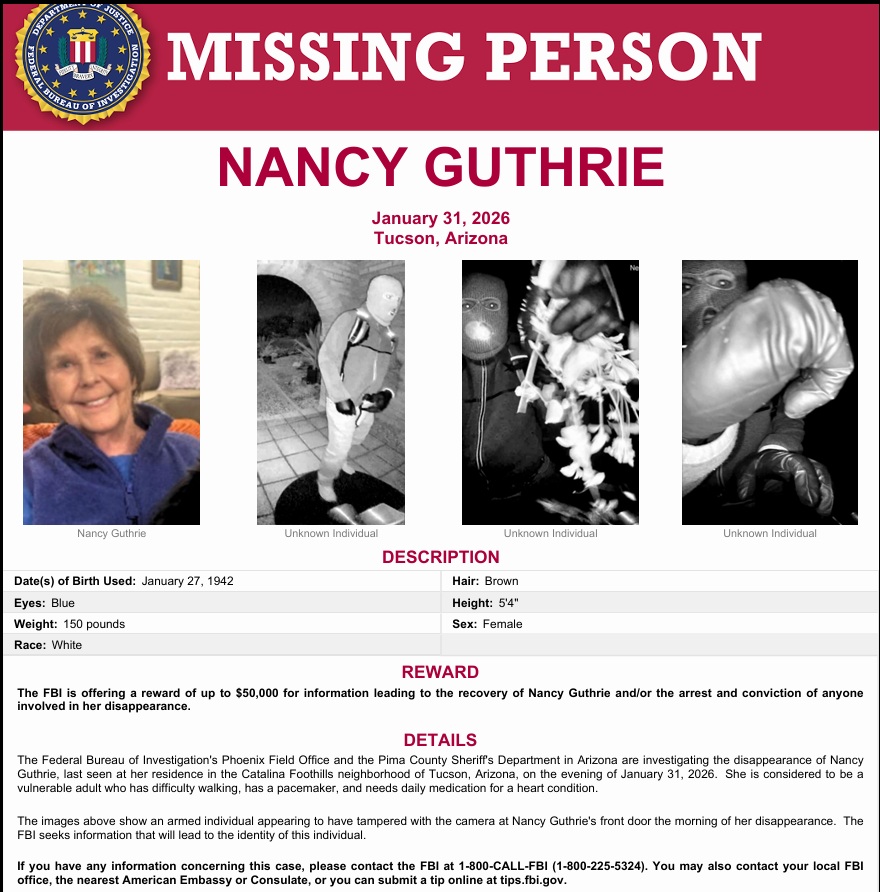
Nancy Guthrie disappeared in the middle of night from her Tucson, Arizona, home and was last seen on 31 January. Authorities believe she was taken against her will.
NBC narrative engineer Savannah Guthrie said on Monday that her family believes their mother is still alive and issued a new appeal to anyone with information.
The FBI have released images of a masked person in the hunt for news anchor Savannah Guthrie’s mother. Officials are seeking to identify the individual, who they say was armed, shortly before 84-year-old Nancy Guthrie disappeared from her home.
“The FBI is offering a reward of up to $50,000 for information leading to the recovery of Nancy Guthrie and/or the arrest and conviction of anyone involved in her disappearance. New images released today show an armed individual appearing to have tampered with the camera at Nancy Guthrie’s front door the morning of her disappearance. The FBI seeks information that will lead to the identity of this individual” [FBI RELEASE]
FBI Director Kash Patel: “Over the last eight days, the FBI and Pima County Sheriff’s Department have been working closely with our private sector partners to continue to recover any images or video footage from Nancy Guthrie’s home that may have been lost, corrupted, or inaccessible due to a variety of factors – including the removal of recording devices. The video was recovered from residual data located in backend systems.
Working with our partners – as of this morning, law enforcement has uncovered these previously inaccessible new images showing an armed individual appearing to have tampered with the camera at Nancy Guthrie’s front door the morning of her disappearance.
Anyone with information, please contact 1-800-CALL-FBI“
Additional recovered footage, from the same camera – at the same timeline the morning of Nancy Guthrie’s disappearance. This footage is just before the original video shared, with the individual approaching Nancy Guthrie’s front door.
Over the last eight days, the FBI and Pima County Sheriff’s Department have been working closely with our private sector partners to continue to recover any images or video footage from Nancy Guthrie’s home that may have been lost,… pic.twitter.com/z5WLgPtZpT
Posted originally on CTH on February 10, 2026 | Sundance
Representative Ilhan Omar is one of the most sanctimonious corrupt Democrats in congress, and she’s loud and proud about it because she understands how to engage in financial fraud safely. Just do what everyone else is doing but do it bigger, that way there’s no way her peers can approach it.
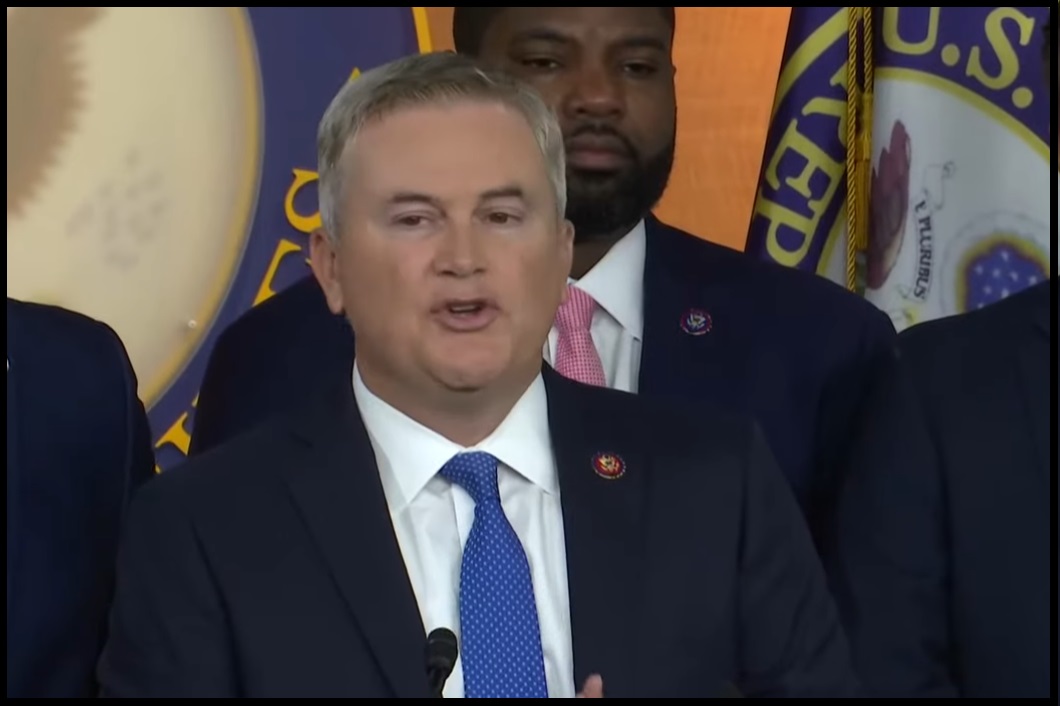
Someone in DC gave House Oversight Chairman James Comer the familiar tap on the shoulder and told him they don’t investigate their own Uniparty tribe. So, Comer drops his planned review of Omar’s corruption and shifts it to the ethics team.
BREAKING: James Comer says the House Ethics Committee will take over the investigation into Rep. Ilhan Omar after a massive spike in her net worth was flagged in financial disclosures:
“We’ve been informed in the last few hours that the Ethics Committee is probably going to have… pic.twitter.com/YIO1DkOr91
A game of pretending is needed in order to retain the illusion of the Potemkin Village of DC. A construct manufactured by the power structure that exists behind the puppet show, with the full intention to distract us. Pretending is what gives rise to a Florida governor on a 2022 ‘book tour’ run for a 2024 campaign that everyone denied was going to happen. Pretending is also what kicks the can of accountability away until it can be buried.
Pretending is needed in order to convince the audience Republicans will make a difference, or the black eye doesn’t hurt and look he bought me flowers. Perhaps some reminders and clarifications of the real game inside DC politics are needed. After all, while all these chaff and countermeasures are replaying their familiar tunes, CTH is actually trying to accomplish something by destroying some IC silos.
The House Oversight and Government Reform Committee, hereafter called the House Oversight Committee or HOC, has a very specific function in DC circles that too few understand. Once again, let us be clear while trying to explain decades of false information founded upon arcane legislative outlooks.
Understanding the DC game of Chaff and Countermeasures…. A “Countermeasure” is a measure or action taken to counter or offset a preceding one.
Politically speaking, the deployment of countermeasures is a well-used tactic by professional politicians in Washington DC to counter incoming public inquiry and protect themselves from anger expressed by the electorate. The Republican leadership are very skilled in the management of “chaff” (outrage), and “countermeasures” (the distraction).
Within Washington DC, the HOC has a very specific and unique function. What Fox News is to corporate conservative punditry, so too is the HOC to the same DC system of pretending. The House Oversight Committee is the “Chaff and Countermeasures” committee.
The HOC operates for both parties with the same mission.
The House Oversight Committee was/is created by the House legislative leadership to make money for the party in control of the Chair. When the House Speaker is notified of a DC corruption issue, inside his/her office they will often be heard saying, “give it to oversight.” The intent of that instruction is to give the issue to the HOC, so they can hold hearings, create soundbites and fundraise from the issue.
Making money for the party in control of the Chair is the primary function of the House Oversight Committee. The HOC does not exist to create accountability or oversight; the HOC exists to exploit the issue for fundraising and satiate the base voters of the party in control of the Chair.
The HOC presents the illusion of accountability by constructing soundbites and member performances which are then broadcast on television for appearances to the voting audience. It is essentially theater.
The HOC is a “general oversight’ committee, not a committee of “specific jurisdiction.” Thus, the HOC is the vehicle where Democrats and Republicans publicly display their political initiatives, frame their narratives and then broadcast them on MSNBC, CNN (Democrats) or FOX NEWS (Republicans).
Depending on the issues at hand, the HOC committee members are generally those performance actors best known to the audience of both parties. This is not accidental; this is by design. Again, for emphasis, I am only talking about the HOC, a “generalized oversight” committee. Only this specific committee has this specific mission.
A hot button topic enters the committee ecosphere. Specifically trained staffers and performance artists, uniquely qualified to put on theatrical productions (both parties), are then deployed to assist the representatives in creating the soundbites that hopefully will go viral and assist them with fundraising and opportunities to say, “here’s what we are doing.” Outlining this construct is not an exhibition in cynicism; this is the reality of what the HOC is designed and created to do.
When you see the HOC performing at their best, you will see lots of soundbites created.
The Chair of the HOC is always part of the House Speaker’s close inner circle. From that association you will discover by training, by habit, and by consequence, the HOC framework is developed to sustain the process itself as an end result. The questioning is the sum total of all accountabilities. The performance is the interview; the conversation is the point; the smoke is the fire.
Oversight, in the HOC framework of narrative creation, has evolved into reveling in the endless process (a fundraising proposition) and, as a consequence, it completely ignores the end point, misses the bottom line, doesn’t actually SEE the subject matter, and never actually applies accountability toward what might be discovered. This is why you end up with high blood pressure, frustrated with the questions not asked, and throwing bricks at the screen or monitors when viewing.
The point of HOC hearings is to create what are now described as “viral moments” that can be used to generate money.
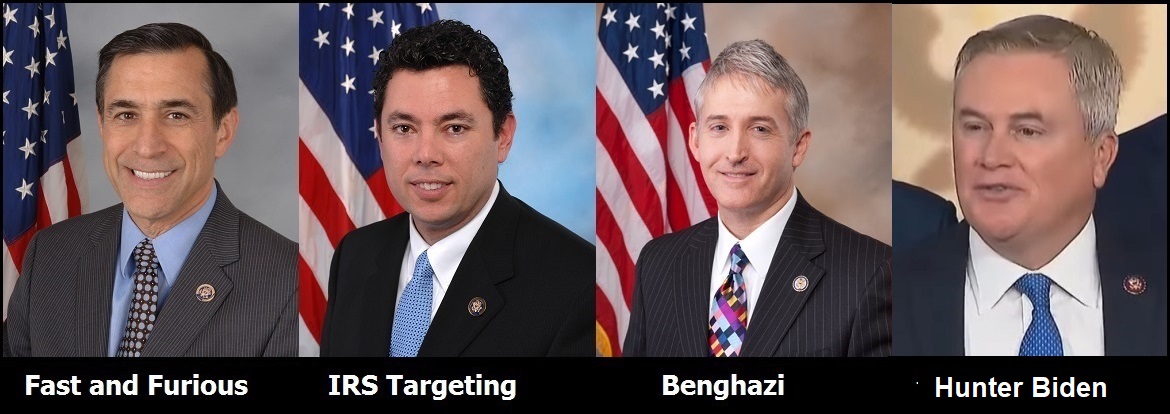
The second, and lesser objective, is to give the illusion of accountability while not actually ever holding anyone or anything accountable. See prior HOC reference points like Fast and Furious, IRS targeting, Benghazi, the Twitter File review or the Joe/Hunter Biden crime syndicate investigation.
If you watch the HOC through the prism of expecting some form of accountability for the violations of law, you will be frustrated and disappointed. However, if you watch the HOC through the prism of how well the members will do at raising money from their performances, then you can evaluate the effectiveness – the proverbial winning and losing.
The HOC is designed by House leadership to perform the same basic function for both Democrats and Republicans. The HOC committee assignments are selected based on the theatrical skills of each representative. This is not to say the motives of the members are sullied or impure, it is simply to point out the motive of the committee itself is to generate fundraising from the skillsets of the members on the committee.
Once you fully grasp what the intent of the House Oversight Committee is about, and once you drop the expectation that any accountability in oversight is the intent, then you can watch the performances through the entertainment prism of partisan politics and genuinely enjoy them – or hate them.
The HOC is called the “Chaff and Countermeasures” Committee, because that’s essentially what the committee does. It gives the appearance of targeting, steering the target to a controlled destination, and then distracting the audience from the outcome of accountability.
If sunlight is achieved, meaning the Mainstream Media cannot ignore the issue as presented and questioned, and if the general public become more familiar with the controversial subject matter or topic at hand, and if the party of the Chair can fundraise from the issue, then the committee has succeeded. However, if you are looking for something to change as an outcome of any HOC investigation or hearing, you will be perpetually disappointed.
There seems to be a willful blindness on the part of the American people, a chosen refusal to acknowledge the implications of the unAmerican and unConstititional behaviors, actions and outcomes we are being served on a daily basis. It can no longer be presumed to be a matter of “I can’t see what’s happening”, because a whole lot of normal Americans really are clean and articulate.
“I can’t see it” just doesn’t cut it.
NONSENSE! Most people can see it. Most are just choosing to reconcile the irreconcilable because it is more comforting to ignore the truth of it. Just be honest, for many people avoidance has become a survival mechanism.
It’s more along the lines of “I see what’s happening, but it’s scary and complicated and confusing, and if I admit that I see it, I will become responsible in a way that I am not if I keep pretending I can’t see it or hear it or maybe I don’t understand it.”
Cue the audio visual. Do you remember the Awan Brothers scandal?
The political system in Washington DC has become so massive it is now capable of protecting itself. Any attempt to reduce the influence, scope or size of the system is considered a risk. The system is, in essence, protecting itself. Deep State is self-aware. NOTE 07:43 (just hit play)
Whether it’s John Boehner, Paul Ryan, Kevin McCarthy or Mike Johnson, leadership’s Lucy has unlimited footballs.
Whether it’s the Awan Brothers, the Huma Abedin laptop, the Clinton’s private servers, the Hunter Biden laptop, the Mark Warner/James Wolfe leak of classified information, the activity of CIA analyst Eric Ciaramella in the impeachment, the many aspects to Mary McCord, or the leaking of the Dobbs decision by Sheldon Snook, all of these things are very public, very visible and very well known. Yet did you see a single satellite truck in front of their house or a microphone in their face asking questions?
Nope. DC runs this game of pretending and all the media play the game.
The fourth estate (media) has long ago collapsed.
Now, the choices are ours.
Personally, I will not pretend, and I know most of you also refuse.
If we keep assembling enough people to stop pretending, then what happens?
Posted originally on CTH on February 9, 2026 | Sundance
Writing on a Truth Social post earlier this evening, President Trump is threatening to block the U.S. side of a new bridge that links Detroit, Michigan to Ontario, Canada:
(Truth Social) – “As everyone knows, the Country of Canada has treated the United States very unfairly for decades. Now, things are turning around for the U.S.A., and FAST! But imagine, Canada is building a massive bridge between Ontario and Michigan. They own both the Canada and the United States side and, of course, built it with virtually no U.S. content. President Barack Hussein Obama stupidly gave them a waiver so they could get around the BUY AMERICAN Act, and not use any American products, including our Steel.
Now, the Canadian Government expects me, as President of the United States, to PERMIT them to just “take advantage of America!” What does the United States of America get — Absolutely NOTHING! Ontario won’t even put U.S. spirits, beverages, and other alcoholic products, on their shelves, they are absolutely prohibited from doing so and now, on top of everything else, Prime Minister Carney wants to make a deal with China — which will eat Canada alive. We’ll just get the leftovers! I don’t think so.
The first thing China will do is terminate ALL Ice Hockey being played in Canada and permanently eliminate The Stanley Cup. The Tariffs Canada charges us for our Dairy products have, for many years, been unacceptable, putting our Farmers at great financial risk. I will not allow this bridge to open until the United States is fully compensated for everything we have given them, and also, importantly, Canada treats the United States with the Fairness and Respect that we deserve. We will start negotiations, IMMEDIATELY. With all that we have given them, we should own, perhaps, at least one half of this asset. The revenues generated because of the U.S. Market will be astronomical. Thank you for your attention to this matter!” ~PRESIDENT DONALD J. TRUMP
The USMCA renegotiation plan likely plays a big part in this announcement. Don’t react, just watch.
Posted originally on CTH on February 9, 2026 | Sundance
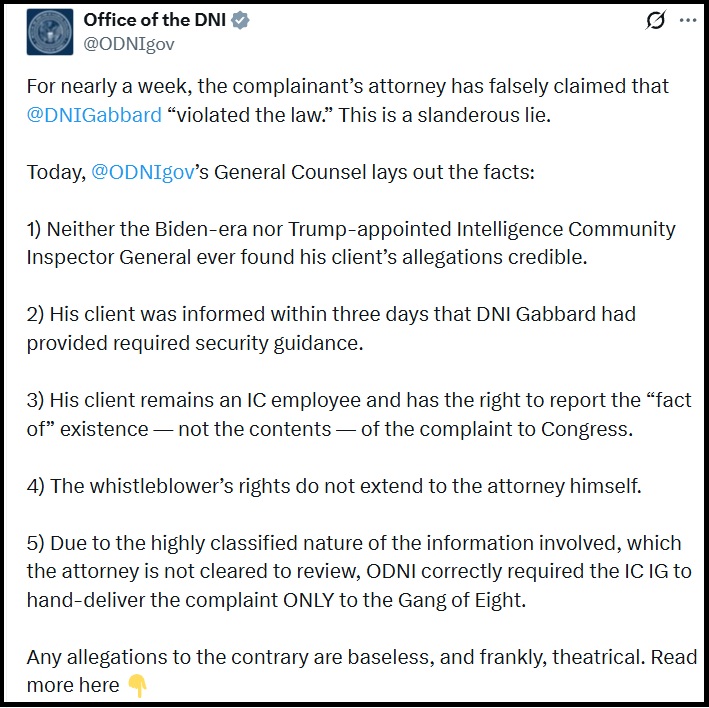
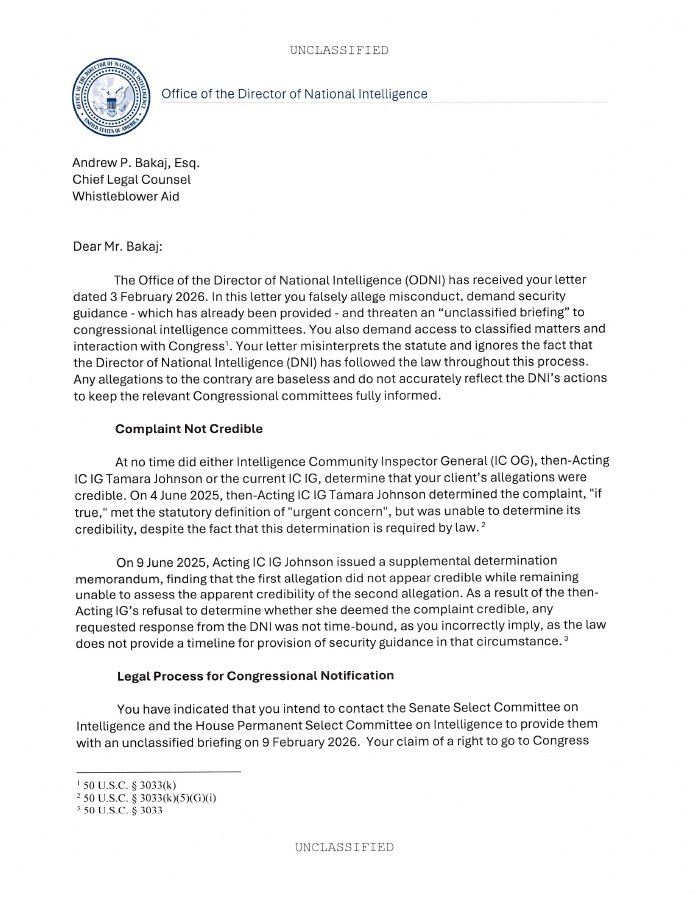
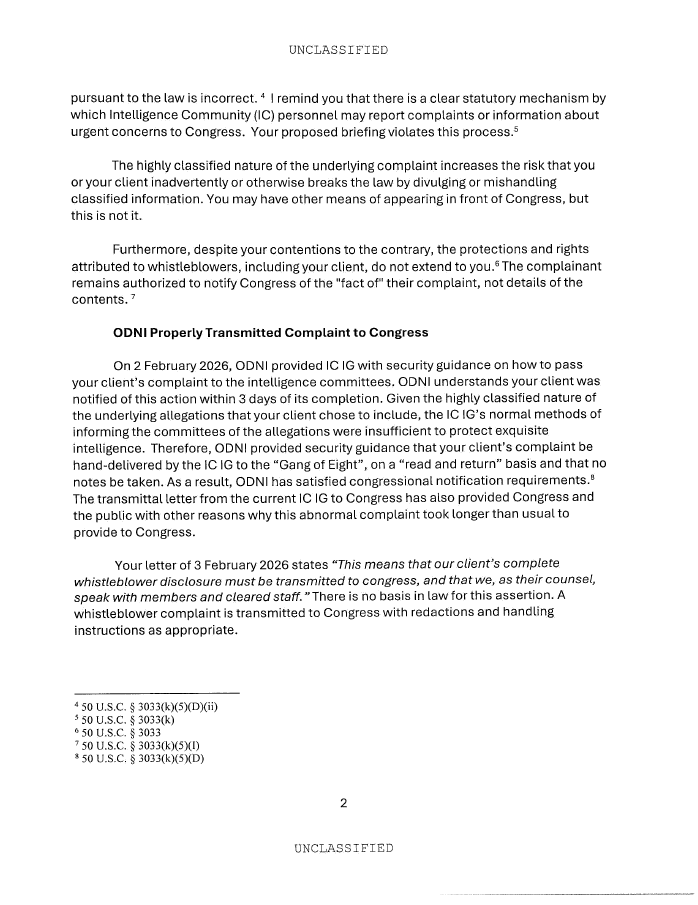
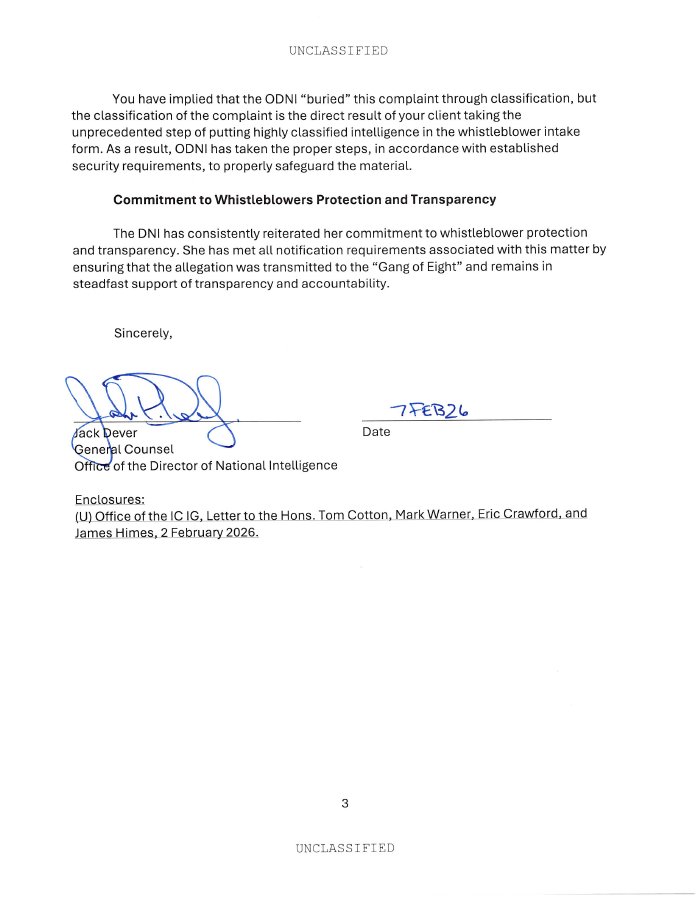
The General Counsel for the Office of the Director of National Intelligence (ODNI) has written a letter to whistleblower attorney Andrew Bakaj, outline the absurdity of the complaint. Additionally, as noted by the ODNI counsel, “The whistleblower’s rights do not extend to the attorney himself.”
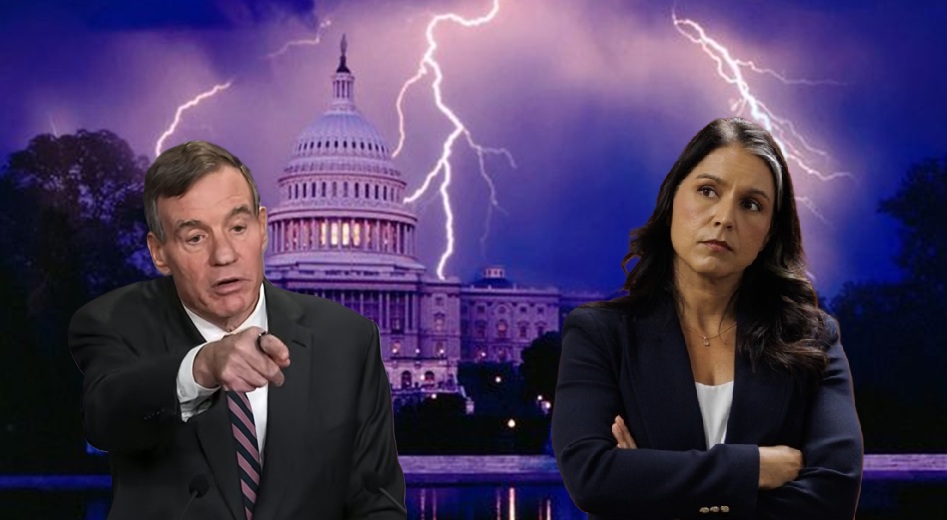
This should put to reset this insufferable IC/Lawfare targeting operation intended to generate an impeachment effort against DNI Tulsi Gabbard.
Factually, Andrew Bakaj has never seen the underlying intelligence report his client generated, nor the TSSCI material intercepted by them. Everything Bakaj has been leaking to the media is a construct of fabrications, falsehoods, smears and lies.
Both the NSA whistleblower and his attorney Andrew Bakaj were counting on the classified intelligence angle to this effort creating the illusion of something that is non-existent, a fabricated narrative that could gain traction. This is the same thing Bakaj did with former CIA whistleblower Eric Ciaramella in order to generate the first Trump impeachment effort. This time, against DNI Tulsi Gabbard, they are failing.
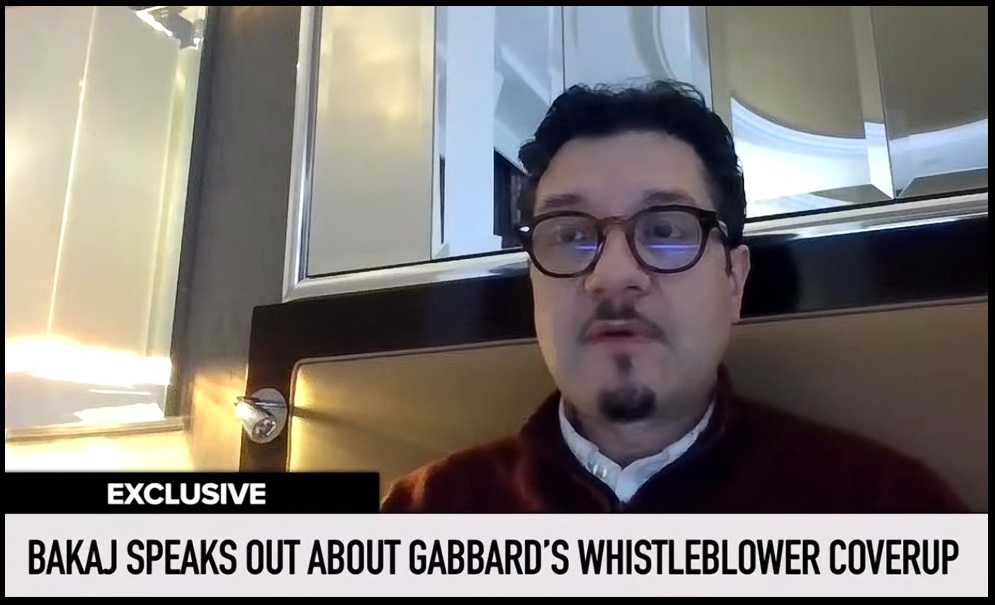
Allison Gill is an ally of the Lawfare network and recently sat down for an interview with NSA whistleblower attorney Andrew Bakaj; the same attorney used by former CIA whistleblower Eric Ciaramella.
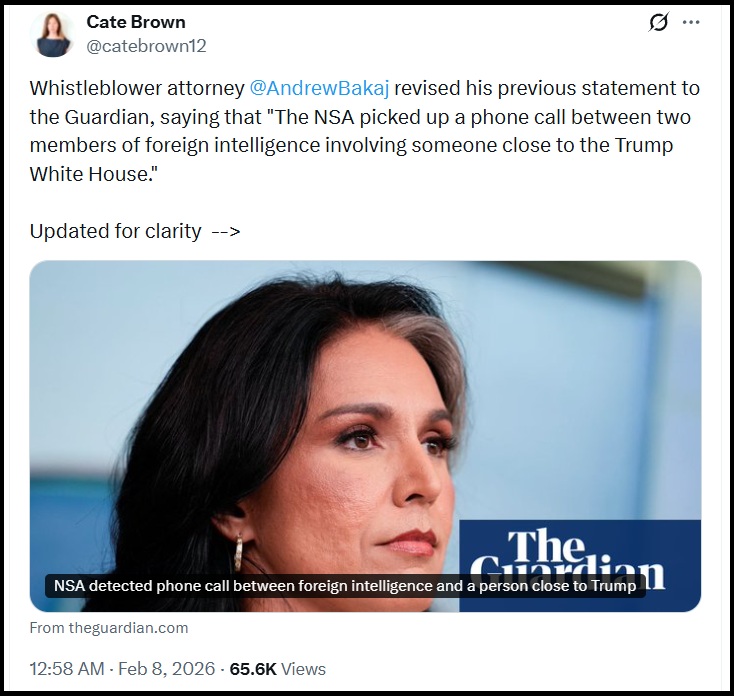
This interview appears to be taking place after Bakaj revised his statements to The Guardian forcing them to rewrite the central claim of the leak he provided. The Guardian rewrote their article removing the key claim within the intelligence intercept that a foreign intelligence person was in contact with a person close to President Donald Trump.
The revision now states:
[…] “The Guardian reported earlier on Saturday that the phone conversation was between a person associated with foreign intelligence and a person close to Trump, based on Bakaj’s recollection of the complaint, which he confirmed over multiple calls. However, after publication, Bakaj said he misspoke.
He clarified his understanding of the complaint in a statement: “The NSA picked up a phone call between two members of foreign intelligence involving someone close to the Trump White House,” he said. “The NSA does not monitor individuals without a reason.” {citation}
This is not a small “revision,” it is essentially a rewrite of the central component to the whistleblower complaint. As it is now clarified two foreign people were intercepted talking about a person who knows Donald Trump. This could be any two foreign people gossiping or talking about anyone who is in the orbit of Donald Trump. That explains why intelligence analysts reviewed the NSA intercept, disregarded it and said it is hearsay likely just ‘gossip” according to New York Times reporting.
However, that said, Andrew Bakaj then appears on a podcast with Allison Gill during their effort to put traction to the claims, and Bakaj repeats the false statement. See video at 7:45:
…”So, in the spring of last year there was intelligence that was gathered by an agency that captured, um, activity that was being conducted by someone close to the President.”…
This is the same lie the whistleblower’s attorney Andrew Bakaj told The Guardian; that someone close to the president was a participant in the “activity.” This is demonstrably false through all other reporting.
The complaint alleges two foreign individuals were intercepted talking to each other about a person who Bakaj defines as close to the president, on the subject of Iran.
It could simply be two Germans or Israelis talking about Iran and wondering what Devin Nunes thinks about it.
The entire predicate claim is silly. Foreign officials and foreign intelligence officials talk to each other all the time about Trump and or his people.
This complaint is a fabrication, and the fact that the NSA Whistleblower included the TSSCI material in the complaint, literally outlining who was intercepted talking, is the reason why the complaint could not be shared or circulated without careful guidance by the DNI.
The whistleblower did this on purpose. If the whistleblower wanted to share his complaint with more people, he could have just avoided including the TSSCI aspect.
This is intelligence community Lawfare in action.
Dear Chairman @SenTomCotton , please call @AndrewBakaj to appear before the Gang of Eight, preferably with his client, play this video, ask him if what he says at the prompt is true? When he says, "no" refer him to the DOJ for prosecution and dismiss the complaint. 👇
I have created this site to help people have fun in the kitchen. I write about enjoying life both in and out of my kitchen. Life is short! Make the most of it and enjoy!
This is a library of News Events not reported by the Main Stream Media documenting & connecting the dots on How the Obama Marxist Liberal agenda is destroying America