“I’m Sick And Tired Of The Pandemic Of Passive Voice” Natalie Winters BLASTS House GOP


Posted originally on Rumble By Bannon’s War Room on: May 13, 2025, at 7:00 pm EST

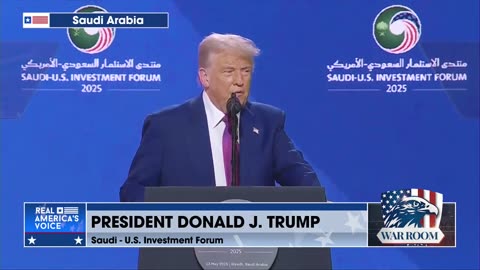
President Donald J. Trump Speaks At Saudi – U.S. Investment Forum


Posted originally on Rumble By Bannon’s War Room on: May 13, 2025, at 1:00 pm EST

LEADERSHIP ON THE WORLD STAGE: Brat And Bannon On President Trump’s Saudi Arabia Visit


Posted originally on Rumble By Bannon’s War Room on: May 13, 2025, at 1:00 pm EST

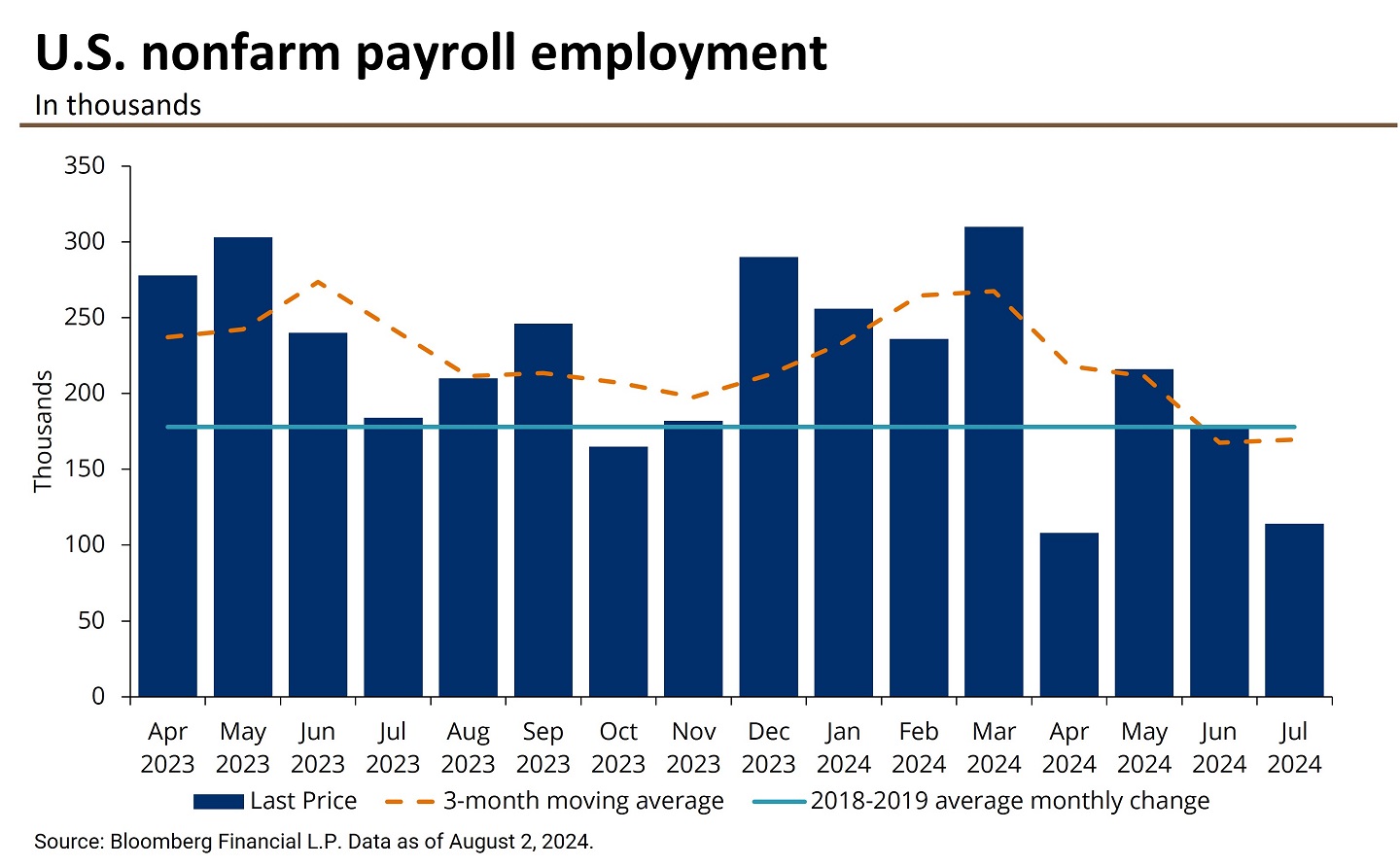
BLS Data Revised – Payrolls Declined Under Biden


Posted originally on May 14, 2025 by Martin Armstrong 

JobsReportJuly2024

(Data before revision)

The Biden Administration successfully mislead the American people into believing that Bidenomics was a successful endeavor. The administration managed to mislead the people into believing the health of the economy, and president for that matter, were in good condition. New revised data from the Bureau of Labor Statistics (BLS) reveals that the private sector contracted significantly under Joe Biden and Kamala Harris.

The BLS surveys 200,000 out of 600,000 businesses monthly to determine nonfarm payroll estimates. The figure is consistently revised with somewhat minimal deviation from the prediction. Yet, that was not the case under the Biden Administration.

The BLS publishes the Business Employment Dynamics (BED) census as well on a quarterly basis. The sample size is 12 million or 17 times the size of the monthly nonfarm payrolls report. From July 2024 to September 2024, monthly data showed a Q3 increase of 399,000 jobs. The newly revised figure shows that the private sector actually contracted by 1,000 positions. This is more than a mere miscalculation—it is a deliberate LIE intended to mislead the American public ahead of the presidential election.

Now, the BLS also releases a quarterly census report on employment and wages. The BLS determines its annual benchmark by comparing these varying reports and reevaluating its monthly estimates. Every March, the BLS looks at the Current Employment Statistics, or CES, survey, and looks at administrative records of employees covered by Unemployment Insurance (UI). Around 97% of employment falls under the CES scope, and the remaining 3% is analyzed by looking at County Business Patterns or other sources like the Railroad Retirement Board. The March survey determines the “universe” count and adjusts the prior year’s monthly estimates, recalibrating the data to match the universe figure.

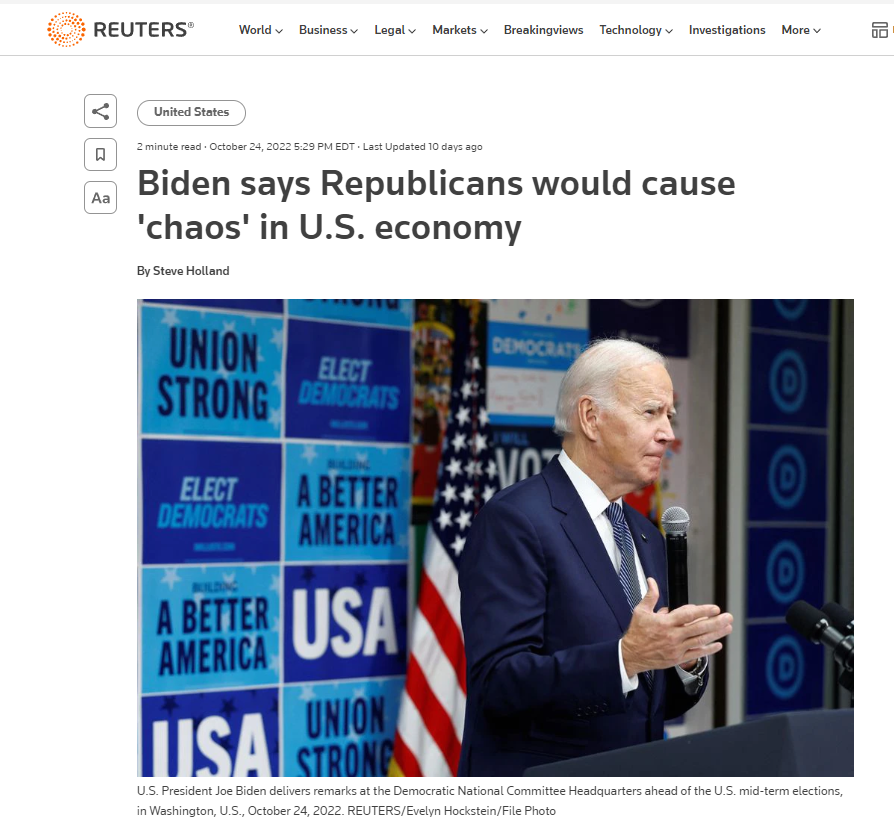
Biden Republican will bring chaos2022_11_03_20_32_25_Biden_says_Republicans_would_cause_chaos_in_U.S._economy_Reuters

How significantly were payrolls recalibrated from last year? From March 2023 to March 2024, the BLS now believes that there was a DECLINE OF 598,000 nonfarm payroll positions.

The BLS reported that the economy grew by 398,000 positions from March to June of 2024 when looking at their monthly reports. The BED analysis actually shows a DECLINE OF 163,000 private sector positions. They were shoving jobs into the public sector to cover the true figure and mask the fact that the economy was in trouble.

Commissioner of the Bureau of Labor Statistics, Erika McEntarfer, was appointed in January 2024 by Joe Biden. There have been numerous scandals under her lead, such as the leak of the April CPI report to private sector economists. The delayed released of the annual nonfarm payroll revision was leaked on social media before the agency’s official publication.

These government reports have long been used as tools of propaganda. They miscalculate everything from payrolls to CPI to mislead the public into believing that their government has a handle on the economy.

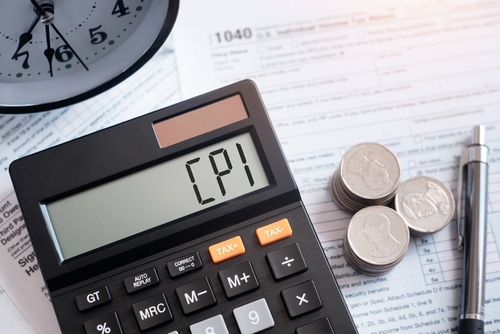
US April Inflation – 2.3%


Posted originally on May 14, 2025 by Martin Armstrong 

CPI Formula

The numbers are in, and the Consumer Price Index fell to 2.3% this April annually, down from March’s 2.4% reading, according to the Bureau of Labor Statistics. April’s reading is the lowest since February 2021.

Shelter costs drove more than half of all items monthly, increasing by 0.3% on a monthly basis, and 4% annually. The energy index experienced a 0.7% increase from the month prior, slightly offset by a decrease in gas (-0.1% monthly; -11.8% annually), fuel oil (-1.3% monthly; -9.6% annually), and energy commodities (-0.2% monthly; -11.5% annually). Electricity rose 0.8% monthly and is up 3.6% for the year, while piped utility advanced 3.7% and is up an alarming 15.7% annually.

Yes, shelter is included in the CPI, but it’s not real-time, and it’s not accurate. The way they calculate shelter is through something called Owner’s Equivalent Rent. It’s based on what homeowners think they would charge to rent their homes, not what people are actually paying in the real world. They consider the actual purchase of real estate an investment, and therefore, that does not go on the CPI report. actual rents and home prices have surged because of artificially constrained supply, institutional buyers, and rising taxes. So the CPI gives a watered-down version of housing inflation.

Food inflation declined by -0.1% for the month, with a 2.8% yearly increase. The meats, poultry, fish, and eggs index rose 7% over the last 12 months, driven by the 49.3% uptick in eggs. The index for nonalcoholic beverages rose 3.2% over the same period, while the index for other food at home rose 0.7%. The dairy and related products index increased 1.6% annually. The cereals and bakery products index remained stagnant over the past year, while the index for fruits and vegetables fell 0.9% over the same period.

Food and energy are the most volatile and politically sensitive components, so they’ve built the CPI to minimize their impact. They’re not excluded from the calculations but they’re manipulated. The BLS uses a tactic called hedonic adjustments. If the quality of a product improves, say a glass jar instead of plastic, they lower the price in the index, even if it costs more in the store. Then there’s substitution. If steak becomes too expensive, they assume you’ll buy chicken. Then if chicken goes up, maybe pork.

Energy is the same game. Oil prices might spike, but they use seasonal adjustments or shift the weightings so it doesn’t move the index much. If gasoline prices double, they’ll say your “transportation services” only rose 4%. It’s accounting gymnastics. Inflation affects interest rates, cost-of-living adjustments, entitlement payouts, and trust in government. So they cook the numbers.

Could this be the best reading for 2025? Global instability could result in sharp increases in food and energy. The impact of tariffs remains to be seen. The April CPI number is yet another example of how governments manipulate statistics to serve political ends. No one believes that prices are significantly down. Americans are experiencing a downgraded quality of life firsthand. Don’t take the CPI at face value. Look at what people are paying out of pocket — energy, food, shelter, taxes. Taxes are another aspect they conveniently exclude when calculating our cost of living. These are rising far faster than the CPI admits. We are in the middle of a confidence crisis, and instead of telling the truth, they’re pretending everything is fine.

DOJ Weaponization Working Group Head, Ed Martin, Holds a Press Conference in Washington DC


The new head of the DOJ Weaponization Working Group, current USAO Ed Martin, holds a press conference to discuss the transition to his new role as Judge Jeanine Pirro is scheduled to take over as U.S. Attorney for the DC office.  WATCH: 

.

Posted originally on CTH on May 13, 2025 | Sundance

DNI Tulsi Gabbard Yanks National Intelligence Council from CIA Silo and Fires Top Officials


Posted originally on CTH on May 13, 2025 | Sundance

This Deep State cleanout move is coordinated by Director of National Intelligence Tulsi Gabbard and CIA Director John Ratcliffe.

News is coming out about DNI Tulsi Gabbard taking the National Intelligence Council out of the CIA silo, and removing the two heads of the agency, Chairman Mike Collins (friend of Mike Morrell) and Deputy Chair Maria Langan-Riekhof.  Both officials were conducting intelligence operations on behalf of the Lawfare aligned Intel Community.

WASHINGTON DC – Director of National Intelligence Tulsi Gabbard has fired the top officials leading the National Intelligence Council – whom whistleblowers describe as “radically opposed to Trump” — and has moved the agency to the Office of the Director of National Intelligence, or ODNI, to ensure she can block any “politicization of intelligence,” Fox News Digital has learned.

Gabbard fired Mike Collins, who was serving as the acting chair of the National Intelligence Council, and his deputy, Maria Langan-Riekhof, Tuesday, senior intelligence officials told Fox News Digital.

Fox News Digital reached out Langan-Riekhof for comment and did not immediately hear back, and couldn’t immediately find contact information for Collins.

Collins also has whistleblower complaints against him for political bias and “deliberately undermining the incoming Trump administration,” officials said.

They added that Collins was closely associated with Michael Morrell, the former deputy director of the CIA who worked to write a public letter in 2020 claiming that Hunter Biden’s laptop had “all the classic earmarks of a Russian information operation,” and to get signatures from top ex-intelligence officials.

As for Langan-Reikhof, officials said she has been a “key advocate” for diversity, equity and inclusion initiatives, and is someone who whistleblowers allege is “radically opposed to Trump.”

Meanwhile, Gabbard is moving the National Intelligence Council from the CIA to the Office of the Director of National Intelligence to “directly hold accountable any improper action and politicization of intelligence,” Fox News Digital has learned.

Many intel community leakers are “career bureaucrats that are entrenched in Washington politics,” officials said.

“It takes time to weed them out and fire them,” one official told Fox News Digital, adding that “plans to eliminate non-essential offices within ODNI that we know are housing deep state leakers are underway.” (read more)

April Consumer Prices Reflect Lowest Inflation in Four Years


Posted originally on CTH on May 13, 2025 | Sundance 

Wait,… wha?  Prices were supposed to skyrocket, so said the experts, pundits, Wall Street analysts and all the ‘talking heads.’  Alas, the Bureau of Labor and Statistics (BLS) releases the April consumer price index [SEE HERE] and, shocker, prices on the critical consumer goods that matter most are dropping.

The rate of inflation dropped to a four-year low in April. Overall consumer prices increased 2.3% from a year earlier, down from 2.4% rise in March.  However, inside the number’s things get better.  Prices for groceries, food at home including eggs, used cars and gasoline all fell.

Meats, poultry and eggs dropped 1.6% overall.  The price of eggs dropped 12.7% for the month. [SEE TABLE 2]   Fuel Oil dropped 2.6%, propane dropped 4.7%.  If it’s a food product grown and harvested in America, the price dropped.  Remember that popular boycott by the Canadians on Orange Juice and citrus from Florida?  Oranges dropped 3.7% in price for American consumers; Citrus overall -2.8%.

The items that are critical to a middle-class or working-class family, all dropped in price.  This is exactly the same pricing outcome we experienced in 2017 that continued for two years.   Energy prices drive farm prices and the total food supply chain; the energy prices have dropped substantially since President Trump took office.

Keep an eye on the “Relative Importance Index” [first column table, 2], because this is where the BLS statisticians will start to play with the data in order to stop President Trump from getting credit for lower prices.  The BLS manipulating this index point is why CTH stopped using their data reports in 2022.  Many people were perplexed at the end of 2021 when suddenly the inflation data no longer made sense.  The BLS changed the priority weighting in order to assist Biden.

President Trump and Mohammed bin Salman Celebrate on Stage During YMCA Performance Exit


Posted originally on CTH on May 13, 2025 | Sundance

This is something you don’t see every day….  lol

At the conclusion of his speech, President Trump was joined by Saudi Crown Prince Mohammed bin Salman at the Saudi-U.S. Investment Forum, as the Village People’s “YMCA” played.

.

President Trump Delivers Remarks During U.S-Saudi Economic Forum


Posted originally on CTH on May 13, 2025 | Sundance

Celebrating a close and mutually beneficial relationship between the U.S. and Saudi Arabia, President Trump delivers remarks to an audience of both American and Saudi business leaders.  WATCH:

WHITE HOUSE – Today in Saudi Arabia, President Donald J. Trump announced Saudi Arabia’s $600-billion commitment to invest in the United States, building economic ties that will endure for generations to come. The first deals under the announcement strengthen our energy security, defense industry, technology leadership, and access to global infrastructure and critical minerals.

  • The deals celebrated today are historic and transformative for both countries and represent a new golden era of partnership between the United States and Saudi Arabia.
  • From day one, President Trump’s America First Trade and Investment Policy has put the American economy, the American worker, and our national security first.
  • The following represent just a few of the many transformative deals secured in Saudi Arabia:
    • Saudi Arabian DataVolt is moving forward with plans to invest $20 billion in AI data centers and energy infrastructure in the United States.
    • Google, DataVolt, Oracle, Salesforce, AMD, and Uber are committing to invest $80 billion in cutting-edge transformative technologies in both countries.
    • Iconic American companies including Hill International, Jacobs, Parsons, and AECOM are building key infrastructure projects like King Salman International Airport, King Salman Park, The Vault, Qiddiya City, and much more totaling $2 billion in U.S. services exports.
    • Additional major exports include GE Vernova’s gas turbines and energy solutions totaling $14.2 billion and Boeing 737-8 passenger aircraft for AviLease totaling $4.8 billion.
    • In the healthcare sector, Shamekh IV Solutions, LLC will be investing $5.8 billion, including a plant in Michigan to launch a high-capacity IV fluid facility.
    • Investment partnerships include several sector-specific funds with a strong emphasis on U.S. deployment—such as the $5 billion Energy Investment Fund, the $5 billion New Era Aerospace and Defense Technology Fund, and the $4 billion Enfield Sports Global Sports Fund—each channeling substantial capital into American industries, driving innovation, and creating high-quality jobs across the United States.
  • Underscoring our commitment to strengthening our defense and security partnership, the United States and Saudi Arabia signed the largest defense sales agreement in history—nearly $142 billion, providing Saudi Arabia with state-of-the-art warfighting equipment and services from over a dozen U.S. defense firms.
    • The sales that we intend to complete fall into five broad categories: (1) air force advancement and space capabilities, (2) air and missile defense, (3) maritime and coastal security, (4) border security and land forces modernization, and (5) information and communication systems upgrades.
    • The package also includes extensive training and support to build the capacity of the Saudi armed forces, including enhancement of Saudi service academies and military medical services.
    • This deal represents a significant investment in Saudi Arabia’s defense and regional security, built on American systems and training.
  • The United States and Saudi Arabia celebrate these and many other deals today as a result of the growing momentum of the last four months. The total package has quickly built to more than $600 billion–the largest set of commercial agreements on record between the two countries.

UNLOCKING NEW OPPORTUNITIES THROUGH DEEPER ALLIANCES: The strategic partnership between the United States and Saudi Arabia has grown increasingly robust over the past eight decades since the meeting between King Abdulaziz Al Saud and President Franklin D. Roosevelt on board the USS Quincy, the 80th anniversary of which was celebrated earlier this year.

  • Saudi Arabia is one of the United States’ largest trading partners in the Middle East.
    • Saudi direct investment in the United States totaled $9.5 billion in 2023, focused on the transportation, real estate, and automotive sectors.
    • In 2024, U.S.-Saudi Arabia goods trade totaled $25.9 billion, with U.S. exports at $13.2 billion, imports at $12.7 billion, and a trade surplus in goods of $443 million.
  • The United States and Saudi Arabia share a commitment to deeper economic integration, underscoring the Kingdom’s pledge of expanding cooperation in critical sectors such as health, energy, and science.
    • The U.S. Department of Energy and the Ministry of Energy of the Kingdom of Saudi Arabia have concluded an agreement for cooperation in the field of energy.  This agreement builds upon their strong existing relationship; it will focus collaboration on examining the potential for innovation, development, financing, and deployment of energy infrastructure.
    • The Ministry of Industry and Mineral Resources in the Kingdom of Saudi Arabia and the Department of Energy of the United States of America have signed a Memorandum of Cooperation to collaborate on mining and mineral resources.  The agreement contributes to economic development and the diversification and resilience of critical mineral supply chains.
    • NASA and the Saudi Space Agency have signed an agreement for a CubeSat to fly on NASA’s Artemis II test flight. Saudi Arabia’s CubeSat will measure aspects of space weather at a range of distances from Earth and deploy in high Earth orbit from a spacecraft adapter on the Space Launch System rocket after the Orion spacecraft is safely flying on its own with its crew of four astronauts.
    • The United States and Saudi Arabia recently agreed to modernize the Air Transport Agreement to allow U.S. airlines to carry cargo between Saudi Arabia and third countries without needing to stop in the United States, an important right for cargo hub operations. Saudi carriers will have the same rights to serve the United States.
  • The United States and Saudi Arabia further underscored their commitment to deeper cultural, educational, and scientific partnerships through the signing of agreements between the Smithsonian Institution’s National Museum of Asian Art and the Royal Commission for AlUla on collaborative research and an exhibition focused on artifacts from ancient Dadan in AlUla, and between the Smithsonian’s National Zoo and the Royal Commission for AlUla to support the conservation of the endangered Arabian leopard through creation of a dedicated exhibit in Washington, D.C.
  • Saudi Arabia remains our largest Foreign Military Sales partner with active cases valued at more than $129 billion.
    • Our defense relationship with the Kingdom of Saudi Arabia is stronger than ever under President Trump’s leadership, and the package signed today, the largest defense cooperation deal in U.S. history, is a clear demonstration of our commitment to strengthening our partnership.
    • The agreement opens the door for expanded U.S. defense industry participation and long-term sustainment partnerships with Saudi entities.
  • The deepening United States-Saudi Arabia partnership reflects a joint vision for long-term prosperity and employment opportunities in both nations.

BUILDING ON A RECORD OF WINNING AT HOME AND ABROAD: President Trump is delivering on his promise to Make America Great Again by catalyzing investment and negotiating fair trade deals to accelerate American employment and prosperity.

  • President Trump is the dealmaker in chief, and he has once again secured a historic deal that strengthens America’s economic dominance and global influence.
  • This comes just one week after President Trump announced a U.S.-UK trade agreement that levels the playing field, creates jobs, and opens market access with the United Kingdom.
  • Leading up to this historic deal, President Trump had already secured trillions in U.S.-based investments, setting the stage for a new era of American prosperity.
  • The $600 billion in Saudi investment in the United States builds on President Trump’s record in 2017 of securing billions in commercial deals and agreements with Saudi Arabia for the defense, energy, technology, and infrastructure sectors.

.