U.S. Ambassador to Canada Informs Govt and Business Leaders No Trade Deals Possible


Posted originally on CTH on October 28, 2025 | Sundance 

For those who have followed along with the U.S-Canada trade positioning, the current status of conflict between the Trump administration and the government of Canada is not surprising.  {GO DEEP} Going all the way back to the replacement of NAFTA, with the USMCA, President Trump always said he did not favor multilateral trade deals with multiple countries; instead, he preferred bilateral free trade agreements.

Some people have construed the bilateral preference of President Trump to be the elimination of globalism in favor of nationalism in trade agreements.

While the outcome of the Trump approach indeed aligns with that theme, it is not specifically the objective of President Trump to eliminate global trade, but rather to focus on specific interests in trade that benefit the unique nature of each party involved.

As a result, the USMCA -or CUSMA as said in Canada- is not in alignment with a bilateral free trade agreement, and the conflicted differences between trade with Mexico and trade with Canada are an outcome of this dynamic.  The solution is simply to eliminate the multilateral in favor of the bilateral approach.  This is the objective of President Trump as expressed.

That said, the USMCA covers approximately 60% of U.S-Canada trade, and the remaining 40% is being debated and argued.  President Trump would prefer to just deal with 100% of the trade sectors in one free trade agreement; hence, his ambivalence until the USMCA is dissolved.

Canada, on the other hand, continues to demand that all trade conflicts be resolved without opening up the entire USMCA. Again, another conflict. Canada is like the dependent spouse in a divorce arguing for child support payments when the “children” are in their twenties.

The current status is President Trump pulling back completely from discussions with Canada, while the various provincial Premiers and Prime Minister Mark Carney antagonize over the issue.

At a certain point, when the entire national economic plan of Canada is based on “Donald Trump bad”, and all political messaging internally is to proclaim they have no alternative policy positions, the Canadians might not realize it, but they are confirming complete and total dependency on the nation Donald Trump represents.

As the Canadian government continues demanding President Trump pay attention to their needs, U.S. Ambassador to Canada, Pete Hoekstra, informs the Carney administration, and various stakeholders, any trade agreement is no longer possible.

CANADA – The U.S. ambassador to Canada doesn’t foresee a new security and economic deal between Canada and the United States — which could see the reduction or full removal of tariffs amid an ongoing trade dispute — before the new year.

“We have stopped negotiations with Canada,” Pete Hoekstra said in a keynote address to the Coalition of Concerned Manufacturers and Business Canada on Monday. “I don’t see any way that there will be an agreement before American Thanksgiving.”

“I’m not sure what it’s going to take to get people back to the table in a constructive and positive mode,” he added.

Hoekstra’s comments come just days after U.S. President Donald Trump said he is terminating trade talks with Canada and increasing levies on Canadian goods by 10 per cent in response to an anti-tariff ad by the government of Ontario which featured the voice of former Republican U.S. president Ronald Reagan. Ontario has since pulled the ads, effective Monday.

Government sources had told CTV News that Canadian officials were hopeful there could be movement on a steel and aluminum deal by this week’s APEC Summit in South Korea.

[…] Asked by event attendees whether he sees any way to get negotiations back on track, such as an apology for the ad, Hoekstra said: “No.”

Speaking more broadly about the state of negotiations, Hoekstra laid the blame at Canada’s feet for the soured relationship.

Hoekstra has previous expressed his distaste for what he’s called “anti-American” sentiment in Canada, and on Monday pointed to some provinces removing U.S. liquor from store shelves and Canadians being discouraged from travelling south of the border as examples.

He also said the ad amounts to foreign interference, with the U.S. Supreme Court set to start hearing arguments on the legality of Trump’s tariffs on Nov. 5, as well as some gubernatorial and state legislative elections happening next week.

“Canada burnt the bridges with America,” he said. “Donald Trump did not slam the door.”

“Donald Trump could do the only thing that a leader of a sovereign nation could do when a neighbour, another sovereign nation, decided to interject itself into American politics,” he added. “Canada slammed that door shut all by itself.” (read more)

Canada is trying to force President Trump to give them preference, in a similar way the EU demanded special trade privileges.

President Trump is trying to end the Canadian one-way benefits toward the U.S. market.
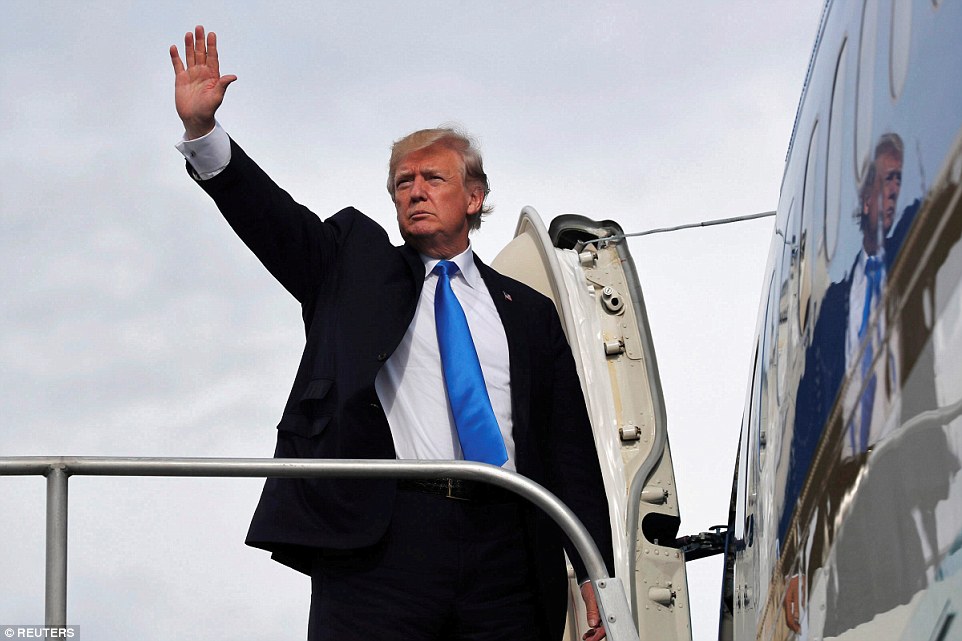
President Trump is currently touring Asia, gathering up bilateral trade deals with various countries all across the ASEAN network.

In the bigger context, Trump is cutting all the tentacles and tools of China, and isolating them from Southeast Asia, as it relates to trade with the USA.

The bigger strategy of President Trump is very clear now, reduce dependency on China by retracting all of the manufacturing dependency.

All of the surrounding nations in Asia stand to benefit from this approach through bilateral free trade agreements with the USA.  Beijing’s influence is being seriously diminished as the lead-up to President Trump sitting down with Chinese Chairman Xi Jinping on Thursday.

Inside China, throughout the Chinese Communist Party, there are indications they are recognizing how successful President Trump has been at working around their influence.  Some outside observers have even started to believe the “moderates” within China feel empowered over the “hardliners” represented by Chairman Xi.  There is a lot going on behind the scenes.

This internal pressure inside Beijing’s politics works to President Trump’s favor, because it makes it even harder for Xi Jinping to be aggressive.  Additionally, with the Chinese economy being uncertain, perhaps significantly weak, Chairman Xi might even face a challenge to his power structure.  Meanwhile President Trump hops around shaking hands and making deals.
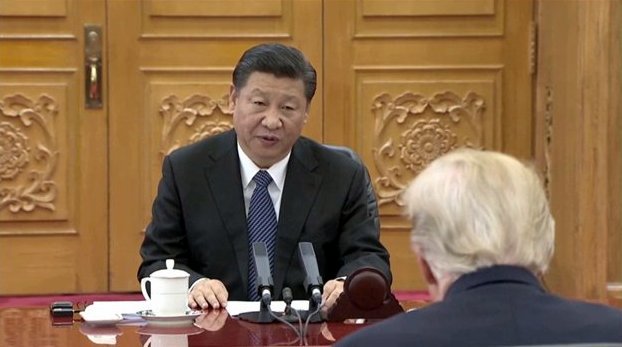
Canada Likely to Take Chinese EV Production as Offset to Lost U.S. Trade


Posted originally on CTH on October 27, 2025 | Sundance 

As previously outlined, Canada is so entrenched with their ‘orange man bad’ syndrome, they just cannot get out of their own way on stupid trade decisions.  {GO DEEP}

You might remember Mexico retreating from Chinese electric vehicle (EV) development following the November 2024 election of Donald Trump.

China was on the cusp of investing $5 to $7 billion in new EV manufacturing in Mexico, when President Trump announced he would impose massive tariffs to block any import of Chinese EVs made in Mexico. Trump won the election and together China and Mexico scrapped their plan.

Europe then stepped on the Chinese EV rake and began purchasing carbon credits from Chinese EV companies to avoid the “climate change” auto goals and subsequent fines to EU car companies for not hitting EV production targets. In essence, Europe is paying Chinese EV companies for carbon credits, thereby subsidizing lower priced Chinese EVs in Europe. The EU is paying China to destroy their own auto industry.

Now, it’s Canada’s turn.

As a result of President Trump asserting tariffs against imported autos, the large auto companies are abandoning plans to build or expand auto manufacturing in Canada. The Canadians are angry, and the professional political class in Canada is doing everything they can to continue ramping up opposition to Donald Trump.

With increased tariffs against Canada, and with the likely dissolution of the USMCA (CUSMA) coming in the near future, the Canadian govt of Mark Carney has been traveling the world to find alternative markets for their goods and services. The main targets for new Canadian economic and trade relations are the U.K, EU and China.

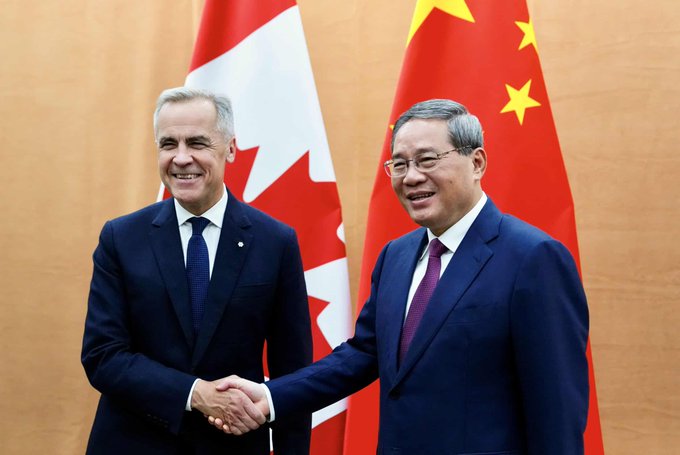
In a deal to expand the trade relationship with China, the Canadian government of Mark Carney is now proposing to drop tariffs against Chinese EVs in a deal to sell more pork and canola oil. That’s correct, in essence Canada will take the EV auto business abandoned by Mexico.

This was Canadian Prime Minister Mark Carney’s grand plan as he attended the ASEAN summit in Malaysia.

Keep in mind, as we have outlined all along during Trump’s trade reset, the USMCA is going to be abandoned in favor of two bilateral free trade agreements; one with Mexico and one with Canada.

As outlined in the Mexican decision to cancel EV investment, Mexico is aligning for a favorable trade relationship with President Trump and the USA.

The Mexican govt can see the benefits and accepts their regional dependency to the world’s largest consumer market. However, Canada is doing exactly the opposite and increasing the disconnect between Canada and the United States on key sectors of trade and commerce.

Canada may benefit in the short term from sales of pork and canola to Beijing, while simultaneously gaining Chinese investment in cobalt mining and auto development for EVs. But those EVs will never be permitted to cross the border into the USA and any effort to enhance Chinese EV sales in Canada will only disconnect them more from trade with Donald Trump and the USA.

[BACKGROUND HERE] – [Canada/Chinese EV Deal Here]

Mohamed El-Erian Outlines Stunning Success of President Trump’s Tariff, Trade and Economic Policy Agenda


Posted originally on CTH on October 27, 2025 | Sundance

Wharton Professor and noted economist Mohamed El-Erian appeared on Fox News to discuss the jaw-dropping success President Trump is having with his global trade reset.

As noted by El-Erian no one, including El-Erian himself, expected President Trump to be able to navigate a global trade and economic reset with such stunning success.  The entire economic policy is being driven by the personal influence of President Trump as he leverages tariffs and policy incentives to the benefit of the USA economy exclusively.

The scale of Trump’s agenda is difficult to overstate, and China is now positioned to feel incredible pressure to align Beijing policy with the requests of President Trump.  “We thought there would be a massive retaliation against the US, there hasn’t been” El-Erian noted.  “We’re collecting $800 Billion of tariff revenue” and “inflation has waned,” he said.  This is a remarkable situation that few economists could accurately predict.  WATCH:

This is not a surprise to readers here as we have discussed the Trump trade agenda with clear, non-pretending eyes.  The ASEAN trip by President Trump is a masterclass in leveraging trade relationships and creating isolation for China.  The downstream consequences for Canada continue to build as the Carney administration doubles down on their entrenched and futile opposition.

If President Trump can formulate a strong, actionable and enforceable free trade agreement with Chairman Xi, it will undercut the ability of Canada to assemble cheap component goods not available in the U.S. manufacturing equation for total cost of goods.  This puts Trump in an even stronger position heading into the 2026 USMCA (CUSMA) dissolution phase.

Additionally, despite the mainstream thoughts to the contrary, putting distance between Russia and China is not averse to the interests of Russian Federation Vladimir Putin, who would strategically prefer to do business with the ‘West’ over Beijing.  However, China does not want to see their Biden-created tentacle weakened in Russia.

China retains a vision of a global financial market option beyond the dollar, and Xi plays that long-term strategy game with Putin quite effectively.  It is only President Trump who holds the key to weakening that strategy, and Chairman Xi likely reminds everyone -through his emissaries- that they can wait out the Trump administration.

However, during the ASEAN conference, again we see President Trump drawing heavily on the personal factor as a part of his strategic influence operation to push distance between Southeast Asia and Beijing.  Cunning Panda can undoubtedly see that play, however, culturally they may underestimate the strength of the dynamic.  President Trump leverages the world’s biggest market with a smile.  The world’s biggest sellers want and need to keep that smile on the face of their #1 customer.

President Donald Trump is a friendly dealmaker, until he is not. Southeast Asia understands this dynamic very well.